- Weekly portions
- Shemot
- Vaera
וָאֵרָא
Vaera
Moshe, Pharaoh and the plagues of Egypt
- Weekly portion
- 14 of 54
- Verses
- Shemot 6:2–9:35
- Parts
- 9
- Reading time
- 2 h 20 min
- Views
marks places where the translation deliberately departs from the Russian original. Tap it to show the note.
Vaera is the weekly portion about God's plan for the liberation of Israel. Alex Blend examines the calling of Moshe and Aharon, the confrontation with Pharaoh, the plagues of Egypt and incomplete repentance. The stenogram includes the Torah text in Hebrew, a transliteration, a translation, the author's commentaries and the haftara from Yechezkel.
Vaera: There Is a Plan
Shemot 6:2–13
With God's help, today you and I begin reading the weekly portion Vaera. This is the second weekly portion in the book of Shemot. We stopped at the point where Moshe's trip to Pharaoh turned out, to put it mildly, unsuccessful. The people's conditions sharply worsened, and Moshe turned to the Most High with a question. One can understand it as a complaint, but we said that it is a question, because the Most High, through Moshe, gives the people of Israel the Torah, or the Teaching. A teaching implies a whole complex of knowledge, and when a person is instructed in a teaching, receives a teaching, he of course not only may but must ask again if he does not understand. Moshe did not understand, and he asked the Most High again why this had happened. And in our weekly portion the Most High opens up His plans a little, and even a little of His nature.
We will read from verse 2 of chapter 6.
וַיְדַבֵּר אֱלֹהִים אֶל־מֹשֶׁה וַיֹּאמֶר אֵלָיו אֲנִי יְהוָה׃
vaydabbér elohím el-moshé vayomer eláv aní adonáy
2 And God spoke with Moshe, and said to him: “I am the LORD.
When we read the word Adonái (the LORD) in the Torah or somewhere in the Tanach, we must remember that most often what is meant is the four-letter name, which, as I have already said, is incorrectly transcribed as Yehova. We will say HaShém, simply the Name. So, the Most High begins the conversation with Moshe by presenting his four-letter Name. And then goes on like this:
וָאֵרָא אֶל־אַבְרָהָם אֶל־יִצְחָק וְאֶל־יַעֲקֹב בְּאֵל שַׁדָּי וּשְׁמִי יְהוָה לֹא נוֹדַעְתִּי לָהֶם׃
va'erá el-avrahám el-yitzchák ve'el-yaakóv be'él shaddáy ushmí adonáy lo nodá'ti lahém
3 I previously appeared to Avraham, Yitzchak and Yaakov by the name El Shaddai, but the name the LORD I did not reveal to them.
It is very strange for a person to hear such a revelation for the first time. For example, the French writer Jules Verne was actually called Jules Gabriel Verne. By the second name Gabriel he is little known, but a person, of course, can have a double name, and, strictly speaking, what difference does it make to us? Why does the Most High speak about His different names?
It is commonly held that the different names of the Most High reflect his different qualities. There is the name Tzva'ot, which means the LORD of hosts. Here we see the names El Shaddai and the name the LORD. The name El Shaddai, by which the Most High was revealed to Avraham, Yitzchak and Yaakov – this is an amazing name. It occurs in the book of Bereshit (the name, one could say, is directly connected with the book of Bereshit), and also here, in this verse, and also in the prophet Yechezkel, in chapter 10. El – this is, of course, God. The word Shaddai – a very amazing word, the root shín-dálet is connected with boundaries: guarding boundaries, setting boundaries, setting time limits. Sadé – this is a field, a marked-out territory; shéd – devil, from the word line, that is, one who violates boundaries, comes from the other side; shodéd – robber, one who penetrates into your territory; shád – a woman's breast, that which feeds the child, that which enters the child, connects mom and child.
El Shaddai – this is, on the one hand, God who feeds with milk food, on the other hand, this is the God of planning, of plans, of setting time limits, of promises, of dreams and so on, God as the childhood of humanity. And by this name the Most High was revealed to Avraham, Yitzchak and Yaakov.
By the name the LORD He was not revealed to them. The name the LORD – this is the Governor, The One Who is, was and will be, uniting in Himself three tenses of the verb lihyot (to be). This name is connected with the fulfillment of promises, with the fact that plans are carried out, with the fact that the Most High does what He promises. One could say that El Shaddai is the path, and the LORD is the gate. And we see here that there exists the possibility of a transition from the era of action of one Name to the era of action of another Name. This means that the reverse can also happen. For example, at the time of the destruction of the Temple a rollback occurred: what had already been accomplished, that Temple which already stood with its gates, which one could enter, now turned into the expectation of the building of the Temple; to some extent it went from the era of the name the LORD to the era of the name El Shaddai in this particular area of work. Here the LORD says: “You do not yet know, but by My nature I am the LORD, the One Who Fulfills promises.”
וְגַם הֲקִמֹתִי אֶת־בְּרִיתִי אִתָּם לָתֵת לָהֶם אֶת־אֶרֶץ כְּנָעַן אֵת אֶרֶץ מְגֻרֵיהֶם אֲשֶׁר־גָּרוּ בָהּ׃
vegám hakimóti et-berití ittám latét lahém et-éretz kená'an et éretz megurehém asher-gáru va
4 Back then I already established the covenant with them: to give them the land of Canaan, into the land of their dwelling, in which they were wanderers.
We remember that our Fathers walked the land of Canaan as temporary residents. Yaakov only settled in it, and even that, as it turned out, not for long: he had to go down to Egypt. And the Most High says: “When I appeared to Avraham, Yitzchak and Yaakov by the name El Shaddai, there, in the era of planning and dreams, I promised them the land as an eternal possession, the land on which they walked as temporary residents.”
וְגַם אֲנִי שָׁמַעְתִּי אֶת־נַאֲקַת בְּנֵי יִשְׂרָאֵל אֲשֶׁר מִצְרַיִם מַעֲבִדִים אֹתָם וָאֶזְכֹּר אֶת־בְּרִיתִי׃
vegám aní shamá'ti et-na'akát bené yisraél ashér mitzráyim ma'avidím otám va'ezkór et-berití
5 And now I have heard the outcry of the people of Israel, who are enslaved by Egypt, and I remembered my covenant.
Here the Most High answers Moshe's question of why He set all this in motion: the time for the fulfillment of the covenant has come.
לָכֵן אֱמֹר לִבְנֵי־יִשְׂרָאֵל אֲנִי יְהוָה וְהוֹצֵאתִי אֶתְכֶם מִתַּחַת סִבְלֹת מִצְרַיִם וְהִצַּלְתִּי אֶתְכֶם מֵעֲבֹדָתָם וְגָאַלְתִּי אֶתְכֶם בִּזְרוֹעַ נְטוּיָה וּבִשְׁפָטִים גְּדֹלִים׃
lachén emór livne-yisraél aní adonáy vehotzetí etchém mittáchat sivlót mitzráyim vehittzaltí etchém me'avodatám vega'altí etchém bizróa netuyá uvishfatím gedolím
6 Go, say to the sons of Israel: I am the LORD, I will bring you out, I will pull you out of enslavement, I will altogether deliver you from any connection with them, when I bring you out beyond the borders of Egypt, with a strong hand I will save you, and with great judgments.
וְלָקַחְתִּי אֶתְכֶם לִי לְעָם וְהָיִיתִי לָכֶם לֵאלֹהִים וִידַעְתֶּם כִּי אֲנִי יְהוָה אֱלֹהֵיכֶם הַמּוֹצִיא אֶתְכֶם מִתַּחַת סִבְלוֹת מִצְרָיִם׃
velakachtí etchém li le'ám vehayíti lachém lelohím vida'tém ki aní adonáy elohechém hammotzí etchém mittáchat sivlót mitzráyim
7 I will take you to Myself as a people and will be God to you, and then you will know that I am the LORD, your God, Who brings you out from the sufferings of Egypt.
The Most High speaks of a four-stage deliverance, four stages will take place: I will bring you out of slavery – this is the first part of the deliverance (it is held that when the plagues began, the slavery ceased); I will deliver you from any connection with them, when I bring you out beyond the borders of Egypt; I will with a strong hand and great judgments save you – this is at the sea; I will take you to Myself as a people – this is the promise at Sinai. All of this we will learn only later. That is, the LORD says: “I will do all this, I will carry out a deliverance in stages, with a clear plan. And then you will know that I am the LORD, your God.”
We said that much – both in the book of Bereshit and in our book of Shemot – is connected with the verb to know. Avraham asked: “How will I know that I will inherit this land?” The whole story, one could say, began with Avraham asking “how will I know.” The LORD brought a sleep upon him among the cut-apart bodies and said to him: “With knowledge you will know.” And now the time has come to know. The Most High says: “I will do this, I will bring about this deliverance, and then you will know.” A question arises: what, did the people of Israel not know before? Here, by and large, this answer is given: “I will be God to you, you will acknowledge me as God, and you will know,” that is, the Most High is only beginning this process of coming to know, for before this there was God who gives promises. Now, however, the Most High says: “I want to be revealed as God fulfilling promises, I want to be revealed by the name the LORD.”
וְהֵבֵאתִי אֶתְכֶם אֶל־הָאָרֶץ אֲשֶׁר נָשָׂאתִי אֶת־יָדִי לָתֵת אֹתָהּ לְאַבְרָהָם לְיִצְחָק וּלְיַעֲקֹב וְנָתַתִּי אֹתָהּ לָכֶם מוֹרָשָׁה אֲנִי יְהוָה׃
vehevetí etchém el-ha'áretz ashér nasáti et-yadí latét otá le'avrahám leyitzchák ulyaakóv venatattí otá lachém morashá aní adonáy
8 I will bring you into the land concerning which I raised the hand (swore) to give it to Avraham, Yitzchak, Yaakov, and I will give it to you as an inheritance, I am the LORD.”
During the Séder Pésach Jews raise four cups corresponding to the four expressions of deliverance which we read here in verses 6–7: vehotzetí etchém (and I will bring you out), vehittzaltí etchém (and I will deliver you), vega'altí etchém (and I will save you), velakachtí etchém (and I will take you). That is, corresponding to the four expressions up to the revelation at Sinai, as we laid it out. Vehevetí etchém (and I will bring, will lead you in) – this is not yet read, it is connected with the time of Mashiach. The Epistle to the Hebrews (4:5) also speaks about this: “Did not bring them into My rest.”The Russian quotation also has no subject (“did not bring them into My rest”); it is translated literally, without adding one. This has not happened yet, the promise has not yet been completely fulfilled, this is a promise for the future, therefore the fifth cup is not drunk. Why does the Most High repeat here: “I am the LORD, this is My plan, I am the LORD, the One Who Fulfills plans”? This is not a promise, this is already the beginning of the fulfillment of the promises.
This is how the Most High answered Moshe's question of what all this is for and why all this is. The Most High says: “I am the LORD, I am the Fulfiller of promises, I fulfill promises.” But the fulfillment, the process of the actions of the Most High – it is in stages, step by step. The power of the Most High is in that He works His deliverance gradually, step by step, not instantly, not by explosions, but builds it so that a person can go through all the stages with Him, so as to include in it as large a part of creation as possible. Deliverance, like dawn, happens slowly, the light grows slowly.
In verse 9 we read that Moshe understood and tried to explain this to others.
וַיְדַבֵּר מֹשֶׁה כֵּן אֶל־בְּנֵי יִשְׂרָאֵל וְלֹא שָׁמְעוּ אֶל־מֹשֶׁה מִקֹּצֶר רוּחַ וּמֵעֲבֹדָה קָשָׁה׃
vaydabbér moshé ken el-bené yisraél veló shame'ú el-moshé mikkótzer rúach ume'avodá kashá
9 And Moshe told all this to the sons of Israel, and they did not listen to Moshe because of weakness of spirit and because of hard work.
Kótzer rúach means short breath, that is, there is no opportunity to catch one's breath, constant strain. The commentators show two different approaches here.
The well-known midrash Mechílta says that the Jews were frightened that this plan has so many stages, and then on top of that, God forbid, they will give the Torah and load them with a heap of all kinds of work and rules, and they were frightened of hard work. To go off somewhere there, to be saved somewhere there – all this is hard, complicated work. Better to live the way we lived, and it's good, after all, on the whole we live not badly. That is, the people, according to the Mechílta, were frightened of the process of deliverance, of the giving of the Torah, of keeping the Torah and everything else.
Later commentators say (and this is closer to the simple meaning) that it was hard for the people. If you work hard from morning to evening, if you work from dawn to sunset and must meet quotas for making bricks, then somehow abstract philosophical ideas about theophany (the appearance of God), the Divine names and various other things are hard to grasp. It did not work out for Moshe (one more failure), he did not manage to explain to the people an introduction to Jewish eschatology (the theory of the end of days), soteriology (the theory of salvation) and even a little theology (divinity). The people took in nothing because of their heavy workload or because of fear of the difficulties. I lean toward the view that it was, after all, precisely the hard labor that kept the Jews from taking in what Moshe was saying.
וַיְדַבֵּר יְהוָה אֶל־מֹשֶׁה לֵּאמֹר׃
vaydabbér adonáy el-moshé lemór
10 And the LORD said to Moshe, saying:
בֹּא דַבֵּר אֶל־פַּרְעֹה מֶלֶךְ מִצְרָיִם וִישַׁלַּח אֶת־בְּנֵי־יִשְׂרָאֵל מֵאַרְצוֹ׃
bo dabbér el-par'ó mélech mitzráyim vishallách et-bene-yisraél me'artzó
11 “Go and speak with Pharaoh, king of Egypt, and he will send the sons of Israel away from the land.”
וַיְדַבֵּר מֹשֶׁה לִפְנֵי יְהוָה לֵאמֹר הֵן בְּנֵי־יִשְׂרָאֵל לֹא־שָׁמְעוּ אֵלַי וְאֵיךְ יִשְׁמָעֵנִי פַרְעֹה וַאֲנִי עֲרַל שְׂפָתָיִם׃
vaydabbér moshé lifné adonáy lemór hen bene-yisraél lo-shame'ú eláy ve'éch yishma'éni far'ó va'aní arál sefatáyim
12 And Moshe said to the LORD, saying: “Look, even the sons of Israel did not listen to Me. How then will Pharaoh listen to me, if I am such – well, not eloquent?!”
That is: “I can't manage to explain anything. I couldn't get anything into the heads even of the Israelites, and you want me to go now and get something into Pharaoh's head.”
וַיְדַבֵּר יְהוָה אֶל־מֹשֶׁה וְאֶל־אַהֲרֹן וַיְצַוֵּם אֶל־בְּנֵי יִשְׂרָאֵל וְאֶל־פַּרְעֹה מֶלֶךְ מִצְרָיִם לְהוֹצִיא אֶת־בְּנֵי־יִשְׂרָאֵל מֵאֶרֶץ מִצְרָיִם׃
vaydabbér adonáy el-moshé ve'el-aharón vaytzavvém el-bene yisraél ve'el-par'ó mélech mitzráyim lehotzí et-bene-yisraél me'éretz mitzráyim
13 And the LORD spoke to Moshe and Aharon, and commanded them, to the sons of Israel and to Pharaoh, king of Egypt, to bring the sons of Israel out of the land of Egypt.
The command went out to all participants in this matter, this special operation: to bring the people of Israel out of the land of Egypt.
And Again a List of Names
Shemot 6:14–28
Last time we talked about the Most High opening up to Moshe a little the secret of his two names: the name El Shaddai and the name the LORD. We talked about different facets of the Most High which are revealed through these names, different principles of governing the world. We talked about the Most High telling Moshe the plan of deliverance, and that Moshe tried to convey it to the people of Israel. But the people of Israel, because of the heaviness of their slave labor, did not receive it with great enthusiasm and simply refused to listen to him. Despite this, the Most High solemnly declared open the beginning of the operation of bringing the people of Israel out of Egypt, gave the order to everyone – to Moshe, and to Aharon, and to the people, and to Pharaoh – to begin the exodus of the people of Israel from Egypt.
In our talk today the Torah briefly leaves our heroes in order to tell about their genealogy. Why does a genealogy appear? In order to point to a person's origin (we will see the origin of Moshe and Aharon) and to explain to us that, even though Moshe will be a god to Pharaoh or will be a god to Aharon, Moshe is simply a person of blood and flesh, and Aharon too is a person of blood and flesh. We will also see that long before their birth the Most High had a plan for their appearance and that the action would be carried out precisely through them; in part this was clear. We will see that here there is already a hint at the choosing of the priesthood. We will see much more that is interesting, but we will work through it as we read. The Torah begins from the very beginning, returning to long-covered material about the genealogy of the sons of Yaakov.
We will read from verse 14 of chapter 6.
אֵלֶּה רָאשֵׁי בֵית־אֲבֹתָם בְּנֵי רְאוּבֵן בְּכֹר יִשְׂרָאֵל חֲנוֹךְ וּפַלּוּא חֶצְרוֹן וְכַרְמִי אֵלֶּה מִשְׁפְּחֹת רְאוּבֵן׃
élle rashé vet-avotám bené re'uvén bechór yisraél chanóch ufallú chetzrón vecharmí élle mishpechót re'uvén
14 And these are the heads of the houses (the heads of the tribes) of their fathers. These are the sons of Re'uven, the firstborn of Israel: Chanoch and Palu, Chetzron and Karmi – these are the families of Re'uven.
וּבְנֵי שִׁמְעוֹן יְמוּאֵל וְיָמִין וְאֹהַד וְיָכִין וְצֹחַר וְשָׁאוּל בֶּן־הַכְּנַעֲנִית אֵלֶּה מִשְׁפְּחֹת שִׁמְעוֹן׃
uvné shim'ón yemu'él veyamín ve'óhad veyachín vetzóchar vesha'úl ben-hakkena'anít élle mishpechót shim'ón
15 And these are the sons of Shimon: Yemu'el, Yamin, Ohad, Yachin, Tzochar and Sha'ul, son of the Canaanite woman. These are the names of the families of Shimon.
וְאֵלֶּה שְׁמוֹת בְּנֵי־לֵוִי לְתֹלְדֹתָם גֵּרְשׁוֹן וּקְהָת וּמְרָרִי וּשְׁנֵי חַיֵּי לֵוִי שֶׁבַע וּשְׁלֹשִׁים וּמְאַת שָׁנָה׃
ve'élle shemót bene-leví letoledotám gereshón ukhat umrarí ushné chayé leví shéva ushloshím um'át shaná
16 And these are the names of the sons of Levi according to their descent: Gershon, and Kehat, and Merari; the years of Levi's life – 137 years.
In chapter 46 of the book of Bereshit, in the talk “What Is in My Name for You?”, we examined in detail the names of these heroes of ours. And the Torah moves on to the most important moment; from here on we continue reading no longer about the next tribe, but about the tribe of Levi. The Torah will unfold the genealogy of Levi.
בְּנֵי גֵרְשׁוֹן לִבְנִי וְשִׁמְעִי לְמִשְׁפְּחֹתָם׃
bené gereshón livní veshim'í lemishpechotám
17 The sons of Gershon: Livni (snow-white) and Shimi (the one about whom they heard), by their families.
וּבְנֵי קְהָת עַמְרָם וְיִצְהָר וְחֶבְרוֹן וְעֻזִּיאֵל וּשְׁנֵי חַיֵּי קְהָת שָׁלֹשׁ וּשְׁלֹשִׁים וּמְאַת שָׁנָה׃
uvné kehat amrám veyitzhár vechevrón ve'uzzi'él ushné chayé kehát shalósh ushloshím um'át shaná
18 The sons of Kehat: Amram, and Yitzhar, and Chevron, and Uzi'el; the years of Kehat's life – 133 years.
The name Amrám means the Great LORD. Even though the word am in modern Semitic languages means people, it is one of the designations of God. Amrám – this is the Exalted LORD or the Most High. Yitzhár – this is a gleam of light. But it is also pure olive oil, that is, something transparent, clarified, bright, full of light. Chevrón – this is a place where friends are found, where people unite with each other. Uzi'él – the might of the LORD.
וּבְנֵי מְרָרִי מַחְלִי וּמוּשִׁי אֵלֶּה מִשְׁפְּחֹת הַלֵּוִי לְתֹלְדֹתָם׃
uvné merarí machlí umushí élle mishpechót halleví letoledotám
19 And the sons of Merari: Machli and Mushi; this is the genealogy of Levi.
Machlí – this is an ornament, one of the many ornaments. The Torah does indeed mention 24 different ornaments: earrings, all kinds of bracelets, rings and even intimate piercing. Machlí – according to many versions this is a bracelet that is put on the forearm, on the upper part of the arm. Mushí – a name similar in its origin to the name Moshé – pulled out from somewhere, rescued from somewhere; possibly it points to a difficult birth.
וַיִּקַּח עַמְרָם אֶת־יוֹכֶבֶד דֹּדָתוֹ לוֹ לְאִשָּׁה וַתֵּלֶד לוֹ אֶת־אַהֲרֹן וְאֶת־מֹשֶׁה וּשְׁנֵי חַיֵּי עַמְרָם שֶׁבַע וּשְׁלֹשִׁים וּמְאַת שָׁנָה׃
vayikkách amrám et-yochéved dodató lo le'ishá vattéled lo et-aharón ve'et-moshé ushné chayé amrám shéva ushloshím um'at shanáThe Russian transliteration has “ana” as the last word; the Hebrew reads shaná (“year”), so the English line follows the Hebrew.
20 And Amram took for himself as a wife his aunt Yocheved, and she is the sister of his father; and she bore him Aharon and Moshe. And the years of Amram's life are also 137 years.
Amrám is the son of Kehat. The name of Amrám's wife, Yochéved, means the Glorious LORD or the glory of the LORD, yo – an abbreviation of the name of the Most High. He took her for himself as a wife, and she is the sister of his father. The Torah forbids doing this, but this was before the giving of the Torah, so apparently there was such a practice. At that moment Yochéved is very many years old, probably also 130 years. Various calculations on this matter say that Yochéved was possibly born on the day when Yaakov went down to Egypt: Yochéved – 130 years, Moshe – 80, together that makes 210 years, which is exactly the time of the people's stay in Egypt. There is a lot more of all kinds of interesting arithmetic on this, and indeed one can calculate it this way. The commentators say that at the moment when the people of Israel went down, the mother of the one through whom the deliverance would be worked had already been born. In any case, one can say about the year of her birth that this is such amazing wisdom, an amazing providence of the Most High, who reveals to us more deeply this very facet – how the LORD acts toward deliverance long before the deliverance has come.
So, Amrám took Yochéved for himself as a wife, and she bore him Aharon and Moshe. A little sister by the name of Miryam is not mentioned yet.
וּבְנֵי יִצְהָר קֹרַח וָנֶפֶג וְזִכְרִי׃
uvné yitzhár kórach vanéfeg vezichrí
21 The sons of Yitzhar: Korach, and Nefeg, and Zichri.
The name Kórach is most often identified with strength. It means strong, sturdy, but in this case, if one compares it with other Semitic names, it is most likely that the name comes from the word keréach (bald), that is, the name Kórach was given in connection with appearance. Néfeg, the name of the second son, comes from the root cell pei-gimel – outstanding, going beyond the frame, breaking the frame of reality. Zichrí – the one of whom there will be remembrance.
וּבְנֵי עֻזִּיאֵל מִישָׁאֵל וְאֶלְצָפָן וְסִתְרִי׃
uvné uzzi'él misha'él ve'eltzafán vesitrí
22 And the sons of Uzi'el : Misha'el, and Eltzafan, and Sitri.
The name Misha'él is of unclear origin, but it can be roughly translated as the one whom God will carry in arms. Eltzafán – the one who reveals his various traits, or the one who will strike the cheeks of his enemies. Sitrí – the one who is under protection, is in a refuge. Such were the names parents gave their children.
וַיִּקַּח אַהֲרֹן אֶת־אֱלִישֶׁבַע בַּת־עַמִּינָדָב אֲחוֹת נַחְשׁוֹן לוֹ לְאִשָּׁה וַתֵּלֶד לוֹ אֶת־נָדָב וְאֶת־אֲבִיהוּא אֶת־אֶלְעָזָר וְאֶת־אִיתָמָר׃
vayikkách aharón et-elishéva bat-amminadáv achót nachshón lo le'ishá vattéled lo et-nadáv ve'et-avihú et-el'azár ve'et-itamár
23 Aharon took for himself as a wife Elisheva, daughter of Amminadav, sister of Nachshon, and she bore him Nadav, and Avihu, and Elazar, and Itamar.
The name Elishéva means God swore. Amminadáv means God gave a sacrifice, God offered as a sacrifice (insofar as this is applicable to God): God gave a gift, God gave out of mercy, God showed good will. Such is the name of the wife of Aharon, the kohen (but back then not yet a kohen). Nachshón means either a little snake, a snakelet, or the one who is foreseen, from the word lenachésh (to guess). Nadáv – this is a voluntarily brought sacrifice, a donation; words of the same root are lenadév (to be a volunteer, a willing one) and nedavá (voluntary sacrifice). We have already mentioned the name Amminadáv, and here the name Nadáv is also a very similar name. Avihu – this is my father is He or my father is the LORD.
וּבְנֵי קֹרַח אַסִּיר וְאֶלְקָנָה וַאֲבִיאָסָף אֵלֶּה מִשְׁפְּחֹת הַקָּרְחִי׃
uvné kórach assír ve'elkaná va'avi'asáf élle mishpechót hakkorchí
24 And the sons of Korach: Assir, and Elkana, and Avi'asaf, these are the families of Korach.
Assír – this is one who submits, obedient in this case. Elkaná – God acquired. Avi'asáf – the LORD will add or the LORD gave an additional blessing.
וְאֶלְעָזָר בֶּן־אַהֲרֹן לָקַח־לוֹ מִבְּנוֹת פּוּטִיאֵל לוֹ לְאִשָּׁה וַתֵּלֶד לוֹ אֶת־פִּינְחָס אֵלֶּה רָאשֵׁי אֲבוֹת הַלְוִיִּם לְמִשְׁפְּחֹתָם׃
ve'el'azár ben-aharón lakach-ló mibbenót puti'él lo le'ishá vattéled lo et-pinechás élle rashé avót halviyím lemishpechotám
25 Elazar, the son of Aharon, took for himself a wife from the daughters of Puti'el, and she bore him Pinchas. These are the heads of the houses of the Levites by their families.
The name Pinchás is an Egyptian name, it is difficult to translate from Hebrew. In due time, when we talk more about Pinchás, we will examine the meaning of this name in more detail.
הוּא אַהֲרֹן וּמֹשֶׁה אֲשֶׁר אָמַר יְהוָה לָהֶם הוֹצִיאוּ אֶת־בְּנֵי יִשְׂרָאֵל מֵאֶרֶץ מִצְרַיִם עַל־צִבְאֹתָם׃
hu aharón umoshé ashér amár adonáy lahém hotzí'u et-bené yisraél me'éretz mitzráyim al-tziv'otám
26 This is Aharon and Moshe, whom the Most High commanded to bring the people of Israel out of Egypt by their hosts.
The name Aharon. We have slowly gone through all the names here, touched on them, except the name Aharon. There is an interesting interpretation that the name Aharon comes from the word ohel (tent), since in some Semitic dialects the letters resh and lamed are indistinguishable. And the name Aharon could sound like Ahalon. (Such a phenomenon also exists in modern Far Eastern languages. For example, in the Korean phonetic alphabet Hangul the letters “r” and “el” sound very similar and sometimes are not distinguished as sounds). Aharon is the one who is destined to dwell in the tent. Perhaps such a name was given to him prophetically.
הֵם הַמְדַבְּרִים אֶל־פַּרְעֹה מֶלֶךְ־מִצְרַיִם לְהוֹצִיא אֶת־בְּנֵי־יִשְׂרָאֵל מִמִּצְרָיִם הוּא מֹשֶׁה וְאַהֲרֹן׃
hem hamdabberím el-par'ó melech-mitzráyim lehotzí et-bene-yisraél mimmitzráyim hu moshé ve'aharón
27 And they will speak with Pharaoh, the king of Egypt, to bring the sons of Israel out of Egypt; this is Moshe and Aharon.
In verse 26 it is Aharon and Moshe, here – by seniority, first Aharon, and then Moshe, because the point is that Aharon will stand closer to the people. For the people of Israel, first Aharon, whom they know, then Moshe, who is his brother.
וַיְהִי בְּיוֹם דִּבֶּר יְהוָה אֶל־מֹשֶׁה בְּאֶרֶץ מִצְרָיִם׃
vayhí beyom dibbér adonáy el-moshé be'éretz mitzrayim
28 This was at the very time when the Most High spoke with Moshe in the land of Egypt.
What was it needed for, this seemingly boring list of names, the names of the descendants of Levi? And even though we went through the meaning of the names, many will still feel that there was no reason to interrupt such a gripping chapter in order to talk about this here. It is needed so that we remember that Moshe and Aharon are people, human beings who come from the people. So that we see that the Most High from the very beginning planned to act through the line of Levi, chose the line of Levi and predetermined Aharon the kohen for election. This always touches my heart, because I am one of his descendants, and Aharon is my distant-distant-…distant grandfather. The Most High told Moshe what the plan would be. And here there is a kind of small report on the work that was done in preparation for carrying out this plan, how Moshe and Aharon came into the world, how they came precisely from the line of Levi, how the Most High nurtured them in advance, long before their birth. That is why the Torah made such a genealogical digression, breaking off its story at the most interesting point and occupying itself with a minute of bureaucracy and genealogy.
You Are Just the One I Need
Shemot 6:29–7:7
This passage of ours turns out rather short, but at the same time rich in content. So, chapter 6, verse 29:
וַיְדַבֵּר יְהוָה אֶל־מֹשֶׁה לֵּאמֹר אֲנִי יְהוָה דַּבֵּר אֶל־פַּרְעֹה מֶלֶךְ מִצְרַיִם אֵת כָּל־אֲשֶׁר אֲנִי דֹּבֵר אֵלֶיךָ׃
vaydabbér adonáy el-moshé lemór aní adonáy dabbér el-par'ó mélech mitzrayim et kol-ashér aní dovér elécha
29 And the LORD spoke to Moshe, saying: “I am the LORD, tell Pharaoh, the king of Egypt, everything that I am telling you.”
It would seem this is what the Most High already said to Moshe when He told him about His design and partly revealed the plan for the deliverance of Israel. Then we got sidetracked by the genealogy, we talked about where Moshe and Aharon came from at all and that they were in the design of the Most High from the beginning. And now the Most High says to Moshe (without mentioning Aharon): “And your task is to go and tell Pharaoh, the king of Egypt, everything that I will tell you; that is your role in My plan.” Again, let us remember that the Most High did not mention Aharon just now, and therefore Moshe goes back to his old ways again, returns to his old objection.
וַיֹּאמֶר מֹשֶׁה לִפְנֵי יְהוָה הֵן אֲנִי עֲרַל שְׂפָתַיִם וְאֵיךְ יִשְׁמַע אֵלַי פַּרְעֹה׃
vayomer moshé lifnéThe Russian transliteration has an extra letter in the word for “before”; the English line follows the Hebrew: lifné. adonáy hen aní arál sefatáyim ve'éch yishmá eláy par'ó
30 And Moshe said before the LORD: “Look, I have uncircumcised lips, so why would Pharaoh listen to me?”
The expression uncircumcised lips in this case does not mean coarse speech or some element of Tourette's syndrome (for example, lack of restraint in speech). Most likely, judging by the word arél (uncircumcised, not fully formed), – it is a problem of diction, possibly even a cleft lip. The commentators note that Pharaoh could say: “So what, this God of Israel of yours could not find someone more worthy, to send to me someone who would at least pronounce the words clearly? Why send me, of all people, a person with a speech defect?”
With this, chapter 6 ends, and we begin with verse 1 of chapter 7.
וַיֹּאמֶר יְהוָה אֶל־מֹשֶׁה רְאֵה נְתַתִּיךָ אֱלֹהִים לְפַרְעֹה וְאַהֲרֹן אָחִיךָ יִהְיֶה נְבִיאֶךָ׃
vayomer adonáy el-moshé re'é netattícha elohim lefar'ó ve'aharón achícha yihyé nevi'écha
1 And the LORD says to Moshe: “Look, you will see, I will make you God to Pharaoh. And Aharon, your brother, will be your prophet.
In other words, the LORD says: “I will make you a form of revelation, that is, the only possibility for Pharaoh to come to know Me will be through you. Pharaoh will not come to Me except through you. I will arrange it so. And he will indeed come, through you, to the understanding that I am the Most High. You say that you have a speech defect, that you are not suitable, but you are just the one I need, because through this weakness, through this miracle within a miracle, a miracle in a miracle, I will reveal My power to Pharaoh.”
Many commentators often ask the question: “Why did the Most High not heal Moshe?” Some say: “Because Moshe never prayed to the Most High for deliverance.” Others say: “Because the Most High said to Moshe: My grace is enough for you, and the fact that salvation will come about through you. What difference does it make whether you have a speech defect or not, if through you My power is revealed in its fullness?”
When we read further, already chapter 15 of the book of Shemot, we will see how it is written: “And then Moshe sang.” From this one can conclude that the Most High did, after all, heal Moshe of his speech problem. But here we read that the Most High says: “Precisely you, precisely with uncircumcised lips, precisely such an ineloquent person, precisely the one who grew up in Egypt, lived in Midyan and who, at first glance, has little to do with the people of Israel, precisely you I will make god to Pharaoh. I will make precisely you the source of the knowledge of the Most High.”
Everything that this verse speaks about is such an image, such an amazing metaphor. The Most High sends prophets to people. A true prophet comes from the true God. There were very many false prophets, of course. There were, and there will be, and there are now, but a true prophet comes from the true God. The Most High says: “I give you divine authority in relation to Pharaoh, so strong that you can even send Aharon, your prophet, to him.” Just as God speaks through the prophets, Moshe will speak to Pharaoh through Aharon.
אַתָּה תְדַבֵּר אֵת כָּל־אֲשֶׁר אֲצַוֶּךָּ וְאַהֲרֹן אָחִיךָ יְדַבֵּר אֶל־פַּרְעֹה וְשִׁלַּח אֶת־בְּנֵי־יִשְׂרָאֵל מֵאַרְצוֹ׃
attá tedabbér et kol-ashér atzavvékka ve'aharón achícha yedabbér el-par'ó veshillách et-bene-yisraél me'artzó
2 You will speak everything that I have commanded, and Aharon, your brother, will speak to Pharaoh, and he will send out (send away, or one could even say, drive out) the sons of Israel from his land.
וַאֲנִי אַקְשֶׁה אֶת־לֵב פַּרְעֹה וְהִרְבֵּיתִי אֶת־אֹתֹתַי וְאֶת־מוֹפְתַי בְּאֶרֶץ מִצְרָיִם׃
va'aní akshé et-lév par'ó vehirbetí et-ototáy ve'et-mofetáy be'éretz mitzráyim
3 And I will make the heart of Pharaoh heavy, through this I will multiply My signs and My wonders in the land of Egypt.
It often happens this way, not only with Pharaohs, but also with believing people: when we come across some miracles, some descriptions of miraculous phenomena, we want to put some natural basis under it. The Dead Sea parted – well, that is a natural phenomenon (Pharaoh also thought that it was a natural phenomenon, and came to a bad end). Water turned into blood – that is some kind of alga that appears in the Nile, over there, in Ethiopia, there is a whole Red lake, it is actually red all the time. And besides, in Egypt there are sometimes frogs – well, for the croaky froggies we will also find some explanation. We even try to explain that the Most High did not create the world in six days, and we give Him a bit more time so that He can manage. This, naturally, is sometimes useful, sometimes it needs to be done, because besides the fact that the Most High, our God, is a God of miracles, He is also the God Who rules the world, Who arranged the world, created the world as a kind of working device, in which the sun rises, in which there are winds and rains, which exists with its own established laws and functions. But, one way or another, the Most High says: “I will make the heart of Pharaoh heavy, it will be hard for him to see Me in all these miracles, and so that there may be more miracles, and through these miracles My power may be revealed in every aspect of the life of Egypt (we will still see this). I will give him all the arguments he could possibly need to find natural explanations for everything that will happen. I will give him the opportunity to download textbooks on biology, geodesy, Egyptology and whatever else, I will give him knowledge, I will give him advisers who will prompt him. I will play, in quotation marks, on his side, so that everything is fair.” Many note that this is unfair – unfair to deprive Pharaoh of free will and to punish him for it. We have already said that there is no deprivation of free will here, and in this case too. The Most High says: “I will give Pharaoh every opportunity to explain rationally, logically, that it is in fact not Me, or to prove through his priests that I am not all that strong. That is, all the argumentation needed to stand against Me, I will provide to Pharaoh.”
וְלֹא־יִשְׁמַע אֲלֵכֶם פַּרְעֹה וְנָתַתִּי אֶת־יָדִי בְּמִצְרָיִם וְהוֹצֵאתִי אֶת־צִבְאֹתַי אֶת־עַמִּי בְנֵי־יִשְׂרָאֵל מֵאֶרֶץ מִצְרַיִם בִּשְׁפָטִים גְּדֹלִים׃
velo-yishmá alechém par'ó venatattí et-yadí bemitzráyim vehotzetí et-tziv'otáy et-ammí vene-yisraél me'éretz mitzráyim bishfatím gedolím
4 And Pharaoh will not listen to you, and I will stretch out My hand upon Egypt, and I will pull out My host, My people, the sons of Israel, from the land of Egypt (how will I pull them out?) by great judgments.
Again: “I am sending you to Pharaoh, you go, speak, do wonders, and he will not listen to you.” The more Pharaoh counter-argues, let's put it that way, the more he resists in his mind, the longer the criminal case against him piles up. The Most High will bring Israel out with a strong, mighty hand, and we return to what we already talked about (commentary on 1:8): our weekly portions are built around Knowledge: knowledge of Yosef's contribution, knowledge of the Most High, knowledge that the Most High fulfills His covenants. And an important knowledge, what all this is needed for, what the Most High needs all this for:
וְיָדְעוּ מִצְרַיִם כִּי־אֲנִי יְהוָה בִּנְטֹתִי אֶת־יָדִי עַל־מִצְרָיִם וְהוֹצֵאתִי אֶת־בְּנֵי־יִשְׂרָאֵל מִתּוֹכָם׃
veyade'ú mitzráyim ki-aní adonáy bintotí et-yadí al-mitzráyim vehotzetí et-bene-yisraél mittochám
5 And the Egyptians will know that I am the LORD, when I raise My hand against Egypt and bring the sons of Israel out from among them.”
This is the purpose of all the numerous wonders. Why did the Most High not simply teleport the people of Israel to the land of Israel? Why not move them by means of some grandiose earthquake, a laser beam, biological or bacteriological weapons? Why are the wonders numerous? We will still talk about the fact that all these wonders, they are not for nothing: all this is so that the Egyptians would know, and later we will see, the Most High will say to Pharaoh too: “…so that you know!” The Most High is not only the God of Israel, this is not some tribal godling who could say: “I will show my people how strong I am, how cool I am.” The purpose of the Most High's design is that the Egyptians too come to know that He is the LORD, that other nations too come to know that He is the LORD – through the numerous wonders that will be for Israel, through the numerous judgments that will be for Egypt, each in its own way. The Most High says: “They will know that I am God, this is one of My tasks.”
It would seem: what difference does it make what the Egyptians believe in over there? They have Horus (the god of war), the sun god – Ra, Set (the god of storms and the desert), Khnum (the god of fertility), very many gods; they have a very beautiful mythology with numerous tales, they have many beautiful pictures. Well, let them go on believing in all that, and the people of Israel would calmly receive the Torah in the desert and go its own way. As for the Egyptians, when they want to, maybe they will come and repent. But the Most High says: “With these wonders of Mine, with these many repeated goings of yours to Pharaoh, I want to show that this is needed for the Egyptians too, and the Egyptians must come to know that I am God.”
וַיַּעַשׂ מֹשֶׁה וְאַהֲרֹן כַּאֲשֶׁר צִוָּה יְהוָה אֹתָם כֵּן עָשׂוּ׃
vayá'as moshé ve'aharón ka'ashér tzivvá adonáy otám ken asú
6 And Moshe and Aharon did as the LORD commanded them, so they did.
What does they did mean? After all, so far they have not done anything at all yet, we will only read about this further on – about what they did. They did here means that they accepted, they understood the essence of the teaching, took this teaching upon themselves – the teaching that the Most High will save Israel in many stages, that there will be four stages and that this deliverance will not yet be completed in those days. They will not yet enter into rest, there will still be vehevéti (and I will bring), and on this road of theirs the salvation and deliverance, at any rate on the level of the knowledge of God, will touch other nations too: the Egyptians, will know that I am God. We will see later that many Egyptians not only came to know that God is God, that the God of Israel is the Creator of the world, that the Creator, the Sovereign of the world, is acting here, but also came out of Egypt together with Israel; we will see that people drew practical conclusions.
וּמֹשֶׁה בֶּן־שְׁמֹנִים שָׁנָה וְאַהֲרֹן בֶּן־שָׁלֹשׁ וּשְׁמֹנִים שָׁנָה בְּדַבְּרָם אֶל־פַּרְעֹה׃
umoshé ben-shemoním shaná ve'aharón ben-shalósh ushmoním shaná bedabberám el-par'ó
7 And Moshe was eighty years old, and Aharon eighty-three years old, when they began to speak to Pharaoh.
There are different commentaries on this matter. Usually the commentators divide Moshe's life, roughly, into three stages: up to 40 years – in Pharaoh's palace, from 40 to 80 years – in Midyan, after 80 years – in the desert, the wandering of Israel. Other commentators say that Moshe was 20 years old when he left Pharaoh's palace, and 40 years is a symbolic number, a kind of “midrash number,” there are mentions that Moshe was 40 years old.
One way or another, 80 years is no longer even the age of reigning, it is the age when people already withdraw from affairs. But the Most High chose two such amazing vessels, two old men – one of them, on top of that, either with a burr, or a lisp, or with some other problems of articulation – chose them for his actions. And further on it will be interesting, and we will see that with God's help everything will work out for them.
Did Anyone Order Plagues?
Shemot 7:8–8:6
With God's help, you and I continue studying the weekly portion Vaera. We stopped at the point where the Most High told Moshe and Aharon how they should interact, one could say, built a team out of Moshe and Aharon, through which the deliverance of Israel will be carried out. And here, in fact, in our passage everything begins. We read from verse 8 of chapter 7.
וַיֹּאמֶר יְהוָה אֶל־מֹשֶׁה וְאֶל־אַהֲרֹן לֵאמֹר׃
vayomer adonáy el-moshé ve'el-aharón lemór
8 And the LORD said to Moshe and Aharon, saying:
כִּי יְדַבֵּר אֲלֵכֶם פַּרְעֹה לֵאמֹר תְּנוּ לָכֶם מוֹפֵת וְאָמַרְתָּ אֶל־אַהֲרֹן קַח אֶת־מַטְּךָ וְהַשְׁלֵךְ לִפְנֵי־פַרְעֹה יְהִי לְתַנִּין׃
ki yedabbér alechém par'ó lemór tenú lachém mofét ve'amartá el-Aharón kach et-mattechá vehashléch lifne-far'ó yehí letannín
9 If (when) Pharaoh speaks with you, saying, give yourselves a sign, and say to Aharon: “Take your rod (staff) and throw it before Pharaoh, and it will turn into a reptile.”
What does give yourselves mean? Give some sign that will demonstrate your power and your capabilities, show, as representatives of God, your professional signature trick, show something that speaks about you, make some kind of sign.
The word mofét means a model, an example or a demonstration of something. In the Torah two words are used that denote a sign: the word ot (mark) – this is a sign in the heavens, and mofét – this is a sign on the earth. Pharaoh asks to be shown something that would reveal the power of Moshe and Aharon, that would be their certificate, their diploma. That is: “Present your magic mandate!” – this is what, in essence, Pharaoh says in his pagan language. And here the Most High warns that Pharaoh will ask for a sign, will ask for this magic mandate.
Why do I translate the word tanín as reptile? In modern Hebrew (and in earlier Hebrew) tanín means crocodile. And in the prophets the word tanín is used with regard to Pharaoh in the sense of crocodile. Pharaoh is a big crocodile sitting by the Nile, saying: “The Nile belongs to me, I made it.” Another meaning of the word tanín is snake, cobra snake, large snake. And here, when we read, it is unclear from the text whether it is about a crocodile or about a snake. The snake is a symbol of the power of Egypt, the snake is the scepter that Pharaoh holds in his hands, while the crocodile is, in fact, the symbol of the country of Egypt. Therefore it may be the one or the other. Although most commentators and most interpreters speak here about a snake, I am nevertheless inclined to understand that here it is about a crocodile.
וַיָּבֹא מֹשֶׁה וְאַהֲרֹן אֶל־פַּרְעֹה וַיַּעַשׂוּ כֵן כַּאֲשֶׁר צִוָּה יְהוָה וַיַּשְׁלֵךְ אַהֲרֹן אֶת־מַטֵּהוּ לִפְנֵי פַרְעֹה וְלִפְנֵי עֲבָדָיו וַיְהִי לְתַנִּין׃
vayavóThe Russian transliteration begins with “voyavó”; the Hebrew reads vayavó (“and came”), so the English line follows the Hebrew. moshé ve'aharón el-par'ó vaya'asu-chén ka'ashér tzivvá adonáy vayashléch aharón et-mattéhu lifné far'ó velifné avadáv vayhí letannín
10 And Moshe and Aharon came to Pharaoh, and did as the LORD commanded (without even waiting for Pharaoh to ask them anything). And Aharon threw his staff before Pharaoh and before his servants, and it became a crocodile.
וַיִּקְרָא גַּם־פַּרְעֹה לַחֲכָמִים וְלַמְכַשְּׁפִים וַיַּעֲשׂוּ גַם־הֵם חַרְטֻמֵּי מִצְרַיִם בְּלַהֲטֵיהֶם כֵּן׃
vayikrá gam-par'ó lachachamím velamchashefím vaya'asú gam-hém chartummé mitzráyim belahatehém ken
11 Pharaoh too called his wise men and sorcerers, and the Egyptian priests did the same by means of their tricks.
The word lahatehém (by their tricks), which is used here, comes from the same root as the word lilót – to hide in fog, to conceal from the eyes. That is, one can understand that the Egyptian priests did what is called in Hebrew achizát eynáyim (holding of the eyes). It was simply an optical deception of sight, they made a kind of “fake-out,” that is how one can understand it.
וַיַּשְׁלִיכוּ אִישׁ מַטֵּהוּ וַיִּהְיוּ לְתַנִּינִם וַיִּבְלַע מַטֵּה־אַהֲרֹן אֶת־מַטֹּתָם׃
vayashlíchu ish mattéhu vayihyú letanniním vayivlá matte-aharón et-mattotám
12 And each threw his staff, and they became crocodiles, and Aharon's staff swallowed their staffs.
It was not Aharon's crocodile that swallowed the crocodiles, because it is quite possible that there were no crocodiles at all, but Aharon's staff swallowed all the staffs. That is, an optical deception of sight does not work on everyone. There are, of course, different opinions, and it is quite possible that such a trick as really turning a staff into a crocodile was within the power of the wise men of Egypt, or they took crocodiles and turned them into staffs. A great deal has been said about this, and we cannot understand it exactly. But this interesting word lahatehém, which we already spoke about, points precisely to trickery, and it is hard to overlook.
One way or another, the wise men of Egypt, the Egyptian priests, the court magicians did something that impressed Pharaoh, and it came to look the same as with Aharon and Moshe, although their school of magic is a bit better, and their little crocodile came out a bit stronger. But that is something that comes with time, a matter of experience, and otherwise – “we can make our own, homegrown crocodiles too, so – no, your technologies do not impress us.”
וַיֶּחֱזַק לֵב פַּרְעֹה וְלֹא שָׁמַע אֲלֵהֶם כַּאֲשֶׁר דִּבֶּר יְהוָה׃
vayechezák lev par'ó veló shamá alehém ka'ashér dibbér adonáy
13 And Pharaoh's heart was strengthened, and he did not listen to them, as the LORD had said.
וַיֹּאמֶר יְהוָה אֶל־מֹשֶׁה כָּבֵד לֵב פַּרְעֹה מֵאֵן לְשַׁלַּח הָעָם׃
vayomer adonáy el-moshé kavéd lev par'ó me'én leshallách ha'ám
14 And the LORD said to Moshe: “Pharaoh's heart is heavy, he does not want to send away the people.
A spirit of rivalry, a spirit of competition, apparently seized Pharaoh's heart. It is hard to give in, it is hard to agree to what one did not agree to at first, Pharaoh does not want to let the people go.
לֵךְ אֶל־פַּרְעֹה בַּבֹּקֶר הִנֵּה יֹצֵא הַמַּיְמָה וְנִצַּבְתָּ לִקְרָאתוֹ עַל־שְׂפַת הַיְאֹר וְהַמַּטֶּה אֲשֶׁר־נֶהְפַּךְ לְנָחָשׁ תִּקַּח בְּיָדֶךָ׃
lech el-par'ó babbóker hinné yotzé hammáyma venittzavtá likrató al-sefát hay'ór vehammatté asher-nehpách lenachásh tikkách beyadécha
15 Go to Pharaoh in the morning, in the morning he goes out to the water, you will stand opposite him on the bank of the Nile, and that very staff that turned into a serpent you will take into your hands.
There are many commentaries about why and for what purpose Pharaoh goes out to the water in the morning. As I always say, commentators say more about themselves. One of the medieval commentators says that Pharaoh had a falcon, and he went out, according to the custom of kings, to go falconing on the bank of the Nile. This commentator lives in Silesia, and what he sees, that is what he says, relating it to the times of Pharaoh. Other commentators say that Pharaoh passed himself off as a god and he was not allowed to “relieve himself,” the people were not allowed to know that he went somewhere to relieve himself, therefore early in the morning, before dawn, he secretly ran to the Nile to do all his physiologically necessary business. Then the rest of the time he could pass himself off as a god; the poor digestion and urogenital system of Pharaoh. But one can also assume the simplest thing: like all Egyptians (as is depicted on many Egyptian papyri), Pharaoh went out to the water to bathe, a kind of morning ablution.
Here we need to remember that Moshe also had a staff, a staff that really did turn, definitely not into a crocodile, but into a serpent – there, back in Midyan, on Mount Chorev, and the Most High told Moshe to take this staff with him.
וַיֹּאמֶר יְהוָה אֶל־מֹשֶׁה הַשְׁכֵּם בַּבֹּקֶר וְהִתְיַצֵּב לִפְנֵי פַרְעֹה הִנֵּה יוֹצֵא הַמָּיְמָה וְאָמַרְתָּ אֵלָיו כֹּה אָמַר יְהוָה שַׁלַּח עַמִּי וְיַעַבְדֻנִי׃
ve'amartá eláv adonáy elohé ha'ivrím shelacháni elécha lemór shallách et-ammí veya'avdúni bammidbár vehinné lo-shamá'ta ad-kó
16 And say to Pharaoh: “The LORD, the God of the Hebrews, sent me to you to say: let my people go, and they will serve Me in the wilderness. And behold, you have not listened until now.”
כֹּה אָמַר יְהוָה בְּזֹאת תֵּדַע כִּי אֲנִי יְהוָה הִנֵּה אָנֹכִי מַכֶּה בַּמַּטֶּה אֲשֶׁר־בְּיָדִי עַל־הַמַּיִם אֲשֶׁר בַּיְאֹר וְנֶהֶפְכוּ לְדָם׃
ko amár adonáy bezót tedá ki aní adonáy hinné anochí makké bammatté asher-beyadí al-hammáyim ashér bay'ór venehefchú ledám
17 Thus says the LORD: “By this you will know that I am the LORD: behold, I will strike with the staff that is in my hand on the waters that are in the Nile, and they will turn into blood.”
Here the word dám (blood), we always talk about this, became the common name for the plague – water that turns into blood. Whether it literally turns into blood or not, there is a dispute about that. Most Jewish commentators say that it turns into blood only in appearance, because blood cannot exist in a liquid state, in the form of a river: it oxidizes, it coagulates, blood spoils instantly. Therefore they say that the river had the unpleasant appearance of blood, but the taste of water.
וְהַדָּגָה אֲשֶׁר־בַּיְאֹר תָּמוּת וּבָאַשׁ הַיְאֹר וְנִלְאוּ מִצְרַיִם לִשְׁתּוֹת מַיִם מִן־הַיְאֹר׃
vehaddagá asher-bay'ór tamút uva'ásh hay'ór venil'ú mitzráyim lishtót máyim min-hay'ór
18 And all the fish in the Nile will die, because of this the Nile will rot (will stink), and the Egyptians will not be able (will not overcome themselves) to drink water from the Nile.
The fish perished, and it was precisely the death of the fish that made the water in the Nile repulsive. Had it been otherwise, the Egyptians would still have drunk it, despite this red, bloody color, but the dead fish made the water repulsive.
There are many different attempts to reconstruct the turning of water into blood, in the literal sense or in the sense of “in appearance.” In the Jerusalem Biblical Zoo, which is called Gán haTanáchi (the Biblical Garden), there is a demonstration section like this: students show children how a certain bacterium, which really does live in the Nile River and which looks green, when suddenly, unexpectedly, the sun shines on it, turns red, thickens and becomes like blood. And they say that there are certain seasons when this happens, and in Ethiopia there are even such red lakes. But if this were a constant process, it would not have surprised anyone in Egypt. It is the same as saying: “In December I will knock with a staff, and tomorrow it will snow.” No, that is not surprising. That is, perhaps there were periods when the Nile became red (although this could not be documented), but here is an obvious miracle. In the Egyptian tradition, in Egyptian papyri, a story has been preserved about a certain hero who turned the waters of the Nile into blood, and for a week it was impossible to drink the water. Perhaps these are traces of our story, but, one way or another, – whether it was some bacterium that resembled blood, or it was blood in the literal sense – for the Egyptians it was a miracle, and the fish died, and it was precisely because of the fish that the Nile stank, and the water became unacceptable for drinking. It seems that this happened, after all, not because of the blood.
So, we read that Moshe received the command to go out in the morning with the staff that had once turned into a snake, to appear before Pharaoh and warn him, saying: “Look, I am about to strike the Nile, and the water will turn into blood!” And this is the first command that Moshe receives.
In verse 19 we read something completely different.
וַיֹּאמֶר יְהוָה אֶל־מֹשֶׁה אֱמֹר אֶל־אַהֲרֹן קַח מַטְּךָ וּנְטֵה־יָדְךָ עַל־מֵימֵי מִצְרַיִם עַל־נַהֲרֹתָם עַל־יְאֹרֵיהֶם וְעַל־אַגְמֵיהֶם וְעַל כָּל־מִקְוֵה מֵימֵיהֶם וְיִהְיוּ־דָם וְהָיָה דָם בְּכָל־אֶרֶץ מִצְרַיִם וּבָעֵצִים וּבָאֲבָנִים׃
vayomerThe first word is misspelled in the Russian transliteration; the English line follows the Hebrew: vayomer (“and He said”). adonáy el-moshé emór el-aharón kach mattechá unte-yadechá al-memé mitzráyim al-naharotám al-ye'orehém ve'al-agmehém ve'ál kol-mikvé memehém veyihyu-dám veháya dam bechol-éretz mitzráyim uva'etzím uva'avaním
19 And the LORD said to Moshe: “Say to Aharon: take your staff and stretch out your hand over the waters of Egypt, over their rivers, over their streams, over their lakes, and over every gathering of their waters – and they will be blood. And there will be blood throughout all the land of Egypt, both in the trees and in the stones.”
A completely different command here. Aharon receives from Moshe the command to take his staff (not Moshe's staff, not the one that turned into a serpent) and not to strike the Nile with it, but to extend it over all the waters of Egypt, that is, to stretch out his hand with the staff extended, as Moshe will later do over the sea, and not only over the Nile, but throughout all of Egypt. By this command all the water will turn into blood. It would seem that here are two contradictory commands. But we said that Moshe and Aharon are a team, and they act each in his own direction. Here one can understand it like this: Moshe acts before Pharaoh, for Pharaoh the Nile is important – it is his offspring, his father and his son, it is his ancestral deity, it is his, so to speak, temple. And therefore one, separate, show is put on for Pharaoh, and for all the Egyptians – a completely different one. In this case Pharaoh must understand that the LORD is the absolute ruler in the world. So how did they act?
וַיַּעֲשׂוּ־כֵן מֹשֶׁה וְאַהֲרֹן כַּאֲשֶׁר צִוָּה יְהוָה וַיָּרֶם בַּמַּטֶּה וַיַּךְ אֶת־הַמַּיִם אֲשֶׁר בַּיְאֹר לְעֵינֵי פַרְעֹה וּלְעֵינֵי עֲבָדָיו וַיֵּהָפְכוּ כָּל־הַמַּיִם אֲשֶׁר־בַּיְאֹר לְדָם׃
vaya'asu-chén moshé ve'aharón ka'ashér tzivvá adonáy vayárem bammatté vayách et-hammáyim ashér bay'ór le'ené far'ó ul'ené avadáv vayehafechú kol-hammáyim asher-bay'ór ledám
20 And Moshe and Aharon, both, did as the LORD commanded, and they raised the staff, and struck the water that is in the Nile, before the eyes of Pharaoh (that is, Aharon raised the staff, and Moshe struck the Nile with the staff) and before the eyes of his servants. And the waters that are in the Nile turned into blood.
וְהַדָּגָה אֲשֶׁר־בַּיְאֹר מֵתָה וַיִּבְאַשׁ הַיְאֹר וְלֹא־יָכְלוּ מִצְרַיִם לִשְׁתּוֹת מַיִם מִן־הַיְאֹר וַיְהִי הַדָּם בְּכָל־אֶרֶץ מִצְרָיִם׃
vehaddagá ashér-bay'ór méta vayiv'ásh hay'ór velo-yachelú mitzráyim lishtót máyim min-hay'ór vayhí haddám bechol-éretz mitzráyim
21 And all the fish that was in the Nile died, and the Nile stank, and the Egyptians could not drink the water of the Nile, and there was blood throughout all the land of Egypt.
וַיַּעֲשׂוּ־כֵן חַרְטֻמֵּי מִצְרַיִם בְּלָטֵיהֶם וַיֶּחֱזַק לֵב־פַּרְעֹה וְלֹא־שָׁמַע אֲלֵהֶם כַּאֲשֶׁר דִּבֶּר יְהוָה׃
vaya'asu-chén chartummé mitzráyim belatehém vayechezák lev-par'ó velo-shamá alehém ka'ashér dibbér adonáy
22 And again the priests (sorcerers, Egyptian home workersThe Russian gloss here is an unusual word meaning “people who work from home”, perhaps a slip for a word meaning folk healers. It is translated literally.) did exactly the same with their tricks, and Pharaoh's heart grew strong, and he did not listen to them, as the LORD had said.
וַיִּפֶן פַּרְעֹה וַיָּבֹא אֶל־בֵּיתוֹ וְלֹא־שָׁת לִבּוֹ גַּם־לָזֹאת׃
vayífen par'ó vayavó el-betó velo-shát libbó gam-lazót
23 And Pharaoh turned, and he did not pay attention to this either (Pharaoh simply turned and went home).
וַיַּחְפְּרוּ כָל־מִצְרַיִם סְבִיבֹת הַיְאֹר מַיִם לִשְׁתּוֹת כִּי לֹא יָכְלוּ לִשְׁתֹּת מִמֵּימֵי הַיְאֹר׃
vayachperú chol-mitzráyim sevivót hay'ór máyim lishtót ki lo yachelú lishtót mimmemé hay'ór
24 And the Egyptians dug in the vicinity of the Nile for water to drink (they probably thought that the earth would filter out this cursed bacterium, or something else would happen, and they would find drinking water), and they could not drink the Egyptian water.
וַיִּמָּלֵא שִׁבְעַת יָמִים אַחֲרֵי הַכּוֹת־יְהוָה אֶת־הַיְאֹר׃
vayimmalé shiv'át yamím acharé hakkot-adonáy et-hay'ór
25 Seven days passed after the blow that the Most High dealt to the Nile.
Here it is not very clear: whether for all seven days they had no normal water, or the water became blood only for some time. After all, the priests did find water somewhere in order to turn it into blood too. Many commentators say that during this time the Egyptians had to buy water from the Jews (so says the midrash), and the Jews grew rich on this. If someone treated an Egyptian, the water turned into blood. If an Egyptian tried to take water, it turned into blood, and only buying was possible. But this, again, is midrash. Other commentators say that the water was not blood for seven days.
וַיֹּאמֶר יְהוָה אֶל־מֹשֶׁה בֹּא אֶל־פַּרְעֹה וְאָמַרְתָּ אֵלָיו כֹּה אָמַר יְהוָה שַׁלַּח אֶת־עַמִּי וְיַעַבְדֻנִי׃
vayomer adonáy el-moshé bo el-par'ó ve'amartá eláv ko amár adonáy shallách et-ammí veya'avdúni
26 And the LORD said to Moshe: “Go to Pharaoh and say to him: thus said the LORD: let My people go, and they will serve Me.”
This very characteristic phrase, shallách et-ammi (let My people go), by the way, is not repeated here for the first time; it has become a song, it is widely quoted. Very many people who come to the Most High say: “I was a drug-addicted person, I was a sick alcoholic, I was this, I was that. God set me free, and now I have peace with God, I have a good relationship with God.” But the story does not end with the phrase let my people go, it has a continuation: shallách et-ammí veya'avdúni – let My people go so that they serve Me. That is, God frees people so that they would make a covenant with Him, enter into a covenant with Him and serve Him. So the question remains: who needs you, so free and liberated, if you do not serve the Most High? Moshe keeps asking that Pharaoh let the people go not just to take a stroll, but that he let them go into the service of the Most High. The Most High does not just want to give freedom – He wants this freedom to be used for serving Him.
וְאִם־מָאֵן אַתָּה לְשַׁלֵּחַ הִנֵּה אָנֹכִי נֹגֵף אֶת־כָּל־גְּבוּלְךָ בַּצְפַרְדְּעִים׃
ve'im-ma'én attá leshalléach hinné anochí nogéf et-kol-gevulechá batzfarde'ím
27 And if you refuse to send, I will strike all your borders with toads.
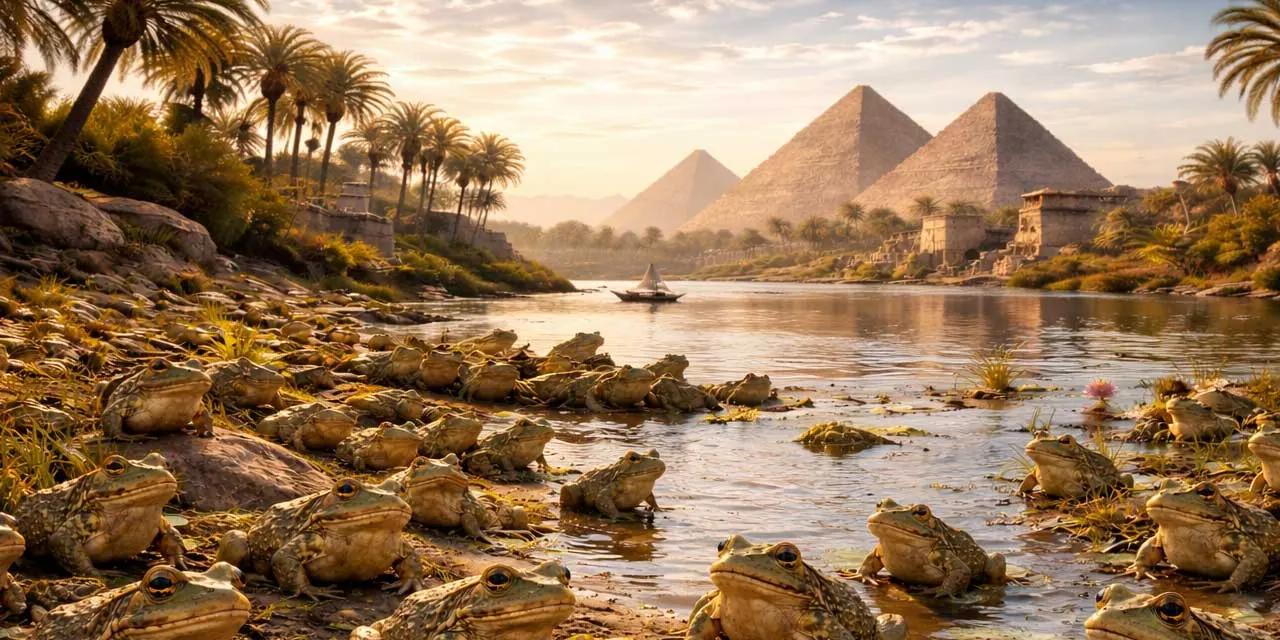
The word tzfardéa can be understood as frog, can be understood as toothed toad, a kind of relative of the toad, but it bites more painfully. Toads are unclean animals, although the Egyptians have a goddess with a frog's head, responsible for fertility, for the prosperity of Egypt, but for them the one does not interfere with the other. Bedrooms were decorated with toads, women wore little talismans in the form of toads as a sign of fertility. We said that the people of Israel, if you look through the eyes of the Egyptians, yishretzú (swarmed) in Egypt, and this outraged them. And here, as an answer to the outrage of the Egyptians, there comes a swarming of toads. There are many commentaries that explain why the striking is done precisely with toads. For example, because Egyptian children loved to play with frogs and made the Jews catch them. Or because the Jewish women had to hold back their cry during childbirth, so that they would not be tracked down and their babies killed, and toads appeared that began to cry out. But, one way or another, the toad is a symbol of fertility, a very important symbol for Egypt, and at the same time a symbol of uncleanness: the toad makes any food, any dish that it touches unclean. And Moshe says here that the Most High will strike all the Egyptian borders with toads (or frogs).
וְשָׁרַץ הַיְאֹר צְפַרְדְּעִים וְעָלוּ וּבָאוּ בְּבֵיתֶךָ וּבַחֲדַר מִשְׁכָּבְךָ וְעַל־מִטָּתֶךָ וּבְבֵית עֲבָדֶיךָ וּבְעַמֶּךָ וּבְתַנּוּרֶיךָ וּבְמִשְׁאֲרוֹתֶיךָ׃
vesharátz hay'ór tzefarde'ím ve'alú uváu bevetécha uvachadár mishkavechá ve'al-mittatécha uvevét avadécha uv'ammécha uvtannurécha uvmish'arotécha
28 And the Nile will swarm with frogs, and they will come up, and they will come into your house, into your bedroom, onto your bed, and into the house of your servants, and into your people, into their ovens and into their kneading troughs.
Moshe says to Pharaoh: “If you think that the plague of blood did not touch you, then here everything will begin with you, the toads will come into your house: they will get into the bedroom too, there where the people sleep, where children are conceived, and there where food is made. Into all spheres of life the unclean, croaking, vile animal will penetrate – the toad.”
וּבְכָה וּבְעַמְּךָ וּבְכָל־עֲבָדֶיךָ יַעֲלוּ הַצְפַרְדְּעִים׃
uvchá uv'ammechá uvchol-avadécha ya'alú hatzfarde'ím
29 Upon you, and upon your people, and upon all your servants the frogs will come up.
The Most High can punish Pharaoh by means of frogs too: “You think that you are a great crocodile, but for Me you are, perhaps, only a staff (just as Assyria is called a punishing staff). And now all your strength can be destroyed through the gods who protect you, including through the frog, whose head you attached to your goddess.”
With this chapter 7 ends, and we continue reading from verse 1 of chapter 8.
וַיֹּאמֶר יְהוָה אֶל־מֹשֶׁה אֱמֹר אֶל־אַהֲרֹן נְטֵה אֶת־יָדְךָ בְּמַטֶּךָ עַל־הַנְּהָרֹת עַל־הַיְאֹרִים וְעַל־הָאֲגַמִּים וְהַעַל אֶת־הַצְפַרְדְּעִים עַל־אֶרֶץ מִצְרָיִם׃
vayomer adonáy el-moshé emór el-aharón neté et-yadécha bemattécha al-hanneharót al-hay'orím ve'al-ha'agammím vehá'alThe Russian transliteration starts this word with a b; the Hebrew reads vehá'al (“and bring up”), so the English line follows the Hebrew. et-hatzfarde'ím al-éretz mitzrayim
1 And the LORD said to Moshe: “Say to Aharon: stretch out your hand with your staff over the rivers, and over the streams, and over the lakes, and bring up frogs (toads) throughout the land of Egypt.”
וַיֵּט אַהֲרֹן אֶת־יָדוֹ עַל מֵימֵי מִצְרָיִם וַתַּעַל הַצְּפַרְדֵּעַ וַתְּכַס אֶת־אֶרֶץ מִצְרָיִם׃
vayét aharón et-yadó al memé mitzráyim vattá'al hattzefardéa vattechás et-éretz mitzráyim
2 And Aharon raised his hand over the waters of Egypt, and the frog came up and covered all the land of Egypt.
The word hatzefardéa, which is used here, – this is a collective image, it is not only fish as one single fish, but also as a lot of fish, as all the fish. The bird of the heavens also means not only one little bird, but can mean all birds.
So, the frog came up, and in the Talmud there is a dispute. Some say that it was many frogs that came up, it is simply a collective name. There is an interesting opinion of Rabbi Akiva: it was one frog and it scattered, it spread over all of Egypt. Someone says that the frog whistled and all the others gathered. And there is also this interesting midrash. The Egyptians saw this enormous frog of incredible size, a Godzilla frog, and began to beat it. And when they beat it, it scattered and toads fell off it, like heads off Zmey Gorynych, that is, what came out was a kind of multi-toadness. And although the Egyptians saw that beating it only made things worse for them, they still went on beating it. I heard a very interesting commentary on this from my teacher, who said: “If they saw that it only multiplied, why then did they beat it? This is the nature of human anger. When a person is in anger, when he beats something, breaks something, smashes something, in fact he understands that this will not calm him, it will only egg him on, but anger clouds his eyes.” The midrash brings this example, uses the story with the toads as material to show how anger works. We will set this midrash aside, and, most likely, here it is after all about the frog as a collective image, simply about numerous frogs that covered all the land.
וַיַּעֲשׂוּ־כֵן הַחֲרְטֻמִּים בְּלָטֵיהֶם וַיַּעֲלוּ אֶת־הַצְפַרְדְּעִים עַל־אֶרֶץ מִצְרָיִם׃
vaya'asu-chén hachartummím belatehém vaya'alú et-hatzfarde'ím al-éretz mitzráyim
3 And the Egyptian priests also did the same, they too brought up frogs onto the Egyptian land.
וַיִּקְרָא פַרְעֹה לְמֹשֶׁה וּלְאַהֲרֹן וַיֹּאמֶר הַעְתִּירוּ אֶל־יְהוָה וְיָסֵר הַצְפַרְדְּעִים מִמֶּנִּי וּמֵעַמִּי וַאֲשַׁלְּחָה אֶת־הָעָם וְיִזְבְּחוּ לַיהוָה׃
vayikrá far'ó lemoshéThe Russian transliteration has “lemashé”; the Hebrew reads lemoshé (“to Moshe”), so the English line follows the Hebrew. ul'aharón vayomer ha'tíru el-adonáy veyasér hatzfarde'ím mimménni ume'ammí va'ashallechá et-ha'ám veyizbechú ladonáy
4 And Pharaoh called Moshe and Aharon, and said to them: “Complain, entreatThe Russian literally says “complain, simplify the LORD”, apparently slips in the transcript for “pray, entreat the LORD” (the Hebrew ha'tíru means “entreat”). “Complain” is kept as it stands; “simplify” is rendered as “entreat”, as evidently intended. the LORD, and He will remove the frogs from me, and from my people, and I will send (send away) the people, and you will offer a sacrifice to the Most High.”
Pharaoh now asks them to pray to the LORD, that very LORD whom back in chapter 5 he did not yet know. Said – done. A big shift has appeared in the process of Pharaoh's education: he already believes in the God of Israel. But Moshe needs it to become clear that this is not chance, not a coincidence of circumstances. Therefore Moshe then says: “Well, as you order.”
וַיֹּאמֶר מֹשֶׁה לְפַרְעֹה הִתְפָּאֵר עָלַי לְמָתַי אַעְתִּיר לְךָ וְלַעֲבָדֶיךָ וּלְעַמְּךָ לְהַכְרִית הַצֲפַרְדְּעִים מִמְּךָ וּמִבָּתֶּיךָ רַק בַּיְאֹר תִּשָּׁאַרְנָה׃
vayomer moshé lefar'ó hitpa'ér aláy lematáy a'tír lechá vela'avadécha ul'ammechá lehachrít hatzfarde'ím mimmechá umibbattécha rak bay'ór tisha'árna
5 And Moshe said to Pharaoh: “When will you deign to have the frogs taken away? And I will ask for you, and for your servants, and for your people, to remove the frogs from you and from your house, only in the Nile will they remain.”
Moshe says: “At a time set by you, so that you understand that these are not some astrological tricks, that this is not some magically guessed time. You will indicate when, and I will ask the Most High to remove the frogs, so that you know that it is His hand.”
וַיֹּאמֶר לְמָחָר וַיֹּאמֶר כִּדְבָרְךָ לְמַעַן תֵּדַע כִּי־אֵין כַּיהוָה אֱלֹהֵינוּ׃
vayomer lemachárThe Russian transliteration ends this word with “ch” instead of “r”; the Hebrew reads lemachár (“for tomorrow”), so the English line follows the Hebrew. vayomer kidvarechá lemá'an tedá ki-én kadonáy elohénu
6 And Pharaoh said: “By tomorrow.” And Moshe said: “Let it be according to your words, so that you know that there is no God like our LORD.”
Again, returning to knowledge: so that you not only know that God exists (this, it seems, Pharaoh has already acknowledged), but so that you know that there is no God like our LORD.
With God's help, you and I will continue reading the weekly portion Vaera. But before continuing, I would like to answer a question that arises for those reading the book of Shemot. A question that suggests itself and is quite natural, consisting of two parts. The first part of the question – why do Moshe and Aharon, representatives of an enslaved people, walk around so freely, where do they get so much free time, and how can Aharon go to meet Moshe at a distance clearly greater than three days' journey? And the second part of the question – why does Pharaoh not simply destroy these people? Right after the very first plague one could have declared Moshe and Aharon state criminals, sentenced them to ten years without the right of correspondence and quietly shot them somewhere in the depths of one of the pyramids. Why does Pharaoh not do this?
Moshe and Aharon, it should be recalled, are over 80 years old, or rather Moshe is 80 years old, Aharon 83. Under any scenario this is retirement age. In Egypt at that time there are two kinds of slaves. The first kind is called chemúu. Chemúu – these are Pharaoh's slaves or serfs, that is, to put it more simply, state-budget workers. The thing is that agriculture did not take up much of people's time, because sowing and harvest in Egypt are close to each other in time, there is little work, and most of the year could have been spent idly. But, as we remember, Yosef bought up all the citizens of Egypt, made them completely enslaved, and they began to work, to exist on a ration-card system. At the time when they could not, were not supposed to, tend their agricultural plots, they were brought in for the construction of buildings – for anything at all, for any kind of work – and accordingly were fed from the budget. In essence, the wheat they themselves had produced was taken from them, and they were made to work for that very wheat, this is a system of serfdom. These people belonged to themselves, they could, in principle, leave for wherever they pleased, move around wherever they pleased, they could own property and could even themselves own slaves (bakú). Bakú is another category of slaves, these are slaves in the full sense of the word, the master's property, a completely rightless being, who worked, as a rule, at household tasks, in the house or on the plantations, did not take part in state construction projects and the like.
When we look at the pyramids, at these huge structures, we assume that slaves built them. But not the bakú slaves, but precisely the chémuu – Egyptian civil servants. Besides, the work of the chémuu was divided into different professional levels, and judging from the outside, the work of a brick “molder” was a bit easier than the work of a stonecutter or a stone carrier. So the Jews as brick molders were in a relatively privileged position, and, accordingly, Moshe and Aharon, being these very budget-paid civil servants, could retire at a certain age and receive support from the budget of their community, which was set aside for the elderly. Egyptian papyri speak about this.
Now regarding repressions. Why, actually, did Pharaoh not just go and kill Moshe and Aharon? Because in Egypt there is a system of justice. Pharaoh is subject to the goddess Maat, in whom he believes, for him she is a really existing goddess, she is the goddess of justice. And, accordingly, the system of Egyptian laws, which Egypt is very proud of, is called the laws of Maat. According to these laws, the death penalty is due only in very, very, very rare cases. Caning is applied, fines, confiscation of property, even mutilation. There was a man whose nose was cut off, there was a man whose ear was cut off, but the death penalty was practically not applied.
What is the crime of Moshe and Aharon? They are carrying out the mission of being envoys of their God and, despite the enormous damage that comes from it, from the point of view of justice, Moshe and Aharon have done nothing punishable: Pharaoh is not Kim Il Sung, not Stalin, and he does not execute people left and right. Some semblance of justice does exist in Egypt after all. We remember that Moshe once fled from justice. Now, when Moshe killed the Egyptian, that was the very time to execute him. But we remember that the angel said to Moshe: “Those who sought your soul have died.” With the death of a Pharaoh an amnesty took place for all wanted criminals. Moshe fell under this amnesty – it does not matter whether he was present in person or not, therefore he could calmly return. About this, in his time, Moshe will say of the Most High: “Who saved me from the sword of Pharaoh.” But throughout the whole story with the plagues Moshe and Aharon cannot be put on trial. Besides, there will be a case, we will read it, when Pharaoh will say: “If I see you once more, you are a dead man.” We will look at this case separately, but for now here is such an answer.
And you and I stopped in the previous passage literally in the middle of Moshe's conversation with Pharaoh about the plague of toads. To refresh our memory, let us go back a little and read from verse 5 of chapter 8:
וַיֹּאמֶר מֹשֶׁה לְפַרְעֹה הִתְפָּאֵר עָלַי לְמָתַי אַעְתִּיר לְךָ וְלַעֲבָדֶיךָ וּלְעַמְּךָ לְהַכְרִית הַצֲפַרְדְּעִים מִמְּךָ וּמִבָּתֶּיךָ רַק בַּיְאֹר תִּשָּׁאַרְנָה׃
vayomer moshé lefar'ó hitpa'ér aláy lematáy a'tír lechá vela'avadécha ul'ammechá lehachrít hatzfarde'ím mimmechá umibbattécha rak bay'ór tisha'árna
5 And Moshe said to Pharaoh: “As it pleases you, when you want me to remove these toads, I will pray for you, and for your servants, and for your people, to remove, to destroy (cut off) the toads from you and from your house, only in their own house (in the Nile) will they remain.
The word lehachrit means to destroy, to exterminate, the word lichrót, karát – to cut off. In verse 4 Pharaoh asked that the frogs go away: “Let the frogs be removed (yeyasér) from me.” Here Moshe says: “I will pray for you, so that He destroys the frogs.” What is the difference? The difference is big. If frogs get into a person's house (or somewhere else) and they simply die in his bed, in his kneading trough, everywhere possible, then they cause a heap of unpleasantness and headaches even after their death. Therefore Pharaoh asks that the Most High destroy the frogs. Moshe says: “You first order for when, and I will pray to the Most High that he kill these frogs.”
וַיֹּאמֶר לְמָחָר וַיֹּאמֶר כִּדְבָרְךָ לְמַעַן תֵּדַע כִּי־אֵין כַּיהוָה אֱלֹהֵינוּ׃
vayomer lemachár vayomer kidvarechá lemá'an tedá ki-én kadonáy elohénu
6 And he said: “For tomorrow.” And Moshe said: “It will be according to your words (further on we will see that not only in this will it be according to his words) – so that you know that there is none like our God.”
וְסָרוּ הַצְפַרְדְּעִים מִמְּךָ וּמִבָּתֶּיךָ וּמֵעֲבָדֶיךָ וּמֵעַמֶּךָ רַק בַּיְאֹר תִּשָּׁאַרְנָה׃
vesarú hatzfarde'ím mimmechá umibbattécha ume'avadécha ume'ammécha rak bay'ór tisha'árna
7 And the frogs will go away from you, and from your house, and from your servants, and from your people, and only in the Nile will they remain.
The word mimmechá can be translated here as from your body. Imagine: frogs, like some kind of parasites, get into the body. This is, of course, an incredible story, but we are talking about miracles. And imagine that they die there, inside. An unpleasant thing. Moshe says: “It will be according to your word: first, it will be tomorrow, second, the frogs will go away. They will not die directly in your houses. In the streets of your cities they may perhaps die, but not on your plots.”
וַיֵּצֵא מֹשֶׁה וְאַהֲרֹן מֵעִם פַּרְעֹה וַיִּצְעַק מֹשֶׁה אֶל־יְהוָה עַל־דְּבַר הַצְפַרְדְּעִים אֲשֶׁר־שָׂם לְפַרְעֹה׃
vayetzé moshé ve'aharón me'ím par'ó vayitz'ák moshé el-adonáy al-devár hatzfarde'ím asher-sám lefar'ó
8 And Moshe and Aharon went out from Pharaoh, and Moshe shouted to the LORD, Moshe cried out to the LORD over the word about the frogs, which He had given to Pharaoh.
Only about this plague is it said that Moshe cried out to the LORD. Was Moshe really in such a hot spot, and did he get so worried about Pharaoh? What is Moshe shouting for? Moshe did not get worried, God forbid, that the frogs were causing Pharaoh some discomfort. Moshe cried out to the Most High that the choice which Pharaoh had made be fulfilled, so that there be no disgrace to the Most High; so that what Moshe told Pharaoh, that it would be according to His word, so that this would come true; so that Pharaoh would really come to know the Most High, so that the Most High would be glorified among the Egyptians. That is what Moshe is crying out for.
וַיַּעַשׂ יְהוָה כִּדְבַר מֹשֶׁה וַיָּמֻתוּ הַצְפַרְדְּעִים מִן־הַבָּתִּים מִן־הַחֲצֵרֹת וּמִן־הַשָּׂדֹת׃
vayá'as adonáy kidvár moshé vayamútu hatzfarde'ím min-habbattím min-hachatzerót umin-hassadót
9 And the LORD did as Moshe had said, and the frogs died both out of the houses, and out of the gardens, and out of the fields (it can be understood as: having gone out, having left the gardens, houses and fields).
וַיִּצְבְּרוּ אֹתָם חֳמָרִם חֳמָרִם וַתִּבְאַשׁ הָאָרֶץ׃
vayitzberú otám chomarím chomarím vattiv'ásh ha'áretz
10 And they gathered them heap upon heap (or they were gathered into huge heaps), and the land stank (unpleasant, but not deadly).
וַיַּרְא פַּרְעֹה כִּי הָיְתָה הָרְוָחָה וְהַכְבֵּד אֶת־לִבּוֹ וְלֹא שָׁמַע אֲלֵהֶם כַּאֲשֶׁר דִּבֶּר יְהוָה׃
vayár par'ó ki hayetá harevachá vehachbéd et-libbó veló shamá alehém ka'ashér dibbér adonáy
11 And Pharaoh saw that relief had come, and he made his heart heavy, and did not hear them, did not listen to them, as the LORD had said, as the LORD had also foretold.
This too is a miracle, that Pharaoh resists, stands up to the blow: having seen that there is relief, Pharaoh refuses to send them away.
In verse 12 we read the beginning of the next plague. If the first two plagues, blood and frogs, were connected with water, with the Nile, then the next two plagues will be connected with animals, as we will see.
וַיֹּאמֶר יְהוָה אֶל־מֹשֶׁה אֱמֹר אֶל־אַהֲרֹן נְטֵה אֶת־מַטְּךָ וְהַךְ אֶת־עֲפַר הָאָרֶץ וְהָיָה לְכִנִּם בְּכָל־אֶרֶץ מִצְרָיִם׃
vayomer adonáy el-moshé emór el-aharón neté et-mattechá vehách et-afár ha'áretz vehayá lechinním bechol-éretz mitzráyim
12 And the LORD said to Moshe: “Say to Aharon: stretch out your staff and strike the ground, the dust of the earth, and it will turn into lice throughout all the land of Egypt.
The word kiním, which is used here, is usually understood as lice in the modern Russian translation. Perhaps the white louse really is meant – a famous, widespread pest that lived everywhere – in the Maghreb, and in the Middle East, and in Egypt, and in the land of Israel, and almost all over the world. Once this was a very widespread phenomenon, an eternal companion of man. The Italian poet Marino wrote verses dedicated to the lice on a lock of his beloved's hair. Among the Jews it was believed that lice protect against the evil eye. I remember that the Lubavitcher Rebbe asked Soviet Jewish prisoners whether they had had lice, and was very glad when they said that they had. Russian and Ukrainian proverbs also speak in defense of lice: “if there is a louse, there will be a penny too; lice bring wealth.” Well, in a word, lice are an ancient companion of man. Besides the fact that to many they seem so blessed, they, of course, also spread diseases. They bite, they have such a peculiarly built jaw, which allows them to bite through the skin and drink the blood, there is a great deal of discomfort from them. It is interesting that lice are an animal strictly bound to its species. That is, lice that live on a person will not crawl over to a cat, and lice that live on a bear will not get onto a person. This makes one doubt that it was precisely lice that appeared all over Egypt.
The Septuagint interprets kiním as little gnats. This is a creature that in Russian is called the biting midge. Little-little, very small-sized gnats that bite very painfully and unpleasantly, cause heaps and heaps of discomfort. If all the dust of Egypt turned into this, then the children are constantly bitten all over, and you only have to open your mouth, and into your mouth, and into your ears too flies this unpleasant, nasty midge. And, of course, who can feel good from this? And there is a dispute as to what kind of insect this was. That is how it often is in Scripture, that the names of this or that animal have not come down to us, we live in different epochs. And when, for example, we say little bug or cockroach, we may mean many, many different insects by these names; the same thing happens here too.
וַיַּעֲשׂוּ־כֵן וַיֵּט אַהֲרֹן אֶת־יָדוֹ בְמַטֵּהוּ וַיַּךְ אֶת־עֲפַר הָאָרֶץ וַתְּהִי הַכִּנָּם בָּאָדָם וּבַבְּהֵמָה כָּל־עֲפַר הָאָרֶץ הָיָה כִנִּים בְּכָל־אֶרֶץ מִצְרָיִם׃
vaya'asu-chén vayét aharón et-yadó vemattéhu vayách et-afár ha'áretz vattehí hakkinnám ba'adám uvabbehemá kol-afár ha'áretz hayá chinním bechol-éretz mitzráyim
13. And Moshe and Aharon did so, and Aharon stretched out, extended his hand with the staff, and he struck the dust of the earth, and there were lice on man and on beast, all the dust turned into lice, into these insects throughout all the land of Egypt.
So, from what is said, that the insects were both on man and on beast, the conclusion is drawn that this is, most likely, not the white louse that is known to us, but, possibly, some kind of mosquitoes, biting midges, because lice do not pass from a person to a beast. But that is not important, again, we are not engaged in the science of insects. And it is clear that this was an enormous humiliation, an enormous defeat for the Egyptian people, it was impossible to do anything: women, children screamed, a mass of skin diseases, undoubtedly, appeared together with this. What is surprising: Moshe here is, as it were, not involved, from Pharaoh's point of view. Before, Moshe used to come and make an announcement: look, if you do not let go, then I will act in such and such a way. The plague described in this verse happens without a declaration of war. Why this happens, we will read in verse 14.
וַיַּעֲשׂוּ־כֵן הַחַרְטֻמִּים בְּלָטֵיהֶם לְהוֹצִיא אֶת־הַכִּנִּים וְלֹא יָכֹלוּ וַתְּהִי הַכִּנָּם בָּאָדָם וּבַבְּהֵמָה׃
vaya'asu-chén hachartummím belatehém lehotzí et-hakkinním veló yachólu vattehí hakkinnám ba'adám uvabbehemá
14. The Egyptian court sorcerers also tried to do so with their tricks – to pull out the lice or to produce lice, and could not. And there were lice on man and on the animals.
They tried either to produce them themselves, or they tried to get rid of them, the word lehotzí, which is used here, can be understood in two ways.
וַיֹּאמְרוּ הַחַרְטֻמִּים אֶל־פַּרְעֹה אֶצְבַּע אֱלֹהִים הִוא וַיֶּחֱזַק לֵב־פַּרְעֹה וְלֹא־שָׁמַע אֲלֵהֶם כַּאֲשֶׁר דִּבֶּר יְהוָה׃
vayomerú hachartummím el-par'ó etzbá elohím hi vayechezák lev-par'ó velo-shamá alehém ka'ashér dibbér adonáy
15 And the priests said to Pharaoh: “This is the finger of God (this is the finger of the Most High).” But Pharaoh's heart was strengthened, and he did not listen to them, just as the LORD had said.
Here there are no words of Moshe, there is a hint: guess where this came flying at you from, guess who it is that is punishing you. But they, even without Moshe, without the Jewish prophet, already understand from whom this came, because they say: “This is the finger of God.” But Pharaoh dug in his heels. His heart was strong enough to survive this.
וַיֹּאמֶר יְהוָה אֶל־מֹשֶׁה הַשְׁכֵּם בַּבֹּקֶר וְהִתְיַצֵּב לִפְנֵי פַרְעֹה הִנֵּה יוֹצֵא הַמָּיְמָה וְאָמַרְתָּ אֵלָיו כֹּה אָמַר יְהוָה שַׁלַּח עַמִּי וְיַעַבְדֻנִי׃
vayomer adonáy el-moshé hashkém babbóker vehit'yattzév lifné far'ó hinné yotzé hammáyma ve'amartá eláv ko amár adonáy shallách ammí veya'avdúni
16 And the LORD said to Moshe: “Rise in the morning and present yourself before Pharaoh again, when he goes out to the water. And say to him: ‘Thus said the LORD: send My people, and they will serve!
כִּי אִם־אֵינְךָ מְשַׁלֵּחַ אֶת־עַמִּי הִנְנִי מַשְׁלִיחַ בְּךָ וּבַעֲבָדֶיךָ וּבְעַמְּךָ וּבְבָתֶּיךָ אֶת־הֶעָרֹב וּמָלְאוּ בָּתֵּי מִצְרַיִם אֶת־הֶעָרֹב וְגַם הָאֲדָמָה אֲשֶׁר־הֵם עָלֶיהָ׃
ki im-enechá meshalléach et-ammí hinení mashlíach bechá uva'avadécha uv'ammechá uvevattécha et-he'aróv umale'ú batté mitzráyim et-he'aróv vegám ha'adamá asher-hém aléha
17 Because if you do not send away My people, then I will send upon you, and upon your servants, and upon your people, and upon your house aróv (wild animals), and they will fill the Egyptian houses, even the ground on which these houses stand, all this will be filled with these animals.
The word aróv means mixture. Usually the commentators say that these are wild beasts, wild animals, which attacked and bit the Egyptians. Tehillim 78 and 105, which retell the story of the plagues of Egypt, hint at this. There it is written what the aróv did – they attacked and bit. Others say that these are small creatures such as moles, rats, scorpions, raccoons and other small animals, which can also spoil everything around. As I said, the first two plagues were connected with the water of the Nile, these new plagues are connected with animals. But there will be, according to the words of the Most High, one particularity:
וְהִפְלֵיתִי בַיּוֹם הַהוּא אֶת־אֶרֶץ גֹּשֶׁן אֲשֶׁר עַמִּי עֹמֵד עָלֶיהָ לְבִלְתִּי הֱיוֹת־שָׁם עָרֹב לְמַעַן תֵּדַע כִּי אֲנִי יְהוָה בְּקֶרֶב הָאָרֶץ׃
vehifletí vayom hahú et-éretz góshen ashér ammí oméd aléha leviltí heyot-shám aróv lemá'an tedá ki aní adonáy bekérev ha'áretz
18 “On that day I will set apart the land of Goshen, on which my people live, so that there will be none of these wild animals there, so that you know that I rule over the earth!”
The Most High says: “I will make a distinction, I will mark a border.” If you remember, when the Most High spoke about the toads, He said: “The toads will be in all your borders.” There the toads clearly defined the border of the Egyptian empire. There is this ironic commentary, which says that Egypt had a territorial dispute with neighboring Ethiopia, and it was resolved during the plague of frogs in Egypt, because where the frogs fell, there Egypt ended. On that they settled and finally concluded a peace agreement, thanks to the plague of frogs. Here the Most High says: “Inside your country I will draw a division. Where My people live, there will be no damage, so that you see who is master in the house.”
Uninvited Guests
Shemot 8:19–9:7
Today we will go back a little bit, to the beginning of the topic, and read from verse 16 of chapter 8 of the book of Shemot.
וַיֹּאמֶר יְהוָה אֶל־מֹשֶׁה הַשְׁכֵּם בַּבֹּקֶר וְהִתְיַצֵּב לִפְנֵי פַרְעֹה הִנֵּה יוֹצֵא הַמָּיְמָה וְאָמַרְתָּ אֵלָיו כֹּה אָמַר יְהוָה שַׁלַּח עַמִּי וְיַעַבְדֻנִי׃
vayomer adonáy el-moshé hashkém babbóker vehityatzév lifné far'ó hinné yotzé hammáyma ve'amartá eláv ko amár adonáy shallách ammí veya'avdúni
16 And the LORD said to Moshe: “Get up early in the morning and stand (present yourself) before Pharaoh, who will be coming out just to the water, and say to him: ‘Thus said the LORD: “Let My people go, and they will serve Me.
The word hashkém means rising early; it is impossible to use the word hashkém in the meaning get up late. Hashkém is precisely early awakening.
Moshe is simply called to keep repeating one and the same demand. We said that this demand corresponds to Egyptian laws. Earlier we spoke about Egyptian legal proceedings, about Egyptian laws. Here Moshe says: “Come on, by law, let My people go!”
כִּי אִם־אֵינְךָ מְשַׁלֵּחַ אֶת־עַמִּי הִנְנִי מַשְׁלִיחַ בְּךָ וּבַעֲבָדֶיךָ וּבְעַמְּךָ וּבְבָתֶּיךָ אֶת־הֶעָרֹב וּמָלְאוּ בָּתֵּי מִצְרַיִם אֶת־הֶעָרֹב וְגַם הָאֲדָמָה אֲשֶׁר־הֵם עָלֶיהָ׃
ki im-enechá meshalléach et-ammí hinení mashlíach bechá uva'avadécha uv'ammechá uvevattécha et-he'aróv umale'ú batté mitzráyim et-he'aróv vegám ha'adamá asher-hém aléha
17 Because, if you do not send My people away again, I will send upon you, and upon your servants, and upon your people, and upon your house such a plague (he'aróv), and the Egyptian houses will be filled (with this mixture), and the ground on which they (these houses) stand.
Literally, he'aróv – is a mixture, but this word is used very widely. For example, the word guarantor arév – one who is in one mixture with someone, pleasant; urév – that which mixes easily with me, combines easily with me. Twilight, when light and darkness mix, is also called érev. In the Torah we read in the first chapters: vayhi-érev vayhi-vóker – and there was evening, and there was morning. The word érev is also from this root. So, the word aróv means a crowd, a mixing of something.
Some commentators understand it like this: “I will send upon you a mixing of light, everything will be mixed up – both day and night, there will be some kind of foggy situation: now heat, now cold, now wind, now no wind.” In a word, “I will send upon you some natural disaster.” But most commentators say that the word aróv points to some kind of animals. Asaf (Tehillim 105), when he tells the story of Israel's stay in Egypt, says: “He sent wild beasts upon them (aróv is translated as wild beasts), and they bit them.” The midrash tells that from the sky these were birds – from the eagle to some very big birds, and from below these were rats, snakes, rodents and gophers, and in the middle, between them, – lions, giraffes and so on. One of the commentators says that these were exclusively panthers, and one of the names of panthers in a Semitic language is indeed arub. That is, one can say: “I will send wild cats upon you.” One way or another, we cannot know specifically what kind of animals these were. The most probable assumption today, as it is interpreted, is that these were all kinds of rodents, pests – from little beetles, little worms, scorpions to rats, gophers, skunks, raccoons, beavers and various other things, fill in what is missing, cross out what is not needed.
וְהִפְלֵיתִי בַיּוֹם הַהוּא אֶת־אֶרֶץ גֹּשֶׁן אֲשֶׁר עַמִּי עֹמֵד עָלֶיהָ לְבִלְתִּי הֱיוֹת־שָׁם עָרֹב לְמַעַן תֵּדַע כִּי אֲנִי יְהוָה בְּקֶרֶב הָאָרֶץ׃
vehifletí vayom hahu et-éretz góshen ashér ammí oméd aléha leviltí heyot-shám aróv lemá'an tedá ki aní adonáy bekérev ha'áretz
18 And I will set apart on that day the land of Goshen, on which My people lives, so that this disaster would not be there (so that there would be no invasion of these animals there), so that you would know that I am the LORD in all the earth.
וְשַׂמְתִּי פְדֻת בֵּין עַמִּי וּבֵין עַמֶּךָ לְמָחָר יִהְיֶה הָאֹת הַזֶּה׃
vesamtíThe Russian transliteration begins this word with a b sound; the Hebrew has a v (vesamtí, “and I will put”), so the English line follows the Hebrew. fedút ben ammí uvén ammécha lemachár yihyé ha'ót hazzé
19 And I have placed a redemption between My people and your people – tomorrow this sign will be.” (I am warning of the start of the term, so that you do not say that it is by chance).
Here, in verse 19, we read one more interesting word. It must be said that most words that are connected with salvation, redemption, deliverance are also connected with division, with separating one from another. The word fedút in its classical meaning means redemption. When we pay for a captive, we pay pidyon. for him. The ransom of the firstborn, when the firstborn son is redeemed from the kohen, is also called pidyon ben according to the Torah. Here fedút means: “I will make a redemption, I will separate from you, I will separate My people from your people, I will begin a division. You will see that these peoples are not one and the same.”
One of the signs in this plague is the separation of Israel, the ability of the Most High to deliver the chosen, His power and His will to deliver the chosen.
וַיַּעַשׂ יְהוָה כֵּן וַיָּבֹא עָרֹב כָּבֵד בֵּיתָה פַרְעֹה וּבֵית עֲבָדָיו וּבְכָל־אֶרֶץ מִצְרַיִם תִּשָּׁחֵת הָאָרֶץ מִפְּנֵי הֶעָרֹב׃
vayá'as adonáy ken vayavó aróv kavéd béta far'ó uvét avadáv uvchol-éretz mitzráyim tishachét ha'áretz mippené he'aróv
20 And the LORD did so, and an enormous throng came into Pharaoh's house, and into the house of his servants, and throughout the whole land of Egypt. And the land was ruined (found itself in ruin) because of this throng.
One can imagine that, to begin with, Pharaoh lives in a kind of Kremlin. He does not live at some border outpost or at the edge of a forest, so it would be logical for rats, wild animals, be they elephants or ants, to appear first throughout Egypt. They would seem to have had to come to the cities from other places, but here is one of the miracles, a miracle within a miracle, – everything begins with Pharaoh. The animals first come into Pharaoh's house, then into the house of his servants, and onto all the land of Egypt.
וַיִּקְרָא פַרְעֹה אֶל־מֹשֶׁה וּלְאַהֲרֹן וַיֹּאמֶר לְכוּ זִבְחוּ לֵאלֹהֵיכֶם בָּאָרֶץ׃
vayikrá far'ó el-moshé ul'aharón vayomer lechú zivchú lelohechém ba'áretz
21 Pharaoh called Moshe and Aharon: “Go and here, in our homeland (on our native altars), offer a sacrifice to the Most High.”
If in verse 14 we read a similar phrase, vayikrá far'ó le moshé (Pharaoh called Moshe and Aharon), then here, it would seem, there is a slight difference: instead of le moshé here stands el-moshé (and Pharaoh called out to Moshe and Aharon), he did not simply invite them to himself, but called out to them, that is, cried out to them. And Pharaoh has a proposal, Pharaoh for the first time begins to look for a compromise, to try somehow to come to an agreement with these Jews, and this is the proposal he has: “Go and here in our homeland, on our native altars, offer a sacrifice to the Most High. Why go far away?” Pharaoh really is afraid that, firstly, the Jews will run away. Run away not only as a workforce, the workforce is also important, but Pharaoh here, most likely, is reasoning not only as a manager. The Jews, so it looks through Pharaoh's eyes, have a remote control that can switch all sorts of Egyptian troubles on and off. And if they, while staying in Egypt, use this remote control to switch things on and off, go know, maybe they will leave and forget to turn off the light, leave and not remove these animals at all, or, before you know it, send some more plagues, so it is better to keep them here.
וַיֹּאמֶר מֹשֶׁה לֹא נָכוֹן לַעֲשׂוֹת כֵּן כִּי תּוֹעֲבַת מִצְרַיִם נִזְבַּח לַיהוָה אֱלֹהֵינוּ הֵן נִזְבַּח אֶת־תּוֹעֲבַת מִצְרַיִם לְעֵינֵיהֶם וְלֹא יִסְקְלֻנוּ׃
vayomer moshé lo nachón la'asót ken ki to'avát mitzráyim nizbách ladonáy elohénu hen nizbách et-to'avát mitzráyim le'enehém veló yiskelúnu
22 And Moshe said: “It is not right to do so, because what we will offer as a sacrifice is an Egyptian abomination. If we slaughter their own idol in front of them, will they not stone us?
Meaning what? The Egyptians worship the ram (the little lamb), it is the symbol of Egypt, and “if we offer it as a sacrifice, then it will look as if we are offering the Egyptian idol as a sacrifice, lest the Egyptians think something…”
“You – Moshe says to Pharaoh – are stirring up, by this, as it were, reckless action of yours, almost a civil war, because if we offer rams as sacrifices here, it will offend the feelings of the Egyptian believers, they may take up the sword or, in any case, stones, and this will not seem small, maybe it will be even scarier than the beasts.”
דֶּרֶךְ שְׁלֹשֶׁת יָמִים נֵלֵךְ בַּמִּדְבָּר וְזָבַחְנוּ לַיהוָה אֱלֹהֵינוּ כַּאֲשֶׁר יֹאמַר אֵלֵינוּ׃
dérech shelóshet yamím neléch bammidbár vezaváchnu ladonáy elohénu ka'ashér yomár elénu
23 For three days we will go into the desert and offer a sacrifice to our LORD, just as He told us.”
וַיֹּאמֶר פַּרְעֹה אָנֹכִי אֲשַׁלַּח אֶתְכֶם וּזְבַחְתֶּם לַיהוָה אֱלֹהֵיכֶם בַּמִּדְבָּר רַק הַרְחֵק לֹא־תַרְחִיקוּ לָלֶכֶת הַעְתִּירוּ בַּעֲדִי׃
vayomer par'ó anochí ashallách etchém uzvachtém ladonáy elohechém bammidbár rak harchék lo-tarchíku laléchet ha'tíru ba'adí
24 And Pharaoh said: “I will send you, and you will offer sacrifices to your LORD in the desert, only do not go far (let's say you go a day's journey, let's come to some compromise). Pray for me.”
The word lea'tér, which is used here – we have already spoken about it – is connected with the pitchfork with which hay is turned. That is, “stir things up there, in heaven, for me, so that this sentence is cancelled, the one that strikes everyone with wild beasts.” It is impossible to live when this nastiness is swarming all around. That is, Pharaoh says: “Fine, let's have you go for a day, and let's have you pray for me.” That is, “let it, after all, be for the good of our fatherland, and not only for the good of your people. Show loyalty to me.”
וַיֹּאמֶר מֹשֶׁה הִנֵּה אָנֹכִי יוֹצֵא מֵעִמָּךְ וְהַעְתַּרְתִּי אֶל־יְהוָה וְסָר הֶעָרֹב מִפַּרְעֹה מֵעֲבָדָיו וּמֵעַמּוֹ מָחָר רַק אַל־יֹסֵף פַּרְעֹה הָתֵל לְבִלְתִּי שַׁלַּח אֶת־הָעָם לִזְבֹּחַ לַיהוָה׃
vayomer moshé hinné anochí yotzé me'immách vehatartí el-adonáy vesár he'aróv mippar'ó me'avadáv ume'ammó machár rak al-yoséf par'ó hatél leviltí shallách et-ha'ám lizbóach ladonáy
25 And Moshe said: “Here, I am going out of you (going out from you). Here, I will go out, I will pray for you (and I will be able to pray already now, to stir things up there above for you), and the throng of animals will depart from Pharaoh, and from his servants, and from his people tomorrow already. But only let Pharaoh not continue to wear us out, to mock us (one can translate literally – to fool us, to keep us hanging), not sending the people to offer sacrifices to the LORD.”
There are interesting commentaries that say that me'immách here can be understood as from your people. “I come from people like you,” says Moshe. That is, “if I go, I can easily offer a sacrifice even at a day's journey. But the people, in order to switch over, to tune in to service, need, so to speak, an encounter, they need to enter a meditative state, rest well after work, tune in to a spiritual mood, and therefore they, unlike me, need more time. A single day's journey will have no effect.”
וַיֵּצֵא מֹשֶׁה מֵעִם פַּרְעֹה וַיֶּעְתַּר אֶל־יְהוָה׃
vayetzé moshé me'ím par'ó vaye'tár el-adonáy
26 And Moshe went out from Pharaoh, and lifted up a prayer to the Most High.
The word vaye'tár, as we said, is connected with the pitchfork. In modern language atira is an appeal in cassation, a petition for pardon or an appeal against something. Moshe asks to appeal the sentence.
וַיַּעַשׂ יְהוָה כִּדְבַר מֹשֶׁה וַיָּסַר הֶעָרֹב מִפַּרְעֹה מֵעֲבָדָיו וּמֵעַמּוֹ לֹא נִשְׁאַר אֶחָד׃
vayá'as adonáy kidvár moshé vayásar he'aróv mippar'ó me'avadáv ume'ammó lo nish'ár echád
27 And the LORD did as Moshe had asked, and removed the horde from Pharaoh, from his servants and from his people; not even one remained.
Well, as we expected, the ending of this story has, in general, already become a classic.
וַיַּכְבֵּד פַּרְעֹה אֶת־לִבּוֹ גַּם בַּפַּעַם הַזֹּאת וְלֹא שִׁלַּח אֶת־הָעָם׃
vayachbéd par'ó et-libbó gam bappá'am hazzót veló shillách et-ha'ám
28 And Pharaoh made his heart heavy this time too, and did not send off the people.
וַיֹּאמֶר יְהוָה אֶל־מֹשֶׁה בֹּא אֶל־פַּרְעֹה וְדִבַּרְתָּ אֵלָיו כֹּה־אָמַר יְהוָה אֱלֹהֵי הָעִבְרִים שַׁלַּח אֶת־עַמִּי וְיַעַבְדֻנִי׃
vayomer adonáy el-moshé bo el-par'ó vedibbartá eláv ko-amár adonáy elohé ha'ivrím shallách et-ammí veya'avdúni
1 And the LORD said to Moshe: “Go to Pharaoh and say to him: thus said God, the LORD of the Hebrews: ‘Send My people, and they will serve.’
There is a difference: sometimes Moshe says shalách amí (simply send away my people), and sometimes it says shalách et-amí. Shalách et-amí and shalách amí are very similar phrases. What is the difference here? Here there is a certain hurrying: “send precisely My people,” with the stress on My, “release them, because they are Mine.”
כִּי אִם־מָאֵן אַתָּה לְשַׁלֵּחַ וְעוֹדְךָ מַחֲזִיק בָּם׃
ki im-ma'én attá leshalléach veodechá machazík bam
2 If you delay or refuse to send it and are still holding them (holding back My people),
הִנֵּה יַד־יְהוָה הוֹיָה בְּמִקְנְךָ אֲשֶׁר בַּשָּׂדֶה בַּסּוּסִים בַּחֲמֹרִים בַּגְּמַלִּים בַּבָּקָר וּבַצֹּאן דֶּבֶר כָּבֵד מְאֹד׃
hinné yad-adonáy hoyá bemiknechá ashér bassadé bassusím bachamorím baggemallím babbakár uvattzón déver kavéd me'ód
3 The hand of the LORD will be on all your livestock that is in the field: on the horses, on the donkeys, on the camels, on the bulls and cows, on the sheep, rams, goats and she-goats I will send upon them a plague, a heavy pestilence.
The word mikné means acquired livestock. There is livestock that is taken to pasture, livestock that is grazed by hired shepherds. Mikné is livestock that is part of the property, that is, it constitutes precisely the wealth of the person himself. The word mikné can be translated as estate in a global sense. “In all your livestock that is in the field,” that is, not including barracks animalsThe Russian literally says “barracks animals”; probably animals kept in stalls rather than in the field are meant. It is translated literally..
An interesting word, déver. It is connected with the word davár – word, object, connected with the word dvir – the place of service in the Temple and midbár – the place where words are spoken (desert). The word déver – a dead, death-dealing word, devastation, putting to death.
וְהִפְלָה יְהוָה בֵּין מִקְנֵה יִשְׂרָאֵל וּבֵין מִקְנֵה מִצְרָיִם וְלֹא יָמוּת מִכָּל־לִבְנֵי יִשְׂרָאֵל דָּבָר׃
vehiflá adonáy ben mikné yisraél uvén mikné mitzráyim veló yamút mikkol-livné yisraél davár
4 And the LORD will make a distinction between the livestock of Israel and the livestock of the Egyptians; with none of the sons of Israel will anyone, anything die.”
וַיָּשֶׂם יְהוָה מוֹעֵד לֵאמֹר מָחָר יַעֲשֶׂה יְהוָה הַדָּבָר הַזֶּה בָּאָרֶץ׃
vayásem adonáy mo'éd lemór machár ya'asé adonáy haddavár hazzé ba'áretz
5 And the LORD set a time, saying: “Tomorrow the LORD will do this deed in the land.”
וַיַּעַשׂ יְהוָה אֶת־הַדָּבָר הַזֶּה מִמָּחֳרָת וַיָּמָת כֹּל מִקְנֵה מִצְרָיִם וּמִמִּקְנֵה בְנֵי־יִשְׂרָאֵל לֹא־מֵת אֶחָד׃
vayá'as adonáy et-haddavár hazzé mimmachorát vayámot kol mikné mitzráyim umimmikné vene-yisraélThe Russian transliteration writes Yisrael with a z sound here; the Hebrew has an s, so the English line follows the Hebrew: yisraél. lo-mét echád
6 And the LORD did as promised (this is from the next day), and all the Egyptian livestock died, but of the livestock of the Israelites not one died.
The commentators say, and this will be important for us later, that when the Torah says all the livestock, all the people, the overwhelming majority is meant. The Torah speaks in human language. When a person says “everything is lost,” this does not mean that everything, everything is lost. When a person says “I was left with nothing,” this does not mean that he was left with nothing. The Torah speaks not in the language of legal documents, but speaks in human language. All the livestock died – this means almost no livestock remained.
וַיִּשְׁלַח פַּרְעֹה וְהִנֵּה לֹא־מֵת מִמִּקְנֵה יִשְׂרָאֵל עַד־אֶחָד וַיִּכְבַּד לֵב פַּרְעֹה וְלֹא שִׁלַּח אֶת־הָעָם׃
vayishlách par'ó vehinné lo-mét mimmikné yisraél ad-echád vayichbád lev par'ó veló shillách et-ha'ám
7 And Pharaoh sent to check: and not one animal of the Egyptian livestock had died. And Pharaoh's heart became heavy, and he did not send the people away.
Incomplete Repentance
Shemot 9:8–35
With God's help, today we continue to study the weekly portion Vaera and will read from verse 8 of chapter 9. In Egypt there is a new day, and Pharaoh has new problems (if anyone felt sorry for him).
וַיֹּאמֶר יְהוָה אֶל־מֹשֶׁה וְאֶל־אַהֲרֹן קְחוּ לָכֶם מְלֹא חָפְנֵיכֶם פִּיחַ כִּבְשָׁן וּזְרָקוֹ מֹשֶׁה הַשָּׁמַיְמָה לְעֵינֵי פַרְעֹה׃
vayomer adonáy el-moshé ve'el-aharón kechú lachém meló chofnechémThe Russian transliteration writes this word with a v; the Hebrew has an f, so the English line follows the Hebrew: chofnechém. píach kivshán uzrakó moshé hashamáyma le'ené far'ó
8 And the LORD said to Moshe and Aharon: “Take for yourselves full handfuls (handfuls are two palms together) of coal from the furnace (of furnace ash), and Moshe will throw this ash toward the heavens before Pharaoh's eyes.
Furnace ash (the word ash, piyách in Hebrew, is masculine, therefore and he will throw it, uzrakó) – this is the white part, such whitened coal, it remains in furnaces. In this case it is about a furnace that is called kivshán; these are big furnaces that are used for firing bricks and clay vessels, a furnace that one can easily walk into.
That is, Moshe and Aharon must take full handfuls of ash. Aharon pours his over to Moshe, Moshe ends up with such a “heaped” handful, and he, before Pharaoh's eyes, throws the ash without comments and without words. No warnings, no demands are put forward.
וְהָיָה לְאָבָק עַל כָּל־אֶרֶץ מִצְרָיִם וְהָיָה עַל־הָאָדָם וְעַל־הַבְּהֵמָה לִשְׁחִין פֹּרֵחַ אֲבַעְבֻּעֹת בְּכָל־אֶרֶץ מִצְרָיִם׃
vehayá le'avák al kol-erétz mitzráyim vehayá al-ha'adám ve'al-habbehemá lishchín poréach ava'bu'ót bechol-éretz mitzráyim
9 And it will turn into dust over all the land of Egypt; and this dust will become, on man and on beast, sores, blossoming and blisters throughout all Egypt.”
And here there is already a miracle, because with two handfuls, however grabby the hands of Moshe and Aharon might be, you will not fill the whole land. There is a multiplication of this dust in the air; at first it will be dust.
Shchín is a kind of skin disease, a sore. The most likely assumption is that this is hives, a red, itchy, very unpleasant skin disease. And the second, no less cheerful option is schistosomiasis, a disease that is also accompanied by a skin rash, very unpleasant sores, a disease that also affects the internal organs through the respiratory organs. We will not go into the etymology of this disease; it is a terrible disease that strikes with sores from inside and outside; as a rule, it is connected with small living parasitic organisms. Hives are a little lighter, a more peaceful disease, but also rather unpleasant.
Here an attentive person will stop and ask: “Wait, wait! What livestock? Where does the behemá come from? Behemá is cattle, and didn't it, it seems, die in the previous plague?” But we have already said that not all the livestock died, that it was as it were all, but, in reality, not all. And there is one more nuance: inside Egypt is the land of Goshen, where the Jews live. They still had livestock, and the Egyptian farm managers (it is quite possible that this is how it was), after their livestock perished in the previous plague, bought new cattle from the Jews. Of course, prices soared, the Jews profited from this. But this is a quite likely scenario of where the animals came from.
So, all the animals and people will turn out to be infected with a very unpleasant dermatological skin disease. Such was the command.
וַיִּקְחוּ אֶת־פִּיחַ הַכִּבְשָׁן וַיַּעַמְדוּ לִפְנֵי פַרְעֹה וַיִּזְרֹק אֹתוֹ מֹשֶׁה הַשָּׁמָיְמָה וַיְהִי שְׁחִין אֲבַעְבֻּעֹת פֹּרֵחַ בָּאָדָם וּבַבְּהֵמָה׃
vayikchú et-píach hakkivshán vaya'amdú lifné far'ó vayizrók otó moshé hashamáyma vayhí shechín ava'bu'ót poréach ba'adám uvabbehemá
10 And they took the furnace ash, and stood before Pharaoh, and Moshe threw it toward the heavens, and there were sores, blisters and blossomings on man and on the animals (everything as the Most High commanded).
וְלֹא־יָכְלוּ הַחַרְטֻמִּים לַעֲמֹד לִפְנֵי מֹשֶׁה מִפְּנֵי הַשְּׁחִין כִּי־הָיָה הַשְּׁחִין בַּחֲרְטֻמִּם וּבְכָל־מִצְרָיִם׃
velo-yachelú hachartummím la'amód lifné moshé mippené hashechín ki-hayá hashechín bachartummím uvchol-mitzráyim
11 And the priests (the Egyptian sorcerers) could not stand before Moshe because of the sores, because the sores struck both the great Egyptian sorcerers and all Egypt.
It is very painful to stand when you have sores on your legs – both on the soles of your feet and on your knees, there is no way you can stand. This is a great, great disgrace. Here you will not even try to do anything, because you cannot even try – you are all covered with sores from the skin disease. Sores were always perceived as a kind of impurity, as defilement, and therefore one can say that the Egyptian sorcerers are disgraced to the full. But Pharaoh does not give up.
וַיְחַזֵּק יְהוָה אֶת־לֵב פַּרְעֹה וְלֹא שָׁמַע אֲלֵהֶם כַּאֲשֶׁר דִּבֶּר יְהוָה אֶל־מֹשֶׁה׃
vaychazzék adonáy et-lév par'ó veló shamá alehem ka'ashér dibbér adonáy el-moshé
12 But the Most High gave Pharaoh strength to hold to his own, to stand his ground, and Pharaoh did not listen to them, just as God had foretold to Moshe.
In the next verse we will read the continuation of the story, and one more question arises: just as in the case of the plague of lice, we will not read that the plague of sores ended. And one can ask: “So what, are the lice still whirling around there, all over Egypt?”
The commentators say that from the first plague, which lasted a week, we can draw the conclusion that all the other plagues also had a duration of about a week. And after a week all this affliction with sores, all this disease, ended. It is interesting that both about schistosomiasis and about hives it is said that if they do not take a chronic form, their period of illness lasts 7 days. But this does not mean that we are now speaking about some rational origin of the disease. Such a mass incidence of a, generally speaking, non-contagious disease is, of course, a miracle. We are simply trying to translate it a little into our modern language. So, most likely, the plague lasted a week, if we proceed from what we studied before. But there are many different other opinions, and it is not our custom to argue with them.
וַיֹּאמֶר יְהוָה אֶל־מֹשֶׁה הַשְׁכֵּם בַּבֹּקֶר וְהִתְיַצֵּב לִפְנֵי פַרְעֹה וְאָמַרְתָּ אֵלָיו כֹּה־אָמַר יְהוָה אֱלֹהֵי הָעִבְרִים שַׁלַּח אֶת־עַמִּי וְיַעַבְדֻנִי׃
vayomer adonáy el-moshé hashkém babbóker vehit'yattzév lifné far'ó ve'amartá eláv ko-amár adonáy elohé ha'ivrím shallách et-ammí veya'avdúni
13 And God said to Moshe: “Wake up early in the morning, and come to Pharaoh, and say to him: ‘Thus said the LORD, the God of the Hebrews: “Let My people go, and they will serve Me.
כִּי בַּפַּעַם הַזֹּאת אֲנִי שֹׁלֵחַ אֶת־כָּל־מַגֵּפֹתַי אֶל־לִבְּךָ וּבַעֲבָדֶיךָ וּבְעַמֶּךָ בַּעֲבוּר תֵּדַע כִּי אֵין כָּמֹנִי בְּכָל־הָאָרֶץ׃
ki bappá'am hazzót aní sholéach et-kol-maggefotáy el-libbechá uva'avadécha uv'ammécha ba'avúr tedá ki en kamóni bechol-ha'áretzThe Russian transliteration writes the last word with a g; the Hebrew has an h, so the English line follows the Hebrew: ha'áretz.
14 For this time I will remind you of all My epidemics, all My pestilences, all the cases of pestilence upon your heart, upon your servants, upon your people, so that you know that there is none like Me in all the earth.
By the way, the Hebrew word pá'am (time), as in the Russian language, is connected with the word to smite, to strike. One can say, with a sword they strike – pa'amím, the heart beats – halev po'ém.
In other words: “I will send you the blow of all blows, out of all blows – a blow, out of all epidemics – an epidemic. I will send upon you such a thing as has never been seen or heard of.”
כִּי עַתָּה שָׁלַחְתִּי אֶת־יָדִי וָאַךְ אוֹתְךָ וְאֶת־עַמְּךָ בַּדָּבֶר וַתִּכָּחֵד מִן־הָאָרֶץ׃
ki attá shaláchti et-yadí va'ách otechá ve'et-ammechá baddáver vattikkachéd min-ha'áretz
15 For right now I would stretch out the hand, and you could be destroyed by pestilence from the earth.
וְאוּלָם בַּעֲבוּר זֹאת הֶעֱמַדְתִּיךָ בַּעֲבוּר הַרְאֹתְךָ אֶת־כֹּחִי וּלְמַעַן סַפֵּר שְׁמִי בְּכָל־הָאָרֶץ׃
ve'ulám ba'avúr zot he'emadtícha ba'avúr har'otechá et-kochí ulmá'an sappér shemí bechol-ha'áretz
16 Why did I let you survive, why did I let you stand firm? I let you stand firm for this reason, so that you would see My strength, so that through this story, through this example of yours, My name would be told, My name would become known throughout all the earth.
Why does God let Pharaoh stand firm, why does God keep supporting Pharaoh in his idea of not letting the people go? The commentators say (in general, this is such a tradition, a common approach): a person is led along the road on which he wants to go. And if Pharaoh says: “I want to stand firm, I want to compete a little with this Jewish God,” then the Most High honestly supports him in this and helps him to stand firm.
עוֹדְךָ מִסְתּוֹלֵל בְּעַמִּי לְבִלְתִּי שַׁלְּחָם׃
odechá mistolél be'ammí leviltí shallechám
17 You are still twisting (you are still spinning around) with My people, so as not to send them.
The word lehistolél means to spin, to wriggle out; maslúl is a laid-out route; twisted noodles are also called maslúla.
The Most High says such a thing to Pharaoh here: “Do not think that you are so cunning. I not only see right through you, I know you from the inside and strengthen you. I am teaching you in this way, but now you will get a real thrashing.”
הִנְנִי מַמְטִיר כָּעֵת מָחָר בָּרָד כָּבֵד מְאֹד אֲשֶׁר לֹא־הָיָה כָמֹהוּ בְּמִצְרַיִם לְמִן־הַיּוֹם הִוָּסְדָה וְעַד־עָתָּה׃
hinení mamtír ka'ét machár barád kavéd me'ód ashér lo-hayá chamóhu bemitzráyim lemin-hayom hivvasedá ve'ad-átta
18 Tomorrow at this same time I will drop upon the earth (I will rain down) a very heavy hail, the like of which has not been in Egypt from the day of its founding until now.
This is what Moshe was to say to Pharaoh, to pass on the words of the Most High. What does “tomorrow at this same time” mean? The Egyptians actively used sundials. On many houses there were such scales, on which one could see how the sun was setting, and one could determine the time. And Moshe, as it were, pointed at the sun, at the little ray of sun, at what level it was on the wall, and said: “Tomorrow at this same time”! Here the precision is no longer to the day, here the precision is to the hour.
Now the Egyptian meteorologists will be surprised! There is such a people – meteorologists and elders. They never remember such heat, do not remember such cold, do not remember such hail. In this particular case they will have the opportunity to say so, because the Most High Himself testifies that there has never been such hail.
וְעַתָּה שְׁלַח הָעֵז אֶת־מִקְנְךָ וְאֵת כָּל־אֲשֶׁר לְךָ בַּשָּׂדֶה כָּל־הָאָדָם וְהַבְּהֵמָה אֲשֶׁר־יִמָּצֵא בַשָּׂדֶה וְלֹא יֵאָסֵף הַבַּיְתָה וְיָרַד עֲלֵהֶם הַבָּרָד וָמֵתוּ׃
ve'attá shelách ha'éz et-miknechá ve'ét kol-ashér lechá bassadé kol-ha'adám vehabbehemá asher-yimmatzé vassadé veló ye'aséf habbáyta veyarád alehém habbarád vamétu
19 Now then, quickly take your cattle, all your property that you have in the field: on every person who remains in the field and does not gather his cattle, the hail will come down upon them, and they will die.”
Again: where do they have property from? After all, it was struck down last time, and the time before last it was struck down. Again the Jews sold, most likely, or the Egyptians made purchases somewhere else, recovered.
הַיָּרֵא אֶת־דְּבַר יְהוָה מֵעַבְדֵי פַּרְעֹה הֵנִיס אֶת־עֲבָדָיו וְאֶת־מִקְנֵהוּ אֶל־הַבָּתִּים׃
hayaré et-devár adonáy me'avdé par'ó henís et-avadáv ve'et-miknéhu el-habbattím
20 Whoever will fear the word of the LORD through Me, of the servants of Pharaoh, he will take his servants and cattle away into the houses.
The Egyptians did not have such a cold winter as in the land of Israel, so that in winter the cattle would be driven into the houses. But the Egyptians did not have such enormous herds either, except for the Jews in the land of Goshen. There were night pens for the cattle, and the cattle could be driven into the night pens. Whoever fears the word of God, he will also drive (here is another test for you) his cattle into the houses.
וַאֲשֶׁר לֹא־שָׂם לִבּוֹ אֶל־דְּבַר יְהוָה וַיַּעֲזֹב אֶת־עֲבָדָיו וְאֶת־מִקְנֵהוּ בַּשָּׂדֶה׃
va'ashér lo-sám libbó el-devár adonáy vaya'azóv et-avadáv ve'et-miknéhu bassadé
21 And whoever does not pay attention (whoever did not put his heart) to the word of the LORD, let him leave his servants and his cattle in the field.
In Hebrew to pay attention is lasím halev, literally to put the heart. When they want to say: “Attention!”, they say símu halév! (put the heart!). The word attention is simát-lev, the putting of the heart. We have already noted that thoughts and reflections are connected with the heart; in Hebrew, in the language of the Torah it was so, and in modern Hebrew this has been preserved.
וַיֹּאמֶר יְהוָה אֶל־מֹשֶׁה נְטֵה אֶת־יָדְךָ עַל־הַשָּׁמַיִם וִיהִי בָרָד בְּכָל־אֶרֶץ מִצְרָיִם עַל־הָאָדָם וְעַל־הַבְּהֵמָה וְעַל כָּל־עֵשֶׂב הַשָּׂדֶה בְּאֶרֶץ מִצְרָיִם׃
vayomer adonáy el-moshé neté et-yadécha al-hashamáyim vihí varád bechol-éretz mitzráyim al-ha'adám ve'al-habbehemá ve'ál kol-ésev hassadé be'éretz mitzráyim
22 And the LORD said to Moshe: “Raise your hand to the heavens, and there will be hail throughout all the land of Egypt, on man and on beast, on every grass of the field in the land of Egypt.”
We said that behemá means mainly cows and bulls, large horned cattle. It is interesting that there is such a biblical hero, behemot, he is mentioned in the book of Iyov (40:10–19), a certain fairy-tale, well, not fairy-tale, such an amazing creation, and from there the Russian word begemot. comes. But in fact it is the plural of the word behemá (cattle), that is, a kind of megabull.
Moshe, of course, obeyed the Most High:
וַיֵּט מֹשֶׁה אֶת־מַטֵּהוּ עַל־הַשָּׁמַיִם וַיהוָה נָתַן קֹלֹת וּבָרָד וַתִּהֲלַךְ אֵשׁ אָרְצָה וַיַּמְטֵר יְהוָה בָּרָד עַל־אֶרֶץ מִצְרָיִם׃
vayét moshé et-mattéhu al-hashamáyim vadonáy natán kolót uvarád vattihalach-ésh ártza vayamtér adonáy barád al-éretz mitzráyim
23 And Moshe raised (inclined, inclined upward in this case) his staff to the heavens, and the LORD gave voices, and fire came down to the earth, and the LORD cast (sent down) hail upon the land of Egypt.
The word vayét (and he raised) has the same root as the word matté (staff), lehatot – to bend, to incline. Therefore one can say that the staff – is to some degree an “incliner,” a “turner,” a “pointer” and so on.
In general, there is such a temptation: every time we read about God's voices, one can see here the shofar, a very significant voice, of course. The midrash says that the sound of the shofar was heard when the Most High blew the soul into Adam. And many commentators say that voices rang out like the sounds of the shofar, but it may well be that here there were thunderclaps.
The fire walked to the earth, “walked itself” to the earth, if translated literally. That is, there was a flame that burned the other way round. Usually the tongues of a flame that burns on the earth rise upward. Here the flame came down from above – in this one can clearly see a revelation of the Most High. Divine fire, which is revealed in blocks of ice falling to the earth. A miracle within a miracle.
The word vayamtér literally also means rained, from the same root is also the word matár – rain: and the LORD rained hail upon the land of Egypt.
וַיְהִי בָרָד וְאֵשׁ מִתְלַקַּחַת בְּתוֹךְ הַבָּרָד כָּבֵד מְאֹד אֲשֶׁר לֹא־הָיָה כָמֹהוּ בְּכָל־אֶרֶץ מִצְרַיִם מֵאָז הָיְתָה לְגוֹי׃
vayhí varád ve'ésh mitlakkáchat betóch habbarád kavéd me'ód ashér lo-hayá chamóhuThe Russian transliteration has a g instead of an h in chamóhu and an a instead of an i at the start of mitlakkáchat; the English line follows the Hebrew. bechol-éretz mitzráyim me'áz hayetá legoy
24 And there was hail and fire flashing up inside the hail, the like of which had not been in the land of Egypt since the time when it was born as a people, became a people.
One can say that these were lightning bolts, but most likely it was something more grandiose, like fiery clouds. The commentators, the interpreters see in this the presence of God inside a very heavy hail.
The word goy simply means people. When people say about a person that he is a goy, most often today this is understood as non-Jew. But the Jewish people itself is also called goy kadósh (holy people). Goy is any people, and goy as a non-Jew is a representative of the nations. In exactly the same way the word heathen does not mean idol worshipper, but means one who came from the tongues, from the nations of the world, one of another tribe. And since Egypt became a tribe, there was no such hail in Egypt.
וַיַּךְ הַבָּרָד בְּכָל־אֶרֶץ מִצְרַיִם אֵת כָּל־אֲשֶׁר בַּשָּׂדֶה מֵאָדָם וְעַד־בְּהֵמָה וְאֵת כָּל־עֵשֶׂב הַשָּׂדֶה הִכָּה הַבָּרָד וְאֶת־כָּל־עֵץ הַשָּׂדֶה שִׁבֵּר׃
vayách habbarád bechol-éretz mitzráyim et kol-ashér bassadé me'adám ve'ad-behemá ve'ét kol-ésev hassadé hikká habbarád ve'et-kol-étz hassadé shibbér
25 And the hail struck down in all the land of Egypt everything that was in the field: from man to beast, and all the grass of the field the hail struck down, and every tree of the field it broke.
Just now we read “every grass of the field.” Further on we will see that the word every and the word all do not always actually mean all.
רַק בְּאֶרֶץ גֹּשֶׁן אֲשֶׁר־שָׁם בְּנֵי יִשְׂרָאֵל לֹא הָיָה בָּרָד׃
rak be'éretz góshen asher-shám bené yisraél lo hayá barád
26 Only in the land of Goshen, in which the Israelites lived, there was no hail.
Hail is enormous damage to the whole economy of Egypt, a very terrible, destructive action. The Egyptians for the most part did not engage in animal husbandry but engaged more in agriculture, and hail is precisely damage to agriculture. In short, this is already the collapse of the economy: not some undermining of prosperity, not some undermining of comfort, but a most terrible blow to the economy of Egypt.
וַיִּשְׁלַח פַּרְעֹה וַיִּקְרָא לְמֹשֶׁה וּלְאַהֲרֹן וַיֹּאמֶר אֲלֵהֶם חָטָאתִי הַפָּעַם יְהוָה הַצַּדִּיק וַאֲנִי וְעַמִּי הָרְשָׁעִים׃
vayishlách par'ó vayikrá lemoshé ul'aharón vayomer alehem chatáti happá'am adonáy hatzaddík va'aní ve'ammí haresha'ím
27 And Pharaoh sent, and called Moshe and Aharon, and said to them: “I have sinned this time, the LORD – the Righteous One, and I and my people – the wicked.
A logical question arises: outside it is not just drizzling, outside there is heavy hail. They say it kills everyone who is out there. In such weather a master would not even think of driving a dog out onto the street, and Pharaoh sent someone for Moshe and Aharon. Who is this volunteer, who will go out in such weather? Well, and after that Moshe also goes out, goes somehow to Pharaoh. And in general, these phrases that we encounter (“called Moshe,” “Pharaoh sent to Moshe and Aharon” and so on) are surprising. Somehow everything happens very quickly, they are found quickly; most likely, Moshe and Aharon live in the city of Ramses, to which the capital of Egypt has been moved at that time, at the border of the land of Goshen. Many Egyptian cities were not big. Let's say, the area of the old city of Jerusalem is a little more than a square kilometer, it looks like such a tiny little town. And Ramses could also have been a rather small city. Inside this small city there were very many galleries, balconies hung over the sidewalks. We see this in Egyptian architecture: closed or open galleries, arches. Trade went on in the galleries, that is, there were some kind of covered sidewalks, along the whole length of the sidewalks there were markets, the city was always a trading city. But that is not the point: if there were covered passageways and if we assume that Moshe and Aharon lived in the capital, then it was relatively safe to send for them. But there were, of course, also open courtyards, and if Pharaoh had a little garden with a barbecue grill, a pool, a lawn and a hookah, then everything he had there, of course, got smashed. But at the same time there are covered passageways.
So, Pharaoh calls Moshe and Aharon and says an amazing thing to them. What is it, that repentance struck Pharaoh so unexpectedly? The Most High commanded to warn, to tell Pharaoh through Moshe: “Here, whoever drives in people and livestock, whoever is afraid, will not suffer, and whoever is not afraid, he will pay.” Pharaoh saw that he had been warned kindly, in a good way, they did not say: “We will crush you here now no matter what.” And it was possible to save all the property. Pharaoh thinks: “Maybe now something can be won back? Let's stop it, there is a chance to acknowledge that the Most High is right.” And he says: “I proclaim that I am not right, I am a villain, and the Most High – He is righteous.”
הַעְתִּירוּ אֶל־יְהוָה וְרַב מִהְיֹת קֹלֹת אֱלֹהִים וּבָרָד וַאֲשַׁלְּחָה אֶתְכֶם וְלֹא תֹסִפוּן לַעֲמֹד׃
ha'tíruThe Russian transliteration begins the first word with a g sound; the Hebrew has an h (ha'tíru), so the English line follows the Hebrew. el-adonáy veráv mihyot kolót elohím uvarád va'ashallechá etchém veló tosifún la'amód
28 Appeal, talk the Most High out of it (once again!), and let Him stop these voices and the hail already, and I will send you, you will not linger here any longer (stand, if you translate it literally).”
Voices, kolót elohím can be understood here as voices of God. But the word elohím is sometimes used by some translators in the meaning great or loud. That is: “And let Him stop these loud voices and this hail,” such is the request to the Most High.
In verse 29 we read Moshe's answer to this cry of Pharaoh:
וַיֹּאמֶר אֵלָיו מֹשֶׁה כְּצֵאתִי אֶת־הָעִיר אֶפְרֹשׂ אֶת־כַּפַּי אֶל־יְהוָה הַקֹּלוֹת יֶחְדָּלוּן וְהַבָּרָד לֹא יִהְיֶה־עוֹד לְמַעַן תֵּדַע כִּי לַיהוָה הָאָרֶץ׃
vayomer eláv moshé ketzetí et-ha'ír efrós et-kappáy el-adonáy hakkolót yechdalúnThe Russian transliteration writes the word for “will cease” without its initial y; the Hebrew has it (yechdalún), so the English line follows the Hebrew. vehabbarád lo yihye-ód lemá'an tedá ki ladonáy ha'áretz
29 And Moshe said to him: “Here, just as soon as I go out of the city, I will spread out my hands to the LORD, and the voices, the thunders will calm down, and there will be no more hail, so that you know that the earth belongs to God.
Always, even in childhood, I asked myself the question: why is Pharaoh more afraid of thunder than of hail? Because thunder frightens you even when you are at home. I often see that even adults are badly frightened by thunder, its unexpected peals, when the window panes rattle and something else crackles. People are afraid of thunder, for the hail was outside, but the thunders got into the house.
וְאַתָּה וַעֲבָדֶיךָ יָדַעְתִּי כִּי טֶרֶם תִּירְאוּן מִפְּנֵי יְהוָה אֱלֹהִים׃
ve'attá va'avadécha yadá'ti ki térem tire'ún mippené adonáy elohím
30 You and your servants, I know, have not yet feared God enough.
And further on we will understand why Moshe says so.
וְהַפִּשְׁתָּה וְהַשְּׂעֹרָה נֻכָּתָה כִּי הַשְּׂעֹרָה אָבִיב וְהַפִּשְׁתָּה גִּבְעֹל׃
vehappishtá vehasse'orá nukkáta ki hasse'orá avív vehappishtá giv'ól
31 Because the flax and the oats are struck down, because the oats by this moment had blossomed, the flax had already formed its stalks.
Flax is the main industrial product of Egypt, one of the main ones. The Egyptians process flax, they produce linseed oil, which is used for healing and for preparing food. And besides that, flax, naturally, is processed into cloth. Oats are the food of the poor, this is the sustenance of poor people. The word avív is translated as spring in modern Hebrew. Spring is connected with the root abúv (to put out buds, to set fruit). If the flax had already formed its stalks, then this means that we are talking about the month of tevét (January – February). If we were talking about the land of Israel, which is located further north, this would mean March-April, the very, very eve of Pesach. And then it does not work out to “pack” the rest of the plagues into this span of time. But we are talking about Egypt, and the time of ripening comes earlier there, therefore it is the month of tevét, that is, it was most likely in January. There are different versions, different calculations, I will not argue with them, I am setting out one of the main opinions, and this is, on the whole, not essential.
וְהַחִטָּה וְהַכֻּסֶּמֶת לֹא נֻכּוּ כִּי אֲפִילֹת הֵנָּה׃
vehachittá vehakkussémet lo nukkú ki afilót hénna
31 But the wheat and the spelt were saved.
Probably, a Russian-speaking person knows spelt from Pushkin's fairy tale “Of the Tsar and His Workman Balda,” whose hero asked: “Give me boiled spelt to eat.” Spelt is a cereal, a kind of wheat with a very brittle, unstable little ear, but very high-yielding. It has a hulled grain, that is, it cannot be separated from the husk. The grain is not threshed out, it always stays with the bran, and the bran cannot be separated from it. And so the wheat and the spelt (what better-off people eat) did not suffer. And since it did not suffer, then you, guys, still have something to lose, and you are not all that worried that you will be left hungry. That is why Moshe says: “I know that you are not particularly afraid.”
וַיֵּצֵא מֹשֶׁה מֵעִם פַּרְעֹה אֶת־הָעִיר וַיִּפְרֹשׂ כַּפָּיו אֶל־יְהוָה וַיַּחְדְּלוּ הַקֹּלוֹת וְהַבָּרָד וּמָטָר לֹא־נִתַּךְ אָרְצָה׃
vayetzé moshé me'ím par'ó et-ha'ír vayifrós kappáv el-adonáy vayachdelú hakkolót vehabbarád umatár lo-nittách ártza
33 And Moshe went out from Pharaoh, out of the city, and spread out his hands to the LORD, and the thunders and the hail stopped, and the rain stopped beating, pounding on the earth.
An interesting question can be asked: why does Moshe always go out of the city to pray, what is the idea of this? The commentators say that the city is full of all kinds of different idols and so on. And when it says that Moshe went out of the city, it is quite possible that he went up onto the city gates, which, as it were, hang over the city (as if it “stands before” beyond the cityThe Russian literally says the gate, as it were, “stands before” beyond the city; the intended meaning (perhaps that it juts out beyond the city) is unclear, so it is translated literally.). That is, in our understanding, he did not quite go out of the city.
When it says that the hail stopped, the commentators paint a beautiful picture: the hailstones simply hung in the air and dissolved at that very moment. Well, a very beautiful picture. One way or another, the hail over Egypt ceased. The hail ceased, the wheat remained, the spelt, part of the livestock remained, the part that turned out to be in the pens, plus one can still buy from the Jews. And therefore...
וַיַּרְא פַּרְעֹה כִּי־חָדַל הַמָּטָר וְהַבָּרָד וְהַקֹּלֹת וַיֹּסֶף לַחֲטֹא וַיַּכְבֵּד לִבּוֹ הוּא וַעֲבָדָיו׃
vayár par'ó ki-chadál hammatár vehabbarád vehakkolót vayosef lacható vayachbéd libbó hu va'avadáv
34 And Pharaoh saw that the rain, and the hail, and the voices had stopped, and he continued to sin, and made heavy his heart and that of his servants.
And this time, you see, when everything stopped, the voices are already in last place for him.
What is Pharaoh's sin? Moshe outlined what a person's sin will be – he did not believe in the Word of the Most High, did not believe in the power of the Most High. Pharaoh said: “Well, never mind, we will survive this too, we will hold out. The main thing for us is to hold on to our Egyptian culture and to stand for the welfare of the fatherland, therefore we will not let the Jews go.”
וַיֶּחֱזַק לֵב פַּרְעֹה וְלֹא שִׁלַּח אֶת־בְּנֵי יִשְׂרָאֵל כַּאֲשֶׁר דִּבֶּר יְהוָה בְּיַד־מֹשֶׁה׃
vayechezák lev par'ó veló shillách et-bené yisraélThe Russian transliteration writes Yisrael with an l instead of an r; the English line follows the Hebrew: yisraél. ka'ashér dibbér adonáy beyad-moshé
35 And Pharaoh's heart grew strong, and he did not send away the sons of Israel, as the LORD had told him through Moshe.
In verse 34 we read that Pharaoh himself made his heart heavy, while here we see that his heart grew strong.
A Hard Childhood
You and I will talk a little more about the weekly portion Vaera, which continues the story of the stay of Israel, which had not yet managed to become a people, in the land of Egypt. In essence, this is the story of our childhood. We all, as it is customary to say, come from childhood. Some were lucky to be born into an educated family, rich or not very rich. And such a person was surrounded from childhood by love, by care, was, as they say, “loved enough,” received a good upbringing, and, it seems, it is easier for him to live than for a person for whom everything turned out differently. It happens that from his very birth a person turns out to be unwanted, forgotten and abandoned. Here, for example, as in this story of one girl:
“My life began simply terribly. And it almost ended, having barely begun. Mama did not want to give birth to me at all, and so she gave birth secretly, in a field. And right there she abandoned me, without even putting me to her breast and without cutting the umbilical cord. Hungry and smeared with blood, I lay there and was dying.”
And this story, this sad story – is not simply the story of some random girl. This is precisely our story, precisely the story of the Jewish people. In chapter 16 of the book of Yechezkel we read how the Most High tells it:
“And this is your birth: on the day of your birth your umbilical cord was not cut, and you were not washed with water for cleansing, and you were not salted with salt, and not wrapped in swaddling clothes. No eye took pity on you, to do for you, out of compassion for you, even any one of these things. And you were thrown out into the field in your loathsomeness on the day of your birth.”
That is, the girl's story is a retelling of this very same story in the first person. This is the story of our childhood, yours and mine – the childhood of God's people. Should it happen that a person finds out such a thing about himself, perhaps he will start going to a psychologist, will lie down on a psychoanalyst's couch and will long, long heal himself of this emotional trauma, will try to forget it. But the Most High not only does not let us forget, He constantly reminds us of it, as if reminding us of the story of our hard childhood. We read, for example, in chapter 4 of the book of Devarim:
“But you the LORD took, and brought you out of the iron crucible, out of the iron-smelting furnace, out of Egypt, so that you would be a people of His share, as on this day.”
Here the Most High reminds us that we were not, mind you, in the Pioneer camp “Artek,” but we were in the iron crucible, in a place where it is impossible to preserve either form or content. In a place of torment, in a place where it is impossible to remain. And from there the Most High brought us out. The memories of our hard childhood are memories of the state from which the Most High brought us out, memories of how low a start, to put it in sports language, we started from and, despite this, achieved what we achieved. There are people who managed, as they say, to be born “with a silver spoon in their mouth”; they did not fight for anything, did not battle for anything. But this is not our story. Our story is the story of overcoming hard situations. And the memory of our hard childhood is the memory that we can overcome hard situations.
There are in our portion a few more stories connected with heaviness and with how heaviness affects us and our life. In chapter four, in verse 10, we read about how Moshe speaks with the Most High, Who sends him to deliver the Jewish people. And Moshe says: “I beg You, Sovereign, I am not a man of words, neither since yesterday, nor since the third day, nor since the beginning of Your speaking with Your servant, for I am ‘heavy-mouthed’ (here in the original it says kaved-pé – I have a heavy mouth). And I am tongue-tied, (here – kavéd lashón – and I have a heavy tongue), I have a heavy mouth, heavy lips and I have a heavy tongue. It will be heavy for me to speak.” As we know from the further story, Moshe overcomes this heaviness and becomes the one through whom the Law will be given, and who in the end becomes such an orator that a whole book of the Torah is named with the word Devarim (Speeches). He spoke a whole book of speeches, repeating, setting out anew for Israel the Law, which came to be called Torat Moshe (the Law of Moses).
On the other hand, we read the story about Pharaoh. Very often the question is asked: “If the Most High made Pharaoh's heart heavy, why then does He still hold him to account?” It would seem, if Pharaoh was deprived of freedom of choice, how can one hold him to account? How can one hold to account a person who was not given the possibility of choosing the right decision? And the answer is this: just as Moshe had a heavy tongue and a heavy mouth, but Moshe overcame this, went and began to speak, in exactly the same way a heavy heart is something that Pharaoh could overcome. The hard labor, which on top of that was made even heavier for the sons of Israel so that they would not think about liberation, did not force them to give up the idea of liberation. Yes – it made it harder, yes – it suspended it, yes – it slowed it down, but the people of Israel came out of Egypt despite this.
Burdens, like weights, like dumbbells, can make us stronger. And, speaking about our hard childhood, the Most High reminds us: “Look in what situations I helped you. Look what situations you lived through with My help. Yes, perhaps you were thrown into the field, thrown into the field dirty, in your loathsomeness, without your umbilical cord being cut, but look what you have achieved!”
Look at your situation now, think about it and say, will you be able to overcome it? Can the situation you are in now be overcome, after what happened in your childhood and what you lived through in your hard childhood? This approach influenced the whole people of Israel, the whole of Jewish history. And today, precisely in secular Israel, there is this saying: “We survived Pharaoh – we will survive this too.” If we were able to survive Pharaoh, it means we will also cope with what is happening to us today.
Meir Ariel, an Israeli poet, singer and composer, speaks about this in a popular Israeli song: “Sometimes I catch it on a crowded bus, at the exit from a parking lot, or when I push and step on other people's feet. Sometimes simply in the street, because of the crowding and jostling, from an excessive urge to grab a little piece of happiness quickly – on the back, on the ribs, and sometimes even in the face I get a blow from an old familiar elbow. But we survived Pharaoh, so we will survive this too.”
Our memories – they are about the fact that we survived Pharaoh, we survived a man who threw our boys into the river, killed all our boys, who forced us from morning to evening, without straightening our backs, to make bricks. Even before we became a community, before we became a people, we survived this. We came out of this, we went through the desert, even if not without difficulties. We reached the land of Israel. We returned to the land of Israel after two thousand years of exile. So much has happened to us, but all the other troubles too we will, with God's help, survive. The story of our hard childhood is a story that made us stronger, because in this story there was the Most High; because when the girl lay abandoned in the field, the Most High met her, the Most High picked her up, and He is near us: it is enough only to pay attention to Him, to turn to Him, and then we will be able to say: “We survived Pharaoh – we will survive this too.”
The Beginning
One can say that the weekly portion Va'era in a certain way begins from the middle. We ended the previous portion on Moshe's indignation, on the fact that he turns to the Most High with the question: “Why did you send me?” On this remark of his the previous portion ended. And our weekly portion begins with verse 2 of chapter 6, begins with the Most High's answer to Moshe's question.
וַיְדַבֵּר אֱלֹהִים אֶל־מֹשֶׁה וַיֹּאמֶר אֵלָיו אֲנִי יְהוָה׃
vaydabbér elohím el-moshé vayomer eláv aní adonáy
2 And Elohim spoke with Moshe, and He said to him: “I am Adonai.”
Here we see two different names of the Most High. The traditional approach says that always, when we read the name Elohim, this points to the strictness of judgment. And conversely, when we read the four-letter name, Adonai, this means mercy. And the sage commentators had a question about this verse: what does such a change of name mean? As we remember, the Most High here is answering Moshe's indignation. The commentators say that judgment is the answer to such an indignant statement of Moshe's; in the mention of the name Elohim here there is a certain accusation directed at Moshe, and we will understand later why.
And further, in verse 3, the Most High says that He was not known to the Patriarchs, Avraham, Yitzchak and Yaakov, by the name Adonai. This causes surprise, because we find mention in the Torah that the Patriarchs call God by this name. And how then can this contradiction be resolved?
It will become clear if we remember that a name is also a hint at a certain essence. There is something that the Most High is about to reveal now, that was not revealed to the Patriarchs. This something (in the opinion of the commentators) – is miracles. The Patriarchs came to know the Most High through their inner world. They did not need miracles in order to believe. We can see that the Most High helped them in life, but there was no supernatural intervention of any kind on His part. And yet, despite this, they knew God. But in IsraelThe Russian says “in Israel” here, although the passage is about Yaakov's descendants multiplying in Egypt; perhaps “within Israel”, the family itself, is meant. It is translated literally. the descendants of Yaakov multiplied, the family of Yaakov became a people. And this people already had a completely different spiritual level, it did not have such a level of faith as the Patriarchs. And therefore the people needed miracles, needed supernatural phenomena. That is precisely why the Most High says that He will now reveal Himself by the name Adonai. That is, from this moment on supernatural things will happen that break the course of nature. This will push the people toward the exodus from Egypt. But this manifestation of the Most High's mercy is conditioned precisely by the fact that the spiritual level of the people is lower than that of the Fathers.
The midrash presents this as a conversation between Moshe and the Most High. The Most High says to Moshe, as it were: “Remember Avraham, to whom I promised to give all the land as an inheritance, and yet he had nowhere to bury his wife, and he had to buy a place with his own money. And despite this he did not lose faith.” But now, after the beginning of the mission and the first visit to Pharaoh, Moshe responds with indignation. That is, in Egypt the people multiplied, but its spiritual level turned out to be lower than that of the Patriarchs.
Further, already in verse 9, the Torah says that the people did not listen to Moshe because of faintheartedness and hard work, and the commentators try to understand why. After all, it would seem, the harder the work, the more joyful the news that a person will be freed from it. The commentators say that the people did not want to listen because it was mired in idolatry. That is, by work is meant idolatry, which in Hebrew is literally avodá zará (foreign work). The Jews did not want to hear about God because they did not want to leave the Egyptian gods whom they worshipped. The Torah does not say this here directly, but an account of it is found in the prophet Yechezkel, in chapter 20. There it says that the people of Israel refused to cast away the abominations of Egypt which it worshipped. But also in the text of the Torah we can see that the people of Israel did not go out until Pharaoh practically drove it out. On that very night when the blow against the firstborn takes place, Pharaoh says: “Rise up and leave my country.” Until that moment the Jews did not leave. That is, the deliverance itself was entirely and completely mercy (that is how the Jewish tradition sees it): the Most High brought Israel out only because He had promised to do so; Israel itself did not want to go out.
There is one more interesting place worth paying attention to, this is verse 13 of chapter 6. Here the Torah says that the Most High sent Moshe and Aharon to Israel to give them a commandment. But the Torah does not specify what exactly they were to command. Yet the Jewish tradition says that the first commandment the Jews received in Egypt was the commandment of freeing slaves, that is, the Jews received the commandment to free all their Jewish slaves in the seventh year. Again, the Torah does not say this directly. But the prophet Yirmeyahu speaks of it (34:13–14). This is not conveyed by all translations, but in the original text it is said that this commandment (to let slaves go) was given to the people on the day of the exodus from Egypt:
“Thus said the LORD, the God of Israel: I made a covenant with your fathers on the day when I brought them out of the land of Mitzrayim, out of the house of slavery, saying: At the end of the seventh year let each one release his brother, an ivri, who sells himself to you; let him serve you six years, and (then) release him from you to freedom.”
Even before Israel received liberation from the Egyptian oppression, the Jews took upon themselves the readiness to free Jewish slaves. And the tradition sees deep symbolism in this. A person cannot receive liberation from slavery if he himself enslaves someone. Without the readiness to let all his slaves go, to forgive all his debtors, there is no possibility for a person to be set free. And we see in this an important parallel with the LORD's prayer “Our Father,” when Yeshua says: “And forgive us our debts, as we also forgive our debtors.” That is, without forgiving our debtors we do not receive forgiveness ourselves. And this forgiveness, the prototype of this forgiveness – is in the very first commandment, which the Jews, not yet as a people, received in Egypt.
One more point can be noted. One of the commentators who lived in recent centuries says that, in essence, 600 thousand Jews came out of Egypt. Of them only two people will enter the land of Israel, only Yehoshua ben Nun and Kalev. The commentator says that we see in this the unusual nature of the Divine plan, that the LORD can make global changes in the world, change nature, intervene in the course of things, even when in the end only two out of 600 thousand attain deliverance. If one looks at this from the human side, then one must pay attention to the fact that the miracles that happen to us, to the community of which we are a part, and sometimes even when we hear some promises – all this requires our participation, our cooperation with the Most High. We may turn out to be unworthy of all these promises, and, even having come out of Egypt, even having made a covenant, we may still perish in the wilderness, despite the fact that many people are walking beside us. As we see, out of 600 thousand only two made it.
Haftara. Yechezkel
Shemot 28:25 – 29:21
כֹּה־אָמַר אֲדֹנָי יְהוִה בְּקַבְּצִי אֶת־בֵּית יִשְׂרָאֵל מִן־הָעַמִּים אֲשֶׁר נָפֹצוּ בָם וְנִקְדַּשְׁתִּי בָם לְעֵינֵי הַגּוֹיִם וְיָשְׁבוּ עַל־אַדְמָתָם אֲשֶׁר נָתַתִּי לְעַבְדִּי לְיַעֲקֹב׃
ko-amár adonáy elohím bekabbetzí et-bét yisraél min-ha'ammím ashér nafótzu vam venikdáshti vam le'ené haggoyím veyashevú al-admatám ashér natátti le'avdí leya'akóv
25 Thus said the Sovereign LORD: “When I gather the House of Israel, and among the peoples into which they are scattered, I will be sanctified through them before the eyes of other peoples, and they will live on their land, which I gave to my servant Yaakov.
What is this about? The Most High often speaks through the prophets about the fact that He is sanctified before other peoples by gathering the people of Israel, by acting in the people of Israel. The amazing history of the people of Israel, its dispersion and its gathering again in the Holy Land, despite the complex twists and turns of history, despite what the people of Israel goes through! And, it would seem, who else would have stood firm through these historical events, through these constant oppressions, persecutions and temptations to dissolve among other peoples? But the Most High says: “I will gather them and thereby reveal to them My holiness.”
Holiness in one of its meanings is separateness from the world, it is independence from any worldly causes, being exalted above all worldly causes and needs. And thereby the Most High says: “I will reveal to them My power, My complete independence from anything that happens in the world. My plan will be carried out, despite any historical events, whatever happens, I will reveal My holiness by gathering the people of Israel. And besides that, the fact that the people of Israel will respond to My call, this too will be a testimony of My holiness. And so I will be sanctified among the peoples.”
The Most High says: “I will bring them back, and they will live on their land….” The word yashevú means permanent residence on the land, that is, they will be permanent residents, they will settle on the land that the Most High promised to Yaakov.
וְיָשְׁבוּ עָלֶיהָ לָבֶטַח וּבָנוּ בָתִּים וְנָטְעוּ כְרָמִים וְיָשְׁבוּ לָבֶטַח בַּעֲשׂוֹתִי שְׁפָטִים בְּכֹל הַשָּׁאטִים אֹתָם מִסְּבִיבוֹתָם וְיָדְעוּ כִּי אֲנִי יְהוָה אֱלֹהֵיהֶם׃
veyashevú alehá lavétach uvanú vattím venate'ú cheramím veyashevú lavétach ba'asotí shefatím bechól hashatím otám missevivotám veyade'ú ki aní adonáy elohehém
26 And they will live on it confidently, and will build houses, and will plant vineyards, and will live securely, when I execute judgment on all who were hostile to them around them, and they will know that I am the LORD, their God!”
And they will live on it confidently – this same promise is also given through Moshe in the book of Devarim. Moshe says that this life in the Holy Land will be a life that is secure, confident, without constant trembling, without constant fear of destruction. It must be said that today's State of Israel is only going along this path. Israel has very many enemies, and therefore there are very large expenditures on the military budget. And one can say that Israel still does not feel safe in such a way that no one will touch us, no one will dare to attack us. As yet this is not there, this is only a promise. The Most High says: “They will live confidently on their land.” In the book of Devarim it says: “I will destroy all the enemies around them.”
“When I execute judgment, on all who were hostile to them around them, and they will know that I am the LORD, their God!” – this too is a manifestation of holiness. And the LORD will show that He has power over any situation and that He shows His care, has not abandoned His care for the people of Israel.
This, actually, is the end of a small passage from the end of chapter 28, and we begin reading chapter 29, verse 1.
בַּשָּׁנָה הָעֲשִׂירִית בָּעֲשִׂרִי בִּשְׁנֵים עָשָׂר לַחֹדֶשׁ הָיָה דְבַר־יְהוָה אֵלַי לֵאמֹר׃
bashaná ha'asirít ba'asirí bishném asár lachódesh hayá devar-adonáy eláy lemór
1 In the tenth year, in the tenth month, on the twelfth day, the word of the LORD came to me:
The tenth year is the tenth year of the exile of Yehoyakim, the tenth month (that is, Tevet), the twelfth day; converted to the modern calendar, this is January 7, 587 BCE.
2600 years ago this prophecy was spoken. We are now reading about some revelation that was received 2600 years ago, and it is relevant for us. It is simply worth stopping and understanding, feeling, what an enormous epoch the Tanach, the Bible, the revelations of the Most High encompass! How relevant they are throughout all time! And little of what was written in the 6th century BCE has come down to us and is as relevant for anyone as these words are!
So, on the twelfth day of the tenth month, Tevet, in the tenth year of the exile of Yehoyakim, the word of the LORD came to Yechezkel:
בֶּן־אָדָם שִׂים פָּנֶיךָ עַל־פַּרְעֹה מֶלֶךְ מִצְרָיִם וְהִנָּבֵא עָלָיו וְעַל־מִצְרַיִם כֻּלָּהּ׃
ben-adám sim panécha al-par'ó mélech mitzráyim vehinnavé aláv ve'al-mitzráyim kullá
2 “Man! Turn your face toward Paro, the king of Egypt, and prophesy about him and about all Egypt.
דַּבֵּר וְאָמַרְתָּ כֹּה־אָמַר אֲדֹנָי יְהוִה הִנְנִי עָלֶיךָ פַּרְעֹה מֶלֶךְ־מִצְרַיִם הַתַּנִּים הַגָּדוֹל הָרֹבֵץ בְּתוֹךְ יְאֹרָיו אֲשֶׁר אָמַר לִי יְאֹרִי וַאֲנִי עֲשִׂיתִנִי׃
dabbér ve'amartá ko-amár adonáy elohím hinení alécha par'ó melech-mitzráyim hattanním haggadól harovétz betóch ye'oráv ashér amár li ye'orí va'aní asitíni
3 Speak and say: ‘Thus said the Sovereign LORD: “Here I am – against you, Paro, king of Egypt, great crocodile, sprawled in the midst of the Nile and saying: ‘The Nile belongs to me, and I made it for myself.’
“Here I am – against you” – this is a form of declaring war, a kind of “I am coming against you!”
And further on the prophet compares the king of Egypt to a crocodile. Here a few remarks need to be made. The word tanním in our verse ends with the letter mem. Usually the word crocodile (tannín) ends with the letter nun. But in different dialects of Hebrew and in different variants, vernaculars of Hebrew, the letters mem and nun at the end of a word can replace each other. In Yechezkel, mem often replaces the letter nun in endings. This is simply a feature of the dialect.
Pharaoh is called a great crocodile that has sprawled in the midst of the Nile. Because of the seeming plural form of the word ye'oráv, people often try to translate it as Niles or rivers. But most likely ye'oráv in this case is precisely the name of the Nile in the Egyptian language. Such a majestic name, like river of rivers or song of songs. The Nile is the most important river; this is what the Nile and its 7 branches are called.
An amazing form of the verb: asitíni – I made it for myself, that is, not only “I created it,” but “I created it to suit myself, for my own sake, it exists for my sake, by my grace the Nile exists.” And yet the Nile is not simply a river, it is a grace for all Egypt: all Egypt (all the agriculture, all the food of Egypt) exists thanks to the river Nile.
This picture portrays Pharaoh, who imagined himself a god, the source of prosperity in Egypt, the absolute ruler in Egypt, dwelling in absolute comfort, in a very good place, which he himself created to suit himself – an invulnerable, great, merciful, almighty crocodile. That is the kind of image of Pharaoh this is.
וְנָתַתִּי חַחִיִּים (חַחִים) בִּלְחָיֶיךָ וְהִדְבַּקְתִּי דְגַת־יְאֹרֶיךָ בְּקַשְׂקְשֹׂתֶיךָ וְהַעֲלִיתִיךָ מִתּוֹךְ יְאֹרֶיךָ וְאֵת כָּל־דְּגַת יְאֹרֶיךָ בְּקַשְׂקְשֹׂתֶיךָ תִּדְבָּק׃
venatattí chachím bilchayécha vehidbaktí degat-ye'orécha bekaskesotécha veha'alitícha mittóch ye'orécha ve'ét kol-degát ye'orécha bekaskesotécha tidbák
4 But I will thrust hooks into your cheeks, and I will stick all the fish of your Nile to your scales, and I will fish you out of your Nile, and all the Nile fish (all the fish of your Nile) will stick to your scales and will be dragged out together with you.
I often mention the fact that the Egyptians loved to draw. Very many elements of Egyptian daily life exist in drawings: how they make bread, how they reap, their weddings, some of their competitions – the Egyptians drew everything. But not a single drawing has come down to us concerning how the Egyptians caught crocodiles. Among the earliest descriptions is the description by the Greek Herodotus, who does indeed say that crocodiles are caught with hooks. Why did the Egyptians not draw the catching of crocodiles? Perhaps because the crocodile was precisely a sacred animal for them, and, of course, Osiris forbid catching crocodiles. And for Pharaoh the best way to feel like a god is to imagine himself a big, great big crocodile.
Crocodiles can be big; Nile crocodiles reach up to 6 meters in length, although this is rare. Reptiles are distinguished by the fact that they grow their whole life long, and some crocodiles live about 60 years, so they, by and large, have the opportunity to grow. So a big, impressive crocodile may quite well be encountered in the Nile.
But the Most High says: “And I will thrust hooks into your cheeks, and I will stick all the fish of your Nile to your scales.” In this case it is the people of Egypt that are the Nile fish. All of it, by the will of the Most High, will stick to the crocodile's scales. (A crocodile, of course, does not have scales like a fish, but its entire skin is covered with horny scales). That is, together with Pharaoh the entire Egyptian population will be caught.
וּנְטַשְׁתִּיךָ הַמִּדְבָּרָה אוֹתְךָ וְאֵת כָּל־דְּגַת יְאֹרֶיךָ עַל־פְּנֵי הַשָּׂדֶה תִּפּוֹל לֹא תֵאָסֵף וְלֹא תִקָּבֵץ לְחַיַּת הָאָרֶץ וּלְעוֹף הַשָּׁמַיִם נְתַתִּיךָ לְאָכְלָה׃
untashtícha hammidbára otechá ve'ét kol-degát ye'orécha al-pené hassadé tippól lo te'aséf veló tikkavétz lechayát ha'áretz ul'óf hashamáyim netattícha le'ochlá
5 And I will fling you into the desert, you and all the fish in your Nile. All of it will fall onto the field, and it will not be gathered, and it will not be taken up, and to the beast of the earth and to the bird of the heavens I will give you as food.
Field in this case is not necessarily a field that someone plows, not some agricultural land. Field – that is, a wild place. For example, wild animals are called chayát hassadé, wild beasts, the beast of the field.
And it will not be gathered, and it will not be taken up – that is, no one will take care to return the crocodile or the fish back to the Nile.
וְיָדְעוּ כָּל־יֹשְׁבֵי מִצְרַיִם כִּי אֲנִי יְהוָה יַעַן הֱיוֹתָם מִשְׁעֶנֶת קָנֶה לְבֵית יִשְׂרָאֵל׃
veyade'ú kol-yoshevé mitzráyim ki aní adonáy yá'an heyotám mish'énet kané levét yisraél
6 And all the inhabitants of Egypt will know that I am the LORD, because they were a support of reed to the house of Israel.
We already read in the book of Shemot, in chapter 14, the Most High says that what He is doing with Pharaoh, one of the goals is educational work with Egypt, so that all the Egyptians would know that He is the LORD. Again sanctification through the people of Israel, perhaps also sanctification through what happens in Egypt. And here the Most High says that Egypt is punished because it is a support, a reed for the people of Israel.
Of Egypt as a reed speaks the envoy of the Assyrian king, Ravshake, in the second book of Melachim (18:21): “Look, you are relying on this support, on this broken reed – Egypt? If anyone leans on it, it will pierce into his palm and go through it! Such is Paro, king of Egypt, to all who rely on him.”
This is an image that is also mentioned in Yeshayahu with regard to the king of Egypt: when a person leans on a reed, the reed may either break – and the person will fall, or the reed may crack – and then the sharp part of the stalk will pierce into the person's hand. That is, to make some alliances, some ties with the house of Pharaoh – this is not great and not healthy, because he is not that strong a support for the house of Israel.
And here are repeated, by and large, the very same words that Ravshake says in the book of Melachim and in Yeshayahu.
בְּתָפְשָׂם בְּךָ בַכַּפך (בַכַּף) תֵּרוֹץ וּבָקַעְתָּ לָהֶם כָּל־כָּתֵף וּבְהִשָּׁעֲנָם עָלֶיךָ תִּשָּׁבֵר וְהַעֲמַדְתָּ לָהֶם כָּל־מָתְנָיִם׃
betofsám bechá vakkáf terótz uvaka'tá lahém kol-katéf uvhisha'anám alécha tishavér veha'amadtá lahém kol-motnáyim
7 If they grab you with the palm, you will crack and pierce them up to the forearm, and if they lean on you, then you will break and make them crack, bend their lower back. You are a bad support for Israel, Pharaoh.”
לָכֵן כֹּה אָמַר אֲדֹנָי יְהוִה הִנְנִי מֵבִיא עָלַיִךְ חָרֶב וְהִכְרַתִּי מִמֵּךְ אָדָם וּבְהֵמָה׃
lachén ko amár adonáy elohím hinení meví aláyich chárev vehichrattí mimméch adám uvhemá
8 Therefore thus says the Sovereign LORD: “Behold, I will bring a sword upon you and destroy from you both man and livestock,
וְהָיְתָה אֶרֶץ־מִצְרַיִם לִשְׁמָמָה וְחָרְבָּה וְיָדְעוּ כִּי־אֲנִי יְהוָה יַעַן אָמַר יְאֹר לִי וַאֲנִי עָשִׂיתִי׃
vehayetá eretz-mitzrayim lishmamá vechorbá veyade'ú ki-aní adonáy yá'an amár ye'ór li va'aní asíti
9. And the land of Egypt will be empty and destroyed. And they will know that I am the LORD. And this is because he said: “Mine is the Nile, and I created it for myself.”
“I will teach you a lesson for thinking that the Nile is yours, for declaring that you are a god able to create the Nile, that you rule it, live by it; you yourself, the crocodile, and everything you considered your universe, I will destroy all of it, to show Who is the LORD.”
לָכֵן הִנְנִי אֵלֶיךָ וְאֶל־יְאֹרֶיךָ וְנָתַתִּי אֶת־אֶרֶץ מִצְרַיִם לְחָרְבוֹת חֹרֶב שְׁמָמָה מִמִּגְדֹּל סְוֵנֵה וְעַד־גְּבוּל כּוּשׁ׃
lachén hinení elécha ve'el-ye'orécha venatattí et-éretz mitzráyim lechorvót chórev shemamá mimmigdól sevené ve'ad-gevúl kush
10 Therefore, behold, I am against you and against your Nile, and I will make the land of Egypt a ruin, destruction and desolation from the tower toward Seveyne (today this is the place where the Aswan Dam is located) and to the borders of Ethiopia.
The tower – this is a place that is mentioned in the book of Shemot, at the beginning of chapter 14, from where the Israelites began the exodus from Egypt.
וְנָתַתִּי אֶת־אֶרֶץ מִצְרַיִם שְׁמָמָה בְּתוֹךְ אֲרָצוֹת נְשַׁמּוֹת וְעָרֶיהָ בְּתוֹךְ עָרִים מָחֳרָבוֹת תִּהְיֶיןָ שְׁמָמָה אַרְבָּעִים שָׁנָה וַהֲפִצֹתִי אֶת־מִצְרַיִם בַּגּוֹיִם וְזֵרִיתִים בָּאֲרָצוֹת׃
venatattí et-erétz mitzráyim shemamá betóch aratzót neshammót ve'aréha betóch arím machoravót tihyéna shemamá arba'ím shaná vahafitzotí et-mitzráyim baggoyím vezeritím ba'aratzót
12 And I will make the land of Egypt a desolation, like all the desolate countries, and its cities will be among ruined cities, and there will be desolation there for forty years. I will scatter Egypt among the nations and disperse them through the countries.”
40 years, 40 days – this is a very important symbolic number connected with purification, therefore Yechezkel does not bring it here for nothing. And perhaps here it is not about mathematics, but about symbolism. 40 years is the life of a generation, and we see this in the example of the change of generations in the wilderness. 40 is a very significant, important period, one that has a vivid symbolic meaning.
כִּי כֹּה אָמַר אֲדֹנָי יְהוִה מִקֵּץ אַרְבָּעִים שָׁנָה אֲקַבֵּץ אֶת־מִצְרַיִם מִן־הָעַמִּים אֲשֶׁר־נָפֹצוּ שָׁמָּה׃
ki ko amár adonáy elohím mikkétz arba'ím shaná akabbétz et-mitzráyim min-ha'ammím asher-nafótzu shámma
13 For thus said the Sovereign LORD: “After forty years have passed I will gather the Egyptians from the places where I scattered them.”
This punishment will not be eternal for Egypt. And here the Most High says that also with regard to Egypt, even with regard to Egypt, which here is subjected to punishment, the Most High has His own plan and has His own mercy. And the Most High says: “I will scatter them, I will gather them.” This is again a testimony to the holiness of the Most High.
וְשַׁבְתִּי אֶת־שְׁבוּת מִצְרַיִם וַהֲשִׁבֹתִי אֹתָם אֶרֶץ פַּתְרוֹס עַל־אֶרֶץ מְכוּרָתָם וְהָיוּ שָׁם מַמְלָכָה שְׁפָלָה׃
veshavtí et-shevút mitzráyim vahashivotí otám éretz patrós al-éretz mechuratám veháyu sham mamlachá shefalá
14 And I will return the habitation of Egypt in Egypt, I will return them to the land of Patros, to the land of their origin, and there they will be a humbled kingdom.
The land of Patros, translated from Egyptian, is the land that is in the south. The Most High says: “I will return them to the southern regions,” that is, “I will return them to the most primordially Egyptian lands.”
And they will be there a humbled kingdom – that is, the Most High says this: “I will restore the kingdom of Egypt. Egypt will again be Egypt, will again be a country, but it will no longer be such an advanced, leading power, but will be, speaking in modern language, a third-world country.”
מִן־הַמַּמְלָכוֹת תִּהְיֶה שְׁפָלָה וְלֹא־תִתְנַשֵּׂא עוֹד עַל־הַגּוֹיִם וְהִמְעַטְתִּים לְבִלְתִּי רְדוֹת בַּגּוֹיִם׃
min-hammamlachót tihyé shefalá velo-titnassé od al-haggoyím vehim'attím leviltí redót baggoyím
15 It will be humbled in relation to the other kingdoms and will no longer exalt itself over the other nations. I will diminish them, make them small, so that they cannot rule over the nations.
וְלֹא יִהְיֶה־עוֹד לְבֵית יִשְׂרָאֵל לְמִבְטָח מַזְכִּיר עָוֹן בִּפְנוֹתָם אַחֲרֵיהֶם וְיָדְעוּ כִּי אֲנִי אֲדֹנָי יְהוִה׃
veló yihye-ód levét yisraél lemivtách mazkír avón bifnotám acharehém veyade'ú ki aní adonáy elohím
16 And it will no longer be a support for the house of Israel, which would remind them of sin and make them look back at the past. And they will know that I am the Sovereign LORD.”
Israel will not look back at the past and think: “And shouldn't we try once more, maybe go down the old path.” Egypt will no longer make its former impression and will not beckon and tempt them to make a covenant with it.
“And they will know that I am the Sovereign LORD” – this again strengthens the knowledge that the world has a Master, that there is the LORD. He is the King, and one must lean on Him.
There is the concept of geopolitics (the word geo – earth) – earthly politics. But the Most High here offers, let us say, heavenpolitics instead of geopolitics. And Israel will stop leaning on some regional powers and will learn, will come to know, will acknowledge that there is One King on the earth.
Many years later Yechezkel will receive one more prophecy about Egypt.
וַיְהִי בְּעֶשְׂרִים וָשֶׁבַע שָׁנָה בָּרִאשׁוֹן בְּאֶחָד לַחֹדֶשׁ הָיָה דְבַר־יְהוָה אֵלַי לֵאמֹר׃
vayhí be'esrím vashéva shaná barishón be'echád lachódesh hayá devar-adonáy eláy lemor
17 And it was – in the twenty-seventh year, in the first month, on the first day of the month (that is, on the first day of the month of Nisan) and there was the word of the LORD to me, saying:
The twenty-seventh year is the year 570 BCE – the latest date in the book of Yechezkel.
בֶּן־אָדָם נְבוּכַדְרֶאצַּר מֶלֶךְ־בָּבֶל הֶעֱבִיד אֶת־חֵילוֹ עֲבֹדָה גְדֹלָה אֶל־צֹר כָּל־רֹאשׁ מֻקְרָח וְכָל־כָּתֵף מְרוּטָה וְשָׂכָר לֹא־הָיָה לוֹ וּלְחֵילוֹ מִצֹּר עַל־הָעֲבֹדָה אֲשֶׁר־עָבַד עָלֶיהָ׃
ben-adám nevuchadrettzár melech-bavél he'evíd et-cheló avodá gedolá el-tzór kol-rósh mukrách vechol-katéf merutá vesachár lo-háya lo ulcheló mittzór al-ha'avodá asher-avád aléha
18 “Son of man! Nevuchadnetzar, king of Babylon, wearied his army with heavy labor, on every head he wore away a bald patch, and every shoulder was rubbed raw, and there was no reward for him and his army from Tzor for the work done against it.”
People carried some kind of gear on their shoulders, and naturally the shoulders got tired and were rubbed raw. It is interesting to see this in paintings that depict people of different classes in the Roman Empire or in Babylon, when some have the cloak thrown over both shoulders, and some (the slaves) – only over one. A slave carries some burden, some loads on the bare shoulder, so that the clothing would not wear out, because skin is cheaper than clothing. This shows that the loads, accordingly, wore out both cloaks and clothing, and the skin was damaged. So here such an example is given, a rubbed-raw shoulder.
And there was no reward for him and his army from Tzor for the work done against it – that is, all the educational measures that Nevuchadnetzar applied to Tzor brought him no profit, no spoils. Here, of course, there is sarcasm. Tzor did not “pay” Nevuchadnetzar, that is, Nevuchadnetzar besieged Tzor long and painfully, tormented himself, tormented his army, but did not get what he wanted.
לָכֵן כֹּה אָמַר אֲדֹנָי יְהוִה הִנְנִי נֹתֵן לִנְבוּכַדְרֶאצַּר מֶלֶךְ־בָּבֶל אֶת־אֶרֶץ מִצְרָיִם וְנָשָׂא הֲמֹנָהּ וְשָׁלַל שְׁלָלָהּ וּבָזַז בִּזָּהּ וְהָיְתָה שָׂכָר לְחֵילוֹ׃
lachén ko amár adonáy elohím hinení notén linvuchadrettzár melech-bavél et-éretz mitzráyim venasá hamoná veshalál shelalá uvazáz bizzá vehayetá sachár lecheló
19 Therefore thus said the Sovereign LORD: “Behold, I give to Nevuchadnetzar, king of Babylon, the land of Egypt, and he will receive his share there, and will gather its trophies, and will plunder it with plundering, and it will be a reward for his army.
That is, instead of Tzor the king of Babylon, Nevuchadnetzar, together with his army will receive Egypt for plunder. And he will plunder it clean: he will plunder, ravage it with ravaging, plunder it with plundering, carry off all the trophies, and this will be a reward for the king of Babylon.
Here the Most High again lifts the lid on His “kitchen,” lifts the lid on how He governs the world: He has concern even for showing justice toward King Nevuchadnetzar, who is far from being someone to count among the righteous. But with the Most High everything is balanced.
פְּעֻלָּתוֹ אֲשֶׁר־עָבַד בָּהּ נָתַתִּי לוֹ אֶת־אֶרֶץ מִצְרָיִם אֲשֶׁר עָשׂוּ לִי נְאֻם אֲדֹנָי יְהוִה׃
pe'ullató asher-ávad ba natátti lo et-éretz mitzráyim ashér ásu li ne'úm adonáy elohím
20 For the labor that he performed at Tzor I have given him the land of Egypt, who made trouble for Me,” – said the Sovereign LORD.
בַּיּוֹם הַהוּא אַצְמִיחַ קֶרֶן לְבֵית יִשְׂרָאֵל וּלְךָ אֶתֵּן פִּתְחוֹן־פֶּה בְּתוֹכָם וְיָדְעוּ כִּי־אֲנִי יְהוָה׃
bayom hahú atzmíyach kéren levét yisraél ulchá ettén pitchon-pé betochám veyade'ú ki-aní adonáy
21 “And on that day I will make a horn grow for the House of Israel, and to you I will give to preach among them, and they will know that I am the LORD!”
The word kéren means horn, it also means fund, a certain horn of plenty, a certain source of blessing and abundance for the House of Israel. The liberation of Israel, the return of Israel to the land is connected with the judgment that the Most High will carry out on the nations. As the Most High also promised Avraham: “I will carry out judgment also on that nation.” And on that day all: both the nations, and Israel, and the Egyptians – all will know that the LORD, He is God and King over all the earth, and thereby the LORD will be sanctified through the people of Israel, through the return of the people of Israel.
Read also: Shemot, Bo and the weekly portions of the Torah.