- Weekly portions
- Bereshit
- Vayeshev
וַיֵּשֶׁב
Vayeshev
Yosef and his brothers
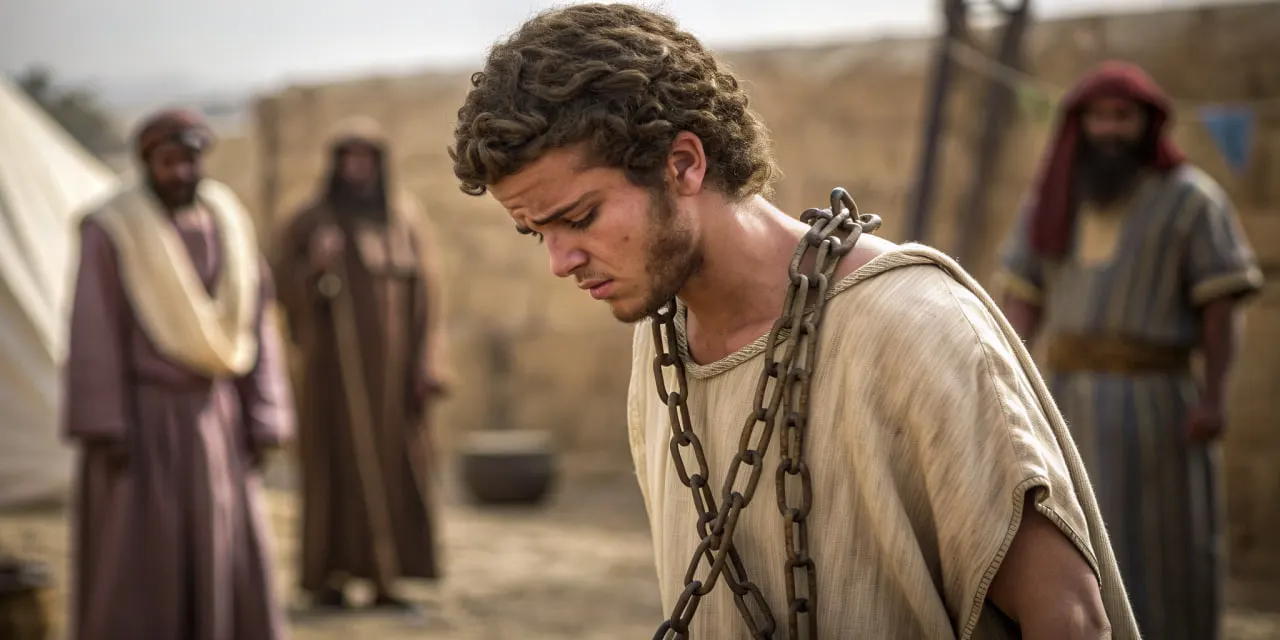
- Weekly portion
- 9 of 54
- Verses
- Bereshit 37:1–40:23
- Parts
- 11
- Reading time
- 3 h 19 min
- Views
marks places where the translation deliberately departs from the Russian original. Tap it to show the note.
Vayeshev – the weekly portion about Yosef and his brothers. In the stenogram, Alex Blend examines the family conflict, the story of Yehuda and Tamar, Yosef's trials in Egypt and the dreams in prison. The Hebrew, the transliteration and the translation are accompanied by the author's commentary on the Torah and on the haftara from Amos.
Vayeshev: how it all began
Bereshit 37:1–11
וַיֵּשֶׁב יַעֲקֹב בְּאֶרֶץ מְגוּרֵי אָבִיו בְּאֶרֶץ כְּנָעַן׃
vayéshev yaakóv be'éretz meguré avív be'éretz kená'an
1 And Yaakov settled in the land of his father's wandering.
Here there is a certain counterweight: where the fathers wandered, Yaakov (after he returned from Charan, from exile) settles down. One can also put it this way: Yaakov relaxed. Every time we read the word vayéshev in the Torah (a stylistic device the reader understands), it means: expect trouble, some calm before the storm, before some unpleasant events. Yaakov settles in the land of his father's wandering, in the land of Canaan.
אֵלֶּה תֹּלְדוֹת יַעֲקֹב יוֹסֵף בֶּן־שְׁבַע־עֶשְׂרֵה שָׁנָה הָיָה רֹעֶה אֶת־אֶחָיו בַּצֹּאן וְהוּא נַעַר אֶת־בְּנֵי בִלְהָה וְאֶת־בְּנֵי זִלְפָּה נְשֵׁי אָבִיו וַיָּבֵא יוֹסֵף אֶת־דִּבָּתָם רָעָה אֶל־אֲבִיהֶם׃
élle toledót yaakóv yoséf ben-shevá-esré shaná hayá ro'é et-echáv battzón vehú ná'ar et-bené vilhá ve'ét-bené zilpá neshé avív vayavé yoséf et-dibbatám ra'á el-avihém
2 This is the genealogy of Yaakov. Yosef is seventeen years old, and he tended the livestock with his brothers / tended his brothers at the livestock (it can be understood two ways, and further on we will see that precisely the second understanding is the more fitting one), and he is the foreman of the sons of Bilha and the sons of Zilpa. And Yosef brought gossip and bad fabrications about them to his father.
How can it be that in the genealogy of Yaakov it says: “Yosef is 17 years old”? Here the word toldót is used in the sense of fruits, offspring, from the word leolít – to give birth, toldot – offspring. This is what happened to Yaakov, these are the fruits of his settling in the holy land, when he relaxed, perhaps before the time. So, he has a son, Yosef (we heard about him when he was born, and since then we have not known anything more about him).
Vehú ná'ar et-bené vilhá ve'ét-bené zilpá – and he is the foreman of the sons of Bilha and the sons of Zilpa. The word ná'ar literally means young man, or someone who constantly stirs everyone up, full of initiative; but in the simple meaning – young man. In the book of Rut we read that among the reapers there was a foreman of the reapers, a junior-level manager, who was called ná'ar. Here we can see that Yosef is 17 years old and he is assigned, as something like a foreman, a group leader or a manager, to the sons of Bilha and Zilpa, Yaakov's wives.
Everything they did, Yosef reported to his father. One could, trying to assume something good about him, say that Yosef had a good intention of repairing the world, that he wanted everyone to be good, and he simply, banally complained to his dad about his brothers' bad behavior. But for us, understandably, the attitude toward a person who informs on his brothers, even to such a person as Yaakov, is a slippery one. And we will not pass judgment on how Yosef behaves, but we understand that his brothers will not particularly love him. And so this is the post, this is the situation Yosef is in.
וְיִשְׂרָאֵל אָהַב אֶת־יוֹסֵף מִכָּל־בָּנָיו כִּי־בֶן־זְקֻנִים הוּא לוֹ וְעָשָׂה לוֹ כְּתֹנֶת פַּסִּים׃
veyisraél aháv et-yoséf mikkól-banáv ki-ven-zekuním hu lo ve'ása lo ketónet passím
3 And Israel loved Yosef more than all the children, because he is the son of his old age; and he made him a special shirt.
Israel loved his son more than all the children, even more than Binyamin – Yosef's younger brother. Binyamin is 10 years old, he is still, perhaps, not so nimble, not so handsome, not so charismatic – all this (we will see) belongs to Yosef.
Ketónet passím literally translates as striped tunic, but the word pas (strip) can also mean the strip that connects the hand with the forearm, and then it means that Yaakov made him a garment with long, full-length sleeves. The garment of a person who does not roll up his sleeves or does not work – such an important, lordly garment. Others say that he made him an adorned garment, that is, he made some garment for him to order.
The Talmud in tractate Shabbat says: “A person must not single out one of his sons among the other children. Look, because of an extra piece of wool worth 2 sela the people of Israel went down to Egypt, hatred was born.” The brothers, naturally, hated the upstart, the snitch, the pretty boy Yosef.
וַיִּרְאוּ אֶחָיו כִּי־אֹתוֹ אָהַב אֲבִיהֶם מִכָּל־אֶחָיו וַיִּשְׂנְאוּ אֹתוֹ וְלֹא יָכְלוּ דַּבְּרוֹ לְשָׁלֹם׃
vayir'ú echáv ki-oto aháv avihemIn the Russian transliteration the letters of the word for “their father” are out of order. The English line follows the Hebrew: avihem. mikkól-echáv vayisne'ú otó veló yachelú dabberó leshalóm
4 And his brothers saw that their father loved him more than all the brothers, and they hated him, and could not speak with him peaceably.
On the one hand, one can say, following Rashi (Rabbi Shlomo Yitzchaki), that from these not very good words about the brothers one can say something good about them: that they are at least honest, they are not hypocrites, they are not two-faced. Such is the personal dislike they feel toward Yosef that they cannot even speak with him, and they do not speak. But we have already read 36 chapters of the book of Bereshit. The first story – when Chava, most likely, silently gave Adam the fruit. If she had said: “Look, the serpent talked me into having a bite,” then one could simply have spanked the serpent, and that would have been the end of it. Kayin apparently wanted to talk with his brother; in any case, it is written: “And Kayin said to Hevel, his brother.” And further on it is not written what he said to him. That is, one can understand it this way: he wanted to say something, but the talk does not work out. And further on, throughout all of Scripture, we see enmity between brothers. Avraham says to Lot: “Let us separate, because we are brothers, because our quarrel can lead to murder.” Esav and Yaakov at least talk: they talked and parted peacefully, they split the world, to some extent divided the land, but they can coexist peacefully and even buried their father together.
And here the same story begins again: the brothers cannot talk. This is the most terrible thing, when in a family people do not talk to each other, when they cannot even have it out. That was the situation on the eve of the revelations that Yosef received.
וַיַּחֲלֹם יוֹסֵף חֲלוֹם וַיַּגֵּד לְאֶחָיו וַיּוֹסִפוּ עוֹד שְׂנֹא אֹתוֹ׃
vayachalóm yoséf chalóm vayaggéd le'echáv vayosífu od senó otó
5 and Yosef had a dream and told his brothers, and they began to hate him even more.
וַיֹּאמֶר אֲלֵיהֶם שִׁמְעוּ־נָא הַחֲלוֹם הַזֶּה אֲשֶׁר חָלָמְתִּי׃
vayomer alehém shim'ú-na hachalóm hazzé ashér chalámti
6 And he said to them: “Here, listen, what dream I had:
וְהִנֵּה אֲנַחְנוּ מְאַלְּמִים אֲלֻמִּים בְּתוֹךְ הַשָּׂדֶה וְהִנֵּה קָמָה אֲלֻמָּתִי וְגַם־נִצָּבָה וְהִנֵּה תְסֻבֶּינָה אֲלֻמֹּתֵיכֶם וַתִּשְׁתַּחֲוֶיןָ לַאֲלֻמָּתִי׃
vehinné anáchnu me'allemím alummím betóch hassadé vehinné káma alummatí vegám-nittzáva vehinné tesubbéna alummotechém vattishtachavéna la'alummatí
7 Here we are binding sheaves in the field, and here my sheaf got up, rose and stood upright, your sheaves turned toward it and bowed down to my sheaf.”
How can such a dream be understood? It can be understood in very different ways. I propose that we now do the almost impossible. You and I read the Torah and partly pretend that we are reading it, because we know it. If one asks now what this dream means, I will be told that the brothers will later bow down to him in Egypt, or some other options. But the brothers did not read the book of Bereshit. And if we try to read this book as if for the first time, when we do not yet know the continuation, we do not know what this dream is leading to and what kind of dream it is, then what can one think here? One can say that Yosef really is speaking from his heart, his dream follows his heart, he wants to rule, and through his subconscious this breaks through in this way. One can understand it so, because, although the whole Eastern culture of that time says that dreams are always from God (precisely in Scripture we see dreams that are given by God, prophetic dreams, unambiguously from the Most High), on the other hand, there are dreams (if we read chapter 29 of the book of the prophet Yeshayahu) when the hungry man sees food, the thirsty man sees water, but when he wakes up, these dreams crumble. That is, dreams that speak from a person's heart. And first of all one has to figure out: is Yosef having a dream from God, or is he opening the little doors of his subconscious a crack? Apparently, the brothers chose the second option.
וַיֹּאמְרוּ לוֹ אֶחָיו הֲמָלֹךְ תִּמְלֹךְ עָלֵינוּ אִם־מָשׁוֹל תִּמְשֹׁל בָּנוּ וַיּוֹסִפוּ עוֹד שְׂנֹא אֹתוֹ עַל־חֲלֹמֹתָיו וְעַל־דְּבָרָיו׃
vayomeru lo echáv hamalóch timlóch alénu im-mashól timshól bánu vayosífu od senó otó al-chalomotáv ve'ál-devaráv
8 And his brothers said to him: “Will you reign over us, or will you rule us?” And they began to hate him even more for his dreams and for what he said.
The brothers think that here it is the second option, that this is what breaks through from Yosef's subconscious. But if we read how the Torah speaks about it, then here is what Yosef says (let me try to translate it with the intonation that the cantillation of the Torah conveys): “And I dreamed that we were binding sheaves in the field, and your sheaves turned and bo-o-o-o-owed down to my sheaf.” In the word bowed the letter oTo imitate the chant, the Russian stretches the vowel i in its word for “bowed down.” The English stretches the o of “bowed” instead, so the letter named here is o. is sung out very joyfully and beautifully, such a tone, as if at the end Yosef said something like “nyah-nyah-nyah. And this is what irritates the brothers: not only Yosef's dream, but also the way he says it. That is, if Yosef secretly dreams of ruling over them or reigning over them, then this broke through, burst out, he gave himself away. The brothers ask him: “Will you reign over us (which means: ‘are we to make you king ourselves?’) or will you rule over us, will you become our ruler, force us under your power?” One could say that they answered him: “Are we to make you king ourselves, or will you subdue us?” Such a cynical answer, which, again, slips away completely in translation. That is, a thoroughly unfriendly conversation between the brothers. Yosef, it seems, does not enter into any debate here at all. He continues:
וַיַּחֲלֹם עוֹד חֲלוֹם אַחֵר וַיְסַפֵּר אֹתוֹ לְאֶחָיו וַיֹּאמֶר הִנֵּה חָלַמְתִּי חֲלוֹם עוֹד וְהִנֵּה הַשֶּׁמֶשׁ וְהַיָּרֵחַ וְאַחַד עָשָׂר כּוֹכָבִים מִשְׁתַּחֲוִים לִי׃
vayachalóm od chalóm achér vaysappér otó le'echáv vayomer hinné chalámti chalóm od vehinné hashémesh vehayaréach ve'achád asár kochavím mishtachavím li
9 And he had yet another dream, and told it to his brothers, and said: “I had one more dream: and here, the sun, and the moon, and 11 stars bowed down to me.” (We will still go through these dreams).
וַיְסַפֵּר אֶל־אָבִיו וְאֶל־אֶחָיו וַיִּגְעַר־בּוֹ אָבִיו וַיֹּאמֶר לוֹ מָה הַחֲלוֹם הַזֶּה אֲשֶׁר חָלָמְתָּ הֲבוֹא נָבוֹא אֲנִי וְאִמְּךָ וְאַחֶיךָ לְהִשְׁתַּחֲוֹת לְךָ אָרְצָה׃
vaysappér el-avív ve'él-echáv vayig'ár-bo avív vayomer lo ma hachalóm hazzé ashér chalámta havó navó aní ve'immechá ve'achécha lehishtachavót lechá ártza
10 And he told his father. and his father gave him a dressing-down (reprimanded him), and said to him: “What kind of dream is this that you have seen?! And that I will come, and your mother, and your brothers, to bow down to you to the ground?”
Vaysappér el-avív – And he told his father. Why did he not tell the first dream to his father? Because, as we think, he interpreted that dream as being about the brothers (there are only 11 sheaves there). In that dream there were the brothers, the parents were not there, and therefore he did not tell his father. But here there are the sun and the moon. And, most likely, Yosef understands that this is also about the parents, therefore he tells his father. As we remember, his mom died when he was very little.
Vayig'ár-bo avív – and his father gave him a dressing-down. The word g'ará – a remark, a sharp remark, a sharp reprimand.
If we read the text where Yaakov speaks about the dream, he says to Yosef: ashér chalámta havó. In these words we can read it this way: in the word ashér אֲשֶׁר pay attention to the last little letter ר (reish); the letters of the word chalámta חָלָמְתָּ – chlmt we can read with reish, as Rachel met; in the word havó let us single out the letter ה (hei), and now we can read inside the words ר חלמת ה Rachel metha – Rachel died. Right inside all this text it is written: Rachel died. Yaakov, perhaps, says by way of a hint: “You remember that your mom, of blessed memory, died. Where did you write her in, then? And I, and she, and the brothers – all of us will come to bow down to you? What kind of nonsense is this you are saying?”
וַיְקַנְאוּ־בוֹ אֶחָיו וְאָבִיו שָׁמַר אֶת־הַדָּבָר׃
vaykan'ú-vo echáv ve'avív shamár et-haddavár
11 And his brothers envied him with hatred, and his father remembered this.
On the one hand, Yaakov seemingly waved it off and said: “What nonsense are you talking, Yosef?” On the other hand, he remembered this dream. That is, he believes that this may have some kind of continuation.
Before saying what the commentators say about this, let us try to look at this dream through the eyes of a reader who has not yet peeked (lucky him!) into the continuation of the text, if he is reading Scripture for the first time.
Yaakov and his family are shepherds, they tend livestock, and it seems they have enough income, enough of everything. And suddenly, out of the blue, in Yosef's dream they, the shepherd brothers, are binding sheaves. Not tending rams, not tending little goats, nor bull calves, nor camels, but binding sheaves, that is, they abruptly changed profession. Grain was connected with what was traded there, what was exported, and, one can say, for Yosef this was subconscious: “We will go, we will carry something to the world, through us the world will be fed not only with material but also with spiritual food. There is no need to sit here in this land, one needs to walk through the world, one needs to carry the Torah, carry the Word, carry monotheism.” In general, carry, walk and so on. And this is the first dream, which can be understood this way.
With regard to the second dream, everything is even more interesting. A person in real life cannot see the sun, the moon and the stars. There are such moments when the sun and the moon really are visible at the same time, almost always the moon and the stars are visible together, but for the sun, the moon and the stars to be visible together, that does not happen. It is hard to imagine such a thing. I am not even talking about how hard it is to imagine stars bowing. It is in cartoons that the sun, the moon and the stars make such a light curtsy: they abruptly jump down and return to their place. It is quite possible that Yosef, although he was not a viewer of “Soyuzmultfilm,” had similar pictures. But one can see in this a scene developing in sequence: the sun and the moon, and the stars. Yosef says that one must go into the night, one must go to shine into the darkness. That is, Yosef speaks about the necessity of going where it is dark, and night for Israel is exile. In this interpretation (Rav Manitu speaks about this, and such rabbis as Rav Sherki repeat it) one can see the revealing of the desire of Yosef's purpose: to serve among other nations.
There is also another approach, that the nations of the world will come to the land of Israel: and they will come, and they will bow down, and they will come to learn. But there are the times of Yosef, and Yosef calls for this. We do not have in the Torah an interpretation of these two dreams. Yes, I remember that it is written: “And Yosef remembered his dreams.” But there is no unambiguous, final interpretation of these dreams. Although we will see that the brothers too bowed down, there is not this feeling of completeness, therefore many commentators give different commentaries about what these dreams mean.
Chaim ben Atar says that in the words “My sheaf rose and stood, and my sheaf stood firm” it is about the trial that Yosef will go through in the house of Potifar, when a beautiful woman clung to him, and he ran away from her. This is a very strong trial. And at this time Judah, as we know, went in to Tamar, whom he considered a harlot. And, in general, it is about trials withstood. This is a rather bold interpretation. (Here, there are people who are no less smart than we are, but think differently).
Chatam Sofer, another commentator, says: “The dream about the sheaves came true in this same chapter. The word alám (sheaf) is akin to the word alím (cruelty). When the brothers threw Yosef into the pit, that is when this dream came true. Together they experienced cruelty. After all, when they were throwing him into the pit, they also bowed down to him. When a person is thrown into a pit, people bend down over the pit. And so already at that moment Yosef's dream came true.”
Midrash Tanchuma, an earlier collection, says: “This came true in Yosef's descendants, in Yehoshua ben Nun, when he commanded the sun to stand still, changed the course of things in the heavens.” There is such an understanding too.
Other commentators say: “Wait, wait, in all the dreams, everything connected with Yosef: both the cows and the branches – all this signifies numbers, and Yosef is in fact talking about numbers. In 11 years he will interpret the dreams of the baker and the cupbearer, and in 13 years (this is also the sun and the moon) he will stand before Pharaoh. These are 13 years divided into 2 stages until his full elevation, and this is what the dream is about.”
And when there are many commentaries on a dream, then it is clear that nothing is clear. I propose trying to preserve the tension that the Most High aimed for in giving the Torah, and trying to read as if we do not know how it will all end. It is interesting, after all, how Yosef's dreams will come true, how they will be fulfilled.
I want to add something more about the sun and the moon. The Torah describes many family biographies. Ever begets Peleg and Yoktan. Peleg has one son, Yoktan has 13 children: 12 boys and a girl. The blessing is, as it were, passed on through Peleg. Avraham does not have so many children, Nachor has 12 boys and one girl, like Yoktan. And Nachor is rejected, the blessing is passed on to Avraham. We know that Yitzchak's children are Esav and Yaakov, Yishmael has 12 boys and one girl. Yishmael is rejected, the blessing is passed on to Yitzchak. That is, we see several times in Scripture that families divide into those who have 12 boys and a girl. This is connected with the lunisolar calendar: 12 boys like 12 months, the girl is the leap year. (Symbols, of course – symbols of blessing). Full blessing for those who count time by the moon or, God forbid, worship the moon (it happens that the one passes into the other). These are 12 children. Yaakov, having 12 children, wrests, receives Esav's blessing. As we read, when he leaves, the sun set, the time of Esav comes, and when Yaakov returns, the sun rises upon him, he unites with the sun (Bereshit 28:11, 32:31). Yaakov united in himself the lunar and the solar. (The Jews have a lunisolar calendar). And the moon and the sun (so say some mystics, teachers of Judaism) – this is all one Yaakov. One can see this too.
That is, Yosef sees Yaakov with the brothers in some situation when they bowed down to him. Perhaps this means that they will solve some economic problems through him. In chapter 50 of the book of Bereshit we will read: “And I will take care of feeding you and your children.” We said earlier that when a blessing says “your brothers will bow down,” it means that you will support them, they will depend on you, you will lead them.
Many, many all sorts of thoughts can be thought up, if one tries to remain in that tension in which the Torah keeps us, when we do not yet know how everything will end. After all, the Torah deliberately makes it so that first chapter 37 should affect us, then 38, then 39. The Torah is deliberately written this way, although, of course, it is one whole. There are very many reflections, interpretations of such a dream, and most likely I will be told: “But I know yet another interpretation.” There are many interpretations, and we will not find the single correct interpretation. It is important to know that there are people who are no less smart than we are, who see something a little different from what we see, and that is how the Most High wanted it. The Most High gave a Torah that has many faces. He made us not alike, not so that we would become alike.
So much that is complicated, interesting and incomprehensible is in our weekly portion. For now we cannot understand what Yosef's dreams mean, for now we can understand that the brothers suspect him of something unkind, suspect him of a claim to power, of some governmental ambitions. The father also does not quite agree, but still Yaakov remembered this dream, perhaps he allows that there are some other understandings besides Yosef's vanity. Yaakov relaxed in the land, and that means something will happen. Yosef has appeared on the stage, which means something will happen through Yosef.
So, at this tense, interesting point the day's reading stops.
וַיֵּלְכוּ אֶחָיו לִרְעוֹת אֶת־צֹאן אֲבִיהֶם בִּשְׁכֶם׃
vayelechú echáv lir'ót et-tzón avihém bishchém
12 And his brothers went to tend their father's livestock in Sh'chem.
The brothers went quite far, to Sh'chem. From Chevron to Sh'chem is about 80 km. When wheat or grain is mown, the stalks left unmown are given to the livestock as pasture; there one can graze the livestock before driving it in for the winter. This is one more short season of putting the livestock out to pasture. The brothers go so far because in Chevron this possibility no longer exists.
וַיֹּאמֶר יִשְׂרָאֵל אֶל־יוֹסֵף הֲלוֹא אַחֶיךָ רֹעִים בִּשְׁכֶם לְכָה וְאֶשְׁלָחֲךָ אֲלֵיהֶם וַיֹּאמֶר לוֹ הִנֵּנִי׃
vayomer yisraél el-yoséf haló achécha ro'ím bishchém lechá ve'eshlachachá alehém vayomer lo hinnéni
13 And Yisrael said to Yosef: “Here, your brothers are tending in Sh'chem; come on, let me send you to them.” And he said to him: “Here I am!”
We spoke about the idea (as one of the understandings) that Yosef was a foreman, a manager and at the same time a controller or inspector of the brothers, mainly the sons of the maidservants, who tended the livestock. When it was nearby, Yosef roughly knew his working day, and when he considered it necessary, he would come, check, take care of things. It is hard to guess how this work was organized. But now the brothers have gone far away, and one has to ride or walk to them, and Yaakov proposes such a trip to Yosef. Besides that, there is the following danger. We remember that both Yaakov and, for the most part, his sons Shimon and Levi carried out a pogrom in Sh'chem, and it is quite possible that someone among the Hittites will want to pay them back for it, because blood revenge for the East is a natural thing and a matter of honor. Yaakov has reason to be afraid.
וַיֹּאמֶר לוֹ לֶךְ־נָא רְאֵה אֶת־שְׁלוֹם אַחֶיךָ וְאֶת־שְׁלוֹם הַצֹּאן וַהֲשִׁבֵנִי דָּבָר וַיִּשְׁלָחֵהוּ מֵעֵמֶק חֶבְרוֹן וַיָּבֹא שְׁכֶמָה׃
vayomer lo lech-ná re'é et-shelóm achécha ve'ét-shelóm hattzón vahashivéni davár vayishlachéhu me'émek chevrón vayavó shechéma
14 And he said to him: “Go now, look at the peace with your brothers (see the peace with your brothers – if translated literally) and the condition of the livestock (the word shelóm is not only peace, it is also health, wholeness, that is, condition), and bring me back word (bring me a report).” And he sent him away from the valley of Chevron. and he came to Sh'chem.
Sent him away from the valley of Chevron – that is, Yaakov saw him off beyond the limits of the city of Chevron. Chevron itself used to stand on a mountain, and in the valley was Me'arat haMachpela (the cave of Machpela), which Avraham bought. Now Chevron really is below, in the valley, because people began to settle around the holy place, and so the city moved. But in his time Avraham bought an allotment outside the city in the valley, and Yaakov went down with his son into the valley, saw him off. And Yosef safely reached Sh'chem. If you ride on a horse, then 80 km is probably 2 days' journey. Of course, one can drive a horse at a march or at a gallop. Yosef is a young 17-year-old guy, and it is quite possible that, like every Israeli, he loves fast riding on a horse, but horses do not always love that, so one can assume that for Yosef this road took 2 days. And he safely reaches the city of Sh'chem.
וַיִּמְצָאֵהוּ אִישׁ וְהִנֵּה תֹעֶה בַּשָּׂדֶה וַיִּשְׁאָלֵהוּ הָאִישׁ לֵאמֹר מַה־תְּבַקֵּשׁ׃
vayimtza'éhu ish vehinné to'é bassadé vayish'aléhu ha'ísh lemór ma-tevakkésh
15 And a man found him, and here he is circling around the field (wandering in the field). And this man asked him, saying: “What are you looking for?”
An amazing story. As always when there is a riddle, the commentators guess what kind of ish this is, what kind of person or man this is who found Yosef. The last time we met an ish, it was the angel who wrestled with Yaakov. Then there was no dispute that it was an angel. Here, however, some commentators say that it is an angel or even 3 angels (we will see later why), that it was quite possibly the angel Gavriel, or Azriel, or Rafael, or all three at once. An angel who was sent by the Most High so that Yosef would after all reach his brothers. Other commentators say that it is simply a chance passerby, and of course it was the Most High who arranged the meeting with this chance passerby, and nevertheless it is a chance passerby.
To try to answer this question, or to propose one more possible answer to this question, I want to draw attention to the word bassadé (in the field). The emphasis ba-sadé with the article, hard for a Russian-speaking reader to catch, indicates that this is a specific field. What field can this be about? If you think about it, when Yaakov sends Yosef to Sh'chem, it is like sending a person to Ryazan and saying: “Go to Ryazan (or some other place) and look for your brothers there.” On a huge territory! But we remember that Yaakov at one time bought a field from the sons of Chamor. And this was his territory, he did not sell it, even when he moved first to Beit-El, then to Chevron. It remained his territory. And according to the custom of that time, Yaakov most likely could hire a man who looked after this territory, who could use it for his own purposes, and in return he provided its protection. This man had to have the corresponding authority in the area. And most likely Yaakov sends Yosef to the place where the brothers would come to graze (and where else would they go?!). That is where Yosef comes to look for them, and that is why he meets a man there who came to see who had wandered onto his territory again.
That is, we see three options. God sends an angel who seems to Yosef to be a man. I think each of us has such moments when we meet some person, and he, quite by chance, plays a fateful role in our life for some time or for our whole life. Angels come our way too, and one wants to see an angel in this. It is quite possible that it was an angel, and we will not learn the answer to this question, but one can also assume this simpler option: that he met a passerby or a man looking after that field.
So, he meets an ish (a man), who asks him what he is looking for. In verse 16 Yosef says a phrase that would later become a catchphrase and even a song.
וַיֹּאמֶר אֶת־אַחַי אָנֹכִי מְבַקֵּשׁ הַגִּידָה־נָּא לִי אֵיפֹה הֵם רֹעִים׃
vayomer et-acháy anochí mevakkésh haggidá-ná li efó hem ro'ím
16 And he said to him: “My brothers I seek; tell me, please, where are they tending?”
Strangely enough, this song came to sound as a symbol of a person's care for his lost brothers, whom he has not found, as a shepherd's grief for his brothers: “My brothers I seek, where are they tending. Where have my brothers gone? I want to find them, bring them back, tell my father about them.” This song is performed by quite a few well-known religious musicians. But here it is not a song; here Yosef answers the question put to him briefly and laconically.
A question arises: if he met an angel (let us suppose it is an angel), then why does he ask Yosef what he wants? If it is a man, then again the same question. Yaakov sent Yosef, first, to Sh'chem, second, to check the health of the brothers and of the livestock, and there is a third understanding: see peace with your brothers, make peace with your brothers and come back to me with that. That is, you go to Sh'chem, make peace with them there, set your relationship with them right, and then come back to me. This is one of the possible interpretations; it answers the question of why, the whole time Yosef was in Egypt, he did not contact his father in any way. He could have sent word, and there are many possible answers as to why he did not do this. But if Yosef understands that he was sent not only on an inspection mission, but was also loaded a little extra with making peace with his brothers, then it is clear why he does not return to Yaakov with the work undone. But this, again, is not the main understanding.
Yosef was sent to Sh'chem, and he can report to his father that he was in Sh'chem, that the brothers safely left the danger zone and went 60 km north toward Dotan (this is a little beyond the modern city of Jenin, 30 km from the Israeli city of Afula and 35 km from the city of Natzeret, roughly there). That is, they went far to the north, and the passions of Sh'chem are no longer a danger to them. And besides, he could have asked this man how things were with the brothers, whether everything was normal with them, whether all was well, and gone back with this report. Yosef could have asked the angel or the man: “Could you tell me, please, how to get back to Chevron?” if he was wandering in the field. But Yosef chooses to continue the mission. This man he met, be he an angel or a man, this sorting station at the crossroads, asks Yosef: “And where do you actually want to go, do you want to go back home?” After all, Yosef had not read the book of Bereshit, and he did not know how his fate would turn out with one choice or the other. But it had to be Yosef's own decision to say: “I am looking for my brothers. Tell me, where are they tending?”
וַיֹּאמֶר הָאִישׁ נָסְעוּ מִזֶּה כִּי שָׁמַעְתִּי אֹמְרִים נֵלְכָה דֹּתָיְנָה וַיֵּלֶךְ יוֹסֵף אַחַר אֶחָיו וַיִּמְצָאֵם בְּדֹתָן׃
vayomer ha'ísh nase'ú mizzé ki shamá'ti omerím nelechá dotáyna vayélech yoséf achár echáv vayimtza'ém bedotán
17 And the man said to him: “They went away from here. I heard how they said: ‘Let us go to Dotan.’ And Yosef went after his brothers, and found them in Dotan.
We talk a lot about gematria, and there are commentators who believe that the word mi-zé (from this) – in the word zé the gematria is 12 – nase'ú mizé means: “They abandoned the idea of 12 sons and decided that 11 are enough for us,” and that is why they left. Here the angel hints to Yosef (who, of course, will immediately count the gematria and understand everything) at the brothers' potential plan to kill him. However, it seems to me that this is too complicated for the simple literal meaning. The man simply says that they went away from here, because he heard them saying: “Let us go to Dotan.”
Yosef went after his brothers, that is, he walked some more distance and found them in Dotan. Apparently, he also searched for them around Dotan. If you find the tracks of moving livestock, you do not need to be a Bedouin tracker to find the livestock by its tracks. (This is in case you ask how Yosef found the way to Dotan).
I said that the angel (or the man) warned Yosef about a possible murder. And people often ask (and this is one of the first questions the commentators ask about this passage): “Why did Yaakov decide to send Yosef to the brothers at all? Did he not know that they had such a complicated attitude toward him? Why did he not foresee that they would kill him?” This question arises if you read the book to the end. Yaakov did not read chapters 37 and 38. Yaakov lived, or lived through, the previous chapters of the book of Bereshit, in which (after Kayin and Hevel) brothers were hostile, separated, quarreled, maybe even fought, but did not kill each other. And therefore the thought that the brothers would kill Yosef could hardly occur to Yaakov. No. At last it will be possible to talk and sort things out, at last it will be possible to settle all the questions. If Yaakov really had in mind not just an inspection, an auditor's visit of Yosef to the brothers, then the point was reconciliation. I think that not even in a nightmare could Yaakov have seen that the brothers would kill him. Otherwise he would also have become suspicious about the shirt stained with blood.
So, Yosef finds his brothers in Dotan. He approaches them, they see him from afar.
וַיִּרְאוּ אֹתוֹ מֵרָחֹק וּבְטֶרֶם יִקְרַב אֲלֵיהֶם וַיִּתְנַכְּלוּ אֹתוֹ לַהֲמִיתוֹ׃
vayir'ú otó merachók uvtérem yikráv alehém vayitnakkelú otó lahamitó
18 And they saw him from afar, and before he came near to them, they got ready to kill him.
From the word vayitnakkelú one can also understand that they moved out toward him to kill him, or conspired to kill him. Whether it was all the brothers, or how many brothers, let us reason this out. There are the sons of Rachel: Yosef himself, of course, is not in on it, he is the victim; Binyamin is ten or eleven years old by this time, most likely he is in the tent altogether. But even if he is with the shepherds, he is hardly involved here. Re'uven and Yehuda have their own plans, we have already spoken about this; of Lea's older sons there remain Shimon and Levi, her younger sons Zevulun and Yissachar, and the sons of the slave women. If one looks at this picture objectively, one can assume that the ringleaders in this story were the same two brothers who are respected among the brothers for the heroism they showed, such “heroes of the fatherland” – Shimon and Levi. It is quite possible that precisely they are the instigators and initiators of all this. When we say that “the brothers said to one another,” “tossed out ideas,” it is clear from the further text that not all the brothers said this in chorus. When we read, we should not picture a chorus of brothers. There is a certain discord of voices. The idea is put forward, most likely, by Shimon and Levi: “Why don't we just kill him.” What is the point here? Let us try to read how they explained it.
וַיֹּאמְרוּ אִישׁ אֶל־אָחִיו הִנֵּה בַּעַל הַחֲלֹמוֹת הַלָּזֶה בָּא׃
vayomerú ish el-achív hinné bá'al hachalomót hallazé ba
19 And a man said to his brother (that is, they talked among themselves): “Here comes this master of dreams.
In chapter 24 of the book of Shemot we read the story of how Moshe goes up the mountain and how the cloud surrounds him, and before that it is written like this: “And Moshe rose up with Yehoshua, his servant, and Moshe went up to the mountain of God. And to the elders he said: ‘Stay here until we return to you. Here, Aharon and Chur are with you; whoever has a matter, let him come to them.’ This phrase has a matter sounds in Hebrew bá'al davár (master of a matter), that is, a case for judgment is brought to Aharon and Chur. But here we are speaking about reconciliation, about having things out between Yosef and the brothers. What comes is not a bá'al davár, to the judgment of history; what is presented to the judgment of the community is not some court case, but dreams: “Here the dreamer has come.” When Yosef, as we remember, tells the brothers his dreams, they ask him a question that seems rhetorical, but in fact is not quite: “Will you rule over us because we ourselves will choose you as king, or because you will take the kingship over us by force? How will this be? Are we to set you over us as king, or will you overpower us yourself?” This ambition of Yosef's is alive in the brothers, and they really think: “How can such a thing happen? If these are Yosef's thoughts, then these are some kind of ambitions for which he must be taught a lesson. If this is from the Most High, then let us try to kill him, for example, and see how this dream comes true or how we manage to kill him. Let us check what kind of dream this is: a prophecy or a fruit of the subconscious. Let us, finally, deal with this Yosef.”
וְעַתָּה לְכוּ וְנַהַרְגֵהוּ וְנַשְׁלִכֵהוּ בְּאַחַד הַבֹּרוֹת וְאָמַרְנוּ חַיָּה רָעָה אֲכָלָתְהוּ וְנִרְאֶה מַה־יִּהְיוּ חֲלֹמֹתָיו׃
ve'attá lechú venahargéhu venashlichéhu be'achád habborót ve'amárnu chayá ra'á achaláthu venir'é ma-yihyú chalomotáv
20 Let us now kill him, and throw his body into one of the pits, and say: ‘An evil beast ate him.’ And then we will see what becomes of his dreams.”
And throw his body into one of the pits – even here there is a certain mercy toward the dead. Why say where to hide a corpse – in the desert, of all places? Let us throw him into one of the pits, so that it would not be so easy to rise again. Even if he rises again, how will he get out? If by chance we have not finished him off, then he will be in the pit. One can also say it this way.
And then we will see (we will check) what becomes of his dreams: if this is from God, then it must come true. They say that Avraham believed that God could raise Yitzchak from the dead. This whole story of the reconciliation, of Yosef being sent as a messenger, naturally gave rise to a great many midrashim of all kinds and parallels with regard to Yosef and the brothers and with regard to Mashiach, who was also sent to the perishing sheep of the house of Yaakov, also sent to the house of Yaakov and its sheep, to seek peace with them, to seek reconciliation. And this is a very big parallel between Mashiach and Yosef. The brothers' reaction (come on, let us kill him and check) – this is also a kind of parallel to what we said (then we will see what becomes of his dreams).
The commentators read Scripture and say that the direct speech of the brothers: “And we will say that an evil animal ate him, and we will see what becomes of his dreams” – is an editorial remark. This is what the Author of the Torah – the Most High – tells the reader. They just wanted to do it, without explaining, without saying out loud what would be the answer to the question: “What will become of his dreams?” They do not really want to talk about his dreams. But one can read the pshat simply as pshat, that they simply said: “We are asked to examine the personal file of comrade Yosef Yaakovlevich, who lays claim to world domination on the basis of his dreams. Let us just kill him and see what comes of it.”
As a parallel one can cite a story from the life of Shabtai Tzvi. In the late Middle Ages there lived in Constantinople a man, his name was Shabtai Tzvi, and a huge part of Israel believed that he was the messiah. It must be said that he was deceived and made to believe it himself, but that is not the point. One day, inspired by the idea of his own messiahship, he came to the Turkish pasha, who at that moment ruled not only Constantinople but also the land of Israel, and said to him: “Pasha, salam, give me the keys to the Holy Land, because I am the Mashiach of Israel.” The pasha said to him: “Well then! If you are the Mashiach, I will gladly give you the keys. But first stand by that wall, and my marksmen will shoot at you. If after that we can continue the conversation, you will get the keys; if not, then, as they say: no man – no problem.” The false Mashiach Shabtai Tzvi lost his nerve, thought on the spot what to do, and converted to Islam. He had no other way out. This was a great disaster for Israel. I tell this as an example of how people try to test: is this from God or not from God. I do not think this is a kosher method of testing, but here a man asked for such a test.
So, the brothers say: “Let us try to kill him and see what comes of it.”
וַיִּשְׁמַע רְאוּבֵן וַיַּצִּלֵהוּ מִיָּדָם וַיֹּאמֶר לֹא נַכֶּנּוּ נָפֶשׁ׃
vayishmá re'uvén vayattziléhu miyadám vayomer lo nakkénnu náfesh
21 And Re'uven heard, and wanted to pull him out of their hands, and said: “Let us not strike down a soul Let us not kill him.” (Why kill? One can try something somehow simpler).
Apparently, Re'uven was not part of this conversation (which is what I was talking about). The brothers who cooked it up, if you work out who they are, are the sons of the slave women and those who boss them around – Shimon and Levi, because Yehuda is not in on it either.
Some commentators cite here a quotation from the Talmud, a halachic idea that if 10 people, all ten together, killed someone, then they are free, because it is impossible to say from whose blow the person died. If 10 people beat one, then none of them is punishable. That is, if the ten of them together beat this Yosef, then all of them will be clear of punishment, you cannot pin it on anyone. But if only 9, then they will get scared and will not do it. That is how some explain the brothers' logic. But again, I think that the brothers did not read the Talmud, and so they simply hear Re'uven's opinion and understand that maybe it is better that way; to kill a person with your own hands, a brother, even a hated one, is a very hard thing.
וַיֹּאמֶר אֲלֵהֶם רְאוּבֵן אַל־תִּשְׁפְּכוּ־דָם הַשְׁלִיכוּ אֹתוֹ אֶל־הַבּוֹר הַזֶּה אֲשֶׁר בַּמִּדְבָּר וְיָד אַל־תִּשְׁלְחוּ־בוֹ לְמַעַן הַצִּיל אֹתוֹ מִיָּדָם לַהֲשִׁיבוֹ אֶל־אָבִיו׃
vayomer alehém re'uvén al-tishpechú-dam hashlíchu otó el-habbór hazzé ashér bammidbár veyád al-tishlechú-vo lemá'an hattzíl otó miyadám lahashivó el-aviv
22 And Re'uven said to them: “Do not shed blood! Throw him into this pit (apparently, he had picked out a pit), which is in the wilderness, but do not touch him with your hands.” All this Re'uven did in order to save him later.
The pit which is in the wilderness is a rather deep well, in which even in summer it is stuffy at the bottom, there is not enough air, the air there is very stale, and there can be snakes, scorpions and generally anything at all. Well, and you can simply die of hunger there, unless, of course, you get some special, miraculous chance of rescue. That is, if you throw him into this pit, then he will die there by himself, and we will see what comes of it. And then we will say that on the way he fell into a pit, we found him and so on.
Lemá'an hattzíl otó miyadám lahashivó el-aviv – this is again a remark of the Most High. The Most High, the Author of the Torah, tells us: “All this Re'uven did in order to save him later.” That is, Re'uven does not subject Yosef to an agonizing death. There is such a people in India – the Sikhs (and it is the religion of several peoples). Among them it is forbidden to cause harm to a person or an animal, it spoils your karma very badly. One of the Sikh kings, so as not to cause harm to his brother, dug a pit under his throne, carefully, without causing harm to his brother, lowered him down there, covered it with the throne and went on reigning with his brother in the pit under the throne. After some time he removed the throne, opened the pit and… oh, good heavens! The brother had died! May the kingdom of heaven be his, the Sikh one. But no, Re'uven did not have such thoughts. He really wants to free Yosef and return him to his father. This is, after all, a kind of reconciliation after he was so strongly outraged at the complexity of the relationship between Yaakov and Lea. And maybe the man did his cheshbon nefesh (what is called the accounting of the soul) and thought what he thought, and now he has this idea. Now, as a son of Lea, he does not want to cause any more harm to the sons of Rachel.
וַיְהִי כַּאֲשֶׁר־בָּא יוֹסֵף אֶל־אֶחָיו וַיַּפְשִׁיטוּ אֶת־יוֹסֵף אֶת־כֻּתָּנְתּוֹ אֶת־כְּתֹנֶת הַפַּסִּים אֲשֶׁר עָלָיו׃
vayhí ka'ashér-bá yoséf el-echáv vayafshítu et-yoséf et-kuttontó et-ketónet happassím ashér aláv
23 And it was: when Yosef came to his brothers, and they stripped Yosef, took off him his shirt, the striped shirt which was on him.
It is precisely the form vayhí (and it was) that is always an introduction to some bad events. The commentators traditionally say that when vayhí, is written, it is the beginning of an account of some not very pleasant and tragic events. So it is not simply the word and it was, but with a certain shade.
Two shirts were taken off Yosef: the first – the outer garment, something like a robe that is worn outdoors, the second – the striped house shirt, apparently of fine fabric. We said that it is not exactly striped, it reaches down to his wrists, that is, a shirt with long sleeves. Of course, to present the clothing to Yaakov, it had to be Yosef's own personal clothing, so that there would be no doubt whether this is his little jacket or not his, his little blazer or not his. It was precisely this shirt that Yaakov had bought him, and precisely this shirt had to be presented to him. Plus, of course, the brothers' sweet dream was to tear off Yosef this shirt in which he stood out and which they envied so much.
וַיִּקָּחֻהוּ וַיַּשְׁלִכוּ אֹתוֹ הַבֹּרָה וְהַבּוֹר רֵק אֵין בּוֹ מָיִם׃
vayikkachúhu vayashlíchu otó habbóra vehabbór rek en bo máyim
24 And they took him, and threw him into the pit; the pit, however, is empty, and there is no water in it.
Some commentators, relying on what is written in chapter 8 of the book of Devarim, say that since there is no water, then, as it is written: “Where there is no water, there are snakes and scorpions.” That means there were snakes and scorpions in this pit too. This already resembles the lions' den and some events in which the protection of the Most High is shown. Other commentators, as, for example, Abarbanel, say: “That there is no water is precisely what helped Yosef survive. They deliberately looked for a pit without water, or simply used it because the pit was without water, understanding that this would help Yosef survive.” We say and constantly repeat that the commentators open a crack in the doors to their own world, each sees the brothers' motives in his own way, tries to understand something about them, as does each of us. And each of us will see (willingly or unwillingly) ourselves in this situation, bring into it some of our own character traits and our own attitude toward the brothers, who are either absolute, perfect evil, or do after all carry some good within them.
So, the brothers threw Yosef into the pit.
וַיֵּשְׁבוּ לֶאֱכָל־לֶחֶם וַיִּשְׂאוּ עֵינֵיהֶם וַיִּרְאוּ וְהִנֵּה אֹרְחַת יִשְׁמְעֵאלִים בָּאָה מִגִּלְעָד וּגְמַלֵּיהֶם נֹשְׂאִים נְכֹאת וּצְרִי וָלֹט הוֹלְכִים לְהוֹרִיד מִצְרָיְמָה:
vayeshevú le'echól-léchem vayis'ú enehém vayir'ú vehinné orechát yishme'elím ba'á miggil'ád ugmallehém nose'ím necho'ót utzrí valót holechím lehoríd mitzráyma
25 And they sat down to eat bread. and they raised their eyes, looking into the distance, and saw: a caravan of Yishmaelites is coming from Gil'ad, and with them camels which carry precious fragrances; they are going down to Egypt.
And they sat down to eat bread. It is important that by the tradition of that world one was not allowed to eat during a trial. When a person is being tried who may be sentenced to death, the judges fast throughout the whole trial. We also remember the story of the concubine from Giv'a, when everyone fasted after the tragedy of the events. Here the brothers feel that everything is fine, they have finished the trial, and with a clear conscience, at any rate considering their conscience clear, they sit down to eat. It is quite possible that this is not only cruelty, but also that they are handing the story over into the power of the Most High: “You had dreams – we want to test whether these are your ambitions, whether this is from God or from you. And God will now arrange everything, and we can finally calm down about this and eat in peace.”
I mentioned last time that one of the possible reasons why they threw him precisely into a pit is that in the laws of Hammurabi, which were used in those parts, it was customary, in order to test some person who claimed to be a sorcerer or a seer, or to have some abilities, to throw him into a pit or into a river. Originally, of course, into the Euphrates, but later also into any river or pit. And if under certain conditions he survived there, especially if the water pushed him out of there, then he could even receive the property of the one who accused him. Complicated laws, but the pit as an instrument of testing existed. Perhaps it has nothing to do with this, but we can keep it in mind.
So, they sat down to eat bread, apparently at some distance from the pit, because Yosef was most likely screaming. Nobody wants to eat like that. In modern cinema there is, of course, the image of a sort of cultured oligarch villain who juicily and with relish eats delicacies while watching someone being tortured, but that is not the case with the brothers. And most likely they sat down at some distance from the pit.
And they raised their eyes, they look into the distance and see: there comes a caravan of Yishmaelites. Who are the Yishmaelites? The Yishmaelites are the descendants of the brother of their grandfather Yitzchak. Yishmael had 12 children, consequently, the Yishmaelites are the descendants of these twelve, distant relatives, in essence second cousins. This is a caravan of camels carrying fragrances. (Usually the Arabs transported oil. Not the oil we know now, but all kinds of combustible substances. They have long traded in this, and it smells accordingly nasty, and its price is not as high as that of fragrances). But here an expensive caravan is coming, imagine, whole camels loaded with precious fragrances. Here rich people are walking through the desert, here poor shepherds are sitting. Here rich merchants are coming from afar, camels, fragrances; although they are caravan men (that is, in the desert, apparently, not in Cardin suits), their wealth is plain to see.
וַיֹּאמֶר יְהוּדָה אֶל־אֶחָיו מַה־בֶּצַע כִּי נַהֲרֹג אֶת־אָחִינוּ וְכִסִּינוּ אֶת־דָּמוֹ׃
vayomer yehudá el-echáv ma-bétza ki naharóg et-achínu vechissínu et-damó
26 And Yehuda said to his brothers: “And what profit will there be for us if we kill our brother and cover his blood?
לְכוּ וְנִמְכְּרֶנּוּ לַיִּשְׁמְעֵאלִים וְיָדֵנוּ אַל־תְּהִי־בוֹ כִּי־אָחִינוּ בְשָׂרֵנוּ הוּא וַיִּשְׁמְעוּ אֶחָיו׃
lechú venimkerénnu layishme'elím veyadénu al-tehi-vó ki-achínu vesarénu hu vayishme'ú echáv
27 Let us sell him to the Yishmaelites, because he is our brother and our flesh.” And his brothers heard him.
This is while they are still talking over their meal. Yehuda says: “What will we gain by killing him? After all, he is our brother, let's not be so harsh, let's sell him.”
There are two pillars of leadership in the family. The first is the firstborn Re'uven, who says: “Let's throw him into the pit, he will die by himself, let's let everything take its own course.” The second leader is Yehuda, he approaches the question differently, he says: “Let's do something, let's move history along, let's act ourselves.” Even in villainy their approaches are different. We will see later that there is a long dispute over the birthright between Re'uven and Yehuda, although in fact the firstborn is Re'uven, yet it is Yehuda who becomes the firstborn.
So, picture the mise-en-scène. The brothers, who are tending the livestock, apparently have a place where they constantly gather to eat; they are in a very rough, simple, camp-like state. And here they see an expensive caravan: an opportunity both to earn a little and not to kill their brother, what is called “win-win” – a no-lose situation. The brothers listened to him, but apparently they did not rush to the pit right away. And it is here that the verses most difficult to interpret begin.
וַיַּעַבְרוּ אֲנָשִׁים מִדְיָנִים סֹחֲרִים וַיִּמְשְׁכוּ וַיַּעֲלוּ אֶת־יוֹסֵף מִן־הַבּוֹר וַיִּמְכְּרוּ אֶת־יוֹסֵף לַיִּשְׁמְעֵאלִים בְּעֶשְׂרִים כָּסֶף וַיָּבִיאוּ אֶת־יוֹסֵף מִצְרָיְמָה׃
vaya'avrú anashím midyaním socharím vayimshechú vaya'alú et-yoséf min-habbór vayimkerú et-yoséf layishme'elím be'esrím kaséf vayavíu et-yoséf mitzráyma
28 And Midyanite men were passing by, merchants, and they pulled (pushed out) Yosef out of the pit, and sold Yosef for 20 pieces of silver to the Yishmaelites, who took Yosef to Egypt.
We know that our Forefather Avraham, after Sara died, had another wife, whose name was Ketura. Some say that she is the very same Hagar; we will not go into that now. In chapter 25 of the book of Bereshit we read: “And Avraham took himself another wife, named Ketura; she bore him Zimran, Yokshan, Medan, Madian, Ishbak and Shuach.” In our portion we will speak about two of them: Medan and Madian. In this case we read that midyaním were passing by, yet more second cousins of Yaakov's sons, merchants.
Vayimshechú vaya'alú et-yoséf min-habbór – and they pulled (pushed out) Yosef out of the pit. From the word imshechú we can see that he was pulled out, most likely unconscious, because in the following chapters, when Pharaoh will have him brought out, it says there vayritzúhu, when he moves by himself. Here he was pulled out of the pit, that is, most likely the merchants came up to the pit, because it is always necessary to top up one's water supply one more time. Instead of water they found a lad there, and they pulled this lad out. This is one way of understanding it. The second way of understanding it is that precisely when the Midianite merchants were passing by, the brothers pulled him out of the pit. If it was the brothers who pulled him out and sold him to the Yishmaelites, then it is unclear what the Midianite merchants have to do with it at all. Therefore the most probable understanding of the text still comes down to this: it was the Midianite merchants who pulled him out and sold him to the Yishmaelites. The brothers see in the distance a rich caravan of Yishmaelites, then the Midianite merchants come and pull Yosef out of the pit. He is most likely in a semi-conscious, half-fainting state, because in the pit it is hot, there is no water there, thirst, dryness, stale air, and he is, quite possibly, already unconscious. In any case, he does not remember and cannot remember later how he was pulled out of the pit and how he was sold. From this text it is difficult to see and difficult to say unequivocally whether his brothers sold him or whether the brothers only wanted to sell him but did not manage to. Later, when Yosef accuses them of having sold him, one can say that this is how Yosef remembers it, this is how Yosef thinks, but it possibly was not so. In any case, the verse is very difficult to understand, and further on it will be even more difficult.
וַיָּשָׁב רְאוּבֵן אֶל־הַבּוֹר וְהִנֵּה אֵין־יוֹסֵף בַּבּוֹר וַיִּקְרַע אֶת־בְּגָדָיו׃
vayáshov re'uvén el-habbór vehinné en-yoséf babbór vayikrá et-begadáv
29 And Re'uven returned to the pit, and here – Yosef is not in the pit, and he tore his garments.
The commentators say that this is the first such teshuva of a person, the first case when a person repents of something. In the whole Torah, when such a vivid repentance takes place, repentance in general in the very situation, although here there is as yet no such clear guilt of Re'uven in anything. And the fact that Re'uven did not find Yosef at the pit also speaks in favor of the possibility that it was not the brothers who sold him.
According to another version, the Midianites, passing by the pit, pulled Yosef out and said that, look, a lad of yours fell into the pit here (this remains off-camera), and handed him over, unconscious, to the brothers, and the brothers sold him to the Yishmaelites. Such a sale took place; the Midianites here play the role of, well, rescuers. And it can be understood that way too.
When I say that it can be understood this way and that way, I really mean it. In fact, there are many ways of understanding this verse, and it is difficult to settle on any one. What can drive us when we choose one understanding or another? Of course, when in the Middle Ages Jews argued with people of other faiths and those said: “There is your nature – you sell your brother,” then one could say: “They did not sell him, it is not written,” and deny it for a long, long time. In other cases, when executions of Jews took place, when there were the 10 executed righteous men after the destruction of the second Temple, then one could say: “These 10 righteous men atone for the sin of the brothers who sold Yosef.” Depending on the situation, on the historical context, people who sincerely accept the Torah, who sincerely interpret the Torah, understood it differently, because, I repeat, we always understand through the prism of ourselves. And therefore there are commentators who say that Yosef was sold here three or even four times. Therefore what we see are these kinds of multi-variant descriptions of the situation.
וַיָּשָׁב אֶל־אֶחָיו וַיֹּאמַר הַיֶּלֶד אֵינֶנּוּ וַאֲנִי אָנָה אֲנִי־בָא׃
vayáshov el-echáv vayomár hayéled enénnu va'aní aná anivá
30 And Re'uven returned to his brothers and said: “The boy is gone, and what am I to do now? (how am I to go on living?)”
Here we see that Re'uven does not hide his intention to save Yosef. Why did Re'uven not say right away: “Let's not kill him,” after all, he is the eldest? Perhaps because Re'uven wanted to teach Yosef a lesson somehow. To teach him a lesson, to give him some punishment so that Yosef would not get above himself, but not a fatal one. Perhaps even the father would not have objected. There are many different views; again, each person, on the strength of some principles of his own, will understand what intention Re'uven had. But now one can see that Re'uven reveals a little to the brothers that he did not want to kill Yosef, that he, at any rate, knows nothing about the sale of Yosef. And the brothers also tell him nothing about what happened. It is possible, after all, that the sale took place without their participation.
וַיִּקְחוּ אֶת־כְּתֹנֶת יוֹסֵף וַיִּשְׁחֲטוּ שְׂעִיר עִזִּים וַיִּטְבְּלוּ אֶת־הַכֻּתֹּנֶת בַּדָּם׃
vayikchú et-ketónet yoséf vayishchatú se'ír izzím vayitbelú et-hakkuttónet baddám
31 And they took Yosef's shirt, spoiled it and dipped it in blood.
וַיְשַׁלְּחוּ אֶת־כְּתֹנֶת הַפַּסִּים וַיָּבִיאוּ אֶל־אֲבִיהֶם וַיֹּאמְרוּ זֹאת מָצָאנוּ הַכֶּר־נָא הַכְּתֹנֶת בִּנְךָ הִוא אִם־לֹא׃
vayshallechú et-ketónet happassím vayavíu el-avihém vayomerú zot matzánu hakker-ná hakketónet binchá hi im-ló
32 And they sent it, and brought it to the father, and said: “This is what we found. recognize, then, the shirt of your son, is it this one or not.”
Here it is not entirely clear: on the one hand, they sent, on the other hand, they brought. Most likely they sent one of the younger brothers, one of the sons of the slave women, and they brought it to the father, while they themselves did not want to show themselves. Hence and they sent the shirt, and brought it to the father.
We will come back to the phrase hakker-ná (recognize, then) in this same portion. So, they create evidence for Yaakov, they create proof so that he will believe that his son has died.
וַיַּכִּירָהּ וַיֹּאמֶר כְּתֹנֶת בְּנִי חַיָּה רָעָה אֲכָלָתְהוּ טָרֹף טֹרַף יוֹסֵף׃
vayakkirá vayomer ketónet bení chayá ra'á achaláthu taróf toráf yoséf
33 And he recognized it. “This is my son's shirt. an evil beast has eaten him, savagely (by tearing) torn apart is Yosef.”
The word trefa, or when people say tref (torn by claws, something that may not be eaten), – here it is the same root. Chayá trefá – a beast of prey. Taróf toráf – by tearing torn – that is probably the most correct way to translate it.
וַיִּקְרַע יַעֲקֹב שִׂמְלֹתָיו וַיָּשֶׂם שַׂק בְּמָתְנָיו וַיִּתְאַבֵּל עַל־בְּנוֹ יָמִים רַבִּים׃
vayikrá yaakóv simlotáv vayásem sak bemotnáv vayit'abbél al-benó yamím rabbím
34 And Yaakov tore his garment, and put garments of coarse cloth (in modern language – sackcloth) on his loins, and mourned for his son many days.
Simla – a garment, a long robe; that is how men dressed at that time. One could say it is fairly similar to how women dress today. Not the way Eastern men who wear robes dress today. One way or another, Yaakov tears his garment.
וַיָּקֻמוּ כָל־בָּנָיו וְכָל־בְּנֹתָיו לְנַחֲמוֹ וַיְמָאֵן לְהִתְנַחֵם וַיֹּאמֶר כִּי־אֵרֵד אֶל־בְּנִי אָבֵל שְׁאֹלָה וַיֵּבְךְּ אֹתוֹ אָבִיו׃
vayakúmu chol-banáv vechól-benotáv lenachamó vayma'én lehitnachém vayomer ki-eréd el-bení avél she'óla vayévk otó avív
35 And all his sons and all his daughters rose to comfort him, and he refused to be comforted, and said: “In grief I will go down to the grave to my son.” And his father wept for him.
Daughters – most likely this refers to the wives of the sons, who count as daughters, and possibly to granddaughters, who count as daughters. At the same time one can say that children were born, daughters, whom history does not mention to us, apart from Dina (who later became the cause of tragic events, which is why she is told about). But most probably the daughters are, after all, the daughters-in-law.
וְהַמְּדָנִים מָכְרוּ אֹתוֹ אֶל־מִצְרָיִם לְפוֹטִיפַר סְרִיס פַּרְעֹה שַׂר הַטַּבָּחִים׃
vehammedaním macherú otó el-mitzráyim lefotifár serís par'ó sar hattabbachím
36 And the Medanites sold him into Egypt to Potifar, Pharaoh's eunuch, the chief of the executioners.
Stop. At the beginning we read that Yosef was pulled out by the Midyanites and they sold him to the Yishmaelites, and now we read that the Medanites sold him to the Egyptians. Where did the Medanites come from – one more people in this story? The Medanites in Egypt were engaged in brokering, that is, one can imagine such a scene. Potifar turns to them and says: “Find me a slave,” they say: “Well, some Yishmaelites came by here, asked whether anyone needed a slave, and sold him.” One more of the possible understandings: the Medanites (madaním) from the word madon – those who are engaged in an evil trade, the slave trade. That is, one can simply say that slave traders sold him into Egypt. But if we follow the style, then, most likely, the Midyanites, the Madanites and the Yishmaelites are one large group. They are united because they are the rejected children of Avraham, they are circumcised, they do after all live in a special way, but they are not part of Israel.
Sar hattabbachím – this can mean chief cook (tabach – cook), but in early Hebrew it means executioner, warrior. The head of Pharaoh's security service – that is who Potifar most likely is.
Many questions arise about this text. For example, why could Yosef not say: “Citizens Yishmaelites, we are relatives after all, remember, you had a great-grandfather like that, Avraham? The brother of your ancestor Yishmael, Yitzchak, had a son Yaakov, I am his son, I am your second cousin. What are these 20 little coins to you? Let me go to Yaakov in Chevron, it is not so far, he will give you 100 or 150.” Why does Yosef, throughout his whole story, not try somehow to contact his father, to send him word, where it is possible? Maybe it is what we talked about, that from the very beginning Yosef thinks that his father is sending him to make peace with his brothers, and as long as there is no peace, there is no point in returning. Possibly Yosef thinks that it was his father who set it all up (one cannot rule out that he has such a nightmarish thought too), that his father sent him to the brothers so that the brothers would do this. Since we remember that his father scolded him for the dream and said to him: “Shall we, your mother and I, bow down to you?” There can be many different motives, and we will talk about this more as we go along.
In this chapter the Torah temporarily sets aside the story of Yosef and tells us another story. Yosef, as we know, is Rachel's firstborn. Among Lea's children there is a certain struggle for the status of firstborn, and the firstborn status of Yehuda is emerging. Yehuda is a candidate for the status of firstborn and the future firstborn. And in chapter 38 we will read the story of Yehuda.
וַיְהִי בָּעֵת הַהִוא וַיֵּרֶד יְהוּדָה מֵאֵת אֶחָיו וַיֵּט עַד־אִישׁ עֲדֻלָּמִי וּשְׁמוֹ חִירָה׃
vayhí ba'ét hahí vayerédThe Russian transliteration has a “yo” vowel in the word for “went down.” The Hebrew has an e there, and the English line follows the Hebrew: vayeréd. yehudá me'ét echáv vayét ad-ísh adullamí ushmó chirá
1 And it was at that time, Yehuda went away from his brothers and entered into business relations with a man from a place that is called Adulam (this is the border of Israel), and this man's name is Chira.
And it was at that time – what is this that time? Further on in this chapter we will read the story of how Yehuda took a wife for himself, and she bore him sons – Er, Onan and Shela. Er married a girl whose name is Tamar, but something did not work out with him, and he died (we will read about this). Then Onan, his brother, married her according to the law of levirate marriage. But he too died. Then it so happened that she had another man (we will read all this, but that is not what we are talking about now). She bore two sons, and one of her sons, at the going down into Egypt, already has two children. This whole story, by its chronology, in no way fits into the 22 years that passed from the moment Yosef ended up in Egypt until the moment when Peretz, the son of Yehuda, had two children. The story there is at least 27–29 years. The commentators who want to fit all this neatly say that in those years our fathers begot children at the age of seven, and therefore 3 generations fit in easily. But this is hard to believe, because nowhere else do we meet seven-year-old dads. We will stay with this question for now and read our chapter.
So, Yehuda went away from his brothers, that is, for some time he stopped tending together with his brothers and started a business with a man from the place Adulam, whose name is Chira. And there in Adulam this is what happens.
וַיַּרְא־שָׁם יְהוּדָה בַּת־אִישׁ כְּנַעֲנִי וּשְׁמוֹ שׁוּעַ וַיִּקָּחֶהָ וַיָּבֹא אֵלֶיהָ׃
vayár-shám yehudá bat-ísh kena'aní ushmó shúa vayikkachéha vayavó eléha
2 And Yehuda saw the daughter of a certain Canaanite, whose name is Shua, and he took her, and came in to her.
The name of Shua's daughter is not given anywhere, but in the first book of Divrei haYamim, in chapter 3, it is written that Bat-Sheva, who was David's wife and bore Shlomo, is called by the name Bat-Shua, like the name of this woman. In this there is a certain non-randomness.
So, Yehuda went away from the common business with his brothers, went to Adulam, met a woman there and married her; he came in to her, as usually happens between a husband and wife.
וַתַּהַר וַתֵּלֶד בֵּן וַיִּקְרָא אֶת־שְׁמוֹ עֵר׃
vattáhar vattéled ben vayikrá et-shemó er
3 She became pregnant, and bore a son, and named him Er.
Er – vigilant, lively, sharp-eyed, attentive, always on the alert. The commentators say that this name comes from the word ararei – lonely, that Bat-Shua (the daughter of Shua) prophetically saw the fate of this child and therefore named him so. I think that a certain ambiguity plays a role, but still parents try to give their children good names, even when it is revealed to them that the child is being given some hard fate; all the more they want to correct this with the help of the name. That is how it usually happens. So, let us understand that the name Er means vigilant, lively, and from the same comes the word ir – city, watch-house, observation post. Therefore it should not surprise us that Kayin founded a city, Kayin built a place of watch, perhaps put up a stool in a place from which one can survey a large territory. So, she bore the firstborn Er.
וַתַּהַר עוֹד וַתֵּלֶד בֵּן וַתִּקְרָא אֶת־שְׁמוֹ אוֹנָן׃
vattáhar od vattéled ben vattikráThe Russian transliteration repeats “he called” (vayikrá) from verse 3. The Hebrew of this verse reads “she called” (vattikrá), and the English line follows the Hebrew. et-shemó onán
4 And once more she became pregnant, and once more bore a son, and named him Onan.
The root of the word onan is on (strength). Onan is a strongman, a mighty man. The commentators say that this name is connected with the verb onen – mourning, grief. But these are commentators who comment on the name retroactively. But originally, of course, the meaning was to name him a strongman.
וַתֹּסֶף עוֹד וַתֵּלֶד בֵּן וַתִּקְרָא אֶת־שְׁמוֹ שֵׁלָה וְהָיָה בִכְזִיב בְּלִדְתָּהּ אֹתוֹ׃
vattósef od vattéled ben vattikrá et-shemó shelá vehayá vichzív belidtá otó
5 And once more she bore a son, and named him Shela; and when they were born, she was in Kziv.
Shelá is the placenta, which comes out together with the child. Perhaps by this she wanted to say that she no longer wants to give birth. Shelá is also one who knows how to make an impression, mashlé – a charmer. One can understand it this way too.
The place Kziv (or disappointment, devastation) – this is what dried-up springs are called. When a spring dries up in summer, when it does not run all year round, it is called chaziv. Here, perhaps, the name of the place has been added as a kind of symbolic mention, to indicate that with this she stops giving birth.
וַיִּקַּח יְהוּדָה אִשָּׁה לְעֵר בְּכוֹרוֹ וּשְׁמָהּ תָּמָר׃
vayikkách yehudá ishá le'ér bechoró ushmá tamár
6 And Yehuda took a wife for his firstborn Er, and her name is Tamar.
It is interesting that Shua, whom we talked about, means palm – a palm that does not bear fruit; such palms are loved today in Israel as a decoration of the city. And tamár is the date palm, the fruit-bearing one. There is a strong contrast between the one and the other, and often in proverbs, in some kind of speech, the one is compared with the other as a barren tree and a fruit tree.
וַיְהִי עֵר בְּכוֹר יְהוּדָה רַע בְּעֵינֵי יְהוָה וַיְמִתֵהוּ יְהוָה׃
vayhí er bechór yehudá ra be'ené adonáy vaymitéhu adonáy
7 And Er, the firstborn of Yehuda, was bad in the eyes of the LORD, and the LORD put him to death.
A terrible thing is said here. First, it does not say here that Er did something bad in the eyes of the Most High; he was bad in the eyes of the Most High, and it is hard to understand how this is. The commentators, when they try to explain this, rely on what follows and say that later on it is written about Onan what he did, and it is said: “And put him to death too.” And, most likely, this means that Er too fooled around with the very same fooling around, but this is only one of the possible understandings.
What can this be about? About the fact that Er did something evil, he was evil, and the Most High put him to death. Why does the Torah speak about this? So that we would not think in this case that Er's death is a punishment for what happened with Yosef, for the sale of Yosef. That is, Er died for his own evil. So that no one from the outside could say: there you go, Yehuda, that came flying back at you for what you did. And, on the other hand, it is written that he was evil in the eyes of the Most High, that is, from the outside people did not see that he was bad or evil, so one could have said: “Look, what a good boy died, this is for you for the other good boy whom you sold.” No, this did not happen either. Er died for his own evil. For what evil? One can think that it is something similar to Onan. One may not believe this, but this is the story that is told.
וַיֹּאמֶר יְהוּדָה לְאוֹנָן בֹּא אֶל־אֵשֶׁת אָחִיךָ וְיַבֵּם אֹתָהּ וְהָקֵם זֶרַע לְאָחִיךָ׃
vayomer yehudá le'onán bo el-éshet achícha veyabbém otá vehakém zéra le'achícha
8 And Yehuda said to Onan: “Come in to the wife of your brother (perform levirate marriage with her) and restore seed to your brother.”
Pay attention to the words come in to the wife of the brother, not to the widow, but to the wife. That is, as long as there are brothers, she is subject to levirate marriage. The word levirate comes from the word levir (brother of the wife, brother-in-law). And by the laws of that time and later by the Torah, if brothers live together and the elder, married brother dies without leaving an allotment, then the younger brother comes in to his wife and restores seed to him. Today, despite the fact that this is an ordinance of the Torah, it is not practiced. It is not practiced because the sages decided that a person today cannot come in to the wife of his brother solely for the sake of fulfilling the commandment, it will not work. There will be some personal passion, some personal predilection. Here there will be not only the commandment, whereas the wife of his brother is permitted to him only for the sake of the commandment of restoring seed to the brother. In order not to fall into the doubtfulness of debauchery, the doubtfulness of impurity, they stopped practicing this commandment. All the more so since the Torah allowed, a certain way out here. Well, and at that time other laws were in force in the land. We know that the Hittite law was in force, which says this: “Clause 193. If a man has a wife and he dies, his brother shall take his wife. Then his father takes her.” That is, if the younger brother also dies, then their father can take her. (We will still need this law.) If the father also dies, then one of the sons of his brother shall take the wife that he had. There will be no punishment. That is, there are certain rules by which it is important that a man's allotment be restored, therefore the woman becomes the wife of another. This is important also because the woman herself will be fed, her sustenance, her pension will be the husband's allotment.
From the standpoint of the 21st century it may seem that the woman is handed from hand to hand like some kind of traveling red banner. This sounds barbaric, but it also, among other things, protects the social rights of the woman. Many times in the Torah we see something that seems a nightmare to us, but in those times it was not perceived that way. The Torah is given to humanity also, among other things, to grow into, so that society changes, and the need for certain securing, fencing rules disappears. This does not mean that one may abolish this or that commandment. The commandments themselves imply different variants of use.
Another law that was in force then is the Assyrian law. The Assyrian law also says: “Clause 33. If a woman is still living in the house of her father, and her husband has died, but she has sons, she may live in one of the houses, wherever she wishes. If she has no sons, her father-in-law may give her to whichever of his sons he wishes.” This is our case. “Or, if the son wishes it, the father-in-law may take her for himself.” We will need this variant, because it is precisely about a similar case that the Torah will speak.
So, Yehuda, relying on the Canaanite laws (or on the Hittite laws, on the laws of the society where he lives), tells Onan to come in to the widow of his brother, veyabbém otá – to enter into levirate marriage with her, which means to restore seed to the brother.
וַיֵּדַע אוֹנָן כִּי לֹּא לוֹ יִהְיֶה הַזָּרַע וְהָיָה אִם־בָּא אֶל־אֵשֶׁת אָחִיו וְשִׁחֵת אַרְצָה לְבִלְתִּי נְתָן־זֶרַע לְאָחִיו׃
vayéda onán ki lo lo yihyé hazzára vehayá im-bá el-éshet achív veshichét ártza leviltí netan-zéraThe Russian transliteration reads “neton-zera.” The Hebrew vowel is an a, so the English line follows the Hebrew: netan-zéra. le'achív
9 And Onan knew that the offspring would not be his; it was so, when he came in to the wife of his brother, he spilled the seed outside, so that his brother would not restore seed (so that Tamar would not conceive).
Onan knew that the offspring would belong to the elder brother, the firstborn, who would receive a double share of the inheritance. If Onan now restores offspring to him, then he will, in fact, lose out in the division of the property.
It was Onan who gave the name to such a phenomenon as onanism, self-abuse, but it was precisely he who did not engage in it. What Onan practiced was interrupted sexual intercourse, that is, the spilling of seed outside the woman's vagina. And he practiced it so that the brother would not get the seed, in order to keep his own share. The commentators single out one more motive for both brothers. They say that Er perished for the same thing, because further on it will be said that the LORD killed Onan too, and that Er was doing the very same thing. Why did they not let Tamar become pregnant? Because they wanted to preserve her beauty, because they thought that if she became pregnant, then the changes that would happen to her body, all these metamorphoses, would spoil her model looks. And for this the LORD punishes them. But here it is evident, at any rate with Onan, that the motives are not only these.
וַיֵּרַע בְּעֵינֵי יְהוָה אֲשֶׁר עָשָׂה וַיָּמֶת גַּם־אֹתוֹ׃
vayéra be'ené adonáy ashér asá vayámet gam-otó
10 And what he had done seemed bad in the eyes of the Most High, and the Most High put him to death too.
Thus two brothers, two husbands of one woman, died. And there is a tradition in such a case to suspect something amiss. Yehuda did not dare to go on giving Tamar his sons, because it is quite possible that whatever ideas one could protect them with would run out later than Yehuda would run out of children. It is a pity to give away the third son. And therefore further on we read:
וַיֹּאמֶר יְהוּדָה לְתָמָר כַּלָּתוֹ שְׁבִי אַלְמָנָה בֵית־אָבִיךְ עַד־יִגְדַּל שֵׁלָה בְנִי כִּי אָמַר פֶּן־יָמוּת גַּם־הוּא כְּאֶחָיו וַתֵּלֶךְ תָּמָר וַתֵּשֶׁב בֵּית אָבִיהָ׃
vayomer yehudá letamár kallató sheví almaná vet-avích ad yigdál shelá vení ki amár pen-yamút gam-hú ke'echáv vattélech tamár vattéshev bet avíha
11 And Yehuda said to Tamar, his daughter-in-law: “Sit as a widow in the house of your father until Shela grows up.” Because he said to himself: “So that he too does not die like his brothers.” And Tamar went away from Yehuda's allotment, and settled in the house of her father.
Tamar became such a “grass widow,” who cannot marry anyone and must wait until Shela grows up. And whether Yehuda will deign to give him is still a question. All this takes place, possibly, as a prehistory to the sale of Yosef, against the background of the sale of Yosef. Because if we begin counting the events from the moment of the sale of Yosef, then here Yehuda went and married, a year passed, and Bat-Shua bore him the firstborn Er; two years passed, and she bore him Onan. At least another 12 years had to pass for Onan to be able to come in to the widow of his brother. In total 14 years passed, then Onan dies, some more time passes. Yehuda goes to Tamar, they have twins, that makes 16 years. But it turns out that 6 years after that Peretz, their son, a “five-year-old” with two children, goes down to Egypt, that is, it is in no way possible. Therefore further on we will try to understand what exactly, which part of the described events took place, as the Torah says, ba'ét hahí (at that time).
וַיִּרְבּוּ הַיָּמִים וַתָּמָת בַּת־שׁוּעַ אֵשֶׁת־יְהוּדָה וַיִּנָּחֶם יְהוּדָה וַיַּעַל עַל־גֹּזֲזֵי צֹאנוֹ הוּא וְחִירָה רֵעֵהוּ הָעֲדֻלָּמִי תִּמְנָתָה׃
vayirbú hayamím vattámot bat-shúa éshet-yehudá vayinnáchem yehudá vayá'al al-gozezé tzonó hu vechirá re'éhu ha'adullamí timnáta
12 And many days passed, and Tamar's mother-in-law died; time passed, Yehuda was comforted and went together with Chira to shear the livestock from Adulam to Timna.
There is a parallel here with Yaakov from the previous chapter, who refused to be comforted. Yehuda was comforted, and it is quite possible that this is where the parallel in time begins. Yaakov refuses to be comforted, while Yehuda, on the contrary, was comforted. Further on we will see that this parallel is correct.
When Yehuda was comforted, came out of his state of despondency and began actively engaging in his business, he went together with his friend Chira to shear the livestock. It is quite possible that Chira kept pestering him to come out of mourning and grief as soon as possible. Well, in any case it is time to get out into nature, time to do wonderful work. The question of sustenance for the next year is the question of how much wool can be sheared. And Yehuda went with his friend from Adulam to Timna, that is, to the south. This is the prehistory to the main story.
Let us repeat, at this time (it is not yet clear which), Yehuda starts a business with a man from Adulam, finds himself a wife there, marries, three children are born to him, two of whom manage to grow up, marry and die without giving him grandchildren. Yehuda sends away his daughter-in-law, not wanting to give her the third son. The daughter-in-law is in a state of suspension in the house of her father. Yehuda's wife dies. At the moment when Yaakov refuses to be comforted over the death of his son, Yehuda finds comfort over the death of his wife. And further on we will see more than one parallel between what happens with Yosef and what happens with Yehuda.
Let us recall where we stopped. The Torah makes a certain digression and tells about Yehuda, Yosef's older brother. He went to the city of Adulam, there he married a Canaanite woman, and from her three children were born to him – Er, Onan and Shela. When Er grew up, Yehuda took for him a wife named Tamar. But Er was bad in the eyes of the Most High, and he died. According to the laws of levirate marriage, Yehuda ordered Onan to go in to Tamar, and they began to live together. Onan did not want to continue his brother's line, this was bad in the eyes of the Most High, and he died too. About the reasons for the death of Yehuda's sons, Tamar's husbands, only the Most High knows, but Tamar ended up in such a situation that by the notions of that time and, by the way, by the notions of modern halacha, modern Jewish law, she is an ishá katlonít (a fatal woman). A woman whose two husbands have died cannot marry a third time, because it is assumed that it is she who brings misfortune. Another position, which existed in those times, is that a woman becomes such only after the death of three husbands. Yehuda has only three sons, he has no spare, reserve son, and so he is in no hurry at all to give Shela to Tamar as a husband. And one can understand him: nobody will want to test experimentally from what point a woman becomes fatal. At the same time Yehuda wants to keep a good reputation in everyone's eyes, he feels awkward – what will people say? He cannot allow himself simply to say: “Tamar, sorry, everything was good, and it is good that it all happened. Go in peace to your father's house,” so that Tamar could continue her life on her own as a widow or, perhaps, enter into a new marriage. And so Yehuda says to her: “Wait, sit in the garments of widowhood, wait until Shela grows up.” This makes Tamar a grass widow: a woman who is neither married nor a widow, and cannot marry either.
Time goes by, Shela grows up, and then Yehuda's wife dies. This means that days of mourning begin. In the days of mourning one may not arrange a match, one may not come to Yehuda and say to him: “Well, Shela has grown up, let us talk, sit over a cup of tea and discuss my future, as a woman, and his, as a man.” But the days pass, and Tamar learns that Yehuda has finally come out of the days of mourning, has been comforted over his wife and is about to go with his friend from Adulam to the shearing of the flock. That means there will be a celebration, that means Yehuda's soul is already asking for a celebration and there is a festive mood.
One can also say that Onan, who did not want to divorce his wife and did not want to continue seed for his brother, also proceeded from this – what will people say? On different levels their sin is one and the same: fear of what people will think, and a kind of hypocrisy for the sake of keeping a reputation, that is, one and the same problem of the soul. Of course, it is easier to understand Yehuda, who is worried about the life of his son (he, after all, again, did not read the book of Bereshit, he does not know how it will all end), than to understand Onan, who simply did not want his brother's widow to get a bigger share. But on the whole, all the same, their problem is similar.
On this wave we begin to read from verse 13.
וַיֻּגַּד לְתָמָר לֵאמֹר הִנֵּה חָמִיךְ עֹלֶה תִמְנָתָה לָגֹז צֹאנוֹ:
vayuggád letamár lemór hinné chamích olé timnáta lagóz tzonó
13 And it was told to Tamar: “Here, your father-in-law is going up to Timna (Timna is a little higher, on a mountain) to shear the flock.”
Apparently, someone came to her and told her, because she was constantly finding out the news: “Well, how is Yehuda doing? When will it be possible to talk?” She lives not only by her father's house, but also by what is happening with her father-in-law.
Again, this is a festive time – the shearing of the flock, there is prayer, there is a feast, thanksgiving to God (or, among the pagans, to the gods) for the shearing of the flock and much else. In a word, there will be a celebration, and there will be an opportunity to talk with Yehuda. This is very reminiscent of a situation which we have not read about yet and which, of course, Tamar did not read about – the situation with a woman named Rut, who also caught Bo'az at a moment when his heart was celebrating. They will even be compared in the book of Rut, when Bo'az is wished that his house be like Tamar's, that his wife be like Tamar. So there is a parallel, and it is an obvious one.
So, a celebration is being prepared.
וַתָּסַר בִּגְדֵי אַלְמְנוּתָהּ מֵעָלֶיהָ וַתְּכַס בַּצָּעִיף וַתִּתְעַלָּף וַתֵּשֶׁב בְּפֶתַח עֵינַיִם אֲשֶׁר עַל-דֶּרֶךְ תִּמְנָתָה כִּי רָאֲתָה כִּי-גָדַל שֵׁלָה וְהִוא לֹא-נִתְּנָה לוֹ לְאִשָּׁה:
vattásar bigdé almenutá me'aléha vattechás battza'íf vattit'alláf vattéshev befétach enáyim ashér al-dérech timnáta ki ra'atá ki-gadál shelá vehí lo-nittená lo le'ishá
14 And she put away the garments of her widowhood, and covered herself with a cloak, and wrapped herself up, and she sat at the entrance to Einayim, which is on the way to Timna, because she saw that Shela had grown up and he was not given to her as a husband.
The word tit'aléf (from the root aléf) can mean wrapped herself up, but it can also mean became weakened. More often in the Tanach it means precisely to become weakened. For example, in the book of Amos (8:13): “On that day, from thirst, the beautiful maidens will fall senseless (tit'alafná),” also the verb lehit'aléf (to faint, to grow faint). In Yeshayahu (51:20) we read: “Who will comfort you? Your sons have fainted (ulfú), they have lain down at the head of all the streets…” There is also the story about Yona, who also yit'aléf (grew faint) from the hot sun. That is, possibly, as part of her image, Tamar made herself feeble, pretended to be half-fainting.
Nowhere in the Tanach do we find a place that is called Fétach Eináyim. Possibly this is the entrance, the turnoff to Einim, next to the present-day yeshuv of Livna in Israel, several dozen kilometers from Be'er-Sheva and a couple of dozen kilometers from Chevron, also a very interesting place. And possibly Tamar sat there. Tamar understood that she might remain a grass widow, and she does what women often do in the Tanach – she takes the initiative. A very bold, very risky initiative – that is what Tamar does. But we see that it is precisely her that the Tanach does not condemn at all.
So, she sat down, wrapped up, at a crossroads by the road, in a place that is called Fétach Einayim or the entrance to Einim. Again, it must be said that the century out there is not the twenty-first, and women do not just sit by the road for no reason; only special women sit there, who wait for travelers. In Canaan the so-called temple prostitution is very developed – these are harlots who are at the same time priestesses of some cults. And to go in to a woman on the way to the festival means that “now we will shear twice as much wool from our little sheep.”
וַיִּרְאֶהָ יְהוּדָה וַיַּחְשְׁבֶהָ לְזוֹנָה כִּי כִסְּתָה פָּנֶיהָ:
vayir'éha yehudá vayachshevéha lezoná ki chissetá panéha
15 And Yehuda saw her, and took her for a harlot, because she had covered her face.
You know, I very often hear this kind of thing: “So, in those times harlots covered their faces.” Or: “So, in ancient Babylon harlots covered their faces, in ancient Syria harlots covered their faces, and, in general, a covered face is the symbol of a harlot.” And, naturally, always, when people talk about what was in antiquity, what was done in Babylon, in Persia, in Syria or in Russia, it would be interesting to see what documents these people rely on. Here it is simply a guess: either he took her for a harlot because harlots cover their faces, or he saw a woman by the road, did not recognize that this was Tamar, because she had covered her face, and took her for a harlot because she is sitting by the road.
To answer the question whether harlots covered their faces, one can turn to the laws of eastern Syria, which were composed approximately in the 17th–15th century before the birth of Mashiach (that is, at approximately the same time) and describe the laws in force in that region. So: “A temple harlot who has been taken in marriage must be covered in the street. But one who has not been taken in marriage must be bareheaded in the street, she must not be covered. A common harlot must not be covered, her head must be uncovered.” And if not, then what? And if not, then this: “He who has seen a common harlot covered must seize her, produce witnesses and drag her to the entrance of the palace. Her jewelry must not be taken, but the one who seized her may take her clothing.” Just imagine – to interrupt all your business, take this poor harlot, drag her to the palace, produce witnesses, write up reports, spend half a day “at the precinct” and, so that this would somehow not look like a waste of time, at least take the clothing off the harlot, well, at least some benefit. Besides that: “She must be given 60 blows with rods and pitch must be poured over her head.” Apparently, there were not that many covered prostitutes with such a punishment.
And what if a person is humane or does not want to get involved? “And if a man has seen a common harlot covered and let her go, without bringing her to the palace, this man must be given 50 blows with rods. The one who informed on him may take his clothing (the system of operational intelligence works brilliantly), his ears must be pierced, a rope passed through them and tied at the back of his head, and for a month he must perform the king's labor.” Most likely, with things set up like that, it was dangerous for a harlot to go about with her head covered: who would want to go about with ears tied at the back of the head and perform the king's labor?
So, Yehuda saw a woman sitting by the road with a covered face, and took her for a harlot. You will say: “But harlots did not cover their faces.” Again: except for married temple harlots. A temple harlot could get married, continue to engage in harlotry, or in her temple prostitution, or in her “unholy service,” and at the same time cover her head. All the more so since Tamar is already quite a grown-up girl: girls were given over to temple prostitution from the age of 8. And, besides that, Yehuda could see, as we have already said, that she is growing faint, that she is in a bad, half-fainting state, and this too may be a fact. Naturally, it is hard for the commentators to imagine such a thing, and so they ask the question: “How is it that Yehuda himself, from whom (from Yehuda) comes Judaism, who gave the name to our people (yehudim – the descendants of Yehuda) – how is it that he just up and went to a harlot? What made him do it?”
וַיֵּט אֵלֶיהָ אֶל-הַדֶּרֶךְ וַיֹּאמֶר הָבָה-נָּא אָבוֹא אֵלַיִךְ כִּי לֹא יָדַע כִּי כַלָּתוֹ הִוא וַתֹּאמֶר מַה-תִּתֶּן-לִּי כִּי תָבוֹא אֵלָי:
vayét eléha el-haddérech vayomer háva na avó eláyich ki lo yadá ki challató hi vattómer ma-titten-lí ki tavó eláy
16 And he turned aside to her onto the road, and approached her, and said: “Come, let me come in to you,” For he did not know that she was his daughter-in-law. And she said to him: “And what will you give me if you come in to me? (one has to bargain, after all)”.
What, then, led him onto the road to a harlot? Is Yehuda really the kind of fellow who will not pass by a harlot? Well, one could ask: “And is Yehuda really not the man who will sell his brother, marry a Canaanite woman and do many other strange things?” Yehuda went down to Canaan, and in the next chapter we will read that Yosef is brought down, and these chapters, strictly speaking, are a little parallel to each other, they are compared here. And so Yehuda himself has sunk so low, has himself become so “Canaanized” that he can no longer pass by a harlot: “after all, it's a great benefit for agricultural work, a good omen – to meet a woman.”
A harlot (and a woman in general), when it is about things connected with intimacy, is often addressed in the masculine gender. So too Lot's daughter addressed her sister also in the masculine gender. This is a kind of attempt to speak in clean language. Tamar keeps up the image of a harlot. There are commentaries, and one can say that this understanding does not distort the pshat very much, saying that she does not think at all that he took her for a harlot. Tamar went out to speak with him, and when he says: “I want to come to you,” she thinks that he wants to come to her, and not to come in to her, and she asks: “And why will you come in to me?” It seems to me that this does not reflect the pshat, but such an understanding also exists, and, in principle, one can understand the pshat that way too.
וַיֹּאמֶר אָנֹכִי אֲשַׁלַּח גְּדִי-עִזִּים מִן-הַצֹּאן וַתֹּאמֶר אִם-תִּתֵּן עֵרָבוֹן עַד שָׁלְחֶךָ:
vayomer anochí ashallách gedi-izzím min-hattzón vattómer im-tittén eravón ad sholchécha
17 And he said: “I will send you a kid from the flock.” She said: “And What pledge will you give me until you send it?”
Yehuda says: “Look, I'll just get to the herd now and send you a kid, it's about a five-hour ride for me from here.” According to the understanding we mentioned in parentheses, one can say that gedí (little kid) is figuratively Shela, and this is a hint at him.
וַיֹּאמֶר מָה הָעֵרָבוֹן אֲשֶׁר אֶתֶּן-לָּךְ וַתֹּאמֶר חֹתָמְךָ וּפְתִילֶךָ וּמַטְּךָ אֲשֶׁר בְּיָדֶךָ וַיִּתֶּן-לָּהּ וַיָּבֹא אֵלֶיהָ וַתַּהַר לוֹ:
vayomer ma ha'eravón ashér etten-lách vattómer chotamechá uftilécha umattechá ashér beyadécha vayitten-lá vayavó eléha vattáhar lo
18 And he said to her: “What can I give you as a pledge?” And she said: “Your seal with your cord, and your cane that is in your hand.” And he gave her this, and came in to her, and she conceived by him.
It must be said that Yehuda went to shear the flock, he did not take a wallet with him, a credit card had not yet been issued to him, he has no checkbook, because he most likely cannot even write, and therefore he can only give from what is directly on him. And what is on him? Chotamechá (your seal) is a kind of stone cylinder with a hole drilled through the inside, like a roller, which has engravings with Yehuda's name and some other writing, and which can be rolled and used as a seal. Possibly there is no name on it at all, only some symbols. This roller (or cylinder) is made of gold or of a precious stone, many such are found in excavations; it is a little item of no small value. Ptilécha (your cord) – strictly speaking, a cord or a chain on which this seal is hung around the neck. Matechá (your cane) is not just a stick, it is a cane with a beautiful knob (perhaps a lion, or a tiger, or some other animal), often they are made of gold or of precious metals.
A terrible story, on the whole, which shows how much of a Canaanite Yehuda had become, but also an amazing one. How much does a kid cost? Today the price of a little kid is 50 dollars. How much do the seal, and the chain, and the staff cost? Incomparably more, perhaps 10 times more. In front of Yehuda, as he thinks, is a harlot who can simply walk away, sell these things, drink them away, they can be taken from her, and so on. Yehuda gives a pledge incomparably greater than what he promises to give. And so the commentators say: “In fact, it was an angel who pushed Yehuda toward Tamar.” Of course, our Forefather would not have gone to a prostitute on his own, but there are angels in charge of debauchery (so says the midrash), and such an angel simply forced Yehuda, pushed him by force toward the harlot for the sake of the birth of Mashiach. We remember that we are waiting for Mashiach, we have been waiting so long for Mashiach, who was later born from Tamar. And so, for the sake of Mashiach (to say it in Russian – for Christ's sake), the angel pushed Yehuda into this deed. But this, again, is what the midrash says, which tries in every way to justify Yehuda. And an angel often appears where some problems need to be dumped on him: instead of “the devil made me do it” there can be “an angel forced me”. Most likely this whole story is a manifestation of the fact that Yehuda sank into Canaan, went into this galút, into this impurity. But through this impurity, too, the Most High acts. Just as through Lot's daughters the Most High brings about Mashiach, in exactly the same way through Tamar the Most High brings about Mashiach. Here there is no need to justify Yehuda somehow, although if someone wants to, then that's wonderful, but the plain text of the Torah does not say this.
וַתָּקָם וַתֵּלֶךְ וַתָּסַר צְעִיפָהּ מֵעָלֶיהָ וַתִּלְבַּשׁ בִּגְדֵי אַלְמְנוּתָהּ:
vattákom vattélech vattásar tze'ifá me'aléha vattilbásh bigdé almenutá
19 And she rose, and went, and took off her veil, and again put on the garments of her widowhood.
Tze'ifá is exactly the veil we spoke about, and this speaks in defense of that word tit'aláf in the sense of pretended to be half-dead, because here there is no uncovering from itThe Russian literally says “here there is no uncovering from it.” It is unclear whether “it” means the veil or the word just discussed, so the phrase is translated literally., it is not repeated. And Yehuda meanwhile had reached the place.
וַיִּשְׁלַח יְהוּדָה אֶת-גְּדִי הָעִזִּים בְּיַד רֵעֵהוּ הָעֲדֻלָּמִי לָקַחַת הָעֵרָבוֹן מִיַּד הָאִשָּׁה וְלֹא מְצָאָהּ:
vayishlách yehudá et-gedí ha'izzím beyád re'éhu ha'adullamí lakáchat ha'eravón miyád ha'ishá veló metza'á
20 Yehuda sent the kid with the Adullamite shepherd boy to take the pledge from the woman, And he did not find her.
Now this is interesting, isn't it? It is not written: “to take the pledge from Tamar” or “to take the pledge from the harlot,” but it is written: “to take the pledge from the woman.” The Tanach now shows us the continuation of the story not through Yehuda's eyes, but through the eyes of the One Who gave the Tanach. And here she is called ishá (woman), that is, the Giver of the Tanach, the Most High, does not consider her a harlot.
וַיִּשְׁאַל אֶת-אַנְשֵׁי מְקֹמָהּ לֵאמֹר אַיֵּה הַקְּדֵשָׁה הִוא בָעֵינַיִם עַל-הַדָּרֶךְ וַיֹּאמְרוּ לֹא-הָיְתָה בָזֶה קְדֵשָׁה:
vayish'ál et-anshé mekomá lemór ayé hakkedeshá hi va'enáyim al-haddárech vayomerú lo-hayetá vazé kedeshá
21 And he asked the local people, saying: “Where is this harlot who was on the road?” And they said to him: “There was no temple harlot of any kind here.”
Here, instead of the word zoná (harlot), there appears the word kedeshá (temple prostitute). Why does this happen? Because earlier we were retelling Yehuda's thoughts. It was he who took her for a harlot, but the Torah itself does not call her a harlot, it is an image. For the shepherd boy she is a kedeshá, that is how he understands it, and that is how he now speaks with people.
וַיָּשָׁב אֶל-יְהוּדָה וַיֹּאמֶר לֹא מְצָאתִיהָ וְגַם אַנְשֵׁי הַמָּקוֹם אָמְרוּ לֹא-הָיְתָה בָזֶה קְדֵשָׁה:
vayáshov el-yehudá vayomer lo metzatíha vegám anshé hammakóm amerú lo-hayetá vazé kedeshá
22 And he returned to Yehuda, and said to him: “I did not find her, And the local people also said: “There was no harlot of any kind here.”
Several times it is repeated: “There was no harlot here.” And indeed, there was no harlot at all.
וַיֹּאמֶר יְהוּדָה תִּקַּח-לָהּ פֶּן נִהְיֶה לָבוּז הִנֵּה שָׁלַחְתִּי הַגְּדִי הַזֶּה וְאַתָּה לֹא מְצָאתָהּ:
vayomer yehudá tikkach-lá pen nihyé lavúz hinné shaláchti haggedí hazzé ve'attá lo metzatá
23 And Yehuda said: “well, all right, Let her keep it, so that we do not disgrace ourselves; after all, I sent her the kid, and they did not find her.”
“So that we do not disgrace ourselves” – this is in two senses: before her and, the second sense, before people. One can't just hang up notices everywhere: “Wanted: the harlot whom Yehuda went in to.” After all, Yehuda has brothers, Yehuda has a family, and it is not worth disgracing oneself like that. And to reassure himself Yehuda says: “Everything is fine, there are no problems on my side.”
וַיְהִי כְּמִשְׁלֹשׁ חֳדָשִׁים וַיֻּגַּד לִיהוּדָה לֵאמֹר זָנְתָה תָּמָר כַּלָּתֶךָ וְגַם הִנֵּה הָרָה לִזְנוּנִים וַיֹּאמֶר יְהוּדָה הוֹצִיאוּהָ וְתִשָּׂרֵף:
vayhí kemishlósh chodashím vayuggád lihudá lemór zanetá tamár kallatécha vegám hinné hará liznuním vayomer yehudá hotzi'úha vetissaréf
24 3 months passed (about three months), and it was told to Yehuda, saying: “Your daughter-in-law Tamar has played the harlot, and look, she is even pregnant from harlotry.” And Yehuda said: “Bring her out to the gates of the city, and she shall be burned.”
Why repeat this? Apparently she did not hide it and spoke about being pregnant. It is not always possible in the third month to recognize the signs of pregnancy in a woman, and women of that time, besides, went about in fairly loose clothing. The midrash therefore says that even in the public bath, which women went to at that time, Tamar boasted: “Look, in my tummy are future kings, and even (potentially) the future Mashiach is also in my belly.” But that is midrash. Most likely Tamar really rejoiced that she had finally become pregnant. Why? Because by the laws of that country a levirate marriage could be contracted with the father-in-law, we spoke about this, and I have already cited sources in confirmation.
What kind of punishment is this – “she shall be burned”? It is nowhere provided for in the Torah, and in the Canaanite laws, and in the Hittite laws, and in the Syrian laws we do not encounter such a thing either. Of course, Yehuda is the head of the clan, the head of the family; in a certain sense he is his own lawgiver and can establish laws. In the case of Achan, many centuries later, we read that he was stoned, and then his body was burned. And this often happened, this custom really exists among many peoples. It is quite possible that what is meant here is that she will be stoned and then burned.
הִוא מוּצֵאת וְהִיא שָׁלְחָה אֶל-חָמִיהָ לֵאמֹר לְאִישׁ אֲשֶׁר-אֵלֶּה לּוֹ אָנֹכִי הָרָה וַתֹּאמֶר הַכֶּר-נָא לְמִי הַחֹתֶמֶת וְהַפְּתִילִים וְהַמַּטֶּה הָאֵלֶּה:
hi mutzét vehí shalechá el-chamíha lemór le'ísh ashér-élle lo anochí hará vattómer hakker-ná lemí hachotémet vehappetilím vehammatté ha'élle
25 And when they were bringing her out (while she was being led through the city), she sent to her father-in-law, saying: “By the man to whom these things belong I am pregnant.” And she said to him: “Recognize, then, to whom does this seal belong, this little chain and this staff.”
The expression hakker-ná (recognize, then) is very important here; partly for its sake this whole chapter is brought, for its sake and for the sake of certain parallels. In the previous chapter we read how the brothers bring Yaakov the shirt in order to tell him that Yosef has perished, and they say to him: “Hakker-ná.” Here a synchronicity switches on between the events with Yehuda and what happened with Yosef. “Hakker-ná” – recognize, then, the reason for this whole plot, why this is happening to you. Not only hakker-ná these objects, but hakker-ná, acknowledge that if I am not a widow, not a divorcée, not an abandoned woman, then you should have married me.” After all, time is passing, and Yehuda had to decide somehow: either marry Shela to someone else and then leave Tamar alone, or after all marry Shela to Tamar. But he kept dragging it out, and Tamar says to him: “Just acknowledge my status too, acknowledge that everything you did, all the mess you stirred up here by sending me to my father's house – all of this is hypocrisy. Just acknowledge it, really look the situation in the eye.” This hakker-ná is the return to Yehuda of that very hakker-ná that was said to Yaakov. And further on we will see one more parallel, to which we will pay attention. The Torah will show that Yosef runs away from a woman, leaving his garment. While Yehuda goes in to a woman and leaves her part of his, so to speak, clothing. There are very many parallels, between the story of Yehuda and the story of Yosef. And hakker-ná points not only to the fact that events will develop according to the principle of “measure for measure,” but also to the fact that fear of what people will say cannot always keep us from speaking the truth.
וַיַּכֵּר יְהוּדָה וַיֹּאמֶר צָדְקָה מִמֶּנִּי כִּי-עַל-כֵּן לֹא-נְתַתִּיהָ לְשֵׁלָה בְנִי וְלֹא-יָסַף עוֹד לְדַעְתָּהּ:
vayakkér yehudá vayomer tzadeká mimménni ki-al-kén lo-netattíha leshelá vení velo-yasáf od leda'tá
26 And Yehuda recognized (and about Yaakov it is also said – and he recognized), and said: “She is more righteous than I, since I did not give her to my son Shela.” And he did not come in to her anymore.
That is: “She is more in the right in this story than I am. I tried to appear righteous and arranged the relationship somehow in such a way that it would look as if I had not abandoned this Tamar, although I did not give her in marriage and did not marry Shela to her. She is more righteous than I am, also by the laws, even by the Canaanite laws.” One can also understand this phrase differently: “She is right that she is pregnant by me.” Thereby Yehuda acknowledged that she is righteous before him, and he did not come in to her anymore.
Why did Tamar act this way? One of the reasons – what if Tamar does not know that she really is a fatal woman? But only God knows for what he took away Yehuda's sons. Perhaps so that there would be evidence that her relationship with Yehuda is not a marriage but a sort of chance occurrence, and therefore Yehuda is not threatened by anything. Tamar did everything boldly, bravely, unusually boldly, in our eyes, simply terribly boldly. But also very delicately: to the very last, under fear of death, expecting that someone would “not quite figure it out,” would “not quite pass on” her objects to Yehuda, and she would simply be beaten and burned. She rather delicately, carefully hands the objects to Yehuda and says: “Here, just identify, here, by this man I am pregnant.” So much courage, so much faith in this act. We, of course, do not see Tamar praying anywhere here, asking the Most High, but there is faith in her own rightness, in the fact that one must act precisely this way. This faith is also based on the confidence that some justice must exist; this faith does not come from hopelessness.
The fact that Tamar became pregnant can be understood as a restoration of children to his son Er: as father-in-law he restored offspring to Er. What will become of Tamar afterwards? Later we will learn that Shela's eldest son is called Er, that is, it is quite possible that Shela, after all, later married Tamar, but all that will come later.
וַיְהִי בְּעֵת לִדְתָּהּ וְהִנֵּה תְאוֹמִים בְּבִטְנָהּ:
vayhí be'ét lidtá vehinné te'omím bevitná
27 And it was, at the time when she was giving birth, here – twins in her womb.
וַיְהִי בְלִדְתָּהּ וַיִּתֶּן-יָד וַתִּקַּח הַמְיַלֶּדֶת וַתִּקְשֹׁר עַל-יָדוֹ שָׁנִי לֵאמֹר זֶה יָצָא רִאשֹׁנָה:
vayhí velidtá vayitten-yád vattikkách hamyallédet vattikshór al-yadó shaní lemór ze yatzá rishoná
28 And during her labor a little hand came out first, and the midwife tied a red thread on it, saying: “This one came out first.”
Many people today bring a red thread from Jerusalem; that is a separate conversation. There are no kabbalistic grounds for it, and the connection with this place and later with Rahab is also strange. Well, whoever wears it, let them wear it. Look, even Putin wears one, as we have seen, but that does not mean there is any confirmation of it in kabbalah.
וַיְהִי כְּמֵשִׁיב יָדוֹ וְהִנֵּה יָצָא אָחִיו וַתֹּאמֶר מַה-פָּרַצְתָּ עָלֶיךָ פָּרֶץ וַיִּקְרָא שְׁמוֹ פָּרֶץ:
vayhí kemeshív yadó vehinné yátza achív vattómer ma-parátzta alécha páretz vayikrá shemó páretz
29 And the child drew his hand back, and his brother came out, and the midwife said: “How you are breaking through!” And they called his name Paretz (the one breaking through, the one tearing apart, trailblazer, pioneer).
In general, since I know obstetrics, since I have not only a rabbinical degree but also the specialty of an obstetrician, it is hard for me to imagine how a hand can come out, then the child pulls the hand back inside and another one is born. But that is what happened.
וְאַחַר יָצָא אָחִיו אֲשֶׁר עַל-יָדוֹ הַשָּׁנִי וַיִּקְרָא שְׁמוֹ זָרַח:
ve'achár yatzá achív ashér al-yadó hashaní vayikrá shemó zárach
30 And after him came out his brother, on whose hand was the red thread (it did not bring him the birthright), and they gave him the name Zarach (dawn, the red pre-dawn sky).
Such is the tragic, sad, very interesting, many-layered story that happened with Tamar and Yehuda.
In this talk the narrative returns to Yosef. We left him in chapter 37, when he was sold into Egypt, and here, in chapter 39, we read the continuation of the story.
וְיוֹסֵף הוּרַד מִצְרָיְמָה וַיִּקְנֵהוּ פּוֹטִיפַר סְרִיס פַּרְעֹה שַׂר הַטַּבָּחִים אִישׁ מִצְרִי מִיַּד הַיִּשְׁמְעֵאלִים אֲשֶׁר הוֹרִדֻהוּ שָׁמָּה:
veyoséf hurád mitzráyma vayiknéhu potifár serís par'ó sar hattabbachím ish mitzrí miyád hayishme'elím ashér horidúhu shámma
1 Yosef was brought down to Egypt, and Potifar bought him, a nobleman of Pharaoh, the chief of the security service, an Egyptian. He bought him from the Yishmaelites, who had brought him down there.
In verse 16 of chapter 38 we noted, speaking about Yehuda, that he went down, moved away from his brothers, went down by himself. To go down means to move away from the community, from the land, from service. Yosef was brought down by force, he did not want to go down. If Yehuda did it himself, then Yosef does it against his will.
The word sarís can mean eunuch, that is, a castrated man, but in its primary meaning it is bodyguard, a compound word made of two: saa (to guard, to carry) and reish (head). In general, this is a person from among those noblemen who have access to the body of Pharaoh, who have access to the body of their superior in general. Perhaps they were also castrated, because they were often witnesses of some personal, intimate meetings of their superiors. We do not know whether Potifar was castrated. Most likely not. A late midrash tells that Potifar wanted to buy the handsome Yosef for amusements, but the angel Gabriel came and castrated Potifar, and Potifar could no longer amuse himself, and so he became a eunuch. It is a beautiful story, and again – an angel, but it is a late midrash. For now we read that he is a nobleman of Pharaoh. In modern Hebrew the word tabbách means cook, but in biblical Hebrew it does not have that meaning. Here tabbách is slaughterer, butcher, executioner. In this case Potifar is sar hattabbachim, the chief of Pharaoh's security service.
At the end of chapter 37 we read that Yosef was sold by the Midyanites. But most likely, seeing a slave at the market who was not quite black, not quite typical, Potifar asked for some guarantees, some confirmation that the person he was buying really was a slave. Such guarantees could be given by the Yishmaelites who sold him, and that is why it is said that the Yishmaelites took part in the sale. One way or another, Yosef ends up with Potifar, Pharaoh's nobleman.
When my kids were little, I read them the Torah before bed. And so, when we were reading in chapter 37 about how the brothers sold Yosef into Egypt, the children were already falling asleep. Naturally, after reading the chapter many questions arise: why this, and why that. And one of the questions was: “And where was God in this whole chapter? Why is it not said in this whole story that God was there? Why did God not appear and say: ‘Do not throw the child into the pit! Do not do the lad any harm!’ Why did God not protect Yosef, where was God? And in the second verse of chapter 39 we read the answer to this children's question.
וַיְהִי יְהוָה אֶת-יוֹסֵף וַיְהִי אִישׁ מַצְלִיחַ וַיְהִי בְּבֵית אֲדֹנָיו הַמִּצְרִי:
vayhí adonáy et-yoséf vayhí ish matzlíach vayhí bevét adonáv hammitzrí
2 And the LORD was with Yosef, and he was a successful man. And he ended up in the house of his Egyptian master.
In this whole story the LORD was with Yosef. This can be seen from which caravan exactly Yosef ends up in – a caravan with fragrances. First, it is a comfortable caravan, going to trade with rich people. Second, we see that Yosef was bought by no ordinary man. One can see the hand of God, the presence of God in Yosef's life even at such a hard moment.
The Hebrew word hatzlacha (success, good fortune) comes from the root tzalách (to come down upon, to hit the target precisely). Yosef – he hit the mark, he found himself in the right place at the right time, he went to the right point by the right route. That is what ish matzlíach means here.
Why is it important that he ended up in the house of the Egyptian master? Because Yosef could have been much less lucky, and he would have ended up in the field (his master has fields too, we will soon see this), on a plantation, on a construction site of the Egyptian master. But Yosef ended up precisely in the house.
וַיַּרְא אֲדֹנָיו כִּי יְהוָה אִתּוֹ וְכֹל אֲשֶׁר-הוּא עֹשֶׂה יְהוָה מַצְלִיחַ בְּיָדוֹ:
vayár adonáv ki adonáy ittó vechól asher-hú osé adonáy matzlíach beyadó
3 And his master saw that the LORD is with him, and to everything that he does the LORD gives success.
The Egyptian, a man clearly not Jewish, an unbeliever, saw that the LORD is with Yosef. That is: if Yosef goes for boiling water, then in the kitchen the boiling water is immediately ready; if Yosef goes for something, plants something, then this “something” brings the greatest fruit; if Yosef buys something, this “something” goes up in price. Yosef moves along a “green wave” – wherever he drives, everywhere the traffic light is green for him. This is what the Egyptian could see. The midrashim say that he saw something else as well – how Yosef is constantly muttering something, whispering: he comes in – he whispers, he goes out – he whispers, and everything works out for him. And the master understood that Yosef communicates with some God who gives him this kind of power. Such was the testimony for Potifar. And here are the fruits of this:
וַיִּמְצָא יוֹסֵף חֵן בְּעֵינָיו וַיְשָׁרֶת אֹתוֹ וַיַּפְקִדֵהוּ עַל-בֵּיתוֹ וְכָל-יֶשׁ-לוֹ נָתַן בְּיָדוֹ:
vayimtzá yoséf chen be'enáv vaysháret otó vayafkidéhu al-vetó vechól-yesh-ló natán beyadó
4 And Yosef pleased him, and he began to serve him personally. and he made him manager over all the household service of the slaves, and everything that he has he gave into his hands.
That is, Yosef gets a promotion: out of all the household slaves he becomes Potifar's personal servant. The next stage – the master makes him manager over all the household service of the slaves, makes him the steward of the house. And at the last stage – “everything that he has he gave into his hands,” that is, he made Yosef the full manager of the estate, raised him to yet another height. This is already a position which slaves almost never reached. There is an Egyptian papyrus that has come down to us which contains a list of 800 slaves with their positions, and in such high positions there are no slaves. Although indeed, foreign slaves advanced better in Egypt, but it is hard for us to understand why.
וַיְהִי מֵאָז הִפְקִיד אֹתוֹ בְּבֵיתוֹ וְעַל כָּל-אֲשֶׁר יֶשׁ-לוֹ וַיְבָרֶךְ יְהוָה אֶת-בֵּית הַמִּצְרִי בִּגְלַל יוֹסֵף וַיְהִי בִּרְכַּת יְהוָה בְּכָל-אֲשֶׁר יֶשׁ-לוֹ בַּבַּיִת וּבַשָּׂדֶה:
vayhí me'áz hifkíd otó bevetó ve'ál kol-ashér yesh-ló vayvárech adonáy et-bet hammitzrí biglál yoséf vayhí birkát adonáy bechól-ashér yesh-lo babbáyit uvassadé
5 And it was, from the time that he set him in his house and over all that he has, the LORD blessed the Egyptian's house for Yosef's sake, And the blessing of the LORD was in all that he has, both at home and in the field.
That is, Yosef began to direct everything, and everything began to prosper, even what Yosef did not do himself, what he himself was not engaged in. This prompted Potifar to take a step which by no means everyone will call right, if one looks at it from the point of view of simple readers (but not from the point of view of those who are wholly and completely on Yosef's side).
וַיַּעֲזֹב כָּל-אֲשֶׁר-לוֹ בְּיַד-יוֹסֵף וְלֹא-יָדַע אִתּוֹ מְאוּמָה כִּי אִם-הַלֶּחֶם אֲשֶׁר-הוּא אוֹכֵל וַיְהִי יוֹסֵף יְפֵה-תֹאַר וִיפֵה מַרְאֶה:
vaya'azóv kol-asher-ló beyad-yoséf velo-yadá ittó me'úma ki im-halléchem asher-hú ochél vayhí yoséf yefe-tó'ar vifé mar'é
6 And he threw everything that he has into Yosef's hands, and no longer looked into anything except the bread which he eats. And Yosef was handsome in form and handsome in appearance.
One can and should redirect one's functions, delegate something to others, but Potifar abandoned everything, nothing interested him any longer, he redirected everything to Yosef except the bread which he ate. The phrase léchem asher-hú ochél (the bread which he eats) can be understood in three ways. The most literal, first variant: except for his own plate, nothing interested Potifar, he now came into the house only to eat. The second variant – the priestly one. With the Egyptians much was connected with the priesthood and with bread, and except for the priestly functions, which you cannot entrust to Yosef because he is a foreigner, nothing interested Potifar. The third variant – a figure of speech. Both the Torah and the Tanach often use the expression “to eat bread” in reference to intimate closeness: except for his wife, Potifar dropped everything on Yosef. It is precisely this understanding that suggests itself in the light of the end of the verse, that Yosef was beautiful in form and beautiful in appearance. This is exactly what is literally said about his mother Rachel. Yosef has a wonderful heredity. This is interesting: are there many people about whom God said, testified, that they are beautiful? There is a person whom someone likes, a person whom many consider beautiful, but here there is Yosef, a young lad, about whom none other than God testifies that he is handsome. The Egyptian husband placed the entire management of his house on Yosef, entrusted everything to him, he himself hardly ever appears at home, and Yosef is very handsome – that means, expect trouble.
וַיְהִי אַחַר הַדְּבָרִים הָאֵלֶּה וַתִּשָּׂא אֵשֶׁת-אֲדֹנָיו אֶת-עֵינֶיהָ אֶל-יוֹסֵף וַתֹּאמֶר שִׁכְבָה עִמִּי:
vayhí achár haddevarím ha'élle vattissá éshet-adonáv et-enéha el-yoséf vattómer shichvá immí
7 And it was after all this, and the master's wife raised her eyes to Yosef, and said to him: “Lie with me!”
Possibly, Potifar is castrated. Possibly, he is simply worn out, does not want to stay at home for long or rarely comes home, since he is an Egyptian nobleman. We know a lot about them, because the Egyptians, as I have already said, loved to draw. There are very many sketches of everyday life about Egypt, and we can see that Egyptian noblemen often spent time in the bathhouses, saunas, bars of that time and were not above ordering girls there. It is quite possible to suppose that Potifar is no great righteous man, and that he leads precisely this kind of life. One way or another, the husband is not at home, the husband no longer acts as the manager, he does not rule the house as a husband. He has entrusted everything to this boy, and this boy is handsome. How could she not raise her eyes to him? A great temptation for a woman.
“Lie with me” is a very crude expression. Of course, one can translate it this way, but the literal translation is much cruder. She does not tell him how handsome he is, she does not say to him: “Oh, what long hair you have, what eyes you have!” She is simple and laconic – partly because she is the mistress, partly because she is, perhaps, overwhelmed by some feelings. It is hard to look into her heart. It is customary (in the light of the fact that we have all read the Torah and we know how it will all end) to consider her such a lustful, depraved, haughty lady. But one can say that the woman is driven into a corner and falls into the sin of adultery, but her heart is not completely black, and not everything she does is so black. She, perhaps, fell in love with Yosef, and we will see that she does not constantly go through one slave after another, we will see this further on. I have no wish at all to justify her, I simply want to present the situation more three-dimensionally.
וַיְמָאֵן וַיֹּאמֶר אֶל-אֵשֶׁת אֲדֹנָיו הֵן אֲדֹנִי לֹא-יָדַע אִתִּי מַה-בַּבָּיִת וְכֹל אֲשֶׁר-יֶשׁ-לוֹ נָתַן בְּיָדִי:
vayma'én vayomer el-éshet adonáv hen adoní lo-yadá ittí ma-babbáyit vechól ashér-yesh-ló natán beyadí
8 And Yosef refused, and he said to his master's wife: “Here, my master does not know, does not keep watch over me, what goes on in the house (up to this point, how does the answer sound? ‘Maybe, maybe, you have a chance’). Everything that he has he has given into my hands.
To the two words that she said to him, Yosef gives an answer of thirty-five words.
אֵינֶנּוּ גָדוֹל בַּבַּיִת הַזֶּה מִמֶּנִּי וְלֹא־חָשַׂךְ מִמֶּנִּי מְאוּמָה כִּי אִם־אוֹתָךְ בַּאֲשֶׁר אַתְּ־אִשְׁתּוֹ וְאֵיךְ אֶעֱשֶׂה הָרָעָה הַגְּדֹלָה הַזֹּאת וְחָטָאתִי לֵאלֹהִים׃
enénnu gadól babbáyit hazzé mimménni veló-chasách mimménni me'úma ki im-otách ba'ashér at-ishtó ve'éch e'esé hara'á haggedolá hazzót vechatáti lelohím
9 And there is no one in this house greater than I (up to this moment, is this a refusal or consent? It is unclear), and he has not withheld anything from me except you, because you are his wife. How then shall I do this evil and sin against God?”
Yosef gives her an answer in three parts. The first part is about property, the second part is family values, the third part is God. Moreover, the word that he uses here is two-sided. The word elohím can also be understood as gods, since he is speaking with a pagan woman. Although the Torah in this whole chapter uses precisely the four-letter Name, here Yosef says elohím. He answers, simply put: “I am so good, hebreo turisto, obliko morale.” And you, how could you even think such a thing?” Of course, he does not address her in any way, because she is his mistress, but what feeling could the woman be left with after this? – “He has just insulted me, humiliated me, made me out to be such a depraved woman.” On the other hand: “Wow! So he is not only handsome, he is also so faithful, so kind, and it is precisely him that I must seduce.” Either Yosef does not know a woman's heart, or, as some commentators say, there is some little spark in him, after all he does not behave entirely in a holy way. It was the same with his dreams. He was not always sensitive to people, was not always attentive to what the people around him, his brothers, were feeling. And here he is in exactly the same way inattentive to how the woman feels. Of course, he has no way out. From the moment she set her eye on him, he is in very great trouble, he is “caught,” he has nowhere to go, it is hard for him to find a way out. This is a temptation for him. The test for a person lies not only in the temptation to yield or not to yield to sin, but also, let us say, in getting pleasure from the fact that a woman likes you, getting support, such a compliment, that you are handsome, that a woman loves you. A very difficult test for the heart of a young man.
The situation between them is assessed by the commentators in completely different ways (again, I keep saying that each of the commentators says more about himself than about Yosef, or about Yehuda, or about Avraham). If one does not try from the outset to make her into a lustful, depraved woman, then one can say that the woman, although she is overwhelmed by sinful feelings, does not think in categories of sin. How could she think in Christian categories? She has a complicated relationship with her husband, now also a complicated relationship with a slave who so openly disdains her, and something has to be done about this. What action can Yosef expect after this? She is not going to say: “Yes, I really am wrong. I will go repent, read some psalms.” That is hard to expect from a woman, and she does not back down.
In general, the situation is very complicated and ambiguous.
וַיְהִי כְּדַבְּרָהּ אֶל-יוֹסֵף יוֹם יוֹם וְלֹא-שָׁמַע אֵלֶיהָ לִשְׁכַּב אֶצְלָהּ לִהְיוֹת עִמָּהּ:
vayhí kedabberá el-yoséf yom yom veló-shamá eléha lishkáv etzlá lihyót immá
10 And it was, she spoke with Yosef day after day, and he did not listen to her, to lie by her.
It is hard to imagine that day after day she says these two words to him: שִׁכְבָה עִמִּי (shichva imi – lie with me), and he repeats 35 words to her in reply or simply pretends that he does not hear her. Apparently, these conversations, her attacks on him, her advances toward him and his delicate answers went on from day to day. This could infuriate her, could provoke in her an even greater desire to get him, and for him too it was a huge temptation – to feel such love toward himself and somehow put up with it. One can see that she tried to approach him in different ways, because at the end of the verse we read that she is now asking him to lie not with her, but by her: “Let us lie down together and look at the sun, with our hands under our heads, at the sunset, at the stars, at the clouds. Stay with me, just stay with me, sit with me. Leave ‘master,’ leave ‘wife.’ Just sit with me – I have no one to talk to, Yosi, I am so lonely, only you understand me, stay with me.” And Yosef does not hear her, and this cannot but lead to an explosion in the relationship. Her crime, Yosef's steadfastness became a test precisely for Yosef.
וַיְהִי כְּהַיּוֹם הַזֶּה וַיָּבֹא הַבַּיְתָה לַעֲשׂוֹת מְלַאכְתּוֹ וְאֵין אִישׁ מֵאַנְשֵׁי הַבַּיִת שָׁם בַּבָּיִת:
vayhí kehayom hazzé vayavó habbáyta la'asót melachtó ve'énThe Russian transliteration drops the final n of the word for “there was no” (it has only “ve'e”). The English line follows the Hebrew: ve'én. ish me'anshé habbáyit sham babbáyit
11 And it was on such a day, and Yosef came home to do his work, and none of the household is there, at home.
Yosef came, none of the household is there, the house is empty, except, naturally, for her. The commentators say: “Why did he come there? Because he wanted to be with her, he was already ready to respond to her call. And the Most High gave him such a revelation: Yaakov appeared before him and said: ‘You will be a leader, you are a born leader. Whether you will be a leader of gals, a herdsman of girls or a shepherd in the people of Israel – choose.’ And Yosef then acted the way he acted. The commentators say: “In general, how did all this begin? Yosef, having received a title, having received a position, began to braid his hair, to put gel on his hair, to dress beautifully, in keeping with his position, and the Most High said to him: ‘Yosef, your father sits in mourning, and you are showing off here. I will now send you a test of your beauty.’ And so, when Yosef is already almost falling in this test (according to the midrash, according to tradition), Yaakov appears to him.
Can it be that the test really came upon Yosef because he began to show off, began to adorn himself? After all, Yosef really is handsome, and the Torah speaks about this. Possibly he admired his beauty or somehow styled it, while his father was truly grieving. The commentators analyze what happened, and maybe this is the reason, maybe it was because of this that everything happened. Yosef is not very sensitive to what is happening around him. But he is learning, and in the next chapter we will see this.
וַתִּתְפְּשֵׂהוּ בְּבִגְדוֹ לֵאמֹר שִׁכְבָה עִמִּי וַיַּעֲזֹב בִּגְדוֹ בְּיָדָהּ וַיָּנָס וַיֵּצֵא הַחוּצָה:
vattitpeséhu bevigdó lemór shichvá immí vaya'azóv bigdó beyadá vayános vayetzé hachútza
12 And she caught him by his garments, saying: “Lie with me!” And he left his garment in her hand, and fled, and ran outside.
She had already come and grabbed him by his garments, apparently trying to pull them off. Not just grabbed, but pulled hard, because the robe is put on over the head, it is not a cloak, it cannot be taken off so easily. A very unpleasant scene. Yosef probably ran out and was catching his breath. Well, and for a woman who had gone into the last decisive battle, this too is a humiliating sight.
וַיְהִי כִּרְאוֹתָהּ כִּי-עָזַב בִּגְדוֹ בְּיָדָהּ וַיָּנָס הַחוּצָה:
vayhí kir'otá ki-azáv bigdó beyadá vayános hachútza
13 And it was, when she saw that he had left his garment in her hand and fled.
וַתִּקְרָא לְאַנְשֵׁי בֵיתָהּ וַתֹּאמֶר לָהֶם לֵאמֹר רְאוּ הֵבִיא לָנוּ אִישׁ עִבְרִי לְצַחֶק בָּנוּ בָּא אֵלַי לִשְׁכַּב עִמִּי וָאֶקְרָא בְּקוֹל גָּדוֹל:
vattikrá le'anshé vetá vattómer lahém lemór re'ú hévi lánu ish ivrí letzáchek bánu ba eláy lishkáv immí va'ekrá bekól gadól
14 And she called all the inhabitants of the house (all her household, all the household servants), and said to them: “Look, he brought this Hebrew to us to mock us, and he came to sleep with me, and I cried out with a loud voice.
וַיְהִי כְשָׁמְעוֹ כִּי-הֲרִימֹתִי קוֹלִי וָאֶקְרָא וַיַּעֲזֹב בִּגְדוֹ אֶצְלִי וַיָּנָס וַיֵּצֵא הַחוּצָה:
vayhí cheshom'ó ki-harimóti kolí va'ekrá vaya'azóv bigdó etzlí vayános vayetzé hachútza
15 And it was, when he heard that I raised my voice and am crying out, he threw his garment by me and fled outside.”
Look how Potifar's wife builds her speech. She says: “Look, he (my husband) dragged this Hebrew here to mock us.” Us – She places herself alongside the whole team of servants, for Yosef is the chief over them, the Hebrew stranger: “Look, he put a Hebrew here over us so that this Hebrew would laugh at us.” What a classic move of the antisemitism that had not yet been born at that time: “Look, he dragged a Hebrew here, put a Hebrew in charge, so that he would make a mockery of us, the native inhabitants. Not only of me, but also of you, of all the household he made a mockery. It is to taunt us that Potifar brought this Hebrew here.” Such a fiery speech, spoken first to the household, in order somehow to put the whole team of the house on her side.
וַתַּנַּח בִּגְדוֹ אֶצְלָהּ עַד-בּוֹא אֲדֹנָיו אֶל-בֵּיתוֹ:
vattannách bigdó etzlá ad-bó adonáv el-betó
16 And she left his garment by her until his master returned.
Further on we read about what happened when Potifar (we do not know from where, let us say, from work) returned home.
וַתְּדַבֵּר אֵלָיו כַּדְּבָרִים הָאֵלֶּה לֵאמֹר בָּא-אֵלַי הָעֶבֶד הָעִבְרִי אֲשֶׁר-הֵבֵאתָ לָּנוּ לְצַחֶק בִּי:
vattedabbér eláv kaddevarím ha'élle lemór ba eláy ha'éved ha'ivrí ashér-hevéta lánu letzáchek bi
17 And this is what she said to him: “The Hebrew slave came to me, whom you brought to mock me.
When she spoke with the slaves, she said Hebrew man; here she speaks with the master, with her husband: “A man of low status came to me, the one whom you brought, to mock me”. Here she does not say “to sleep with me”, she does not mention the sexual context, although it is there. She mentions it only by a hint, so that, God forbid, Potifar would not begin to picture some images in his head; she speaks like some modest maiden and prude.
וַיְהִי כַּהֲרִימִי קוֹלִי וָאֶקְרָא וַיַּעֲזֹב בִּגְדוֹ אֶצְלִי וַיָּנָס הַחוּצָה:
vayhí kaharimí kolí va'ekrá vaya'azóv bigdó etzlí vayános hachútza
18 And it was, when I cried out, he threw his garment by me and ran off.”
This is the story the wife told Potifar. Potifar is silent, and the Torah continues.
וַיְהִי כִשְׁמֹעַ אֲדֹנָיו אֶת-דִּבְרֵי אִשְׁתּוֹ אֲשֶׁר דִּבְּרָה אֵלָיו לֵאמֹר כַּדְּבָרִים הָאֵלֶּה עָשָׂהּ לִי עַבְדֶּךָ וַיִּחַר אַפּוֹ:
vayhí chishmó'a adonáv et-divré ishtó ashér dibberá eláv lemór kaddevarím ha'élle ása li avdécha vayíchar appó
19 And it was, when he heard the words of his wife, when she said to him: “This is what your slave did to me,” – and Potifar became angry.
She, apparently, showed a bump, a bruise, a pimple, or showed with gestures what exactly Yosef had done to her. Potifar became angry – by the way, not necessarily at Yosef, whom he trusted. It is quite possible that he understood this situation well and became angry at the situation in general, at the fact that his wife had driven him into a trap, had put him in a bad position: now he will have to give up the slave who brings economic prosperity to the house. Potifar had something to be angry about.
וַיִּקַּח אֲדֹנֵי יוֹסֵף אֹתוֹ וַיִּתְּנֵהוּ אֶל-בֵּית הַסֹּהַר מְקוֹם אֲשֶׁר-אֲסוּרֵי (אֲסִירֵי) הַמֶּלֶךְ אֲסוּרִים וַיְהִי-שָׁם בְּבֵית הַסֹּהַר:
vayikkách adoné yoséf otó vayittenéhu el-bét hassóhar mekóm asher-asiré hammélech asurím vayhi-shám bevét hassóhar
20 And Yosef's master took him, and put him in prison, the place where the king's prisoners are held, and he was there in prison.
The word sóhar (prison) is connected with the word sahar (moon or a moon-shaped hollow, a moon-like pit). We remember that Potifar is the head of the king's security service, therefore the place where the prisoners are held is also at his place, at Potifar's home (we will read this in the next chapter). This is a separate building in Potifar's courtyard, most likely a pit, over which there is a separate chief, and Yosef is put there. What is the parallel here? Again Yosef's garment is taken from him, which is then used for identification, again Yosef ends up without a garment in a pit, in prison. And this is just some terrible déjà vu, a second lesson from the Most High, who is with Yosef, who helps him. In all this the Most High does not abandon him. Such is the path.
וַיְהִי יְהוָה אֶת-יוֹסֵף וַיֵּט אֵלָיו חָסֶד וַיִּתֵּן חִנּוֹ בְּעֵינֵי שַׂר בֵּית-הַסֹּהַר:
vayhí adonáy et-yoséf vayét eláv chásed vayittén chinnó be'ené sar bet-hassóhar
21 And the LORD was with Yosef, and gave him favor in the eyes of the chief of the prison.
Again, if we ask: “Wait, wait! There, at the beginning, the LORD was with Yosef, but in this whole story with the woman He disappeared somewhere again?” No, the LORD was with Yosef and gave him favor in the eyes of the chief of the prison.
And further on – déjà vu again.
וַיִּתֵּן שַׂר בֵּית-הַסֹּהַר בְּיַד-יוֹסֵף אֵת כָּל-הָאֲסִירִם אֲשֶׁר בְּבֵית הַסֹּהַר וְאֵת כָּל-אֲשֶׁר עֹשִׂים שָׁם הוּא הָיָה עֹשֶׂה:
vayittén sar bet-hassóhar beyad-yoséf et kol-ha'asirím ashér bevét hassóhar ve'ét kol-ashér osím sham hu hayá osé
22 And the chief of the prison gave into Yosef's hands all the prisoners who are in the prison, and all that is done there, he did.
Literally like Potifar, so the chief of the prison acts with Yosef.
אֵין שַׂר בֵּית-הַסֹּהַר רֹאֶה אֶת-כָּל-מְאוּמָה בְּיָדוֹ בַּאֲשֶׁר יְהוָה אִתּוֹ וַאֲשֶׁר-הוּא עֹשֶׂה יְהוָה מַצְלִיחַ:
en sar bet-hassóhar ro'é et-kol-me'úma beyadó ba'ashér adonáy ittó va'asher-hú osé adonáy matzlíach
23 And the chief of the prison does not oversee anything at all, because the LORD is with him, and to everything that he does the LORD gives success
The LORD makes it so that everything Yosef does happens at the right time, in the right place.
Such is chapter 39, which begins with Yosef, taken out of the pit, ending up in Egypt, and ends with Yosef again ending up in a pit. But the LORD is with him, and there is success. And there is some further amazing lesson that Yosef has yet to learn. All the characters are very much alive. The villainess, Potifar's wife, commits a crime; Yosef receives punishment, and the denouement is still ahead. We will also meet Potifar's wife again, strange as it may seem, and see how it all ends.
We left Yosef at the moment when he had been thrown into prison, had found favor (the LORD gave him favor) in the eyes of the chief of the prison, and the chief of the prison entrusted to him simply everything that can be entrusted, left all the prison affairs to Yosef.
וַיְהִי אַחַר הַדְּבָרִים הָאֵלֶּה חָטְאוּ מַשְׁקֵה מֶלֶךְ-מִצְרַיִם וְהָאֹפֶה לַאֲדֹנֵיהֶם לְמֶלֶךְ מִצְרָיִם:
vayhí achár haddevarím ha'élle chateú mashké melech-mitzráyim veha'ofé la'adonehém lemélech mitzráyim
1 And it was after these events, the cupbearer of the king of Egypt and the baker sinned before their lord, the king of Egypt.
The commentators give two versions of how they sinned. According to the first they say: “Well, apparently, professional problems: a fly was found in the wine, a pebble was found in the bread, that is, problems of quality control of the products.” Other commentators say: “Since in the previous chapter Yosef spoke about the sin of lying with his master's wife, here too one must say that these two fellows wanted to do some things with their master's wife, in this case, with the wife of the king of Egypt.” But this is difficult: first, because such things are not forgiven, second, because such things are punished by death, and third, because of what we will read next:
וַיִּקְצֹף פַּרְעֹה עַל שְׁנֵי סָרִיסָיו עַל שַׂר הַמַּשְׁקִים וְעַל שַׂר הָאוֹפִים:
vayiktzóf par'ó al shené sarisáv al sar hammashkím ve'ál sar ha'ofím
2 And Pharaoh was angry with his two nobles: with the chief (minister) of the cupbearers and with the chief of the bakers.
The word kétzef (foam), with the same root as in the word that is used here, vayiktzóf – and he foamed up, got angry to the point of foaming at the mouth, Pharaoh did. We do not know what happened with the cupbearer and the baker; one can assume that they were even executed altogether, and besides them Pharaoh was also angry with their superiors, with those who are responsible for them – with the chief of the cupbearers and with the chief of the bakers. Although afterwards they are again called the cupbearer and the baker, one can understand it this way (and such an understanding is entirely realistic), that Pharaoh punishes the superiors. Well, these are, strictly speaking, details.
וַיִּתֵּן אֹתָם בְּמִשְׁמַר בֵּית שַׂר הַטַבָּחִים אֶל-בֵּית הַסֹּהַר מְקוֹם אֲשֶׁר יוֹסֵף אָסוּר שָׁם:
vayittén otám bemishmár bet sar hattabbachím el-bét hassóhar mekóm ashér yoséf asúr sham
3 And he placed them under guard in the house of the chief of the security service, in prison – the place where Yosef is confined.
Do you remember what the chief of the security service is called? He is called Potifar. Pharaoh placed them, one can say in modern language, in a holding cell (a pre-trial detention cell) or in a remand center (a pre-trial jail), pending the hearing. And this remand center, this cell, is located in the house of the chief of the security service. These two nobles are placed under guard, that is, they have a slightly different status: they are under arrest, while Yosef is a convict. There is a big, serious difference in status.
וַיִּפְקֹד שַׂר הַטַּבָּחִים אֶת-יוֹסֵף אִתָּם וַיְשָׁרֶת אֹתָם וַיִּהְיוּ יָמִים בְּמִשְׁמָר:
vayifkód sar hattabbachím et-yoséf ittám vaysháret otám vayihyú yamím bemishmár
4 And the chief of the security service appointed Yosef to serve them, and they stayed there not a few days.
Since these are prisoners of status, prisoners not just like that but close associates of the king, in prison too they are entitled to a status of increased comfort, they have “VIP” cells, and Yosef is supposed to look after them. Sar hattabbachím (the chief of the security service), who is mentioned here, is Potifar. He does, after all, trust Yosef and gives him some serious work.
וַיַּחַלְמוּ חֲלוֹם שְׁנֵיהֶם אִישׁ חֲלֹמוֹ בְּלַיְלָה אֶחָד אִישׁ כְּפִתְרוֹן חֲלֹמוֹ הַמַּשְׁקֶה וְהָאֹפֶה אֲשֶׁר לְמֶלֶךְ מִצְרַיִם אֲשֶׁר אֲסוּרִים בְּבֵית הַסֹּהַר:
vayachalmú chalóm shenehém ish chalomó beláyla echád ish kefitrón chalomó hammashké veha'ofé ashér lemélech mitzráyim ashér asurím bevét hassóhar
5 And they both saw a dream, each his own dream on one and the same night, each with its own meaning: the cupbearer and the baker, who are of the king of Egypt, who are confined in prison.
Each of them saw a dream. It was not one dream that they saw, this is just the language of the Torah. And it was clear to each one that he needed an interpretation; each dream was prophetic, but incomprehensible. They realized this, and this, of course, threw them into confusion.
Why is “who are confined in prison” added? People are confined in a prison, in a pre-trial detention cell, in a remand center, and there there is constantly some kind of “buzz,” there is some kind of action – everyone is thinking about what will happen to them next. Imagine: Pharaoh put them in prison for further investigation, and here they see a prophetic dream. A verdict comes to them, one could say, but written in Chinese, and this, of course, is frightening, and it is unclear what will happen, and this does not add joy, but it does add worries.
וַיָּבֹא אֲלֵיהֶם יוֹסֵף בַּבֹּקֶר וַיַּרְא אֹתָם וְהִנָּם זֹעֲפִים:
vayavó alehém yoséf babbóker vayár otám vehinnám zo'afím
6 And Yosef came to them in the morning, and saw them, and look, they are gloomy.
It would seem, people are sitting in prison, so why would they be cheerful, why would they rejoice? But Yosef pays attention (and here it is important for us to note this), Yosef for the first time pays attention to some feelings of people. In any case, we notice for the first time that Yosef shows attentiveness to what is happening with the people around him. It is quite possible that (we said that God was with Yosef and that Yosef found favor) that is how it was, and he too showed care for people and was concerned about the state of people. But here the Torah tells us about it for the first time. Yosef's deliverance, his path upward, begins with his taking an interest in why there are gloomy people around him, why these two nobles are gloomy.
וַיִּשְׁאַל אֶת-סְרִיסֵי פַרְעֹה אֲשֶׁר אִתּוֹ בְמִשְׁמַר בֵּית אֲדֹנָיו לֵאמֹר מַדּוּעַ פְּנֵיכֶם רָעִים הַיּוֹם:
vayish'ál et-serisé par'ó ashér ittó vemishmár bet adonáv lemór maddúa penechém ra'ím hayom
7 And he asked Pharaoh's nobles who were with him in custody in his master's house, saying: “Why do you have such faces today?”
The Torah repeats, emphasizes, that he asked the people who were confined with him in his master's house about their state, that is, Yosef does not write off their gloominess to the circumstances: he saw gloomy people, well, it is clear why they are gloomy. When various documentaries show a prison and prisoners, there are few joyful faces there; the faces of prisoners, as a rule, are gloomy. But Yosef, even with these people, not writing it off to their situation as prisoners, asked what the reason was, why today they were so cheerless.
וַיֹּאמְרוּ אֵלָיו חֲלוֹם חָלַמְנוּ וּפֹתֵר אֵין אֹתוֹ וַיֹּאמֶר אֲלֵהֶם יוֹסֵף הֲלוֹא לֵאלֹהִים פִּתְרֹנִים סַפְּרוּ-נָא לִי:
vayomerú eláv chalóm chalámnu ufotér en otó vayomer alehém yoséf haló lelohím pitroním sapperú-ná li
8 And they said to him: “We saw a dream, and there is no interpreter with it.” And Yosef said to them: “with God are interpretations. Tell me!”
Yosef says to them: “How can there be no interpreter, if there is always an interpreter – God?” Yosef sits down to hear what is on the hearts of his cellmates.
וַיְסַפֵּר שַׂר-הַמַּשְׁקִים אֶת-חֲלֹמוֹ לְיוֹסֵף וַיֹּאמֶר לוֹ בַּחֲלוֹמִי וְהִנֵּה-גֶפֶן לְפָנָי:
vaysappér sar-hammashkím et-chalomó leyoséf vayomer lo bachalomí vehinne-géfen lefanáy
9 And the chief of the cupbearers told his dream to Yosef, and said to him: “look, I See in my dream: a vine before me.
וּבַגֶּפֶן שְׁלֹשָׁה שָׂרִיגִם וְהִיא כְפֹרַחַת עָלְתָה נִצָּהּ הִבְשִׁילוּ אַשְׁכְּלֹתֶיהָ עֲנָבִים:
uvaggéfen sheloshá sarigím vehiThe Russian transliteration has only “ve” here and leaves out “hi” (“and it”), which the Hebrew has. The English line follows the Hebrew: vehi. cheforáchat aletá nittzá hivshílu ashkelotéha anavím
10 Three shoots are on the vine, and I see that it is about to open up, and look, it blossomed, and on it bunches of grapes ripened.
וְכוֹס פַּרְעֹה בְּיָדִי וָאֶקַּח אֶת-הָעֲנָבִים וָאֶשְׂחַט אֹתָם אֶל-כּוֹס פַּרְעֹה וָאֶתֵּן אֶת-הַכּוֹס עַל-כַּף פַּרְעֹה:
vechós par'ó beyadí va'ekkách et-ha'anavím va'eschát otám el-kós par'ó va'ettén et-hakkós al-káf par'ó
11 And Pharaoh's cup is in my hand, and I squeeze the grapes into Pharaoh's cup, and give the cup to Pharaoh.”
Such an amazing dream.
וַיֹּאמֶר לוֹ יוֹסֵף זֶה פִּתְרֹנוֹ שְׁלֹשֶׁת הַשָּׂרִגִים שְׁלֹשֶׁת יָמִים הֵם:
vayomer lo yoséf ze pitronó shelóshet hassarigím shelóshet yamím hem
12 And Yosef said to him: “Here is the interpretation for you: the three vines – these are three days.
בְּעוֹד שְׁלֹשֶׁת יָמִים יִשָּׂא פַרְעֹה אֶת-רֹאשֶׁךָ וַהֲשִׁיבְךָ עַל-כַּנֶּךָ וְנָתַתָּ כוֹס-פַּרְעֹה בְּיָדוֹ כַּמִּשְׁפָּט הָרִאשׁוֹן אֲשֶׁר הָיִיתָ מַשְׁקֵהוּ:
be'ód shelóshet yamím yissá par'ó et-roshécha vahashivechá al-kannécha venatattá chos-par'ó beyadó kammishpát harishón ashér hayíta mashkéhu
13 In three days Pharaoh will lift up your head and return you to your place. And you will give him the cup, Pharaoh's cup, into his hands, as in those days when you gave him drink.
A very kind interpretation Yosef gave to the minister of the cupbearers, he surely calmed him. Yosef adds something to this interpretation and says:
כִּי אִם-זְכַרְתַּנִי אִתְּךָ כַּאֲשֶׁר יִיטַב לָךְ וְעָשִׂיתָ-נָּא עִמָּדִי חָסֶד וְהִזְכַּרְתַּנִי אֶל-פַּרְעֹה וְהוֹצֵאתַנִי מִן-הַבַּיִת הַזֶּה:
ki im-zechartáni ittechá ka'ashér yítav lach ve'asita-ná immadí chásed vehizkartáni el-par'ó vehotzetáni min-habbáyit hazzé
14 But keep me in mind when it is good for you, and show me favor, and remember me before Pharaoh, and pull me out of this house.
The commentators relate differently to this deed of Yosef. Rashi says: “Since he asked, it was precisely because of this that he sat another two years in prison, because he put his hope in a man, and not in God.” Other commentators say: “Well, how can that be, is it really not allowed to ask for help, if such an opportunity has come up?” So, if a person is in a burning house and he sees a fire extinguisher, then he must not use it, but must say: “Let God put out this fire?!” And a dispute on this topic, of course, goes on among the commentators. One should and may try to seek deliverance through people, through people close to the authorities, and Jews have always acted that way. But here that very Yosef, with whom God always is, whom the Most High cares for all the time, and who has just said: “With God is the interpretation of dreams,” could have said: “Remember me before Pharaoh, perhaps God will bring me out of here.” Or: “Perhaps the LORD will give me favor in the eyes of Pharaoh and bring me out of here.” But Yosef said: “Perhaps you, cupbearer, will pull me out of here.” Possibly this is what became the reason that Yosef was held in prison for two more years. Although, I think that God's plan, too, was that Yosef should still sit in prison: had Pharaoh released him now, before those dreams that Pharaoh dreamed, Yosef would have started his business, gotten it off the ground, opened a chain of kosher restaurants and gone about his own affairs, and what happened would not have happened.
Yosef continues and says for what reason he must be pulled out of this pit.
כִּי-גֻנֹּב גֻּנַּבְתִּי מֵאֶרֶץ הָעִבְרִים וְגַם-פֹּה לֹא-עָשִׂיתִי מְאוּמָה כִּי-שָׂמוּ אֹתִי בַּבּוֹר:
ki-gunnóv gunnávti me'éretz ha'ivrím vegam-pó lo-asíti me'úma ki-samú otí babbór
15 For I was stolen by theft from the land of the Hebrews, and here too I have done nothing for them to put me into the pit.”
That is: “I ended up a slave unlawfully in the first place, I am not a slave, I am stolen, and I cannot be kept as a slave.” Yosef explains smoothly, smoothly sets out an appeal to a higher court, but this is not a prayer, this is an appeal to a man. Possibly this delay of two years came precisely because Yosef did not mention God here and, perhaps, in his heart did not put his hope in the Most High. In any case, this is how it can be understood. Everything is in the hands of the Most High, and God forbid that we should judge anyone, at most only discuss. Possibly Yosef here is not mindful enough of the Most High, and for this he receives another two years of punishment.
וַיַּרְא שַׂר-הָאֹפִים כִּי טוֹב פָּתָר וַיֹּאמֶר אֶל-יוֹסֵף אַף-אֲנִי בַּחֲלוֹמִי וְהִנֵּה שְׁלֹשָׁה סַלֵּי חֹרִי עַל-רֹאשִׁי:
vayár sar-ha'ofím ki tov patár vayomer el-yoséf af-aní bachalomí vehinné sheloshá salé chorí al-roshí
16 And the chief of the bakers saw that Yosef had interpreted the dream well, and he said to Yosef: “I too saw in my dream: and behold, I have three baskets on my head.
Besides the word salé (baskets) there is here the word chorí, and it can be translated as woven or full of holes. But, to tell the truth, none of the commentators, none of those who are specialists in Hebrew, can say exactly what the word chorí means here. Possibly these are baskets with holes, from the word chor (hole, opening). Possibly baskets of white bread, baskets that are used for baking from expensive white flour. So, three baskets on the baker's head in the dream.
וּבַסַּל הָעֶלְיוֹן מִכֹּל מַאֲכַל פַּרְעֹה מַעֲשֵׂה אֹפֶה וְהָעוֹף אֹכֵל אֹתָם מִן-הַסַּל מֵעַל רֹאשִׁי:
uvassál ha'elyon mikkól ma'achál par'ó ma'asé ofé veha'óf ochél otám min-hassál me'ál roshí
17 And in the uppermost basket – Pharaoh's food, baked goods, the produce of bakers, and a bird eats these baked goods from the basket on my head.”
וַיַּעַן יוֹסֵף וַיֹּאמֶר זֶה פִּתְרֹנוֹ שְׁלֹשֶׁת הַסַּלִּים שְׁלֹשֶׁת יָמִים הֵם:
vayá'an yoséf vayomer ze pitronó shelóshet hassallím shelóshet yamím hem
18 And Yosef answered, and said: “Here is the interpretation for you: the three baskets – these are three days (very similar to what Yosef said to the cupbearer).
בְּעוֹד שְׁלֹשֶׁת יָמִים יִשָּׂא פַרְעֹה אֶת-רֹאשְׁךָ מֵעָלֶיךָ וְתָלָה אוֹתְךָ עַל-עֵץ וְאָכַל הָעוֹף אֶת-בְּשָׂרְךָ מֵעָלֶיךָ
be'ód shelóshet yamím yissá far'ó et-roshechá me'alécha vetalá otechá al-étz ve'achál ha'óf et-besarechá me'alécha
19 In three days Pharaoh will lift your head off you and hang you on a tree, and the bird will eat your flesh off you.”
Up to this point (now here is someone who knows how to keep up the suspense in a narrative – that wonderful master of rhetoric, Yosef), up to these very words everything sounds exactly the same as in the case of the cupbearer. But instead of saying “will raise up your head” – “will take your head off you.” Such is the interpretation. The question arises: how does Yosef interpret these dreams at all? In the first dream the cupbearer acts, he is active, he performs a certain action: he presses the vine, he hands the cup to Pharaoh. The baker has baskets on his head, it is uncomfortable for him, they are very hard to take off, he needs help to take them off. The birds eat this bread, and possibly the baker himself would not have seen this if he had not been asleep, just as a person does not see what is happening on his own head. The baker is absolutely passive in his dream, unlike the cupbearer. In the case of the cupbearer, the wine ultimately reaches Pharaoh, that is, what is intended for Pharaoh does reach Pharaoh. In the case of the baker this does not happen, his bread is eaten by the birds. Therefore one can say that the wine in the cupbearer's dream does mean wine and that this dream is literal, realistic. The baker's dream is symbolic, and the bread in his dream symbolizes his own flesh, which the birds will later eat.
Thus the Most High sent the two noblemen in prison a double dream. And Pharaoh will later see a dream that is like two dreams. And before this Yosef too saw two dreams which are about one thing. Yosef becomes a narrow specialist in deciphering paired dreams. These are the thoughts there are concerning the dreams of these people.
וַיְהִי בַּיּוֹם הַשְּׁלִישִׁי יוֹם הֻלֶּדֶת אֶת-פַּרְעֹה וַיַּעַשׂ מִשְׁתֶּה לְכָל-עֲבָדָיו וַיִּשָּׂא אֶת-רֹאשׁ שַׂר הַמַּשְׁקִים וְאֶת-רֹאשׁ שַׂר הָאֹפִים בְּתוֹךְ עֲבָדָיו:
vayhí bayom hashelishí yom hullédet et-par'ó vayá'as mishté lechól-avadáv vayissá et-rosh sar hammashkím ve'et-rósh sar ha'ofím betóch avadáv
20 And it was, on the third day, Pharaoh's birthday. and he made a feast for all his slaves, and he lifted up, raised up the head of the cupbearers and the head of the bakers too.
וַיָּשֶׁב אֶת-שַׂר הַמַּשְׁקִים עַל-מַשְׁקֵהוּ וַיִּתֵּן הַכּוֹס עַל-כַּף פַּרְעֹה:
vayáshev et-sár hammashkím al-mashkéhu vayittén hakkós al-káf par'ó
21 And he returned the chief of the cupbearers to his wine, and he gave the cup to Pharaoh.
וְאֵת שַׂר הָאֹפִים תָּלָה כַּאֲשֶׁר פָּתַר לָהֶם יוֹסֵף
ve'ét sar ha'ofím talá ka'ashér patár lahém yoséf
22 And the chief of the bakers he hanged, as Yosef had interpreted.
Such a question arises: why then was there the baker's dream? It is clear that the cupbearer will later remember that it was Yosef who interpreted the dream, while the baker will disappear. Precisely because the dream had to be double, precisely because there had to be such a double testimony, so that later the cupbearer would remember him at the right moment, precisely for this the baker is sent a dream. And one cannot say that the Most High puts the baker to death for the sake of saving Yosef. No, the baker was going to die anyway, but he received a prophecy about his death.
So, everything came true, just as Yosef had interpreted. And, it would seem, now the cupbearer will remember him. It is Pharaoh's birthday, Pharaoh is in a good mood. It is quite possible that, having tasted the wine that was served to him, he said: “Somehow the cupbearers these days are not what they used to be, here they are offering me white wine with turkey. I ought to think about how to bring back the old cupbearer.” Pharaoh was in good spirits, and it was just the right time to put in a word for Yosef, but the chief of the cupbearers did not put in a word for him.
וְלֹא-זָכַר שַׂר-הַמַּשְׁקִים אֶת-יוֹסֵף וַיִּשְׁכָּחֵהוּ:
veló-zachár sar-hammashkím et-yoséf vayishkachéhu
23 And the chief of the cupbearers did not remember Yosef, and forgot him.
He did not remember on that day, and forgot about him afterward; forgot him afterward for two whole years, and will remember him only in the next weekly portion.
Many years ago I had occasion to give lessons on the weekly portion in the psychiatric hospital “Kfar Sha'ul,” which is located in the wonderful city of Jerusalem. The patients of a psychiatric hospital are a very good, lively audience. They ask non-standard questions, react in non-standard ways and demand a creative approach. It is very interesting to talk with them, and to learn Torah with them is also very interesting.
Once, precisely on the day of studying the weekly portion Vayeshev, I came to the hospital to give a lesson, and in the corridor a doctor caught me and said to me: “Alex, I beg you. We have Yosi lying here. Well, you know him. It was precisely his brothers who put him in here for treatment. He takes the story of the sale of Yosef very hard. He is having a hard time as it is. Better, please, do not bring up this story.” I (and I had prepared to speak precisely about this story) had to improvise, and I decided to tell the story of how Yosef got to Egypt, and how everyone around saw that God was with him, and how everyone entrusted to him everything that can be entrusted, and how Yosef prospered in Egypt. But I underestimated Yosi. Yosi listened to this speech of mine (for about fifteen minutes) and said: “And how did it happen that precisely in the story with Potifar's wife, when Yosef, as you say, overcame his yétzer, when he stood firm in a very hard test (it really is a hard test for a young man to withstand the advances of a woman on whom he is dependent), how did it happen that the Most High did not stand up for him? Why precisely at this moment, when, it would seem, Yosef needed the Most High most of all, did Potifar not see that the LORD was with him? Why could Potifar not (not in those times, of course, but something like it) pull up the video cameras, question the servants, conduct at least some kind of investigation, interrogate Yosef at least somehow, believe Yosef? Why did the Most High not give Yosef favor in Potifar's eyes? Why not send an angel into his dream? Why did the Most High not stand up for Yosef in any way? That is the question of all questions. All right, Potifar saw that God was with him. Then the prison warden saw that God was with him. Everyone saw how he prospered. Why precisely at this moment did God turn out not to be near?”
We reread the chapter together and searched for an answer to this question. I invite you, together with me and with Yosi from the past, to reread this 39th chapter of the book of Bereshit and to try to give different answers to his questions.
וְיוֹסֵף הוּרַד מִצְרָיְמָה וַיִּקְנֵהוּ פּוֹטִיפַר סְרִיס פַּרְעֹה שַׂר הַטַּבָּחִים אִישׁ מִצְרִי מִיַּד הַיִּשְׁמְעֵאלִים אֲשֶׁר הוֹרִדֻהוּ שָׁמָּה׃
VEYOSÉF HURÁD MITZRÁYMA VAYIKNÉHU POTIFÁR SERÍS PAR'Ó SAR HATTABBACHÍM ISH MITZRÍ MIYÁD HAYISHME'ELÍM ASHÉR HORIDÚHU SHÁMMA
1 And Yosef was brought down to Egypt, and Potifar bought him, a eunuch (guard) of Pharaoh, the chief of the punitive service, an Egyptian man, from the hands of the Yishmaelites who had brought him down there.
The word סְרִיס sarís is usually translated as eunuch. And then in the Russian language the association arises that he is necessarily a castrate. If one analyzes the word sarís: sa-rís is a bodyguard or guardian of the head, one who carries the head. The one who has access to Pharaoh's body, the one who has the right to be in Pharaoh's presence at arm's length. So, Pharaoh's saris Potifar, sar hatabachím – chief of the punitive service, possibly. The word tabách can mean executioner, or it can simply mean cook, depending on what the tabách cuts. Well, let us translate it chief of the security service.
So, Yosef ended up in Egypt. Potifar, the chief of Pharaoh's security service, bought him from them.
וַיְהִי יְהוָה אֶת-יוֹסֵף וַיְהִי אִישׁ מַצְלִיחַ וַיְהִי בְּבֵית אֲדֹנָיו הַמִּצְרִי׃
VAYHÍ ADONÁY ET-YOSÉF VAYHÍ ISH MATZLÍACH VAYHÍ BEVÉT ADONÁV HAMMITZRÍ
2 And the LORD was with Yosef, and he was prospering in everything, and he was in the house of his master, the Egyptian.
Whatever Yosef touches, he prospers in everything, everything works for him, everything goes well for him. It is evident that the LORD is with Yosef.
וַיַּרְא אֲדֹנָיו כִּי יְהוָה אִתּוֹ וְכֹל אֲשֶׁר-הוּא עֹשֶׂה יְהוָה מַצְלִיחַ בְּיָדוֹ׃
VAYÁR ADONÁV KI ADONÁY ITTÓ VECHÓL ASHER-HÚ OSÉ ADONÁY MATZLÍACH BEYADÓ
3 and his master saw that the LORD is with him, and everything that he does, the LORD puts success into it.
וַיִּמְצָא יוֹסֵף חֵן בְּעֵינָיו וַיְשָׁרֶת אֹתוֹ וַיַּפְקִדֵהוּ עַל-בֵּיתוֹ וְכָל-יֶשׁ-לוֹ נָתַן בְּיָדוֹ׃
VAYIMTZÁ YOSÉF CHEN BE'ENÁV VAYSHÁRET OTÓ VAYAFKIDÉHU AL-VETÓ VECHOL-YESH-LÓ NATÁN BEYADÓ
4 And Yosef found favor in his eyes, and he made him his personal adjutant, and first he set him over his house, and then gave into his hands everything that he had.
Yosef is making a career. He finds favor in the eyes of his master. First the master makes him his personal servant. This is a very close acquaintance. Then he makes him the house manager. And in the end he makes him the full steward over everything that he has.
וַיְהִי מֵאָז הִפְקִיד אֹתוֹ בְּבֵיתוֹ וְעַל כָּל-אֲשֶׁר יֶשׁ-לוֹ וַיְבָרֶךְ יְהוָה אֶת-בֵּית הַמִּצְרִי בִּגְלַל יוֹסֵף וַיְהִי בִּרְכַּת יְהוָה בְּכָל-אֲשֶׁר יֶשׁ-לוֹ בַּבַּיִת וּבַשָּׂדֶה׃
VAYHÍ ME'ÁZ HIFKÍD OTÓ BEVETÓ VE'ÁL KOL-ASHÉR YESH-LÓ VAYVÁRECH ADONÁY ET-BÉT HAMMITZRÍ BIGLÁL YOSÉF VAYHÍ BIRKÁT ADONÁY BECHOL-ASHÉR YESH-LÓ BABBÁYIT UVASSADÉ
5 and it was from the time that he set him in his house, over everything that he has (that is, when Yosef reached the peak of his career in Potifar's house), and the LORD blessed the house of the Egyptian for Yosef's sake. and God's blessing was on everything that he has both in the house and in the field.
That is, not only where Yosef works, but everywhere, in all affairs, Potifar received blessing. Everywhere he had holdings, he prospered in everything. And, of course, this is a great blessing. We remember from the story with Lavan that Lavan once told Yaakov: “I practiced divination, and I saw that it is through you that blessing came to me.” When blessing comes to some person and suddenly he begins to prosper, he naturally looks for the reason for this success, in order to secure it. And Potifar, too, was no fool. And he understood that the blessing comes to him through Yosef.
By the way, this is the nature of the very name Yosef. Yosef means he will add. They say that the addition of the Most High is always greater than the base. For example, if a person goes and buys a kilogram of meat and asks the butcher (when he has already paid): “Add a little.” How much will the butcher put in? He will put in a tiny bit more, maybe 50 grams, maybe 100 grams. In the East this is called “with an approach.”The expression the author quotes from the East literally means “with an approach”; it refers to a small extra given freely on top of what was paid for. We kept the literal wording. After a person has bought a kilogram of berries, they have been weighed and paid for, they will put in another handful of berries for him. And this is called “an approach.” It is such an addition from the heart. And so they say that the Most High adds more than there is. To a kilogram of meat the Most High can add four kilograms and more. This is the essence of this addition from the Most High. And Yosef's very name signifies blessing, multiplication. Therefore, if Potifar or the chief of the prison wanted to figure out the reason for the blessing, there was no need to go far; one could figure out the meaning of the name. Well, and probably the local fortune-tellers and little fortune-tellers would have pointed it out too, and would have opened up their crystal balls as well.
וַיַּעֲזֹב כָּל-אֲשֶׁר-לוֹ בְּיַד-יוֹסֵף וְלֹא-יָדַע אִתּוֹ מְאוּמָה כִּי אִם-הַלֶּחֶם אֲשֶׁר-הוּא אוֹכֵל וַיְהִי יוֹסֵף יְפֵה-תֹאַר וִיפֵה מַרְאֶה׃
VAYA'AZÓV KOL-ASHER-LÓ BEYAD-YOSÉF VELO-YADÁ ITTÓ ME'ÚMA KI IM-HALLÉCHEM ASHER-HÚ OCHÉL VAYHÍ YOSÉF YEFE-TÓ'AR VIFÉ MAR'É
6 and everything that he has, he gave over to Yosef, and he himself touched nothing except the bread which he eats. and Yosef was handsome in appearance and handsome in face.
Here we need to look a little deeper into what the bread which he eats means. Very often the eating of bread is connected with a wife, that is, in such clean language the Torah uses a euphemism and says: “He gave him everything except his own wife.” And Yosef is handsome in appearance and handsome in face. This too fits well with the connotation that it is about the wife. But perhaps, it may well be that it is literally about bread, that is, Potifar chose only his own menu for himself. Or perhaps it was even prepared by people who were subordinate to Yosef. Some say: “We remember that for the Egyptians it is an abomination to eat with Jews, and therefore Potifar did not let Yosef touch the food, for religious reasons. And in everything else he trusted him.” But we consider all the variants, we cannot discard any of them.
Here the story of Yosef's prospering and the story of Yosef's career end. From the seventh verse we read: וַיְהִי vayhí (and it was). This is, as it were, the beginning of a new story.
וַיְהִי אַחַר הַדְּבָרִים הָאֵלֶּה וַתִּשָּׂא אֵשֶׁת-אֲדֹנָיו אֶת-עֵינֶיהָ אֶל-יוֹסֵף וַתֹּאמֶר שִׁכְבָה עִמִּי׃
VAYHÍ ACHÁR HADDEVARÍM HA'ÉLLE VATTISSÁ ESHET-ADONÁV ET-ENÉHA EL-YOSÉF VATTÓMER SHICHVÁ IMMÍ
7 and it was after these things, and the master's wife lifted up her eyes to Yosef, and said to him: “Lie with me.”
Lie with me. In the crudest form – sleep with me.
In the word vayma'én, above the little letter א (alef) in the Torah scroll there stands that very sign (a trill) which we have already talked about with you. One can read: vayma'éeeeeeeeeen, that is, he refused, he resisted, he held back. But this trill in the reading of the word points to a certain inner turmoil.
וַיֹּאמֶר אֶל-אֵשֶׁת אֲדֹנָיו הֵן אֲדֹנִי לֹא-יָדַע אִתִּי מַה-בַּבָּיִת וְכֹל אֲשֶׁר-יֶשׁ-לוֹ נָתַן בְּיָדִי׃
VAYOMER EL-ÉSHET ADONÁV HEN ADONÍ LO-YADÁ ITTÍ MA-BABBÁYIT VECHÓL ASHER-YESH-LÓ NATÁN BEYADÍ
…and he said to the wife of his master: “Look, the master does not know what goes on in his house, he has entrusted everything to me. Everything that he has, he has given into my hands.
אֵינֶנּוּ גָדוֹל בַּבַּיִת הַזֶּה מִמֶּנִּי וְלֹא-חָשַׂךְ מִמֶּנִּי מְאוּמָה כִּי אִם-אוֹתָךְ בַּאֲשֶׁר אַתְּ-אִשְׁתּוֹ
ENÉNNU GADÓL BABBÁYIT HAZZEThe Russian transliteration has a wrong vowel in the word for “this.” The English line follows the Hebrew: hazze. MIMMÉNNI VELO-CHASÁCH MIMMÉNNI ME'ÚMA KI IM-OTÁCH BA'ASHÉR ATT-ISHTÓ
9 and there is no one in this house who would be greater than me. And he has withheld nothing from me except you, because you are his wife…
And this statement of Yosef's, when he speaks personally to the wife, also allows us to go back two verses: that this bread – possibly it is the wife that is meant by it.
וְאֵיךְ אֶעֱשֶׂה הָרָעָה הַגְּדֹלָה הַזֹּאת וְחָטָאתִי לֵאלֹהִים׃
VE'ÉCH E'ESÉ HARA'Á HAGGEDOLÁ HAZZÓT VECHATÁTI LELOHÍM
…how then shall I do this evil? I will sin before the LORD.”
What do these verses say? Yosef, first of all, vayma'én, first of all he did not want to do this. First of all his answer is no, although the cantillation sign points to certain tossings of the soul. And we will talk about this further. But besides the answer no, one also has to give some kind of explanation to the mistress. One cannot simply say no to the mistress, because you are her slave. This requires some kind of attitude. One could tell her that intimacy of a married woman with a strange man is adultery and that it is forbidden. But she is hardly going to understand that. Because, I think, she knows that it is forbidden. That is exactly what she wants. Yosef talks with her about something else. Yosef talks with her about loyalty and gratitude. And he says: “How can I do such a thing to my master, after what he has done for me, after he has entrusted everything to me? By doing so I would sin before God.”
וַיְהִי כְּדַבְּרָהּ אֶל-יוֹסֵף יוֹם יוֹם וְלֹא-שָׁמַע אֵלֶיהָ לִשְׁכַּב אֶצְלָהּ לִהְיוֹת עִמָּהּ׃
VAYHÍ KEDABBERÁ EL-YOSÉF YOM YOM VELO-SHAMÁ ELÉHA LISHKÁV ETZLÁ LIHYOT IMMÁ
10 and it was after she spoke with Yosef day after day, he did not listen to her, to lie with her or to be with her.
Day after day the mistress pestered Yosef and pursued Yosef. This is a very heavy trial. What did she say? First she said: lishkáv etzlá – to sleep with her, then simply to be with her. This Potifar is who knows where, he is busy with his affairs, and the slave is here. “You listen to me. Nobody loves me. Caress me, hold me, sit with me, wipe the lone tear from my cheek.” And so day after day she pursued Yosef.
Again we read in verse 11: וַיְהִי (vayhí) and it was. Again the beginning of a new story.
וַיְהִי כְּהַיּוֹם הַזֶּה וַיָּבֹא הַבַּיְתָה לַעֲשׂוֹת מְלַאכְתּוֹ וְאֵין אִישׁ מֵאַנְשֵׁי הַבַּיִת שָׁם בַּבָּיִת׃
VAYHÍ KEHAYOM HAZZÉ VAYAVÓ HABBÁYTA LA'ASÓT MELACHTÓ VE'ÉN ISH ME'ANSHÉ HABBÁYIT SHAM BABBÁYIT
11 and it was as on that day, and he came into the house to do his work, and none of the household is at home.
Here it must be said that the commentators differ about what happened on that day. Some commentators say: “Yosef really came just to do his work. Nothing bad was planned. But Potifar's wife said she was sick and did not go to some public event, some pagan festival that they had. And Yosef came, and she, completely unexpectedly, is at home.” Other commentators say that Yosef did give in to the persuasion after all and came to her when no one was at home.
It must be said (this must always be remembered) that in the approach to studying Scripture there are two foundations. Some people say: “These are our fathers, they are holy. All the heroes of the Bible are holy, and no thoughts of sin and nothing of the kind can happen to them.” Others say: “No. Both the Patriarchs, and the children of Yaakov, and Yosef in particular, and David, and even Moshe – all of them could sin. And from their sins, from their mistakes we can learn something. Here Yosef is a youth whom the mistress is pursuing, and he gave in to temptation.” Still others say: “This was a kind of calculation. If he does not agree, she can slander him, which in the end is what happened. She can slander him and say: ‘Look at these Jews. You brought a Jew here, and he came to rape me.’ And the Jews will be beheaded, and together with them the God of Israel.” And Yosef, according to this interpretation, perhaps did not so much want this woman as want to stop this pursuit and guard himself against chilul HaShem (desecration of the Name). We will come back to this question.
וַתִּתְפְּשֵׂהוּ בְּבִגְדוֹ לֵאמֹר שִׁכְבָה עִמִּי וַיַּעֲזֹב בִּגְדוֹ בְּיָדָהּ וַיָּנָס וַיֵּצֵא הַחוּצָה׃
VATTITPESÉHU BEVIGDÓ LEMÓR SHICHVÁ IMMÍ VAYA'AZÓV BIGDÓ BEYADÁ VAYÁNOS VAYETZÉ HACHÚTZA
12 and she caught him by his garment, saying to him: “Lie with me.” and he threw (and left) the garment in her hand, and ran outside.
What is a garment? It is not so easy to take off an outer garment. And again the commentators say: “Maybe he had already intended to take off this garment. At the very last moment he stopped.” What stopped him? Some say: “The memories of Yaakov stopped him. He stopped not because of his past. Maybe he was brought up in Yaakov's house and absorbed a lot.” Let us remember that his brothers sold him. Devotion to what tradition can there be any talk of? This too is a very great doubt and a very great test for Yosef, to feel this presence of God with him, despite the fact that his own brothers sold him. Sold by brothers not only by blood, but also by faith. Practically, he was sold by almost the whole Jewish people that existed at that time. But Yosef sees Yaakov, Yosef sees that behind all this and behind his life there is a future. And what stops him (according to the version that he really was tempted) is not the past, but the future. And he runs out from Potifar's wife.
Well, what comes next we know. The wife raised a cry and said just that: “Look, you brought a Hebrew here to mock us.” And Potifar, believing his wife, puts Yosef in the dungeon. Yosef ends up in prison.
And further on, when he is in prison, we again read: “And God was with Yosef, and the chief of the prison saw this.” And again the same story happens with Yosef. He makes a career. And a question remains: why did the Most High not stand up for Yosef here? A very reasonable question.
Let us begin with the fact that we spoke of the version that Yosef was tempted by this woman. The commentators say: “Yosef was handsome in appearance, handsome in himself. About only one single man in the whole Torah is such a thing written.” Apparently, he really was a handsome person. He reached certain heights in Potifar's house. And again, as the commentators say: “He began to adorn his beard. He began to make some hairstyles, began to be taken up with his appearance. This is understandable. A young, handsome man, at his post, was seduced by this.” And the Most High said to him: “Your father sits there in mourning, and you are showing off here. Now I will set a she-bear on you.” And behind this whole story with the attempt to seduce Yosef and behind the fact that Yosef ends up in prison stands the Most High, who says to Yosef: “Do not show off. Remember that your father is there, who worries about you, who grieves for you.” And about him too it is said: vayma'én (“And he refused to be comforted”). And it turns out that precisely in the fact that Yosef ended up in prison lies the presence of the Most High in his life. This is the hand of the Most High.
Other commentators say: “There is Yosef – a person, a righteous person, who really held back from a great temptation, did not give in to the temptation of this woman. And he really is not guilty here. He had no intention to sin with this woman. He did not think of her for a second. But besides the fact that there is Yosef, there is also the people of Israel. Besides the fact that there is the life of Yosef, there is also the life, the plan of the people of Israel. And therefore the Most High is present here in Yosef's life, uses him, despite all his suffering (yes, this is a righteous man who is in a bad way), uses him for the deliverance of the people of Israel. Yosef himself will later say about this: ‘You thought to sell me. You were plotting evil. The Most High turned it into good.’”
There is one more explanation, one more commentary. And again I will remind you of what I constantly repeat, that commentaries say more about the commentators than about the events that these commentators commented on. When the brothers seized Yosef, they tore this shirt off him (הפסים hapassím, which is the striped, or colored shirt, or the shirt with long sleeves), they tore off him the shirt that symbolized all his dignity. And from this level he went down into the pit. And in this state we see that the LORD was with him. He remembered that this can serve for good. He believed that this can serve for good. Therefore, when Potifar's wife harassed him, and threatened him, and said: “I will tell about you,” he understood that such a threat exists. “I will tell about you, I will disgrace you, I will put you in prison, I can do anything at all I like with you, I can frame you.” And there will be a great desecration of the name. And so it happened. We remember, the wife began to say: “You brought us this Hebrew to scoff at us.” And the stigma fell, as it were, not only on Yosef, but also on the Jews, and, as we already said, also on the God of Israel. Yosef understood that even through desecration the Most High can act. Even through desecration deliverance can come. After all, he himself had already gone through this: the brothers took off his shirt, he was disgraced, most likely he was sold naked at the bazaar, at the slave market. And he took to heart what is said in the book of Iyov: “He raises the humbled to the height, and the downcast are lifted up by salvation.” Yosef understood that humiliation is not the end, and out of humiliation salvation and elevation can grow. And therefore, according to this understanding, God was with Yosef all this time. And he was in those relations in which Yosef could see him. When we are not in the state in which Yosef is, it seems to us that God at this moment left Yosef. But in reality this is not so at all.
This is where we finished reading the weekly portion with that audience. All those present listened to three versions, three explanations, and Yosi said: “Closer to me is not understanding. It is probably simpler for me to understand it this way: that not on every level of mine, not in every spiritual state of mine do I sense the presence of God in my life. Not because God is absent, but simply because I am not at the spiritual level to feel him. And when it seems to me that the Most High did not act in Yosef's life, it only seems so to me, because I am just Yosi, and he is Yosef. That means one has to grow spiritually.” This is the conclusion that Yosi drew for himself.
Well, and each of us can draw conclusions, change them, look at this from different sides. And it is not all limited to three explanations. It cannot be in the Torah that there are only three explanations. But when it seems to us that God has left us, it would be good to remember that maybe it only seems so to us.
And with this we will finish our conversation about Yosef and Potifar's wife.
The weekly portion tells about the sale of Yosef. First of all, it is worth understanding that the Jewish tradition and the Christian tradition draw parallels between Yosef and Mashiach. Therefore, in the story of the sale of Yosef one can see parallels with the relationship of Israel and the Messiah. It is not very clear who exactly sold Yosef. The Torah tells that the brothers were going to sell him. This was Yehuda's proposal. Yehuda did not want Yosef's death, and therefore he said: “Will there be any benefit to us from killing him? Let us sell him to the sons of Yishmael. Here comes their caravan.” The Torah says that the brothers listened to Yehuda. Further on, the Torah tells that people from Midyan, merchants, were passing by. They pulled Yosef out of the pit and sold Yosef for 20 pieces of silver to the Yishmaelites. That is, when reading the Torah it appears that the brothers did not sell Yosef; they were going to do it, but did not manage to. The Midyanites pulled him out and sold him to the sons of Yishmael.
The brothers themselves, as we will see later, considered Yosef dead. They say to each other: “Look, his blood is being required of us.” And when later Yehuda stands before Yosef, not recognizing him, he says: “Our brother died.” Re'uven reproaches the brothers: “Did I not warn you not to raise a hand against him. Now we are paying for his blood.” That is, judging by the text of the Torah, the brothers themselves believe that Yosef perished. They did not sell him, but Re'uven, coming to the pit, simply did not find him.
Yosef did not die. He disappeared. He rose high in Egypt. And this rise of his in Egypt, and his loss for Israel – all these events were part of the plan of the Most High.
When Yaakov sends Yosef to check on the brothers, the Torah says: “Yaakov, sent him from the valley of Chevron.” One of the best-known commentators of the Torah – Rashi – asks: “But Chevron stands on a mountain. How then is it said that he sent him from the valley?” And he answers: “From the valley – in the sense of from the depths, from the depth of the plan of the Most High.” And later, when Yosef tells the brothers about what happened, he says to them: “It was not you who did this, but God.” In all the events connected with how Yosef got to Egypt and rose there, the hand of the Most High is visible. And we can see parallels between the life of Yosef and what happened with Yeshua.
Yeshua too turns out to have been sold, and the people of Israel consider him dead. Just as the brothers considered Yosef a dreamer, a proud man and one who speaks evil about them, so Israel too treated Yeshua; there was bitterness toward Yeshua. There is deception also concerning the death of Yeshua. And just as the Egyptians accepted Yosef's wisdom and enthroned him, practically enthroned him over themselves, so the nations of the world accepted Yeshua as their king. Exactly as for the Egyptians Yosef was the right hand of Pharaoh, so for the nations of the world Yeshua sat down at the right hand of the Most High. We see that these parallels were fulfilled in the Messiah.
And there is one more parallel, which has yet to be fulfilled. When Yosef says: “Brothers, I am Yosef. Is my father still alive?” And recognition and repentance take place. There is no need for many words, there are no reproaches, and there is no quarrel and no grudges. Yosef simply says that he is Yosef, and everything becomes clear. And in exactly the same way it must be fulfilled in Mashiach Yeshua too, when he will say to the people: “I am Mashiach Yeshua,” appearing before them in royal garments. And the doubts will vanish. Everything will become clear. Just as in the case of Yosef, it will become clear that this was the plan of the Most High. The bitterness toward Yeshua, his execution, the hardening against him after his death, and the resurrection – all this was part of the plan of the Most High. And when Yeshua reveals himself to the people, this will become clear. Exactly as the sons of Israel came and bowed down to Yosef, so too, when the time comes, the people of Israel will come and bow down to Yeshua.
Today you and I will reread the passage about the dreams that the cupbearer and the baker saw. Very little is said about this topic. We will try to understand how Yosef interpreted the dreams of the cupbearer and the baker exactly the way he interpreted them, and what this means for you and me today.
Of course, I foresee objections right away. Yosef himself says to the cupbearer and the baker: “The interpretation of dreams is from God.” There is no doubt, the interpretation of dreams is from the Most High. And the question is whether it is given as a prophecy, that is, as some ready-made text, as some ready-made decoding, or whether Yosef relies on the wisdom that he received from the Most High, on the experience that he has, thanks to the fact that the Most High prepared him for this interpretation. And I will be speaking about the fact that in our case it is precisely the second option that is most likely.
So, the backstory. After a false accusation of harassment, Yosef goes from Potifar's house into prison. In prison he quickly gains the favor of the authorities. Exactly as it happened in Potifar's house, he practically runs the prison. The chief of the prison trusts him completely. No wonder that when “by chance” the chief of the cupbearers and the chief of the bakers (high nobles at Pharaoh's court) end up in prison, the chief of the prison assigns Yosef to these distinguished nobles, and for some time they spend together in prison.
We will begin reading from verse 5 of chapter 40.
וַיַּחַלְמוּ חֲלוֹם שְׁנֵיהֶם אִישׁ חֲלֹמוֹ בְּלַיְלָה אֶחָד
VAYACHALMÚ CHALÓM SHENEHÉM ISH CHALOMÓ BELÁYLA ECHÁD
5 look, they both saw a dream (they both – these are the cupbearer and the baker), each his own dream on one and the same night…
Let us pay attention to the fact that it is not written vayachalmú chalomót – and they saw dreams, but they saw a dream. As if these two dreams add up to one common dream. We will see something similar when Yosef later says to Pharaoh: “These dreams of Pharaoh, these two dreams – this is one dream.” So, on one and the same night two people saw different dreams, which possibly will add up to one dream.
אִישׁ כְּפִתְרוֹן חֲלֹמוֹ
ISH KEFITRÓN CHALOMÓ
…each according to the interpretation of his dream.
How can this be understood? It can be understood in this way, that each one felt, each one understood that precisely this dream requires its own interpretation. We all see dreams, we see different dreams. Sometimes it seems to us that these are just dreams, and Rambam said: “All dreams speak falsehood.” And others say: “Dreams simply follow a person's thoughts.” And there are very many different reflections on how dreams are born, both in the Torah and in modern science. And by far not all dreams require interpretation. But here the dreams came with an interpretation. And some commentators say that they saw (each of them – both the baker and the cupbearer) also saw the interpretation as well, but forgot it.
Who saw these dreams?
הַמַּשְׁקֶה וְהָאֹפֶה אֲשֶׁר לְמֶלֶךְ מִצְרַיִם אֲשֶׁר אֲסוּרִים בְּבֵית הַסֹּהַר׃
HAMMASHKÉ VEHA'OFÉ ASHÉR LEMÉLECH MITZRÁYIM ASHÉR ASURÍM BEVÉT HASSÓHAR
…the cupbearer and the baker, who are of the king of Egypt, who are confined in prison.
וַיָּבֹא אֲלֵיהֶם יוֹסֵף בַּבֹּקֶר וַיַּרְא אֹתָם וְהִנָּם זֹעֲפִים׃
VAYAVÓ ALEHÉM YOSÉF BABBÓKER VAYÁR OTÁM VEHINNÁM ZO'AFÍM
6 and Yosef came to them in the morning, and saw them, and look, they are gloomy.
Yosef comes in the morning to two prisoners who have been thrown into prison from their high position. And look, a surprise – they are gloomy. How did Yosef react to this?
Once in Be'er Sheva I saw a little scene like this, I even told about it on my Facebook. Early in the morning a dad is walking a little boy through the city to kindergarten. The father hurries him along, because the dad still has to go about his own business, and they have to make it to kindergarten in time. Coming toward them is an elderly woman, Shura, elderly, a bit unwell, with her ailments, with her problems. The boy stops and says: “Hello, Shura! How are you doing?” They have a little smalltalk for about three minutes and part ways. And the dad says: “Well, we're in a hurry, aren't we. Why are you stopping?” The boy says: “Dad, do you remember what Yosef's deliverance began with?” The dad does not understand at all why his son is telling him this, and says: “Well, what was it there, dreams... Dreams… He interpreted dreams there for the cupbearer and the baker.” And the boy answers: “No, Dad. It begins earlier, when he saw that they had gloomy faces, and asked: why are you so gloomy?”
And we read in verse 7:
וַיִּשְׁאַל אֶת-סְרִיסֵי פַרְעֹה אֲשֶׁר אִתּוֹ בְמִשְׁמַר בֵּית אֲדֹנָיו לֵאמֹר מַדּוּעַ פְּנֵיכֶם רָעִים הַיּוֹם׃
VAYISH'ÁL ET-SERISÉ FAR'Ó ASHÉR ITTÓ VEMISHMÁR BET ADONÁV LEMÓR MADDÚA PENECHÉM RA'ÍM HAYOM
7 and he asked Pharaoh's nobles who were with him under guard in the house of their master, saying: “Why do you have such bad faces today?”
That is, Yosef does not say: “Well, why on earth should they be happy, what should they be grinning about, they are sitting in prison after all, it is clear that they are gloomy, and who here is cheerful?” And Yosef himself is sitting in prison, and he himself has no reason to be merry either. And, it would seem, well, they are sad and sad about their own matters, their noblemen's matters. But Yosef does not pass by and very amicably asks: “Why are you, my friends, so sad.” It is precisely with this that his deliverance begins.
וַיֹּאמְרוּ אֵלָיו חֲלוֹם חָלַמְנוּ וּפֹתֵר אֵין אֹתוֹ וַיֹּאמֶר אֲלֵהֶם יוֹסֵף הֲלוֹא לֵאלֹהִים פִּתְרֹנִים סַפְּרוּ-נָא לִי׃
VAYOMERÚ ELÁV CHALÓM CHALÁMNU UFOTÉR EN OTÓ VAYOMÉR ALEHÉM YOSÉF HALÓ LELOHÍM PITRONÍM SAPPERU-NÁ LI
8 and they said to him: “we saw a dream, and there is no one who could interpret this dream.” and Yosef said to them: “for interpretations belong to God, tell me.”
God can interpret, tell me, not because I am here in place of God. But let us interpret this dream with God's help. Tell me, and we will try to understand.
וַיְסַפֵּר שַׂר-הַמַּשְׁקִים אֶת-חֲלֹמוֹ לְיוֹסֵף וַיֹּאמֶר לוֹ בַּחֲלוֹמִי וְהִנֵּה-גֶפֶן לְפָנָי׃
VAYSAPPÉR SAR-HAMMASHKÍM ET-CHALOMÓ LEYOSÉF VAYOMER LO BACHALOMÍ VEHINNE-GÉFEN LEFANÁY
9 and the chief of the cupbearers told his dream to Yosef, and said to him: “I saw a dream, and look, before me is a grapevine;
וּבַגֶּפֶן שְׁלֹשָׁה שָׂרִיגִם וְהִיא כְפֹרַחַת עָלְתָה נִצָּהּ הִבְשִׁילוּ אַשְׁכְּלֹתֶיהָ עֲנָבִים׃
UVAGGÉFEN SHELOSHÁ SARIGÍM VEHÍ CHEFORÁCHAT ALETÁ NITTZÁ HIVSHÍLU ASHKELOTÉHA ANAVÍM
10 and on this vine are three branches, and it is as if they (these branches) blossomed and put forth buds, and then in their clusters the berries ripened.
Some process that usually takes several months is now rushing swiftly before the cupbearer's eyes, as if he were watching a film in a very fast-forward mode, he sees all of this very fast-forwarded. And this speed continues.
וְכוֹס פַּרְעֹה בְּיָדִי וָאֶקַּח אֶת-הָעֲנָבִים וָאֶשְׂחַט אֹתָם אֶל-כּוֹס פַּרְעֹה וָאֶתֵּן אֶת-הַכּוֹס עַל-כַּף פַּרְעֹה׃
VECHÓS PAR'Ó BEYADÍ VA'EKKÁCH ET-HA'ANAVÍM VA'ESCHÁT OTÁM EL-KÓS PAR'Ó VA'ETTÉN ET-HAKKÓS AL-KÁF PAR'Ó
11 and Pharaoh's cup is in my hands, and I took the grapes, and squeezed them into Pharaoh's cup, and gave the cup into Pharaoh's hands.”
If someone here thinks that there are whole movements, whole denominations, which by virtue of their theology say that people in ancient times did not drink wine. No, of course not. In Pharaoh's house they drink wine. Pharaoh does not drink grape juice, even freshly squeezed, he drinks wine. And here the acceleration continues, that is, the grape juice turns into wine in Pharaoh's cup. Well, anyway, this is a detail on which I do not insist at all, and it has little significance for us. So, everything that the cupbearer sees, he sees in accelerated form. That is the kind of dream the cupbearer saw.
From verse 12 we read how Yosef interprets this dream.
וַיֹּאמֶר לוֹ יוֹסֵף זֶה פִּתְרֹנוֹ שְׁלֹשֶׁת הַשָּׂרִגִים שְׁלֹשֶׁת יָמִים הֵם׃
VAYOMER LO YOSÉF ZE PITRONÓ SHELÓSHET HASSARIGÍM SHELÓSHET YAMÍM HEM
12 and Yosef said to him: “Here is the interpretation of this dream: the three branches – these are three days;
בְּעוֹד שְׁלֹשֶׁת יָמִים יִשָּׂא פַרְעֹה אֶת-רֹאשֶׁךָ וַהֲשִׁיבְךָ עַל-כַּנֶּךָ וְנָתַתָּ כוֹס-פַּרְעֹה בְּיָדוֹ כַּמִּשְׁפָּט הָרִאשׁוֹן אֲשֶׁר הָיִיתָ מַשְׁקֵהוּ׃
BE'ÓD SHELÓSHET YAMÍM YISSÁ FAR'Ó ET-ROSHÉCHA VAHASHIVECHÁ AL-KANNÉCHA VENATATTÁ CHOS-PAR'Ó BEYADÓ KAMMISHPÁT HARISHÓN ASHÉR HAYÍTA MASHKÉHU
13 in three days Pharaoh will lift up your head and return you to your place, and you will give Pharaoh's cup into his hands, as it was established before, when you were his cupbearer.
כִּי אִם-זְכַרְתַּנִי אִתְּךָ כַּאֲשֶׁר יִיטַב לָךְ וְעָשִׂיתָ-נָּא עִמָּדִי חָסֶד וְהִזְכַּרְתַּנִי אֶל-פַּרְעֹה וְהוֹצֵאתַנִי מִן-הַבַּיִת הַזֶּה׃
KI IM-ZECHARTÁNI ITTECHÁ KA'ASHÉR YÍTAV LACH VE'ASITA-NÁ IMMADÍ CHÁSED VEHIZKARTÁNI EL-PAR'Ó VEHOTZETÁNI MIN-HABBÁYIT HAZZÉ
14 and if I am mentioned by you together with you, when it is good for you, do me a kindness, and you mention me before Pharaoh, and he will pull me out of this house,
Verse 14 can be understood as a continuation of the interpretation, although not everyone understands it that way. ki im-zechartáni ittechá – and if I am mentioned by you together with you. A very interesting phrase. If this dream is a dream that is a dream for me too.
כִּי-גֻנֹּב גֻּנַּבְתִּי מֵאֶרֶץ הָעִבְרִים וְגַם-פֹּה לֹא-עָשִׂיתִי מְאוּמָה כִּי-שָׂמוּ אֹתִי בַּבּוֹר׃
KI-GUNNÓV GUNNÁVTI ME'ÉRETZ HA'IVRÍM VEGAM-PÓ LO-ASÍTI ME'ÚMA KI-SAMÚ OTÍ BABBÓR
15 because by stealing I was stolen from the land of the Ivrim, and here too I did nothing for which they should put me into the pit.
Rabbi Shlomo Yitzchaki, the well-known commentator on the Torah, explains and interprets it this way: “Yosef here weakened in his faith and put his hope in the mercy of the cupbearer, saying to him: ‘Well, you put in a word for me there.’” For this, for not putting his hope in the Most High but putting his hope in the cupbearer, in the opinion of Rabbi Shlomo Yitzchaki, Yosef was given 2 more years of imprisonment, he will be in prison for another 2 years. This is not the only interpretation. There are commentators who say: “Why not put in a word, why not use connections, what is bad about that?” And, besides that, we can see this strange linguistic construction at the beginning of verse 14: im-zechartáni itechá – if I am mentioned by you together with you, if you saw this dream about me too. That is, Yosef sees that this is a dream about release. And he says: “Possibly this is also about my release too, and God will return me too to my place, just like you. So you put in a word for me there. Maybe this is a dream about both of us.” Why Yosef thought so, we will talk about later. That is the interpretation Yosef gives to this dream.
One can say that it sounds very similar also in the interpretation of Pharaoh's dream later, when Yosef will tell about the seven fat years and the seven lean years, and right away will give some practical advice, as part of the interpretation of the dream. Here too, as part of the interpretation of the dream, possibly, Yosef says: “If I am mentioned together with you.” It is interesting that Yosef here does not wait (we have read chapter 40, and we know how everything ends) for the interpretation of the dream about the baker. Why does he not wait? Maybe he already foresees what the baker saw his dream about. We will still talk about this.
Seeing such a good interpretation, the baker is inspired and says:
וַיַּרְא שַׂר-הָאֹפִים כִּי טוֹב פָּתָר וַיֹּאמֶר אֶל-יוֹסֵף אַף-אֲנִי בַּחֲלוֹמִי וְהִנֵּה שְׁלֹשָׁה סַלֵּי חֹרִי עַל-רֹאשִׁי׃
VAYÁR SAR-HA'OFÍM KI TOV PATÁR VAYOMER EL-YOSÉF AF-ANÍ BACHALOMÍ VEHINNÉ SHELOSHÁ SALÉ CHORÍ AL-ROSHÍ
16 and the baker saw that Yosef had interpreted this dream well, and he said to Yosef: “Here I too, in my dream, and behold, I have three woven baskets on my head,
וּבַסַּל הָעֶלְיוֹן מִכֹּל מַאֲכַל פַּרְעֹה מַעֲשֵׂה אֹפֶה וְהָעוֹף, אֹכֵל אֹתָם מִן-הַסַּל מֵעַל רֹאשִׁי׃
UVASSÁL HA'ELYON MIKKÓL MA'ACHÁL PAR'Ó MA'ASÉ OFÉ VEHA'ÓF OCHÉL OTÁM MIN-HASSÁL ME'ÁL ROSHÍ
17 in the very top basket (that is, he has one basket inside another, and the two lower baskets are completely useless, and in the third, top basket…) Pharaoh's food – the work of a baker's hands, and the birds are eating this bread, these baked goods from the basket above my head.
He retold his dream very briefly.
וַיַּעַן יוֹסֵף וַיֹּאמֶר זֶה פִּתְרֹנוֹ שְׁלֹשֶׁת הַסַּלִּים שְׁלֹשֶׁת יָמִים הֵם׃
VAYÁ'AN YOSÉF VAYOMER ZE PITRONÓ SHELÓSHET HASSALLÍM SHELÓSHET YAMÍM HEM
18 and Yosef answered him, and said to him: “here is its interpretation: the three baskets – these are three days,
בְּעוֹד שְׁלֹשֶׁת יָמִים יִשָּׂא פַרְעֹה אֶת-רֹאשְׁךָ
BE'ÓD SHELÓSHET YAMÍM YISSÁ FAR'Ó ET-ROSHECHÁ …
19 in three days, Pharaoh will lift up YOUR head (with exactly the same words as he said to the cupbearer – Pharaoh will lift up your head).
מֵעָלֶיךָ
ME'ALÉCHA
… off you.
If there it is will lift up together with you, will lift you up, then here it is – will tear your head off you. But this very measured text unexpectedly strikes the baker. Everything sounded exactly the same as with the cupbearer, and suddenly – will lift up your head, but not the way you think, rather will tear off, chop off your head.
וְתָלָה אוֹתְךָ עַל-עֵץ וְאָכַל הָעוֹף אֶת-בְּשָׂרְךָ מֵעָלֶיךָ׃
…VETALÁ OTECHÁ AL-ÉTZ VE'ACHÁL HA'ÓF ET-BESARECHÁ ME'ALÉCHA
…and will hang you on a tree, and the bird of heaven will eat your flesh.
Such is the interpretation of the two dreams. Probably I am not the only one to whom it will seem that this is cruel toward the baker. To begin interpreting exactly the same way as for the cupbearer. To already prepare the man for this joy, that he too will now be released. And suddenly this – boom! Pharaoh will lift your head off your shoulders, and you will be hanged, and the birds will eat your flesh. One needs not only much courage, much boldness for such an interpretation, much resolve, much inner honesty, because, as we will see, Yosef understands this dream as a dream about himself too. He interprets this dream for himself too, talks this dream through, as in the case of the first dream, the cupbearer's dream.
Yosef interprets the first dream literally in everything. The first dream, which the cupbearer sees, is a dream that sees the cupbearer in action. Here he is, here is the vine, here is Pharaoh's hand (maybe Pharaoh himself is not yet visible, but here it is, Pharaoh's hand). And the cupbearer sees himself at work, and practically Yosef says to him: “Your dream will come true. What you saw, that is what will be.” There is almost no symbolic interpretation. The only thing that is interpreted symbolically in the cupbearer's dream is the three vines, which are three days. If we suppose that the cupbearer and the baker told their dreams in the prison dining hall, or in the prison chess club, or over a game of table tennis or backgammon with other prisoners, then any of the prisoners would have interpreted the three vines the same way, would have interpreted the three baskets exactly the same way. Why? Because the whole prison knows that in three days it is Pharaoh's birthday. Everyone is waiting for it, because possibly there will be an amnesty. Therefore three days, this is, on the whole, an understandable interpretation, and everything else in the cupbearer's dream is understandable. A very clear dream.
In the baker's dream everything is interpreted symbolically, except perhaps the bird. The baker himself sees himself. Here there is no movement, no action, apart from the baker, who stands with three baskets, like a crown of bread, above his head – there is nothing. Here the baker is proud that he is a baker, that he is by himself a proud baker in proud solitude, he is a baker all the same.
The Egyptians (today's science says this, of course, later, that this is a historical discovery) were the first who began to make yeast bread. They are producers of yeast bread, and they were proud of it. In Judaism (of course, in later times and also within the framework of the story of the exodus from Egypt) chametz, yeast bread, bread that rises, is compared with yetzer hara (the evil inclination of man). But here a man is proud of his skill, a man is proud that he is a baker. He has three baskets, only one of them has any use, only in one of them is there bread. By the way, in various drawings (I looked at paintings that depict the baker's dream and the cupbearer's dream) they very often depict the baker having bread in all three baskets, and one on top of the other standing on his head, but all this is not so.
Indeed, Egypt is the first place, as historians suppose, and the first place in the region for sure, where they began to produce yeast bread. Egypt was very proud of yeast bread. In 2016 the Egyptologist and spirited scientist Seamus Blackley, from remains of yeast (some yeast that was found), recreated ancient Egyptian bread. I did not get the chance to taste it, but they say that they had good bread.
The baker is a baker by himself. He is not engaged in any service. Yes, in his basket there is Pharaoh's food, but Pharaoh is not there nearby. He stands by himself, his own. Why does Yosef interpret the bread as the baker's flesh. Bread as flesh – very Christian images. Of course, in a Christian way one could develop very much that is interesting here. This is such a good testimony that bread can symbolize flesh, but that is not what this is about. The bread symbolizes this very ego, this very particularity of service. Why does Yosef interpret one dream literally, and interpret the other dream symbolically? One could have said: “In three days you will carry bread to Pharaoh, and in the courtyard ravens will swoop down on you, but the palace guard will drive them away.”
Yosef himself earlier also saw two different dreams. In the first dream there were the brothers, there were sheaves, there was concern about the food supply, everyone bowed down to him. All this is understandable. He had to understand that with Yosef's help some financial problems would be solved. The particularity of the first dream is that there everyone was working in the field. Each was doing his service, and Yosef himself was at service. It is not some static dream. There people were busy with work, Yosef too, among them, was at work. In the second dream, which Yosef saw (the second dream has a symbolic interpretation and there is no action in it at all, Yosef does nothing in it), the sun, the moon and eleven stars bow down to him, and he, apparently, only receives the bowing in this dream.
That is, if we take the two pairs of dreams, how are they similar? That the first has a direct meaning – here are the brothers, here are the sheaves. Everything is clear. In the second – stars, sun, moon, and Yaakov gives a symbolic interpretation to this dream. It is clear that the first dream is interpreted literally, the second dream – symbolically. And here is a similar pair.
It is clear that one needs to interpret symbolically, but why interpret it precisely toward death? Yosef too has two options to choose from, as it were two dreams (these two dreams – they are in some measure also Yosef's dreams): either you serve with all your experience, all your skill, you hand the cup to Pharaoh, you look at Pharaoh (well, at your master, of course, the parallel for Yosef); or you are the starry Yosef who, like the baker, himself revels in the fact that everyone bows down to him, and this is the path to death. This is a Yosef who can die, because there his mother too is among those bowing, possibly because this is already another world, already dead. There Yosef can die. This is the path of life, this is the path of death. Either you serve, you are in service. Or you are proud in your position as a servant, proud of your position as a baker, and then this path, of course, leads to death.
Such are the two interpretations, two options for understanding this dream. Now the question: what about that part of the interpretation when Yosef says to the cupbearer: “If you saw me together with yourself”? Why did the cupbearer forget Yosef? However, let us read to the end.
וַיְהִי בַּיּוֹם הַשְּׁלִישִׁי יוֹם הֻלֶּדֶת אֶת-פַּרְעֹה וַיַּעַשׂ מִשְׁתֶּה לְכָל-עֲבָדָיו;
VAYHÍ BAYOM HASHELISHÍ YOM HULLÉDET ET-PAR'Ó VAYÁ'AS MISHTÉ LECHOL-AVADÁV
20 and it was on the third day, it was Pharaoh's birthday, and he made a feast for all his servants, for all his workers…
Well, it is clear again that everyone in the prison knew about this.
וַיִּשָּׂא אֶת-רֹאשׁ שַׂר הַמַּשְׁקִים וְאֶת-רֹאשׁ שַׂר הָאֹפִים בְּתוֹךְ עֲבָדָיו׃
VAYISSÁ ET-RÓSH SAR HAMMASHKÍM VE'ET-RÓSH SAR HA'OFÍM BETÓCH AVADÁV
…he lifted up the heads both of the cupbearer and of the baker among his slaves,
וַיָּשֶׁב אֶת-שַׂר הַמַּשְׁקִים עַל-מַשְׁקֵהוּ וַיִּתֵּן הַכּוֹס עַל-כַּף פַּרְעֹה׃
VAYÁSHEV ET-SÁR HAMMASHKÍM AL-MASHKÉHU VAYITTÉN HAKKÓS AL-KÁF PAR'Ó
21 and he returned the cupbearer to his wine, and he gave the cup into Pharaoh's hands,
וְאֵת שַׂר הָאֹפִים תָּלָה; כַּאֲשֶׁר פָּתַר לָהֶם יוֹסֵף׃
VE'ÉT SAR HA'OFÍM TALÁ KA'ASHÉR PATÁR LAHÉM YOSÉF
22 but the chief of the bakers he hanged, as Yosef had deciphered (interpreted) for them.
וְלֹא-זָכַר שַׂר-הַמַּשְׁקִים אֶת-יוֹסֵף וַיִּשְׁכָּחֵהוּ׃
VELO-ZACHÁR SAR-HAMMASHKÍM ET-YOSÉF VAYISHKACHÉHU
23 and the chief of the cupbearers did not remember Yosef, and forgot him.
Was Yosef mistaken? What would have happened if the chief of the cupbearers had come to Pharaoh and said to him: “Comrade Pharaoh, you know, there in the prison there was a man who interpreted a dream for me. A good man is doing time for nothing”? Well, everyone is doing time for nothing. And the interpretation of a dream is so-so as an interpretation. But even if Pharaoh had intervened, then Yosef really would have been returned to his workplace, to Potifar's house. He would have been acquitted, and Pharaoh would have given him a certificate of innocence. Maybe Potifar would have quarreled with that wife of his. It does not matter, but the story would have ended there. Or maybe Yosef would have been set free. He would have gotten himself going, started some kind of business, with that enterprising spirit of his.
The point is that the cupbearer really did see a dream about Yosef too. Yosef too must rise up to Pharaoh. Now, thanks to the cupbearer and the baker, Yosef is acquainted with Pharaoh, as they say nowadays, through one handshake. And indeed the dream says that Yosef will be restored, will be raised up into Pharaoh's house. And Yosef understood everything correctly, and quite correctly the cupbearer temporarily forgot him. He will remember him, really, he will remember, precisely when the time comes for Yosef to appear in Pharaoh's house. And this is what Yosef's dream is about. Precisely in Pharaoh's house, and this is what the cupbearer's dream is about, in the sense in which it touches Yosef too. He will return, he will end up in Pharaoh's house, he will not return to Potifar's house.
And what is the conclusion for us? The conclusion – what the dreams teach Yosef, they teach us too. If you are in service, if you are involved in some action, taking part, if your position is used in order to serve with the service that corresponds to your position, you are on the right path. If you are simply proud of your “credentials,” your title, your status, then this is the path of death. If you are a star person, then you may turn out to be a dead person. This, of course, is only one of the possible angles of view on the dreams of the cupbearer and the baker. I do not in the least insist that this is the only correct version. I am only just tossing some wood onto the little campfire of thought.
We will read a passage from the book of the prophet Amos from the 6th verse of the 2nd chapter to the 8th verse of the 3rd chapter of this book. In order to understand better what Amos speaks about in our passage, let us recall what the prophet Amos speaks about from the very beginning. The Most High says through the prophet Amos that His wrath is inescapable upon the nations that surround Israel (upon Damesek, upon Aza, upon Ashdod, upon Teiman). Concerning each of the nations the Most High says for what His wrath is inescapable over this nation. But the Most High did not send the prophet Amos to speak to these nations. All these words are addressed to the people of Israel. Possibly so that such words, sweet to the mouth of Israel, a balm for the soul of an Israelite, would attract the attention of the crowd. Everyone likes to gather and listen to what meanies and bogeymen live around us, how the Most High is angry with our wicked neighbors and how He will punish them. And so, when a crowd gathers around the prophet, listening to him open-mouthed, and possibly even rubbing their hands with joy, then the prophet's prophecy about the people of Israel rings out. And it is precisely this that we will read.
כֹּה אָמַר יְהוָה עַל-שְׁלֹשָׁה פִּשְׁעֵי יִשְׂרָאֵל וְעַל-אַרְבָּעָה לֹא אֲשִׁיבֶנּוּ עַל-מִכְרָם בַּכֶּסֶף צַדִּיק וְאֶבְיוֹן בַּעֲבוּר נַעֲלָיִם׃
koh amar adonay al shlosha pish'ey yisra'el ve al arba'a lo ashivennu al michram bakkesef tzaddik ve'evyon ba'avur na'alayim
6 Thus said the LORD: “For three transgressions of Israel, and for four, I will not return it (will not avert it), because they sold (sell) the righteous for money and the poor – for sandals.”
Almost every phrase requires its own explanation. What does עַל-שְׁלֹשָׁה פִּשְׁעֵי יִשְׂרָאֵל וְעַל-אַרְבָּעָה לֹא אֲשִׁיבֶנּוּ mean? Some translate it like this: “Because of three and four transgressions of Israel I will not avert my wrath upon it.” The word אֲשִׁיבֶנּוּ (ashivenu) is translated here as I will avert it and refers to the wrath, to God's punishment. Others understand it like this: “Because of three-four transgressions I will stop bringing it back to myself.” Rabbi Yosi bar Yehuda in tractate Yoma in the Babylonian Talmud (tractate Yoma 86b) says this: “A man sinned – he is forgiven.” That is, if a person commits some transgression, the Most High sends into his life some people and some circumstances in order to bring this person back to himself. If, after the person has recovered, he sins a second time, the Most High does the same thing a second time. And, if the person sins a third time, the Most High again arranges the circumstances around him and the people around him in order to bring this person back. If a person does this a fourth time, then the Most High no longer sends people into his life. If the person awakens by himself, if he has an inner impulse to return, then, of course, he returns and the Most High accepts him. This is in harmony with what is said in the book of Yov: “All this God does twice, three times with one man” (these are the words of Elihu from the book of Yov 33:29).
There are two understandings of this phrase. The first: for three-four transgressions, that is, if some transgressions have become nature, have become part of the people, have become generally accepted behavior, the Most High will now inescapably pour out his wrath on this people. The other understanding is that after three-four times the Most High stops calling his people to repentance. Both the one and the other are very hard to understand and accept, because (as for me) I believe in the unconditional mercy of the Most High, in that He always wants the repentance of the sinner.
What is spoken about next?
עַל-מִכְרָם בַּכֶּסֶף צַדִּיק וְאֶבְיוֹן בַּעֲבוּר נַעֲלָיִם
al michram bakkesef tzaddik ve'evyon ba'avur na'alayim
…because they sell the righteous for money and the poor for sandals.
One can understand this in the simple meaning, in different ways. First, one can say this: there is some righteous man, a poor one, who is a righteous person but not rich in money, and it so happened that he ran into a debt. For this debt, even if it is a completely insignificant debt, no more than the cost of sandals, he is sold into slavery.
Another understanding concerns the judges. The Most High very often speaks about true judgment. And one can understand it this way: the judges lean, in passing sentence, against the poor man and against the righteous man for a small bribe, for a bribe that is all in all just sandals. That is, they are not only corrupt, but their corruptness is so habitual that even a big bribe is no longer required, so natural has corruption become in Israel.
There is a third understanding. In order to understand it, let us recall what is said in the book of Rut (4:7): “Now this was the custom in Israel from ancient times: at redemption and at exchange, to confirm any matter, one took off his shoe and gave it to the other. And this was a testimony in Israel.” That is, when something was sold or bought, so that people would see: taken-received, sold-bought – a shoe was passed from hand to hand. And here the prophet says that they sell the righteous, sell the poor without any pangs of conscience, publicly, without embarrassment, without pangs of conscience, according to all the traditions and customs of the people. What would have to be done, if, God forbid, it had to be done at all, secretly and with shame, they do as though it were in the order of things and as though it were completely legalized.
I will give such an example. Many years ago I was looking for a rented apartment for my family in the city of Be'er Sheva. Be'er Sheva consists of many different districts, in which different populations live as well. In one of the neighborhoods of the city I was offered a very cheap apartment. The price was very tempting. I looked at it, and after the viewing I was still hesitating whether to rent it or not. The apartment seemed not so great, but the price… And so I went into a shop to buy myself something. It was a small neighborhood shop by the courtyard. There was a line of three or four people, and while I was standing in line, suddenly two people came in and said: “Excuse us, it's urgent for us.” They put a little bag of cannabis on the scales, and one said: “Well, you see, there are 15 grams here. What were you complaining about?” They said thank you to the shopkeeper and left. And I understood that if in this district one can so freely, without embarrassment, fearlessly sell each other a drug, then probably I do not need to live in this district. The same thing, but in a much harsher form, existed, apparently, in Israel, and there they fearlessly sold not drugs but people, and righteous people at that.
Let us return to our verse. Any of these three understandings, on the whole, reflects one and the same thought: a person's disregard for his neighbor.
An ancient tradition connects this verse from the prophet with the sale of Yosef. There is an apocryphon called “The Testament of the Patriarchs.” According to this apocryphon, each of the 12 sons of Yaakov before his death instructed his children, shared his memories and gave them a deathbed instruction. Zevulun, one of the sons of Yaakov, says to his sons about the sale of Yosef: “For I had no part in the price, my children, but Shimon, and Dan, and Gad, and the children, having taken his price, bought shoes for themselves, and for their wives, and for their children.” There is a rather ancient tradition that our patriarchs, when they sold their brother Yosef, bought themselves sandals with this money. There are very many different explanations for this. It is quite possible that this tradition was known to the prophet Amos. In any case, in the times of Greek rule, when this chapter was set side by side with the chapter about the sale of Yosef, this tradition was most likely already known. The midrashim say that the emperor Hadrian in his time, reading the texts of the Tanach (there is such a notion that he read the texts of the Tanach), having seen this story, summoned the sages of the Sanhedrin and said: “Is it not written that one who sells his brother shall die? Accept the punishment for having sold your brother Yosef for sandals.” Despite the fact that this was many centuries later and not the same people, he gave such an order. This gave rise to another tradition, about the ten who were killed in atonement for the sin.
Another tradition says that, in fact, Yosef was sold not for 20 pieces of silver, that is, not simply for 20 silver coins, but, as they say, for 20 pieces of silver to each. Each of the 10 sons received 20 pieces of silver, and all together they received 200 pieces of silver. 200 in gematria is na'alayim – sandals. This midrash does not take into account that not all the brothers took part in the sale of Yosef. First, Re'uven was not there. Second, most likely the sons of the maidservants, with whom Yosef usually tended the flocks, were not there. And Yosef was sent to the other sons. It is unclear how many sons were there. Possibly six. But there are different midrashim, there is an ancient tradition that connects this verse with the story of the sale of Yosef. And this is important to remember, because we read it in the context of our portion about the sale of Yosef.
We will continue with verse 7.
הַשֹּׁאֲפִים עַל-עֲפַר-אֶרֶץ בְּרֹאשׁ דַּלִּים וְדֶרֶךְ עֲנָוִים יַטּוּ וְאִישׁ וְאָבִיו יֵלְכוּ אֶל-הַנַּעֲרָה לְמַעַן חַלֵּל אֶת-שֵׁם קָדְשִׁי׃
hasho'afim al afar eretz berosh dallim vederech anavim yattu ve'ish ve'aviv yelchu el hanna'ara lema'an challel et shem kodshi
This phrase can be understood in two ways. One can say this: הַשֹּׁאֲפִים עַל-עֲפַר-אֶרֶץ – striving toward the dust, that is, those who sink, and sink with all pleasure, so low that there is nowhere further to go, break through the bottom, sink below the baseboard, sink into the mud. One can use any expressions to understand it. And they head, go at the front of a company of equally poor and worthless people. One can understand it as meaning that they like it when the poor sprinkle ashes on their heads. The point is that בְּרֹאש (berosh) can be understood as at the head, or it can be understood as on the head. On the basis of this the meaning of the whole phrase will change. And again, however one understands it, it will point to the moral decay of those being spoken about.
וְדֶרֶךְ עֲנָוִים יַטּוּ
ve derech anavim yattu
This can be understood this way: they pervert, bend judgment with regard to poor people, or one can understand they have strayed from the road of modesty, have lost all shame, and therefore
וְאִישׁ וְאָבִיו יֵלְכוּ אֶל-הַנַּעֲרָה
ve'ish ve'aviv yelchu el hanna'ara
…a man with his father goes to the girl (that is, goes to a HARLOT),
That is, people have lost their shame, all embarrassment, all conscience to such a degree that a man together with his father goes to a harlot.
חַלֵּל אֶת-שֵׁם קָדְשִׁי׃
challel et shem kodshi
…to profane My holy name.
One can understand it here this way: they go to the harlot and get pleasure not so much from being with the harlot as from the feeling that they are profaning the Holy Name. In this there is a bitter hostility toward the very Most High.
וְעַל-בְּגָדִים חֲבֻלִים יַטּוּ אֵצֶל כָּל-מִזְבֵּחַ
ve'al bgadim chavulim yattu etzel kol mizbeach
8 on every altar they lean in confiscated garments...
Again it is about the robbing of the poor and the destitute. From someone, for debts, for something not done and not fulfilled, his clothing was taken away. And they walk around in it, and to any altar they approach in the service of the very Most High, they come out and are not ashamed to go in confiscated garments.
וְיֵין עֲנוּשִׁים יִשְׁתּוּ בֵּית אֱלֹהֵיהֶם׃
veyn anushim yishtu beyt eloheyhem
...AND THE WINE OF ROBBED PEOPLE THEY DRINK IN THE HOUSE OF THEIR GOD.
The Most High speaks about the extreme moral decay of the people, about the fact that, of course, His anger against this people will not die down. The Most High recalls all the good deeds that He did for his people.
וְאָנֹכִי הִשְׁמַדְתִּי אֶת-הָאֱמֹרִי מִפְּנֵיהֶם אֲשֶׁר כְּגֹבַהּ אֲרָזִים גָּבְהוֹ וְחָסֹן הוּא כָּאַלּוֹנִים
ve'anochi hishmadti et ha'emori mippneyhem asher kegova arazim gavhoThe Russian transliteration ends the word for “its height” in -u, but the Hebrew has an o there, so the English line follows the Hebrew: gavho. vechason hu ka'allonim
9 AND I DESTROYED BEFORE THEM THE AMORITE, who was tall as cedars, AND HE WAS STRONG (protected), AS AN OAK...
I brought them into this land, prepared this land for them.
וְחָסֹן הוּא כָּאַלּוֹנִים – he was strong, or one can say protected (the word chasún today means immunity, protectedness), he was protected, as an oak.
וָאַשְׁמִיד פִּרְיוֹ מִמַּעַל וְשָׁרָשָׁיו מִתָּחַת׃
Va'ashmid piro mimma'al vesharashav mittachat
...but I destroyed his fruit from above and his roots from below.
I uprooted him, I uprooted this oak and cut down this cedar. I destroyed this strong people before them. I prepared for them the way into this land, so that they could live, live in peace and prosper in this land.
וְאָנֹכִי הֶעֱלֵיתִי אֶתְכֶם מֵאֶרֶץ מִצְרָיִם וָאוֹלֵךְ אֶתְכֶם בַּמִּדְבָּר אַרְבָּעִים שָׁנָה לָרֶשֶׁת אֶת-אֶרֶץ הָאֱמֹרִי׃
ve'anochi he'eleti etchem me'eretz mitzrayim va'olech etchem bammidbar arba'im shana lareshet et eretz ha'emori
10 AND I BROUGHT YOU UP FROM THE LAND OF EGYPT, and 40 YEARS I WALKED WITH YOU THROUGH THE WILDERNESS. I WAS CONSTANTLY WITH THIS PEOPLE, SO THAT THEY WOULD INHERIT THE LAND OF THE AMORITE.
“And what is all this for, if they behave like this in the land into which I brought them?” The Most High also speaks of having been, in the land too, constantly the Guide and Protector of this people.
וָאָקִים מִבְּנֵיכֶם לִנְבִיאִים וּמִבַּחוּרֵיכֶם לִנְזִרִים
va'akim mibbnechem linvi'im umibbachureychem linzirim
11 I raised up prophets from your sons and from your young men I restored for myself Nazirites....
What is meant here is not so much people who took upon themselves the oath of the nazirites, as people who, like Shimshon, were destined from their mother's womb to be servants.
הַאַף אֵין-זֹאת בְּנֵי יִשְׂרָאֵל נְאֻם-יְהוָה׃
ha'af eyn zot bney yisrael ne'um adonay
“...is it not so, sons of Israel?” – says the Most High.
“Is it not so, comrade Jews?” – says the LORD. “Did I not do all this for you? How can you justify yourselves? I did everything so that you would live righteously and live in righteousness. I sent you nazirites and prophets. What did you do?”
וַתַּשְׁקוּ אֶת-הַנְּזִרִים יָיִן
vattashku et hannezirim yayin
12 “You gave the nazirites wine to drink...
There, where their strength was in not drinking wine, in abstaining from wine in order to be in service, there you seduced them and gave them wine to drink.
וְעַל-הַנְּבִיאִים צִוִּיתֶם לֵאמֹר לֹא תִּנָּבְאוּ׃
ve'al hannevi'im tzivvitem lemor lo tinnavu
...AND THE PROPHETS YOU SHUT UP (COMMANDED THEM NOT TO PROPHESY).
You did not let them serve. This seems a deed of days long past, a legend of deep antiquity. In fact, even today, when a person takes some service upon himself, some function (even if not a nazirite one, even if not a prophetic one), a person fasts, for example, or a person suddenly discovered Shabbat for himself, took upon himself the keeping of the Sabbath. How many people try to knock a person off the path of keeping the Sabbath! If a person discovered for himself that he wants to serve the Most High by abstaining from unclean food, if a person decided that the Most High wants him to abstain from unclean food, and the person says to those around him: “I do not want to eat unclean meat, I do not want to eat pork.” How many people around him will want to feed him that very pork! In this respect, the cart is still where it was. Well, a person does not eat it, a person serves this way, thank God. However, this also concerns the completely secular world. Tell secular people, completely unbelieving people, that you do not eat fish, or liver, or onions, and you will meet a whole contest of housewives who will want to feed you edible liver, edible onions or edible fish. This yétzer, this temptation lives in all people. But here it was directed against the servants of the Most High. If there was a nazír, he had to be made to drink wine, so that he would be a sinner, just like us. If there was a prophet, then we do not want to listen to him, so that, God forbid, he does not somehow correct us. And the Most High says: “My wrath will pour out upon you.”
הִנֵּה אָנֹכִי מֵעִיק תַּחְתֵּיכֶם כַּאֲשֶׁר תָּעִיק הָעֲגָלָה הַמְלֵאָה לָהּ עָמִיר׃
hinne anochi me'ik tachteychem ka'asher ta'ik ha'agala hamle'a lah amir
13 BEHOLD, I WILL LOAD YOU DOWN, AS A CART IS LOADED WITH SHEAVES.
And again this is a phrase that is difficult to translate. Some translate it, saying: “I will run over you, as a cart with sheaves runs over someone.” But this is hard to reconcile with the meaning of the word me'ik – load, burden. One can say: “I will load you the way a cart is loaded with sheaves, so that it is impossible to move it from its place, so that in this race of yours toward sin, in your striving to wallow in the mud, you are somehow stopped. I will load you the way a cart is loaded with sheaves, so that you will have nowhere to move. I will stop you when I load you.”
וְאָבַד מָנוֹס מִקָּל וְחָזָק לֹא-יְאַמֵּץ כֹּחוֹ וְגִבּוֹר לֹא-יְמַלֵּט נַפְשׁוֹ׃
ve'avad manos mikkal vechazak lo ye'ammetz kocho vegibbor lo yemallet nafsho
14 And escape will perish (the possibility to run away will be lost) for the swift one, and the strong one will not gather his strength, and the hero will not save his soul,
וְתֹפֵשׂ הַקֶּשֶׁת לֹא יַעֲמֹד וְקַל בְּרַגְלָיו לֹא יְמַלֵּט וְרֹכֵב הַסּוּס לֹא יְמַלֵּט נַפְשׁוֹ׃
vetofes hakkeshet lo ya'amod vekal beraglav lo yemallet verochev hassus lo yemallet nafsho
15 AND THE ARCHER WILL NOT STAND (WILL NOT BE ABLE TO GET UP), AND THE SWIFT-FOOTED WILL NOT ESCAPE, AND THE ONE RIDING A HORSE WILL ALSO NOT SAVE HIS SOUL.
וְאַמִּיץ לִבּוֹ בַּגִּבּוֹרִים עָרוֹם יָנוּס בַּיּוֹם-הַהוּא נְאֻם-יְהוָה׃
ve'ammitz libbo baggibborim arom yanus bayom hahu ne'um adonay
16 perhaps the strongest in heart among the heroes will escape naked on that day,” says the LORD.
Well, naked does not mean that he will necessarily run away nude, but he will run away in whatever he has on, he will not even be able to drag out his property. If someone, one of the heroes, does escape on that day, then maybe he will escape at all only in whatever he has on, in whatever comes to hand.
With this the second chapter ends. We begin to read the third chapter.
שִׁמְעוּ אֶת-הַדָּבָר הַזֶּה אֲשֶׁר דִּבֶּר יְהוָה עֲלֵיכֶם בְּנֵי יִשְׂרָאֵל עַל כָּל-הַמִּשְׁפָּחָה אֲשֶׁר הֶעֱלֵיתִי מֵאֶרֶץ מִצְרַיִם לֵאמֹר׃
shimu et haddavar hazze asher dibber adonay aleychem bney yisra'el al kol hammishpacha asher he'eleti me'eretz mitzrayim lemor
1 “Hear, this word which the LORD speaks to you, sons of Israel, to the whole family which I brought up from the land of Egypt, saying:
Why is the people of Israel called a family here? A family is a group of people who are connected by kinship or covenant relationships. They are either relatives, or in a covenant. And the Most High says: “To the whole family, your whole clan, all who are connected by bonds of kinship, to the whole family that ought to behave like a family, to this whole family I am speaking.”
רַק אֶתְכֶם יָדַעְתִּי מִכֹּל מִשְׁפְּחוֹת הָאֲדָמָה
rak etchem yadati mikkol mishpechot ha'adama
2 “I know only you out of all the families of the earth...
What does this mean? Does God have such narrow horizons? Has He not heard about other peoples? The word יָדַעְתִּי (yadáti) means complete closeness, knowing each other. If we carry it over to relationships between a person and a person, between a man and a woman, there are four levels of connection: a look (when people only look at each other), a touch (when there is also tactile contact), a kiss (when these touches become sensual) and union, knowing (when these feelings, the merging are fully realized, when the merging is complete). The Most High says: “I know only you. Only with you am I close, closer than with any of the peoples of the earth, closer than with any of the earthly families.”
עַל-כֵּן אֶפְקֹד עֲלֵיכֶם אֵת כָּל-עֲוֹנֹתֵיכֶם׃
al ken efkod aleychem et kol avonoteychem
…Therefore I will call you to account for all your sins.”
That is, from you, as from relatives, more is demanded. Well, let us give an example. If you have children in your house (your children or the children of guests) and someone has gotten naughty, you can punish your own child more than someone else's child. To someone else's child you can simply say: “Don't come here.” Or say to your own child: “Don't be friends with him.” It is precisely your own child that you can punish more.
And here the Most High says further:
הֲיֵלְכוּ שְׁנַיִם יַחְדָּו בִּלְתִּי אִם-נוֹעָדוּ׃
hayelchu shnayim yachdav bilti im no'adu
3 will two walk together if they have not agreed?
That is, when you came out of Egypt with me, we had an agreement, we made a decision. You came out together with Me – that means you are with me in the covenant, you are My people. I do not know you one-sidedly.
הֲיִשְׁאַג אַרְיֵה בַּיַּעַר וְטֶרֶף אֵין לוֹ
hayish'ag ar'ye baya'ar veteref eyn lo
4 but can it be that a lion roars in the forest and he has no prey?..
“You think that I am just talking, that I am just the noise of the wind? No, if I speak, then, as with a lion in the forest, the prey is already in My hands. You are already in My hands.”
הֲיִתֵּן כְּפִיר קוֹלוֹ מִמְּעֹנָתוֹ בִּלְתִּי אִם-לָכָד׃
hayitten kefir kolo mimme'onato bilti im lachad
…Will a young lion give voice from his dens, if he has not caught prey?
Again here the Most High says: “If I speak, if I roar, even a young lion does not roar for nothing. This roar of mine –this is a very serious warning.”
הֲתִפֹּל צִפּוֹר עַל-פַּח הָאָרֶץ וּמוֹקֵשׁ אֵין לָהּ
hatippol tzippor al pach ha'aretz umokesh eyn lah
5 will a bird fall into a trap, and it has no latch?..
“Do you really think that you can run out, if you have already been caught, if you are already seized?”
הֲיַעֲלֶה-פַּח מִן-הָאֲדָמָה וְלָכוֹד לֹא יִלְכּוֹד׃
haya'ale pach min ha'adama velachod lo yilkod
…will a net begin to rise above the ground, if a bird has not been caught in it?
Here, probably, one needs to picture the construction of the trap in order to understand what is happening. But, on the whole, it is not so difficult to picture.
אִם-יִתָּקַע שׁוֹפָר בְּעִיר וְעָם לֹא יֶחֱרָדוּ אִם-תִּהְיֶה רָעָה בְּעִיר וַיהוָה לֹא עָשָׂה׃
im yittaka shofar be'ir ve'am lo yecheradu im tih'ye ra'a be'ir va adonay lo asa
6 can it be that a shofar sounds in a city and the people are not afraid? If there is calamity in a city, and it is not the LORD who did it?
“Listen, a shofar sounds, why then do you not feel fear? Animals are afraid of a lion's roar. It means that he has already caught. It is frightening all the same. Why, when a shofar sounds in the city, are you not afraid? I send prophets to you. Before I catch prey, before I cry out like a lion, I send the shofar, I send my prophets. Why are you not afraid? Why do you not think that the calamities that will happen in the city, these are not from Me?”
Further the Most High speaks of his mercy toward the prophets and toward his people, of a mercy which it would be foolish not to make use of.
כִּי לֹא יַעֲשֶׂה אֲדֹנָי יְהוִה דָּבָר כִּי אִם-גָּלָה סוֹדוֹ אֶל-עֲבָדָיו הַנְּבִיאִים׃
ki lo ya'ase adonay adonay davar ki im gala sodo el avadav hannevi'im
7 for the LORD will do nothing, unless he reveals his secret to his servants the prophets.
The Most High says here: “I will not overtake you suddenly. I will not attack, I will not punish you without warning, if I do not reveal this secret of mine to my prophets. Then one might think that the prophets, perhaps, will say: ‘Aha, understood, I have taken note. Thank you, LORD! I am taking my family and leaving.’”
Further the Most High says:
אַרְיֵה שָׁאָג מִי לֹא יִירָא אֲדֹנָי יְהוִה דִּבֶּר מִי לֹא יִנָּבֵא׃
ar'ye sha'ag mi lo yira adonay adonay dibber mi lo yinnave
8 EVERYONE IS AFRAID WHEN A LION ROARS. IF THE LORD SPEAKS TO A PROPHET, THE PROPHET WILL PROPHESY (IF THE LORD HAS SPOKEN, WHO WILL NOT PROPHESY)? That is, the Most High says: “I deliberately send prophets to you, raise up prophets, even though sometimes it seems useless. Sometimes it is frightening. I send prophets to you, because I do not want to do anything without warning. Let these prophets be like a shofar, like a trumpet in a city, so that you would be afraid, so that you would be afraid of this shofar, so that you need not fear a lion's roar later. Listen to the voice of the prophet who warns you”
Read also: Vayishlach, Miketz and the weekly portions of the Torah.