- Weekly portions
- Bereshit
- Vayigash
וַיִּגַּשׁ
Vayigash
Yehuda, Yosef and the family reunion
- Weekly portion
- 11 of 54
- Verses
- Bereshit 44:18–47:27
- Parts
- 10
- Reading time
- 2 h 17 min
- Views
marks places where the translation deliberately departs from the Russian original. Tap it to show the note.
Vayigash is the weekly portion about Yehuda's speech and the reunion of Yosef's family. Alex Blend examines the defense of Binyamin, the brothers' return to their father, the move to Egypt and the economics of famine. The stenogram includes Hebrew, transliteration, translation and commentary on the Torah and on the haftara from Yechezkel.
Vayigash: in defense of the father
Bereshit 44:18–34
We left our heroes at the moment when Yosef's planted cup is found in Binyamin's bag. The brothers return to Yosef's house, Binyamin is accused of theft. Yehuda proposes that all the brothers become Yosef's slaves. Yosef refuses this idea and says: “No, that would be unfair, let Binyamin, let the one in whose bag the cup was found, he is the one who will be my slave, and you go in peace, I have no claims against you.” And at this moment Yehuda turns to Yosef with a speech, which we are going to read. We need to remember that Yehuda understands that he has little time, no one will let him give a long speech, like Cicero's. He needs to speak briefly, forcefully and in such a way that it is convenient for the interpreter to translate (we remember that they are talking through an interpreter). This speech of Yehuda has given rise to many different commentaries, which stray very far from the plain meaning and in which it appears that Yehuda is constantly attacking Yosef, telling him about injustice, about how he is unrighteous from the outset, and accusing him in every way, almost leading him to repentance. But if we read the plain meaning, simply read this speech, then it is evident that this is a finely constructed, skillful speech of a person who wants to obtain favor from the ruler.
וַיִּגַּשׁ אֵלָיו יְהוּדָה וַיֹּאמֶר בִּי אֲדֹנִי יְדַבֶּר־נָא עַבְדְּךָ דָבָר בְּאָזְנֵי אֲדֹנִי וְאַל־יִחַר אַפְּךָ בְּעַבְדֶּךָ כִּי כָמוֹךָ כְּפַרְעֹה׃
vayiggásh eláv yehudá vayomer bi adoní yedabber-ná avdechá davár be'ozné adoní ve'al-yíchar appechá be'avdécha ki chamócha kefar'ó
18 And Yehuda came up to him and said: “In me, my lord, Please let your servant speak a word in the ears of my lord And let your anger not burn Against your servant, Because you are like Pharaoh.
Came up, of course, to Yosef. The word vayiggásh (came up) means not simply to come up, to approach, but to come up in order to start a conversation. That is how people say it in modern Russian too: “come up to me tomorrow” or “I will come up to him about this matter,” that is, to come up for some decision.
In me, my lord means two things at once. The first is an oath: “I swear by myself, I swear by my life: what I am about to say now – it is true, it is the truth, I answer for it.” And the second: “With me, my lord, negotiate with me.” Yehuda is not the firstborn, the firstborn is Re'uven, then come Shimon and Levi. Yehuda is the fourth son, and it would seem that the one who should have spoken was Re'uven or, if it comes to that, Binyamin, who was caught red-handed. But Yehuda begins this conversation, because it was precisely he who took responsibility for Binyamin. He took the responsibility, so he is the one to answer for it.
You are like Pharaoh – subtle flattery: “We regard you as we would Pharaoh, with all respect, but that requires composure. You are a great politician, and simply giving in to emotions is not at all your level. So I will tell you, and you, do not order me executed, permit me to speak a word, do not be angry, because it does not become you to be angry over trifles at some Canaanites or other, even if they did try to steal something from you.”
אֲדֹנִי שָׁאַל אֶת-עֲבָדָיו לֵאמֹר הֲיֵשׁ-לָכֶם אָב אוֹ-אָח׃
adoní sha'ál et-avadáv lemór hayesh-lachém av o-ách
19 The lord asked his servants, saying: “And do you have a father or a brother?”
Yehuda seemingly reminds Yosef of what happened, but in actual fact it was not like that at all. Yosef accused them of being scouts, of being spies, and then they themselves told him that they had a brother and a father. But now Yehuda does not have much time, he has about ten minutes or 16 verses of Torah for the whole speech, and he does not want to bring up the old conflict, so that the old idea does not wake up in Yosef: “Or maybe you really are spies? And you stole this cup too for spying purposes (technological espionage)?”
וַנֹּאמֶר אֶל־אֲדֹנִי יֶשׁ־לָנוּ אָב זָקֵן וְיֶלֶד זְקֻנִים קָטָן וְאָחִיו מֵת וַיִּוָּתֵר הוּא לְבַדּוֹ לְאִמּוֹ וְאָבִיו אֲהֵבוֹ׃
vannómer el-adoní yesh-lánu av zakén veyéled zekuním katán ve'achív met vayivvatér hu levaddó le'immó ve'avív ahevó
20 and We said to our lord: We have an old father, who has a little son of old age, And his brother died (the conversation is, of course, about Yosef), And he alone is left of his mother, And his father loves him.
The little son of old age is Binyamin. He is 31–32 years old, he has 10 children. But let us not nitpick over details, for his father he really is a ná'ar (youth). The youngest son remains a servant at his father's side, his wife is at the level of a household maid, such is the tradition of the East. And he is a ná'ar not by age but by status. This rule, this language was preserved right up to the ancient Greek period, and in Jewish-Greek texts we read something similar.
They did not tell Yosef any of this, it is Yehuda who is saying it now. Imagine what Yehuda is going through. Yehuda is Lea's fourth son. She named her first son Re'uven: “Now he, now he, dear Yaakov, will see that I have borne him a son, and then he will surely love me.” A year later Shimon was born: “The LORD heard me, gave me a son, and at last Yaakov will love me.” Then Levi was born, and she named him: “Now he will surely walk with me, now he will yitlavéle (be my companion), because I have borne him three children.” The whole biography of the relationship between Lea and Yaakov, the whole tragedy of Lea was in the names of her sons. Yehuda grew up in this, and he saw that there was an aunt whom his dad loved more. This aunt gives birth to Yosef, whom his dad also loves more, and that is hard to take. And it seems to us now, how easy it is to say: “He has a son of old age there, whom he loves, and us? What about us, what about me?” That is really very hard to take. And these words cost Yehuda dearly.
וַתֹּאמֶר אֶל־עֲבָדֶיךָ הוֹרִדֻהוּ אֵלָי וְאָשִׂימָה עֵינִי עָלָיו׃
vattómer el-avadécha horidúhu eláy ve'asíma ení aláv
21 And you said to your servants: “Bring him down to me (bring the boy down to me, not the father, of course), And I will put my eye on him.”
To put the eye (we read a similar thought in Yirmeyahu (39:12): “Take him, and look after him, and do him no harm at all”) means I will look after him here. That is, Yehuda says: “You summoned him, and partly, to some extent, you took responsibility for him, you promised to look after him.” Yosef said none of this to Yehuda and did not say it to the brothers. Yehuda embellishes the information a little. Yosef is not going to argue with him over trifles, is he? And the picture that emerges is a rather pretty one.
וַנֹּאמֶר אֶל-אֲדֹנִי לֹא-יוּכַל הַנַּעַר לַעֲזֹב אֶת-אָבִיו וְעָזַב אֶת-אָבִיו וָמֵת׃
vannómer el-adoní lo-yuchál hanná'ar la'azóv et-avív ve'azáv et-avív vamét
22 And we said to our lord: “This boy cannot leave his father. if he leaves his father, he will die.”
Here it is unclear: will the father die or will the son die? But Yehuda simply reminds Yosef of how it was not in actual fact.
וַתֹּאמֶר אֶל-עֲבָדֶיךָ אִם-לֹא יֵרֵד אֲחִיכֶם הַקָּטֹן אִתְּכֶם לֹא תֹסִפוּן לִרְאוֹת פָּנָי׃
vattómer el-avadécha im-ló yeréd achichém hakkatón ittechém lo tosifún lir'ót panáy
23 And you said to your servants: “If your youngest brother does not come down with you, You will not see my face again.”
Well, and why should they see his face? His face is needed in order to keep getting a license to buy wheat. That is: “If you do not bring the youth with you, then not only my face will you not see.” The face, God be with it, but you will not see wheat either, you will not see food, and that means that possibly you will die of hunger as well.
וַיְהִי כִּי עָלִינוּ אֶל-עַבְדְּךָ אָבִי וַנַּגֶּד-לוֹ אֵת דִּבְרֵי אֲדֹנִי׃
vayhí ki alínu el-avdechá aví vannagged-ló et divré adoní
24 And it was: When we went up to your servant, my father, And told him the words of our lord, that is, yours,
וַיֹּאמֶר אָבִינוּ שֻׁבוּ שִׁבְרוּ-לָנוּ מְעַט-אֹכֶל׃
vayomer avínu shúvu shivru-lánu me'at-óchel
25 And our father said: “Go down again and buy us a little food.”
וַנֹּאמֶר לֹא נוּכַל לָרֶדֶת אִם-יֵשׁ אָחִינוּ הַקָּטֹן אִתָּנוּ וְיָרַדְנוּ כִּי-לֹא נוּכַל לִרְאוֹת פְּנֵי הָאִישׁ וְאָחִינוּ הַקָּטֹן אֵינֶנּוּ אִתָּנוּ׃
vannómer lo nuchál larédet im-yésh achínu hakkatón ittánu veyarádnu ki-ló nuchál lir'ót pené ha'ísh ve'achínu hakkatón enénnu ittánu
26 And we said to him: “We cannot go down. Only if the little brother is with us, then we will go down. We will not be able to see the face of the lord if our youngest brother is not with us.”
וַיֹּאמֶר עַבְדְּךָ אָבִי אֵלֵינוּ אַתֶּם יְדַעְתֶּם כִּי שְׁנַיִם יָלְדָה-לִּי אִשְׁתִּי׃
vayomer avdechá aví elénu attém yeda'tém ki shenáyim yaleda-lí ishtí
27 And your servant, my father, said to us: “You know that my wife bore me only two.
Think about these terrible words that Yehuda says: “My father said to us – to us, the ten brothers: ‘You do know that my wife bore me only two, and that is not you.’” To say such a thing about a father, to hear such a thing from a father – that is very hard. In other words: “I actually have only two children, and you – you, well, you just happened to be born; you exist, but I love only two. One went missing, and now you will take the second one too.” And Yehuda says this without condemnation, although there was something to condemn, there was plenty to suffer through, there was room to say: “This Binyamin together with Yosef have constantly been like a bone in our throat, and our dad is always with their mother, because our mom was forced on him. We have, you know, comrade Egyptian, such a family tragedy.” Terrible things Yehuda is saying. Just imagine that he is telling this pain not to Yosef, his brother, but to an Egyptian official through an interpreter. And he says it no longer with resentment: “Here, in our family there are beloved brothers and unloved ones,” he says it with mercy and with compassion for his father. This is a very great inner feat – forgiveness and acceptance of the fact that you are an unloved son. He continues to quote Yaakov and says:
וַיֵּצֵא הָאֶחָד מֵאִתִּי וָאֹמַר אַךְ טָרֹף טֹרָף וְלֹא רְאִיתִיו עַד-הֵנָּה׃
vayetzé ha'echád me'ittí va'omár ach taróf toráf veló re'itív ad-hénna
28 And one of them went out from me, And I said that a beast tore him apart, tore him apart with tearing, I have not seen him anymore.
This is Yehuda speaking, and here Yosef hears for the first time what his father thinks about his disappearance. First: “I said that a beast tore him apart.” Second, this “and I have not seen him anymore” hints that maybe Yaakov somewhere still hopes that his son is alive. People wait for their sons, daughters, husbands, fathers, and this, unfortunately or fortunately, is natural for a person. And Yosef here hears for the first time this part of the story, that which he, of course, could not have known. A whole abyss of feelings must open up before Yosef.
What a rethinking of life on Yehuda's part! Over these years, it must be said, he managed to get married, to bury two children, to see two grandchildren, and that, of course, changes a person very much. Possibly, after the death of Er and Onan, his two children, Yehuda went gray, grew old, all this is possible. But what is certain – he learned many lessons and perhaps began to value family ties more. Here we see a completely different person, who forgives, comes to terms with the fact that he is the unloved son in the family, and values his father's love for the beloved “not himself.” This is a very terrible tragedy in a person's heart, a very mighty power of forgiveness.
Yaakov continues to speak, as retold by Yehuda:
וּלְקַחְתֶּם גַּם-אֶת-זֶה מֵעִם פָּנַי וְקָרָהוּ אָסוֹן וְהוֹרַדְתֶּם אֶת-שֵׂיבָתִי בְּרָעָה שְׁאֹלָה׃
ulkachtém gam-et-zé me'ím panáy vekaráhu asón vehoradtém et-sevatí bera'á she'óla
29 If you take this one too from my face And misfortune befalls him, And you bring my soul down, in evil, to the grave.”
Yaakov said (42:38) beyagón (in grief) she'óla, but here Yehuda says bera'á (in evil) she'óla. Maybe because he is trying to speak a simpler Hebrew, maybe because that is how he retells the conversation. He finishes retelling what his father said, and adds:
וְעַתָּה כְּבֹאִי אֶל-עַבְדְּךָ אָבִי וְהַנַּעַר אֵינֶנּוּ אִתָּנוּ וְנַפְשׁוֹ קְשׁוּרָה בְנַפְשׁוֹ׃
ve'attá kevo'í el-avdechá aví vehanná'ar enénnu ittánu venafshó keshurá venafshó
30 Now, if I come to your servant, the boy's father, And the boy is not there, And his soul is bound up with his soul.
That is: “He loves Binyamin, our life – it is free, it is worth nothing. He loves Binyamin, and even if the ten of us come to him now, that will not console him, it will kill him anyway, because his soul is bound up with the boy's soul, their souls are bound up.”
וְהָיָה כִּרְאוֹתוֹ כִּי-אֵין הַנַּעַר וָמֵת וְהוֹרִידוּ עֲבָדֶיךָ אֶת-שֵׂיבַת עַבְדְּךָ אָבִינוּ בְּיָגוֹן שְׁאֹלָה׃
vehayá kir'otó ki-én hanná'ar vamét vehorídu avadécha et-sevát avdechá avínu beyagón she'óla
31 as soon as he sees that the youth is not with us, And he will die, And your servants will bring down The gray hairs of your servant, our father, With anguish to the grave.
Here he is already quoting Yaakov in full: beyagón she'óla – with anguish, with sorrow to the grave.
The essence of Yehuda's speech is not: “You know, Binyamin is a stay-at-home boy, I don't know how this happened with him; he has good references from work, but maybe yesterday we had a drink, and he stole this cup?” or: “You know what? With Binyamin it is heredity: his mom also once stole divination instruments. He is simply a monotheist, and so wherever he sees something for divination, he steals it right away.” One could have taken a third strategy and said: “This boy suffers so much for his brother that he thought he would find him by your cup, and that is why he stole it. Have mercy!” One could have talked about anything at all, but Yehuda chose the option that “our father will die if we do not bring the youth back.” Why did Yehuda choose this line? Apparently because he heard how the Egyptian official takes an interest in the father, asks about him warmly. And Yehuda decided to talk about what interests Yosef. It is unclear why Yosef takes an interest in their father, but since he has taken an interest, then first one had to say: “It is great that you are so sensitive, it is great that you have empathy for the old man. Now understand that he may, God forbid, die if we come and the youth is not with us.”
כִּי עַבְדְּךָ עָרַב אֶת-הַנַּעַר מֵעִם אָבִי לֵאמֹר אִם-לֹא אֲבִיאֶנּוּ אֵלֶיךָ וְחָטָאתִי לְאָבִי כָּל-הַיָּמִים׃
ki avdechá aráv et-hanná'ar me'ím aví lemór im-ló avi'énnu elécha vechatáti le'aví kol-hayamím
32 For your servant (here he is talking about himself) vouched for the youth before the father Saying: “If I do not bring him to you, I have sinned against my father all the days.”
First Yehuda changes the person, first he says: “If I do not bring to you, I have sinned against the father.” All this is the art of retelling. Very beautifully Yehuda retells all of this.
וְעַתָּה יֵשֶׁב-נָא עַבְדְּךָ תַּחַת הַנַּעַר עֶבֶד לַאדֹנִי וְהַנַּעַר יַעַל עִם-אֶחָיו׃
ve'attá yeshev-ná avdechá táchat hanná'ar éved ladoní vehanná'ar yá'al im-echáv
33 So now let your servant (that is, I) be a slave of my lord instead of this youth, And the youth will go together with his brothers.
What does Yehuda propose? Yehuda says: “What can be done, my father loves most of all not me, but Binyamin. If I return without Binyamin, I will be guilty in my father's eyes all my life. And I will have no life anyway, but he will have no life either, because he is bound by his soul to Binyamin's soul. So let me stay as a slave instead of him. The father loves him more, have mercy on the father.” This is easy to say, easy to reread, but it is a terrible inner struggle of a person.
כִּי-אֵיךְ אֶעֱלֶה אֶל-אָבִי וְהַנַּעַר אֵינֶנּוּ אִתִּיפֶּן אֶרְאֶה בָרָע אֲשֶׁר יִמְצָא אֶת-אָבִי׃
ki-éch e'elé el-aví vehanná'ar enénnu ittí pen er'é vará ashér yimtzá et-aví
34 For how shall I come to my father, And the youth is not with me? So that I do not see the evil that will happen to my father.”
I do not know, we do not know whether Yehuda really believes that Binyamin stole this cup. There is no justification for him here, we do not hear any justification for him. To the very end Binyamin will not utter a single word, and Yosef, most likely, will not tell the brothers about this. And realizing this, maybe even seeing a criminal in Binyamin, but understanding that his father loves him more, Yehuda says: “How shall I return to my father if the lad is not with me?” This phrase became a symbol, a motto of Hasidism. The Hasidim are teachers who went to the people, to the simplest people – to the coachmen, to the tavern keepers, to those who worked at the simplest jobs and perhaps had drifted away from the Most High. They went to them, served them, preached and brought them back to the Torah with the thought: “How shall I come to the Father, how can I come to the Father (the heavenly one, that is meant) for prayers, for service, if the youth is not with me?”
So much care for the father, so much humility before that heavy inequality that exists in their family. So much calm, kind love for the father, self-confidence and readiness to remain a slave for life, not to see his children – all only so that the father's beloved son, the father's favorite, whom one could have envied with malice, would return to the father. A tragic speech, terrifying in its depth.
We stopped at the point where Yehuda delivered a piercing speech, in the course of which he said that Binyamin – what can you do – is the father's beloved son, without whom the father will die. He, Yehuda, cannot possibly return to his father without this youth. And so he proposed to Yosef that he himself would remain his slave instead of Binyamin. A profitable deal. Yehuda is an experienced man, you can see the calloused hands. Binyamin, unlike him, is a homebody boy, and the exchange is worth it. Yehuda finished his speech and froze in expectation. This is where you and I stopped, and we will continue reading from the beginning of chapter 45.
וְלֹא־יָכֹל יוֹסֵף לְהִתְאַפֵּק לְכֹל הַנִּצָּבִים עָלָיו וַיִּקְרָא הוֹצִיאוּ כָל־אִישׁ מֵעָלָי וְלֹא־עָמַד אִישׁ אִתּוֹ בְּהִתְוַדַּע יוֹסֵף אֶל־אֶחָיו׃
velo-yachól yoséf lehit'appék lechól hannitzavím aláv vayikrá hotzíu chol-ísh me'aláy velo-ámad ish ittó behitvaddá yoséf el-echáv
1 And Yosef could no longer restrain himself before all who were stationed with him, And he cried out: “Bring everyone out from me!” And no one was with him When Yosef revealed himself to his brothers.
Yosef is not a simple man, he has high status. Next to him are an interpreter, a secretary, a staff secretary, the head of the house, an errand-runner, an adjutant and who knows who else, there are plenty of servants around him. And Yosef understands that everyone is now hearing Yehuda's story, but only he knows that it is his father who is being spoken about. The family's tragedy has been splashed out onto the Egyptian servants, and one can look at the faces: some feel pity, some feel sorrow, some are curious. Yosef cannot bear all this. And not only this. We will understand later, we will try to understand what Yosef feels when he reveals himself to his brothers. Here the Torah already lets us glimpse that Yosef is now about to reveal himself to his brothers.
וַיִּתֵּן אֶת-קֹלוֹ בִּבְכִי וַיִּשְׁמְעוּ מִצְרַיִם וַיִּשְׁמַע בֵּית פַּרְעֹה׃
vayittén et-koló bivchí vayishme'ú mitzráyim vayishmá bet par'ó
2 And he gave voice to tears, And the Egyptians heard, and the house of Pharaoh heard.
Everything he had been holding back, all this weeping burst out, and he gave free rein to his tears.
It is clear that the Egyptians did not simply go out. One can imagine that many of them rubbed their ears raw against the walls to understand what was going on there behind the door. And if the speech, which will be in Hebrew, will be understood only by the interpreter, the weeping is understood by everyone, and tomorrow all the papyrus tabloids will print: “Yosef is crying. Our minister of economics, the right hand and even the head of Pharaoh, is crying.” All of Egypt will immediately learn about this event.
וַיֹּאמֶר יוֹסֵף אֶל-אֶחָיו אֲנִי יוֹסֵף הַעוֹד אָבִי חָי וְלֹא-יָכְלוּ אֶחָיו לַעֲנוֹת אֹתוֹ כִּי נִבְהֲלוּ מִפָּנָיו׃
vayomer yoséf el-echáv aní yoséf ha'ód aví chay velo-yachelú echáv la'anót otó ki nivhalú mippanáv
3 And Yosef said to his brothers: “I am Yosef! Is my father still alive?” And the brothers could not answer him, Because they were terrified of him.
And here the reader is at a loss: what is going on with Yosef? Did Yosef not hear before this that Yehuda in his speech mentioned the father 14 times and said: “I have a poor father, he will die, he will not survive it”? And before this Yosef was constantly asking the brothers about their father's health. What drives Yosef when he asks such a question first of all?
Some commentators say: “Yosef had long been preparing this cry of the soul. He imagined how he would see his brothers, how he would ask them about this. Therefore the cry bursts out of him instinctively, entirely without any connection to the context: ‘I am Yosef. Is my father still alive?’”
Others say that perhaps Yosef is a little cynical and ironic here: “You were saying here that my father will not survive the death of Binyamin, because he loves him, and how hard it will be for him, and how his gray hairs will go down in sorrow to the grave. How then did he, how then did dad bear my death? I am Yosef. Is my father still alive? My death, at least, he survived, maybe he will survive Binyamin's death too.” And it can, of course, also be understood this way, this is one of the understandings. But it does not quite fit with the tears, with the weeping. Would Yosef, having heard the confession of the unloved Yehuda, start talking about some kind of jealousy toward Binyamin? Difficult. Anything is possible, because the human soul is complex, but it is hard to imagine such a thing.
Another option: Yosef does not believe in Yehuda's sincerity at all. And he thinks: “Well, Yehuda has understood that this is a weak spot, that this interests me, and so he is pressing on the story about the father, but the father, in fact, has long since been gone without a trace.” And that is why he says: “I am Yosef. Now tell me the truth, is my father still alive?” This is also a possible understanding.
I must say that over the course of my life I have understood Yosef in different ways, perhaps because I myself was different. And recently I remembered what one old Hasid taught me, how he interpreted this place in the Torah, what Yosef is saying: “Here you are now telling me all this, you are telling me how dad was upset when I disappeared and no one knew what had become of me. And with what sorrow he sent Binyamin off, and how he perhaps said: ‘And whom I bury, I bury.’ And now, when all eleven of you are here, when he does not know what is happening to you, is he alive now? Maybe he died of grief and worry, with all the delays that have happened to you here? Maybe he dreamed something in his sleep. Is he alive now? At this very minute? Not when you left, but right now?” Yosef was overflowing with concern for his father.
I remember, in my son's kindergarten there was a play, and he played one of the brothers, and another boy played Yosef. He sat on the throne and listened to Yehuda, and in another part of the stage sat his dad, this boy's dad, who at the same time played the role of Yosef's father and portrayed the weeping Yaakov: as if in Yehuda's story, Yaakov sits and weeps. And the dad wept so theatrically, portrayed the weeping Yaakov so beautifully, that Yosef on the throne could not bear it and, with a cry of “Daddy!”, ran to his father. A child's impression. Perhaps it was this worry that struck Yosef down. He remembered his father, he felt not only Yehuda's grief but also the love of the father, whose twelve children are all now who knows where. And that is why he asks such a seemingly absurd question: “I am Yosef. Is my father still alive?”
… because they were terrified of him. The commentators speak about this as follows: “Look, when the Most High comes to rebuke us, how terrible it will be for us!” On the other hand, Ravua says: “Look, when Mashiach is revealed and says to us: ‘I am Mashiach,’ then there will be no need for words, or any explanations, or reproaches.” On the one hand, it will be terrifying, and on the other hand, everything will immediately be set right.
So, the brothers stand frightened, apparently still standing at the other end of the hall in which Yosef receives them, and Yosef also understands that they are being listened to there. Yosef also understands the stupefaction that has seized the brothers.
וַיֹּאמֶר יוֹסֵף אֶל-אֶחָיו גְּשׁוּ-נָא אֵלַי וַיִּגָּשׁוּ וַיֹּאמֶר אֲנִי יוֹסֵף אֲחִיכֶם אֲשֶׁר-מְכַרְתֶּם אֹתִי מִצְרָיְמָה׃
vayomer yoséf el-echáv geshu-ná eláy vayiggáshu vayomer aní yoséf achichém asher-mechartém otí mitzraymá
4 And Yosef said to his brothers: “Come up to me.” And they came up to him, And he said to them (once more): “I am Yosef, your brother, Whom you sold into Egypt.
In part this is again an instinctive submission to that very same Egyptian official who had just been speaking with them. On the other hand, we can picture that in Pharaoh's house, if there are not cameras and microphones hung up everywhere, then there are ears everywhere. And indeed, many ears were glued to the walls, so Yosef says to the brothers: “Come up to me.” There are commentators and midrashim that say: “The brothers wanted to rush at him and kill him, but the angels did not let them, and then Yosef said to them: ‘Come up to me.’” Others say: “Yosef called them over to show them the brit mila as proof of his ‘Yosef-ness.’” Well, it seems to me these are somewhat theatrical midrashim. And simply to calm the brothers, he says to them: “Come up to me.”
“I am Yosef, your brother, whom you sold into Egypt.” This did not need to be shouted across the whole court, so that they would not hear: “Ah, these did not just come here, so that is the kind of family Yosef has. Here come those very brothers who sold him.” Yosef delivers this rebuke in such a way that no one at all could hear it. Yosef continues and says:
וְעַתָּה אַל־תֵּעָצְבוּ וְאַל־יִחַר בְּעֵינֵיכֶם כִּי־מְכַרְתֶּם אֹתִי הֵנָּה; כִּי לְמִחְיָה שְׁלָחַנִי אֱלֹהִים לִפְנֵיכֶם׃
ve'attá al-te'atzevú ve'al-yichar be'enechém ki-mechartém otí hénna ki lemich'yá shelacháni elohím lifnechém
5 And now Do not grieve, do not lose heart, And let this not be vexation, let this not be anger in your eyes, That you sold me, Because for the sake of life, for the sake of sustenance God sent me before you.
But why be angry here? We will sort this out too. That is: “Do not despair and do not be angry with yourselves that you sold me: remember, guys, that everything is in God's hands, whatever you might plot. Why be angry with you now, why reproach yourselves now? God did everything for the sake of sustenance.”
כִּי-זֶה שְׁנָתַיִם הָרָעָב בְּקֶרֶב הָאָרֶץ וְעוֹד חָמֵשׁ שָׁנִים אֲשֶׁר אֵין-חָרִישׁ וְקָצִּיר׃
ki-zé shenatáyim hara'áv bekérev ha'áretz ve'ód chamésh shaním ashér en-charísh vekatzír
6 Here it is already two years of famine in the land, And for seven more years there will be no plowing and harvest.
וַיִּשְׁלָחֵנִי אֱלֹהִים לִפְנֵיכֶם לָשׂוּם לָכֶם שְׁאֵרִית בָּאָרֶץ וּלְהַחֲיוֹת לָכֶם לִפְלֵיטָה גְּדֹלָה׃
vayishlachéni elohím lifnechém lasúm lachém she'erít ba'áretz ulhachayot lachém lifletá gedolá
7 And the LORD sent me before you, To make for you a remnant in the land, So that you would have a great refuge.
Yosef says: “The LORD has foreseen everything, this is all for the good, do not be afraid.”
וְעַתָּה לֹא-אַתֶּם שְׁלַחְתֶּם אֹתִי הֵנָּה כִּי הָאֱלֹהִים וַיְשִׂימֵנִי לְאָב לְפַרְעֹה וּלְאָדוֹן לְכָל-בֵּיתוֹ וּמֹשֵׁל בְּכָל-אֶרֶץ מִצְרָיִם׃
ve'attá lo-attém shelachtém otí hénna ki ha'elohím vaysiméni le'áv lefar'ó ul'adón lechol-betó umoshél bechol-éretz mitzráyim
8 And now, It was not you who sent me here, But God, And made me a father to Pharaoh And his lord over all his house, Pharaoh's, And ruler over all the land.
The word father here is in the sense of patron, that is, the senior partner at work, the one responsible for the affairs. Although we spoke about the fact that many Pharaohs in Egypt ruled very young, and this may be such a case, but here, most likely, the word av (father) is used figuratively. Today, wherever there are some kind of dormitories, where many people live, in yeshivas and boarding schools, the one in charge is called av bayt (father of the house) or em bayt (mother of the house).
Yosef has now said this: “It was not you who set me up here as king – it was God who set me up here as king.” Do you remember his dream? When he told them the first dream about the ears of grain, the brothers asked: “Will you reign over us?” or “Will you rule over us?” That is, to reign means “we ourselves will set you up as king,” to rule means “you will take power over us by force.” To this question Yosef here consciously (or unconsciously) answers them: “It is not you and not I, it is God who decided so, the interpretation of dreams is from God.”
מַהֲרוּ וַעֲלוּ אֶל-אָבִי וַאֲמַרְתֶּם אֵלָיו כֹּה אָמַר בִּנְךָ יוֹסֵף שָׂמַנִי אֱלֹהִים לְאָדוֹן לְכָל-מִצְרָיִם רְדָה אֵלַי אַל-תַּעֲמֹד׃
maharú va'alú el-aví va'amartém eláv ko amár binchá yoséf samáni elohím le'adón lechol-mitzráyim redá eláy al-ta'amód
9 Hurry, go up to my father And say to him: “Thus said your son Yosef: ‘God has set me as lord over all Egypt, Come down to me without delay.
מַהֲרוּ וַעֲלוּ אֶל־אָבִי וַאֲמַרְתֶּם אֵלָיו כֹּה אָמַר בִּנְךָ יוֹסֵף שָׂמַנִי אֱלֹהִים לְאָדוֹן לְכָל־מִצְרָיִם רְדָה אֵלַי אַל־תַּעֲמֹד׃
veyashavtá ve'eretz-góshen vehayíta karov eláy attá uvanécha uvné vanécha vetzonechá uvkarechá vechol-asher-lách
10 And you will live in the land of Goshen, And you will be near me, You and your sons, And the sons of your sons, Your small livestock and your large livestock – Everything that you have.
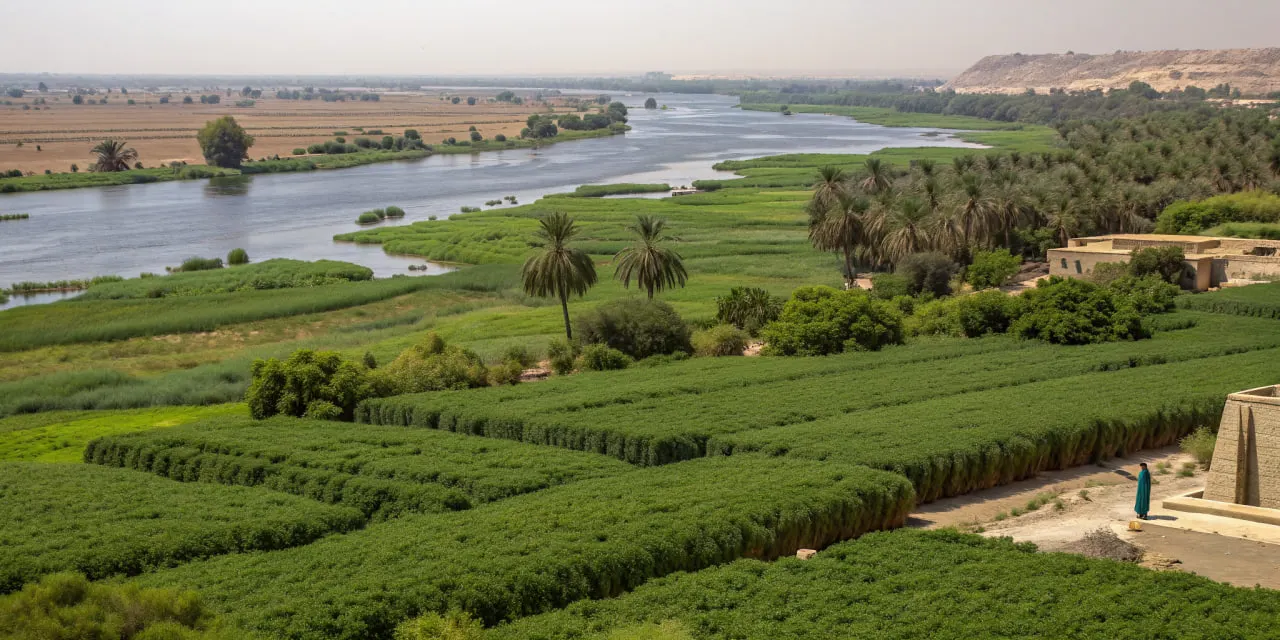
The land of Goshen is located in the east of Egypt, it is the easternmost part, the Nile delta. It began at a place called Fogas: fo is a kind of article in the Egyptian language (like in German das, or in English the, or in Hebrew ha); gas is a shortening of the names gesem, or geshem, or goshen, or gesen – this is the flooding of the Nile delta, fertile, green meadows in the east of Egypt. On the other side, in the northeast, it ended at a place called Per-Ramses, this is today's province of Ash-Sharqiya in Egypt, very fertile meadows, places of pasture. By the way, the city of Fakus, which we mentioned above, exists to our time. True, the Arabs invented an Arabic etymology for this name. Well, but what does that change? And everyone knows that the land of Goshen is fertile land. And Yaakov surely knows about this, so there is no need to tell him about it in detail.
וְהָיִיתָ קָרוֹב אֵלַי אַתָּה וּבָנֶיךָ וּבְנֵי בָנֶיךָ וְצֹאנְךָ וּבְקָרְךָ וְכָל-אֲשֶׁר-לָךְ׃
vechilkaltí otechá sham ki-ód chamésh shaním ra'áv pen-tivvarésh attá uvetechá vechol-asher-lách
11 And there I will give you sustenance, For there will be five more years of famine, So that you do not become poor, you and your house, from everything that you have.
This is what Yosef commands the brothers: to go urgently to their father and tell him.
וְהִנֵּה עֵינֵיכֶם רֹאוֹת וְעֵינֵי אָחִי בִנְיָמִין כִּי-פִי הַמְדַבֵּר אֲלֵיכֶם׃
Vehinné enechém ro'ót ve'ené achí vinyamín ki-fí hamdabbér alechém
12 For behold, Your eyes see And the eyes of my brother, Binyamin, see That it is my mouth that speaks to you.
An almost American phrase read my lips (read me from my lips), but here: “You yourselves will testify to the father that you saw me, who in Hebrew, in our home language, told you this. And you, brothers, who perhaps were far from me, and Binyamin, who perhaps, although he was little, was closer to me and remembers me better, you will be witnesses that it was my mouth that told you, that it was I who promised you.”
וְהִגַּדְתֶּם לְאָבִי אֶת-כָּל-כְּבוֹדִי בְּמִצְרַיִם וְאֵת כָּל-אֲשֶׁר רְאִיתֶם וּמִהַרְתֶּם וְהוֹרַדְתֶּם אֶת-אָבִי הֵנָּה׃
vehiggadtém le'aví et-kol-kevodí bemitzrayim ve'ét kol-ashér re'itém umihartém vehoradtém et-aví hénna
13 And tell my father About all the honor with which I am surrounded in Egypt, And about all that you have seen, And hurry, and bring my father down here.”
Yosef, apparently, is after all concerned, worried precisely about what is happening now with his father. Is he healthy? Will he survive this whole journey, this whole journey of his sons to Egypt, the absence of his sons? This is what, apparently, Yosef is worried about, and to persuade him to come down to him, he says: “Tell him everything you have seen. Win him over, present this story to him beautifully, so that he is not afraid to come down to Egypt.” In short: “you are talented speakers here, you will persuade him.” And already after he has again laid out the economic program (remember, when he interpreted the dreams for Pharaoh, he laid out the economic program without emotion and said what to do), he gives vent to his feelings.
וַיִּפֹּל עַל-צַוְּארֵי בִנְיָמִן-אָחִיו וַיֵּבְךְּ וּבִנְיָמִן בָּכָה עַל-צַוָּארָיו׃
vayippól al-tzavveré vinyamin-achív vayévk uvinyamín bacha al-tzavvaráv
14 And he fell on the neck of Binyamin, his brother, And wept, And Binyamin wept on his neck.
Many pay attention to the form of the expression al tzavere – on the necks of his brother. The thing is that the word neck today has become the word tzavar (singular). In ancient Hebrew the right and the left side of the neck existed as separate parts, like, for example, the cheeks: one is léchi, the second is léchi, together lechayáyim – a dual plural; in the same way also tzavaráim or tzavarím – like the mouths of the neck. So, it was not on the necks of Binyamin (Binyamin had one neck) that he fell.
וַיְנַשֵּׁק לְכָל-אֶחָיו וַיֵּבְךְּ עֲלֵיהֶם וְאַחֲרֵי כֵן דִּבְּרוּ אֶחָיו אִתּוֹ׃
vaynashék lechol-echáv vayévk alehém ve'áchare chen dibberú echáv ittó
15 and Kissed each of the brothers, and wept together with them (on each of them, one can say, embracing each of them), And after this the brothers talked with him.
We know very little of what the brothers say. We see Re'uven, Yehuda in this story. We, perhaps, know that somewhere there Shimon and Levi are in the background. The rest of the brothers: Dan, Asher, Yissachar, Naftali, Gad and Zevulun, we do not hear in this story. But apparently the brothers all talked with him, told him about how life had been going. Yehuda could tell about the two children whom he buried, about the story with his daughter-in-law. Binyamin – about the ten children whom he fathered. And each had something to tell, each had a whole lived life behind him, although these are still young people.
וְהַקֹּל נִשְׁמַע בֵּית פַּרְעֹה לֵאמֹר בָּאוּ אֲחֵי יוֹסֵף וַיִּיטַב בְּעֵינֵי פַרְעֹה וּבְעֵינֵי עֲבָדָיו׃
vehakkól nishmá bet par'ó lemór bá'u aché yoséf vayitáv be'ené far'ó uv'ené avadáv
16 And the rumor reached the house of Pharaoh, that The brothers of Yosef have come. This pleased Pharaoh and his servants.
Everyone was glad for Yosef. Why is it written “and his servants”? None of the servants said: “This one Jew alone was oppressing us here, now there will be twelve times more of them, or even seventy. And how will this end? These Jews have sold off Egypt and gotten it drunk, corrupted it.” Nothing of the kind. Apparently, Yosef was able to position himself in such a way that Pharaoh's servants could rejoice at his joy.
וַיֹּאמֶר פַּרְעֹה אֶל-יוֹסֵף אֱמֹר אֶל-אַחֶיךָ זֹאת עֲשׂוּ טַעֲנוּ אֶת-בְּעִירְכֶם וּלְכוּ-בֹאוּ אַרְצָה כְּנָעַן׃
vayomer par'ó el-yoséf emór el-achécha zot asú ta'anú et-be'irechém ulchu-vó'u artza kená'an
17 And Pharaoh said to Yosef: “Say to your brothers: This is what you are to do: Load up your livestock now, And go to the land of Canaan.
וּקְחוּ אֶת-אֲבִיכֶם וְאֶת-בָּתֵּיכֶם וּבֹאוּ אֵלָי וְאֶתְּנָה לָכֶם אֶת-טוּב אֶרֶץ מִצְרַיִם וְאִכְלוּ אֶת-חֵלֶב הָאָרֶץ׃
ukchú et-avichém ve'et-battechém uvó'u eláy ve'ettená lachém et-túv éretz mitzráyim ve'ichlú et-chelev ha'aretz
18 Take your father And your households And come to me (now they have a personal invitation from Pharaoh), And I will give you The best that there is in the house, in the land of Egypt, And they will eat of the fat of the land.”
וְאַתָּה צֻוֵּיתָה זֹאת עֲשׂוּ קְחוּ-לָכֶם מֵאֶרֶץ מִצְרַיִם עֲגָלוֹת לְטַפְּכֶם וְלִנְשֵׁיכֶם וּנְשָׂאתֶם אֶת-אֲבִיכֶם וּבָאתֶם׃
ve'attá tzuvvéta zot asú kechu-lachém me'éretz mitzráyim agalót letappechém velinshechém unsatém et-avichém uvatém
19 And you, command that they do so: Take for yourselves from the land of Egypt chariots For your children and for your wives, And bring your father on them.
וְעֵינְכֶם אַל-תָּחֹס עַל-כְּלֵיכֶם כִּי-טוּב כָּל-אֶרֶץ מִצְרַיִם לָכֶם הוּא׃
ve'enechém al-tachós al-kelechém ki-túv kol-éretz mitzráyim lachém hu
20 And let your eyes not spare some trifle, vessels, do not be petty as you pack, Because all the good things of the land of Egypt will be yours.”
וַיַּעֲשׂוּ-כֵן בְּנֵי יִשְׂרָאֵל וַיִּתֵּן לָהֶם יוֹסֵף עֲגָלוֹת עַל-פִּי פַרְעֹהוַיִּתֵּן לָהֶם צֵדָה לַדָּרֶךְ׃
vaya'asu-chén bené yisraél vayittén lahém yoséf agalót al-pí far'ó vayittén lahém tzedá laddárech
21 And the sons of Israel did so, And Yosef gave them Chariots, by the mouth of Pharaoh, And gave them provisions for the road.
Chariots are the advanced technology of Egypt, Yosef has no right to dispose of them himself, therefore he gave the chariots “by the mouth of Pharaoh.”
לְכֻלָּם נָתַן לָאִישׁ חֲלִפוֹת שְׂמָלֹת וּלְבִנְיָמִן נָתַן שְׁלֹשׁ מֵאוֹת כֶּסֶף וְחָמֵשׁ חֲלִפֹת שְׂמָלֹת׃
lechullám natán la'ísh chalifót semalót ulvinyamín natán shelósh me'ót késef vechamésh chalifót semalót
22 To all he gave, To each he gave upper and lower clothing, And to Binyamin he gave three hundred pieces of silver And five changes of clothing.
The commentators say: “Why did he give to Binyamin? And why exactly three hundred pieces of silver?” And it is said thus: “Anyone who sells a Jewish slave to the heathen is fined (this is the Talmud, tractate Gittin, and although this law is late, it will be relevant and interesting for us here). He is liable to a tenfold fine. The price of a Jewish slave is 30 pieces of silver, therefore from each of the ten brothers, from their bonus of 300 pieces of silver, 300 pieces of silver have been deducted. They receive zero, and Binyamin receives a tenfold payment for the fact that he did not take part in the selling of Yosef.
וּלְאָבִיו שָׁלַח כְּזֹאת עֲשָׂרָה חֲמֹרִים נֹשְׂאִים מִטּוּב מִצְרָיִם וְעֶשֶׂר אֲתֹנֹת נֹשְׂאֹת בָּר וָלֶחֶם וּמָזוֹן לְאָבִיו לַדָּרֶךְ׃
ul'avív shalách kezót asará chamorím nose'ím mittúv mitzráyim ve'éser atonót nose'ót bar valéchem umazón le'avív laddárech
23 And to his father he sent ten donkeys, loaded with all the good things of Egypt, And ten she-donkeys, Which carried wheat, and bread, And provisions for his father for the road.
וַיְשַׁלַּח אֶת-אֶחָיו וַיֵּלֵכוּ וַיֹּאמֶר אֲלֵהֶם אַל-תִּרְגְּזוּ בַּדָּרֶךְ׃
vayishlách et-echáv vayeléchu vayomer alehém al-tirgezú baddárech
24 And he sent off his brothers, And they went, And he said to them: “do not quarrel, do not squabble on the road.”
Do not quarrel over who sold whom where, who is guilty of what, who got what. That is, keep the peace, go in peace, do not quarrel, do not be angry. So, Yosef let his brothers go.
We stopped at the point where Yosef said goodbye to his brothers, already as Yosef, and instructed them not to quarrel on the way. Pharaoh blessed the operation organized by Yosef for resettling Israel in Egypt, supplied the brothers with chariots, and on a luxurious road, with chariots, with laden livestock, they go up to the land of Israel to take Yaakov to Egypt, to tell him the joyful news.
וַיַּעֲלוּ מִמִּצְרָיִם וַיָּבֹאוּ אֶרֶץ כְּנַעַן אֶל-יַעֲקֹב אֲבִיהֶם׃
vaya'alú mimmitzráyim vayavó'u éretz kená'an el-yaakóv avihém
25 And they went up out of Egypt, And they came into the Canaanite land To Yaakov, their father.
First of all, without going home, without taking off their shoes, wishing to share the good news, the brothers rushed to their father. That is how it can be understood. Eleven brothers – each has his own family, his own house, his own place where bread is awaited – straight away, as a caravan, on chariots, one could say, as a luxurious motorcade, drive up and park at Yaakov's tent.
וַיַּגִּדוּ לוֹ לֵאמֹר עוֹד יוֹסֵף חַי וְכִי-הוּא מֹשֵׁל בְּכָל-אֶרֶץ מִצְרָיִם וַיָּפָג לִבּוֹ כִּי לֹא-הֶאֱמִין לָהֶם׃
vayaggídu lo lemór od yoséf chay vechi-hú moshél bechol-éretz mitzráyim vayáfog libbó ki lo-he'emín lahém
26 And they told him, saying: “Yosef, why, Yosef is still alive! And besides that, he rules over all the land of Egypt.” And Yaakov's heart stopped, froze, Because he did not believe them.
And so, “neither hello nor good morning,” the sons burst in and say such a thing.
Yaakov, one could say, falls unconscious, almost faints at such a thought. He grows weak, no, he does not lose consciousness, but he grows weak and falls, his heart stopped. The word lafúg in the sense of afugá – cessation, suspension, the freezing of the heart. He did not believe them – apparently they are up to something again. The commentators say: “Well, such is the fate of a little liar: even when he tells the truth, nobody believes him.” The very same brothers who had shown him Yosef's garment, washed in blood, stained with blood, now say that Yosef is alive. Not only that, he also rules over Egypt. How, in what amazing way? Of course, this is hard to believe.
וַיְדַבְּרוּ אֵלָיו אֵת כָּל-דִּבְרֵי יוֹסֵף אֲשֶׁר דִּבֶּר אֲלֵהֶם וַיַּרְא אֶת-הָעֲגָלוֹת אֲשֶׁר-שָׁלַח יוֹסֵף לָשֵׂאת אֹתוֹ וַתְּחִי רוּחַ יַעֲקֹב אֲבִיהֶם׃
vaydabberú eláv et kol-divré yoséf ashér dibbér alehém vayár et-ha'agalót asher-shalách yoséf lasét otó vattechí rúach yaakóv avihém
27 And they told him all the adventures of Yosef which he had told them, everything that he had commanded them to tell, And he saw all the chariots that Yosef had sent to carry him, And then the spirit of Yaakov, their father, revived.
Chariots (I have already spoken about this) are the advanced technology of Egypt. In the whole surrounding region only Egypt has them, and Egypt does not have that many of them either. Ordinary Egyptians do not have such chariots, this is royal equipment. And therefore, naturally, only by Pharaoh's word could such a royal taxi have been sent for Yaakov. This is what convinced Yaakov. There are commentators who tell something a little different, that Yaakov had studied a certain chapter of the Talmud with Yosef, and so, when he saw the chariots, these were associations with that chapter. But there is, after all, the simple meaning, and from the simple meaning it is clear that Yaakov saw this luxury and understood that stealing chariots in order to deceive him like this is not the same as staining a garment with blood. And then the spirit of Yaakov revived, Yaakov came alive, came to himself. One can say (and this is also noted, there is such a shade in this) that at this moment the Spirit of God descended upon him.
וַיֹּאמֶר יִשְׂרָאֵל רַב עוֹד־יוֹסֵף בְּנִי חָי אֵלְכָה וְאֶרְאֶנּוּ בְּטֶרֶם אָמוּת׃
vayomer yisraél rav od-yoséf bení chay ELÉCHA VE'ER'ÉNNU BETÉREM AMÚTThe Russian transliteration leaves off the final t of the last word. The Hebrew reads amút (“I die”), so the English line follows the Hebrew.
28 And Yisrael said: “Great! My son, Yosef, is still alive.
In the Russian translation rav is enough. No, not enough. Rav is much, it is great. One can put it this way: “How great is the grace that the Most High has done for me!” An amazing reaction of Yaakov, from the point of view of a believing person. Someone else would start saying: “Glory to the LORD! Great are Your works, LORD! How much You have made! Glory to God! Baruch haShem! Yishtabach Shemo!” and would pronounce many other blessings. But in Yaakov's house faith is not always on display, and so Yaakov's prayer in his pure heart is expressed in one word: “Great!” That is: “What a great thing, what a great mercy the Most High has done with me!” Again, this phrase too, this word the commentators interpret in different ways. Some say: “Our Yosef, wow, what a big shot he is, how high he has risen!” and this is not the same as: “Look at that, my Yosef is alive!” And, most likely, this word rav further on too, in Tehillim, for example, is very often used for glorifying the Most High. Here there is a wonderful exclamation of joy, which is at the same time also a prayer. We sometimes pray with unuttered exclamations, sometimes with uttered exclamations, and this too can be prayer. Pay attention: when little kids give each other presents, they do not say thank you, don't mention it, you're welcome – they rejoice. There is the emotion of joy which the child shares in return, and with his joy he expresses gratitude. And when we rejoice in what the Most High gives us, then the joy that we have such a caring Father, the joy that He cares for us so much – it in itself can be greater than the words thank you, Glory to You, Great is Your mercy, because He knows that the glory belongs to Him and that His mercy is great, but heartfelt joy, sincerity, is hard to attain. Therefore here one can see that Yaakov prays to the Most High with this word rav.
We have finished chapter 45 and continue from verse 1 of chapter 46:
וַיִּסַּע יִשְׂרָאֵל וְכָל־אֲשֶׁר־לוֹ וַיָּבֹא בְּאֵרָה שָּׁבַע וַיִּזְבַּח זְבָחִים לֵאלֹהֵי אָבִיו יִצְחָק׃
vayissá yisraél vechol-asher-ló vayavó be'éra sháva vayizbách zevachím
1 And Yisrael set off, Yisrael went forth And all that he has (pay attention, he did not set off on the chariots), And he came to Be'er-Sheva, And he brought a sacrifice to the God of his father, Yitzchak.
Sacrifices, of course, were brought before Yaakov too. They were brought starting with Kayin and Hevel, and Noach, and Avraham, and Yitzchak. For the first time here what is brought is not an olá (burnt offering), but a zévach (peace offering). The number of Yaakov's sons has been restored to twelve; consequently, the promise of the covenant that was given to Yitzchak is already being realized, and Yaakov brings the zévach sacrifice. The difference between the zévach (peace offering, for propitiation) sacrifice and the olá (burnt offering) sacrifice is that the burnt offering is burned entirely, it is all for the Most High, while the offering of propitiation is a sacrifice which the one who brings it also eats. It is a shared meal with the Most High. And here, at the moment of the making of the covenant, the fulfillment of the covenant between Israel and the Most High, here Yaakov brings such a sacrifice.
Why is it written: to the God of Yitzchak, not to the God of Avraham? Well, first, a person is obligated to honor his father more than his grandfather, so say most commentators. There is one more important detail: Yitzchak in his time also wanted to go down to Egypt because of famine. The Most High appeared to him and told him not to go down. Yaakov comes to Be'er-Sheva, a place very significant for the people, for him, for Yitzchak, for Avraham, to a place where there surely are also old altars which they had set up there. And Yaakov brings a sacrifice there with the question: should he, in fact, go down to Egypt or not go down? Maybe all this enthusiasm of his is entirely out of place?
וַיֹּאמֶר אֱלֹהִים לְיִשְׂרָאֵל בְּמַרְאֹת הַלַּיְלָה וַיֹּאמֶר יַעֲקֹב יַעֲקֹב וַיֹּאמֶר הִנֵּנִי׃
vayomer elohím leyisraél bemar'ót halláyla vayomer yaakóv yaakóv vayomer hinnéni
2 And God said to Israel in a night vision, And spoke to him: “Yaakov, Yaakov!” And he said: “Here I am.”
וַיֹּאמֶר אָנֹכִי הָאֵל אֱלֹהֵי אָבִיךָ אַל־תִּירָא מֵרְדָה מִצְרַיְמָה כִּי־לְגוֹי גָּדוֹל אֲשִׂימְךָ שָׁם׃
vayomer anochí ha'él elohé avícha al-tirá meredá mitzráyma ki-legóy gadól asimechá sham
3 And said to him: “I am the God of your father, Do not be afraid to go down to Egypt, For I will make of you there a great nation. I will set you up there as a great nation.
“Do not be afraid” is said precisely to the one who is afraid. There is no such thing here as Yaakov saying: “But I am not afraid at all! It's all the same to us!” No, it is precisely for this reason that he brought the zevachím sacrifices, precisely for this reason the Most High says to him: “Do not be afraid! I will make you there, I will realize your potential as a great nation.”
אָנֹכִי אֵרֵד עִמְּךָ מִצְרַיְמָה וְאָנֹכִי אַעַלְךָ גַם-עָלֹה וְיוֹסֵף יָשִׁית יָדוֹ עַל-עֵינֶיךָ׃
anochí eréd immechá mitzráyma ve'anochí a'alchá gam-aló veyoséf yashít yadó al-enécha
4 I will go down with you to Egypt, I will bring you up and bring up your people, And Yosef will close, will lay his hands on your eyes.”
What the Most High says here is very important. Naturally, the LORD – He is everywhere, He cannot move from Jerusalem to Egypt. He is saying that: “I will be with you in Egypt, My providence, My plan, My eyes will be on you constantly in Egypt.” That is, everything is thought through, everything is in the plan: “I have foreseen everything for you. I am going with you. I am leading you by the hand. That means, whatever happens, I will bring you up, you will return to Israel (will be buried in Israel in this case), and I will bring up your sons.”
“Yosef will close your eyes” – an old custom, it exists among all peoples, including among the people of Israel: when someone dies, a person close to him closes his eyes.
וַיָּקָם יַעֲקֹב מִבְּאֵר שָׁבַע וַיִּשְׂאוּ בְנֵי-יִשְׂרָאֵל אֶת-יַעֲקֹב אֲבִיהֶם וְאֶת-טַפָּם וְאֶת-נְשֵׁיהֶם בָּעֲגָלוֹת אֲשֶׁר-שָׁלַח פַּרְעֹה לָשֵׂאת אֹתוֹ׃
vayákom yaakóv mibbe'ér sháva vayis'ú vene-yisraél et-yaakóv avihém ve'et-tappám ve'et-neshehém ba'agalót asher-shalách par'ó lasét otó
5 And Yaakov rose up from Be'er-Sheva, And the sons of Israel carried Yaakov, their father, And their children, And their wives On those chariots Which Pharaoh had sent to carry him.
It is noted that it was precisely for Yaakov's sake, for the sake of his honor, that Pharaoh sent the chariots. The children and the wives, naturally, were carried too – they could hardly go on foot. But only at the moment when Yaakov received the blessing of the Most High does he get onto the “extraterritorial” chariots, so to speak. He enters the territory of Egypt by getting into the chariots. Before this it is nowhere said that he traveled on these chariots.
וַיִּקְחוּ אֶת-מִקְנֵיהֶם וְאֶת-רְכוּשָׁם אֲשֶׁר רָכְשׁוּ בְּאֶרֶץ כְּנַעַן וַיָּבֹאוּ מִצְרָיְמָה יַעֲקֹב וְכָל-זַרְעוֹ אִתּוֹ׃
vayikchú et-miknehém ve'et-rechushám ashér racheshú be'éretz kená'an vayavóu mitzráyima yaakóv vechol-zar'ó ittó
6 And they took their livestock, And their possessions, All that they had acquired in the land of Canaan, And they came to Egypt, Yaakov and all his seed with him.
What did they not take? Why is it written: “all that they had acquired in the land of Canaan”? They did not take with them the livestock that they had bought, that they had acquired in Charan. After all, Yaakov came from Charan with large flocks. And he, apparently, separated out that which, from the fruits of the land of Israel, goes down from Israel to Egypt. Everything from Charan could be sold, turned into money. But the true blessing that Yaakov brings down to Egypt is not the blessing of Charan, it is the blessing of the land of Canaan, the country that is the country of Israel. That is why the Torah notes such a detail, that they took what they had acquired in the country of Canaan.
בָּנָיו וּבְנֵי בָנָיו אִתּוֹ בְּנֹתָיו וּבְנוֹת בָּנָיו וְכָל-זַרְעוֹ הֵבִיא אִתּוֹ מִצְרָיְמָה׃
banáv uvné vanáv ittó benotáv uvnót banáv vechol-zar'ó heví ittó mitzráyma
7 Sons, and the sons of his sons with him, And his daughters, and the daughters of his sons, And all his seed He brought with him to Egypt.
The daughters of the sons, they are like sons in inheritance, but the sons of the daughters do not inherit that way, because a daughter goes into the house of her husband, and there she already inherits for the house of her husband. Therefore the sons of the daughters are separate, while the daughters of the sons remain in the house of the father, in the house of the son, and consequently they also inherit differently.
So, Yaakov and all his family go down to Egypt. Further on the Torah will list the names of all the sons, and we, with God's help, will try to trace how and what names Yaakov's sons gave to his grandsons. We have said that names are prayers, names are hopes, names are signs. And perhaps, by looking at the names, we will learn something more about them. After all, in essence, we know very little about most of Yaakov's sons, about whom it is sometimes simply only mentioned that they were born, and nothing more is known about them. Perhaps, by studying the names, we will be able to understand something.
We stopped at this: the Torah told us how Yaakov and his whole household with sons and grandsons goes down to Egypt. And in our passage the Torah will list the names of the whole family of Yaakov, of everyone who goes down with him to Egypt. We will try to look into these names a little.
וְאֵלֶּה שְׁמוֹת בְּנֵי-יִשְׂרָאֵל הַבָּאִים מִצְרַיְמָה יַעֲקֹב וּבָנָיו בְּכֹר יַעֲקֹב רְאוּבֵן׃
ve'élle shemót bene-yisraél habba'ím mitzráyima yaakóv uvanáv bechór yaakóv re'uvén
8 Here are the names of the sons of Israel who are going down to Egypt: Yaakov and the sons, The firstborn of Yaakov – Re'uven.
וּבְנֵי רְאוּבֵן חֲנוֹךְ וּפַלּוּא וְחֶצְרוֹן וְכַרְמִי׃
uvné re'uvén chanóch ufallú vechetzrón vecharmi
9 And the sons of Re'uven: Chanoch, Palyu, Chatzran, Karmi.
Re'uven has four sons and their names are Chanoch, Palyu, Chatzran and Karmi. The name Chanoch is surely familiar to most readers in the form Enoch. That was the name of the first son of Kayin, the firstborn of Adam's firstborn, that is, Adam had a firstborn and the firstborn had a son, his name was Chanoch. The firstborn of the seventh generation, whom “the LORD took from the earth,” also had the name Chanoch; this Chanoch is called “the seventh from Adam.” Yaakov also has a firstborn, and this firstborn also has a firstborn, and he too is named Chanoch. Chanoch means renewed, initiator, the first beginning of something new. For example, housewarming in Hebrew is chanukát-bayt. And the festival of Renewal (Chanuká) comes from the very same root.
Palyu is a name that sounds unusual to the modern ear; this is the second son of Re'uven. His name comes from the root פלה (pei-lamed-hei) – one who knows how to distinguish, who understands subtleties, who knows how to reason subtly, able to distinguish between things.
The third son of Re'uven is named Chatzran. One of the understandings of this name is also connected with the meaning knowledgeable, discerning, able to delimit things, knowing the boundaries between things – such an experienced, “hard-boiled” lawyer. The second meaning of this word is simpler, from the root chatzér (courtyard), and it simply means a settled person, a person who has switched to a settled way of life.
The name of the fourth son is Karmi, which means I am the vineyard of the Most High or the LORD is my Vinedresser, it can also be translated that way, or born in a vineyard (if we are being completely mundane), from the root kérem – vineyard.
What can be said about these names? If we take into account that both Palyu and Chatzran are legal terms of a peculiar kind, then one can say that this is about some kind of struggle for rights. And then in the name Karmi – my allotment from the Most High, my vineyard – one can discern that Re'uven, to some extent, is trying to defend his rights of the firstborn, to fight for his position as firstborn. And then his vineyard is his share, received as the share of the firstborn or no longer as the firstborn, one can reason in different ways. Those are the four sons Re'uven has.
וּבְנֵי שִׁמְעוֹן יְמוּאֵל וְיָמִין וְאֹהַד וְיָכִין וְצֹחַר וְשָׁאוּל בֶּן-הַכְּנַעֲנִית׃
uvné shim'ón yemu'él veyamín ve'óhad veyachín vetzóchar vesha'úl ben-hakkana'anít
10 Here are the sons of Shimon: Yemu'el, and yamin, and ohed, and yachin, and itzchar, and sha'ul, son of the Canaanite woman.
So, Yemu'el, the eldest son of Shimon, his name means the LORD is my right hand, the LORD is my strength.
Yamin, the second son, – strong or the one who gives me strength. Look how much emphasis on strength there is with Shimon. We know that Shimon and Levi are the main defenders with the sword in Yaakov's family, for good or for bad.
The third son is Ohed. Ohed is the one who supports, encourages, the one who shouts “hurrah”. In modern Hebrew ohadím are fans, ohed is a fan – a soccer fan, a sports fan, one who supports, who backs up.
Yachin, one more name, means one who is in a state of combat readiness.
Tzchor, one more son, means one who sees the situation clearly, one who lights up the field, lights up the day.
And among the sons of Shimon there is also Sha'ul, son of the Canaanite woman. Little can be said about who this is. For some reason it is understood that Dina – she is the Canaanite woman, and perhaps Shimon adopted, as the son of a stranger woman, precisely the son of Dina, and that is how this Sha'ul came about. In general, if you look, the sons of Shimon, all the names in the family are tied to strength, to the realization of strength. Shimon constantly puts the emphasis on strength, and here – Sha'ul, son of the Canaanite woman, who somehow slipped in here, it is not at all clear who he is, and the story with Dina, perhaps, does not look so strange here after all.
וּבְנֵי לֵוִי גֵּרְשׁוֹן קְהָת וּמְרָרִי׃
uvné leví gereshón kehát umrarí
11 The sons of Levi: Gershon, Kehat and Merari.
Gershon is a stranger, an exile, one who has no allotment of his own in the land.
Kehat is one who lives a quiet life, not a bustling one, but removed from everything, hides far from view, like people who lived through persecution sitting out in the provinces.
And Merari is enduring, one who bears it out or one who waits things out, sitting on the sidelines. A very interesting set of names, it resembles: “hide, wait it out, sit in ambush.”
וּבְנֵי יְהוּדָה עֵר וְאוֹנָן וְשֵׁלָה וָפֶרֶץ וָזָרַח וַיָּמָת עֵר וְאוֹנָן בְּאֶרֶץ כְּנַעַן וַיִּהְיוּ בְנֵי־פֶרֶץ חֶצְרוֹן וְחָמוּל׃
uvné yehudá er ve'onán veshelá vaféretz vazárach vayámot er ve'onán be'éretz kená'an vayihyú vene-féretz chetzrón vechamúl
12 The sons of Yehuda: Er, Onan, Shela, Peretz, Zerech (these are all names that we learned about and discussed before); Er and Onan died in the country of Canaan, And the sons of Peretz: Chetzron And Chamu'el.
Once again Chetzron, about whom we have already spoken, possibly means lawyer, and possibly – the first settled person.
Chamul means the one whom the Most High has pardoned, to whom the Most High has shown mercy, from the word chemlá (to pardon). After Yehuda's sons had died, he apparently gave his son a name as with mercy, with a plea for mercy, that is why he is Chamul.
וּבְנֵי יִשָׂשכָר תּוֹלָע וּפֻוָּה וְיוֹב וְשִׁמְרוֹן׃
uvné yisachár tolá ufuvvá veyov veshimrón
13 The sons of yissachar: Tola, and Puva, and Yov, and Shamron.
The name Tola comes from the name of the dye shení tola'át (crimson) – bright red.
The name Puva is the name of a plant (dyer's madder in modern Russian), also used for dyeing fabrics. That is, two sons are given names connected with dyeing textiles, partly, perhaps, because they are ruddy, red of skin, but quite likely it is connected with the fact that the family was engaged in the dyeing trade.
Yoshuv (or Yov) is a shortening of the name Yoshuvel – the one whom the Most High keeps, or the one whom the Most High guards, or the Most High sees to it that he sits and does not get up, or the one whom the Most High cares for.
And Shimron, the last name, also connected with guarding – will be kept. One can see that in the family of Yissachar there is some kind of industry, some kind of professional experience, and there is a desire to keep everything as it is, so that everything continues the way it is going. Things are going well for Yissachar.
וּבְנֵי זְבוּלֻן סֶרֶד וְאֵלוֹן וְיַחְלְאֵל׃
uvné zevulún séred ve'elón veyachle'él
14 The sons of Zevulun: Sered, Olon and Yachle'el.
Sered means – he will survive, a survivor of sorts, a person who survives.
Elon is a person strong as an oak, the word olón means oak.
And the name of the last, third son is Yachle'el – the Most High will sweeten.
אֵלֶּה בְּנֵי לֵאָה אֲשֶׁר יָלְדָה לְיַעֲקֹב בְּפַדַּן אֲרָם וְאֵת דִּינָה בִתּוֹ כָּל-נֶפֶשׁ בָּנָיו וּבְנוֹתָיו שְׁלֹשִׁים וְשָׁלֹשׁ׃
élle bené le'á ashér yaledá leyaakóv befaddán arám ve'ét diná vittó kol-néfesh banáv uvnotáv sheloshím veshalósh
15 These are the sons of Lea, Whom she bore to Yaakov in Padan-Aram; And Dina, his daughter. And all the souls with him, his sons and daughters, thirty-three.
Further on we read about the sons of Gad. Gad is the seventh son. The gematria of the name Gad – גד (gimel – dalet) – is seven, and he has seven sons. Perhaps this is not by chance.
וּבְנֵי גָד צִפְיוֹן וְחַגִּי שׁוּנִי וְאֶצְבֹּן עֵרִי וַאֲרוֹדִי וְאַרְאֵלִי׃
uvné gad tzif'yon vechaggí shuní ve'etzbón erí va'arodí ve'ar'elí
16 The sons of Gad: Tzifyon and Chaggi, Shuni and Etzbon, Eri, and Arodi, and Ar'eli.
Tzifyon is the eldest son, the name means northern.
Chaggi – one who was born on a festival.
Shuni – one who was born in the place Shuni. And the place Tzifyon is in the valley of Sukkot, this is the northern part of the valley of Sukkot, the northernmost part of the allotment of Gad, although the allotment of Gad did not yet exist then. And Shuni too is connected with the allotment of Gad.
Etzbon is the fourth son, from the word etzbá, which means finger up (this may be the thumb, the way people show it now with the gesture “everything's cool,” or a finger that points up, to the Most High, with gratitude). That is: “everything is good with me, great,” such is the meaning of the name.
The fifth son is Eri, which means (like Er, the son of Yehuda) watchful or standing firm.
Arodi – loaded, or pumped up, or hunched, one who hauls rich spoils on himself.
Ar'eli is one who carries the Most High on himself, this is, one could say, a keruv. In one of the Semitic languages (one of the ancient Semitic forms for keruv) – one who carries God on himself, a God-bearing man, a man upon whom the blessing of the Most High rests. Through his sons Gad says that he first names them after the place where they live, first it is geography, and then, there is the blessing of the Most High connected with prosperity, which came into Gad's family.
וּבְנֵי אָשֵׁר יִמְנָה וְיִשְׁוָה וְיִשְׁוִי וּבְרִיעָה וְשֶׂרַח אֲחֹתָם וּבְנֵי בְרִיעָה חֶבֶר וּמַלְכִּיאֵל׃
uvné ashér yimná veyishvá veyishví uvri'á vesérach achotám UVNÉ veri'Á chéver umalki'él
17 The sons of Asher: Yimna, Yishva, Yishvi, Beri'a, And Serach, their sister, and the sons of Beri'a – Chever and Malki'el.
Yimna, from the word limnót – God will count or there will be no count, only God will be able to count. When the first child is born, one of the possible names that can be given to him is that he will be not the first but endless, that is one out of infinity, such is the meaning of the name.
Yishva and Yishvi are two very similar names, so that some researchers and commentators say that this is a repetition of one and the same name – Yishva, little Yishvie, an affectionate repetition. These may also be the names of twin brothers, Yishva and Yishvi – worthy and my worthy one. Yishva means worthy, worthwhile, fitting, that is, such a wonderful one.
Beri'a means glory of a man, glory of a husband, one who glorifies his father.
They have a sister Serach, whose name can be translated in many different ways. One of the meanings is twining, the one who twines around the family.
The sons of Beri'a: Chever, which means joining or conspiring (similar to the sister's name) and Malchi'el, which means God is my King. Well, with this name everything seems to be clear.
אֵלֶּה בְּנֵי זִלְפָּה אֲשֶׁר-נָתַן לָבָן לְלֵאָה בִתּוֹ וַתֵּלֶד אֶת-אֵלֶּה לְיַעֲקֹב שֵׁשׁ עֶשְׂרֵה נָפֶשׁ׃
élle bené zilpá asher-natán laván lele'á vittó vattéled et-élle leyaakóv shesh esré náfesh
18 These were the sons of Zilpa, Whom Lavan gave to Lea, his daughter, And she bore these to Yaakov; sixteen souls in all.
בְּנֵי רָחֵל אֵשֶׁת יַעֲקֹב יוֹסֵף וּבִנְיָמִן׃
bené rachél éshet yaakóv yoséf uvinyamín
19 And the sons of Rachel, the wife of Yaakov: Yosef and Binyamin.
If, speaking about the names of the previous sons, we read first the list and then the mention of the mother, here it is first the mention of the mother, then the mention of the children, and this is a hint at the special status of Rachel, at Yaakov's special attitude toward Rachel. We read that Yaakov says to his sons: “You know that my wife bore me only two children.”
וַיִּוָּלֵד לְיוֹסֵף בְּאֶרֶץ מִצְרַיִם אֲשֶׁר יָלְדָה-לּוֹ אָסְנַת בַּת-פּוֹטִי פֶרַע כֹּהֵן אֹן אֶת-מְנַשֶּׁה וְאֶת-אֶפְרָיִם׃
vayivvaléd leyoséf be'éretz mitzráyim ashér yaleda-ló asenát bat-póti féra kohén on et-menashé ve'et-efráyim
20 These are the ones who were born to Yosef in the Egyptian land, Whom Asnat, daughter of Poti-far, a kohen, a priest from the city of On, bore to him: Menashe and Efrayim.
This is Yosef's branch. We spoke about the names Menashe and Efrayim when we told about their birth (41:51–52).
וּבְנֵי בִנְיָמִן בֶּלַע וָבֶכֶר וְאַשְׁבֵּל גֵּרָא וְנַעֲמָן אֵחִי וָרֹאשׁ מֻפִּים וְחֻפִּים וָאָרְדְּ׃
uvné vinyamín béla vavécher ve'ashbél gerá vena'amán echí varósh muppím vechuppím va'árd
21 And the sons of Binyamin: Bela, and Bechor, and Eshbal, Gera'a, and Na'aman, Echi, and Rosh, Muppim, and Chuppim, and Ard.
The very same Binyamin of whom the Torah says that he is a lad, that he is a very young man, he has the most children of all his brothers, he has ten children. And his children are called like this: Bela, which means longing, or sorrow, or missing someone, to miss someone.
Bechor – this means the eldest or of the eldest; one who will follow the eldest. Perhaps, again, like the first, this name speaks of longing, of sorrow for the elder brother, for Yosef.
Eshbal is an unusual name, it means one who presses his lips together – one who presses his lips together in sorrow, in weeping, a kind of weeping, mimic expression of the face.
Gera'a, the next name, is a wanderer of God.
Na'aman – one who dwells in sadness and longing.
Echi – my brother.
Rosh means, actually, head. This name can have many meanings. The commentators say that in light of all the other names that Binyamin gave his sons, Rosh can mean to clutch one's head.
Further we read, Muppim – this is to wipe the face, Chuppim – this is to cover the face with the hands.
We have already spoken about the name Ard: this is one who is hunched; one who hauls a burden on himself (perhaps spoils, and perhaps simply sorrow, in Binyamin's case). Many commentators note that Binyamin gave all ten of his sons names connected with sorrow for Yosef.
אֵלֶּה בְּנֵי רָחֵל אֲשֶׁר יֻלַּד לְיַעֲקֹב כָּל-נֶפֶשׁ אַרְבָּעָה עָשָׂר׃
élle bené rachél ashér yullád leyaakóv kol-néfesh arba'á asár
22 These are the sons of Rachel who were born to Yaakov, fourteen souls in all.
וּבְנֵי-דָן חֻשִׁים׃
uvne-dán chushím
23 The sons of Dan: Chushim.
Dan has only one son, his name is Chushim. Chushim means hurrying, hastening or haste, bustle, hurriedness. One who hurries succeeds (one can also put it this way) – this is chushim, in a good sense. Many Hasidic teachers say that it is great to repeat this verse for prosperity, for attaining prosperity, because later we see a greatly expanded tribe of Dan. Despite the fact that he had one son, from him came the largest tribe in Israel, with a very unusual destiny. But, one way or another, in his lifetime Dan saw the most descendants precisely from his son Chushim. A question arises: where does the tribe of Dan disappear to later? We will not talk about this for now, it is out of place to talk about it while discussing the pshat of the Torah, discussing the pshat of the weekly portion, so I am leaving this question “for later.”
וּבְנֵי נַפְתָּלִי יַחְצְאֵל וְגוּנִי וְיֵצֶר וְשִׁלֵּם׃
uvné naftalí yachtze'el veguní veyétzer veshillém
24 The sons of Naftali: Yachtze'el, and Guni, and Yetzer, and Shillem.
Naftali has four sons: Yachtze'el – means God will divide me, will break me into two halves. Guni means my half, Yetzer – will mold from two, will join into one, will sculpt. Shillem means whole. One can see an interesting tendency: first God will break me, and then will heal me. What this means in Naftali's life is hard to say, but apparently Naftali went through certain vicissitudes, and he gave his sons such names.
אֵלֶּה בְּנֵי בִלְהָה אֲשֶׁר-נָתַן לָבָן לְרָחֵל בִּתּוֹ וַתֵּלֶד אֶת-אֵלֶּה לְיַעֲקֹב כָּל-נֶפֶשׁ שִׁבְעָה׃
élle bené vilhá asher-natán laván lerachél bittó vattéled et-élle leyaakóv kol-néfesh shiv'á
25 These are all the sons of Bilha, whom Lavan gave to Rachel, his daughter, And she bore them to Yaakov; seven souls in all.
כָּל-הַנֶּפֶשׁ הַבָּאָה לְיַעֲקֹב מִצְרַיְמָה יֹצְאֵי יְרֵכוֹ מִלְּבַד נְשֵׁי בְנֵי-יַעֲקֹב כָּל-נֶפֶשׁ שִׁשִּׁים וָשֵׁשׁ׃
kol-hannéfesh habba'á leyaakóv mitzráyima yotze'é yerechó millevád neshé vene-yaakóv kol-néfesh shishím vashésh
26 All the souls that went down with Yaakov to Egypt, All who came out of his loins, Besides the wives of Yaakov's sons, Sixty-six souls in all.
וּבְנֵי יוֹסֵף אֲשֶׁר-יֻלַּד-לוֹ בְמִצְרַיִם נֶפֶשׁ שְׁנָיִם כָּל-הַנֶּפֶשׁ לְבֵית-יַעֲקֹב הַבָּאָה מִצְרַיְמָה שִׁבְעִים׃
uvné yoséf asher-yullad-ló vemitzráyim néfesh shenáyim kol-hannéfesh levet-yaakóv habba'á mitzráyimaFor the second mention of Egypt in this verse, the Russian transliteration has mitzráyim. The Hebrew reads mitzráyima (“to Egypt”), as in verse 26, so the English line follows the Hebrew. shiv'ím
27 And the sons of Yosef, who were born in Egypt, two souls (in Egypt two were born to Yosef); and all the souls that go down with Yaakov to Egypt – seventy (this, of course, including Yaakov himself).
Such are the names the Torah tells us about. They reveal something to us (even if only a little) about the sons of Yaakov. It is very interesting how people gave names to their sons, what they put into them and how differently we choose names for our children today. For the parents, names were like notes, like a diary of their dreams or of what was happening to them. Children were most often named based on what they would mean for the parents, in their destiny, or what they signify as something already accomplished, or what the parents want to receive through them. A distinctive prayer of gratitude or a prayer-wish was contained in a child's name.
We stopped at the point where Yaakov goes down with his whole large family, numbering no more and no less than seventy people, to Egypt. And we went through the list of these people name by name. The Torah digressed from describing the events in order to list the names of all those who go down to Egypt, and we tried to study these names more closely. Now the Torah returns to retelling the story of how Yaakov with his family goes down to Egypt.
וְאֶת-יְהוּדָה שָׁלַח לְפָנָיו אֶל-יוֹסֵף לְהוֹרֹת לְפָנָיו גֹּשְׁנָה וַיָּבֹאוּ אַרְצָה גֹּשֶׁן׃
ve'et-yehudá shalách lefanáv el-yoséf lehorót lefanáv góshna vayavó'u ártza góshen
28 And Yehuda he sends ahead of himself to Yosef, To direct everyone to Goshen, So that they would arrive in the land of Goshen.
By tradition, when a noble person travels somewhere, he sends messengers ahead of himself who organize his visit or his move. Yaakov cannot (it is not fitting for his rank and not fitting for his status) simply move to an empty place, therefore everything must be prepared for his move. A place must be chosen where he will stop, how he will stop, he and all his large household. And so, they arrive in the land of Goshen.
וַיֶּאְסֹר יוֹסֵף מֶרְכַּבְתּוֹ וַיַּעַל לִקְרַאת-יִשְׂרָאֵל אָבִיו גֹּשְׁנָה וַיֵּרָא אֵלָיו וַיִּפֹּל עַל-צַוָּארָיו וַיֵּבְךְּ עַל-צַוָּארָיו עוֹד׃
vaye'sór yoséf merkavtó vayá'al likrat-yisraél avív góshna vayerá eláv vayippól al-tzavvaráv vayévk al-tzavvaráv od
29 And Yosef prepared a chariot, got into the chariot. And he went up to meet his father in Goshen, And appeared to him, And fell on his neck, And fell on his neck and wept, and again fell on his neck, and again wept.
The commentators see this in different ways. Some say: “It is written plainly: Yosef himself drove his chariot.” This shows that love breaks the chain of command. When a person acts within the bounds of love, moved by love, he pays no attention to his status and can do things that are beneath his status. Hatred – exactly the same, because Pharaoh too himself (it will be said later) harnesses his chariot.
Other commentators say: “No, Yosef uses the services of slaves, and the language of the Torah is such that Yosef went himself, but in fact it is the slaves.” I find it interesting: indeed, such a rule does work, that often a person moved by love or hatred does not look at his status, acts in violation of status, of the chain of command, of the setup, etc. And this is important to remember. We do not know how things were there with Yosef, but it is quite possible that he went to meet his father himself.
Israel is a man no longer young, and the meeting with Yosef is extremely important and moving for him. One can only imagine what feelings are tearing Yaakov apart, rending him, and therefore it is said that “he appeared to him.” One can understand that Yosef appeared from afar and was approaching, and everyone saw and said: “Look, there he comes, Yosef!” And Israel peered: is it him or not him? He had parted from Yosef when Yosef was 17 – a young kid, now a forty-year-old man is coming toward him and, apparently, does not reveal himself to him right away. There is a kind of stage preparation, so that, God forbid, Israel would not lose consciousness.
…and again fell on his neck and again wept – here the commentators say: “Why then did Israel not weep, and only Yosef wept?” But in fact, it is not clear from the text who wept here, who fell on whose neck here. One can understand that, when Yosef came up, Yaakov, Israel, fell on his neck and wept, and wept on his neck some more. Or Yosef fell on Yaakov's neck and wept, and Yaakov also wept. There is no need to reduce this scene to some psychological analysis. And some commentators reduce it also to a theological one and say: “Precisely at this time Yaakov was praying the ‘Shma’ prayer, and therefore he did not weep, and did not embrace his son.” I think that the scene is simple enough, and there is nothing here to pile up theologically: two people meet after twenty years of separation – a heartrending, touching scene, and it is silly to look at who is weeping there, who is not. Most likely, this is how we can understand it, both of them weep.
וַיֹּאמֶר יִשְׂרָאֵל אֶל-יוֹסֵף אָמוּתָה הַפָּעַם אַחֲרֵי רְאוֹתִי אֶת-פָּנֶיךָ כִּי עוֹדְךָ חָי׃
vayomer yisraél el-yoséf amúta happá'am acharé re'otí et-panécha ki odechá chay
30 And Yisrael said to Yosef: “I will die now, After I have seen your face, and you are, after all, alive.”
This does not mean: “Now I will die because I saw your face.” Yaakov was preparing for death, Yaakov constantly speaks to his children about death, that he is about to die, and for him the question is how he will die. And he says: “I do not want you to bring down my face in grief, in tears to bring my face down to the grave. I do not want my gray hairs to die in grief!” Now Yaakov says, in essence: “Now I can die in peace, because I have seen that you are alive!”
In this whole scene many ask a logical question: is it possible that until his very death Yaakov never found out what happened back then, there, not far from Sh'chem, in Datan? What happened with the pit, with the Yishmaelites, with the Midyanites, the whole story of the sale? And the Torah does not give us an unambiguous answer. In some places one can understand from hints that “yes,” he knew, in others, on the contrary, that “no,” he did not know. But most likely, as we said, Yaakov is an old, sensitive man who must not be upset. It is quite possible that to tell him everything and to recall not only the sale of Yosef, which took place perhaps within three days at most (by the very, very longest versions it took three days), but also the story of the beloved, chosen son and the unloved wife, and what the children felt, and to pick open, to unfold all the feelings forgotten twenty years ago – possibly the brothers decided that this was not necessary. Possibly, for Yaakov the story remained that Yosef got lost, somewhere fought with an animal, somewhere he was picked up and sold into slavery, and we do not know whether Yaakov found out the truth.
There will be one more story, already after Yaakov's death, when the brothers will tell what Yaakov did or did not say. We will still look into this story. But it still remains unknown whether Yaakov found out the truth. We can weigh it, each of us in his own situation: would we tell an aged, beloved father, even one who did not always act fairly, this whole terrible and sad story?
Well, this is how very tersely the Torah describes this meeting. Clearly, in a Hollywood film there would be ten minutes of joyful music alone. But the Torah is a laconic book. Yosef immediately gets down to business. We have spoken about this ability of Yosef's to put forward programs right away: he immediately answered Pharaoh with an economic program, and as soon as he revealed to his brothers who he was, he immediately had a business proposal. And here too Yosef does not give free rein to a romantic scene, although he could have. Yosef immediately speaks to the point.
וַיֹּאמֶר יוֹסֵף אֶל-אֶחָיו וְאֶל-בֵּית אָבִיו אֶעֱלֶה וְאַגִּידָה לְפַרְעֹה וְאֹמְרָה אֵלָיו אַחַי וּבֵית-אָבִי אֲשֶׁר בְּאֶרֶץ-כְּנַעַן בָּאוּ אֵלָי׃
vayomer yoséf el-echáv ve'el-bét avív e'elé ve'aggída lefar'ó ve'omerá eláv acháy uvet-aví ashér be'eretz-kená'an bá'u eláy
31 And Yosef said to his brothers And to the house of his father: “I will go and tell Pharaoh. And I will say to him: My brothers and the house of my father have come to me.
Why does Yosef not speak about this with his father, but speaks with his brothers? Because the brothers are gradually beginning to manage the situation. We already saw this in the case of Dina. And now this sounds even more vividly. Yosef addresses the brothers and the house of his father.
The house of the father – these are the women who live with the father, that is, both the brothers' wives and the father's wives, if they are still alive. A wife is called by the word bayt (house). The house of Yaakov is the women of the house of Yaakov. In Hebrew, also in modern Hebrew, among religious Jews the word house is often a synonym of the word wife. A wife is a house. And the house of Yaakov is the women of the house of Yaakov.
וְהָאֲנָשִׁים רֹעֵי צֹאן כִּי-אַנְשֵׁי מִקְנֶה הָיוּ וְצֹאנָם וּבְקָרָם וְכָל-אֲשֶׁר לָהֶם הֵבִיאוּ׃
veha'anashím ro'é tzon ki-anshé mikné hayú vetzonám uvkarám vechol-ashér lahém heví'u
32 And these men – they are shepherds, Because they were cattle traders, And their small livestock, and the large livestock, and all that they have, they have driven along with them.
Why is it important to repeat this: not simply shepherds, but also cattle traders? Because there were also poor shepherds who hired themselves out to others and only grazed other people's flocks, and had no flocks of their own. This is not what Yosef wants to tell Pharaoh. On the one hand, this means that nothing, in essence, is expected from Pharaoh. They brought everything with them. And, on the other hand, this shows that they are quite rich, that they are successful shepherds. Even in a year of famine they have some livestock or other, and this means that they ought to be given land for pastures. Egypt too will prosper from this. This is what Yosef promises to tell Pharaoh. And then he prepares his brothers for the meeting with him.
וְהָיָה כִּי-יִקְרָא לָכֶם פַּרְעֹה וְאָמַר מַה-מַּעֲשֵׂיכֶם׃
vehayá kiyikrá lachém par'ó ve'amár ma-ma'asechém
33. And it will be, when Pharaoh calls you and asks what your occupation is, what you are by profession?
וַאֲמַרְתֶּם אַנְשֵׁי מִקְנֶה הָיוּ עֲבָדֶיךָ מִנְּעוּרֵינוּ וְעַד-עַתָּה גַּם-אֲנַחְנוּ גַּם-אֲבֹתֵינוּ בַּעֲבוּר תֵּשְׁבוּ בְּאֶרֶץ גֹּשֶׁן כִּי-תוֹעֲבַת מִצְרַיִם כָּל-רֹעֵה צֹאן׃
va'amartém anshé mikné hayú avadécha minne'urénu ve'ad-átta gam-anáchnu gam-avoténu ba'avúr teshevú be'éretz góshen ki-to'avát mitzráyim kol-ró'e tzon
34 and You will say to him: “We have been cattle traders, ‘cattle-occupiers’ from our youth And until now, Both we, And our brothers,” So that he settles you in the land of Goshen (the zone of Egypt with the richest black soil, the most fertile for pastures, but far from the capital), Because an abomination to the Egyptian are all herders of livestock, all those who graze livestock.”
That is: “Pharaoh will not allow such an abominable and unpleasant business near the capital. And we win two things at once. First, you will be farther from the capital, your methods of Divine service will be an eyesore to no one, just like their, Egyptian, methods, since you will live in a remote province. And, second, the Egyptians will not actively express disgust at what you do, and you will be able to engage freely in cattle breeding.” Yosef wanted in advance for Pharaoh to place them in the land of Goshen. Pharaoh does not yet know that he has decided so, but Yosef has prepared everything very well.
At this point we begin chapter 47.
וַיָּבֹא יוֹסֵף וַיַּגֵּד לְפַרְעֹה וַיֹּאמֶר אָבִי וְאַחַי וְצֹאנָם וּבְקָרָם וְכָל-אֲשֶׁר לָהֶם בָּאוּ מֵאֶרֶץ כְּנָעַן וְהִנָּם בְּאֶרֶץ גֹּשֶׁן׃
vayavó yoséf vayaggéd lefar'ó vayomer aví ve'acháy vetzonám uvkarám vechol-ashér lahém báu me'éretz kená'an vehinnám be'éretz góshen
1 And Yosef came, and told Pharaoh, And said: “My father and my brothers, and their small livestock, and their large livestock, and all that came with them from the land of Canaan, And here they are, quite by chance, in the land of Goshen.
וּמִקְצֵה אֶחָיו לָקַח חֲמִשָּׁה אֲנָשִׁים וַיַּצִּגֵם לִפְנֵי פַרְעֹה׃
umiktzé echáv lakách chamishá anashím vayattzigém lifné far'ó
2 And he took five of his brothers and presented them to Pharaoh.
There are in the midrashim, in the tradition, two different lists. According to the first list, he presented to Pharaoh Zevulun, Gad, Dan, Naftali and Asher, that is, the sons of the slave women. According to the second version, he presented to Pharaoh Re'uven, Shimon, Levi, Yissachar and Binyamin. Why such a difference, and where do these lists come from at all? It is written: umiktzé echáv lakách – from the edge of the brothers he took, that is, Yosef presented the five outermost brothers to Pharaoh. Outermost – this may mean outermost by origin, that is, the lowest by origin. In the second version – he presented to Pharaoh the weakest, the most, well, un-pumped-up brothers. Five, because five is the number symbolizing blessing for Egypt, and the weak ones – so that they would not be mobilized, God forbid, into the Egyptian army. The situation is not simple. The Egyptian fatherland is, of course, in danger, because it is the only one that has bread. Other countries are starving, hunger pushes people (not only bad ones) to banditry. And, of course, there are many countries that would like to fight a little war with Egypt, and the Jews from the house of Yaakov are not very keen on the Egyptian army. And therefore there is a version that Yosef presented the simplest, the frailest of all the brothers. Why Levi and Shimon ended up among the frail ones is a debatable question. But such a midrash, such a reading, does exist. The plain meaning – the Torah does not say which five brothers Yosef brought to Pharaoh.
וַיֹּאמֶר פַּרְעֹה אֶל-אֶחָיו מַה-מַּעֲשֵׂיכֶם וַיֹּאמְרוּ אֶל-פַּרְעֹה רֹעֵה צֹאן עֲבָדֶיךָ גַּם-אֲנַחְנוּ גַּם-אֲבוֹתֵינוּ׃
vayomer par'ó el-echáv ma-ma'asechém vayomerú el-par'ó ro'é tzon avadécha gam-anáchnu gam-avoténu
3 And Pharaoh said to the brothers: “What is your occupation?” And they said to Pharaoh: “Shepherds are we, your servants, both we ourselves and our fathers (as if looking into a crystal ball, Yosef foresaw that Pharaoh would ask exactly this).”
וַיֹּאמְרוּ אֶל-פַּרְעֹה לָגוּר בָּאָרֶץ בָּאנוּ כִּי-אֵין מִרְעֶה לַצֹּאן אֲשֶׁר לַעֲבָדֶיךָ כִּי-כָבֵד הָרָעָב בְּאֶרֶץ כְּנָעַן וְעַתָּה יֵשְׁבוּ-נָא עֲבָדֶיךָ בְּאֶרֶץ גֹּשֶׁן׃
vayomerú el-par'ó lagúr ba'áretz bánu ki-én mir'é lattzón ashér la'avadécha ki-chavéd hara'áv be'éretz kená'an ve'attá yeshevu-ná avadécha be'éretz góshen
4 And they said to Pharaoh: “We have come to stay a while in the land, Because now there is no pasture for the livestock that your servants have, Because the famine is great in the land of Canaan, And now let them live permanently in the land of Goshen.”
There is a difference: to stay a while in the land was possible in those times without any special permits – this is tourism, it should not be confused with emigration. And even working tourism is still not emigration. That is: “We have come to stay a while here,” lagúr – to live temporarily. Then the word lashévet – to live permanently already appears, to settle in the land of Goshen.
What are the brothers talking about, and why such a roundabout approach? They say: “Without your permission we came here to graze our livestock a little. We liked it here very much. In this land of Goshen everything is so wonderful that we want to ask you for permanent residence. And this is no longer in Yosef's power to give us, and this can no longer be done just like that, therefore you, Pharaoh, allow us to live in the land of Goshen.”
וַיֹּאמֶר פַּרְעֹה אֶל-יוֹסֵף לֵאמֹר אָבִיךָ וְאַחֶיךָ בָּאוּ אֵלֶיךָ׃
vayomer par'ó el-yoséf lemór avícha ve'achécha báu elécha
5 And Pharaoh said to Yosef, saying: “Your father and your brothers have come to you.
אֶרֶץ מִצְרַיִם לְפָנֶיךָ הִוא בְּמֵיטַב הָאָרֶץ הוֹשֵׁב אֶת-אָבִיךָ וְאֶת-אַחֶיךָ יֵשְׁבוּ בְּאֶרֶץ גֹּשֶׁן וְאִם-יָדַעְתָּ וְיֶשׁ-בָּם אַנְשֵׁי-חַיִל וְשַׂמְתָּם שָׂרֵי מִקְנֶה עַל-אֲשֶׁר-לִי׃
éretz mitzráyim lefanécha hi bemetáv ha'áretz hoshév et-avícha ve'et-achécha yeshevú be'éretz góshen ve'im-yadá'ta veyesh-bám anshe-cháyil vesamtám saré mikné al-asher-lí
6 The land of Egypt is all before you, In the best part of the land settle your brothers and your father, Let them live permanently in the land of Goshen. And if you by chance know that There are among them successful, talented lads, Make them shepherds, in the role of shepherds, also over what I have.”
Pharaoh makes such an offer and says: “Not only let them live here, but if among them there are really talented shepherds – after all, you say that you are hereditary shepherds for many generations – then I trust you right away, and appoint them: if you know some, then appoint them yourself as shepherds over my livestock.” An offer that… We do not know whether the brothers agreed or not, but by all appearances – no. And politically it was right not to agree: the less the Jews are woven into the political and economic life of Egypt during the famine, the safer it is for the Jews. Although, as we will learn later, even this did not help.
וַיָּבֵא יוֹסֵף אֶת-יַעֲקֹב אָבִיו וַיַּעֲמִדֵהוּ לִפְנֵי פַרְעֹה וַיְבָרֶךְ יַעֲקֹב אֶת-פַּרְעֹה׃
vayavé yoséf et-yaakóv avív vaya'amidéhu lifné far'ó vayvárech yaakóv et-par'ó
7 And Yosef brought Yaakov, his father, and set him before Pharaoh, And Yaakov blessed Pharaoh.
Blessed – here not necessarily the way Yitzchak once blessed Yaakov: “And may God give you…”. Blessed – this may be: “O king, live forever!” or “Dear, esteemed Pharaoh! We, the Jewish shepherds, and…” – then an ellipsis, applause. Yaakov blessed Pharaoh. But it is curious to note that there are midrashim that say what blessing Yaakov gave Pharaoh: that the Nile would rise to meet him. One of the interesting qualities of Yaakov the shepherd that the midrashim and the tradition of the midrashim attribute to Yaakov is that water rises to meet him. He does not need a bucket to draw water from a well. No one else can take water from his well. Yaakov comes up, the water rises by itself, overflows the rims of the well and pours along the channels that are made near the well for the livestock. Such a wonderful, marvelous property Yaakov has. About this property, later, a thousand years later, the Samaritan woman will speak, who will say: “Are you like our father Yaakov, who can get water without a mug, without a bucket, without a jug and without a pump? Who gave us this well, and drank from it himself, and all his family?” It is precisely about this property, apparently, that legends circulated in Samaria too in the times of the Mashiach. So, Yaakov blessed Pharaoh. How did he bless him? We cannot know, but there is such an interesting version.
וַיֹּאמֶר פַּרְעֹה אֶל-יַעֲקֹב כַּמָּה יְמֵי שְׁנֵי חַיֶּיךָ׃
vayomer par'ó el-yaakóv kammá yemé shené chayécha
8 And Pharaoh said to Yaakov: “How many days of the years of your life?”
This is such a classic calque from the common Semitic ancient languages – “days of the years of your life.”
וַיֹּאמֶר יַעֲקֹב אֶל-פַּרְעֹה יְמֵי שְׁנֵי מְגוּרַי שְׁלֹשִׁים וּמְאַת שָׁנָה מְעַט וְרָעִים הָיוּ יְמֵי שְׁנֵי חַיַּי וְלֹא הִשִּׂיגוּ אֶת-יְמֵי שְׁנֵי חַיֵּי אֲבֹתַי בִּימֵי מְגוּרֵיהֶם׃
vayomer yaakóv el-par'ó yemé shené megurá y sheloshím um'át shaná me'át vera'ím hayú yemé shené chayáy veló hissígu et-yemé shené chayé avotáy bimé megurehém
9 Yaakov answers Pharaoh and says: “The days of the years of my wandering Are thirty and a hundred years. Few and bad have been the years of my life And they have not reached the longevity of my fathers in the days of their sojourning.”
The word megurá y is the same word lagúr that we read recently, in the meaning to wander, to live temporarily on the land. Yaakov says, as it were: “I am not of this world” or “Is this a life, what you are asking about?” The most fitting understanding: “Is this really a life? It is just, well, wandering!”
Yaakov is 130 years old when he meets Pharaoh. From this one can calculate that Yaakov was 91 years old when Yosef was born. A whole long chronology is derived from this date.
It is possible that Pharaoh's question arose because Pharaoh could not determine Yaakov's age from the way he looked. Yaakov probably looked too old for his hundred and thirty, or something else surprised Pharaoh. But Yaakov answers, and from his answer it is clear that he aged before his time. He says: “Excuse me, it is not that our genetics are like that. It is that my life was hard, and I could not live the way my fathers lived, because…”. Well, indeed, Yaakov's life is very difficult. We already know very much about him, we know how many wanderings and vicissitudes there are in this man's life, and maybe, for his hundred and thirty years, he went gray early. In general, apparently, the conversation was short, purely official.
וַיְבָרֶךְ יַעֲקֹב אֶת-פַּרְעֹה וַיֵּצֵא מִלִּפְנֵי פַרְעֹה׃
vayvárech yaakóv et-par'ó vayetzé millifné far'ó
10 And Yaakov blessed Pharaoh, and went out from before the face of Pharaoh.
Naturally, a king, a pharaoh, a prince, an emperor, a bai, a khan, a caliph is blessed on coming in and on going out. And Yaakov is no exception. Here we see a part of court etiquette.
וַיּוֹשֵׁב יוֹסֵף אֶת־אָבִיו וְאֶת־אֶחָיו וַיִּתֵּן לָהֶם אֲחֻזָּה בְּאֶרֶץ מִצְרַיִם בְּמֵיטַב הָאָרֶץ בְּאֶרֶץ רַעְמְסֵס כַּאֲשֶׁר צִוָּה פַרְעֹה׃
vayoshév yoséf et-avív ve'et-echáv vayittén lahém achuzzá be'éretz mitzráyim bemetáv ha'áretz be'éretz ra'mesés KA'ASHÉR TZIVVÁ FAR'Ó
11 And Yosef settled his father and his brothers, And gave them an allotment, an estate (from the word le'echóz – something that can be held), a possession in the land of Egypt, In the best part of the land, In the land of Ramses, as Pharaoh commanded.
Ramses is located on the southern border of the land of Goshen, it is its capital. Cities will be built there later, but at that moment it is, indeed, a backwater, the twenty-fourth province of ancient Egypt. Indeed, the back of beyond; everyone can understand from their own country what kind of back of beyond this is – a remote backwater, with poor means of communication, but with fertile agricultural land.
וַיְכַלְכֵּל יוֹסֵף אֶת-אָבִיו וְאֶת-אֶחָיו וְאֵת כָּל-בֵּית אָבִיו לֶחֶם לְפִי הַטָּף׃
vaychalkél yoséf et-avív ve'et-echáv ve'ét kol-bét avív léchem lefí hattáf
12 And Yosef fed, “nourished” his brothers, and his father, And all the house of his father With bread, like children.
First of all, it is unclear: if he settled them there, then they could have pastured their livestock and fed themselves. But, indeed, there is famine, indeed, a hard time. And Yosef has to feed them and support them, because livestock, after all, does not give bread, from livestock there is meat and dairy products. Yosef helped them with bread. What does lefí hattáf (like children) mean? The commentators say: “Children, after all, crumble more than they eat,” that is, he gave to them with a generous hand. In general, one can stop here and say that Egypt did not eat its fill, the Egyptians did not feast lavishly even in the years of plenty, and the food of simple people was always simple. And in the years of famine, when it had to not only provide for itself but also sell bread to other countries, it shrank to the minimum altogether, and it is hard to imagine how much more modest the diet of ancient people was than ours and with how little they could be content. Today there is a culture of consumption (to which I count myself as well), a culture of people who love to eat. It can be recognized by the amount of garbage thrown out, by the amount of surplus food that is left over. All of this was not characteristic of that world, or, let's say, little characteristic. Therefore the Torah says: “Yosef gave to them as to children,” that is, they could still crumble something, and for those times this was a miracle.
We stopped at the point that Yosef settled his father's family and all his brothers in a remote but very fertile area of Egypt, in the land of Goshen, very suitable for cattle breeding. Now the Torah again makes a digression and tells some of the background of events, about how the situation developed during the famine in the land of Egypt.
וְלֶחֶם אֵין בְּכָל-הָאָרֶץ כִּי-כָבֵד הָרָעָב מְאֹד וַתֵּלַהּ אֶרֶץ מִצְרַיִם וְאֶרֶץ כְּנַעַן מִפְּנֵי הָרָעָב׃
veléchem en bechol-ha'áretz ki-chavéd hara'áv me'ód vattéla éretz mitzráyim ve'éretz kena'án mippené hara'áv
13 And there is no bread in all the land, Because the famine is very severe, And the Egyptian land is exhausted And the Canaanite land From the famine.
There is no bread, the land is exhausted, the land cannot give food, does not make the seed grow.
וַיְלַקֵּט יוֹסֵף אֶת-כָּל-הַכֶּסֶף הַנִּמְצָא בְאֶרֶץ-מִצְרַיִם וּבְאֶרֶץ כְּנַעַן בַּשֶּׁבֶר אֲשֶׁר-הֵם שֹׁבְרִים וַיָּבֵא יוֹסֵף אֶת-הַכֶּסֶף בֵּיתָה פַרְעֹה׃
vaylakkét yoséf et-kol-hakkésef hannimtzá ve'eretz-mitzráyim uv'éretz kená'an bashéver asher-hém shoverím vayavé yoséf et-hakkésef béta far'ó
14 And Yosef gathered all the silver that was in the Egyptian land and in the Canaanite land, For the payment which they paid, And Yosef brought this money into the house of Pharaoh.
Yosef traded in wheat, and traded for silver, and traded so profitably and well that all the silver from Egypt and Canaan migrated into Yosef's cash box. The stocks of costume jewelry and jewelry pieces in Egypt and in Canaan ran dry, silver in ingots too: everything ended up in Pharaoh's house practically at the end of the first year already. But the year was not over yet.
וַיִּתֹּם הַכֶּסֶף מֵאֶרֶץ מִצְרַיִם וּמֵאֶרֶץ כְּנַעַן וַיָּבֹאוּ כָל-מִצְרַיִם אֶל-יוֹסֵף לֵאמֹר הָבָה-לָּנוּ לֶחֶם וְלָמָּה נָמוּת נֶגְדֶּךָ כִּי אָפֵס כָּסֶף׃
vayittóm hakkésef me'éretz mitzráyim ume'éretz kená'an vayavóu chol-mitzráyim el-yoséf lemór hava-lánu léchem velámma namút negdécha ki afés kásef
15 And the silver ran out in the Egyptian land and the Canaanite land, And all the Egyptians gathered to Yosef, saying: “Give us bread! Is it because we have no money that we must die before you? Let's think of something.”
וַיֹּאמֶר יוֹסֵף הָבוּ מִקְנֵיכֶם וְאֶתְּנָה לָכֶם בְּמִקְנֵיכֶם אִם-אָפֵס כָּסֶף׃
vayomer yoséf havu-miknechém ve'ettená lachém bemiknechém im-afés kásef
16 And Yosef said: “Bring your livestock, If you have no money. I, so be it, will accept payment from you in livestock.”
Yosef is always ready to meet the people halfway, he is a true democrat in this case (this is irony, of course).
And indeed, when there is no money, when the situation is very bad, then there is nothing to feed the livestock with. Naturally, this is a double benefit: on the one hand, to get rid of the livestock, so it will not perish; on the other hand, to receive bread. I gave the example, from the papyri, of the correspondence of a Hittite queen with an Egyptian Pharaoh, in which she asks him to take away as soon as possible the livestock that was given to her as a dowry, because she has nothing to feed it with. Yosef makes a very advantageous offer for the Egyptians. We see that Yosef is a talented manager and marketer and knows how to sell grain, especially in the years of its scarcity. He says: “Let's exchange grain for livestock!”
וַיָּבִיאוּ אֶת-מִקְנֵיהֶם אֶל-יוֹסֵף וַיִּתֵּן לָהֶם יוֹסֵף לֶחֶם בַּסּוּסִים וּבְמִקְנֵה הַצֹּאן וּבְמִקְנֵה הַבָּקָר וּבַחֲמֹרִים וַיְנַהֲלֵם בַּלֶּחֶם בְּכָל-מִקְנֵהֶם בַּשָּׁנָה הַהִוא׃
vayavíu et-miknehém el-yoséf Vayittén lahém yoséf léchem bassusím uvmikné hattzón uvmikné habbakár uvachamorím vaynahalém balléchem bechol-miknehém bashaná hahí
17 And they brought all their livestock to Yosef, And Yosef gave them bread For the horses, And for the herds of small livestock, And for the herds of large livestock, And for their donkeys, And he managed them with bread For all their livestock in that year.
That is, Yosef was able to set the prices of bread for that year in such a way that all the livestock ended up with him, and the Egyptians had only just enough bread. What does lenahel – to manage them with bread mean? Yosef, one could say, introduced a kind of ration-card system of strict purchases, when it was impossible to buy ahead and one constantly had to exchange livestock for bread. And the prices rose: if each time you have to pay for one, two, three, four days of food, then prices, accordingly, grow very much.
וַתִּתֹּם הַשָּׁנָה הַהִוא וַיָּבֹאוּ אֵלָיו בַּשָּׁנָה הַשֵּׁנִית וַיֹּאמְרוּ לוֹ לֹא-נְכַחֵד מֵאֲדֹנִי כִּי אִם-תַּם הַכֶּסֶף וּמִקְנֵה הַבְּהֵמָה אֶל-אֲדֹנִי לֹא נִשְׁאַר לִפְנֵי אֲדֹנִי בִּלְתִּי אִם-גְּוִיָּתֵנוּ וְאַדְמָתֵנוּ׃
vattittóm hashaná hahi vayavóu eláv bashaná hashenít vayomeru lo lo-nechachéd me'adoní ki im-tám hakkésef umikné habbehemá el-adoní lo nish'ár lifné adoní biltí im-geviyaténu ve'admaténu
18 And that year came to an end, And they came to him in the second year. “We will not die before our lord, If our small livestock, and large livestock, and silver have run out, And nothing is left to us anymore before our lord except our bodies and our land.
Apparently, this is about the second year of the famine. It is right to understand it this way: the Torah does not start counting from the moment of Yaakov's arrival, this is not about the fourth year, but about the second year, when Yaakov comes to Egypt. At roughly the same time, what the Torah now describes takes place. So, the silver ran out, the livestock ran out, the Egyptians have nothing left to sell, and at the beginning of the second year they come to Yosef.
לָמָּה נָמוּת לְעֵינֶיךָ גַּם-אֲנַחְנוּ גַּם אַדְמָתֵנוּ וְנִהְיֶה אֲנַחְנוּ וְאַדְמָתֵנוּ עֲבָדִים לְפַרְעֹה וְתֶן-זֶרַע וְנִחְיֶה וְלֹא נָמוּת וְהָאֲדָמָה לֹא תֵשָׁם׃
lámma namút le'enécha gam-anáchnu gam-admaténu venihyé anáchnu ve'admaténu avadím lefar'ó veten-zéra venichyé veló namút veha'adamá lo teshám
19 Why should we die before you, both we and our land? Buy us and our land for bread, And we and our land will be slaves to Pharaoh, And give us seeds, And we will live, and will not die, and the land will not become desolate.”
Why, one wonders, does the Torah say here that “we will die, both we and our land”? Well, it is clear that they may die, but what, it would seem, does their land have to do with it? Because the Torah says: “When there is no man who works the land, then the land too in some sense dies.”
Now they already think that it is they who are making Yosef an advantageous offer, and they say to him: “Give us bread for our land, and we will live, and will not die, and everything will be fine with our land too!” A very good and proper offer, and Yosef, naturally, cannot but agree.
וַיִּקֶן יוֹסֵף אֶת-כָּל-אַדְמַת מִצְרַיִם לְפַרְעֹה כִּי-מָכְרוּ מִצְרַיִם אִישׁ שָׂדֵהוּ כִּי-חָזַק עֲלֵהֶם הָרָעָב וַתְּהִי הָאָרֶץ לְפַרְעֹה׃
vayíken yoséf et-kol-admát mitzráyim lefar'ó ki-macherú mitzráyim ish sadehu ki-chazák alehém hara'áv vattehí ha'áretz lefar'ó
20 And Yosef bought All the Egyptian land for Pharaoh, Because the Egyptians sold each his field, Because the famine was strong upon them, And the whole land came to belong to Pharaoh.
אֶת-הָעָם הֶעֱבִיר אֹתוֹ לֶעָרִים מִקְצֵה גְבוּל-מִצְרַיִם וְעַד-קָצֵהוּ׃
ve'et-ha'ám he'evír otó le'arím miktzé gevul-mitzráyim ve'ad-katzéhu
21 And the people Yosef resettled, each one, from end to end of the Egyptian land, from one border to the other.
Why does Yosef do this? If a man lives on his own land, on his own allotment, he can say: “Somehow I don't remember ever selling this land. That was long ago and it isn't true, this is my land, I turned over every stone here, there is not a grain of sand here that I have not touched. Therefore – no, I did not sell it!” But if a man is resettled, then it is clear that he is a newcomer. On the new land he has neither documents nor connections. And in order to break this tradition, so as not to give a man the opportunity to say: “This is my land and the land of my ancestors,” Yosef organizes a resettlement of peoples. It must be said that this technique was adopted later. Perhaps it was not Yosef himself who invented it, we do not know, but later on we see similar actions among the Persians, and among other peoples, even among the Bolsheviks, when they needed it.
רַק אַדְמַת הַכֹּהֲנִים לֹא קָנָה כִּי חֹק לַכֹּהֲנִים מֵאֵת פַּרְעֹה וְאָכְלוּ אֶת-חֻקָּם אֲשֶׁר נָתַן לָהֶם פַּרְעֹה עַל-כֵּן לֹא מָכְרוּ אֶת-אַדְמָתָם׃
rak admát hakkohaním lo kaná ki chok lakkohaním me'ét par'ó ve'achelú et-chukkám ashér natán lahém par'ó al-kén lo macherú et-admatám
22 Only the land of the priests Yosef did not buy, Because a ration was allotted to the priests from Pharaoh, And they ate what was allotted to them, What Pharaoh gave them. Therefore they did not sell their land.
And what was the situation with the priests? They were given a state ration, bread, anyway. They had enough bread. Perhaps they went hungry too, but not so much as to sell their land. Upon completing this virtuous campaign, Yosef says to the people:
וַיֹּאמֶר יוֹסֵף אֶל-הָעָם הֵן קָנִיתִי אֶתְכֶם הַיּוֹם וְאֶת-אַדְמַתְכֶם לְפַרְעֹה הֵא-לָכֶם זֶרַע וּזְרַעְתֶּם אֶת-הָאֲדָמָה׃
vayomer yoséf el-ha'ám hen kaníti etchém hayom ve'et-admatchém lefar'ó he-lachém zéra uzra'tém et-ha'adamá
23 And Yosef said to the people: “I have bought you today and your land for Pharaoh. Here is seed for you, and sow the land.
וְהָיָה בַּתְּבוּאֹת וּנְתַתֶּם חֲמִישִׁית לְפַרְעֹה וְאַרְבַּע הַיָּדֹת יִהְיֶה לָכֶם לְזֶרַע הַשָּׂדֶה וּלְאָכְלְכֶם וְלַאֲשֶׁר בְּבָתֵּיכֶם וְלֶאֱכֹל לְטַפְּכֶם׃
vehayá battevu'ót untattém chamishít lefar'ó ve'arbá hayadót yihyé lachém lezéra hassadé ul'ochlechém vela'ashér bevattechém vele'echól letappechém
24 And you will, when there is a harvest, Give the fifth part to Pharaoh, And four fifths will be yours in order to sow the field, And for your food, And for the food of your slaves, And in order to feed your children.”
Yosef, in fact, makes a generous offer under the conditions of early Egyptian serfdom, and he sets a fairly low quitrent – a fifth part of the whole harvest must be given to Pharaoh. And this is truly generous, because in other countries and in other cultures it happened that even four fifths were taken.
וַיֹּאמְרוּ הֶחֱיִתָנוּ נִמְצָא-חֵן בְּעֵינֵי אֲדֹנִי וְהָיִינוּ עֲבָדִים לְפַרְעֹה׃
vayomerú hecheyitánu nimtza-chén be'ené adoní vehayínu avadím lefar'ó
25 And they said to him: “You have revived us. But if only we could find favor in the eyes of our lord And be slaves to Pharaoh.”
The phrase eheyitenu, eheyiteni – you have revived us, you have revived me is still used in Hebrew to this day as a formula of politeness. When, in grief, I receive some joyful news, when I am comforted in sadness, I can say: “Eheyiteni (you have revived me)!” They really do see this as joyful news, for them this is a very good offer. And they ask: “It would be great for us to be Pharaoh's slaves all the time on such favorable terms, this is much better than starving.” The people ask, and Yosef meets them halfway.
וַיָּשֶׂם אֹתָהּ יוֹסֵף לְחֹק עַד-הַיּוֹם הַזֶּה עַל-אַדְמַת מִצְרַיִם לְפַרְעֹה לַחֹמֶשׁ רַק אַדְמַת הַכֹּהֲנִים לְבַדָּם לֹא הָיְתָה לְפַרְעֹה׃
vayásem otá yoséf lechók ad-hayom hazzé al-admát mitzráyim lefar'ó lachómesh rak admát hakkohaním levaddám lo hayetá lefar'ó
26 And Yosef established this law to this day Over all the Egyptian lands: to Pharaoh – a fifth part. And only the land of the priests did not belong to Pharaoh.
Commentators usually like to say that every time the Torah says: “…to this day,” it really is – to this day, that is, even now. In modern Egypt the laws are completely different. Modern Egyptians are, for the most part, not the descendants of those Egyptians. But the law by which a fifth part is given to Pharaoh in Egypt existed for a very, very long time, even Greek authors still manage to mention it, so indeed the law lasted for a long time.
וַיֵּשֶׁב יִשְׂרָאֵל בְּאֶרֶץ מִצְרַיִם בְּאֶרֶץ גֹּשֶׁן וַיֵּאָחֲזוּ בָהּ וַיִּפְרוּ וַיִּרְבּוּ מְאֹד׃
vayéshev yisraél be'éretz mitzráyim be'éretz góshen vaye'achazú va vayifrú vayirbú me'ód
27 And the Israelites lived in the land of Egypt, in the land of Goshen, And held it, And proliferated, and multiplied very greatly.
What happened? The Egyptians were left without their land. Although only a fifth part was taken from them, the time was still one of famine, the harvest was meager. And the Israelites at this time, first, remained the only (apart from the priests) owners of land, second, lived in relative plenty and therefore multiplied extremely, that happens too.
A great deal has been said about how Yosef reveals himself to his brothers, about one of the most dramatic events of the book of Bereshit, about this heartrending event. And each commentator tried to contribute his share to the understanding of what happened there, and how it happened there? What prompted Yosef to reveal himself to his brothers precisely at this moment? What was going on in Yosef's heart, what was going on in the hearts of the brothers? In a word, this passage gives a great deal of food for thought, and a great many wise men have shared their thoughts on this matter. We will look at how this passage was seen by Rabbi Sholom Noach Berezovsky, also known as the Rebbe of Slonim. He draws attention to what is written in the first verse of chapter 45. Yosef ordered all outsiders to leave, and it is written: “And there was no man who stood beside him when Yosef revealed himself to his brothers.”
וְלֹא-עָמַד אִישׁ אִתּוֹ בְּהִתְוַדַּע יוֹסֵף אֶל-אֶחָיו׃
velo-ámad ish ittó behitvaddá yoséf el-echáv
And there was no man who stood beside him, When Yosef revealed himself to his brothers.
And when the Rebbe of Slonim reads this passage, he recalls, sees a parallel with another passage, from the book of Vayikra (16:17), which tells how the kohen gadol enters the Holy of Holies:
וְכָל-אָדָם לֹא-יִהְיֶה בְּאֹהֶל מוֹעֵד בְּבֹאוֹ לְכַפֵּר בַּקֹּדֶשׁ
vechol-adám lo-yihyé be'óhel mo'éd bevo'ó lechappér bakkódesh…
And no man shall be in the Tent of Testimony, When (the kohen gadol) enters there, To make atonement in the holy place…
“What does it mean,” the commentators ask, reading this passage in the book of Vayikra, “no one shall be? And the kohen gadol himself will be there? How can one say that no one must be there, if the kohen gadol must be there?” And they answer: “At this moment the kohen gadol ceases to be simply a man.” Having made atonement for his house, and for himself, and for the people, he appears as something greater than simply a man. He appears as something superhuman, God-human (one can venture to call it that), as a man “made ready” who has arranged his meeting with God. It is precisely in this state that he must be in the Holy of Holies. “God-humanity” is what switches on in the kohen gadol in the Holy of Holies. And what happens during the meeting of the brothers and Yosef, when Yosef reveals himself, is very similar to what we see in the Holy of Holies.
What happened with Yehuda? We read before this that the brothers had already said, Yehuda had already said for everyone: “We will all be slaves to you.” But this is not what made Yosef reveal himself to his brothers. Yosef answered: “No-no-no! We have a just court here! The one who stole the goblet, he will be my slave.” So what happened here?
Imagine, Yehuda is a leader, one can say in modern language, self made (self made – one who made himself). Not the firstborn by blood, but the one of the brothers who became the firstborn thanks to his talents, thanks to his leadership qualities. And now he says: “I will be a slave!” He says it to some obscure Tzafenat-Paneach, to some obscure man in Egypt. It is one thing to say: “We will all be slaves.” When the punishment is collective, it is not so frightening. Probably everyone remembers what happened when the whole class was punished, the whole company, the whole squad, the whole group and so on. When you are punished together with some collective, this unites the collective, it creates such a big, strong “we” and lets you bear the punishment with greater ease. It is another thing when you are the leader among the brothers. When you are Yehuda, a man with talent, a talent that you have already managed to realize, with ambitions, ambitions that you have already managed to realize. And now you will wave a handkerchief to your brothers, who will go to the father, to Canaan, and you will stay here as a slave.
This is a level of service, a level of vision, possibly, of God's design, a vision of justice. And he says: “No! I will not stop being Yehuda. My talents, my ambitions, my abilities will not go anywhere.” In exactly the same way we saw earlier what happened with Yosef, who ended up a slave. He did not stop being a successful man, and everyone around him saw that God was with him. Yehuda now resolves on this voluntarily. No, this is not a renunciation of himself, it is not a renunciation of ambitions, but Yehuda says: “All my talents, all my abilities I am ready to use here. I remain Yehuda, but I will be a slave to this, once again, obscure Egyptian.” A terrible decision, an incredible dedication of oneself to the design.
And at this very moment Yosef too reveals himself as a man who has a part in the design. And when he says: “I am Yosef, whom you sold (asher-mechartem)” – this is not an accusation. We see that further on, too, Yosef does not accuse the brothers, Yosef weeps on the shoulder of each of the brothers, Yosef comforts the brothers. It is Yosef who comforts them, and not the other way around. Yosef weeps on their shoulder, and not the other way around. And therefore, when Yosef says: “I am the one whom you sold,” – this is not an accusation. This is a description of experience: “I am Yosef, and what is more, I am Yosef who was sold. I am Yosef, and this experience that Yehuda has just gone through, I have already gone through it. I have already had such an experience, I know it – what it is like to be sold and what it is like to remain Yosef when you are sold. And now Yehuda is going through the same thing.
There are no personalities here, there is no personal, own vision of one's path here. After all, Yosef pictured his future one way, Yehuda another way. Each saw his future differently, and here there is a complete entrusting of oneself into God's hands. Again – entrusting oneself. Not a renunciation of oneself, not a renunciation of one's qualities, because Yosef and Yehuda were and will remain different people. Yosef has his tasks, Yehuda has his own tasks. But the readiness, being a leader, being called to something very high, not to count it as humiliation, not to count it as brokenness to become a slave – this is a raising to that level in the Spirit, when a person rises above his human, above his human principle and transforms it into a “God-human” principle. Therefore one can understand, as the Rebbe of Slonim sees it, that there were no humans there, there everyone so fully realized the presence of the Divine design in their world, their share in the Divine design, that there was an ascent to the “God-human” level, a rise to a completely different, to a higher level.
Again: this is, of course, by no means the only correct understanding, and perhaps to someone another variant of understanding will seem more relevant, will speak to him more. I am only showing some little-known views on the weekly portion and tossing some firewood into the bonfire of your reflection.
Yaakov with Pharaoh
We will talk about a short conversation that took place between the Forefather Yaakov and the Egyptian Pharaoh. We read about this in chapter 47 of the book of Bereshit, from verse 8: “And Pharaoh said to Yaakov: how many are the years of your life?” And Yaakov said to Pharaoh: “The days of my life are a hundred and thirty years. Few and ill-fated were the days of my life, and they did not reach the years of the life of my fathers in the time of their life.”
A very strange answer Yaakov gives to Pharaoh's question. Pharaoh, to put it in modern language, asked him: “How old are you, Yaakov?” And instead of saying: “I am 130 years old, comrade Pharaoh!”, Yaakov answers him more extensively, and more expansively, and says: “Small and ill-fated were the days of my life, and they did not reach those years that my ancestors lived.” A completely incomprehensible end of the sentence. Yaakov has not died yet, after all, and he does not yet know at all how long he will live. How then can one say that “I have not yet lived to the age of my fathers,” “I will not live to the age of my fathers”? Or what does it mean? And in any case, why complain to the Egyptian monarch about the sorrows of one's life? In short, quite a lot of questions about just one short verse. How can this be understood?
Pharaoh sees before him a very old man. Possibly such a very old man – so old does Yaakov look – that it seems that maybe he is Avraham, or maybe he is even adam rishon (the first Adam)? Who are you, old man? How old are you, that you look so old? That is what Pharaoh is possibly asking Yaakov. And Yaakov answers him: “The days of my life are 130 years. I am 130 years old. And, you know, Pharaoh, I would look much younger if life had not battered me. Small and ill-fated were the days of my life. It is because my life was so bad that I grew old. Do not ask what clean mountain air I breathe, what diet I kept to live to such a venerable age, and what cream I use on my face so that I have so few wrinkles. No! I am this old because life battered me, otherwise I would look even younger.”
And in this, possibly, there is not just a meeting of Yaakov and Pharaoh. This is a meeting of Jewish civilization with Egyptian civilization, of the Jewish people with the Egyptian people, where Israel says: “You can batter me badly, you can torment me badly, so that my life is ill-fated. I will look like an old and battered Jew, but I am alive. I am alive! However much you might, perhaps, wish the opposite.” Well, although let us not speak badly about Pharaoh, he is simply asking. And therefore Yaakov goes on to say: “And my ancestors, Avraham and Yitzchak, lived even longer. And I, with God's help, have not yet reached the age at which I should die. In my family there are nothing but long-livers anyway. You, Pharaoh, just know that!” And these words are understood as a good action of Yaakov's, as Yaakov giving Pharaoh a good answer.
In the traditional collection of midrashim, Bereshit Rabba, there is a discussion of this conversation, in chapter 95. The sages say: “Pharaoh began to ask Yaakov questions. He asked: ‘How old are you, then?’ And Yaakov said to Pharaoh: ‘The days of my life are 130 years. Few and ill-fated were the days of my life.’” Rabbi Aba bar Kahana said: “Between You and me I am not worthy,” that is, “when you spoke with God, in chapter 32, before the meeting with Esav, you said: ‘There has been so much mercy in my life. So merciful were You to me that katonti (I am small) compared to all Your mercies, I am not worthy of all Your mercies, I am not worthy of what You have done.’ That is when you speak alone with Me, with God. And when you speak with others, you say: ‘Ah, what a sad, what a bitter life I have.’” And again one can say that these words are said in Yaakov's defense. When Yaakov speaks with the Most High, he says: “I am not worthy of all those mercies that You have done with me. Because, look, I crossed the Jordan alone, only with a staff. Look what I have now.” When he speaks with others, he does not boast and does not say: “Look how merciful the LORD is to me, how righteous I am, or how many mercies I have earned,” or “What an unworthy servant I am, and how many mercies the LORD has done with me.” He does not brag about these mercies.
After all, it often happens like this: a person seemingly wants to glorify God and wants to boast of the mercies that God has done with him, but in fact he is praising himself. He says: “Look, my ex-wife acted badly, and she did this, but look what God is doing in my life, I am righteous. I am righteous, and look, see how God rewards me for it!” Or even: “I am an unworthy servant, but I am with the LORD! I am with the LORD, so how am I unworthy? I am worthy! And that is why He rewards me for it, but you are not with the LORD. You prayed wrongly, you did wrongly, but He rewards me!” And the emphasis is not on “He,” but on “me,” and this happens very often. But sometimes a person does not brag about how many mercies he has obtained from the Most High – whether by faith, or by trust, or by prayers – and in this way does not brag about himself. But says: “Yes, I also have problems in my life. With God's help I try, I live somehow, I try, I overcome.” One can say it like this. And let me explain once more: I do not mean, God forbid, that one should not glorify God by telling of the mercies that He does for us. But one must, when telling, glorify Him, and not oneself, because this is a trap into which it is very easy to fall.
One can also understand it differently: “When you are before Me, you acknowledge all the mercies, but when you are with others, you are a hypocrite and start whining. Decide, Yaakov, where are you telling the truth? Am I merciful to you, or do you have ill-fated days, day after day, all your life?” And then these words can be interpreted as a condemnation of Yaakov.
A stricter approach to discussing these words is taken by Rabbi Shimon bar Yochai, a very authoritative rabbi, who says: “Few and ill-fated. Because Yaakov murmured, because he whined, complained in 33 words, 33 years of life were taken from him.” Here Rabbi Shimon bar Yochai counts all the words in the verse being interpreted: there are 33 of them. And he says that this was a display of Yaakov's weakness, and as a punishment for it 33 years of life were taken from him. A very strict approach to Yaakov's words.
What conclusion can we draw for ourselves from this story? Maybe that we are battered, but alive. That misfortunes, adversities, troubles, if we have seen them in our lives, have battered us and we have grown old before our time. Or we seem old to someone, but we are alive, and in this there is a display of mercy. Mercy in that we were able to overcome these troubles and misfortunes, and we ourselves, our life, are the proof that God is merciful to us. Complain less, maybe. Maybe try to see and to speak about the mercies that the Most High has done with us, to remember the mercies that the Most High has done with us. And if we do complain, if we pour out our soul, then before the very One Whom we praise for the mercies that He has performed with us.
One can draw many other conclusions from this story, it gives a great deal of food for thought, and I will be glad if it gives food for thought to you.
What is Yehuda talking about?
In this talk I would like to return once more to the house of the “almost” Pharaoh, the ruler of Egypt named Tzefanat-Paneach, about whom we (and maybe only we), the readers of the book of Bereshit, know that this is Yosef. Early in the morning the brothers left his house, and had almost set out in peace from Egypt to the land of Canaan. But no such luck. The steward of Yosef's house catches up with them and accuses them of having repaid his master's hospitality with black ingratitude and of having stolen his divining cup. Of course, the brothers do not know that the cup was planted in Binyamin's bag in advance. They refuse to confess to what they did not do. Then, as everyone knows, the ruler searches the bags, and the cup is found in Binyamin's bag. Do the brothers know that it was planted? Maybe they guess, because money was also found there in each one's sacks. In general, one can think anything. There is a midrash that says that the brothers scolded Binyamin or even began to beat him, saying: “Thief, son of a thief! Just as your mother, in her time, stole the terafim, so now you too have stolen! How long can we put up with this bad blood?” There are such midrashim, and we can set them aside for now, this is not written directly. The brothers, with heads hung low, return to the ruler's house for his judgment.
About what happens next and, maybe, why it happens, let us read from verse 14 of chapter 44.
וַיָּבֹא יְהוּדָה וְאֶחָיו בֵּיתָה יוֹסֵף וְהוּא עוֹדֶנּוּ שָׁם וַיִּפְּלוּ לְפָנָיו אָרְצָה׃
vayavó yehudá ve'echáv béta yoséf vehú odénnu sham vayippelú lefanáv artzá
14 And Yehuda and his brothers came into Yosef's house, Yosef is still there, And they fell prostrate before him.
It is clear why the Torah says here “Yehuda and the brothers,” and not simply “and the brothers came,” including Yehuda. Yehuda is already the established leader of the brothers, despite the fact that he is not the firstborn, the firstborn is Re'uven. Yehuda is the leader here also because Yaakov entrusted Yehuda with leading this delegation or this expedition. Yosef begins to speak with them (again, for us – this is Yosef, for them – the Egyptian ruler).
וַיֹּאמֶר לָהֶם יוֹסֵף מָה־הַמַּעֲשֶׂה הַזֶּה אֲשֶׁר עֲשִׂיתֶם הֲלוֹא יְדַעְתֶּם כִּי־נַחֵשׁ יְנַחֵשׁ אִישׁ אֲשֶׁר כָּמֹנִי׃
vayomer lahém yoséf ma-hamma'asé hazzé ashér asitém haló yedatém ki-nachésh yenachésh ish ashér kamóni
15 And Yosef said to them: “What is this deed that you have done? you understood, after all, that a man like me, he will guess who did it?”
And Yehuda, who does not know that the cup was planted on Binyamin, says:
וַיֹּאמֶר יְהוּדָה מַה־נֹּאמַר לַאדֹנִי מַה־נְּדַבֵּר וּמַה־נִּצְטַדָּק הָאֱלֹהִים מָצָא אֶת־עֲוֹן עֲבָדֶיךָ הִנֶּנּוּ עֲבָדִים לַאדֹנִי גַּם־אֲנַחְנוּ גַּם אֲשֶׁר־נִמְצָא הַגָּבִיעַ בְּיָדוֹ׃
vayomer yehudá ma-nomár ladoní ma-nedabbér uma-nitztaddák ha'elohím matzá et-avón avadécha hinnenú avadím ladoní gam-anáchnu gam asher-nimtzá haggavíya beyadó
16 And Yehuda said: “What shall we say to the master? What shall we speak about and how shall we justify ourselves (these words became part of the prayer that we read in the process of repentance)? The LORD God has found the guilt, has found the sin of your servants. Here we are now slaves to the master, both we, all ten, and the one with whom the cup was found.”
Such a way out of the conflict is what Yehuda proposes. He says: “Let the master now have eleven slaves. One – for the theft, well, and we along with him, because, apparently, there is also our sin in this.”
וַיֹּאמֶר חָלִילָה לִּי מֵעֲשׂוֹת זֹאת הָאִישׁ אֲשֶׁר נִמְצָא הַגָּבִיעַ בְּיָדוֹ הוּא יִהְיֶה־לִּי עָבֶד וְאַתֶּם עֲלוּ לְשָׁלוֹם אֶל־אֲבִיכֶם׃
vayomer chalíla li me'asót zot ha'ísh ashér nimtzá haggavíya beyadó hu yihye-lí áved ve'attém alú leshalóm el-avichém
17 but he said: “God forbid that I should do this. The man in whose hands the cup was found shall be my slave, And you, go in peace to your father.”
Yosef says: “God keep me from that! Why should I enslave innocent people? Here there is a just court, here there is no collective punishment, and only the one who stole will be a slave.” Fair? Fair!
And Yehuda begins a speech, a speech that will become the center of our conversation, a speech at the end of which he makes, as we know, an offer: “I will stay instead of Binyamin.” What is happening here? Let us look through the eyes of Yehuda, who has not read the book of Bereshit, does not know how everything will end, does not know that Yosef is before him, and is speaking with the ruler of Egypt. Yehuda begins and ends his speech with an offer. The first offer, which the ruler refused, was – eleven slaves. Yehuda ends with an offer – one slave. That is, if earlier the ruler of Egypt was offered to receive Yehuda and ten more slaves, then the last time he is offered to receive only Yehuda. So, the first question: why is the last offer better than the first? The second question: why does Yehuda give a long speech, a long historical excursus? He could have stated right away the offer with which he ends. And the third question, probably the most important: why does Yehuda tell exactly what he tells? And he tells what did not happen at all. And Yosef, for the most part, knows that this did not happen.
וַיִּגַּשׁ אֵלָיו יְהוּדָה וַיֹּאמֶר בִּי אֲדֹנִי יְדַבֶּר-נָא עַבְדְּךָ דָבָר בְּאָזְנֵי אֲדֹנִי וְאַל-יִחַר אַפְּךָ בְּעַבְדֶּךָ כִּי כָמוֹךָ כְּפַרְעֹה׃
vayiggásh eláv yehudá vayomer bi adoní yedabber-ná avdechá davár be'ozné adoní ve'al-yíchar appechá be'avdécha ki chamócha kefar'ó
18 And Yehuda approached him and began to speak: “By me, master, by me I swear, for the sake of my life, Let your servant speak (this is about himself), let me, allow me to speak A word in the ears of my master, And let your anger not flare up against your servant, Because you are like Pharaoh. Because you are almost like Pharaoh.
If your anger flares up, then all this may end in a mass execution. That is, you could, in principle, even kill us all. Therefore allow me to speak, do not be angry, do not order me executed, bid me speak a word. And here is the word that Yehuda speaks:
אֲדֹנִי שָׁאַל אֶת-עֲבָדָיו לֵאמֹר הֲיֵשׁ-לָכֶם אָב אוֹ-אָח׃
adoní sha'ál et-avadáv lemór hayesh-lachém av o-ách
19 The master asked his servants (that is, you asked us), saying: “do you have a father or a brother?”
But Yosef did not ask this. It was like this: when the brothers came, Yosef accused them of being scouts, and they told him that they are the sons of one man, and they have one more brother, there was one more, but he is no more. Yosef never asked them the question: “Do you have a father or a brother?” Why does Yehuda speak about this, knowing that Yosef remembers that it was not so? When, then, did this idea appear, that Yosef had asked whether they had a father or a brother? It appeared when the brothers were getting ready to go to Egypt and said to Yaakov: “Without Binyamin there is no way for us there.” Yaakov asked: “Why did you say that you have a brother? Why did you tell him this at all?” Here Yehuda says: “It was the ruler who questioned us,” as if trying to justify why they chattered too much. Why does Yehuda speak about this to Yosef here? Let us stay with this question for now.
וַנֹּאמֶר אֶל־אֲדֹנִי יֶשׁ־לָנוּ אָב זָקֵן וְיֶלֶד זְקֻנִים קָטָן וְאָחִיו מֵת וַיִּוָּתֵר הוּא לְבַדּוֹ לְאִמּוֹ וְאָבִיו אֲהֵבוֹ׃
vannómer el-adoní yesh-lánu av zakén veyéled zekuním katán ve'achív met vayivvatér hu levaddó le'immó ve'avív ahevó
20 And we said to the master: “We have an old father And a little son of his old age (Binyamin at that moment is already over thirty years old, but let us not talk about that). And his brother died, And he alone remained Of his mother, And his father loves him.”
None of this, of course, did they tell Yosef. They told him simply that one of the brothers had disappeared. Now Yehuda tells what he feels, what stood behind those words that he briefly said to Yosef then. After all, when we say: “One brother died, and one brother remained,” we picture this brother, we know much more than we say. Here Yehuda speaks about what he felt back then, when he was speaking. In verse 21 again Yehuda says what did not happen.
וַתֹּאמֶר אֶל־עֲבָדֶיךָ הוֹרִדֻהוּ אֵלָי וְאָשִׂימָה עֵינִי עָלָיו׃
vattómer el-avadécha horidúhu eláy ve'asíma ení aláv
21 And you said to your servants: Bring him down to me, bring him to me, I will set my eye on him, I will look after him here (or I will look at him, or I will admire him).
Somehow this way one can understand these words, but however we translate them, these are not the words that Yosef ever said to the brothers. And why tell this to Yosef, who remembers well how things were? But here, in these words, lies what Yehuda was thinking. He was thinking: “Look, we are telling him about our brother. Why is he asking us to bring the brother?” Therefore here he says: “We understood it this way, that you want to call him in order to look at him. If we had thought that you wanted to take him away from us, or put him in prison, or do something bad to him, we would not have brought him. We brought him because you inspired our trust, because we saw that you are a merciful man. We thought that you were calling him simply to look at him.” That is, Yehuda is not retelling the facts to Yosef, this is not an official record, this is the judgment of Yehuda himself, Yehuda tells what he felt.
וַנֹּאמֶר אֶל-אֲדֹנִי לֹא-יוּכַל הַנַּעַר לַעֲזֹב אֶת-אָבִיו וְעָזַב אֶת-אָבִיו וָמֵת׃
vannómer el-adoní lo-yuchál hanná'ar la'azóv et-avív ve'azáv et-avív vamét
22 And We said: “this boy cannot leave his father, because if he leaves his father, the father will die.”
This too is something Yehuda never said, but similar conclusions can be drawn from their conversation.
וַתֹּאמֶר אֶל-עֲבָדֶיךָ אִם-לֹא יֵרֵד אֲחִיכֶם הַקָּטֹן אִתְּכֶם לֹא תֹסִפוּן לִרְאוֹת פָּנָי׃
vattómer el-avadécha im-ló yeréd achichém hakkatón ittechém lo tosifún lir'ót panáy
23 And you said to your servants: “If your youngest brother does not come down together with you, You will no longer be able to see my face.”
This too is not something Yosef ever said. Although, of course, from all the events one could understand, Yehuda could understand, the brothers, any sensible person would have understood that without Binyamin they had better not even return to Egypt.
וַיְהִי כִּי עָלִינוּ אֶל-עַבְדְּךָ אָבִי וַנַּגֶּד-לוֹ אֵת דִּבְרֵי אֲדֹנִי׃
vayhi ki alínu el-avdechá aví vannagged-ló et divré adoní
24 And it was, when we were approaching your servant, our father, And we told him about the words of our master.
וַיֹּאמֶר אָבִינוּ שֻׁבוּ שִׁבְרוּ-לָנוּ מְעַט-אֹכֶל׃
vayomer avínu shúvu shivru-lánu me'at-óchel
25 And our father said: “go on and get us a little something to eat.”
וַנֹּאמֶר לֹא נוּכַל לָרֶדֶת אִם-יֵשׁ אָחִינוּ הַקָּטֹן אִתָּנוּ וְיָרַדְנוּ כִּי-לֹא נוּכַל לִרְאוֹת פְּנֵי הָאִישׁ וְאָחִינוּ הַקָּטֹן אֵינֶנּוּ אִתָּנוּ׃
vannómer lo nuchál larédet im-yésh achínu hakkatón ittánu veyarádnu ki-ló nuchál lir'ót pené ha'ísh ve'achínu hakkatón enénnu ittánu
26 And we said: “We will not be able to go down like this, But if our little brother is with us, then we will be able to go down, Because we will not be able to see the man's face, If our younger brother is not with us.”
Again, this is not what Yosef said, but this is what Yehuda told Yaakov, because that is how he understood this situation. Here, having become agitated, Yehuda, overflowing with feelings, speaks from the heart, says what he felt. This is what Yehuda wants to get across to the ruler of Egypt. And further on Yehuda says a terrible thing:
וַיֹּאמֶר עַבְדְּךָ אָבִי אֵלֵינוּ אַתֶּם יְדַעְתֶּם כִּי שְׁנַיִם יָלְדָה-לִּי אִשְׁתִּי׃
vayomer avdechá aví elénu attém yeda'tém ki shenáyim yaleda-lí ishtí
27 And your servant, our father, said to us: “You know that my wife bore me only two.
Imagine what a terrible thing this is. Yaakov says to his sons, to his ten sons: “You know that I have only two children, and it is not you.” Yaakov did not say this, at any rate, we do not read that Yaakov said this, but this is what Yehuda sees behind Yaakov's answer, that Yaakov is not very worried that somewhere over there Shimon is under arrest (although in fact Yaakov did speak about Shimon, but now, in Yehuda's memories and feelings, that is not there). Imagine what kind of attitude toward the other sons there is in this family, if Re'uven says to Yaakov: “If I do not bring Binyamin back, you may kill my two sons.” This is what Yehuda feels. Yehuda lives with the feeling that Yaakov has ten unloved children and two loved ones. And he speaks about this here: “And our father said: ‘You know that my wife bore me only two.’” It is hard to live with such a feeling.
וַיֵּצֵא הָאֶחָד מֵאִתִּי וָאֹמַר אַךְ טָרֹף טֹרָף וְלֹא רְאִיתִיו עַד-הֵנָּה׃
vayetzé ha'echád me'ittí va'omár ach taróf toráf veló re'itív ad-hénna
28 And one of them went away from me, And I said to myself: “surely he has been torn apart by a beast, And I have not seen him until now.”
What do these words mean, which Yehuda attributes to Yaakov? Very often one has come across this among people who survived the Holocaust, survived the Catastrophe and lost many of their relatives. Until the very last days of their lives they hoped that these lost relatives were alive somewhere and would turn up some day. If they had not seen the body, if they had not literally seen the death of their relatives, they went on waiting. My grandfather went missing near Kyiv on November 7, 1943. Until the late seventies my grandmother would go out and look at the road. Every evening she sat and looked at the road, to see whether her husband would come back from the war. Very many, very many such situations, when women come to the railway station day after day, so that maybe they will meet their missing husband, their missing son. We read that when they brought Yaakov Yosef's bloodied garments, Yaakov refused to be comforted. That is how Yehuda understands it. Unlike Yaakov, Yehuda knows that Yosef did not really perish, and so Yaakov, who refuses to be comforted, Yaakov, who after all did not see this body torn apart by animals, and about whom Yehuda knows that he has not yet lost his son, in Yehuda's eyes he is still waiting for Yosef even now. And from this it becomes simply very frightening. And how is Yehuda to live with this? Yehuda does not know that before him is not an Egyptian ruler, that before him is Yosef. And Yosef is now hearing this whole story, which is even more terrible if you look at it through his eyes. Yehuda understands that Yaakov, somewhere deep in his soul, is still waiting for Yosef, and he will not be ready, his heart will not bear it, if Yaakov has to wait with the same pain for Binyamin as well. Yehuda understands how much pain he has brought his father, how much his father suffers because of him. Yehuda tells, without hiding anything, in the presence of many people, and through an interpreter at that, how he feels in this family, the feeling of an unloved son. He tells about it by now without pain and says: “That is just how it turned out, those are the relations we have with our father, this is our family.” This is not the least bit bad, he loves his father exactly as he is, and that is exactly what he is talking about. There is no condemnation here, there is neither complaint nor whining here. There is nothing here but pain, worry for his father, who is still waiting for his son. Otherwise why does he say: “I have not seen him since?” There is a great deal of love for his father here, a great deal of humility, a great deal of reconciliation and acceptance of his beloved father.
וּלְקַחְתֶּם גַּם-אֶת-זֶה מֵעִם פָּנַי וְקָרָהוּ אָסוֹן וְהוֹרַדְתֶּם אֶת-שֵׂיבָתִי בְּרָעָה שְׁאֹלָה׃
ulkachtém gam-et-zé me'ím panáy vekaráhu asón vehoradtém et-sevatí bera'á she'óla
29 And you will take this one too from before my face, And if some misfortune happens to him, And you will bring down my gray hairs in evil, in grief to the netherworld.”
Yaakov said that Shimon is gone, and Yosef is gone, and now something will happen to Binyamin as well, and “all of this will fall on me.” Yaakov did not speak about the netherworld, but again Yehuda understands, senses between the lines what is happening.
וְעַתָּה כְּבֹאִי אֶל-עַבְדְּךָ אָבִי וְהַנַּעַר אֵינֶנּוּ אִתָּנוּ וְנַפְשׁוֹ קְשׁוּרָה בְנַפְשׁוֹ׃
ve'attá kevo'í el-avdechá aví vehanná'ar enénnu ittánu venafshó keshurá venafshó
30 And now, If I come to your servant, my father, And this boy is not with me, And his soul is bound up with his soul, their souls are bound together.
וְהָיָה כִּרְאוֹתוֹ כִּי-אֵין הַנַּעַר וָמֵת וְהוֹרִידוּ עֲבָדֶיךָ אֶת-שֵׂיבַת עַבְדְּךָ אָבִינוּ בְּיָגוֹן שְׁאֹלָה׃
vehayá kir'otó ki-én hanná'ar vamét vehorídu avadécha et-sevát avdechá avínu beyagón she'óla
31 And if he sees that this youth is not there, He will die, And it turns out that your servants will bring down the gray hairs of our father into the netherworld.
כִּי עַבְדְּךָ עָרַב אֶת-הַנַּעַר מֵעִם אָבִי לֵאמֹר אִם-לֹא אֲבִיאֶנּוּ אֵלֶיךָ וְחָטָאתִי לְאָבִי כָּל-הַיָּמִים׃
ki avdechá aráv et-hanná'ar me'ím aví lemór im-ló avi'énnu elécha vechatáti le'aví kol-hayamím
32 For your servant became surety for this youth before his father Saying: If we do not bring him to you, I will be guilty before my father all the days of my life.
Again, this is not quite what actually happened, but this is what Yehuda senses, what Yehuda understands. This phrase of Yehuda's can be understood in two ways. First: “We will be guilty of our father dying, it is we who will bring his gray hairs down to the netherworld, because I became surety. And, since I became surety, I will be guilty and the guilt for his death will be on me. And second: one can understand that this “for” at the beginning of the verse is an introduction to the proposal that Yehuda will make later on. Since he became surety, then let it be as Yehuda will say next:
וְעַתָּה יֵשֶׁב-נָא עַבְדְּךָ תַּחַת הַנַּעַר עֶבֶד לַאדֹנִי וְהַנַּעַר יַעַל עִם-אֶחָיו׃
ve'attá yeshev-ná avdechá táchat hanná'ar éved ladoní vehanná'ar yá'al im-echáv
33 And now, Let your servant stay instead of this youth As a servant to my lord, And let the youth go up with his brothers.
כִּי-אֵיךְ אֶעֱלֶה אֶל-אָבִי וְהַנַּעַר אֵינֶנּוּ אִתִּי פֶּן אֶרְאֶה בָרָע אֲשֶׁר יִמְצָא אֶת-אָבִי׃
ki-éch e'elé el-aví vehanná'ar enénnu ittí pen er'é vará ashér yimtzá et-aví
34 For how shall I go up to my father, And the youth is not with me? So that I would not see the grief that will befall my father.
What was Yehuda talking about? Why did he say what had not been, or, let us put it this way, say what existed only in his understanding?
This is a lesson for us too. We often set out what we saw and felt, and these are not always facts. But this does not mean that we were telling an untruth, it does not mean that Yehuda was lying outright here. Why would he lie to a person who remembers how everything was? He speaks the way he understood and the way he felt. He says: “We trusted you altogether, we saw that you are not a bad person, that, besides being a ruler who is equal to Pharaoh in everything, you have mercy, we saw that you are a kind and just person. And it was precisely by believing you, by trusting you, that we brought this youth, our brother, to you. If we had not trusted you, if we had considered you an evil person who has no mercy at all, we would not have brought this youth to you. And we saw that you are a kind person. Both when you blessed him and when you showed concern and asked whether our father was still alive, we saw different sides of your mercy.” Possibly the brothers saw Yosef come out of the room into which he went to weep, and there were some tears on his face. In Yosef's actions, in the actions of the Egyptian ruler, there was both much mercy and a display of justice.
And now, when this Egyptian ruler said: “To act like this is unjust. Only he will be my slave,” Yehuda lays out, describes to the ruler a different picture. A picture such as he sees it, so that the ruler would, as it were, hear the other side as well: “Do you want to act according to justice? Are you just, or do you want to seem just? Here is additional information for you about our view, about my, Yehuda's, view of justice. Not of the facts, no, of their essence.”
Yehuda's goal is not for Yosef to reveal himself to his brothers. He does not know that this is Yosef. And he, as is said about kings, “went to look for donkeys and found a kingdom.” With his talk he wanted to achieve one result, but he achieves another. But he conveys all the pain, all that bitterness which there is in his family, a bitterness for which he too is to blame, the feelings of their father and how they themselves feel too. And he says: “In this whole situation, in this whole misfortune, we went so far as to bring our little brother to you, because we understood that you are merciful, and now show mercy.”
Therefore Yehuda's proposal to the ruler of Egypt consists not in: “You did not agree to take eleven slaves, take me,” but in that Yehuda says to the ruler of Egypt: “Show mercy, show that you are a kind person.” Yehuda awakens mercy in him, a sense of justice, a sense of decency. Very candidly, one can say, the height of candor. He reveals all the pain there is in his family, the pain of the unloved son, the pain of the father who lost a son and is still waiting for him, still hoping to see him after all. Yehuda also speaks as the only one of Yaakov's children whose children had also died. And since Yosef, after all, did not die, Yehuda says: “And understand what it really means to lose sons.” Yehuda is the only one whose sons died in the land of Israel. And from this pain Yehuda delivers his speech, appealing to the most, most human feelings of the Egyptian ruler. Yehuda, let me remind you once more, was not speaking with Yosef, he was speaking with the ruler of Egypt. And his task was to achieve what he wants from the Egyptian ruler. Not from Yosef, he had no aim that Yosef should reveal himself.
And so, from this point of view, one can understand, first, why Yehuda gives such a long speech. Second, he does not change the facts, he speaks about his inner world, he reveals his inner essence, his inner experiences, imagine, in the presence of many people and through an interpreter. How strong an act this is. And he, by revealing the humane in himself, expects that a human string in the Egyptian ruler will respond in resonance, and the Egyptian ruler will meet him halfway and arrange that he himself, Yehuda, be a slave instead of Binyamin.
Such is a view, from a somewhat different angle, that can be taken of Yehuda's speech before Yosef.
Together with the weekly portion Vayigash, a prophetic passage from the book of Yechezkel is read.
וַיְהִי דְבַר-יְהוָה אֵלַי לֵאמֹר׃
vayhí devar-adonáy eláy lemór
15 And the word of the LORD was to me, saying:
וְאַתָּה בֶן-אָדָם קַח-לְךָ עֵץ אֶחָד
ve'attá ven-adám kach-lechá etz echád
16 And you, man, take for yourself one tree
Let us stop here, because at this point discrepancies arise in the translations.
Many Russian, Russian-language editions translate the word etz as staff. In fact, the word etz has no such meaning. For the word staff there is the word makel and the word mate. And it is not very clear why exactly staff appeared here. Possibly by analogy with other Biblical stories. Another translation variant speaks of a little board. Indeed, the word etz does have such a meaning – take for yourself a little board. Little boards, small square planks, were covered with wax and used for writing – where short-term notes were needed, for example, at school or in some kind of bookkeeping and so on, that is, waxed little boards were used, on which people wrote. And possibly it is exactly such a little board that is meant. One more understanding, and, in my view, the most correct one, is the literal understanding of the word etz as tree – take for yourself a small tree.
וּכְתֹב עָלָיו לִיהוּדָה וְלִבְנֵי יִשְׂרָאֵל חֲבֵרוֹ (חֲבֵרָיו) וּלְקַח עֵץ אֶחָד וּכְתוֹב עָלָיו לְיוֹסֵף עֵץ אֶפְרַיִם וְכָל-בֵּית יִשְׂרָאֵל חֲבֵרוֹ (חֲבֵרָיו)׃
uchtóv aláv lihudá velivné yisraél chaveráv ulkách etz echád uchtóv aláv leyoséf etz efráyim vechol-bét yisraél chaveráv
…and write on it: For Yehuda and for the sons of Israel who have joined him. And take one tree, And write on it, on the second tree: for Yosef, the tree of Efrayim And all the house of Israel that has joined them.
The Southern Kingdom is called Yehuda, because its basis is formed by the tribe of Yehuda. The tribes of Shimon and Binyamin joined the tribe of Yehuda (at the time of the division of the kingdom), and therefore the address here is not only to Yehuda, but also to the sons of Israel who joined him. That is, the tree symbolizes the Southern Kingdom, and this kingdom consists of the sons of Yehuda, Shimon and Binyamin.
Note that further on the Most High does not say: “Take a second tree.” These two trees, each is by itself, each is one. They are not by count, they are not in a row, they do not compete with each other here either in quantity or in quality.
Why such a strange inscription on the second tree? In the family of our Forefather Yaakov there were two firstborns: the firstborn from Lea and the firstborn from Rachel. Originally Re'uven was destined to be the firstborn from Lea. But we know: what happened happened, and Re'uven lost the birthright. Shimon and Levi also lost it, and the firstborn became, strange as it may seem, the fourth in line – Yehuda. And from then on he is the firstborn by choice. The firstborn from Rachel is Yosef. That is why it turned out symbolically that the Southern Kingdom is the kingdom of Yehuda, the Northern Kingdom is the kingdom of Yosef. The kingdom split in two in the times of Jeroboam. Jeroboam ben Navat, the first Israelite king, the first king of the Northern Kingdom, came from the tribe of Efrayim. Therefore the Northern Kingdom, all these tribes, also came to be called Efrayim. That is why the inscription is so hard to understand. So, the prophet took (if we accept the word etz in the meaning little tree) two little trees. One of them for the tribe of Yehuda and those who joined them, for the southern kingdom, the other for the northern kingdom.
וְקָרַב אֹתָם אֶחָד אֶל-אֶחָד לְךָ לְעֵץ אֶחָד וְהָיוּ לַאֲחָדִים בְּיָדֶךָ׃
vekaráv otám echád el-echád lechá le'étz echád vehayú la'achadím beyadécha
17 And bring them near one to another, And they will be for you one tree, And they will be one in your eyes.
The word achadim is the word one in the plural: they will become a single, unified tree in your hand.
Here a very short digression needs to be made, and it needs to be said: this is a very frequent principle of prophecy in Yechezkel. Very often the Most High commands the prophet to perform some symbolic actions, sometimes very strange ones, so that those around him would ask him: “What do these actions mean?” And here is exactly such a case. The Most High says to the prophet: “Take two trees, join them, and they will become one tree.” From the point of view of the Israelite layman, the action seems understandable. Crossing two trees, grafting one tree onto another – this is an important agricultural process. It improves the quality of the trees, that is, when one tree is grafted onto another, the result turns out better than two trees separately. This is something meant to improve the quality of the tree, something meant to improve the yield or the quality of the fruit, or the hardiness – there are different reasons. But in any case this is some kind of agricultural surgical operation to improve the tree, and, on the whole, an operation understood by everyone. What is incomprehensible is when this happens so magically fast before the eyes of the whole people.
וְכַאֲשֶׁר יֹאמְרוּ אֵלֶיךָ בְּנֵי עַמְּךָ לֵאמֹר הֲלוֹא-תַגִּיד לָנוּ מָה-אֵלֶּה לָּךְ׃
vecha'ashér yomerú elécha bené ammechá lemór halo-taggíd lánu ma-élle lach
18 And when the sons of your people say to you, saying: “Well, tell us then, what is this you have?”
דַּבֵּר אֲלֵהֶם כֹּה-אָמַר אֲדֹנָי יְהוִה הִנֵּה אֲנִי לֹקֵחַ אֶת-עֵץ יוֹסֵף אֲשֶׁר בְּיַד-אֶפְרַיִם וְשִׁבְטֵי יִשְׂרָאֵל חֶבְרוֹ (חֲבֵרָיו) וְנָתַתִּי אוֹתָם עָלָיו אֶת-עֵץ יְהוּדָה וַעֲשִׂיתִם לְעֵץ אֶחָד וְהָיוּ אֶחָד בְּיָדִי׃
dabbér alehém ko-amár adonáy elohím hinné aní lokéyach et-étz yoséf ashér beyad-efráyim veshivté yisraél chaveráv venatattí otám aláv et-étz yehudá va'asitím le'étz echád vehayú echád beyadí
19 Say to them: “Thus said the Sovereign LORD: Here, I take the tree of Yosef, which is under the management of Efrayim, And the tribes of Israel that have joined it, And I will graft to it, to this tree, the tree of Yehuda, And I will make them one tree, And they will be one in My hand.”
וְהָיוּ הָעֵצִים אֲשֶׁר-תִּכְתֹּב עֲלֵיהֶם בְּיָדְךָ לְעֵינֵיהֶם׃
vehayú ha'etzím asher-tichtóv alehém beyadechá le'enehém
20 And these trees, on which you will make an inscription, will be in your hand before their eyes.
Here, perhaps, retroactively the Most High explains that this whole action with the two trees will have to be performed before the face of the whole people. That is, it should look like this: the prophet comes out with two trees, on one is written: To Yehuda, on the other is written: for Yosef, and the people ask: “What is that you have? What do you want to show us this time?” And the prophet says: “I will join them, and they will be one tree.” All this must be done before the eyes of all the honest folk.
וְדַבֵּר אֲלֵיהֶם כֹּה-אָמַר אֲדֹנָי יְהוִה הִנֵּה אֲנִי לֹקֵחַ אֶת-בְּנֵי יִשְׂרָאֵל מִבֵּין הַגּוֹיִם אֲשֶׁר הָלְכוּ-שָׁם וְקִבַּצְתִּי אֹתָם מִסָּבִיב וְהֵבֵאתִי אוֹתָם אֶל-אַדְמָתָם׃
vedabbér alehém ko-amár adonáy elohim hinné aní lokéyach et-bené yisraél mibbén haggoyím ashér halechu-shám vekibbatztí otám missavív vehevetí otám el-admatám
21 And say to them: “Thus said the Sovereign LORD: Behold, I will take the sons of Israel from among the heathen, Where they have gone, And I will gather them from everywhere, And I will bring them into their land.
וְעָשִׂיתִי אֹתָם לְגוֹי אֶחָד בָּאָרֶץ בְּהָרֵי יִשְׂרָאֵל וּמֶלֶךְ אֶחָד יִהְיֶה לְכֻלָּם לְמֶלֶךְ וְלֹא יִהְיֶה- (יִהְיוּ-) עוֹד לִשְׁנֵי גוֹיִם וְלֹא יֵחָצוּ עוֹד לִשְׁתֵּי מַמְלָכוֹת עוֹד׃
ve'asíti otám legóy echád ba'áretz beharé yisraél umélech echád yihyé lechullám lemélech veló yihyu-ód lishné goyím veló yechátzu od lishté mamlachót od
22 And I will make them one people in the land, On the mountains of Israel, And one king will be king for them all, And they will no longer be two peoples, And they will no longer be divided into two kingdoms any more.
Pay attention to how often a word is repeated here: echad (one). The tree becomes one. The Most High says: “I will bring them into their country, they will be one people, they will have one king.” That is, if earlier we read other prophets, heard other prophets who spoke about Israel returning and living next to Judea, and there being peace, friendship and harmony between them, as between good neighbors, here the prophet speaks of a greater mercy. And, in fact (we, now, from our 21st century, do not quite understand this), in fact, the prophet is saying a revolutionary thing: two peoples will unite into one people and will become one people.
At the end of the verse there is a kind of intensification, a very emotional expression. Never again will they be divided into two kingdoms. Only the One Ruler, the One God can give the promise of Unity. Only the One God can promise that there will be no more division, precisely because He is the Uniquely One.
וְלֹא יִטַמְּאוּ עוֹד בְּגִלּוּלֵיהֶם וּבְשִׁקּוּצֵיהֶם בְכֹל פִּשְׁעֵיהֶם וְהוֹשַׁעְתִּי אֹתָם מִכֹּל מוֹשְׁבֹתֵיהֶם אֲשֶׁר חָטְאוּ בָהֶם וְטִהַרְתִּי אוֹתָם וְהָיוּ-לִי לְעָם וַאֲנִי אֶהְיֶה לָהֶם לֵאלֹהִים׃
veló yitammeú od begillulehém uvshikkutzehém uvchól pish'ehém vehosha'tí otám mikkól moshevotehém ashér chateú vahém vetihartí otám vehayu-lí le'ám va'aní ehyé lahém lelohím
23 And they will never again defile themselves with their idols, and with their defilement, And with all their transgressions. And I will save them, deliver them from all deceits, from all trickeries, from all the sins with which they have sinned, And I will purify them, And they will be a people to Me, And I will be God to them.
I have already spoken several times about the word gilul. The word elil means a little god or an idol; the word gilul means balls of dung. And the Most High often calls the little gods dung-gods, such a contemptuous, so to speak, word, a play on words. And they will no longer defile themselves with their idols and their abominations.
The Most High says: “After I purify them of everything, they themselves will want to be My people, and then I will be God to them. The reason will be that they will want Me to reign over them as God, and I will reign over them as God, after I purify them.
וְעַבְדִּי דָוִד מֶלֶךְ עֲלֵיהֶם וְרוֹעֶה אֶחָד יִהְיֶה לְכֻלָּם וּבְמִשְׁפָּטַי יֵלֵכוּ וְחֻקֹּתַי יִשְׁמְרוּ וְעָשׂוּ אוֹתָם׃
ve'avdí davíd mélech alehém vero'é echád yihyé lechullám uvmishpatáy yeléchu vechukkotáy yishmerú ve'asú otám
24 And My servant David will be king over them. And there will be one Shepherd for all, And they will walk in My judgments, And they will keep My laws, And they will do them.
Of course, what is meant is not David himself, what is meant is Mashiach – the son of David. Here it is time to recall the word Mashiach – anointed one, or one who anoints, or one who is able to pass on the anointing. Usually the king was anointed, his descendants could reign without anointing, by the anointing of their father, just like the priests. After the kingdom of David was cut off from the throne, the people awaited King Mashiach, the One Who will come not only with a restored anointing, but also able to pass on the anointing to others. And this will be the anointing of David. That is, the Most High here promises a King, an Anointed One from the line of David, who will reign over a united Israel. This is a very deep messianic prophecy. This is the answer to the question of who anoints Mashiach. Mashiach comes with an active anointing from King David, because He is a Descendant of King David. By the very essence of his descent from David, He is also the bearer of the anointing of David.
וְיָשְׁבוּ עַל-הָאָרֶץ אֲשֶׁר נָתַתִּי לְעַבְדִּי לְיַעֲקֹב אֲשֶׁר יָשְׁבוּ-בָהּ אֲבוֹתֵיכֶם וְיָשְׁבוּ עָלֶיהָ הֵמָּה וּבְנֵיהֶם וּבְנֵי בְנֵיהֶם עַד-עוֹלָם וְדָוִד עַבְדִּי נָשִׂיא לָהֶם לְעוֹלָם׃
veyashevú al-ha'áretz ashér natátti le'avdí leya'akóv ashér yashevu-vá avotechém veyashevú aléha hémma uvnehém uvné venehém ad-olám vedavíd avdí nasí lahém le'olám
25 And they will live in the land that I gave to My servant Yaakov, In which their fathers lived, And in it will live they, And their sons, And the sons of their sons forever, And David, My servant, will be Sovereign over them forever.
One can also understand this as “and they will be returned to the land that I gave to My servant Yaakov.”
And again we are speaking about King Mashiach, of whose reign there will be no end, who will be from the line of David. And since we say le'olam (forever), here one can understand that what is meant is, of course, the heavenly reign of Mashiach. And what is important to understand here? When we said that only the One can promise Unity, here we need to remember that only the Eternal can promise eternity, only the One Who abides forever can guarantee that something will be forever. This is a testimony that the God of Israel is the One God and the Eternal God, and this will be revealed in the people of Israel.
וְכָרַתִּי לָהֶם בְּרִית שָׁלוֹם בְּרִית עוֹלָם יִהְיֶה אוֹתָם וּנְתַתִּים וְהִרְבֵּיתִי אוֹתָם וְנָתַתִּי אֶת-מִקְדָּשִׁי בְּתוֹכָם לְעוֹלָם׃
vecharattí lahém berít shalóm berít olám yihyé otám untattím vehirbetí otám venatattí et-mikdashí betochám le'olám
26 And I will make with them a covenant of peace, An eternal covenant it will be with them, And I will give them this land, and multiply them, And I will set My Sanctuary among them forever.
Pay attention, the Most High speaks about this very often, and we too try to recall it often, and it will not be superfluous to recall it once more. The Most High says: “Build Me a Temple, build Me a Sanctuary, and I will live in you. I will live not in the Temple – I will live in you. And here the Most High says: “They will live in the Holy Land, they will return. Mashiach, the son of David, will reign over them. Mashiach, the son of David, will reign forever. And I will live among them forever.” This prophecy is truly deeply, deeply messianic. And when we look at the two trees that are grafted one onto the other, and when we look at the eternal reign of David, we can see what messianic depth there is in this prophecy.
וְהָיָה מִשְׁכָּנִי עֲלֵיהֶם וְהָיִיתִי לָהֶם לֵאלֹהִים וְהֵמָּה יִהְיוּ-לִי לְעָם׃
vehaya mishkaní alehém vehayíti lahém lelohím vehémma yihyu-lí le'ám
27 And My dwelling will be over them, and my sanctuary will be upon them, I will be God to them, and they will be a people to Me.
Pay attention again: not with them, but upon them. Upon their holiness, upon their desire that I should reign. This also resonates with chapter 31 of Yirmeyahu, when the commandments will be written on the heart, when the people themselves will enthrone the Most High, and His Sanctuary will abide, and He will reign in the people through Mashiach, the son of David, who here is called simply David.
And here the order is already reversed. Like two lovers who with their love warm each other's feelings, so it is here too: first the people want the closeness of the Most High, and the Most High responds to this desire, and then the Most High reveals His desire toward the people, and now the people respond to this desire. Such warm relations, relations of love and holiness, the Most High promises when King Mashiach, the son of David, is revealed upon the people of Israel.
וְיָדְעוּ הַגּוֹיִם כִּי אֲנִי יְהוָה מְקַדֵּשׁ אֶת-יִשְׂרָאֵל בִּהְיוֹת מִקְדָּשִׁי בְּתוֹכָם לְעוֹלָם׃
veyade'ú haggoyím ki aní adonáy mekaddésh et-yisraél bihyot mikdashí betochám le'olám
28 And the heathen will know that I am the LORD, Who sanctifies Israel, Because My Sanctuary will be within them forever.”
The peoples that went into exile perished. Few examples can be found (maybe I do not know history well enough), there are not that many peoples that were able to survive exile, were able to survive a long exile. Here the LORD says: “I exiled them, I will bring them back. I will bring back the kingdom of David, and not simply the kingdom of David. This, of course, will not be a resurrected David, it will be Mashiach, the son of David, whom we already know, He will return and reign. And they will have one King, one people, one God, they will be one in Spirit. And this means that the return will be not only from the geographical galut, from the geographical exile, but the people will also be brought back from the spiritual exile. They will no longer defile themselves, they will no longer return to their sins. And all the peoples will know that I am God, because I will sanctify them, because I will sanctify this people. Through this people it will be proclaimed to all that I am the LORD, and that My Holiness abides in them, that I can live in people, in this people. And this will be a testimony to all that I am the LORD!”
A very strong, very joyful messianic message here in the prophet Yechezkel about two trees that are joined together. Here one can also recall the two olive trees, and many other parallels. And with this we will stop, leaving the readers food for thought.
Read also: Miketz, Vayechi and the weekly portions of the Torah.