- Weekly portions
- Bemidbar
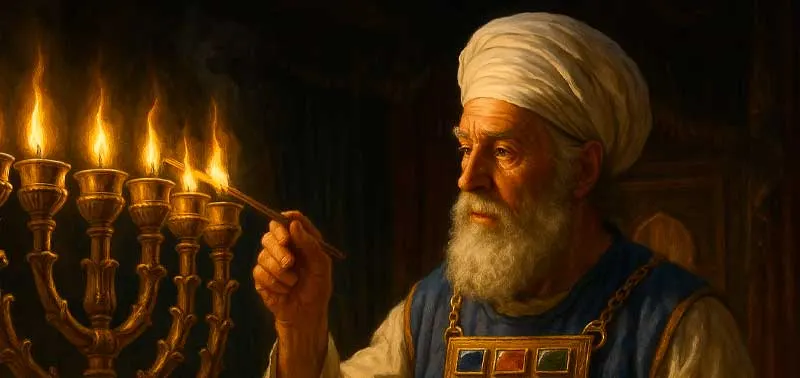
- Behaalotecha
בְּהַעֲלֹתְךָ
Behaalotecha
service and the journey in the wilderness
- Weekly portion
- 36 of 54
- Verses
- Bemidbar 8:1–12:16
- Parts
- 9
- Reading time
- 1 h 58 min
- Views
marks places where the translation deliberately departs from the Russian original. Tap it to show the note.
Behaalotecha is the weekly portion about the lampstand, the service of the Levites and the journey of Israel in the wilderness. In Alex Blend’s stenogram, chapters 8–12 of the book of Bemidbar are examined: the second Pesach, the silver trumpets, the grumbling of the people, prophecy and the relations of Moshe with Miryam and Aharon. The Hebrew text is accompanied by a transliteration, a translationThe Russian says the Hebrew text comes with a Russian translation. Since this page is in English, it simply says “a translation”. and the author’s interpretation.
The service of the Levites
Bemidbar 8:1–26
With God’s help we begin studying the weekly portion Behaalotecha, and we will read from verse 1 of chapter 8 of the book of Bemidbar.
וַיְדַבֵּר יְהוָה אֶל־מֹשֶׁה לֵּאמֹר׃
vaydabbér adonáy el-moshé lemór
1 And the LORD spoke to Moshe, saying:
דַּבֵּר אֶל־אַהֲרֹן וְאָמַרְתָּ אֵלָיו בְּהַעֲלֹתְךָ אֶת־הַנֵּרֹת אֶל־מוּל פְּנֵי הַמְּנוֹרָה יָאִירוּ שִׁבְעַת הַנֵּרוֹת׃
dabbér el-aharón ve'amartá eláv beha'alotechá et-hannerót el-múl pené hammenorá ya'íru shiv'át hannerót
2 “Speak to Aharon and say to him: when you raise the lamps, let the seven lamps shine before the face of the lampstand.”
This seemingly clear sentence requires a whole series of explanations. Why exactly now does the Most High give some commands to Aharon? In chapter 7 we read the long enumeration of the offerings of each tribe. The only tribe from which there were no offerings – that is the tribe of Levi: the Levites brought nothing. And Aharon also brought nothing. The commentators say that this greatly dejected and upset Aharon. In a proprietor’s way, in a kohen’s way, Aharon could have reasoned: “Wow, how much good people have brought me here. Glory to God for their self-sacrifice and kindness. I am a kohen, and now there will be food in the house of God, that is, in my house.” But Aharon felt that he had given nothing to the Most High: “Where then is my share? I also want to serve.” And precisely at this moment the Most High sends Moshe to him, to remind him of one of his services – of the service of lighting the lampstand. What is interesting is that this is not Aharon’s most important service. One could have reminded him: “Aharon, you are so cool that you will burn incense in the Holy of Holies, serve on Yom Kippur, on the Day of Judgment, you will stand on behalf of the whole people.” Why then does the Most High, as a consolation for Aharon, choose precisely the seven lamps that Aharon lights for the menorah? And what does they will burn before the face of the lampstand mean, if they themselves are part of the lampstand?
If we look closely at the verb that is used here, leha'alót (to raise, to elevate), it too is unclear. One could have used the verb lehadlik (to light) here. For example, to light a match – lehadlik gafrúr, a fiery person – adám madlík. Here, however – eláv beha'alotechá et-hannerót (when you raise, elevate the lights), that is, so that they would flare up like bonfires, so to speak, so that their flame would burn brightly. So the commentators say. And in this one can see a special function of the lampstand.
In the Temple stand the keruvim, and when they turn their faces toward each other or look in different directions, one can say: “These are miracles that the Most High performs.” The lampstand is an indicator of the presence of the Divine Shechina in Israel. Therefore the lampstand burns constantly, constantly shows: as long as it burns, there is Divine presence in Israel. And this presence is realized precisely through Aharon’s service. This is a miracle to which Aharon is admitted. Therefore he is told as a consolation that, although he did not bring any material offerings, he brings his service: for the menorah is one of the central elements of the Tent of Meeting. Of course, if we speak about what appears to us openly, then the ark of the covenant is more important. But the menorah is a relay transmitter of the Divine Light into the world, and Aharon the kohen is the instrument for transmitting this Light.
וַיַּעַשׂ כֵּן אַהֲרֹן אֶל־מוּל פְּנֵי הַמְּנוֹרָה הֶעֱלָה נֵרֹתֶיהָ כַּאֲשֶׁר צִוָּה יְהוָה אֶת־מֹשֶׁה׃
vayá'as ken aharón el-múl pené hammenorá he'elá nerotéha ka'ashér tzivvá adonáy et-moshé
3 And Aharon did so: before the face of the menorah he set up (raised) the lamps, as the LORD had commanded Moshe.
Again it is surprising: why not simply write and Aharon did as Moshe commanded him? What does before the face of the menorah mean? And the commentators say: “Aharon’s very standing before the menorah is Aharon’s participation not only in lighting the light, but in the Light itself.” When Aharon goes out of the sanctuary, he carries this Light out with him and brings it into human souls, kindles human souls with this Light. A person did not simply come, look and say: “Wow, a menorah, how bright it is here,” and stay in this light for a while. Aharon is a bearer of the Light, he turns human souls into candles. Thanks to Aharon, this Light spreads through the world. He Who created light does not Himself need any light. He gave us the possibility, by His mercy, to be bearers of spiritual Light. It is precisely this assignment that is given to Aharon, who did not want to remain idle, did not want any event to take place without his participation. And Aharon received consolation, a very important consolation from the Most High: “Here is your service.”
וְזֶה מַעֲשֵׂה הַמְּנֹרָה מִקְשָׁה זָהָב עַד־יְרֵכָהּ עַד־פִּרְחָהּ מִקְשָׁה הִוא כַּמַּרְאֶה אֲשֶׁר הֶרְאָה יְהוָה אֶת־מֹשֶׁה כֵּן עָשָׂה אֶת־הַמְּנֹרָה׃
vezé ma'asé hammenorá mikshá zaháv ad-yerechá ad-pirchá mikshá hi kammar'é ashér her'á adonáy et-moshé ken asá et-hammenorá
4 And this is how the menorah is made: of a single piece of gold it is forged, down to its base, down to its flower it is forged; like the vision (image) which the LORD showed Moshe, so the menorah is made.
And again it is surprising: why are we told about the menorah here? We read about it long ago in chapter 25 of the book of Shemot, and we know how it is constructed. But here there is a hint that all this shining inside and outside – this is the whole people of Israel, which must turn into a menorah, become a lampstand. It must unite in some sense into one big menorah, must become a single whole, a single organism like mikshá echád (one forged work), one single element, not held together with screws, nor with threads, nor with Velcro, nor with glue or with plasticine. That is what this is about. And with this verse, in fact, the command to Aharon and the consolation that the Most High gives him come to an end.
וַיְדַבֵּר יְהוָה אֶל־מֹשֶׁה לֵּאמֹר׃
vaydabbér adonáy el-moshé lemór
5 And the LORD spoke to Moshe, saying:
קַח אֶת־הַלְוִיִּם מִתּוֹךְ בְּנֵי יִשְׂרָאֵל וְטִהַרְתָּ אֹתָם׃
kach et-halviyím mittóch bené yisraél vetihartá otám
6 “Take the Levites from among the sons of Israel and purify them.
וְכֹה־תַעֲשֶׂה לָהֶם לְטַהֲרָם הַזֵּה עֲלֵיהֶם מֵי חַטָּאת וְהֶעֱבִירוּ תַעַר עַל־כָּל־בְּשָׂרָם וְכִבְּסוּ בִגְדֵיהֶם וְהִטֶּהָרוּ׃
vecho-ta'asé lahém letaharám hazzé alehém me chattát vehe'evíru tá'ar al-kol-besarám vechibbesú vigdehém vehitteháru
7 . And do thus to them, to purify them: sprinkle them with water of purification, and they shall pass a razor over all their flesh, and they shall wash their clothes, and thereby they will be purified.
Most likely, the water of purification means the water connected with the red heifer.
As we already said about those afflicted with tzara'at and about the nazirites, in passing from status to status, from world to world, there is a certain resetting of the connection between the inner and the outer. What grows from the inside outward? Hair. Therefore the Levites, for their purification, must shave off all the hair on the body, precisely on the body (according to some views of the commentators, including the beard, but not including the head of hair, not including the hair on the head). And to this day teachers sometimes recommend to someone who has come out of some very unpleasant situations, or feels some unpleasant presence in his life, to apply such a method and clear the whole body of hair.
That is, we see three components for the purification of the Levites: the water of purification, the shaving of hair and the washing of clothes. Of course, they themselves also wash when they wash their clothes, that goes without saying.
וְלָקְחוּ פַּר בֶּן־בָּקָר וּמִנְחָתוֹ סֹלֶת בְּלוּלָה בַשָּׁמֶן וּפַר־שֵׁנִי בֶן־בָּקָר תִּקַּח לְחַטָּאת׃
velakechú par ben-bakár umincható sólet belulá vashámen ufar-shení ven-bakár tikkách lechattát
8 And they shall take a yearling bull and its grain offering of solet flour, diluted with oil. And take a second bull as a purification offering.
וְהִקְרַבְתָּ אֶת־הַלְוִיִּם לִפְנֵי אֹהֶל מוֹעֵד וְהִקְהַלְתָּ אֶת־כָּל־עֲדַת בְּנֵי יִשְׂרָאֵל׃
vehikravtá et-halviyím lifne óhel mo'éd vehikhaltá et-kol-adát bené yisraél
9 And you shall bring the Levites before the Tent of Meeting, and you shall gather the whole assembly of the people of Israel.
If previously the firstborn were dedicated to the Most High, now the Levites, one of the tribes of Israel, are sanctified and taken for service. Since the Most High makes some changes in the agreement between Him and Israel, this is done before the face of the whole people of Israel. Not delegates, not chosen representatives – the whole community gathers, and the whole community will be witness to what is happening.
וְהִקְרַבְתָּ אֶת־הַלְוִיִּם לִפְנֵי יְהוָה וְסָמְכוּ בְנֵי־יִשְׂרָאֵל אֶת־יְדֵיהֶם עַל־הַלְוִיִּם׃
vehikravtá et-halviyím lifné adonáy vesamechú vene-yisraél et-yedehém al-halviyím
10 And you shall bring the Levites near before the LORD (let them approach the Tent of Meeting), and the sons of Israel shall lay their hands on the Levites.
One can imagine a scene in which five hundred fifty thousand Israelites lay hands on someone, each on each, and this could probably go on endlessly. Another option one can imagine is that the elders of each tribe will come and lay hands on the Levites, since the Levites will stand on behalf of the whole people. And the third option, which seems the most likely: each firstborn, in whose place a Levite is taken, lays hands, let us say, on “his” Levite, who becomes the ransom of the firstborn. This is the option that fits the meaning best. The Levite is taken for service in place of the firstborn, and the firstborn, as it were, ordains him to this service.
וְהֵנִיף אַהֲרֹן אֶת־הַלְוִיִּם תְּנוּפָה לִפְנֵי יְהוָה מֵאֵת בְּנֵי יִשְׂרָאֵל וְהָיוּ לַעֲבֹד אֶת־עֲבֹדַת יְהוָה׃
veheníf aharón et-halviyím tenufá lifné adonáy me'ét bené yisraél vehayú la'avód et-avodát adonáy
11 And Aharon elevated the Levites as an elevation before the LORD on behalf of the sons of Israel, and they shall serve the service of the LORD.
It would be understandable if these were pieces of meat that Aharon lifts and elevates before the Most High. We said that this is a kind of dance. Did Aharon really lift the Levites up in his arms, toss them into the air, lower them and in this way elevate them before the Most High? Most likely, it was some gesture (perhaps raising the hand, like a referee when he announces the winner of a bout), some clear movement, we cannot say exactly which. The word tenufá (waving, elevation) will be used several times in this chapter. We will encounter it again: each time it will be written that Aharon elevates the Levites before the Most High. Since these Levites will serve directly before the LORD, lifné adonáy, and will be directly connected with the holy elements, the holy furnishings of the Tent of Meeting, we can say that this is about the elevation of the sons of Kehat, that it is precisely they who are sanctified here by Aharon for service.
וְהַלְוִיִּם יִסְמְכוּ אֶת־יְדֵיהֶם עַל רֹאשׁ הַפָּרִים וַעֲשֵׂה אֶת־הָאֶחָד חַטָּאת וְאֶת־הָאֶחָד עֹלָה לַיהוָה לְכַפֵּר עַל־הַלְוִיִּם׃
vehalviyím yismechú et-yedehém al rosh happarím va'asé et-ha'echád chattát ve'et-ha'echád olá ladonáy lechappér al-halviyím
12 And the Levites shall lay their hands on the heads of the bulls: and one shall be a purification offering, and one shall be a burnt offering to the LORD, to atone for the Levites.
This is, generally speaking, an understandable process. We have observed it in other consecrations as well – every time a person changes his status. It is a necessary part of atonement before the Most High, like a compensation for everything that a person cannot reach. We often say: “What do I lack in order to draw near to the Most High?” More rarely we ask: “What is superfluous in me, what superfluous organs are in me, what superfluous growths are on me that hinder me from drawing near to the Most High?” The offering that is brought, this offering of atonement, is meant to remove, to atone for those very elements in me that hinder me from being with the Most High, that is, to remove everything superfluous.
וְהַעֲמַדְתָּ אֶת־הַלְוִיִּם לִפְנֵי אַהֲרֹן וְלִפְנֵי בָנָיו וְהֵנַפְתָּ אֹתָם תְּנוּפָה לַיהוָה׃
veha'amadtá et-halviyím lifné aharón velifné vanáv vehenaftá otám tenufá ladonáy
13 And you shall set the Levites before Aharon and before his sons, and you shall elevate them as an elevation to the LORD.
The second elevation – this time not lifné adonáy (before the face of the LORD), but simply ladonáy (to the LORD). Here the second family of the Levites is sanctified, the family of Gershuni, which no longer carries elements from the Holy of Holies, but nevertheless carries elements of the Mishkan.
וְהִבְדַּלְתָּ אֶת־הַלְוִיִּם מִתּוֹךְ בְּנֵי יִשְׂרָאֵל וְהָיוּ לִי הַלְוִיִּם׃
vehivdaltá et-halviyím mittóch bené yisraél vehayu li halviyím
14 And you shall separate the Levites from all the sons of Israel, and the Levites shall be Mine.
וְאַחֲרֵי־כֵן יָבֹאוּ הַלְוִיִּם לַעֲבֹד אֶת־אֹהֶל מוֹעֵד וְטִהַרְתָּ אֹתָם וְהֵנַפְתָּ אֹתָם תְּנוּפָה׃
ve'achare-chén yavóu halviyím la'avód et-óhel mo'éd vetihartá otám vehenaftá otám tenufá
15 And after this the Levites shall come to serve in the Tent of Meeting, and you shall purify them, and you shall elevate them.
Here it is already about the third family of the Levites, about the family of Merari, who serve as quartermasters for that part of the Tent of Meeting which is less endowed with holiness. We said that they haul the pillars, the boards and so on.
כִּי נְתֻנִים נְתֻנִים הֵמָּה לִי מִתּוֹךְ בְּנֵי יִשְׂרָאֵל תַּחַת פִּטְרַת כָּל־רֶחֶם בְּכוֹר כֹּל מִבְּנֵי יִשְׂרָאֵל לָקַחְתִּי אֹתָם לִי׃
ki netuním netuním hémma li mittóch bené yisraél táchat pitrát kol-réchem bechór kol mibbené yisraél lakáchti otám li
16 For as subjects they are given to Me from among the sons of Israel; in place of the firstborn that open the womb, of the sons of Israel – I have taken them for Myself.
כִּי לִי כָל־בְּכוֹר בִּבְנֵי יִשְׂרָאֵל בָּאָדָם וּבַבְּהֵמָה בְּיוֹם הַכֹּתִי כָל־בְּכוֹר בְּאֶרֶץ מִצְרַיִם הִקְדַּשְׁתִּי אֹתָם לִי׃
ki li chol-bechór bivné yisraél ba'adám uvabbehemá beyom hakkotí chol-bechór be'éretz mitzráyim hikdáshti otám li
17 For every firstborn among the sons of Israel belongs to Me, of man and of beast; on the day when I struck down the firstborn in the land of Egypt, I consecrated them to Myself.
וָאֶקַּח אֶת־הַלְוִיִּם תַּחַת כָּל־בְּכוֹר בִּבְנֵי יִשְׂרָאֵל׃
va'ekkách et-halviyím táchat kol-bechór bivné yisraél
18 And I will now take the Levites in place of every firstborn among the sons of Israel.
וָאֶתְּנָה אֶת־הַלְוִיִּם נְתֻנִים לְאַהֲרֹן וּלְבָנָיו מִתּוֹךְ בְּנֵי יִשְׂרָאֵל לַעֲבֹד אֶת־עֲבֹדַת בְּנֵי־יִשְׂרָאֵל בְּאֹהֶל מוֹעֵד וּלְכַפֵּר עַל־בְּנֵי יִשְׂרָאֵל וְלֹא יִהְיֶה בִּבְנֵי יִשְׂרָאֵל נֶגֶף בְּגֶשֶׁת בְּנֵי־יִשְׂרָאֵל אֶל־הַקֹּדֶשׁ׃
va'ettená et-halviyim netuním le'aharón ulvanáv mittóch bené yisraél la'avód et-avodát bene-yisraél be'óhel mo'éd ulchappér al-bené yisraél veló yihyé bivné yisraél négef begéshet bene-yisraél el-hakkódesh
19 And I will give the Levites as subjects to Aharon and to his sons from among the sons of Israel, to perform the service for the sons of Israel in the Tent of Meeting and to be atoners for the sons of Israel, and there will be no plague among the sons of Israel when the sons of Israel would draw near to the sanctuary.”
What is the Most High speaking about? That it is very dangerous to draw near to the sanctuary, and one can die. And any outsider who draws near to the sanctuary is exposed to mortal danger. How then is one to act, how is one at the same time to serve the Most High? And here the LORD says: “I have appointed the Levites, I have given them everything necessary, endowed them with everything necessary for the sacred service, and they can enter the sanctuary and atone for Israel. An ordinary Israelite, however, cannot enter there.”
וַיַּעַשׂ מֹשֶׁה וְאַהֲרֹן וְכָל־עֲדַת בְּנֵי־יִשְׂרָאֵל לַלְוִיִּם כְּכֹל אֲשֶׁר־צִוָּה יְהוָה אֶת־מֹשֶׁה לַלְוִיִּם כֵּן־עָשׂוּ לָהֶם בְּנֵי יִשְׂרָאֵל׃
vayá'as moshé ve'aharón vechol-adát bene-yisraél lalviyím kechól asher-tzivvá adonáy et-moshé lalviyím ken-asú lahém bené yisraél
20 And Moshe did, and Aharon, and the whole community of the sons of Israel, to the Levites in accordance with everything that the LORD had commanded Moshe to do for the Levites; so the sons of Israel acted.
וַיִּתְחַטְּאוּ הַלְוִיִּם וַיְכַבְּסוּ בִּגְדֵיהֶם וַיָּנֶף אַהֲרֹן אֹתָם תְּנוּפָה לִפְנֵי יְהוָה וַיְכַפֵּר עֲלֵיהֶם אַהֲרֹן לְטַהֲרָם׃
vayitchatteú halviyím vaychabbesú bigdehém vayánef aharón otám tenufá lifné adonáy vaychappér alehém aharón letaharám
21 And the Levites purified themselves, and washed their clothes. And Aharon elevated them (here it is already said about all the Levites) as an elevation before the Most High, and Aharon atoned for them by their purification (that is, he brought for them the atoning offerings which they had given him).
וְאַחֲרֵי־כֵן בָּאוּ הַלְוִיִּם לַעֲבֹד אֶת־עֲבֹדָתָם בְּאֹהֶל מוֹעֵד לִפְנֵי אַהֲרֹן וְלִפְנֵי בָנָיו כַּאֲשֶׁר צִוָּה יְהוָה אֶת־מֹשֶׁה עַל־הַלְוִיִּם כֵּן עָשׂוּ לָהֶם׃
ve'achare-chén báu halviyím la'avód et-avodatám be'óhel mo'éd lifné aharón velifné vanáv ka'ashér tzivvá adonáy et-moshé al-halviyím ken asú lahém
22 And after this the Levites came to do (perform) their service in the Tent of Meeting before Aharon and before his sons; as the LORD had commanded Moshe concerning the Levites, so they did.
This is the end of the description of the process of consecrating the Levites. Several times here (and in general throughout the whole Torah) it is said: “As was commanded, so he did.” We very much love creativity, innovative ideas and other such things. Very often one comes across an alternative Pesach seder, an alternative welcoming of the Sabbath, an alternative study of Torah – something alternative, new, creative, different from the traditional, not musty, but breathing novelty and freshness. And this, of course, very much draws and attracts. But sometimes there is a special level of holiness in observing simple things. Rabbi Nachman of Breslov, who lived several centuries ago, once remarked that in the generation of the coming of Mashiach, a person who simply, routinely does his ordinary work, does it conscientiously and in holiness before the Most High, without seeking new paths – this person will be an innovator, like the Baal Shem Tov (the founder of Hasidism) or like the coolest teachers. This very ability to do simple work – to be a simple servant, a simple teacher, without inventing new theories, new interpretations, to reveal new light, but not to turn it into something alternative, not to invent one’s own religion – this too is very important. And this is emphasized several times with regard to the service of the Levites, because there is not and cannot be an alternative Levitical service.
וַיְדַבֵּר יְהוָה אֶל־מֹשֶׁה לֵּאמֹר׃
vaydabbér adonáy el-moshé lemór
23 And the LORD spoke to Moshe, saying:
זֹאת אֲשֶׁר לַלְוִיִּם מִבֶּן חָמֵשׁ וְעֶשְׂרִים שָׁנָה וָמַעְלָה יָבוֹא לִצְבֹא צָבָא בַּעֲבֹדַת אֹהֶל מוֹעֵד׃
zot ashér lalviyím mibbén chamésh ve'esrím shaná vamá'la yavó litzvó tzavá ba'avodát óhel mo'éd
24 “This is the command for the Levites: from twenty-five years and older they shall come into the host for the service in the Tent of Meeting.
Earlier we read (4:3) that the Levites come to the service at the age of thirty. Here suddenly we see that it is at twenty-five. How can this be reconciled? For five years the Levites study and get used to it. Five years of training – these are “My Levitical Universities” (almost after Gorky). At first I study, learn this specialty. Then I practice, moving from simple things to more complex ones. The Levites are really great hard workers: they carry a lot, chop, work with their hands, work hard. This requires preparation, this requires understanding, the ability to see that you are not simply hauling boards, you are not simply chopping meat: you are serving the Most High. One has to get used to this, one has to understand this. It may turn out that a person will never understand this. All this is part of the five years of a Levite’s preparation – training, practice, internship and a probation period.
וּמִבֶּן חֲמִשִּׁים שָׁנָה יָשׁוּב מִצְּבָא הָעֲבֹדָה וְלֹא יַעֲבֹד עוֹד׃
umibbén chamishím shaná yashúv mitzevá ha'avodá veló ya'avód od
25 And from the age of fifty he shall leave the working army and shall work no more,
וְשֵׁרֵת אֶת־אֶחָיו בְּאֹהֶל מוֹעֵד לִשְׁמֹר מִשְׁמֶרֶת וַעֲבֹדָה לֹא יַעֲבֹד כָּכָה תַּעֲשֶׂה לַלְוִיִּם בְּמִשְׁמְרֹתָם׃
vesherét et-echáv be'ohel mo'éd lishmór mishméret va'avodá lo ya'avód kácha ta'asé lalviyím bemishmerotám
26 But he shall continue to serve with his brothers before the Tent of Meeting, to stand on guard, but at the work he shall not work. So you shall do with the Levites in their services.”
That is, one can understand this simply: from the age of fifty a person moves to lighter work. If he sings in the praise, then it is clear that he can continue to sing. If he is a gatekeeper and opens the gates, it is clear that he can go on opening the gates. But chopping, hauling and doing all sorts of heavy work he will no longer do from the age of fifty. This is a kind of retirement. On the one hand, he remains involved in affairs, because it is not right for a person who is capable of action to be inactive. All the more so since he is in a circle of friends, and not growing old somewhere in retirement in a village. On the other hand, he is freed from heavy labor.
Such is the command of the Most High regarding the Levites.
Wait, so you could do that?!
Bemidbar 9:1–23
With God’s help we continue studying the weekly portion Behaalotecha, and we will read from verse 1 of chapter 9 of the book of Bemidbar.
וַיְדַבֵּר יְהוָה אֶל־מֹשֶׁה בְמִדְבַּר־סִינַי בַּשָּׁנָה הַשֵּׁנִית לְצֵאתָם מֵאֶרֶץ מִצְרַיִם בַּחֹדֶשׁ הָרִאשׁוֹן לֵאמֹר׃
vaydabbér adonáy el-moshé vemidbar-sináy bashaná hashenít letzetám me'éretz mitzráyim bachódesh harishón lemór
1 And the LORD spoke with Moshe in the wilderness of Sinai in the second year after their going out of the land of Egypt, in the first month, saying:
In the previous chapters we read the addresses and speeches that the Most High spoke to Moshe in the second month of the second year. Now the Torah, as it were, goes back: the Most High addresses Moshe in the first month of the second year. From this the sages draw a general conclusion that the Torah is not always built in chronological order, and in other places too there can be a chronological discrepancy. The Torah is by no means obliged to convey everything in the chronological order in which it happened.
וְיַעֲשׂוּ בְנֵי־יִשְׂרָאֵל אֶת־הַפָּסַח בְּמוֹעֲדוֹ׃
veya'asú vene-yisraél et-happásach bemo'adó
2 “Let the sons of Israel make Pesach at its appointed time.
בְּאַרְבָּעָה עָשָׂר־יוֹם בַּחֹדֶשׁ הַזֶּה בֵּין הָעֲרְבַּיִם תַּעֲשׂוּ אֹתוֹ בְּמוֹעֲדוֹ כְּכָל־חֻקֹּתָיו וּכְכָל־מִשְׁפָּטָיו תַּעֲשׂוּ אֹתוֹ׃
be'arba'á asar-yom bachódesh hazzé ben ha'arbáyim ta'asú otó bemo'adó kechol-chukkotáv uchechol-mishpatáv ta'asú otó
3 On the fourteenth day of this month, at twilight, make it at its appointed time, according to all its laws and according to all its statutes make it.”
When, a year before this, the people of Israel were going out of Egypt, the Most High gave commands concerning Pesach. The commands were of two kinds: the first concerned Pesach in Egypt, and it had its own particular features: for example, on the tenth of the month one had to take a ram into the house, smear the doorposts with blood, one had to take into account many more elements that were not done afterwards. The Most High does not command this for the following generations, it was relevant only in Egypt. The second command concerned the following generations, including ours. We received instructions from the Most High that one must eat the Paschal offering with bitter herbs, and other instructions. And all this the Most High says here. After all, this is the first Pesach in the new generation, the first Pesach-remembrance, this is no longer the going out of Egypt itself, but the first festival that is done in remembrance of what happened then. The Most High says: “The law of Pesach remains, do it at the proper time.”
וַיְדַבֵּר מֹשֶׁה אֶל־בְּנֵי יִשְׂרָאֵל לַעֲשֹׂת הַפָּסַח׃
vaydabbér moshé el-bené yisraél la'asót happásach
4 And Moshe told the sons of Israel to make Pesach.
וַיַּעֲשׂוּ אֶת־הַפֶּסַח בָּרִאשׁוֹן בְּאַרְבָּעָה עָשָׂר יוֹם לַחֹדֶשׁ בֵּין הָעַרְבַּיִם בְּמִדְבַּר סִינָי כְּכֹל אֲשֶׁר צִוָּה יְהוָה אֶת־מֹשֶׁה כֵּן עָשׂוּ בְּנֵי יִשְׂרָאֵל׃
vaya'asú et-happésach barishón be'arba'á asár yom lachódesh ben ha'arbáyim bemidbár sináy kechól ashér tzivvá adonáy et-moshé ken asú bené yisraél
5 And they performed Pesach in the first month, on the fourteenth day of the month, at twilight, in the wilderness of Sinai – all as the LORD had commanded Moshe, so the sons of Israel did.
וַיְהִי אֲנָשִׁים אֲשֶׁר הָיוּ טְמֵאִים לְנֶפֶשׁ אָדָם וְלֹא־יָכְלוּ לַעֲשֹׂת־הַפֶּסַח בַּיּוֹם הַהוּא וַיִּקְרְבוּ לִפְנֵי מֹשֶׁה וְלִפְנֵי אַהֲרֹן בַּיּוֹם הַהוּא׃
vayhí anashím ashér hayú teme'ím lenéfesh adám velo-yachelú la'asot-happésach bayom hahú vayikrevú lifné moshé velifné aharón bayom hahú
6 And it was: people who were impure because of the impurity of the dead, and they could not make Pesach on that day, and they came to Moshe and to Aharon on that day.
Someone did, after all, die in the wilderness, and people took care of the dead. There are midrashim that say that these were the people who carried the bones of Yosef and therefore considered themselves impure. According to another version, these could have been Misha'el and Eltzafan, the sons of Uzi'el, who carried out the bodies of Nadav and Avihu, the perished sons of Aharon. One way or another, there were some people who are called here teme'ím lenéfesh (impure with the impurity of the dead). The people were impure and still wanted to take part in Pesach. They felt bitter and hurt that their state of impurity prevented them from performing Pesach. And one could have said: “Okay, guys, you have your whole life ahead of you, next time you will bring the offering, next time you will perform Pesach.”
If a person says to me: “I did not light the Shabbat candles this Sabbath, may I light them on Monday?” I will tell him: “No, wait for the next Shabbat.” But these people who came to Moshe and Aharon are not satisfied with such an answer. The feeling of bitterness over having missed the opportunity to take part in Pesach makes them search, cry out: maybe there is, after all, some possibility? No, they do not say: “Let us, the impure, do the Pesach seder,” they ask: “Maybe it is somehow possible for us not to miss this opportunity and to bring the Pesach offering?” The outcry with which they cry out, their thirst for the commandment, is very important.
וַיֹּאמְרוּ הָאֲנָשִׁים הָהֵמָּה אֵלָיו אֲנַחְנוּ טְמֵאִים לְנֶפֶשׁ אָדָם לָמָּה נִגָּרַע לְבִלְתִּי הַקְרִב אֶת־קָרְבַּן יְהוָה בְּמֹעֲדוֹ בְּתוֹךְ בְּנֵי יִשְׂרָאֵל׃
vayomerú ha'anashím hahémma eláv anáchnu teme'ím lenéfesh adám lámma niggará leviltí hakrív et-korbán adonáy bemo'adó betóch bené yisraél
7 And these people said to him: “Yes, we are impure with the impurity of a dead person, but we do not want to lose the opportunity to bring an offering to the Most High at its appointed time among all the other sons of Israel.”
Although they came to Moshe and Aharon, they speak with Moshe, they speak like this: “We are impure, that is how it happened. But why should we slide down, why should we sink so low as not to bring offerings to the LORD at its appointed time? We do not want to lose the opportunity to serve the Most High!” This resembles the distress of Aharon, who also wanted to take part in the service, which we read about at the beginning of chapter 8. These are in fact similar feelings, although of a different nature. And the people say: “How can this be? How is it that we will not be able to? We, too, want to serve the Most High!” Their outcry is that they should, after all, be given the opportunity to serve the Most High.
Today, if a person is told: “You are exempt from fulfilling such-and-such a commandment,” he may say: “Well, thank God, I don’t have to make an effort, I saved myself a lamb.” But the people of that generation not only are not afraid to approach Moshe in a state of impurity, they ask: “Let us serve the Most High, even though we are impure now.”
וַיֹּאמֶר אֲלֵהֶם מֹשֶׁה עִמְדוּ וְאֶשְׁמְעָה מַה־יְצַוֶּה יְהוָה לָכֶם׃
vayomer alehém moshé imdú ve'eshme'á ma-yetzavvé adonáy lachém
8 And Moshe said to them: “Stand. I will now listen to what the LORD will command you.”
Again let us pay attention to Moshe’s reaction. Moshe does not tell them: “This is not the last Pesach, guys,” and does not say: “Guys, if you bring the Pesach in impurity – oh, woe to you! For this one can receive a severe punishment.” Moshe understands their need and understands that the Torah answers (among other things) also the needs of a person in the service of the Most High, and therefore he asks the Most High for their sake.
וַיְדַבֵּר יְהוָה אֶל־מֹשֶׁה לֵּאמֹר׃
vaydabbér adonáy el-moshé lemór
9 And the LORD answered Moshe, saying:
דַּבֵּר אֶל־בְּנֵי יִשְׂרָאֵל לֵאמֹר אִישׁ אִישׁ כִּי־יִהְיֶה־טָמֵא לָנֶפֶשׁ אוֹ בְדֶרֶךְ רְחֹקָה לָכֶם אוֹ לְדֹרֹתֵיכֶם וְעָשָׂה פֶסַח לַיהוָה׃
dabbér el-bené yisraél lemór ish ish ki-yihyé tamé lanéfesh o vedérech rechoká lachém o ledorotechém ve'ása fésach ladonáy
10 “Speak to the sons of Israel, saying: each one of the people, if he is impure with the impurity of a dead person or on a distant journey, among you or in your generations, shall still make Pesach to the LORD.
This question of a probably small group of impure people gave birth to a new revelation of the Most High to all the sons of Israel. It turned out that thanks to their question, their outcry, one more address of the LORD to Israel appeared. Moreover, we will now see that in response to their need an additional festival was born, which did not exist before. The outcry of people striving to serve was able to reveal what had not been revealed to Moshe at the outset. The revelation that the Most High gives here is not some permission for just these very people who are asking. Through their outcry, through their request for service to the Most High, they really turned out to be capable of changing the reality of the Torah for generations ahead, including for our generation.
בַּחֹדֶשׁ הַשֵּׁנִי בְּאַרְבָּעָה עָשָׂר יוֹם בֵּין הָעַרְבַּיִם יַעֲשׂוּ אֹתוֹ עַל־מַצּוֹת וּמְרֹרִים יֹאכְלֻהוּ׃
bachódesh hashení be'arba'á asár yom ben ha'arbáyim ya'asú otó al-mattzót umrorím yochelúhu
11 In the second month, on the fourteenth day at twilight, they shall make it (Pesach) with unleavened bread, and with bitter herbs they shall eat it.
For those who turned out to be impure or who turned out to be on a distant road, a second Pesach can be made a month later: not on the fourteenth of the month of Nisan, but on the fourteenth of the month of Iyar. And one must treat it exactly the same way as the first, all the laws of Pesach must be observed – except for one detail, which we will talk about now.
לֹא־יַשְׁאִירוּ מִמֶּנּוּ עַד־בֹּקֶר וְעֶצֶם לֹא יִשְׁבְּרוּ־בוֹ כְּכָל־חֻקַּת הַפֶּסַח יַעֲשׂוּ אֹתוֹ׃
lo-yash'íru mimménnu ad-bóker ve'étzem lo yishberu-vó kechol-chukkát happésach ya'asú otó
12 They shall not leave anything of it (the offering) until morning, and they shall not break its bones; in accordance with all the laws of Pesach they shall make it.”
That is, Pesach as Pesach, with all the strictness regarding the offering. The only difference is that on the fourteenth of Nisan, when the first Pesach is celebrated, there must be no chametz in the house; it must be removed from the house for the seven days of the celebration. Here, on Pesach sheni (the second Pesach), there is one day of celebration with a sacrifice, and on this day there may be chametz in the house. If we remember what exactly chametz symbolizes, then one can look at this somewhat differently. Chametz (leaven) symbolizes the evil, sinful principle, the urge toward the sinful principle. It happens that a person cannot rise to that level of purity at which he has no chametz, no leaven in the house, no leaven inside. And in this case a person is given a second chance. He can – even in a not fully rectified state, even with leaven in the house, even late – still celebrate Pesach, bring an offering to the Most High; his Pesach offering can be accepted. And this is a revelation that the Most High did not give Moshe just like that, but gave it when such a cry was born from the people, from simple people. We often look at a situation and say: “Even in the Torah there is no way out! No, the Torah does not provide an answer for some situation of ours.” Or we see that according to the Torah one must act in such and such a way, and we cannot do this, that is, there is no way out. It would seem that you cannot bring the Pesach offering a month later. But when a cry to the Most High is born, then He gives an answer through Moshe and says: “You can. You can perform Pesach sheni, the second Pesach. I give you a chance.”
This is not only a lesson about a second chance, that there is always a second chance. This is a lesson about how much a cry, how much the desire to serve the Most High can change the reality around us: this desire gives rise to changes, reveals additional light in the process of the giving of the Torah, that is, it has an influence in very, very high worlds. This is what simple people with simple faith did, who with all their soul wanted to bring an offering to the Most High, and in their merit, in the merit of this cry of theirs to Heaven, we have been given one more festival that did not exist originally. At the same time the Most High says that all this is not a game at all.
וְהָאִישׁ אֲשֶׁר־הוּא טָהוֹר וּבְדֶרֶךְ לֹא־הָיָה וְחָדַל לַעֲשׂוֹת הַפֶּסַח וְנִכְרְתָה הַנֶּפֶשׁ הַהִוא מֵעַמֶּיהָ כִּי קָרְבַּן יְהוָה לֹא הִקְרִיב בְּמֹעֲדוֹ חֶטְאוֹ יִשָּׂא הָאִישׁ הַהוּא׃
veha'ísh asher-hú tahór uvdérech lo-hayá vechadál la'asót happésach venichretá hannéfesh hahí me'amméha ki korbán adonáy lo hikrív bemo'adó chet'ó yissá ha'ísh hahú
13 But if a man is pure and not on a journey and has not made the Pesach, that soul shall be cut off from the people, because he did not bring the offering of the LORD at its appointed time; this man shall bear his sin.
That is, if a person can, but says: “I will bring it next time somehow, maybe on the fifteenth of Iyar, maybe on the tenth of Tamuz, maybe some other time – in short, not today,” that soul shall be cut off from the people. Once again: a person who turned out to be impure or unable to make Pesach at its time, thanks to the desire of those people to serve the Most High, thanks to their appeal to Moshe, receives the possibility of making Pesach a month later. In the same way we too receive a chance: when we are in impurity, when we cannot, we receive the possibility of making Pesach a month later. But if we are able to make it and postpone it, then there is no second chance.
וְכִי־יָגוּר אִתְּכֶם גֵּר וְעָשָׂה פֶסַח לַיהוָה כְּחֻקַּת הַפֶּסַח וּכְמִשְׁפָּטוֹ כֵּן יַעֲשֶׂה חֻקָּה אַחַת יִהְיֶה לָכֶם וְלַגֵּר וּלְאֶזְרַח הָאָרֶץ׃
vechi-yagúr ittechém ger ve'ása fésach ladonáy kechukkát happésach uchmishpató ken ya'asé chukká achát yihyé lachém velaggér ul'ezrách ha'áretz
14 And if a stranger lives with you and wants to make Pesach to the LORD, according to the laws and according to the statutes of Pesach he shall make it. The same laws shall be for you, both for the ger and for the citizen (for the stranger and for the permanent resident).”
There is no alternative Pesach for repatriates from Sweden or for proselytes from Mongolia. Whoever joins the people of Israel (even if his ancestors did not come out of Egypt, even if it is hard to say: “God, who brought you out of Egypt”) does everything according to the laws and according to the statutes, as is proper; in this respect there is no difference between the stranger and the permanent resident.
With this ends the story of the new festival, a festival obtained from God by prayer, so one can say, which today is customarily called Pesach sheni, the second Pesach.
From verse 15 a completely different topic begins.
וּבְיוֹם הָקִים אֶת־הַמִּשְׁכָּן כִּסָּה הֶעָנָן אֶת־הַמִּשְׁכָּן לְאֹהֶל הָעֵדֻת וּבָעֶרֶב יִהְיֶה עַל־הַמִּשְׁכָּן כְּמַרְאֵה־אֵשׁ עַד־בֹּקֶר׃
uvyom hakím et-hammishkán kissá he'anán et-hammishkán le'óhel ha'edút uva'érev yihyé al-hammishkán kemar'e-ésh ad-bóker
15 And on the day when the Mishkan was set up, the cloud covered the Tent of Testimony, and in the evening there was over the Mishkan something like a fiery vision (glow) until morning.
כֵּן יִהְיֶה תָמִיד הֶעָנָן יְכַסֶּנּוּ וּמַרְאֵה־אֵשׁ לָיְלָה׃
ken yihyé tamíd he'anán yechassénnu umar'e-ésh láyla
16 And so it was always: the cloud covers, and the fiery glow at night.
וּלְפִי הֵעָלֹת הֶעָנָן מֵעַל הָאֹהֶל וְאַחֲרֵי־כֵן יִסְעוּ בְּנֵי יִשְׂרָאֵל וּבִמְקוֹם אֲשֶׁר יִשְׁכָּן־שָׁם הֶעָנָן שָׁם יַחֲנוּ בְּנֵי יִשְׂרָאֵל׃
ulfí he'alót he'anán me'ál ha'óhel ve'áchare chen yis'ú bené yisraél uvimkóm ashér yishkon-shám he'anán sham yachanú bené yisraél
17 And when the cloud rose above the Tent, after that the sons of Israel set out on the way, and in the place where the cloud stopped, there the sons of Israel pitched camp.
The cloud was a pointer. Where it stopped, there the people of Israel stopped; when it set off on the way, the people of Israel also set off on the way. This was probably an amazing life. Amazing, because one had to look at the cloud constantly. You think: “Shall I build a cellar here, shall I nail up some shelves here, or are we setting off in an hour? Should I start settling in, or expect that the stop here will be short?” Each time everyone decides in his own way, but no one ever knows when the cloud will rise and move on its way.
עַל־פִּי יְהוָה יִסְעוּ בְּנֵי יִשְׂרָאֵל וְעַל־פִּי יְהוָה יַחֲנוּ כָּל־יְמֵי אֲשֶׁר יִשְׁכֹּן הֶעָנָן עַל־הַמִּשְׁכָּן יַחֲנוּ׃
al-pí adonáy yis'ú bené yisraél ve'al-pí adonáy yachanú kol-yemé ashér yishkón he'anán al-hammishkán yachanú
18 By the mouth of the LORD the sons of Israel rose (moved), and by the mouth of the LORD they pitched camp; all the days that the cloud dwelt on the Mishkan, they were in the camp.
וּבְהַאֲרִיךְ הֶעָנָן עַל־הַמִּשְׁכָּן יָמִים רַבִּים וְשָׁמְרוּ בְנֵי־יִשְׂרָאֵל אֶת־מִשְׁמֶרֶת יְהוָה וְלֹא יִסָּעוּ׃
uvha'arích he'anán al-hammishkán yamím rabbím veshamerú vene-yisraél et-mishméret adonáy veló yissáu
19 And when the cloud was over the Mishkan for a long time (long days), the sons of Israel were on the watch of the LORD and did not move.
The longest stay of the people of Israel was, it seems, about nineteen years. For nineteen years one had to live in one place and constantly watch the cloud, whether it would move. On the one hand, you have already sort of, as it were, settled down, and on the other hand, you must constantly watch, keep track: maybe tomorrow on the march, maybe already today at lunchtime on the march. But however long the cloud stood over the Mishkan, no one moved anywhere.
וְיֵשׁ אֲשֶׁר יִהְיֶה הֶעָנָן יָמִים מִסְפָּר עַל־הַמִּשְׁכָּן עַל־פִּי יְהוָה יַחֲנוּ וְעַל־פִּי יְהוָה יִסָּעוּ׃
veyésh ashér yihyé he'anán yamím mispár al-hammishkán al-pí adonáy yachanú ve'al-pí adonáy yissáu
20 It happened that the cloud was a few days over the Mishkan, and then they pitched camp by the word of the LORD, and by the word of the LORD they moved.
This is, after all, one more task: if we stop somewhere for a few hours, should we set up the Mishkan itself? Here it is said that we should set it up. The cloud has stopped – that’s it, start setting up. And even if they have only just managed to set it up, perhaps they will have to take it down again. One must constantly watch what is happening. In our life sometimes we do not know for how long we find ourselves in some place, for how long we find ourselves involved in some service, in fellowship with some people, in serving some people. And often, probably, the question also arises: “Set up the Mishkan or not set it up?” And the Torah says: “If you are here, if the cloud has stopped over you, it means you are staying here; set up the Mishkan, even if you will move on from here in a few hours.”
וְיֵשׁ אֲשֶׁר־יִהְיֶה הֶעָנָן מֵעֶרֶב עַד־בֹּקֶר וְנַעֲלָה הֶעָנָן בַּבֹּקֶר וְנָסָעוּ אוֹ יוֹמָם וָלַיְלָה וְנַעֲלָה הֶעָנָן וְנָסָעוּ׃
veyésh ashér yihyé he'anán me'érev ad-bóker vena'alá he'anán babbóker venasáu o yomám valáyla vena'alá he'anán venasáu
21 And it happened that the cloud was there from evening until morning, and the cloud rose in the morning, and they moved. Or it happened that a day and a night – and the cloud rose, and they went.
אוֹ־יֹמַיִם אוֹ־חֹדֶשׁ אוֹ־יָמִים בְּהַאֲרִיךְ הֶעָנָן עַל־הַמִּשְׁכָּן לִשְׁכֹּן עָלָיו יַחֲנוּ בְנֵי־יִשְׂרָאֵל וְלֹא יִסָּעוּ וּבְהֵעָלֹתוֹ יִסָּעוּ׃
o-yomáyim o-chódesh o-yamím beha'arích he'anán al-hammishkán lishkón aláv yachanú vene-yisraél veló yissáu uvhe'alotó yissáu
22 Or a couple of days, or a month, or days, when the cloud was over the Mishkan, to dwell on it, the sons of Israel pitched camp and did not move anywhere, and when the cloud rose – they moved.
The word yamím (days) is understood here in the meaning of year; it is often used so. And all these years one had to be in a state of full combat readiness.
עַל־פִּי יְהוָה יַחֲנוּ וְעַל־פִּי יְהוָה יִסָּעוּ אֶת־מִשְׁמֶרֶת יְהוָה שָׁמָרוּ עַל־פִּי יְהוָה בְּיַד־מֹשֶׁה׃
al-pí adonáy yachanú ve'al-pí adonáy yissáu et-mishméret adonáy shamáru al-pí adonáy beyad-moshé
23 By the word of the LORD they pitched camp and by the word of the LORD they set out on the way; they kept the vigil to the LORD, by the mouth of the LORD, by the hand of Moshe.
In this chapter two different topics as it were merge, in a certain sense, into one. On the one hand, if a person for some reason turns out not to be ready for Pesach, he has a second chance, a second possibility to make Pesach. The second chance is given to a person who wanted to serve, who wanted to do it but could not, not to one who from the outset did not want to. On the other hand, the very stay in the camp of Israel requires one to be constantly ready to tear oneself away from everything familiar and follow the Most High. Both the one and the other (both the second chance and the need for constant attention) are connected with the desire to serve the Most High.
The trumpet calls!
Bemidbar 10:1–36
With God’s help, you and I continue studying the weekly portion Behaalotecha, and we will read chapter 10 of the book of Bemidbar.
וַיְדַבֵּר יְהוָה אֶל־מֹשֶׁה לֵּאמֹר׃
vaydabbér adonáy el-moshé lemór
1 And the LORD spoke with Moshe, saying:
עֲשֵׂה לְךָ שְׁתֵּי חֲצוֹצְרֹת כֶּסֶף מִקְשָׁה תַּעֲשֶׂה אֹתָם וְהָיוּ לְךָ לְמִקְרָא הָעֵדָה וּלְמַסַּע אֶת־הַמַּחֲנוֹת׃
asé lechá shité chatzotzerót késef mikshá ta'asé otám vehayú lécha lemikrá ha'edá ulmassá et-hammachanót
2 “Make yourself two silver trumpets, of hammered work make them, and they shall be for you for summoning the community and for calling the camps to move.
That is, the Most High commands Moshe to make two special silver trumpets, two musical instruments that will summon the people and call them to move. As is customary today too, at many royal courts, at many parades trumpeters, buglers appear, they exist in many armies. And the root of this lies as far back as the trumpets that the Egyptian Pharaohs had. Here Moshe is commanded to make trumpets, as at a royal court, strengthening to some degree Moshe’s status as king.
The word chatzotzerá (trumpet, plural chatzotzerót) some commentators (Hasidic mystics, for the most part) understand as chétzi (half) tzurá (form), that is, as half a form, and they say that Moshe is told, in the spiritual sense, to become a person consisting of two parts, of two forms, uniting in himself the Divine and the human, to become a bridge between God and people. And the word késef (silver) is that by means of which one attains what one desires, with the same root as the verb lehikasef (to desire passionately, to crave). And if, following the midrash, one interprets the word zahav (gold) as ze hav (give this), then silver can be understood as a means of attaining gold, of attaining something more precious. Chatzotzerót késef (silver trumpets) as it were call us to rise to a higher level, to go from the human to the Divine. And Moshe as it were unites two shores in himself. This is, of course, a figurative, mystical commentary, and we will return from it to the simple meaning. And in the simple meaning, Moshe is told to make two trumpets.
Here is how Yosef Flavius, the Jewish historian who lived in the 1st century CE, describes them: “Moshe also made a kind of silver trumpet, which has the following appearance: in length it is a little less than a cubit, that is, less than fifty centimeters (if you, reading this for the first time, like me, pictured some enormous trumpet, a huge, huge bugle, then – no, the trumpet was less than fifty centimeters long), and its tube is narrow, only a little wider than that of a flute. Its mouthpiece is roomy enough to take in a mass of air, which the player blows into it. And it ends in a wide opening like a hunting horn. In the Hebrew language this instrument is called chatzotzerá. Two such trumpets were made. One was used for summoning and gathering the people to a general assembly, with the other the elders were invited to a council. But if both were blown at the same time, then everyone without exception had to gather for the assembly.” The same Yosef Flavius relates that before the onset of the Sabbath a bugler would go up onto the wing, onto the corner of the Temple, and also blow the trumpet, and this meant that Shabbat would soon begin, and people would leave the market and finish all their trading business. At the modern Machane Yehuda market in Jerusalem there is a man who for 20 years now has been walking around before the Sabbath with such a shepherd’s horn and blowing, announcing that Shabbat is approaching, warning the traders that it is time to finish trading. This exists to this day.
וְתָקְעוּ בָּהֵן וְנוֹעֲדוּ אֵלֶיךָ כָּל־הָעֵדָה אֶל־פֶּתַח אֹהֶל מוֹעֵד׃
vetake'ú bahén veno'adú eléycha kol-ha'edá el-pétach óhel mo'éd
3 And you will blow them, and the whole community will gather to you at the entrance to the Tent of Meeting.
וְאִם־בְּאַחַת יִתְקָעוּ וְנוֹעֲדוּ אֵלֶיךָ הַנְּשִׂיאִים רָאשֵׁי אַלְפֵי יִשְׂרָאֵל׃
ve'im-be'achát yitká'u veno'adú eléycha hannesi'ím rashé alfé yisraél
4 And if they blow one of the trumpets, the heads of the thousands of Israel will gather to you.
וּתְקַעְתֶּם תְּרוּעָה וְנָסְעוּ הַמַּחֲנוֹת הַחֹנִים קֵדְמָה׃
utka'tém teru'á venase'ú hammachanót hachoním kédma
5 And if you blow with an intermittent sound, the camps that stand in the east will move.
There are several kinds of blowing: one of them is tki'á, from the verb litkó'a (to blow), this is a continuous, drawn-out sound of the trumpet. Another is teru'á (exclamation, a stormy expression of feelings), from the verb leharí'a (to exclaim, to shout), a somewhat broken, weaker sound, as if the trumpet is applauding or exclaiming joyfully, leading the people into battle with a cry of “Hurrah!”
We remember that each camp has its own place where it is positioned. Since the people of Israel are moving through the wilderness to the southeast, first, naturally, the camps standing in front, in the east, set out: this is the camp of Yehuda, which includes three tribes – Yehuda, Zevulun, Yissachar, and if they blow the teru'á sound, they set out first.
וּתְקַעְתֶּם תְּרוּעָה שֵׁנִית וְנָסְעוּ הַמַּחֲנוֹת הַחֹנִים תֵּימָנָה תְּרוּעָה יִתְקְעוּ לְמַסְעֵיהֶם׃
utka'tém teru'á shenít venase'ú hammachanót hachoním temána teru'á yitke'ú lemas'ehém
6 And if you blow intermittently a second time, then the camps that stand in the south will move; with the sound of teru'á let them blow for each of their movements.
This is the camp of Re'uven, which, besides Re'uven, includes the tribes of Shimon and Gad. They move out after the second intermittent blowing.
וּבְהַקְהִיל אֶת־הַקָּהָל תִּתְקְעוּ וְלֹא תָרִיעוּ׃
uvhakhíl et-hakkahál titke'ú veló tarí'u
7 And when you gather the community, blow with a single sound, and not an intermittent one.
וּבְנֵי אַהֲרֹן הַכֹּהֲנִים יִתְקְעוּ בַּחֲצֹצְרוֹת וְהָיוּ לָכֶם לְחֻקַּת עוֹלָם לְדֹרֹתֵיכֶם׃
uvné aharón hakkohaním yitke'ú bachatzotzerót vehayú lachém lechukkát olám ledorotechém
8 The sons of Aharon, the kohanim, will blow these trumpets, and this will be for you an everlasting law throughout your generations.
Even though Moshe is told: “Make for yourself, and these trumpets will be for you,” naturally the king does not blow himself, and Moshe himself does not blow either. For this there are the kohanim, the sons of Aharon, they are appointed to blow the trumpets. These two trumpets were at the disposal of the sons of Aharon, they were responsible for them, and they were also the ones who blew them. The commentators say that specifically these two trumpets were made precisely for Moshe and were in effect for as long as Moshe himself was alive. As proof of this they cite a verse from the book of Devarim (31:28), when Moshe has already finished his service, has handed the reins of government to Yehoshua ben Nun and says: “Gather to me all…”. Here there is no blowing, because the trumpets had already ceased to serve Moshe. In later generations other trumpets, and the trumpet sound itself, remained.
Thank God, we still often hear it in synagogues, although today we mostly hear the shofar, that is, a horn, and not a metal trumpet. There are very many different opinions as to why this happened. Perhaps they considered that the shofar would be a more worthy fulfillment of the commandment. But most likely it is because the common people could hardly tell apart the oboe, the bassoon, the clarinet, the saxophone, the French horn, the trombone and other musical instruments. The common people hardly distinguished labial wind instruments from embouchure ones, and therefore simply a wind instrument, the trumpet, remained in use. Moshe was supposed to make the trumpets of silver, but later on this was not understood that way. Whether this is right or not is a separate question, but history tells us that in the future, in all generations, sometimes trumpets are used, sometimes shofars, sometimes shofars and trumpets together, and it is often very hard to figure out what is used and when.
וְכִי־תָבֹאוּ מִלְחָמָה בְּאַרְצְכֶם עַל־הַצַּר הַצֹּרֵר אֶתְכֶם וַהֲרֵעֹתֶם בַּחֲצֹצְרוֹת וֲנִזְכַּרְתֶּם לִפְנֵי יְהוָה אֱלֹהֵיכֶם וְנוֹשַׁעְתֶּם מֵאֹיְבֵיכֶם׃
vechi-tavó'u milchamá be'artzechém al-hattzár hattzorér etchém vahare'otém bachatzotzerót venizkartém lifné adonáy elohechém venosha'tém me'oyevechém
9 And if war comes into your land, if an oppressor attacks you, you will blow the trumpets intermittently, and remember the LORD, your God, and you will be saved from your enemies.
וּבְיוֹם שִׂמְחַתְכֶם וּבְמוֹעֲדֵיכֶם וּבְרָאשֵׁי חָדְשֵׁיכֶם וּתְקַעְתֶּם בַּחֲצֹצְרֹת עַל עֹלֹתֵיכֶם וְעַל זִבְחֵי שַׁלְמֵיכֶם וְהָיוּ לָכֶם לְזִכָּרוֹן לִפְנֵי אֱלֹהֵיכֶם אֲנִי יְהוָה אֱלֹהֵיכֶם׃
uvyom simchatchém uvmo'adechém uvrashé chodshechém utka'tém bachatzotzerót al olotechém ve'ál zivché shalmechém vehayú lachém lezikkarón lifné elohechém aní adonáy elohechém
10 And on the days of your rejoicing, and on your festivals, and on the days of your new moons you will blow the trumpets with a drawn-out sound, over your burnt offerings and over your peace offerings, and they will be for you a remembrance before the LORD: I am the LORD, your God.
Later on, too, we see that every event – both when the walls of Jerusalem were being rebuilt and when the altar was renewed – was accompanied by blowing; we see that wind instruments, the trumpet and the shofar, accompanied the people of Israel throughout their entire history. And in 1967, when Jerusalem was liberated in the course of the Six-Day War, in honor of this joyful event there was also blowing of the shofar. In the weekly portion Matot (in our book), at the beginning of chapter 31, we read about Moshe’s war against Midyan, and it is written (31:6): “And Moshe sent them, a thousand from each tribe, into the army, them and Pinchas, son of Elazar the kohen, into the army, and the holy articles, and the trumpets for the alarm in his hand.” That is, we see that trumpets were used to call warriors to war. One more important detail that must be noted: it is not the king who leads the people out to war, it is the kohanim who lead the people out to war. It is precisely the kohanim who make the call, this is a separation of power. The king in Israel will never be all-powerful; he does, of course, rule (Moshe, admittedly, is not even quite a king), but it is the kohanim, the servants of God, those who know the soul of the people, who lead the people out to war. This is the difference between the Israelite structure of society and all other communities. This is the part of our portion that concerns the trumpets. Naturally, we have not retold even a small part of what is connected with this, because about the trumpets alone one can talk for hours.
וַיְהִי בַּשָּׁנָה הַשֵּׁנִית בַּחֹדֶשׁ הַשֵּׁנִי בְּעֶשְׂרִים בַּחֹדֶשׁ נַעֲלָה הֶעָנָן מֵעַל מִשְׁכַּן הָעֵדֻת׃
vayhí bashaná hashenít bachódesh hashení be'esrím bachódesh na'alá he'anán me'ál mishkán ha'edút
11 And it was, in the second year, in the second month, on the twentieth day (the twentieth of Iyar), the cloud rose above the Tent of Testimony (that means one must set out on the way).
וַיִּסְעוּ בְנֵי־יִשְׂרָאֵל לְמַסְעֵיהֶם מִמִּדְבַּר סִינָי וַיִּשְׁכֹּן הֶעָנָן בְּמִדְבַּר פָּארָן׃
vayis'ú vene-yisraél lemas'ehém mimmidbár sináy vayishkón he'anán bemidbár parán
12 And the sons of Israel set out on their journey from the wilderness of Sinai, and the cloud stopped (settled) in the wilderness of Paran.
וַיִּסְעוּ בָּרִאשֹׁנָה עַל־פִּי יְהוָה בְּיַד־מֹשֶׁה׃
vayis'ú barishoná al-pí adonáy beyad-moshé
13 And for the first time they set out at the word of the LORD, by the hand of Moshe.
Three calls sounded for the people of Israel to set out on the way. The first is the cloud, which moved. The second is the trumpets, which sounded. About the third we will read in verse 35, it is Moshe’s call “Kumá adonáy – Arise, LORD!” There was a time to gather, to set out on the way, and everywhere, at every step, the Divine presence was felt, after all, the cloud itself symbolizes the Divine presence, in the cloud the LORD is revealed. What is important here? What is important is that it is not yet predetermined that the people of Israel will walk through the wilderness for a whole forty years, there has been no talk of this at all yet. And all this arrangement, all these instructions, all this schedule is given by the Most High for what is, in essence, a short passage to the land of Israel. That is, it does not matter how short an operation we are carrying out, how short-term our plan is. But even concerning the briefest actions detailed instructions may be given.
וַיִּסַּע דֶּגֶל מַחֲנֵה בְנֵי־יְהוּדָה בָּרִאשֹׁנָה לְצִבְאֹתָם וְעַל־צְבָאוֹ נַחְשׁוֹן בֶּן־עַמִּינָדָב׃
vayissá dégel machané vene-yehudá barishoná letziv'otám ve'al-tzevaó nachshón ben-amminadáv
14 And the camp of the camp of Yehuda set out according to their hosts, and the commander-in-chief of the whole camp, the head of the tribe of Yehuda – Nachshon ben Amminadav.
וְעַל־צְבָא מַטֵּה בְּנֵי יִשָׂשכָר נְתַנְאֵל בֶּן־צוּעָר׃
ve'al-tzevá matté bené yissachár netan'él ben-tzu'ár
15 And next to him the headquarters of the sons of Yissachar, they are commanded by Netan'el ben Tzu'ar.
וְעַל־צְבָא מַטֵּה בְּנֵי זְבוּלֻן אֱלִיאָב בֶּן־חֵלוֹן׃
ve'al-tzevá matté bené zevulún eli'áv ben-chelón
16 And next to him the tribe of Zevulun, commanding it is Eli'av ben Chelon.
וְהוּרַד הַמִּשְׁכָּן וְנָסְעוּ בְנֵי־גֵרְשׁוֹן וּבְנֵי מְרָרִי נֹשְׂאֵי הַמִּשְׁכָּן׃
vehurád hammishkán venase'ú vene-gereshón uvné merarí nose'é hammishkán
17 And the Mishkan was packed up, and the sons of Gershon and Merari, the bearers of the Mishkan, set out on the way.
Why did they go out first, these Levite families who carry all the non-holy equipment of the Mishkan? Because they must also set up the Mishkan first, and when the ark arrives, the Mishkan will already be ready. The ark must not be on people’s shoulders waiting until the Mishkan is set up, one must prepare a place for the Holy in advance. This is not just some schedule, this is an important schedule that takes into account the hierarchy of the events taking place. So, the sons of Gershon and Merari are the first of the Levites to go out with all the equipment that they must carry.
וְנָסַע דֶּגֶל מַחֲנֵה רְאוּבֵן לְצִבְאֹתָם וְעַל־צְבָאוֹ אֱלִיצוּר בֶּן־שְׁדֵיאוּר׃
venasá dégel machané re'uvén letziv'otám ve'al-tzevaó elitzúr ben-shede'úr
18 And after them went out the camp of Re'uven, and leading this whole army is Eletzur ben Shdeyur.
In Re'uven’s camp, which stands on the southern side, there are also the tribe of Shimon and the tribe of Gad.
וְעַל־צְבָא מַטֵּה בְּנֵי שִׁמְעוֹן שְׁלֻמִיאֵל בֶּן־צוּרִי שַׁדָּי׃
ve'al-tzevá matté bené shim'ón shelumi'él ben-tzurishaddáy
19 And leading the headquarters of the sons of Shimon is Shlemi'el ben Tzurishaddai.
וְעַל־צְבָא מַטֵּה בְנֵי־גָד אֶלְיָסָף בֶּן־דְּעוּאֵל׃
ve'al-tzevá matté vene-gád elyasáf ben-de'u'él
20 And over the headquarters of the sons of Gad – Elyasaf ben Re'u'el (De'u'el).
וְנָסְעוּ הַקְּהָתִים נֹשְׂאֵי הַמִּקְדָּשׁ וְהֵקִימוּ אֶת־הַמִּשְׁכָּן עַד־בֹּאָם׃
venase'ú hakkehatím nose'é hammikdásh vehekímu et-hammishkán ad-bo'ám
21 And the Levites of the family of Kehat set out, the bearers of the holy utensils, and before their arrival they had already prepared the Mishkan.
וְנָסַע דֶּגֶל מַחֲנֵה בְנֵי־אֶפְרַיִם לְצִבְאֹתָם וְעַל־צְבָאוֹ אֱלִישָׁמָע בֶּן־עַמִּיהוּד׃
venasá dégel machané vene-efráyim letziv'otám ve'al-tzevaó elishamá ben-ammihúd
22 And after this the camp of the sons of Efrayim set out, according to their armies, and over this whole army – Elishama ben Ammihud.
This is the western camp, in it are Efrayim, Binyamin and Menashe, they stand on the west, behind everyone.
וְעַל־צְבָא מַטֵּה בְּנֵי מְנַשֶּׁה גַּמְלִיאֵל בֶּן־פְּדָה־צוּר׃
ve'al-tzevá matté bené menashé gamli'él ben-pedatzúr
23 And over the army of the camp of the sons of Menashe – Gamli'el ben Pdatzur.
וְעַל־צְבָא מַטֵּה בְּנֵי בִנְיָמִן אֲבִידָן בֶּן־גִּדְעוֹנִי׃
ve'al-tzevá matté bené vinyamín avidán ben-gid'oní
24 And over the camp of the sons of Binyamin – Avidan ben Gidoni.
This is the third camp that set out on the way. Now an interesting question: did they blow the trumpets a third time, for the third camp to set out? We read about the first time, when the eastern camp sets out. About the second time, when they blow for the southern camp. But what about the western and the northern camps? Most likely, they did not blow for them, because the kohanim had left together with the ark, and they were simply no longer there. And, as we remember, it is precisely the kohanim who must blow. Therefore, according to most opinions, the western and northern camps went out without the sounds of trumpet blowing, because they saw that the ark had gone.
וְנָסַע דֶּגֶל מַחֲנֵה בְנֵי־דָן מְאַסֵּף לְכָל־הַמַּחֲנֹת לְצִבְאֹתָם וְעַל־צְבָאוֹ אֲחִיעֶזֶר בֶּן־עַמִּישַׁדָּי׃
venasá dégel machané vene-dán me'asséf lechol-hammachanót letziv'otám ve'al-tzevaó achi'ézer ben-ammishaddáy
25 And the camp of the sons of Dan went out, the rearguard after all the camps, according to their armies, and over their host – Achi'ezer ben Ammishaddai.
There is an opinion that the word me'asséf (the rearguard) can be understood as the one who gathers. Like the last bus that leaves in the evening and stops at every pole: it picks up the people who were already late for all the other buses. In this case one can say that this camp, which went out last, gathered, picked up those left behind, took care of weakened, lost people and things, performed all the functions of the rearguard on a military march.
וְעַל־צְבָא מַטֵּה בְּנֵי אָשֵׁר פַּגְעִיאֵל בֶּן־עָכְרָן׃
ve'al-tzevá matté bené ashér pag'i'él ben-ochrán
26 And over the headquarters of the sons of Asher – Pagi'el ben Achran.
וְעַל־צְבָא מַטֵּה בְּנֵי נַפְתָּלִי אֲחִירַע בֶּן־עֵינָן׃
ve'al-tzevá matté bené naftalí achirá ben-enán
27 And over the headquarters of the sons of Naftali – Achira ben Einan.
אֵלֶּה מַסְעֵי בְנֵי־יִשְׂרָאֵל לְצִבְאֹתָם וַיִּסָּעוּ׃
élle mas'é vene-yisraél letziv'otám vayissá'u
28 This is the order of march of the sons of Israel according to their armies, and they moved out on the way.
For the first time the people of Israel move out on the way in the established order, following the cloud. On the twentieth day of the second month (the month of Iyar), of the second year of Israel’s stay in the wilderness, this event takes place. And when the people of Israel set out on the way, Moshe speaks with his father-in-law.
וַיֹּאמֶר מֹשֶׁה לְחֹבָב בֶּן־רְעוּאֵל הַמִּדְיָנִי חֹתֵן מֹשֶׁה נֹסְעִים אֲנַחְנוּ אֶל־הַמָּקוֹם אֲשֶׁר אָמַר יְהוָה אֹתוֹ אֶתֵּן לָכֶם לְכָה אִתָּנוּ וְהֵטַבְנוּ לָךְ כִּי־יְהוָה דִּבֶּר־טוֹב עַל־יִשְׂרָאֵל׃
vayomer moshé lechováv ben-re'u'él hammidyaní chotén moshé nose'ím anáchnu el-hammakóm ashér amár adonáy otó ettén lachém lechá ittánu vehetávnu lach ki-adonáy dibber-tóv al-yisraél
29 And Moshe spoke with Chovav ben Re'u'el from Midyan, the father-in-law of Moshe: “We are going to the place of which the LORD said: I will give it to you. Come with us, we will deal kindly with you, because the LORD speaks favorably toward Israel.
What Moshe says: “We will deal kindly with you” can also be understood like this: “You will go with us, and this will bring you good, it will be for your benefit. Now is such a time that the LORD is favorably disposed toward Israel, you can join him and move together with him.”
So, Moshe speaks with his father-in-law. An amazing person is Yitro, the father-in-law of Moshe, who very often changes names, and if you follow this, it is not always clear what his name actually is. The Synodal translation adds to the confusion too, which translates one and the same name in different ways, and then complete chaos arises. There are three main versions that reconcile all the various names of Moshe’s father-in-law. According to the first version, Chovav and Yitro are the name of one and the same person. Chovav is buddy, dear, beloved, close one, that is how one can call a close friend. It is quite possible to address a father-in-law this way too, and this may be one of his nicknames or names. Re'u'el is the father of Chovav or Yitro, and then in the scene with the daughters (Shemot 2:18) these are in fact not Re'u'el’s daughters but his granddaughters, which is also quite understandable from the point of view of the biblical text: granddaughters can be called daughters. Then everything falls into place. The second version: the word chatán can be applied to all the relatives of the bride or wife, and therefore it is used now for one, now for another person. According to the third version, Re'u'el is a clan name that refers to the whole family of Yitro. This version is rather complicated, because it implies that the word chatán means Moshe’s son-in-law – not father-in-law, but son-in-law of Moshe, that is, the husband of his daughter. And in order to somehow substantiate this version, one would also have to invent some daughter that Moshe has somewhere. Therefore it is difficult to accept this version. The most probable version is that the word chatán refers to all the relatives on the wife’s side. And then everything falls into place.
וַיֹּאמֶר אֵלָיו לֹא אֵלֵךְ כִּי אִם־אֶל־אַרְצִי וְאֶל־מוֹלַדְתִּי אֵלֵךְ׃
vayomer eláv lo eléch ki im-el-artzí ve'el-moladtí eléch
30 And he said to him (the father-in-law answers Moshe): “I will not go with you, but to my land and to my homeland I will go.”
Perhaps this is a polite refusal, which, generally speaking, implies consent. By the laws of Eastern politeness it is sometimes customary to decline offers when in fact you want to accept. This is a kind of politesse. And to this day in many families, when a person is asked whether he wants to eat, it is hard to get out of him whether he really wants to eat. I often have guests who say: “No, no, I don’t want to eat.” And you have to pull out of them, with the help of surgical instruments, their consent to dine, because in fact they are hungry. Such politeness was perhaps familiar to Moshe’s father-in-law too, and most likely he refuses precisely out of politeness. Moshe continues to persuade him.
וַיֹּאמֶר אַל־נָא תַּעֲזֹב אֹתָנוּ כִּי עַל־כֵּן יָדַעְתָּ חֲנֹתֵנוּ בַּמִּדְבָּר וְהָיִיתָ לָּנוּ לְעֵינָיִם׃
vayomer al-ná ta'azóv otánu ki al-kén yadá'ta chanoténu bammidbár vehayíta lánu le'enáyim
31 And Moshe said to him: “Do not leave us, please, for you do know our encampments in the wilderness, and you were (or became) eyes for us.
This expression can be understood in different ways. The first option: “You did walk with us, you saw everything with your own eyes, you saw how many miracles happened to us. Do you really want to leave us?” The second option: “You walk with us, you can see from the outside, you have already once given valuable advice and, perhaps, will give more than one valuable piece of advice. Perhaps we will need your wisdom.” This is a beautiful approach of Moshe to his father-in-law. The third way of understanding is this: “You have become as dear to us as eyes.” And today among Eastern Jews it is customary to translate from Arabic, from ancient Semitic languages eynáyim shelí (my eyes) in the sense of my dear, my sweet. Possibly so. There is one more way of understanding: “You could become a spy here against us. You could be caught, and they could start interrogating you about our organization, about how everything is arranged with us, where we walk and where we stop.” This is a rather strange commentary. To imagine how two million Jews sneak unnoticed through the wilderness of Sinai and no one notices them (unless Yitro gives them away) is very difficult, because such a camp cannot move unnoticed, it spreads out over an enormous territory and is visible to all. Moreover, its crossing is accompanied by so many miracles that rumors about it reach as far as Jericho and spread throughout the whole region. Rumors about how the people of Israel are moving are known to everyone, and no scouts are needed here, there is nothing to scout out here.
וְהָיָה כִּי־תֵלֵךְ עִמָּנוּ וְהָיָה הַטּוֹב הַהוּא אֲשֶׁר יֵיטִיב יְהוָה עִמָּנוּ וְהֵטַבְנוּ לָךְ׃
vehayá ki-teléch immánu vehayá hattóv hahú ashér yetív adonáy immánu vehetávnu lach
32 And it will be, if you go with us, then the good with which the LORD will endow us, we will do it for you (we will share this good with you).
Here the dialogue of Moshe and his father-in-law ends. Whether the father-in-law joined the people or did leave after all, the Torah gives no answer here. An answer is perhaps given by the book of Shoftim. In chapter 1, in verse 16 we read: “And the sons of Keini, Moshe’s father-in-law, went up from the City of Palms with the sons of Yehuda into the wilderness of Judea, which is to the south of Arad, and went, and settled among the people.” We read that the sons of Moshe’s father-in-law (who, let us note, is this time called Keini) do after all live among the people of Israel. And perhaps this is evidence that the father-in-law did go with them after all.
וַיִּסְעוּ מֵהַר יְהוָה דֶּרֶךְ שְׁלֹשֶׁת יָמִים וַאֲרוֹן בְּרִית־יְהוָה נֹסֵעַ לִפְנֵיהֶם דֶּרֶךְ שְׁלֹשֶׁת יָמִים לָתוּר לָהֶם מְנוּחָה׃
vayis'ú mehár adonáy dérech shelóshet yamím va'arón berit-adonáy noséya lifnehém dérech shelóshet yamím latúr lahém menuchá
33 And they moved on from the mountain of the LORD a three-day journey, and the ark of the covenant moved before them a three days’ journey, to search out a place of rest for them.
וַעֲנַן יְהוָה עֲלֵיהֶם יוֹמָם בְּנָסְעָם מִן־הַמַּחֲנֶה׃
va'anán adonáy alehém yomám benos'ám min-hammachané
34 And the cloud of the LORD is over them by day, when they go as a camp.
וַיְהִי בִּנְסֹעַ הָאָרֹן וַיֹּאמֶר מֹשֶׁה קוּמָה יְהוָה וְיָפֻצוּ אֹיְבֶיךָ וְיָנֻסוּ מְשַׂנְאֶיךָ מִפָּנֶיךָ׃
vayhí binsóa ha'arón vayomer moshé kumá adonáy veyafútzu oyevécha veyanúsu mesan'écha mippanécha
35 And it was, when the ark rose, and Moshe said: “Arise, LORD, and Your enemies will be scattered, and those who hate You will flee from Your face.”
וּבְנֻחֹה יֹאמַר שׁוּבָה יְהוָה רִבְבוֹת אַלְפֵי יִשְׂרָאֵל׃
uvnuchó yomár shuvá adonáy rivevót alfé yisraél
36 And when (the ark) stopped, he would say: “Return, LORD, to the myriads, to the thousands of Israel.”
Many years later David will quote this, saying: “The Most High will arise, and His enemies will be scattered.” Very often people who are beginning some undertaking, planning something, setting themselves some path, say precisely this prayer. We do not simply move with the ark – we ask the LORD to be our weapon of battle, a terror for the enemies. The LORD Himself leads the people through the wilderness, and the people need fear nothing, because the LORD puts to flight all the enemies of his people. This is the third part, the third call to the people to set out on the way, as we said (the first is the cloud, the second is the blowing of the trumpets). The third call is Moshe’s prayer to the Most High: “Kumá Adonái – Arise, LORD!” With this prayer the people of Israel, to the sound of the trumpets, set out on the way following the cloud. These are the three components of the beginning of any action for the people of Israel. No one moved without prayer, Moshe did not allow this. And the trumpet sound called them to move, to follow the Most High. Therefore later it will be said: “Blessed is the people that knows the trumpet sound.” The trumpet sound is not simply the sound of a trumpet. It shows a person his place, shows when it is precisely he who should set off and where precisely he should move. And our whole portion with its various events, its various stories tells about the call of the Most High to action: first the two trumpets and the blowing, then following the Most High, the invitation to Yitro to join Israel, Moshe’s prayers. Our portion is a story about how important, how necessary it is to respond to the call, about the ability to hear the call, the ability to recognize one’s place in the ranks.
Cooking and psychology
Bemidbar 11:1–35
With God’s help, you and I continue studying the weekly portion Behaalotecha, and we will read chapter 11 of the book of Bemidbar, but first a little background as a reminder.
After a year of life in the wilderness, a life rather calm and idle, after the people solemnly opened the Tent of Meeting, the glory of God was revealed to the people: the LORD in the cloud revealed His presence to the people. Numerous sacrifices have been offered, the Levites have been dedicated to the Most High. For the first time since Israel stopped at Mount Sinai, the people set out on a three-day march. The cloud moved, the trumpets sounded, in a solemn march the people set out on the way. This is not yet the journey forty years long, this sentence because of the sin of the scouts has not yet been pronounced, after all, we have not yet read anything about it. A crossing of two weeks is expected, perhaps eleven days, and in this time the people of Israel are supposed to reach Kadesh-Barnea and enter the land of Israel. Everything, it would seem, is festive, cheerful and solemn, for now the people are walking a three-day march.
וַיְהִי הָעָם כְּמִתְאֹנְנִים רַע בְּאָזְנֵי יְהוָה וַיִּשְׁמַע יְהוָה וַיִּחַר אַפּוֹ וַתִּבְעַר־בָּם אֵשׁ יְהוָה וַתֹּאכַל בִּקְצֵה הַמַּחֲנֶה׃
vayhí ha'ám kemit'onením ra be'ozné adonáy vayishmá adonáy vayíchar appó vattiv'ar-bám esh adonáy vattóchal biktzé hammachané
1 And the people began to grumble wickedly in the ears of the LORD, and the LORD heard, and He became angry, and the fire of the LORD came down upon them (flared up among them), and ate the edges of the camp.
The people voiced their discontent at the Most High and, as it is written, into the ears of the Most High, that is, deliberately, so that God would hear it. The midrash gives as an example this parable: “It is like a person who stands in the square and abuses the king, criticizes the government and does not notice that behind him the king is walking with his retinue. The people begin to hush him and say: ‘Quiet, quiet, the king may hear,’ but the person answers: ‘All the more so, I do not intend to hide my opinion from the king,’ and tells the dear father king the blunt truth straight to his face.” And here the people begin to express their discontent with the Most High; the concrete reason we do not know. Perhaps three days of marching is too hard, it is hot, but they have to walk. They were not teleported, and they have to move on their own, perhaps both by day and by night, and these marches are hard. The people begin to express discontent. Remember, in chapter 10 Moshe dreamily described to Yitro how much good the Most High will do with Israel and how generously Israel is ready to share these good things with Yitro. There was such an expectation that the Most High would bestow benefits on the people of Israel, so many times Moshe used the word tov (good, a good thing). Here we see that the word ra (bad) is used. The people did not appreciate the good that the LORD had prepared for them.
The expression ate the edges of the camp can be understood in different ways. Some say that it snatched the weakest, those lagging behind, and burned them. Others say – no, the word katzé (edge, end) must be understood as prominent, standing out, from the word katzín (officer). That is, it did not eat the weakest, but the instigators, those who were the ringleaders of this grumbling, it ate them. So, the fire of the LORD came down, the people were frightened.
וַיִּצְעַק הָעָם אֶל־מֹשֶׁה וַיִּתְפַּלֵּל מֹשֶׁה אֶל־יְהוָה וַתִּשְׁקַע הָאֵשׁ׃
vayitz'ák ha'ám el-moshé vayitpallél moshé el-adonáy vattishká ha'ésh
2 And the people cried out to Moshe, and Moshe prayed to the LORD, and the fire subsided.
Moshe is the first addressee, the one who stands before God. If something is needed from God, the people prefer to turn to Moshe. Fighting against the Most High turns out to be awkward. Moshe prayed, and, it would seem, the conflict is settled.
וַיִּקְרָא שֵׁם־הַמָּקוֹם הַהוּא תַּבְעֵרָה כִּי־בָעֲרָה בָם אֵשׁ יְהוָה׃
vayikrá shem-hammakóm hahú tav'erá ki-va'ará vam esh adonáy
3 And this place was named Tav'era (place of burning), for the fire of the LORD flared up among them.
וְהָאסַפְסֻף אֲשֶׁר בְּקִרְבּוֹ הִתְאַוּוּ תַּאֲוָה וַיָּשֻׁבוּ וַיִּבְכּוּ גַּם בְּנֵי יִשְׂרָאֵל וַיֹּאמְרוּ מִי יַאֲכִלֵנוּ בָּשָׂר׃
vehasafsúf ashér bekirbó hit'avú ta'avá vayashúvu vayivkú gam bené yisraél vayomerú mi ya'achilénu basár
4 And the rabble that was near them desired desires, and this made them turn back and weep, and the sons of Israel too, and they began to say: “Who will feed us meat?
The word asefá (gathering), repeated twice, that is asafsúf, means a gathering of gatherings, a mob, a rabble, means people who have drifted together, banded together into a company, into a gang. It happens that ill-intentioned people, driven by the evil inclination, band together into just such a big collective – a pack, a gang, an armed gang, call it whatever you like. The Torah calls them a rabble. Apparently, this is a part of those who at one time joined the people of Israel, these are those people who came out of Egypt who were not originally part of Israel.
Desired desires – a very strange phrase. I propose one of the many understandings of this expression. The people of Israel lived in the wilderness for a whole year, ate man, their clothes did not wear out, did not get dirty, did not spoil, and little changed in life. On the one hand – a well-fed life, on the other – a monotonous one. No changing your clothes, no eating something tasty, no drinking something intoxicating, and there are no desires at all. The people gradually get rid of fleshly desires, of fleshly “wants,” for which there will still be a place. When the people enter the Holy Land, there will be a place there both for desires and for their satisfaction. But here there is a certain path that teaches people to humble themselves and to be renewed. But there will always be those who want to want. It seems they have everything, full abundance, but they, in the words of the singer and poet Boris Grebenshchikov, go crazy because they have nothing more to want. They want to want, and they desired desires (hit'avú ta'avá).
This happens to all of us too. When I was little and wanted ice cream, they bought it for me, I ate it, I liked it very much. Even today it happens that I sometimes want ice cream, but I can no longer want it now the way I wanted it then. I am not even talking about the fact that I cannot want a toy car the way I wanted one then. I cannot want to run around the way I wanted to then. Many girls, women cannot want a doll the way they wanted one then, even if they could not buy it. Now it seems they can, but that desire is not there, and sometimes one wants to return to young life and to want – this is a normal wanting, that is, to want to want – this is normal. Today I am a grown man, I have other desires, I live a different life, I can desire something and fulfill my desires. Some of my desires I have humbled, because they were wrong, I no longer want them, I do not have them, I managed to overcome them, some I still want, it is good – to want.
But in this case this rabble wants to want as before, wants to want to live a fleshly life, when one constantly wants something, thirsts for something, and these desires have to be satisfied. There is nothing bad in this either, but this is not the level they must be on. They simply cannot pull off this level. And the people of Israel too were pulled along after this rabble (bad company corrupts good morals), and the people of Israel too sank down and began to weep.
זָכַרְנוּ אֶת־הַדָּגָה אֲשֶׁר־נֹאכַל בְּמִצְרַיִם חִנָּם אֵת הַקִּשֻּׁאִים וְאֵת הָאֲבַטִּחִים וְאֶת־הֶחָצִיר וְאֶת־הַבְּצָלִים וְאֶת־הַשּׁוּמִים׃
zachárnu et-haddagá asher-nochál bemitzráyim chinnám et hakkishu'ím ve'ét ha'avattichím ve'et-hechatzír ve'et-habbetzalím ve'et-hashumím
5 We remember the fish that we ate for free in Egypt, cucumbers, watermelons, greens, onions, garlic.
What a varied menu, however, the people had in Egypt! Everything one wanted, there was plenty of everything, and chinnám (for free), as they say. Although this had its price: slavery and a time when every Jewish boy was thrown into the river. And nevertheless one wants, one wants to go back there, one wants to want, one wants to go back to youth, even though it was hard, one wants to go back, to that world. Very many people who have gone through some times that were hard for them, a drug or some other addiction, sometimes feel like going back there. So the people too felt like it.
וְעַתָּה נַפְשֵׁנוּ יְבֵשָׁה אֵין כֹּל בִּלְתִּי אֶל־הַמָּן עֵינֵינוּ׃
ve'attá nafshénu yeveshá en kol biltí el-hammán enénu
6 But here our soul has dried up, and before our eyes there is nothing except this man.”
It seems there is man, there is enough of it, but there is only it. And it seems we are not hungry, and not unclothed, and we have everything, but one wants to want.
וְהַמָּן כִּזְרַע־גַּד הוּא וְעֵינוֹ כְּעֵין הַבְּדֹלַח׃
vehammán kizra-gád hu ve'enó ke'én habbedólach
7 And the man is like coriander seed, and it is like little crystals.
שָׁטוּ הָעָם וְלָקְטוּ וְטָחֲנוּ בָרֵחַיִם אוֹ דָכוּ בַּמְּדֹכָה וּבִשְּׁלוּ בַּפָּרוּר וְעָשׂוּ אֹתוֹ עֻגוֹת וְהָיָה טַעְמוֹ כְּטַעַם לְשַׁד הַשָּׁמֶן׃
shátu ha'ám velaketú vetachanú varecháyim o dachú bammedochá uvishelú bapparúr ve'asú otó ugót vehayá ta'mó ketá'am leshád hashámen
8 The people went out and gathered it, and ground it in millstones or pounded it in a mortar, and boiled it in pots or baked it, made ugót from it. And its taste was like the taste of rich cream.
The word ugiyá in modern language means a pastry, or some small cookie, that is, the Israelites made some sweet baked product out of the man, they got a tasty, rich dairy product. And here a certain contrast between milk and meat can already be seen.
וּבְרֶדֶת הַטַּל עַל־הַמַּחֲנֶה לָיְלָה יֵרֵד הַמָּן עָלָיו׃
uvrédet hattál al-hammachané láyla yeréd hammán aláv
9 And when the dew came down on the camp at night, the man came down upon it.
And the people grew tired of this man, which tastes like sweet cream, and they wanted meat.
וַיִּשְׁמַע מֹשֶׁה אֶת־הָעָם בֹּכֶה לְמִשְׁפְּחֹתָיו אִישׁ לְפֶתַח אָהֳלוֹ וַיִּחַר־אַף יְהוָה מְאֹד וּבְעֵינֵי מֹשֶׁה רָע׃
vayishmá moshé et-ha'ám boché lemishpechotáv ish lefétach aholó vayichar-áf adonáy me'ód uv'ené moshé ra
10 And Moshe heard that the people were weeping by their families, each at the entrance of his tent, and the LORD became very greatly angry, and in the eyes of Moshe it became bad.
This means that it is no longer a mob of people that came out to a single rally and shouts: “Me-at! Me-at!”, no. These are all the people, each of whom sits at his tent and each complains, each tells his troubles, each is dissatisfied with something. Many-many-many troubles of the people, all the complaints mixed together, and there is no longer even any need for an instigator who would incite people to this dissatisfaction, who would keep up this grumbling. Each one already grumbles on his own, such a degree of decay has occurred.
There is such a concept as a leadership crisis, when a leader proposes some program and the people reject it. When a plan that the leader wanted to carry out turned out to be mistaken and the leader drew the people into some bad situation. This entails the leader’s disappointment in himself, the people’s disappointment in the leader or, as here, the leader’s disappointment in the people. Moshe understands that the people want to be at such a level that he cannot pull off, he cannot cope with this task, and Moshe felt bitter. He felt like a person on whom an impossible mission had been heaped.
וַיֹּאמֶר מֹשֶׁה אֶל־יְהוָה לָמָה הֲרֵעֹתָ לְעַבְדֶּךָ וְלָמָּה לֹא־מָצָתִי חֵן בְּעֵינֶיךָ לָשׂוּם אֶת־מַשָּׂא כָּל־הָעָם הַזֶּה עָלָי׃
vayomer moshé el-adonáy lamá hare'óta le'avdécha velámma lo-matzáti chen be'enécha lasúm et-massá kol-ha'ám hazzé aláy
11 And Moshe said to the LORD: “Why have You done evil to Your servant, how did I displease You, that You have laid the burden of this whole people on me? (for what, how have I done so wrong?)
This is poetic language, by Your servant Moshe means himself. “Why have You, LORD, done evil to me?”
הֶאָנֹכִי הָרִיתִי אֵת כָּל־הָעָם הַזֶּה אִם־אָנֹכִי יְלִדְתִּיהוּ כִּי־תֹאמַר אֵלַי שָׂאֵהוּ בְחֵיקֶךָ כַּאֲשֶׁר יִשָּׂא הָאֹמֵן אֶת־הַיֹּנֵק עַל הָאֲדָמָה אֲשֶׁר נִשְׁבַּעְתָּ לַאֲבֹתָיו׃
he'anochí haríti et kol-ha'ám hazzé im-anochí yelidtíhu ki-tomár eláy sa'éhu vechekécha ka'ashér yissá ha'omén et-hayonék al ha'adamá ashér nishbá'ta la'avotáv
12 Did I conceive this people? Did I give birth to it, that You should say to me: “Carry it in your bosom, as a guardian carries a child, so that I may bring it into the land that You promised to its forefathers.”
Moshe sees a punishment in this: “For what have You heaped this unbearable burden on me?”, this is a disgrace for him.
מֵאַיִן לִי בָּשָׂר לָתֵת לְכָל־הָעָם הַזֶּה כִּי־יִבְכּוּ עָלַי לֵאמֹר תְּנָה־לָּנוּ בָשָׂר וְנֹאכֵלָה׃
me'áyin li basár latét lechol-ha'ám hazzé ki-yivkú aláy lemór tena-lánu vasár venochéla
13 Where would I get meat to give to this whole people, that they should weep and say to me: “Give us meat, and we will eat it?
It is very similar to the relationship between a mother and a child: the mother’s desire to feed the child is greater than the child’s desire to eat (we are speaking, of course, about a normal, healthy, spiritual mother). A mother loves to feed her child with milk, loves to give him her breast. And, drawing a parallel, one can say that Moshe wanted the elevation of this people to a higher spiritual level more than the people itself wanted it. The analogy with an infant is quite fitting, but the people did not want milk, the people want meat, and Moshe, appointed as the provider, cannot give meat. The people are not yet at that level, and Moshe says: “Where would I even get meat? How can anyone want meat from me?” And when he says that each one weeps by his own families, then it is no longer even a united people that weeps, because each one has some troubles of his own.
לֹא־אוּכַל אָנֹכִי לְבַדִּי לָשֵׂאת אֶת־כָּל־הָעָם הַזֶּה כִּי כָבֵד מִמֶּנִּי׃
lo-uchál anochí levaddí lasét et-kol-ha'ám hazzé ki chavéd mimménni
14 I will not be able to carry this whole people alone, because it is heavy, I alone cannot cope.
וְאִם־כָּכָה אַתְּ־עֹשֶׂה לִּי הָרְגֵנִי נָא הָרֹג אִם־מָצָאתִי חֵן בְּעֵינֶיךָ וְאַל־אֶרְאֶה בְּרָעָתִי׃
ve'im-kácha att-óse li horgéni na harróg im-matzáti chen be'enécha ve'al-er'é bera'atí
15 If this is how You deal with me, then kill me. Kill me, if I am pleasing to You, if You want to show me mercy, so that I do not see all these sufferings of my own.”
Moshe says a very terrible thing here, this conveys to us the state of his crisis, the whole depth of his crisis: “I do not want such a life, I cannot carry this people by myself.” Several problems arose at once. The first problem – this is the people who want meat. The people have sunk, want to rebel, but the outward problem that is voiced – the people want meat. The second problem – this is Moshe’s problem, the problem of the leader, who says: “I cannot carry this people alone.” With which problem will the Most High begin to resolve the matter? Perhaps He will hear Moshe’s request and kill him, or will there be some other solution?
וַיֹּאמֶר יְהוָה אֶל־מֹשֶׁה אֶסְפָה־לִּי שִׁבְעִים אִישׁ מִזִּקְנֵי יִשְׂרָאֵל אֲשֶׁר יָדַעְתָּ כִּי־הֵם זִקְנֵי הָעָם וְשֹׁטְרָיו וְלָקַחְתָּ אֹתָם אֶל־אֹהֶל מוֹעֵד וְהִתְיַצְּבוּ שָׁם עִמָּךְ׃
vayomer adonáy el-moshé esfa-lí shiv'ím ish mizzikné yisraél ashér yadá'ta ki-hém zikné ha'ám veshoteráv velakachtá otám el-óhel mo'éd vehit'yattzevú sham immách
16 And the LORD said to Moshe: “Gather for Me seventy men from the people of Israel, of whom you know that they are elders of the people and its overseers (that is, they enjoy authority among the people), and take them to the Tent of Meeting, and let them stand there with you.
Let us pay attention to the command of the Most High, to the word esfá-li (gather for Me). In response to the asafsúf gathering of gatherings, rabble, which has gathered and is sowing unrest, as a counterweight to it another gathering is set up, which will support the people, which will work in a completely different direction. This is not a strengthening of Moshe, not some kind of assistance to Moshe, not a strengthening of his power – this is a change in the spiritual state of the people by throwing into the jar of the people’s marinade a bacillus of goodness and holiness.
And further the Most High says:
וְיָרַדְתִּי וְדִבַּרְתִּי עִמְּךָ שָׁם וְאָצַלְתִּי מִן־הָרוּחַ אֲשֶׁר עָלֶיךָ וְשַׂמְתִּי עֲלֵיהֶם וְנָשְׂאוּ אִתְּךָ בְּמַשָּׂא הָעָם וְלֹא־תִשָּׂא אַתָּה לְבַדֶּךָ׃
veyaradtí vedibbartí immechá sham ve'atzaltí min-harúach ashér alécha vesamtí alehém venaseú ittechá bemassá ha'ám velo-tissá attá levaddécha
17 I will come down and will speak with you there, and I will take from the spirit that is upon you, and will put it upon them, and they will carry the burden of the people with you, and you will not carry it alone.”
This is not a strengthening of power, this is a strengthening of holiness, out of Moshe-the-person they make Moshe-the-collective. As a counterweight to the rabble that gathered and became a gang, now Moshe will also have a gang, but this is not a gang under the leadership of Moshe, this is a gang made of Moshe.
וְאֶל־הָעָם תֹּאמַר הִתְקַדְּשׁוּ לְמָחָר וַאֲכַלְתֶּם בָּשָׂר כִּי בְּכִיתֶם בְּאָזְנֵי יְהוָה לֵאמֹר מִי יַאֲכִלֵנוּ בָּשָׂר כִּי־טוֹב לָנוּ בְּמִצְרָיִם וְנָתַן יְהוָה לָכֶם בָּשָׂר וַאֲכַלְתֶּם׃
ve'el-ha'ám tomár hitkaddeshú lemachár va'achaltém basár ki bechitém be'ozné adonáy lemór mi ya'achilénu basár ki-tóv lánu bemitzráyim venatán adonáy lachém basár va'achaltém
18 And to the people say: “Sanctify yourselves for tomorrow, and you will eat meat, for you wept into the ears of the Most High, saying: ‘Who will feed us meat? And how good it was for us in Egypt!’ And the LORD will give you meat, and you will eat it.
לֹא יוֹם אֶחָד תֹּאכְלוּן וְלֹא יוֹמָיִם וְלֹא חֲמִשָּׁה יָמִים וְלֹא עֲשָׂרָה יָמִים וְלֹא עֶשְׂרִים יוֹם׃
lo yom echád tochelún veló yomáyim veló chamishá yamím veló asará yamím veló esrím yom
19 Not one day will you eat it, and not two days, and not five days, and not ten days, and not twenty days,
עַד חֹדֶשׁ יָמִים עַד אֲשֶׁר־יֵצֵא מֵאַפְּכֶם וְהָיָה לָכֶם לְזָרָא יַעַן כִּי־מְאַסְתֶּם אֶת־יְהוָה אֲשֶׁר בְּקִרְבְּכֶם וַתִּבְכּוּ לְפָנָיו לֵאמֹר לָמָּה זֶּה יָצָאנוּ מִמִּצְרָיִם׃
ad chódesh yamím ad asher-yetzé me'appechém vehayá lachém lezará yá'an ki-me'astém et-adonáy ashér bekirbechém vattivkú lefanáv lemór lámma ze yatzánu mimmitzráyim
20 But thirty days, until it comes out of your nostrils and becomes loathsome to you, because you disdained, you were squeamish about God, Who is among you, and you wept before Him, saying: ‘Why then did we come out of Egypt?’”
Such a promise the Most High gives Moshe. How does Moshe react?
וַיֹּאמֶר מֹשֶׁה שֵׁשׁ־מֵאוֹת אֶלֶף רַגְלִי הָעָם אֲשֶׁר אָנֹכִי בְּקִרְבּוֹ וְאַתָּה אָמַרְתָּ בָּשָׂר אֶתֵּן לָהֶם וְאָכְלוּ חֹדֶשׁ יָמִים׃
vayomer moshé shesh-me'ót élef raglí ha'ám ashér anochí bekirbó ve'attá amárta basár ettén lahém ve'achelú chódesh yamím
21 And Moshe said: “Six hundred thousand men of the people, among whom I am, and You said: ‘I will give them meat, and they will eat for a whole month’?
הֲצֹאן וּבָקָר יִשָּׁחֵט לָהֶם וּמָצָא לָהֶם אִם אֶת־כָּל־דְּגֵי הַיָּם יֵאָסֵף לָהֶם וּמָצָא לָהֶם׃
hatzón uvakár yishachét lahém umatzá lahém im et-kol-degé hayám ye'aséf lahém umatzá lahém
22 Perhaps you will slaughter small and large cattle for them and gather (pull out) for them all the fish of the sea?”
וַיֹּאמֶר יְהוָה אֶל־מֹשֶׁה הֲיַד יְהוָה תִּקְצָר עַתָּה תִרְאֶה הֲיִקְרְךָ דְבָרִי אִם־לֹא׃
vayomer adonáy el-moshé hayád adonáy tiktzár attá tir'é hayikrechá devarí im-ló
23 And the LORD said to Moshe: “Is the hand of the LORD short? Now you will see whether this will happen to you or not.”
A very strange dialogue. Does Moshe not know the greatness and might of the Most High? Is it not revealed to him that the Most High can give the people meat for a month, and for a year, and for the whole of life ahead? What is Moshe in doubt about? About the process of upbringing. Moshe as it were says: “First give them meat, then they will ask for something else, then fish, then caviar, then sandwiches, then a bath of champagne – you cannot please them. If they have set out on a path of such squabbling and discontent, then to feed them meat for a month is, of course, good, but what will happen after the month?” And the answer of the Most High can be interpreted like this: “Do you really think that My arms are too short to bring them up? You will see that everything will work out!” This is one of the understandings of the plain meaning, one can see an educational element in this. But, of course, one can also understand it as if Moshe doubted the omnipotence of the Most High, and the Most High reminded him that He is All-Powerful.
וַיֵּצֵא מֹשֶׁה וַיְדַבֵּר אֶל־הָעָם אֵת דִּבְרֵי יְהוָה וַיֶּאֱסֹף שִׁבְעִים אִישׁ מִזִּקְנֵי הָעָם וַיַּעֲמֵד אֹתָם סְבִיבֹת הָאֹהֶל׃
vayetzé moshé vaydabbér el-ha'ám et divré adonáy vaye'esóf shiv'ím ish mizzikné ha'ám vaya'améd otám sevivót ha'óhel
24 And Moshe went out, and retold to the people the word of the LORD, and gathered seventy men from the elders of the people, and stood with them around the Tent.
וַיֵּרֶד יְהוָה בֶּעָנָן וַיְדַבֵּר אֵלָיו וַיָּאצֶל מִן־הָרוּחַ אֲשֶׁר עָלָיו וַיִּתֵּן עַל־שִׁבְעִים אִישׁ הַזְּקֵנִים וַיְהִי כְּנוֹחַ עֲלֵיהֶם הָרוּחַ וַיִּתְנַבְּאוּ וְלֹא יָסָפוּ׃
vayéred adonáy be'anán vaydabbér eláv vayátzel min-harúach ashér aláv vayittén al-shiv'ím ish hazzekením vayhí kenóach alehém harúach vayitnabbeú veló yasáfu
25 And the LORD came down in the cloud, and spoke with him, and took from the spirit that was upon him, and gave it to the seventy elders. And it was, when the spirit came down upon them, they prophesied, and never again did they prophesy.
How this is and what this is – it is hard to understand, but, most likely, this is such a visible, evident gesture – endowing people with the spirit of Moshe, endowing them with Moshe’s mission. That is, at this moment they understood that they were endowed with the spirit of Moshe, and, according to the first understanding, this spirit remained with them. The second understanding, and it is most likely the more correct one: and they no longer needed to receive this spirit, they immediately received the spirit of prophecy, and dispersed.
וַיִּשָּׁאֲרוּ שְׁנֵי־אֲנָשִׁים בַּמַּחֲנֶה שֵׁם הָאֶחָד אֶלְדָּד וְשֵׁם הַשֵּׁנִי מֵידָד וַתָּנַח עֲלֵיהֶם הָרוּחַ וְהֵמָּה בַּכְּתֻבִים וְלֹא יָצְאוּ הָאֹהֱלָה וַיִּתְנַבְּאוּ בַּמַּחֲנֶה׃
vayisha'arú shene-anashím bammachané shem ha'echád eldád veshém hashení medád vattánach alehém harúach vehémma bakketuvím veló yatzeú ha'óhela vayitnabbeú bammachané
26 And two men remained in the camp: one is called Eldad, and the second is called Meidad, and the spirit came down upon them too, for they had been written down (for this gathering at Moshe’s), and they did not come to the Tent, and they began to prophesy in the camp.
That is, despite the fact that they were not present at this whole procedure by the Tent, they began to prophesy in the camp, the spirit came down upon them too. The commentators say that they did not go to the Tent because they thought: “Who are we, we are unworthy of going and being consecrated as elders, who are we to be leaders!”, and out of their modesty they did not come out. And, most likely, this says that this whole procedure, this whole ceremony was demonstrative, in order to show the people the very fact of the descent of the spirit.
וַיָּרָץ הַנַּעַר וַיַּגֵּד לְמֹשֶׁה וַיֹּאמַר אֶלְדָּד וּמֵידָד מִתְנַבְּאִים בַּמַּחֲנֶה׃
vayárotz hanná'ar vayaggéd lemoshé vayomár eldád umedád mitnabbe'ím bammachané
27 And a lad ran, and told Moshe: “Eldad and Meidad are prophesying in the camp!”
That is, someone began to prophesy without Moshe’s permission. Maybe this is a mutiny on the ship? Maybe these are some kind of opposition actions, and Moshe must urgently be informed, because – this is out of order? And therefore the boy urgently ran to Moshe and began to shout to him: “Eldad and Meidad are prophesying in the camp! All hands on deck! Maybe we should seize them?”
וַיַּעַן יְהוֹשֻׁעַ בִּן־נוּן מְשָׁרֵת מֹשֶׁה מִבְּחֻרָיו וַיֹּאמַר אֲדֹנִי מֹשֶׁה כְּלָאֵם׃
vayá'an yehoshúa bin-nún mesharét moshé mibbechuráv vayomár adoní moshé kela'ém
28 And Yehoshua ben Nun, Moshe’s assistant from among his people, spoke, saying: “My lord, Moshe, arrest them!”
And this can also be understood differently. Some commentators try to soften this phrase and say that Yehoshua said: “Moshe, load them with work, give them some task, so that they do not prophesy here and get in our way, because we have one prophet here – that is you.”
וַיֹּאמֶר לוֹ מֹשֶׁה הַמְקַנֵּא אַתָּה לִי וּמִי יִתֵּן כָּל־עַם יְהוָה נְבִיאִים כִּי־יִתֵּן יְהוָה אֶת־רוּחוֹ עֲלֵיהֶם׃
vayomer lo moshé hamkanné attá li umí yittén kol-ám adonáy nevi'ím ki-yittén adonáy et-ruchó alehém
29 And Moshe said to him: “What, are you jealous for me? (are you worried about my monopoly on prophecies?) Who would grant that all the people of God would prophesy, that the LORD would give His spirit upon all!
In this behavior of Moshe we see precisely the confirmation of what we have already said: it is not about strengthening the power and authority of Moshe, which would rest on another seventy elders. It is about strengthening, widening the channel through which the spirit of God will act in the people. Therefore the fact that two people prophesy without, let us say, a license – that is good, because it is the action of the spirit of God in the people, it strengthens the presence of God in the people.
וַיֵּאָסֵף מֹשֶׁה אֶל־הַמַּחֲנֶה הוּא וְזִקְנֵי יִשְׂרָאֵל׃
vaye'aséf moshé el-hammachané hu vezikné yisraél
30 And Moshe went away (gathered himself in) to the camp together with the elders of Israel.
We again see the word vaye'aséf (and he gathered himself in). Through this gathering of elders the people of Israel receive a unified governing body, which Moshe joins. As a counterweight to the rabble, the illegal armed gang, a powerful social core was created of those who will sow what is holy among the people.
וְרוּחַ נָסַע מֵאֵת יְהוָה וַיָּגָז שַׂלְוִים מִן־הַיָּם וַיִּטֹּשׁ עַל־הַמַּחֲנֶה כְּדֶרֶךְ יוֹם כֹּה וּכְדֶרֶךְ יוֹם כֹּה סְבִיבוֹת הַמַּחֲנֶה וּכְאַמָּתַיִם עַל־פְּנֵי הָאָרֶץ׃
verúach nasá me'ét adonáy vayágoz salvím min-hayám vayittósh al-hammachané kedérech yom ko uchdérech yom ko sevivót hammachané uch'ammatáyim al-pené ha'áretz
31 And a wind blew from the LORD, and brought quail from the sea, and laid them around the camp, at a distance of a day’s journey in all directions, in a layer two cubits thick (that is, one meter) above the ground.
Quail often fatten up over the winter, grow fat, and it becomes hard for them to fly. Sometimes, if the wind beats them hard, they fall to the ground in exhaustion. Of course, not in such quantities, and, of course, the LORD intensified this phenomenon here. And the people received, as they wanted, the dietary bird meat of tasty, juicy quail.
וַיָּקָם הָעָם כָּל־הַיּוֹם הַהוּא וְכָל־הַלַּיְלָה וְכֹל יוֹם הַמָּחֳרָת וַיַּאַסְפוּ אֶת־הַשְּׂלָו הַמַּמְעִיט אָסַף עֲשָׂרָה חֳמָרִים וַיִּשְׁטְחוּ לָהֶם שָׁטוֹחַ סְבִיבוֹת הַמַּחֲנֶה׃
vayákom ha'ám kol-hayom hahú vechol-halláyla vechól yom hammachorát vaya'asfú et-hasseláv hammam'ít asáf asará chomarím vayishtechú lahém shatóach sevivót hammachané
32 And the people rose up all that day, and all the night, and all the next day, and gathered the quail. And the most modest one gathered ten measures (omers), and they spread them out around the camp.
הַבָּשָׂר עוֹדֶנּוּ בֵּין שִׁנֵּיהֶם טֶרֶם יִכָּרֵת וְאַף יְהוָה חָרָה בָעָם וַיַּךְ יְהוָה בָּעָם מַכָּה רַבָּה מְאֹד׃
habbasár odénnu ben shinnehém térem yikkarét ve'áf adonáy chará va'ám vayách adonáy ba'ám makká rabbá me'ód
33 And the meat was still on their teeth, not yet cleared away, when the anger of the LORD broke out against the people, and the LORD struck the people with a very severe blow.
וַיִּקְרָא אֶת־שֵׁם־הַמָּקוֹם הַהוּא קִבְרוֹת הַתַּאֲוָה כִּי־שָׁם קָבְרוּ אֶת־הָעָם הַמִּתְאַוִּים׃
vayikrá et-shem-hammakóm hahú kivrót hatta'avá ki-shám kaverú et-ha'ám hammit'avvím
34 And this place was named Kivrot-hata'ava (Graves of Craving), because there the people buried those who craved.
מִקִּבְרוֹת הַתַּאֲוָה נָסְעוּ הָעָם חֲצֵרוֹת וַיִּהְיוּ בַּחֲצֵרוֹת׃
mikkivrót hatta'avá nase'ú ha'ám chatzerót vayihyú bachatzerót
35 From Kivrot-hata'ava the people moved on to the place called Chatzerot, and they were in Chatzerot.
Such, then, is the amazing and terrible story that is told in our portion.
Cherchez la femme
Bemidbar 12:1–16
With God's help, you and I will read the mysterious 12th chapter of the book of Bemidbar from the weekly portion Behaalotecha. It begins with an amazing and incomprehensible, truly mysterious story, about which a great many commentaries have been written, and all these commentaries have still not given a final answer and have not created a clear picture. Nevertheless, who would we be if we did not try to figure out what is written in the first three verses of the chapter, what the Torah is telling us about? And perhaps we will even try to answer the question: why does the Torah suddenly speak in such a tangled language?
Let us begin with the first verse.
וַתְּדַבֵּר מִרְיָם וְאַהֲרֹן בְּמֹשֶׁה עַל־אֹדוֹת הָאִשָּׁה הַכֻּשִׁית אֲשֶׁר לָקָח כִּי־אִשָּׁה כֻשִׁית לָקָח׃
vattedabbér miryám ve'aharón bemoshé al-odót ha'ishá hakkushít ashér lakách ki-ishá chushít lakách
1 And Miryam spoke with Aharon about Moshe concerning the Kushite woman (a dark-skinned woman) whom he had taken, because he had taken a Kushite wife.
וַיֹּאמְרוּ הֲרַק אַךְ־בְּמֹשֶׁה דִּבֶּר יְהוָה הֲלֹא גַּם־בָּנוּ דִבֵּר וַיִּשְׁמַע יְהוָה׃
vayomerú harák ach-bemoshé dibbér adonáy haló gam-bánu dibbér vayishmá adonáy
2 And they said: “Did the LORD speak only through Moshe? And through us too He spoke!” And the LORD heard this conversation of theirs.
וְהָאִישׁ מֹשֶׁה עָנוֹ (עָנָיו) מְאֹד מִכֹּל הָאָדָם אֲשֶׁר עַל־פְּנֵי הָאֲדָמָה׃
veha'ísh moshé anáv me'ód mikkól ha'adám ashér al-pené ha'adamá
3 But Moshe is a very humble man, humbler than any person who is on the earth.
Such are these three verses, and it is completely unclear what is happening here. Rashi, one of the most famous commentators, following the sages of the Talmud, interprets this by way of drash: without explaining the plain meaning, he draws a certain conclusion from the whole text. And he says that Moshe, apparently by the personal command of the Most High, had withdrawn from his wife Tzippora, had secretly given her a get (a bill of divorce), had divorced her and distanced himself from her. What could have happened at the ceremony when the seventy elders were receiving the spirit of Moshe? Let us paint this picture. Miryam and Tzippora, two sisters-in-law, stood together and watched everything that was happening. And the shaken Tzippora could not hold back and said: “Oh, the poor wives of these people, the poor wives of these people.” Miryam looked at her in surprise and asked: “What's the matter with you? Why are they poor things, when their husbands are receiving such a lofty spirit?!” Tzippora said: “Now their husbands will withdraw from them, will distance themselves from them, and what difference does it make what kind of spirit they have?” And the surprised Miryam went on asking: “So what, wait, Moshe what, has distanced himself from you?” And here Tzippora lowered her eyes to the ground, Miryam drew her conclusions and went to speak with Aharon: “Is Moshe the only prophet? We prophesy too, and the LORD has spoken through us, but I did not withdraw from my husband, you did not withdraw from your wife. Why then did Moshe withdraw?” This is how this indignation of Miryam's is interpreted in the Talmud and by the classical commentators. And the LORD heard this conversation, and right away it says that Moshe is the humblest of people, he simply listened to God and did as God said. I repeat: this is the most widespread classical understanding of the story.
Why is this understanding so ambiguous? Because here it is written he took a Kushite wife. What does Tzippora have to do with it? Why recall that once upon a time Moshe took a wife, and finally, why write took a wife when he divorced his wife? This inconsistency is hinted at by Rashi's grandson, Rashbam, who says: “No, it was not like that, not like that at all. Long ago, when Moshe fled from Egypt, according to the chronicle of Moshe's life (this is a medieval legendary midrash that Rashbam takes seriously), Moshe reigned in the land of Kush (Ethiopia) and there took an Ethiopian wife. And not just an Ethiopian woman, of course, but the Ethiopian queen. He brought her and took her around with him, and now Miryam and Aharon began to say: ‘Why on earth did he take an Ethiopian wife? Why did he take her? Perhaps as a prophet he allowed himself to take a queen as his wife? Well, we too prophesied.’ And again there is indignation at Moshe's deed.
This understanding of Rashbam's differs from the classical one, but it too is hard to accept. First, because the very source about how Moshe reigned in Ethiopia is a medieval midrash, in essence a medieval essay, a fantasy on the theme of an unknown part of Moshe's life. This well-known literary genre became widespread in the Middle Ages and partly came to be perceived as a historical source. That is how Rashbam understood it, although the author had no such intention, the author did not even present it as some kind of revelation. We do not in fact have serious and authoritative sources saying that Moshe married an Ethiopian queen.
There is one more understanding (let us mention it in parentheses), according to which the first verse should be read a little differently: “And Miryam spoke with Aharon about Moshe because of the Kushite woman whom he had taken.” The word al-odót, which is used here, is usually translated as about (concerning), but it can also be translated as because of. And then one can understand that it was Aharon who took the Kushite woman. And what happened? The Kushite woman (as a woman of foreign origin) first came to Miryam and started an intrigue like this, saying: “Look, Moshe did not invite us to this ceremony of endowing everyone with the spirit. Was it only his spirit that had to be handed out? Our spirit should have been handed out too. Why were you and Aharon left out? Why were you not invited? Why is Moshe's spirit multiplied, and Aharon's spirit is not multiplied? Your brother has pulled one over on you.” And, giving in to this female indignation (according to this opinion), Miryam went to speak with Aharon.
There is also another way of understanding it, and I think we can settle on this variant: Moshe really did take a Kushite wife, took a dark-skinned woman as his wife. Why could he have done this? There may be several reasons. First of all, the simplest reason – he wanted to marry and he married. He liked this Kushite woman, he fell in love with her, and why not marry her? Another reason – if someone of such high status as Moshe does not marry her, then nobody will marry her. Moshe is an example for the whole people, and the woman whom Moshe marries, a woman with a different skin color who has joined the people, will be perceived as an equal. And Moshe set an example that it is worth abolishing status in marriages. How far Moshe succeeded in doing this is hard to say, because the problem of status in marriages remains relevant today too – both among Jews and among believing Christians. This often happens among peoples with an ancient history, with a traditional way of life. People can always say: “Why did you bring us a Belarusian girl into a Ukrainian home, an Armenian girl into a Georgian home, a Tajik girl into an Uzbek home,” there are many variants. Unfortunately, status, the national fixation of marriages, still exists. Sometimes this is appropriate, but I will not go into philosophizing on this subject. It is important to understand that Israel is a single whole, and it is important to have a testimony from Moshe that Israel is a single whole. This is a very important lesson for everyone.
Let us remember that Miryam and Aharon are not simply Moshe's colleagues, they are, after all, Moshe's family. In their time their parents brought three children into the world, and all three are prophets. The most successful family, the most successful alliance in Jewish history: all three children became prophets, leaders in Israel. And here Moshe brings into the family who knows whom: “Why did he not consult with us, why did he decide on his own to bring an Ethiopian woman not simply into his own family, but into our big family, a family in which there is the older brother Aharon, the older sister Miryam. And I remember this Moshe from back when he was floating in the river and I ran after him. And what would have become of him if I had not told the Egyptian princess back then about a Jewish wet nurse, so that, God forbid, not a single Egyptian woman could say about him: ‘My breasts nursed him.’ We secured him a life in our home, we put so much into it, and now he has dragged an Ethiopian woman into the family.” And this can indeed be a reason for indignation: “He not only discredits and disgraces himself by this misalliance, but our whole noble family as well.”
One way or another, we see that there are very many opinions and positions on this matter, and one wants to ask: “Why did the Torah not write clearly what was going on there?” It could have described clearly what Moshe did and what Miryam and Aharon did not like, and we would not have argued about it for many centuries, as the sages argue about it. The whole point is that what is being discussed here is not Moshe's action as such. What is being discussed here is an attempt to intrude into personal territory: to interfere in the leader's personal life, to talk about the personal life of the leader. And, in fact, the story is not about Moshe's family life, but about lashon hara (evil speech). One should not understand this as meaning that the Torah is against criticism. The Torah is against criticism behind someone's back. When people criticize not to someone's face, criticism becomes evil speech. That is why the Torah testifies that Moshe acted humbly, he did not go after any lusts of his own. The LORD heard the conversation of Miryam and Aharon, and although they were speaking among themselves, He did not want to allow evil speech in the family.
In Jewish sources we read very many stories about evil speech against Moshe, about evil speech against Aharon. There is a very interesting presentation of this criticism by Rabbi Naftali of Ropshitz, who lived in the 18th century. He interpreted it like this: “As it is written in the book of Tehillim (106:16): ‘And they were jealous against Moshe in the camp and against Aharon, the holy one of the LORD.’ Moshe was inclined to solitude, as it is written: ‘And Moshe took and pitched the Tent for himself outside the camp, far from the camp (this is in the book of Shemot), and withdrew from people.’ With Aharon it was different, about Aharon it is said that he pursues peace, that he strives for peace. But such is the nature of the people that at any time they will find a reason to take up arms against a great person who stands out from the people. They were jealous against Moshe because he separated himself from the people, and they condemned him because he withdrew from contact with people. And against Aharon they rose up because he meddled in the affairs of the people, saying: ‘It is not fitting for a person of such a level to behave like this, but rather to withdraw from people, preserving holiness.’
And Yeshua also spoke about Himself and Yochanan the Immerser, that look, Yochanan came and lives like a hermit, and has no part in the pleasures of this world, and he is criticized; and the Son of Man came, eats and drinks, and they say that he loves to eat and to drink wine, a friend of tax collectors and sinners. And this story is constantly repeated, there is constantly criticism directed at leaders, constant slander directed at outstanding people.
In the Jerusalem Talmud there is a story about how the people looked at Moshe going into the Tent and said: “Look at the cheeks Moshe has eaten himself, look at the thighs Moshe has eaten himself. Everything he has eaten on himself, he has eaten off the Jews, he has grown fat on Jewish grub.” There was a lot of evil speech, and the midrashim speak about it. And indeed it can be seen in the text of the Torah too, when the people come to Moshe with various complaints. But here the question is that in the prophetic family, in the most faithfully serving family of Israel, discord and evil speech appear among the servants. The LORD hears this and does not let it develop.
וַיֹּאמֶר יְהוָה פִּתְאֹם אֶל־מֹשֶׁה וְאֶל־אַהֲרֹן וְאֶל־מִרְיָם צְאוּ שְׁלָשְׁתְּכֶם אֶל־אֹהֶל מוֹעֵד וַיֵּצְאוּ שְׁלָשְׁתָּם׃
vayomer adonáy pit'óm el-moshé ve'el-aharón ve'el-miryám tze'ú sheloshtechém el-óhel mo'éd vayetze'ú sheloshtám
4 And the LORD said suddenly to Moshe, to Aharon and to Miryam: “Come out immediately, all three of you, to the Tent of Meeting.” And the three of them came out.
A very interesting event can happen in a person's life when suddenly the Director says to him: “Stop, come on out to the Tent.” Usually the Director is not seen and does not interfere, and one can allow oneself to talk, to criticize, to do foolish things or clever things, good deeds or evil ones. And suddenly the Director says: “Come out here for the post-flight debriefing.”
On the one hand, it is a tremendous mercy when the Most High speaks suddenly (pit'óm) like this, and on the other hand, the heart can stop from this unexpected appearance of the Director. And what readiness, what humility one needs to have in order at any moment, even in impurity, like Miryam and, possibly, like Aharon, to come out to this voice that sounded suddenly, to be ready to hear it and obey.
וַיֵּרֶד יְהוָה בְּעַמּוּד עָנָן וַיַּעֲמֹד פֶּתַח הָאֹהֶל וַיִּקְרָא אַהֲרֹן וּמִרְיָם וַיֵּצְאוּ שְׁנֵיהֶם׃
vayéred adonáy be'ammúd anán vaya'amód pétach ha'óhel vayikrá aharón umiryám vayetze'ú shenehém
5 And the LORD came down in a pillar of cloud, and stood at the entrance to the Tent, and called to Aharon and to Miryam, and they both came out.
The pillar of cloud came down and said: “Aharon, Miryam, step out of the ranks!” And Aharon and Miryam stepped out of the ranks.
וַיֹּאמֶר שִׁמְעוּ־נָא דְבָרָי אִם־יִהְיֶה נְבִיאֲכֶם יְהוָה בַּמַּרְאָה אֵלָיו אֶתְוַדָּע בַּחֲלוֹם אֲדַבֶּר־בּוֹ׃
vayomer shim'u-ná devaráy im-yihyé nevi'achém adonáy bammar'á eláv etvaddá bachalóm adabber-bó
6 And He said to them: “Hear My words! If there is among you one who prophesies to the LORD, this means, I will appear to Him in visions, in a dream I will speak with him.
God speaks here about the maximal level of prophecy, open to everyone except Moshe. That is, usually the Most High speaks to a prophet either in visions or in a dream, and this is what is happening, evidently, with Aharon and Miryam, since they had spoken about their prophetic gift.
לֹא־כֵן עַבְדִּי מֹשֶׁה בְּכָל־בֵּיתִי נֶאֱמָן הוּא׃
lo-chén avdí moshé bechol-betí ne'emán hu
7 But not so is My servant Moshe: in all My house he is a trusted person.
We know that Aharon has the right to enter the Holy of Holies only on Yom Kippur, once. Moshe enters when he wants, when he needs to. He always has the keys to the Holy of Holies, and he goes in there for any need.
פֶּה אֶל־פֶּה אֲדַבֶּר־בּוֹ וּמַרְאֶה וְלֹא בְחִידֹת וּתְמֻנַת יְהוָה יַבִּיט וּמַדּוּעַ לֹא יְרֵאתֶם לְדַבֵּר בְּעַבְדִּי בְמֹשֶׁה׃
pe el-pé adabber-bó umar'é veló vechidót utmunát adonáy yabbít umaddúa lo yeretém ledabbér be'avdí vemoshé
8 I will speak with him mouth to mouth and in clear vision, and not through riddles and pictures will he look at the LORD. Why then were you not afraid to speak about Moshe, My servant?”
Here one hears what we know from Paul's Epistle to the Romans (14:4): “Who are you, judging another's servant?” And why were you not afraid to encroach on his spirit of prophecy, on the level of his prophecy, and criticize his actions as though you were equal to him in understanding the spiritual world?
וַיִּחַר אַף יְהוָה בָּם וַיֵּלַךְ׃
vayichar-áf adonáy bam vayelách
9 And the anger of the LORD flared up against them, and He went away.
When it is written that the anger of the LORD flared up, this is always connected with some punishment. Their actions could not remain without punishment, that is, Miryam and Aharon received their punishments. The commentators say: “Why is the punishment that Aharon received not recorded, and did he receive the punishment right away?” Perhaps out of respect, out of reverence for Aharon, and perhaps because here the ideological inspirer of this whole affair was Miryam, therefore it is important to write precisely about her.
וְהֶעָנָן סָר מֵעַל הָאֹהֶל וְהִנֵּה מִרְיָם מְצֹרַעַת כַּשָּׁלֶג וַיִּפֶן אַהֲרֹן אֶל־מִרְיָם וְהִנֵּה מְצֹרָעַת׃
vehe'anán sar me'ál ha'óhel vehinné miryám metzorá'at kasháleg vayífen aharón el-miryám vehinné metzorá'at
10 And the cloud moved away from the Tent, and behold – Miryam is covered with tzara'at, as with snow. And Aharon turned to Miryam, and behold, she is covered with tzara'at.
One can understand this verse as a continuation of the previous one, that the LORD went away, and the cloud in which He had come down moved away. But the commentators see a separation here. There is the amúd anán (pillar of cloud), in which the LORD appeared to Moshe, Aharon and Miryam at the entrance to the Tent, having set a meeting with them. And there is the anán (cloud), which enveloped the Tent, which had to be watched in order to set out on the way in the event that it rose above the Tent. And according to this commentary, according to this understanding, at the moment when the cloud shifted, the people were supposed to set out on the way. But the Most High says: “Wait for Miryam, let Miryam stay outside the camp for a while.” This is an interesting lesson for us – to wait for the purification of the one struck with tzara'at and only then run after the Most High. Very often in some spiritual work, in some movement of his own, a person makes a dash forward, leaving behind him his family, his wife, children, people close to him, and this can turn out to be a false start, can turn out to be a futile dash, because the Most High says: “Wait for your own, do not run too far ahead, everything must be balanced.”
And here is what else is interesting: Miryam, the one who was indignant about the black skin color of Moshe's wife, became white as snow.
וַיֹּאמֶר אַהֲרֹן אֶל־מֹשֶׁה בִּי אֲדֹנִי אַל־נָא תָשֵׁת עָלֵינוּ חַטָּאת אֲשֶׁר נוֹאַלְנוּ וַאֲשֶׁר חָטָאנוּ׃
vayomer aharón el-moshé bi adoní al-ná tashét alénu chattát ashér no'álnu va'ashér chatánu
11 And Aharon said to Moshe: “By myself I swear, my lord (by my life I ask), do not lay upon us the sin in which we acted foolishly and in which we sinned.
אַל־נָא תְהִי כַּמֵּת אֲשֶׁר בְּצֵאתוֹ מֵרֶחֶם אִמּוֹ וַיֵּאָכֵל חֲצִי בְשָׂרוֹ׃
al-ná tehí kammét ashér betzetó meréchem immó vaye'achél chatzí vesaró
12 Let her not be like a dead man, because she came out of the womb of our mother, and our flesh will be eaten away, she is half of us.”
One struck with tzara'at is like a dead person, because he is impure and has no connection to the camp, just as a dead person has no connection to the world of the living. This is, of course, a metaphor – she will be like a dead man, will become like a dead woman (kamét).
An amazing symmetry is built into this. The one who at the very beginning spoke about the purity of the family, about the fact that Moshe had allowed himself to bring someone into the family, is now herself impure. And Aharon intercedes for her by right of her belonging to the family. Aharon intercedes for Miryam and says: “If she is like a dead woman, then we too are as if dead.” Now she is impure, and the family has to be purified because of the impurity of Miryam, not because of the impurity of Moshe. This is what with the Most High is called measure for measure, that is, retribution is symmetrical.
וַיִּצְעַק מֹשֶׁה אֶל־יְהוָה לֵאמֹר אֵל נָא רְפָא נָא לָהּ׃
vayitz'ák moshé el-adonáy lemór el na refá na la
13 And Moshe cried out to the LORD, saying: “LORD, heal her!”
These five words, el na refá na la (LORD, heal her!) – are probably the shortest prayer for healing in all of Scripture. This prayer, like many similar prayers, became a popular song among the people. So it is that Moshe immediately responds to Aharon's request and right away turns in prayer to the Most High. Moshe has no resentment – a sincere request to the Most High to heal his sister.
וַיֹּאמֶר יְהוָה אֶל־מֹשֶׁה וְאָבִיהָ יָרֹק יָרַק בְּפָנֶיהָ הֲלֹא תִכָּלֵם שִׁבְעַת יָמִים תִּסָּגֵר שִׁבְעַת יָמִים מִחוּץ לַמַּחֲנֶה וְאַחַר תֵּאָסֵף׃
vayomer adonáy el-moshé ve'avíha yarók yarák befanéha haló tikkalém shiv'át yamím tissagér shiv'át yamím michútz lammachané ve'achár te'aséf
14 And the LORD said to Moshe: “If her father had spat in her face, would she not be ashamed to appear in public for seven days? Let her be shut up outside the camp for seven days, and after this she will return.”
A terrible situation. And the Most High says: “Yes, she will be healed, but she must go through seven days of purification.” Did the Most High heal her right away? Most likely – yes, the Most High healed her right away. But she still has to go through seven days of purification (as one struck with tzara'at and healed) according to the law.
וַתִּסָּגֵר מִרְיָם מִחוּץ לַמַּחֲנֶה שִׁבְעַת יָמִים וְהָעָם לֹא נָסַע עַד־הֵאָסֵף מִרְיָם׃
vattissagér miryám michútz lammachané shiv'át yamím veha'ám lo nasá ad he'aséf miryám
15 And Miryam stayed outside the camp seven days, and the people did not move on until Miryam had rejoined them.
Apparently, it was also the people's own wish to wait for Miryam, and the Most High commands them to wait until Miryam rejoins, even though the cloud moves from its place. This is not a contradiction, this is a lesson. How should one act when at the same time there are two situations, two commandments that contradict each other? Abandon a person in impurity and go after God, or stay with the one struck with tzara'at and then catch up with the cloud? What to choose? God says: “Choose the one struck with tzara'at.”
וְאַחַר נָסְעוּ הָעָם מֵחֲצֵרוֹת וַיַּחֲנוּ בְּמִדְבַּר פָּארָן׃
ve'achár nase'ú ha'ám mechatzerót vayachanú bemidbár parán
16 After this the people set out from Chatzerot, and they camped in the wilderness of Paran.
The Leader and Dissent
Let us talk a little more about our weekly portion Behaalotecha and read a few verses from chapter 11 of the book of Bemidbar.
24. And Moshe went out, and retold to the people the word of the LORD, and gathered seventy men of the elders of the people, and stood with them around the Tent.
25. And the LORD came down in the cloud, and spoke with him, and took of the spirit that was on him, and put it upon the seventy elders. And it was, when the spirit came down upon them, that they prophesied, veló yasáfu.
The end of verse 25, this very veló yasáfu, is translated in different ways. Most Russian translations say: “…but then they stopped.” Let us work it out. If one understands yasáfu as from the verb lehosíf (to add, to add on, to continue), then it turns out that they uttered some prophecy once or prophesied for some time, and then veló yasáfu, that is, and they stopped prophesying.
Other translations (for example, the Aramaic Targum) interpret the phrase in the opposite way: and they did not stop. Why so? Because yasáfu can be translated from the word sóf (end): and there was no end to their prophecies.
The most probable translation is the third option: and they added nothing to this prophecy. That is, they prophesied by the spirit of Moshe, repeated, relayed the prophecy of Moshe, prophesied within the framework of Moshe's vision. And this is the most probable understanding.
Next we read the story about Eldad and Meidad.
26. And two men remained in the camp: one is called Eldad, and the second is called Meidad, and the spirit came down (vatanách) on them too, for they were among those written down, and they did not come to the Tent, and they began to prophesy in the camp.
27. And a youth ran, and said to Moshe: “Eldad and Meidad are prophesying in the camp!”
28. And Yehoshua bin Nun, the assistant of Moshe from among his men, spoke, saying: “My lord, Moshe, arrest them (kela'ém)!”
That is, besides the seventy elders who went out to the Tent, there were two more men, Eldad and Meidad, who had been invited, but, as tradition says, out of their modesty or for some other reason they did not go out to the Tent. And on them too the spirit came down . Here the word vatanách – lay upon, the spirit settled on them, is used, that is, the spirit took up dwelling in them and let them prophesy. But this was not the spirit from Moshe; they received from the Most High separately the prophetic gift of the spirit and prophesied. And again, tradition says that they prophesied somewhat not what Moshe prophesied, that they, for example, said: “Moshe will die, he will not bring the people of Israel into the land, and instead of him Yehoshua bin Nun will do it.” They prophesied about the future, prophesied about the days of the Mashiach, they had a more global vision – so says tradition. One way or another, they too prophesied by a spirit from God, but not by the spirit received through Moshe, by another spirit.
And therefore, of course, their prophecy was received with wariness, and they immediately ran to report to Moshe, and his longtime servant and faithful assistant Yehoshua bin Nun responded. And what does Moshe answer him?
29. And Moshe said to him: “Are you not jealous for my sake? Oh, if only all the people of the LORD were prophets, if only the LORD would put His spirit upon them!”
Moshe says here: “I would be glad if all the people, not only these seventy men here and these two men there, if all the people prophesied, if only the LORD would put His spirit upon them.”
A few chapters later we will read the story about Korach, who came out with literally the same idea. He said: “And why is it that you, Moshe and Aharon, why do you, guys, exalt yourselves? The whole community is holy, the whole community prophesies, we are prophets too.” And we see that Moshe treated Korach and the gathering of his supporters differently. And the Most High showed Himself differently: the earth split open and swallowed them alive.
What is the difference? Is opposition toward a prophet possible? Can someone prophesy what the leader of the community does not prophesy, in this case Moshe, whom the Most High Himself appointed as the unquestioned leader? Can there be an alternative, a difference of thinking, some opposition toward this leader? If there can be, then in what way? And the answer, actually, is in Moshe's words: “If only the LORD has put His spirit upon them.” That is, unlike Korach, Eldad and Meidad did not push their way into being prophets, did not elbow their way and did not say: “We demand that we too be appointed prophets!” They demanded nothing. They received this prophetic spirit from the Most High. And yes, perhaps they prophesied not what those seventy prophesied, who added nothing to the prophecy of Moshe. These ones – did add. They prophesied a different vision, perhaps a broader one, perhaps a more far-reaching one, something different, which the God-appointed leader of the people of Israel did not prophesy.
And Moshe says: “Why, I would be glad if everyone prophesied, if you lived not only by my vision, not only by my prophecy. I would be glad if each of you had his own vision, if each of you had his own prophecy, but so that this would happen not as the result of elbowing and not as the result of striving to break out ahead, but as the result of the Most High having put His spirit upon you. I would be glad if the Most High put the spirit on each of you, as on me, so that all of you prophesied, so that each of you added something of his own to my prophecy, added a new view, brought in new prophetic ideas, so that this would contribute to the development of the community. I will be glad, but only if this spirit is from the Most High.” This is the answer to the question whether there can be in a community a vision that differs from the vision of the leader.
Very often a leader says: “I see, I stand at the helm, I am responsible for my community, only my view is relevant for the community. And you are my parishioners, my sheep, and you, with all my respect for sheep, are not shepherds. I see, I have the vision, me the Most High has appointed.”
Here Moshe gives us an example and says: “I would be glad if everyone prophesied, I would be glad if there were many prophets, but only so that these would be prophets who prophesy by the spirit of God. Not those who push their way into being prophets, not those who pose as prophets and pass off their own opinion as prophecy.”
This is an instruction for us: to rightly receive those who see not the way we do, who think not the way we do, understand not the way we do. Perhaps the spirit of God is on them too. Perhaps the LORD has given them of His spirit, so that they too would have some vision, some understanding, perhaps different from ours. Perhaps they have seen further than we, wider than we, differently than we, and we must rejoice over such a manifestation of the spirit. And the leader of the community must rejoice that in his community there is such a manifestation of the spirit. This is very important – to be able to rejoice that another has a close relationship with the Most High, to rejoice in the successes of another, to rejoice in the blessings that our neighbor receives. This is, probably, one of the important lessons that our weekly portion gives us.
If All the People Were Prophets
In chapter 10, in verse 11, we read: “And it was, in the second year, in the second month, on the twentieth day, the cloud rose above the Tent of Testimony.” That is, it is time to set out on the way. From the moment the people of Israel went out of Egypt until those events that are described in our weekly portion, a little more than a year passed. During this time a lot happened: during this time the people of Israel received the Torah, during this time the people of Israel said to Moshe: “You speak with us, and let the Most High speak through you,” during this time the people of Israel, not having waited for Moshe, made the golden calf, Moshe broke the tablets… Many, many things happened. And so, a year and a month later the people of Israel set out on the way to the Promised Land. If one relies on the book of Devarim, then the people had eleven days of journey ahead of them. Naturally, no one is going to walk eleven days in a row, after all there will also be Shabbat. All in all, the journey ahead was not a long one, and everything began solemnly: there were solemn ceremonies, there was the sound of trumpets. Everything really began very beautifully. But here is what happens next: the people begin to murmur, we read about this in verse 1 of chapter 11. We do not yet know what the people are murmuring about, but they are murmuring about something. And there is always something to grumble about on the road, on the road there are always some unpleasant things. If you have ever traveled with children, then you know: no matter what fun, joyful event you are going to, often the children begin to murmur, begin to be capricious, begin to ask: “When will we get there already?” And the people began to murmur.
And here it must be said that Moshe has his own development, Moshe, after all, also went through a difficult path: from ish mitzrí (man-Egypt), as Yitro's daughters call him at the first meeting, through simply ish (man), when Moshe disappeared and the people waited for him and could not wait long enough, to ish elohim (man of God). He did not break at the golden calf, did not break at the numerous other troubles that he got into with the people. And when it becomes really hard for Moshe, when the people grew tired of the man and they wanted meat, he turns to the Most High (11:14–15) with terrible words: “I will not be able alone to carry all this people, because it is heavy, I alone cannot manage. If this is how You deal with me, then kill me. Kill me, if I am pleasing to You, if You want to show me favor, so that I do not see all these sufferings of my own.” And the Most High answers: “Part of your spirit must be given to people from the people. Gather to Me seventy elders.” Tradition says that these are the elders who were overseers in Egypt. These are people who truly come from the people, who lived with the people, lived its sufferings, live its needs and, possibly, the same people who asked for meat.
So, Moshe gathers seventy elders by his Tent (and Moshe's Tent, as we remember, stands outside the camp). Everyone went out beyond the camp, went out to the Tent, the Most High speaks with Moshe there, the Most High gives of Moshe's spirit to the seventy elders… and then an emergency happens.
There are two men of those who remained in the camp, Eldad and Meidad. There is such a situation in the army, when everyone is already getting on the bus to leave the base, and then the base commander comes and says: “But we really ought to leave two men here to guard the property (or for something else).” And so they stay: either those who were punished stay, or they stay by some lot. So some commentators say that Eldad and Meidad remained in the camp by some lot. And others say that Eldad and Meidad believed that one can receive the spirit of prophecy in any place. There is no need to go out beyond the camp, no need for some separation from the people, from the routine of the people's everyday life, let us put it that way. And so these Eldad and Meidad, who remained in the camp, suddenly also began to prophesy. Immediately some youth appeared, who runs to report to Moshe and says: “Save us, help, call the guard! Eldad and Meidad are prophesying in the camp!” Yehoshua ben Nun hears this and says: “Make them run dry, take this spirit away from them!” Here Rashi's commentary is interesting, which puts this meaning into Yehoshua's words: occupy them with public affairs, and, having immersed themselves in them, they will forget what the prophetic spirit is. Moshe says: “And why are you jealous for my sake, I would like all the people to prophesy, only so that God would put His spirit on them. I want that also in everyday life, that also in daily life the spirit of God be on people.”
Such is the story that happens. The people set out on the way, and the way seemed too long. To us it may not seem so, after all we look from the outside, we have read the book of Bemidbar, and the book of Devarim we have also read, we know how everything ended. And it seems strange to us and even somehow so foolish that the people grumble (just as it seems foolish to us that our children are capricious when we are on the road). These people who were capricious had not read the books of the Torah. They had all kinds of desires, there was a feeling that they were fed up with everything, that these events, this war, everything is lasting too long, and that one ought to somehow already… Such thoughts arise: “Come on, let's not go anywhere at all! Come on, let's end all this altogether! Come on, let's go back to Egypt!”
One can recall the vision of the dried-up bones from the book of the prophet Yechezkel, from chapter 37. In verse 3 God asks the prophet: “Son of man! Will these bones come to life?” The bones are covered with flesh, but they come to life only when the spirit enters them, the breath of life: flesh is not alive without spirit. And when the people groan, when the flesh begins to take power, when the flesh begins to show its strength, all sorts of “wantings” (perhaps completely, completely normal human desires), the LORD says: “Here it is necessary that the spirit be on the elders, on people from the people, on people who do simple routine work.” And when Yehoshua ben Nun worries: “It just cannot be that inside the camp, that on these simple people here there be the spirit! Forbid it, take this away from them! Or let us occupy them with work, so that they have no time for the spirit,” Moshe answers and says: “I want the spirit to be on everyone, that the LORD pour out His spirit on everyone, that everyone prophesy, that our everyday actions be like prophetic actions. Then we will be able, perhaps, to wage a long war, then we will be able to do long work.”
There is an Austrian writer, psychologist and psychiatrist, Viktor Frankl, who went through concentration camps, German concentration camps. He said that the first to burn out were those who thought that this would end quickly. The first to burn out were those who thought that, here we go, we will now quickly get there, we will now do something, and this will end right away. But it did not end right away. Then those burned out who thought that this would never end. Let's run at the fence and they will kill us, let's somehow put an end to this, make it so that all this ends. Those survived who filled their life with meaning.”
When we feel that everything is going on too long, that this will never end, we can ask the Most High to fill us with spirit. The Most High Himself is long-suffering (érech apáyim), literally this means that He has (I often speak about this) a long nose, He has much spirit. And we need to be filled with spirit for our everyday affairs, for affairs that seem endless to us, for those affairs about which we do not know when they will end. We need this so that we cope, so that we stand firm in all the long processes: in war, in building the state, in changing ourselves. And for us to succeed in this, we need the spirit of God. And yes, there may turn up such a youth who will be afraid that the spirit of God acts in our everyday affairs, in some routine affairs. But let us remember the words of Moshe, that the spirit of God can act also inside the camp, the spirit of God can be on each one.
Torah in 5 Minutes
Let us read a little from chapter 9 of the book of Bemidbar.
15. And on the day when the Mishkan was set up, the cloud covered the Tent of Testimony, and from evening there was over the Mishkan something like a fiery appearance until morning.
16. So it always was: the cloud covered it, and the fiery appearance was at night.
17. And when the cloud rose above the Tent, the sons of Israel moved after it. And in the place where the cloud stopped, there the sons of Israel stopped.
18. By the instruction of the LORD (al-pí adonáy, by the mouth of the LORD) the sons of Israel moved, and by the instruction of the LORD they stopped. All the time that the cloud stood over the Mishkan, they stood.
19. And if the cloud lingered over the Mishkan many days, then the sons of Israel also followed the instruction of the LORD and did not move.
20. It happened that the cloud remained over the Mishkan a few days, and they stopped by the instruction of the LORD, and by the instruction of the LORD they moved.
21. It happened that the cloud remained from morning until evening, and as the cloud rose toward morning, they moved; but if it was there both by day and by night, then only when the cloud rose did they move.
22. Even if two days, or a month, or a whole year the cloud stood over the Mishkan, the sons of Israel stood and did not move, and when it rose – they moved.
23. By the instruction of the LORD they stopped and by the instruction of the LORD they moved; the instruction of the LORD they kept according to the word given through Moshe.
As soon as Moshe finished building the Tent of Meeting, the cloud of the presence of the Most High immediately came down on the Tent. The Most High promised (Shemot 25:8): “Ve'asú li mikdásh veshachantí betochám – And make Me a sanctuary, and I will live among you.” The verb lishkón means to live, to dwell, to reside, shochén – to be a neighbor. That is: “I will be a neighbor to you, I will constantly be near you.” The cloud of the Divine presence (shchiná) will constantly be with the people, and, accordingly, the people will constantly be near the cloud.
Let us imagine a mother with a nursing baby, who set out, let us say, on a bus from Jerusalem to Haifa. And so, she is riding on the bus with her infant, and at this time a friend calls her and asks: “Rut, dear, where are you?” She answers: “I… I am riding from Jerusalem to Haifa.” – “And where is little Yonatan?” – “Ahh, little Yonatan is with me.” Little Yonatan, of course, is also riding from Jerusalem to Haifa. But this is only outwardly; inwardly – he is always with mom. Wherever mom moves, the little nursing baby is next to her, his location, his whereabouts – this is to be next to mom. And in exactly the same way the people of Israel, whether it moves or stands, it is next to the cloud. And relative to the cloud, relative to the Divine presence, it is always next to it, it never goes away from it. There where the presence of God is revealed, there is Israel too. And when this Divine breath that filled the Tent of Meeting moves somewhere, then by the Divine breath, by the mouth of the LORD, Israel moves too. This is such a movement that implies at the same time also standing in place. It is relative to the outside world that Israel is moving somewhere, but inwardly it is next to the cloud, constantly abides next to God.
In our practical, everyday life we too often move, relocate, rush about, look for some place for ourselves. And it is important to remember, important to understand and, most importantly, to feel (because to remember and to understand can be simply a slogan, a motto, but to feel – that is important) that we are in the neighborhood of the Most High. If He is next to us, if we feel His presence, then it means that everything is good, it means that we have not lost our way. And knowing that He is the Good One, we are sure that with us too everything will be good. This optimism is the foundation of our faith, as with an infant, when he believes that everything will be good as long as he is with mom. And, remaining with this feeling, let us be happy, like infants.
Be blessed in all your good deeds.
Behaalotecha: related materials
Continue your study: a talk on the portion Behaalotecha, a talk on trumpets and sound, stenogram of the portion Naso and weekly portions of the Torah.