- Weekly portions
- Bemidbar
- Shelach
שְׁלַח־לְךָ
Shelach
scouts, faith and responsibility
- Weekly portion
- 37 of 54
- Verses
- Bemidbar 13:1–15:41
- Parts
- 6
- Reading time
- 1 h 39 min
- Views
marks places where the translation deliberately departs from the Russian original. Tap it to show the note.
Shelach is the weekly portion about the scouts, the people's fear and responsibility for the choice. In Alex Blend's stenogram, chapters 13–15 of the book of Bemidbar are examined: the attitude toward the land of Israel, forty years in the desert and the commandment of tzitzit. The text of the Torah is given in Hebrew with transliteration, a translationThe Russian original says the Torah text comes with a Russian translation. On this English page it simply says “a translation.” and the author's interpretation.
Shall we go scouting?
Bemidbar 13:1–33
With God's help we are beginning to study the weekly portion Shelach, and we will read from verse 1 of chapter 13 of the book of Bemidbar. Our portion tells of a tragedy, possibly the greatest tragedy during the people's time in the desert. At any rate, this can be seen from the punishment the people received for their transgression: for the umpteenth time we will read the story of the scouts. And in our conversation we will talk about scouts and about scouting in a not very good sense of the word. Why do we, again and again, every year, have to or have the privilege (depending on which side you look at it from) of reading it? Because the events that happened in this portion, the tragedy that happened, the sin this portion speaks of, are in essence still relevant today. If I, Alex, still read this portion every year – it means I have something to correct in my relationship with the land of Israel in the broad sense of the word, in the spiritual and physical sense. In the spiritual sense, man, as the midrash says, is made from the earth that was taken from the place where the altar will later stand in the Temple. The earth is the most important part of the land of Israel, therefore the relationship with the land of Israel, in the spiritual aspect, in the spiritual understanding of the meaning of the land of Israel – is also the relationship with the earth from which I am made; this is a very deep question. In the simple, physical sense – I must correct my relationship with the land of Israel as a geographical territory.
Therefore, year after year we read and return to the same portions, reflect on the same problems of ours, in order to correct ourselves in something else, or at least to try to find in ourselves, to see in ourselves these problems.
So, let us read this story itself from the very beginning.
וַיְדַבֵּר יְהוָה אֶל־מֹשֶׁה לֵּאמֹר׃
vaydabbér adonáy el-moshé lemór
1 And the LORD spoke to Moshe, saying:
שְׁלַח־לְךָ אֲנָשִׁים וְיָתֻרוּ אֶת־אֶרֶץ כְּנַעַן אֲשֶׁר־אֲנִי נֹתֵן לִבְנֵי יִשְׂרָאֵל אִישׁ אֶחָד אִישׁ אֶחָד לְמַטֵּה אֲבֹתָיו תִּשְׁלָחוּ כֹּל נָשִׂיא בָהֶם׃
shelach-lechá anashím veyatúru et-éretz kená'an asher-aní notén livné yisraél ish echád ish echád lematté avotáv tishláchu kol nasí vahém
2 “Send for yourself men, and they will explore the land of Canaan, which I am giving to the sons of Israel; one man each from the camp of the fathers send, every leader among them.”
That is, leaders are sent, the most important, the most influential people from each tribe; not the elders (since exploring the land requires certain physical effort), but some of the leaders, that is, important, serious people.
If we turn to the book of Devarim, to chapter 1, a somewhat different story will be told there, or possibly another part of the story. Trying to compare, to combine these two stories into one, the commentators say this: “The people came and began to ask Moshe: ‘Let us explore this land, let us send scouts and check whether the LORD is really giving us a good land, let us go and check it.’ As a result, Moshe found himself in a very awkward position. If he does not send scouts and objects: ‘What, have you lost your minds? How can the Most High give us a bad land, don't you believe Him?!’, then the people may say: ‘Aha, so it is probably not that good after all, this land of yours, since you are hiding it.’ To go along with the people and send scouts would mean showing disrespect to the Most High. And Moshe turned to the Most High with a question: ‘What should I do, how should I act?’ It was then that the Most High said to Moshe: ‘Send, send men, and they will explore (yatúru) this land.’”
There are two verbs that can be used in this situation. The first verb is latúr (to explore, to scout); from this word comes, in modern Hebrew, the word tourist, traveler (tayár). The second verb, which is used in the book of Devarim (1:24), is leragél (to track, to spy), sharing a root with the word régel (foot); in today's Hebrew meragél – is a spy. What is the difference between a tourist and a spy? A tourist goes to certain places that he wants to visit. If he is a normal tourist, he looks for sights, he looks for everything good and interesting. No one will say: “Let's go to Paris and look at the garbage heap in the 16th district.”
If he is a spy, then he seeks out weak spots, bad places, he seeks out everything bad. If you want to get married, look for a wife like a tourist, otherwise you will not marry the right person. Seek out a woman with whom it is easy for you to communicate, look for good, kind qualities in her, do not look for the evil. And in what the Most High says to Moshe, one needs to see two important details.
First – He says: “Shelach-lechá (send for yourself), this is not needed by Me, send for yourself, for your own purposes. In order to calm the people – fine, send scouts.” Many say that this is the beginning of the Most High's anger; with this begins the expression of His displeasure. Some midrashim say that Moshe did not catch this note of displeasure and thought: “Well, finally we are grown up and can do something ourselves.” There is also another understanding, such a midrash: Moshe had already received the sentence according to which he would not enter the land of Israel. He received it (according to this understanding) when the daughters of Yitro came to their father and said: “Some Egyptian saved us.” Moshe kept silent, and for this a sentence was passed on him that he would not be in the land of Israel. And now, when the Most High says to Moshe: “Send for yourself,” it is so that he would be with this people for another forty years, to prolong his own life.
There is also another amazing midrash: send them so that they fail, because a person (or a people) cannot learn anything at all if he has not suffered a fiasco, if he has not failed, has not made a mistake in something. As it is said: “A person does not learn the words of the Torah unless he stumbles,” there is such a tradition. And according to this view, lechá should be understood as for a lesson, so that you make a mistake and understand where you are wrong or that you are imperfect. In any case, shelach-lechá (send for yourself) should be understood as you need it, so you send them.
And second – the Most High says: “Let them explore this land.” That is, let them really go in order to seek out the good in this land, to spot everything good, and then come and tell about it, to go as tourists. But, as it says in the book of Devarim, they went as meraglím, as spies.
וַיִּשְׁלַח אֹתָם מֹשֶׁה מִמִּדְבַּר פָּארָן עַל־פִּי יְהוָה כֻּלָּם אֲנָשִׁים רָאשֵׁי בְנֵי־יִשְׂרָאֵל הֵמָּה׃
vayishlách otám moshé mimmidbár parán al-pí adonáy kullám anashím rashé vene-yisraél hémma
3 And Moshe sent them from the desert of Paran, by the word of the Most High; all the men – of the heads of the people of Israel are they.
וְאֵלֶּה שְׁמוֹתָם לְמַטֵּה רְאוּבֵן שַׁמּוּעַ בֶּן־זַכּוּר׃
ve'élle shemotám lematté re'uvén shammúa ben-zakkúr
4 And these are their names: from the camp of Re'uven – Shamua ben Zakur.
The name Shamua is the one who is heard; the name of his father, Zakur, is the one who is remembered.
לְמַטֵּה שִׁמְעוֹן שָׁפָט בֶּן־חוֹרִי׃
lematté shim'ón shafát ben-chorí
5 From the camp of Shimon – Shafat ben Chori.
The name Shafat is judged, gave judgment, made a decision. That is, a sane person, a judicious person, such is the meaning of the name. Chori – the one who strives to achieve.
לְמַטֵּה יְהוּדָה כָּלֵב בֶּן־יְפֻנֶּה׃
lematté yehudá kalév ben-yefunné
6 From the camp of Yehuda – Kalev ben Yefunne.
The name Kalev means dog. There is no need to be surprised, there are many names connected with the names of animals. Why could a person be called a dog? For example, in the Sumerian tradition there is the name Kalmarduk, that is, the devoted dog of the god Marduk. Of course, Kalev has nothing to do with Marduk, but devotion is a quality characteristic of a dog, and it shows itself in relation to God.
לְמַטֵּה יִשָּׂשכָר יִגְאָל בֶּן־יוֹסֵף׃
lematté yissachár yig'ál ben-yoséf
7 From the camp of Yissachar – Yigal ben Yosef.
The name Yigal means will be saved or will save. From this root comes the word ge'ulá (deliverance), go'él – deliverer.
לְמַטֵּה אֶפְרָיִם הוֹשֵׁעַ בִּן־נוּן׃
lematté efráyim hoshéya bin-nún
8 From the camp of Efrayim – Hoshea ben Nun.
לְמַטֵּה בִנְיָמִן פַּלְטִי בֶּן־רָפוּא׃
lematté vinyamín paltí ben-rafú
9 From the camp of Binyamin – Palti ben Rafu.
The meaning of the name Palti is the one who flies out, sets out far, will be able to go far. The name Rafu – the one being healed. Perhaps this is what they called a child who was born weak and needed healing.
לְמַטֵּה זְבוּלֻן גַּדִּיאֵל בֶּן־סוֹדִי׃
lematté zevulún gaddiél ben-sodí
10 From the camp of Zevulun – Gadi'el ben Sodi.
The name Gadi'él – my lot is the Most High, that is, God, my destiny; Sodí – secret, the one who is in immediate closeness with the Most High, so that he can even whisper with Him.
לְמַטֵּה יוֹסֵף לְמַטֵּה מְנַשֶּׁה גַּדִּי בֶּן־סוּסִי׃
lematté yoséf lematté menashé gaddí ben-susí
11 From the camp of Yosef, from Menashe – Gadi ben Susi.
The name Gadi, like the name Gadi'el, is connected with the word destiny, lot; Susi – my horse, this name is also connected with an animal.
לְמַטֵּה דָן עַמִּיאֵל בֶּן־גְּמַלִּי׃
lematté dan ammiél ben-gemallí
12 From the camp of Dan – Ami'el ben Gmali.
The name Ami'el means God with my people; Gmali –camel.
לְמַטֵּה אָשֵׁר סְתוּר בֶּן־מִיכָאֵל׃
lematté ashér setúr ben-michaél
13 From the camp of Asher – Stur ben Michael.
The name Stur – hidden, hiding under the shelter of the Most High, sheltered by the Most High. There are very many names and place names connected with concealment. People wanted safety, and therefore there are places called Aniyim (the poor), Sturim (the hidden) or Zanoach (the abandoned). There are very many such names, since it is better and safer to live in a remote province by the sea; this is the well-known psychology of people.
לְמַטֵּה נַפְתָּלִי נַחְבִּי בֶּן־וָפְסִי׃
lematté naftalí nachbí ben-vofsí
14 From the camp of Naftali – Nachbi ben Vofsi.
The name Nachbi is also connected with the verb to be hidden, concealed (lehechave). For the name Vofsi it was not possible to find any serious commentaries that would explain its meaning.
לְמַטֵּה גָד גְּאוּאֵל בֶּן־מָכִי׃
lematté gad ge'uél ben-machí
15 From the camp of Gad – Ge'u'el ben Machi.
Ge'u'el is the one whom the Most High exalts, or the one who exalts his life into the Most High; Machi – the striker, who, as in the proverb: with one swing slew seven.
So, the names (as usual, we have examined their meanings) of the scouts who were sent have been named.
אֵלֶּה שְׁמוֹת הָאֲנָשִׁים אֲשֶׁר־שָׁלַח מֹשֶׁה לָתוּר אֶת־הָאָרֶץ וַיִּקְרָא מֹשֶׁה לְהוֹשֵׁעַ בִּן־נוּן יְהוֹשֻׁעַ׃
élle shemót ha'anashím asher-shalách moshé latúr et-ha'áretz vayikrá moshé lehoshéya bin-nún yehoshúa
16 These are the names of the men whom Moshe sent to explore the land, and Moshe called Hoshea ben Nun – Yehoshua.
That is, Moshe gave him a new name, called him by the name Yehoshua. What does this tell us, why is this told to us here? Here is one of the most probable commentaries: “Hoshea ben Nun had long served Moshe, was his faithful friend, his constant companion, with whom they spent much time together, and Moshe called him Yehoshua.” Potentates, rulers, leaders often changed the names of those who were near them, a kind of adoption. Therefore Moshe changed the name Hoshea to Yehoshua. There are also many commentaries in the genre of midrash, in this spirit: “May the Most High save you from being in counsel with these people with whom I am sending you.” Maybe it is so. But, in my view, at the moment when Moshe sends the people to explore the land, nothing yet foreshadows the coming disaster.
וַיִּשְׁלַח אֹתָם מֹשֶׁה לָתוּר אֶת־אֶרֶץ כְּנָעַן וַיֹּאמֶר אֲלֵהֶם עֲלוּ זֶה בַּנֶּגֶב וַעֲלִיתֶם אֶת־הָהָר׃
vayishlách otám moshé latúr et-éretz kená'an vayomer alehém alú ze bannégev va'alitém et-hahár
17 And Moshe sent them to explore the country of Canaan, and said to them: “Go up from the south and ascend the mountain,
וּרְאִיתֶם אֶת־הָאָרֶץ מַה־הִוא וְאֶת־הָעָם הַיֹּשֵׁב עָלֶיהָ הֶחָזָק הוּא הֲרָפֶה הַמְעַט הוּא אִם־רָב׃
ur'itém et-ha'áretz ma-hí ve'et-ha'ám hayoshév aléha hechazák hu harafé ham'át hu im-ráv
18 And look over the land: what kind of people it is that lives on it, whether it is strong or weak, whether it is few or many;
וּמָה הָאָרֶץ אֲשֶׁר־הוּא יֹשֵׁב בָּהּ הֲטוֹבָה הִוא אִם־רָעָה וּמָה הֶעָרִים אֲשֶׁר־הוּא יוֹשֵׁב בָּהֵנָּה הַבְּמַחֲנִים אִם בְּמִבְצָרִים׃
umá ha'áretz asher-hú yoshev ba hatová hi im-ra'á umá he'arím asher-hú yoshév bahénna habemachaním im bemivtzarím
19 And what kind of land it is on which it lives, whether it is good or bad; and what kind of cities they are in which it lives, whether they are open or they are surrounded by a wall;
וּמָה הָאָרֶץ הַשְּׁמֵנָה הִוא אִם־רָזָה הֲיֵשׁ־בָּהּ עֵץ אִם־אַיִן וְהִתְחַזַּקְתֶּם וּלְקַחְתֶּם מִפְּרִי הָאָרֶץ וְהַיָּמִים יְמֵי בִּכּוּרֵי עֲנָבִים׃
umá ha'áretz hashemená hi im-razá hayesh-bá etz im-áyin vehitchazzaktém ulkachtém mipperí ha'áretz vehayamím yemé bikkuré anavím
20 And what kind of land it is, whether it is fat or lean (that is, whether it is fertile or meager, infertile), whether there is a tree on it or not, and if you strengthen yourselves, then you will take of the fruits of the land.” And these were the days of the first ripe grapes.
In the traditional Canaanite calendar that has come down to us, the day of the first ripe grapes was celebrated somewhere at the end of July – beginning of August, on the third day of the month of Av, and approximately then the events take place. If Moshe sends the scouts as it were under pressure, under the influence of the people, why does he ask for such a detailed list? Here is why: if people come back and say: “There are no big cities there,” then so that no one would start saying: “And nothing grows there either.” Or if people come and say: “Wonderful fruits grow there,” then so that no one would start saying: “Probably the guard there is good.” Moshe asks for a full report, because he is absolutely sure of the Most High, sure that the Most High will give a good land, that on all points it will be a hundred percent “excellent.” And therefore Moshe gives the assignment to examine everything in great detail, he is not ashamed to ask many questions, in order to receive an equally detailed, good report. There is a situation in journalism (in closed countries, in some not very open regimes) when certain questions may not be asked. Moshe openly says: “Give a full report, go as tourists, find there everything good and fine, show that this is a good, fine country, which the Good, Great, Almighty Most High is giving us.”
וַיַּעֲלוּ וַיָּתֻרוּ אֶת־הָאָרֶץ מִמִּדְבַּר־צִן עַד־רְחֹב לְבֹא חֲמָת׃
vaya'alú vayatúru et-ha'áretz mimmidbar-tzín ad-rechóv levó chamát
21 And they went up, and they explored (passed through) the land from the desert of Tzin to Rechov, and came as far as Chamat (almost to the very north).
וַיַּעֲלוּ בַנֶּגֶב וַיָּבֹא עַד־חֶבְרוֹן וְשָׁם אֲחִימַן שֵׁשַׁי וְתַלְמַי יְלִידֵי הָעֲנָק וְחֶבְרוֹן שֶׁבַע שָׁנִים נִבְנְתָה לִפְנֵי צֹעַן מִצְרָיִם׃
vaya'alú vannégev vayavó ad-chevrón veshám achimán shesháy vetalmáy yelidé ha'anák vechevrón shéva shaním nivnetá lifné tzó'an mitzráyim
22 And they went up from the south, and came as far as Chevron, and there live Achiman, Sheshai and Talmai, sons of Anak (the giant); and Chevron was built seven years earlier than Tzo'an in Egypt.
Chevron at that moment is about five hundred years old, which means it was built somewhere in the 17th century BCE. And some very tall people live there. And probably they are known to everyone, and Chevron is proud of them, therefore the scouts also found out about these people. Of course, when such personalities appear on the stage of the Torah, all sorts of stories begin: that they are accidentally surviving descendants of giants, that they are people of some special origin and the like, although here there is not a word about this. These are very tall people, apparently people of large size, perhaps suffering from acromegaly (an imbalance of growth hormone). And most likely these are ordinary people. Some time later their descendants will be finished off by Yehoshua ben Nun, of whom verse 16 speaks. In his book (11:21–22) we read: “And Yehoshua came at that time, and destroyed the Anakim from the mountain, from Chevron, from Dvir, from Anav and from all the mountains of Yehuda, and from all the mountains of Israel: together with their cities Yehoshua destroyed them utterly. There remained no Anakim (giants) in the land of the sons of Israel, only in Aza, in Gat and in Ashdod did they remain.” That is, giants that can quite well be defeated.
וַיָּבֹאוּ עַד־נַחַל אֶשְׁכֹּל וַיִּכְרְתוּ מִשָּׁם זְמוֹרָה וְאֶשְׁכּוֹל עֲנָבִים אֶחָד וַיִּשָּׂאֻהוּ בַמּוֹט בִּשְׁנָיִם וּמִן־הָרִמֹּנִים וּמִן־הַתְּאֵנִים׃
vayavóu ad-náchal eshkól vayichretú mishám zemorá ve'eshkól anavím echád vayissa'úhu vammót bishnáyim umin-harimmoním umin-hatte'ením
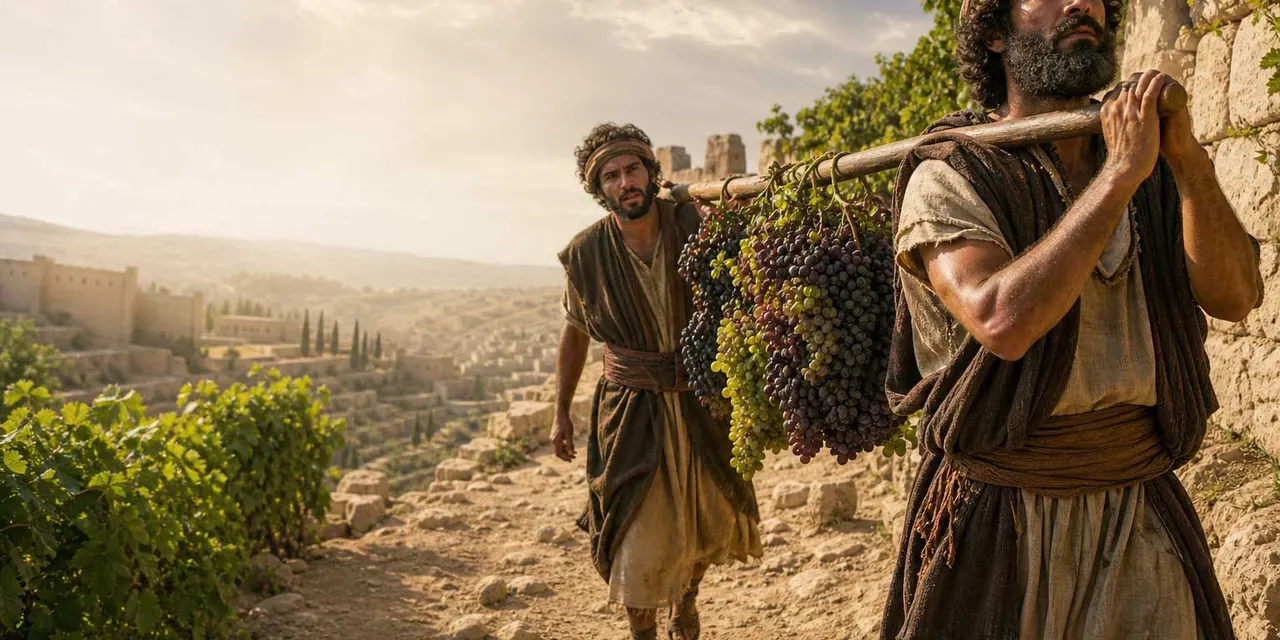
23 And they came as far as the stream of Eshkol, and there they cut one cluster of grapes, and the two of them carried it on a pole; and they took also of the pomegranate and of the fig.
Some commentators somehow calculate that this cluster was carried by eight people. This means that they walked through this land quite openly. If you are making your way at night, secretly, through hostile territory, you will not take a cluster of grapes with you. And so, through hostile territory, twelve Jews crept along unnoticed with a huge cluster of grapes on a pole, and they had never been so close to failure. Nevertheless, they calmly and safely planned to reach their camp with this cluster.
לַמָּקוֹם הַהוּא קָרָא נַחַל אֶשְׁכּוֹל עַל אֹדוֹת הָאֶשְׁכּוֹל אֲשֶׁר־כָּרְתוּ מִשָּׁם בְּנֵי יִשְׂרָאֵל׃
lammakóm hahú kará náchal eshkól al odót ha'eshkól asher-karetú mishám bené yisraél
24 And this place was named the spring Eshkol because of the cluster that the sons of Israel cut off there.
וַיָּשֻׁבוּ מִתּוּר הָאָרֶץ מִקֵּץ אַרְבָּעִים יוֹם׃
vayashúvu mittúr ha'áretz mikkétz arba'ím yom
25 And they returned from scouting the country after forty days.
וַיֵּלְכוּ וַיָּבֹאוּ אֶל־מֹשֶׁה וְאֶל־אַהֲרֹן וְאֶל־כָּל־עֲדַת בְּנֵי־יִשְׂרָאֵל אֶל־מִדְבַּר פָּארָן קָדֵשָׁה וַיָּשִׁיבוּ אוֹתָם דָּבָר וְאֶת־כָּל־הָעֵדָה וַיַּרְאוּם אֶת־פְּרִי הָאָרֶץ׃
vayelechú vayavóu el-moshé ve'el-aharón ve'el-kol-adát bene-yisraél el-midbár parán kadésha vayashívu otám davár ve'et-kol-ha'edá vayar'úm et-perí ha'áretz
26 And they went, and came to Moshe, and to Aharon, and to the whole community of the sons of Israel in the desert of Paran, to Kadesh, and answered them, speaking to the whole community, and showed them the fruits of the land.
Of course, this is an astonishing event for a people that is in the desert. Suddenly a strange procession with a cluster of grapes appears on the horizon, twelve are walking, they are awaited: “Look, what is it they are carrying?” And everyone, young and old, gathered in order to listen with bated breath to an astonishing story, the way people listen to stories about distant travels. Everything is ready for a solemn speech to be delivered, an ode to the country of Israel. And, as merchants often do when displaying curiosities, the story here also begins with the people being shown visual aids on the topic “Know and love your native land.” The scouts returned after a safe crossing, and they begin their story. It would seem that everything begins well, but one very important professional mistake is made: a scout must not engage in analysis, a scout collects facts.
It is exactly the same in court. If you end up in court, and some witness is being questioned, then as soon as he says: “I think that…” or: “I guess that…,” the judge will stop him: “Excuse me, I am the one who thinks and guesses here, and you report facts.” The scouts were sent for facts, and while everything is going well, they show the fruits of the land. But let us read their report.
וַיְסַפְּרוּ־לוֹ וַיֹּאמְרוּ בָּאנוּ אֶל־הָאָרֶץ אֲשֶׁר שְׁלַחְתָּנוּ וְגַם זָבַת חָלָב וּדְבַשׁ הִוא וְזֶה־פִּרְיָהּ׃
vaysapperu-ló vayomerú bánu el-ha'áretz ashér shelachtánu vegám zavát chaláv udvásh hi veze-pir'yá
27 And they told him, and said: “We went to the country to which you sent us, and indeed, it flows with milk and honey, and here are its fruits.
אֶפֶס כִּי־עַז הָעָם הַיֹּשֵׁב בָּאָרֶץ וְהֶעָרִים בְּצֻרוֹת גְּדֹלֹת מְאֹד וְגַם־יְלִדֵי הָעֲנָק רָאִינוּ שָׁם׃
éfes ki-áz ha'ám hayoshév ba'áretz vehe'arím betzurót gedolót me'ód vegam-yelidé ha'anák ra'ínu sham
28 However, the people that lives in that country is strong, and the cities are fortified and very large; and the sons of Anak (the giant) we saw there.
עֲמָלֵק יוֹשֵׁב בְּאֶרֶץ הַנֶּגֶב וְהַחִתִּי וְהַיְבוּסִי וְהָאֱמֹרִי יוֹשֵׁב בָּהָר וְהַכְּנַעֲנִי יֹשֵׁב עַל־הַיָּם וְעַל יַד הַיַּרְדֵּן׃
amalék yoshév be'éretz hannégev vehachittí vehayvusí veha'emorí yoshév bahár vehakkena'aní yoshév al-hayám ve'ál yad hayardén
29 Amalek lives in the south, and the Hittites, Yevusites and Emorites live on the mountain, and the Canaanites live along the seashore and by the Jordan.
The scouts began to tell frightening stories. Why did they begin to tell frightening stories? Maybe their very approach was not as it should have been.
Indeed, a person who sets out on some undertaking, begins some business, must calculate his strength and apply corresponding efforts. A person's success really does depend on the works of his hands, as the Torah says: “In the sweat of your face you will eat your bread.” For a person to eat bread, he needs to plow, sow, reap, do all the necessary agricultural work. But if a person thinks that he will just sow, reap and everything will work out, then the person is mistaken. He must sow, and at the same time it would be good for him to understand that this is God's will: to sow in order to receive bread. That is, we sow in order to fulfill the will of the Most High, Who wants to give us bread in this way.
We can go to a doctor, who has been given the right to heal. But if we think that it was the doctor who healed us, then we will be mistaken. It is God who wants us to go to the doctor as well, in order to give us healing through the doctor. On the one hand, we – yes, apply some efforts in order to achieve something. On the other hand, if we want to achieve something only by our own efforts, then we are mistaken and become idol worshippers, believers in our own work, and we get gods of the harvest, and gods of sowing, and much else.
And here the scouts began to think about whether they would manage by their own strength? Would they succeed in managing by their own strength? They got frightened and could no longer keep from some kind of analysis.
Let us read further.
וַיַּהַס כָּלֵב אֶת־הָעָם אֶל־מֹשֶׁה וַיֹּאמֶר עָלֹה נַעֲלֶה וְיָרַשְׁנוּ אֹתָהּ כִּי־יָכוֹל נוּכַל לָהּ׃
vayáhas kalév et-ha'ám el-moshé vayomer alóThe Russian transliteration has “ló” here, leaving out the first vowel. The Hebrew reads “aló” (“let us go up”), and the English line follows the Hebrew. na'alé veyaráshnu otá ki-yachól nuchál la
30 And Kalev tried to calm the people, speaking to Moshe: “Let us go up, then, let us go, let us ascend and be worthy of it, inherit it, because we will be able to overcome it!”
Kalev says: “Let's go and do it.” There is a very interesting, original commentator on the Torah, Rabbi Efrayim-Shlomo bar Aharon Lunchitz (or Kli Yakar), who lived in the 16th century CE. As I have already said, a person is often given a name after the title of a book he wrote. One of his books, a commentary on the Torah, is called Kli Yakar (Precious Vessel), therefore he is often called that – Kli Yakar. And he wrote this: “If Moshe had sent women, and not men, to scout, the women would not have said anything bad about the land.” Of course, it is hard to imagine a kind of traveling bachelorette party, where twelve girls or women would walk through the land of Israel and explore something. Of course, no one sent women to scout. What is meant here is that men lack the feminine spirit of sacrifice, the feminine capacity for self-sacrifice; in women this is very developed. Kli Yakar writes that a woman comes even when she is not called, does what will not pay off for her. A man, on the other hand, is constantly calculating in his head: is this profitable for me or not profitable. And if a man had to give birth instead of a woman, then humanity would not multiply: why on earth would a man walk around for nine months with a belly, be tormented, suffer and then also feel pain in childbirth. Only a woman is capable of this.
And the midrash says: “In that generation, the generation of the desert, everything the men broke, wherever the men made a breach, there the women patched it up.” So it was also in the story of the golden calf, when the women did not give their jewelry, and in all the other cases. The women held firm in faith, clearly set on a specific goal, while the men dangled back and forth.
When the Most High said: “Bring Me offerings, tell the men (anashím) to bring offerings,” then, when the men came, the women were already standing in line, as it is said: “Vayavó'u ha'anashím al-hanashím...” Women are on the front line, women are self-sacrificing. And it was this male spirit of cold practicality, of calculation, that pushed the scouts to say: “Everything is so frightening, we are such heroes for having walked around there.” One would like to remark: “Hello-o, guys, you brought a whole cluster, somehow got past the checkpoints of the enemy's reconnaissance and everything else. All the way from Chevron, across half the country, you dragged this cluster of grapes. Maybe it's not all that frightening, not all that dangerous? The land is good, God be with you.”
And so, Kli Yakar says that the women, simply seeing the goal, would have said: “That's it, we have to go and do it. Wow, what a wonderful land! What wonderful grapes! And what a sea there is there! And what sun! And what healing mud there, at the Dead Sea!” A woman loves and does, she does not occupy herself with calculations. The scouts lacked feminine qualities, because men are all so swaggering. This is what Kli Yakar spoke about. And this is one of the reasons why such a tragedy happened to the people of Israel.
וְהָאֲנָשִׁים אֲשֶׁר־עָלוּ עִמּוֹ אָמְרוּ לֹא נוּכַל לַעֲלוֹת אֶל־הָעָם כִּי־חָזָק הוּא מִמֶּנּוּ׃
veha'anashím ashér alú immó amerú lo nuchál la'alót el-ha'ám ki-chazák hu mimménnu
31 And the people who were with him (with Yehoshua ben Nun) said: “We will not cope with this people, because it is stronger than we are.”
They said what a scout must not say. A scout should have come and said: “Moshe, they have fifty chariots there, four hundred archers, four machine guns, twenty M16 rifles.” That's all. List the weaponry, tell about the systems of fortification. And no analysis: we can, we cannot – all this was for Moshe to decide.
וַיּוֹצִיאוּ דִּבַּת הָאָרֶץ אֲשֶׁר תָּרוּ אֹתָהּ אֶל־בְּנֵי יִשְׂרָאֵל לֵאמֹר הָאָרֶץ אֲשֶׁר עָבַרְנוּ בָהּ לָתוּר אֹתָהּ אֶרֶץ אֹכֶלֶת יוֹשְׁבֶיהָ הִוא וְכָל־הָעָם אֲשֶׁר־רָאִינוּ בְתוֹכָהּ אַנְשֵׁי מִדּוֹת׃
vayotzí'u dibbát ha'áretz ashér tarú otá el-bené yisraél lemór ha'áretz ashér avárnu va latúr otá éretz ochélet yoshevéha hiThe Russian transliteration has “bi” here. The Hebrew word is “hi” (“it is”), and the English line follows the Hebrew. vechol-ha'ám asher-ra'ínu vetochá anshé middót
32 And they brought out all the evil speech about the land that they had explored to the sons of Israel, saying: “The land through which we passed to explore it is a land that devours its inhabitants, and all the people whom we saw there – are people of enormous size.
The expression lehotzi (to bring out) dibá (slander, calumny) means to invent, to exaggerate evil speech about the land. The scouts began to speak badly about the land and to tell this to the sons of Israel. There are commentators who relate this to the spiritual realm, and this is what they say: “This people has already grown used to living in such a spiritual land, in such a spiritual state, where there is man, there is sun, air and water, there is enough of everything, and there is no need to engage in daily labor, including earthly, peasant labor, the simplest labor. And, naturally, such labor, if we engage in it, will devour all our spirituality. We will not be able to remain spiritual if we have to fight and then also plow. Let us rather sit here, with the man, it is more comfortable this way.” And indeed, one can understand it this way. It is so easy to roll away, to move over into the spiritual world and declare oneself spiritual, to stop caring about the material. And even better – to lay this on some of one's relatives or on society and to enjoy exclusively spiritual experiences, not to live in the land of Israel, which requires, among other things, work in the material world. And every person, at his own level, will build his own understanding of this.
Other people, and this happens very often to this day with those who live in Israel, cannot endure life in Israel. They say: “We cannot endure it, this land seems to devour us.” And the sages said: “The land of Israel is acquired through suffering.” In the land of Israel, with its agriculture, a person really has to find this difficult balance between the spiritual and the physical. It is a simple agrarian country in which it is not easy to live, although there are also information technologies and a great deal else. The scouts are not lying all that much; the reconnaissance, in essence, reported accurately. Only the reconnaissance decided, besides reporting, to also frighten the people. Do not frighten, do not frighten the people, God is with us, and therefore no one should say that we will not be able to do something. At the moment when you said that they are stronger than we are, you in fact said: “Their gods are stronger than our God,” so the commentators say. This is the most outrageous heresy there could possibly be. But what happened happened.
And all the people whom we saw there – are people of enormous size. Is that how they remembered it? How many giants were there in Chevron? How many people did they see there? But what stuck in their memory was that all the people there are big, simply acromegaly in everyone. This fear arises when there is a feeling that you will have to do everything yourself, that precisely your actions by themselves must lead to victory. And then you think: I can – I can't, look how big those people are, how huge, what big cities there are. And how are we to cope with this? If you understand that your task is to believe and go out to war, then there is no such fear, and the scale of the people changes sharply, as does the scale of the problems.
וְשָׁם רָאִינוּ אֶת־הַנְּפִילִים בְּנֵי עֲנָק מִן־הַנְּפִלִים וַנְּהִי בְעֵינֵינוּ כַּחֲגָבִים וְכֵן הָיִינוּ בְּעֵינֵיהֶם׃
veshám ra'ínu et-hannefilím bené anák min-hannefilím vannehí ve'enénu kachagavím vechén hayínu be'enehém
33 And there we saw the giants, the sons of Anak, who are of the giants, and we seemed to ourselves like grasshoppers compared to them, and so we appeared in their eyes.”
The sons of Anak, who are of the giants – what kind of revelation is this? Can one say that here it is, the evidence that the giants survived, that they lived through the flood? Most likely, this is a metaphor that the scouts use in order to tell about what they saw, so that there would be some kind of comparison: “We saw someone who resembles those very mythical, fairy-tale giants we heard about.” Why do I say mythical and fairy-tale? It is quite likely that some semi-mythical stories about giants went around among all the peoples, after all, there is no written Torah yet: read – they had not read, but heard – they had heard.
Perhaps the story about the giants will confirm the account that we did not just go there for nothing, we went as heroes. We were in that land, saw its inhabitants, and we risked our lives there. Do not go there, let us remain the only heroes who have been there. We will not cope, we will not overcome, we do not have enough bayonets. This is how, with such an approach, “real” men and warriors can tell about their heroism. If we return to the commentary of Kli Yakar, a woman would simply have set a goal, decided that no sooner said than done, let it be so. Therefore, when we speak about the punishment, about those who will die in the desert, it will not concern the women: they will not die in the desert. The punishment will be only for the men, because all this intimidation, this whole scene was played out at this very boys' get-together.
Such is the story of the reconnaissance and its report. The story of how people were sent as tourists, sent to tell about the good. But they came back as if from a combat reconnaissance, to share their exploits and to tell how frightening it is in the land of Israel. This is the beginning of a sad story, to be continued.
Self-Insufficiency
Bemidbar 14:1–45
With God's help we continue to study the weekly portion Shelach. Let us recall a little of the background and try to reconstruct the mise-en-scène of what is happening. So, the scouts returned after a forty-day journey through the Holy Land. The people gathered to listen to them, apparently late in the evening, as can be seen from the text. Consequently, fires are burning, everyone is sitting by the fires, in the glow of the fires faces can be seen… And the scouts tell about the land: “The land is, on the whole, good, indeed flowing with milk and honey. And just look at what clu-u-usters of grapes are found there. But it devours those who live on it, and we will in no way cope with the inhabitants of that country, there is no point even poking our noses in.” Night, a fire – just the right time to tell scary stories. And indeed, it becomes scary. Let us put ourselves in the place of ordinary people, to whom not just some bunch of brothers came, but the heads of the tribes came and said: “We cannot cope.” And what does that mean? Staying in the desert is impossible, pushing into the country means dying in battle. The women and children will be taken captive, and how the inhabitants of the Middle East treat captives is well known to everyone. Return to Egypt? Well, that is also such a dubious prospect. And the Torah opens up to us a little what happens next with these frightened people, what they talk about.
Do not hurry to condemn them, first put yourselves in their place. If you say: “But they saw numerous miracles, miracles were constantly happening in their life.” Of course. But one must not rely on a miracle. We cannot say: “Our God is a God of miracles, therefore I will take my whole salary and give it to a beggar, and God will somehow feed me by a miracle, keep me going.” One must not act that way, that is, one must not count on a miracle. One can and should count on the Most High's participation in your life, count on the Most High's support more than on your own strength, but not on a miracle. And anyway, forget about the miracles that happened at some time. Simply imagine a bewildered, frightened crowd of people, whom their own leaders and chiefs have frightened.
So, we read from verse 1 of chapter 14.
וַתִּשָּׂא כָּל־הָעֵדָה וַיִּתְּנוּ אֶת־קוֹלָם וַיִּבְכּוּ הָעָם בַּלַּיְלָה הַהוּא׃
vattissá kol-ha'edá vayittenú et-kolám vayivkú ha'ám balláyla hahú
1 And the whole community lifted up its voice (the word voice is not written, but it is implied here), and their voice rang out, and the whole people wept that night.
וַיִּלֹּנוּ עַל־מֹשֶׁה וְעַל־אַהֲרֹן כֹּל בְּנֵי יִשְׂרָאֵל וַיֹּאמְרוּ אֲלֵהֶם כָּל־הָעֵדָה לוּ־מַתְנוּ בְּאֶרֶץ מִצְרַיִם אוֹ בַּמִּדְבָּר הַזֶּה לוּ־מָתְנוּ׃
vayillónu al-moshé ve'al-aharón kol bené yisraél vayomerú alehém kol-ha'edá lu-mátnu be'éretz mitzráyim o bammidbár hazzé lu-mátnu
2 And they complained against Moshe and Aharon, all the sons of Israel, and the whole community said to them: “If only we had died in Egypt or if only we had died in this desert…
A very strange expression: no one is stopping them from dying in the desert even now. One can simply stay in the desert – and then you will die in the desert. And why list different possibilities of death? And what difference does it make – to die in Egypt, in the desert or in battle with a sword in hand for the Canaanite land, which perhaps we will cope with and be able to conquer? Much is unclear here.
The commentators say that a frightened person, if he is a believing person, may also begin to think what for he is getting this punishment. And he may reason like this: “Maybe it would have been good if we had died in Egypt – there, during the Egyptian darkness, when those Jews also died who served idols and received punishment for idolatry (there are midrashim, a tradition that says that only a fifth of the Jews came out). Perhaps it would have been better for us to die in the desert, as those died who sinned with the golden calf, when Moshe and the Levites put many to death. Or like those who died just quite recently, because of the quails. Or perhaps, as those women died, having drunk the bitter waters (mei sota), by which those suspected of adultery are tested. Were there few occasions to receive punishment? What have we done so wrong that the Most High is leading us under the sword? That is the worst of punishments. Maybe the Most High has decided to punish the whole people for idolatry: I will bring them into the land, as I promised, I will fulfill my promise, but there they will all be killed by the sword?” Many thoughts can flash through the head of a person who is afraid.
And what do they decide? There are several options for making a decision. The first: we have the prospect of going forward, into the last and decisive battle, in which we will certainly not win. Part of us will be killed, part of us will be taken captive. And our wives and our children will surely be taken captive. The second option: to stay in the desert and wait for who knows what. But we do have to move somewhere. The third, the most optimal option, as it may seem: to return to Egypt and say: “Excuse us, forgive us, we have understood, we have realized,” and return to the bricks. Six hundred thousand men, and altogether probably two million people, the Egyptians will certainly not shoot, they treat women slaves well, they respect family life. And slaves who came on their own and sold themselves are, of course, different from captives. We have to think about the women and children. What are we to do now? There is one more option: how did it go there, how many years of slavery? Four hundred thirty, four hundred… – it is unclear from when to count and how to count. We are slaves, we are bad at arithmetic. Maybe the Most High has decided to move us from Egyptian slavery into Canaanite slavery? And there, in Canaan, they will again abuse our women and children. Therefore in this scenario too it is better to return to Egypt (there are also such variants that read the people's thoughts this way). But besides all these interesting, logical and beautiful variants and explanations, there is one more logical explanation, which is talked about less: these people, in a state of fear, in a state of fright, forgot about the Most High. A person who has seen a multitude of miracles can also forget about God – like a person who stood for twenty years before a candle, but as soon as he turned away, found himself in darkness. The simplest option, and also, of course, quite a real one – to remember the Most High, real also with regard to us. Do we always, at a moment of difficulty (especially when we decide whether we can do something or not), remember that in this world there is also God? But, one way or another, however you explain it, the people found themselves facing the fact that the mission could not be carried out. Mission impossible. Then one has to ask: “But what for? What was all this?” And the people ask:
וְלָמָה יְהוָה מֵבִיא אֹתָנוּ אֶל־הָאָרֶץ הַזֹּאת לִנְפֹּל בַּחֶרֶב נָשֵׁינוּ וְטַפֵּנוּ יִהְיוּ לָבַז הֲלוֹא טוֹב לָנוּ שׁוּב מִצְרָיְמָה׃
velamá adonáy meví otánu el-ha'áretz hazzót linpól bachérev nashénu vetappénu yihyú laváz haló tov lánu shuv mitzráyema
3 Why is the LORD bringing us into this country, to fall by the sword, and our women and children will be for plunder? Is it not a good option for us to return to Egypt?”
וַיֹּאמְרוּ אִישׁ אֶל־אָחִיו נִתְּנָה רֹאשׁ וְנָשׁוּבָה מִצְרָיְמָה׃
vayomerú ish el-achív nittená rosh venashúva mitzráyema
4 And they said each to his brother: “Let us choose a new head (leader, chief) and return to Egypt!”
This is how the words nittena rosh. can be understood. Another way of understanding them – let us come to our senses, let us reason sensibly, literally – let us take the head, let us take hold of our heads. That is, let us pull ourselves together, let us reason soundly, throw off the intoxication with the idea of the country of Israel and return to Egypt. But the most probable, the most widespread translation is that they wanted to choose a new head. And, accordingly, the reaction of Moshe and Aharon:
וַיִּפֹּל מֹשֶׁה וְאַהֲרֹן עַל־פְּנֵיהֶם לִפְנֵי כָּל־קְהַל עֲדַת בְּנֵי יִשְׂרָאֵל׃
vayippól moshé ve'aharón al-penehém lifné kol-kehál adát bené yisraél
5 And Moshe and Aharon fell prostrate before the whole community of the sons of Israel.
Why do they say nothing now? Because they are already about to be removed, someone is to be chosen in their place, and therefore this is not the time for them to speak.
וַיֹּאמְרוּ אֶל־כָּל־עֲדַת בְּנֵי־יִשְׂרָאֵל לֵאמֹר הָאָרֶץ אֲשֶׁר עָבַרְנוּ בָהּ לָתוּר אֹתָהּ טוֹבָה הָאָרֶץ מְאֹד מְאֹד׃
vihoshúa bin-nún vechalév ben-yefunné min-hattarím et-ha'áretz kare'ú bigdehém
6 Yehoshua ben Nun and Kalev ben Yefunne, of those who explored the land, tore their clothes.
They tore their clothes because of that untruth, uncleanness, slander that they heard about the land, and because they sense the approach of a great disaster.
וַיֹּאמְרוּ אֶל־כָּל־עֲדַת בְּנֵי־יִשְׂרָאֵל לֵאמֹר הָאָרֶץ אֲשֶׁר עָבַרְנוּ בָהּ לָתוּר אֹתָהּ טוֹבָה הָאָרֶץ מְאֹד מְאֹד׃
vayomerú el-kol-adát bene-yisraél lemór ha'áretz ashér avárnu va latúr otá tová ha'áretz me'ód me'ód
7 And they spoke to the whole community of the sons of Israel, saying: “The country that we passed through to explore it, this country is good, very, very (it is a very good country)!
אִם־חָפֵץ בָּנוּ יְהוָה וְהֵבִיא אֹתָנוּ אֶל־הָאָרֶץ הַזֹּאת וּנְתָנָהּ לָנוּ אֶרֶץ אֲשֶׁר־הִוא זָבַת חָלָב וּדְבָשׁ׃
im-chafétz bánu adonáy veheví otánu el-ha'áretz hazzót untaná lánu éretz asher-hí zavát chaláv udvásh
8 If the LORD has chosen us (is favorable to us), then He will also bring us into this land, and give us this land, which flows with milk and honey.
אַךְ בַּיהוָה אַל־תִּמְרֹדוּ וְאַתֶּם אַל־תִּירְאוּ אֶת־עַם הָאָרֶץ כִּי לַחְמֵנוּ הֵם סָר צִלָּם מֵעֲלֵיהֶם וַיהוָה אִתָּנוּ אַל־תִּירָאֻם׃
ach badonáy al-timródu ve'attém al-tire'ú et-ám ha'áretz ki lachménu hem sar tzillám me'alehém vadonáy ittánu al-tira'úm
9 Only do not rebel against the LORD and do not fear the people of that country, because they are our bread, protection has departed from them. And the LORD is with us! Do not fear them!”
Only do not start considering the LORD deceitful, do not rebel against Him, do not try to do something to oppose His will. However wrongly or however rightly you interpret His will, do not try to do something to avoid it, do not devise something to get around His plan – you will not succeed. But if we act according to His plan and if the LORD is favorable to our actions, as corresponding to His plan, then we will prosper. And our movement forward will be successful. If you go against His will, then your so convenient return to Egypt may end in failure, because it will be against the will of the Most High.
And do not fear the people of that country, because they are our bread. This is a strange expression, not very clear. When a person lives in the desert, he very often engages in catching animals: quails, grouse, perhaps some young deer that walk about the desert – this is his bread, naturally. The animals that he eats, he does not fear. And here Yehoshua says: “This is what has been, as it were, given to us for food, given into our hands. We will make use of what they have produced there: their vineyards, their gardens, and their fortified cities too.” The commentators explain that Yehoshua in a certain sense prophesies here: “The angels under whose protection these peoples are (there are, after all, angels of the peoples, we see them here and there in the Tanach) are already deprived of strength, there is no protection whatsoever over these peoples. But with us is the LORD, therefore there is no need to fear them.” But the community is already out of its mind.
וַיֹּאמְרוּ כָּל־הָעֵדָה לִרְגּוֹם אֹתָם בָּאֲבָנִים וּכְבוֹד יְהוָה נִרְאָה בְּאֹהֶל מוֹעֵד אֶל־כָּל־בְּנֵי יִשְׂרָאֵל׃
vayomerú kol-ha'edá lirgóm otám ba'avaním uchvód adonáy nir'á be'óhel mo'éd el-kol-bené yisraél
10 And the whole community said – to stone them. And then the glory of the LORD appeared over the Tent of Meeting, over all the sons of Israel.
Let us simply stone these three, four, however many there are – Moshe, Aharon, Kalev and Yehoshua – and go to Egypt. We are not kamikazes. We do not want to expose our wives to danger, or to expose our children to danger, therefore let us simply stone them. Let us put out the last pocket of resistance and go to Egypt. Thus Moshe, Aharon, Kalev and Yehoshua find themselves on the brink of death. Any moment now, one more second – and stones will fly at them, the whole of Jewish history will change, and the inglorious march of Israel through the desert will end, an academic leave from Egyptian slavery a year long. And the people will safely return to Egypt. It is all over for these four Jews. But get ready: as always, there is a completely unexpected plot twist at the last second. One can imagine it as a kind of picture where everyone has frozen, such a motionless freeze-frame (as in the children's game: “sea figure – freeze!”). Everyone froze, and over everyone the glory of the LORD shone forth. Again the Chief Director appears on the stage. The whole people is present, and everyone hears how a voice from above speaks with Moshe.
וַיֹּאמֶר יְהוָה אֶל־מֹשֶׁה עַד־אָנָה יְנַאֲצֻנִי הָעָם הַזֶּה וְעַד־אָנָה לֹא־יַאֲמִינוּ בִי בְּכֹל הָאֹתוֹת אֲשֶׁר עָשִׂיתִי בְּקִרְבּוֹ׃
vayomer adonáy el-moshé ad-ána yena'atzúni ha'ám hazzé ve'ad-ána lo-ya'amínu vi bechól ha'otót ashér asíti bekirbó
11 And the LORD said to Moshe: “How long will this people anger Me, how long will they not believe in Me, and with all the signs that I have done among them?
אַכֶּנּוּ בַדֶּבֶר וְאוֹרִשֶׁנּוּ וְאֶעֱשֶׂה אֹתְךָ לְגוֹי־גָּדוֹל וְעָצוּם מִמֶּנּוּ׃
akkénnu vaddéver ve'orishénnu ve'e'esé otechá legoy-gadól ve'atzúm mimménnu
12 I will strike it with pestilence and destroy it, and from you I will make a people still stronger!”
A sensible proposal, and one can say here that the Most High appeared and saved Moshe at the last second. If not for this manifestation of the glory, the people would now have taken up stones, and Moshe would have perished not all that gloriously from the stone of some kinsman of his somewhere out there in the desert. And the people of Israel would have turned around as a crowd and trudged off toward Egypt. The Most High saves Moshe's life and says: “Let Me finally deal with this people,” with the people that had just wanted to kill Moshe. A very good occasion to say: “Well, go ahead!”, since there are no guarantees that next time the Most High will appear at the last second. Here you have an offer that is very hard to refuse. But Moshe is called a prophet precisely because he not only shows the Most High to the people, but also stands before the Most High on behalf of the people. And Moshe does not give up this calling of his even at such a moment.
וַיֹּאמֶר מֹשֶׁה אֶל־יְהוָה וְשָׁמְעוּ מִצְרַיִם כִּי־הֶעֱלִיתָ בְכֹחֲךָ אֶת־הָעָם הַזֶּה מִקִּרְבּוֹ׃
vayomer moshé el-adonáy veshame'ú mitzráyim ki-he'elíta vechochachá et-ha'ám hazzé mikkirbó
13 And Moshe said to the LORD: “But Egypt will hear that You brought this people out by Your strength from its midst,
וְאָמְרוּ אֶל־יוֹשֵׁב הָאָרֶץ הַזֹּאת שָׁמְעוּ כִּי־אַתָּה יְהוָה בְּקֶרֶב הָעָם הַזֶּה אֲשֶׁר־עַיִן בְּעַיִן נִרְאָה אַתָּה יְהוָה וַעֲנָנְךָ עֹמֵד עֲלֵהֶם וּבְעַמֻּד עָנָן אַתָּה הֹלֵךְ לִפְנֵיהֶם יוֹמָם וּבְעַמּוּד אֵשׁ לָיְלָה׃
ve'amerú el-yoshév ha'áretz hazzót shame'ú ki-attá adonáy bekérev ha'ám hazzé asher-áyin be'áyin nir'á attá adonáy va'ananechá oméd alehém uv'ammúd anán attá holéch lifnehém yomám uv'ammúd esh láyla
14 And they will tell the inhabitants of this land, who have heard that You, the LORD, are in the midst of this people, when You looked at them eye to eye, and Your cloud was over them, and in a pillar of cloud You go before them by day and as a pillar of fire – by night,
וְהֵמַתָּה אֶת־הָעָם הַזֶּה כְּאִישׁ אֶחָד וְאָמְרוּ הַגּוֹיִם אֲשֶׁר־שָׁמְעוּ אֶת־שִׁמְעֲךָ לֵאמֹר׃
vehemattá et-ha'ám hazzé ke'ísh echád ve'amerú haggoyím asher-shame'ú et-shim'achá lemór
15 And You will kill this people, all to the last one. And the pagans who have heard about all Your deeds will say, they will say, saying:
מִבִּלְתִּי יְכֹלֶת יְהוָה לְהָבִיא אֶת־הָעָם הַזֶּה אֶל־הָאָרֶץ אֲשֶׁר־נִשְׁבַּע לָהֶם וַיִּשְׁחָטֵם בַּמִּדְבָּר׃
mibbiltí yechólet adonáy lehaví et-ha'ám hazzé el-ha'áretz asher-nishbá lahém vayishchatém bammidbár
16 “Because God was not able to bring this people into the country that He swore to them, (He) slaughtered them all in the desert.
Moshe says: “Never mind me, I am not concerned about my own glory, I am not concerned about my own safety, nor about the women, nor about the children who are with this people, I am not asking for mercy for this people. Your glory – what will become of it if the whole world, all the peoples around, who have heard of all Your miracles, say: ‘But He did not manage it, some God He is!’” And Moshe continues:
וְעַתָּה יִגְדַּל־נָא כֹּחַ אֲדֹנָי כַּאֲשֶׁר דִּבַּרְתָּ לֵאמֹר׃
ve'attá yigdal-ná kóach adonáy ka'ashér dibbárta lemór
17 So You now, magnify Your strength, as You spoke, saying:
יְהוָה אֶרֶךְ אַפַּיִם וְרַב־חֶסֶד נֹשֵׂא עָוֹן וָפָשַׁע וְנַקֵּה לֹא יְנַקֶּה פֹּקֵד עֲוֹן אָבוֹת עַל־בָּנִים עַל־שִׁלֵּשִׁים וְעַל־רִבֵּעִים׃
adonáy érech appáyim verav-chésed nosé avón vafásha venakké lo yenakké pokéd avón avót al-baním al-shilleshím ve'al-ribbe'ím
18 The LORD is long-suffering and abundant in mercy, forgiving (bearing) iniquity and wickedness, cleansing those who repent, but not cleansing those who have not repented, reckoning the sin of the fathers to the sons in the third and fourth generation.
The Most High remembers certain misdeeds and watches whether they will show up again in the following generations. There are different interpretations of this statement. One can imagine how a certain man, a merchant, came to a certain kingdom and borrowed some money there, but could not pay it back. After some time his son came and said: “I also want to borrow money,” and they lent to the son too. The third time, perhaps, they also lent. But the question arose: is this not a dynasty of swindlers? And one can apply a similar question here. The Most High says: “Has the sin taken root in the people, has the sin become nature, part of the genetic code of the family?” And then the whole clan is punished. There are many different interpretations on this matter, and each person probably relates these interpretations to his own life experience.
סְלַח־נָא לַעֲוֹן הָעָם הַזֶּה כְּגֹדֶל חַסְדֶּךָ וְכַאֲשֶׁר נָשָׂאתָה לָעָם הַזֶּה מִמִּצְרַיִם וְעַד־הֵנָּה׃
selach-ná la'avón ha'ám hazzé kegódel chasdécha vecha'ashér nasáta la'ám hazzé mimmitzráyim ve'ad-hénna
19 Forgive the sin of this people according to the greatness of Your mercy, and as You have forgiven this people from Egypt until now!”
Moshe says: “Forgive for the sake of Your glory, forgive, so that they do not say that You are not almighty, forgive, so that Your glory does not suffer.” It is not for mercy toward the children and women, not for mercy toward the people that he cries out, not for it to be saved, for its safety to be taken care of (and there is something to take care of). Moshe says: “Forgive this people for the sake of Your glory, as You have already forgiven it. For You are glorified by Your mercy, not by Your wrath, not by Your judgment, but by Your mercy.” Just quite recently we read (11:14–15) how Moshe says: “Kill me, I am not ready to carry this people any longer. If You want to leave it on me, better kill me, so that I do not see all these abominations.” And at the moment when he really could be killed any second, when there is a real threat to life, and the people has not changed much either – it grumbles again, complains again, and again Moshe is to blame – at this moment Moshe again thinks not about himself, not about the people, not about the fact that from him another people could be produced, one that will be more obedient and that will glorify the Most High under Moshe's leadership. No. Moshe thinks about how the glory of the Most High will be revealed among other peoples, about His glory Moshe thinks. And he appeals to His mercy for the sake of this people, which is eternally dissatisfied with everything and which, let us not forget, right now wants to kill him.
וַיֹּאמֶר יְהוָה סָלַחְתִּי כִּדְבָרֶךָ׃
vayomer adonáy saláchti kidvarécha
20 And the LORD said: “I have forgiven according to your word.
That is: “You asked Me to forgive for the sake of My glory, and I have forgiven for the sake of My glory. But since we are talking about glory, then if you please, listen further to what I will do.”
וְאוּלָם חַי־אָנִי וְיִמָּלֵא כְבוֹד־יְהוָה אֶת־כָּל־הָאָרֶץ׃
ve'ulám chay-áni veyimmalé chevod-adonáy et-kol-ha'áretz
21 But as I live (I swear), and as the glory of the LORD fills the whole earth,
כִּי כָל־הָאֲנָשִׁים הָרֹאִים אֶת־כְּבֹדִי וְאֶת־אֹתֹתַי אֲשֶׁר־עָשִׂיתִי בְמִצְרַיִם וּבַמִּדְבָּר וַיְנַסּוּ אֹתִי זֶה עֶשֶׂר פְּעָמִים וְלֹא שָׁמְעוּ בְּקוֹלִי׃
ki chol-ha'anashím haro'ím et-kevodí ve'et-ototáy asher-asíti vemitzráyim uvammidbár vaynassú otí ze éser pe'amím veló shame'ú bekolí
22 So all the people who have seen My glory and the signs that I did in Egypt and in the desert, and have tested Me already ten times, and have not heard My voice,
The commentators, by the way, count ten trials and say that ten times is not a metaphor, it is an actual account.
אִם־יִרְאוּ אֶת־הָאָרֶץ אֲשֶׁר נִשְׁבַּעְתִּי לַאֲבֹתָם וְכָל־מְנַאֲצַי לֹא יִרְאוּהָ׃
im-yir'ú et-ha'áretz ashér nishbá'ti la'avotám vechol-mena'atzáy lo yir'úha
23 Will they see the land that I gave with an oath to their fathers? All who anger Me will not see it!
וְעַבְדִּי כָלֵב עֵקֶב הָיְתָה רוּחַ אַחֶרֶת עִמּוֹ וַיְמַלֵּא אַחֲרָי וַהֲבִיאֹתִיו אֶל־הָאָרֶץ אֲשֶׁר־בָּא שָׁמָּה וְזַרְעוֹ יוֹרִשֶׁנָּה׃
ve'avdí chalév ékev hayetá rúach achéret immó vaymallé acharáy vahavi'otív el-ha'áretz asher-bá shámma vezar'ó yorishénna
24 But My servant Kalev, because another spirit was with him, and he was filled with service, I will bring him into the country into which he went, and his seed will inherit it.
Kalev did not give in to public opinion, did not give in either to the general fear, or to the influence of the scouts, who could have said: let us make a joint report, or to the influence of the crowd. In him there is a completely different spirit, he is a person of a completely different nature.
וְהָעֲמָלֵקִי וְהַכְּנַעֲנִי יוֹשֵׁב בָּעֵמֶק מָחָר פְּנוּ וּסְעוּ לָכֶם הַמִּדְבָּר דֶּרֶךְ יַם־סוּף׃
veha'amalekí vehakkena'aní yoshév ba'émek machár penú us'ú lachém hammidbár dérech yam-súf
25 The Amalekites and the Canaanites live in the valley, therefore tomorrow turn around and go into the desert, along the shore of the sea.”
The Most High says: “The campaign into the holy land is postponed. And you also cannot stay here as a camp, because the Amalekites and the Canaanites are nearby, and they can simply attack you, and they are literally just behind that hill over there. Therefore tomorrow pack up and go into the desert to serve your punishment.” In connection with the changed situation the Most High gives a new instruction to Moshe and Aharon:
וַיְדַבֵּר יְהוָה אֶל־מֹשֶׁה וְאֶל־אַהֲרֹן לֵאמֹר׃
vaydabbér adonáy el-moshé ve'el-aharón lemór
26 And the LORD spoke to Moshe and Aharon, saying:
עַד־מָתַי לָעֵדָה הָרָעָה הַזֹּאת אֲשֶׁר הֵמָּה מַלִּינִים עָלָי אֶת־תְּלֻנּוֹת בְּנֵי יִשְׂרָאֵל אֲשֶׁר הֵמָּה מַלִּינִים עָלַי שָׁמָעְתִּי׃
ad-matáy la'edá hara'á hazzót ashér hémma malliním aláy et-telunnót bené yisraél ashér hémma malliním aláy shamá'ti
27 “How long shall I bear this evil community, which complains against Me? And I have heard the sons of Israel, how they complain against Me.
After all, they complained and spoke about Moshe and Aharon, the complaints were not presented in the form of complaints against the Most High, we read this at the very beginning of the chapter, in verse 2: “And they complained against Moshe and against Aharon.” But the Most High says: “I am the Seer of hearts, and I understand that they were complaining against Me, I heard what was really going on,” that is, they were complaining against the Most High.
אֱמֹר אֲלֵהֶם חַי־אָנִי נְאֻם־יְהוָה אִם־לֹא כַּאֲשֶׁר דִּבַּרְתֶּם בְּאָזְנָי כֵּן אֶעֱשֶׂה לָכֶם׃
emór alehém chay-áni ne'um-adonáy im-ló ka'ashér dibbartém be'oznáy ken e'esé lachém
28 You tell them (pass it on): as I live, says the LORD, if I do not do as you spoke in My ears (as you said that I would deal with you, as you complained against Me, murmured against Me), so I will deal with you.
בַּמִּדְבָּר הַזֶּה יִפְּלוּ פִגְרֵיכֶם וְכָל־פְּקֻדֵיכֶם לְכָל־מִסְפַּרְכֶם מִבֶּן עֶשְׂרִים שָׁנָה וָמָעְלָה אֲשֶׁר הֲלִינֹתֶם עָלָי׃
bammidbár hazzé yippelú figrechém vechol-pekudechém lechol-misparchém mibbén esrím shaná vamá'la ashér halinotém aláy
29 Your corpses will fall in this desert, and all those counted of your number, all who are with you, from twenty years and up, as you murmured, complained against Me.
אִם־אַתֶּם תָּבֹאוּ אֶל־הָאָרֶץ אֲשֶׁר נָשָׂאתִי אֶת־יָדִי לְשַׁכֵּן אֶתְכֶם בָּהּ כִּי אִם־כָּלֵב בֶּן־יְפֻנֶּה וִיהוֹשֻׁעַ בִּן־נוּן׃
im-attém tavó'u el-ha'áretz ashér nasáti et-yadí leshakkén etchém ba ki im-kalév ben-yefunné vihoshúa bin-nún
30 And you will not come into the country that I promised you, about which I raised the hand to say that you would settle there, except Kalev ben Yefunne and Yehoshua ben Nun.
וְטַפְּכֶם אֲשֶׁר אֲמַרְתֶּם לָבַז יִהְיֶה וְהֵבֵיאתִי אֹתָם וְיָדְעוּ אֶת־הָאָרֶץ אֲשֶׁר מְאַסְתֶּם בָּהּ׃
vetappechém ashér amartém laváz yihyé vehevetí otám veyade'ú et-ha'áretz ashér me'astém ba
31 But your children, about whom you said that they would be plunder, I will bring them, and they will know the land that you despised.
וּפִגְרֵיכֶם אַתֶּם יִפְּלוּ בַּמִּדְבָּר הַזֶּה׃
ufigrechém attém yippelú bammidbár hazzé
32 But your corpses will fall in this desert.
וּבְנֵיכֶם יִהְיוּ רֹעִים בַּמִּדְבָּר אַרְבָּעִים שָׁנָה וְנָשְׂאוּ אֶת־זְנוּתֵיכֶם עַד־תֹּם פִּגְרֵיכֶם בַּמִּדְבָּר׃
uvnechém yihyú ro'ím bammidbár arba'ím shaná venase'ú et-zenutechém ad-tóm pigrechém bammidbár
33 And your sons will be shepherds in the desert forty years, and will bear the consequences of your harlotry, until your corpses rot in the desert.
בְּמִסְפַּר הַיָּמִים אֲשֶׁר־תַּרְתֶּם אֶת־הָאָרֶץ אַרְבָּעִים יוֹם יוֹם לַשָּׁנָה יוֹם לַשָּׁנָה תִּשְׂאוּ אֶת־עֲוֹנֹתֵיכֶם אַרְבָּעִים שָׁנָה וִידַעְתֶּם אֶת־תְּנוּאָתִי׃
bemispár hayamím asher-tartém et-ha'áretz arba'ím yom yom lashaná yom lashaná tis'ú et-avonotechém arba'ím shaná vida'tém et-tenu'atí
34 According to the number of days in which you investigated this land, forty days, a day for a year, a day for a year you will bear your sin forty years. And you will know what apostasy from Me is.
Since the envoys were representatives of the whole people, were the eyes and legs of the people of Israel, the punishment too will be for all the forty days that the envoys spent in the country of Israel, a year for a day, that is, forty years. And the punishment will be not because of the bad report, but for the wrong approach. The punishment corresponds not to the report, but to the reconnaissance itself; the punishment will be for the very methods of exploration, for the wrong building of the relationship with the Holy Land.
אֲנִי יְהוָה דִּבַּרְתִּי אִם־לֹא זֹאת אֶעֱשֶׂה לְכָל־הָעֵדָה הָרָעָה הַזֹּאת הַנּוֹעָדִים עָלָי בַּמִּדְבָּר הַזֶּה יִתַּמּוּ וְשָׁם יָמֻתוּ׃
aní adonáy dibbárti im-ló zot e'esé lechol-ha'edá hara'á hazzót hanno'adím aláy bammidbár hazzé yittámmu veshám yamútu
35 I, the LORD, have sworn, and I will do so to this whole evil community; those who took counsel against Me in this desert, there they will waste away, and there they will die.”
וְהָאֲנָשִׁים אֲשֶׁר־שָׁלַח מֹשֶׁה לָתוּר אֶת־הָאָרֶץ וַיָּשֻׁבוּ וַיִּלּוֹנוּ וַיַּלִּינוּ עָלָיו אֶת־כָּל־הָעֵדָה לְהוֹצִיא דִבָּה עַל־הָאָרֶץ׃
veha'anashím asher-shalách moshé latúr et-ha'áretz vayashúvu vayallínu aláv et-kol-ha'edá lehotzí dibbá al-ha'áretz
36 And the men whom Moshe sent to explore the land, and who returned and complained about it, in order to slander the country before the whole community,
וַיָּמֻתוּ הָאֲנָשִׁים מוֹצִאֵי דִבַּת־הָאָרֶץ רָעָה בַּמַּגֵּפָה לִפְנֵי יְהוָה׃
vayamútu ha'anashím motzi'é dibbat-ha'áretz ra'á bammaggefá lifné adonáy
37 And the men who maliciously slandered this land died from the breath of the LORD.
The commentators describe this death in different ways: some say that their whole body was filled with worms, others say that in one moment the spirit of the glory of the Most High blew and killed ten scouts – all except Kalev and Yehoshua.
וִיהוֹשֻׁעַ בִּן־נוּן וְכָלֵב בֶּן־יְפֻנֶּה חָיוּ מִן־הָאֲנָשִׁים הָהֵם הַהֹלְכִים לָתוּר אֶת־הָאָרֶץ׃
vihoshúa bin-nún vechalév ben-yefunné chayú min-ha'anashím hahém haholechím latúr et-ha'áretz
38 Yehoshua ben Nun and Kalev ben Yefunne remained alive of those men who went to explore the land.
וַיְדַבֵּר מֹשֶׁה אֶת־הַדְּבָרִים הָאֵלֶּה אֶל־כָּל־בְּנֵי יִשְׂרָאֵל וַיִּתְאַבְּלוּ הָעָם מְאֹד׃
vaydabbér moshé et-haddevarím ha'élle el-kol-bené yisraél vayit'abbelú ha'ám me'ód
39 And Moshe spoke these words to all the sons of Israel, and the people mourned greatly.
The people mourned, the people, of course, were thinking what to do, and again decided to do everything their own way and on their own. That is, if earlier there was fear that we would not cope on our own, and there was no faith that the Most High would help, then the fear vanished, but the desire to cope on their own, without the Most High, did not go anywhere. And therefore the people themselves, without the Most High's approval, set out to war. What the Most High wanted to teach them, they have so far still not learned.
וַיַּשְׁכִּמוּ בַבֹּקֶר וַיַּעֲלוּ אֶל־רֹאשׁ־הָהָר לֵאמֹר הִנֶּנּוּ וְעָלִינוּ אֶל־הַמָּקוֹם אֲשֶׁר־אָמַר יְהוָה כִּי חָטָאנוּ׃
vayashkímu vabbóker vaya'alú el-rosh-hahár lemór hinnénnuIn the Russian transliteration this word starts with a v sound. The Hebrew word, meaning “here we are,” starts with h (hinnénnu), and the English line follows the Hebrew. ve'alínu el-hammakóm asher-amár adonáy ki chatánu
40 And they rose early in the morning, and went up to the top of the mountain, saying: “Here we are, we will now go up and go to the place of which the LORD spoke, to correct our sin, because we have sinned.”
וַיֹּאמֶר מֹשֶׁה לָמָּה זֶּה אַתֶּם עֹבְרִים אֶת־פִּי יְהוָה וְהִוא לֹא תִצְלָח׃
vayomer moshé lámma ze attém overím et-pí adonáy vehí lo titzlách
41 And Moshe said to them: “Why then are you transgressing what was spoken by the mouth of the LORD? And this whole campaign of yours will not succeed.
Do not even try to do this without the Most High: by your own strength, on your own, you will not overcome anyone, as the scouts said quite correctly.
אַל־תַּעֲלוּ כִּי אֵין יְהוָה בְּקִרְבְּכֶם וְלֹא תִּנָּגְפוּ לִפְנֵי אֹיְבֵיכֶם׃
al-ta'alú ki en adonáy bekirbechém veló tinnagefú lifné oyevechém
42 Do not go up, because the LORD is not among you, and then you will not perish before your enemies.
כִּי הָעֲמָלֵקִי וְהַכְּנַעֲנִי שָׁם לִפְנֵיכֶם וּנְפַלְתֶּם בֶּחָרֶב כִּי־עַל־כֵּן שַׁבְתֶּם מֵאַחֲרֵי יְהוָה וְלֹא־יִהְיֶה יְהוָה עִמָּכֶם׃
ki ha'amalekí vehakkena'aní sham lifnechém unfaltém bechárev ki-al-kén shavtém me'acharé adonáy velo-yihyé adonáy immachém
43 Because there, ahead of you, are the Amalekites and the Canaanites, and you will fall by the sword, because you have again turned away from the LORD, and the LORD will not be with you.”
וַיַּעְפִּלוּ לַעֲלוֹת אֶל־רֹאשׁ הָהָר וַאֲרוֹן בְּרִית־יְהוָה וּמֹשֶׁה לֹא־מָשׁוּ מִקֶּרֶב הַמַּחֲנֶה׃
vaya'pílu la'alót el-rósh hahár va'arón berit-adonáy umoshé lo-máshu mikkérev hammachané
44 And they dared to go up to the top of the mountain, but the ark of the covenant and Moshe did not move away from the camp.
That is, it was an independent sortie, perhaps in the expectation that the Most High would see their courage, resolve, and would change His verdict. Moshe said: “No, if the verdict of the Most High has been pronounced, if the oath has been pronounced, that means it will be so. Do not go looking for trouble. You really will not be able to overcome your enemy without the Most High.”
וַיֵּרֶד הָעֲמָלֵקִי וְהַכְּנַעֲנִי הַיֹּשֵׁב בָּהָר הַהוּא וַיַּכּוּם וַיַּכְּתוּם עַד־הַחָרְמָה׃
vayéred ha'amalekí vehakkena'aní hayoshév bahár hahú vayakkúm vayakketúm ad-hachormá
45 And the Amalekites and the Canaanites who lived on that mountain came down, and struck them, and crushed them to complete destruction (or to Chorma).
The word ad-hachorma can be understood as to complete destruction, to complete annihilation, until nothing was left of them. Some interpret the word hachorma as the name of a locality. That is, they were chased to the place that is called Chorma and that is located near Kadesh, near the place where their camp was. A sad story happened. A story from which the people had to learn a lesson: action with God brings blessing, but inaction too can be with God. That is, if God said to wait, then God will be with you while you wait. And there is no need to say: “I myself, I can, I will cope.” By yourself – we see that without the Most High nothing works out. Nor will it work to start something, having said: “I will start, and then the Most High will join in, on seeing that I am succeeding.” No, you will not succeed, it will not work. And the people of Israel learn here that at all stages of their history, throughout the whole course of their history – whether in exile, whether in punishment, whether in the blessed return to the land with a rebuilt Temple – the most important thing is not to transgress what the Most High says, to act according to the mouth of the Most High and not to try to say to God: “But I will prove it to You!” as we often do in relation to our parents, in relation to our friends: “I will make it without you, I will prove that I am worth something on my own.” Sometimes that is not bad, but only not in relation to the Most High.
Divine Pills
Bemidbar 15:1–41
With God's help we continue studying the weekly portion Shelach and will read chapter 15. We have already read that the Most High proclaimed a sentence terrible for the people of Israel: a whole generation will not be able to enter the land of Israel, the people of Israel is sentenced to forty years of wandering through the desert. I imagine how terrible it is to hear that now you are living simply in order to live out your days, that entering the land of Israel is no longer the goal of your life, that this event will happen after your corpse has simply rotted in the desert. It is probably very terrible to hear this. The people of Israel, which is still afraid, of course, of the Amalekites and the Canaanites, is nevertheless more afraid of the Most High. The people resolves on a desperate act: if we now go out to battle against these terrible Amalekites and Canaanites, perhaps the Most High will have mercy on us and will be favorable to us. But this does not happen. Having left the Most High, or fearing someone other than the Most High, it is hard to achieve anything. The Amalekites together with the Canaanites win the victory, they rout Israel. Imagine the state of the people after this, the depth of despair, disappointment and despondency that could have seized the people. And in such a situation the Most High turns to Moshe and begins to heal the people, gives the people prescriptions for healing. One can say that it is precisely to these prescriptions that the whole of chapter 15 of our book is devoted. Let us read and try to understand how the healing of the Most High works.
וַיְדַבֵּר יְהוָה אֶל־מֹשֶׁה לֵּאמֹר׃
vaydabbér adonáy el-moshé lemór
1 And the LORD said to Moshe, saying:
דַּבֵּר אֶל־בְּנֵי יִשְׂרָאֵל וְאָמַרְתָּ אֲלֵהֶם כִּי תָבֹאוּ אֶל־אֶרֶץ מוֹשְׁבֹתֵיכֶם אֲשֶׁר אֲנִי נֹתֵן לָכֶם׃
dabbér el-bené yisraél ve'amartá alehém ki tavó'u el-éretz moshevotechém ashér aní notén lachém
2 “Speak with the sons of Israel and say to them: when you come into the land of your permanent dwelling, which I give you,
Here the command begins, and in this there is already hope. The commentators say, and this can be understood: “The people is in depression, in despondency, people work each other up, and perhaps such thoughts flash by: there is such a strict criminal code here, with our God, and what if during these forty years we somehow sin again, become guilty of something else, God forbid, before Him, and He leaves us here for another forty years, then our children too will rot here. And then another forty years, and we will be doomed, like human-camels, to walk and wander through this desert for all eternity. What if He never forgives us and we never turn out righteous enough to enter this land.” Terrible thoughts. But the Most High comforts and says: “When you enter (not you – your children) this land, not if, but when. Prepare your children, teach them to live by the laws of this land. You are the people of Israel, and therefore potentially you too will enter this land, which I give you, and this land is called moshevotechem (the land of your permanent dwelling), and there you will live a settled life. If here you wander, then your wandering is not eternal, you will settle, and you will settle in the land that I give you, in the present tense.” And the healing itself, and this whole process of forty years of wandering through the desert, is part of acquiring the country: in order to earn the country, in order to receive the country, these forty years of wandering are needed. Therefore the very first line, the very first words of the Most High already give some comfort. And what will happen when the people enters this land?
וַעֲשִׂיתֶם אִשֶּׁה לַיהוָה עֹלָה אוֹ־זֶבַח לְפַלֵּא־נֶדֶר אוֹ בִנְדָבָה אוֹ בְּמֹעֲדֵיכֶם לַעֲשׂוֹת רֵיחַ נִיחֹחַ לַיהוָה מִן־הַבָּקָר אוֹ מִן־הַצֹּאן׃
va'asitém ishé ladonáy olá o-zévach lefalle-néder o vindavá o bemo'adechém la'asót réyach nichóach ladonáy min-habbakár o min-hattzón
3 And you will bring a fire offering to the LORD, a burnt offering or an offering given by a vow, or a voluntary offering, or on your festive appointed days (what is meant are the festivals and new moons, when offerings are to be brought), to make a scent of pleasing fragrance to the LORD, from the large livestock or from the small livestock.
We see that this is about some new conditions for bringing an offering.
וְהִקְרִיב הַמַּקְרִיב קָרְבָּנוֹ לַיהוָה מִנְחָה סֹלֶת עִשָּׂרוֹן בָּלוּל בִּרְבִעִית הַהִין שָׁמֶן׃
vehikrív hammakrív korbanó ladonáy minchá sólet issarón balúl birvi'ít hahín shámen
4 And the one bringing an offering to the Most High shall bring an issaron (a tenth part of an efa) of solet flour, mixed with a quarter of a hin of oil.
Let us recall that solet flour is flour of the highest quality, issaron, or one tenth part of a measure (efa), is approximately 2.2 liters. Hin is approximately a gallon (3.8 liters), more or less, therefore a quarter of a hin is 0.8–0.9 liters (although, by the most grandiose measures, and there is a difference in understanding these measures, it is 1.5 liters). Well, let us round it off to make it simpler: we will count a quarter of a hin as a liter, and we get an offering of 2.2 liters of flour mixed with one liter of oil.
וְיַיִן לַנֶּסֶךְ רְבִיעִית הַהִין תַּעֲשֶׂה עַל־הָעֹלָה אוֹ לַזָּבַח לַכֶּבֶשׂ הָאֶחָד׃
veyáyin lannésech revi'ít hahín ta'asé al-ha'olá o lazzávach lakkéves ha'echád
5 And wine for the libation, also a quarter of a hin, make for the burnt offering or for any offering of one ram.
That is, for each ram that is brought as an offering one must add another offering, mincha (a bread gift), we know about this from the book of Vayikra. But now one must also add a libation of wine – something that did not exist before. Rabbi Ovadya bar Yaakov Sforno, one of the well-known commentators on the Torah, draws attention to the fact that until the moment when Israel sinned with the golden calf, there were no grain offerings accompanying the offering. Both Noach, coming out of the ark, and Avraham, when he offered up a ram instead of Yitzchak, did not accompany the sacrifice with any bread offerings. And in chapter 24 of the book of Shemot, when the Israelites brought an offering as a sign of concluding the covenant, nothing is written either about any bread gifts that accompanied it. The bread gift as an addition, a supplement to the offering, appears after the sin of the golden calf, for the correction of the sin committed. On the one hand, the sin was committed by the whole people, on the other hand, this addition appears as a supplement to the individual offering. Here, in our case, we see one more addition – wine, as if the Most High says: “Bring Me a present, I want a present from you.” And when someone wants a present from us, wants to rejoice in our present – that means he wants reconciliation with us. The Most High needs neither our bread nor our wine, but bread and wine became two supplements, additions to the sacrifices, which are brought as part of the atonement for sin: on the one hand – the sin of the golden calf, on the other hand – the sin of the scouts. Therein lies the importance of the use of bread and wine. The Most High says: “I want from you a new gift, I give you a new commandment; I want you to give Me a gift, to bring Me a gift.” The addition to the sacrifice in the form of wine is connected with grapes: the people saw what a cluster of grapes the scouts brought. Some commentators say: “It was a cluster weighing several tons, and the wine from it was enough for Israel for the whole time of its existence in the desert.” This is, of course, a hyperbole, but there is a certain connection. The scouts said: “Look, just as these fruits are strange and somehow megalomaniac, so this land is strange.” That is, the sin is mixed up with grapes, and its correction is also connected with grapes, with wine. The Most High could have said: “I do not want to see your wine anymore, and do not speak about grapes in My presence.” That happens: when a person is guilty of something, he does not even want to remember it. But the Most High says: “I want your wine, you will bring Me wine.” And further on we read that each offering will have its own corresponding amount of wine.
אוֹ לָאַיִל תַּעֲשֶׂה מִנְחָה סֹלֶת שְׁנֵי עֶשְׂרֹנִים בְּלוּלָה בַשֶּׁמֶן שְׁלִשִׁית הַהִין׃
o la'áyil ta'asé minchá sólet shené esroním belulá vashémen shelishít hahín
6 The lamb shall be accompanied by a grain offering of two tenths of a measure (4.4 liters) of solet flour, mixed with a third of a hin of oil (1.3 liters).
וְיַיִן לַנֶּסֶךְ שְׁלִשִׁית הַהִין תַּקְרִיב רֵיחַ־נִיחֹחַ לַיהוָה׃
veyáyin lannésech shelishít hahín takrív reyach-nichóach ladonáy
7 And a third of a hin of wine (1.3 liters) bring as a fragrant offering to the LORD.
The wine itself, naturally, is not part of the fire offering, it is simply poured out on the altar.
וְכִי־תַעֲשֶׂה בֶן־בָּקָר עֹלָה אוֹ־זָבַח לְפַלֵּא־נֶדֶר אוֹ־שְׁלָמִים לַיהוָה׃
vechi-ta'asé ven-bakár olá o-závach lefalle-néder o-shelamím ladonáy
8 And if you bring a bull as a burnt offering, or as an offering in fulfillment of a vow, or as a peace offering to the LORD,
וְהִקְרִיב עַל־בֶּן־הַבָּקָר מִנְחָה סֹלֶת שְׁלֹשָׁה עֶשְׂרֹנִים בָּלוּל בַּשֶּׁמֶן חֲצִי הַהִין׃
vehikrív al-ben-habbakár minchá sólet sheloshá esroním balúl bashémen chatzí hahín
9 Then in that case together with the young bull you shall bring three tenth parts of a measure (6.6 liters) of solet flour, mixed with half a hin (about 2 liters) of oil.
וְיַיִן תַּקְרִיב לַנֶּסֶךְ חֲצִי הַהִין אִשֵּׁה רֵיחַ־נִיחֹחַ לַיהוָה׃
veyáyin takrív lannésech chatzí hahín ishé reyach-nichóach ladonáy
10 And of wine bring as an offering half a hin, a fire offering and a fragrance to the LORD.
כָּכָה יֵעָשֶׂה לַשּׁוֹר הָאֶחָד אוֹ לָאַיִל הָאֶחָד אוֹ־לַשֶּׂה בַכְּבָשִׂים אוֹ בָעִזִּים׃
kácha ye'asé lashór ha'echád o la'áyil ha'echád o-lassé vakkevasím o va'izzím
11 And so it shall be done with each bull, or with each lamb, or with each of the young rams, or with each of the goats.
כַּמִּסְפָּר אֲשֶׁר תַּעֲשׂוּ כָּכָה תַּעֲשׂוּ לָאֶחָד כְּמִסְפָּרָם׃
kammispár ashér ta'asú kácha ta'asú la'echád kemisparám
12 As many as are brought, for each one of them do so according to their number.
That is, the animal by itself can no longer be brought as an offering separately. To every animal one must add its own offering of bread and wine.
כָּל־הָאֶזְרָח יַעֲשֶׂה־כָּכָה אֶת־אֵלֶּה לְהַקְרִיב אִשֵּׁה רֵיחַ־נִיחֹחַ לַיהוָה׃
kol-ha'ezrách ya'ase-kácha et-élle lehakrív ishé reyach-nichóach ladonáy
13 Every native-born inhabitant shall do this so, in order to bring a fire offering, fragrant for the LORD.
In verse 14 we read an important addition:
וְכִי־יָגוּר אִתְּכֶם גֵּר אוֹ אֲשֶׁר־בְּתוֹכְכֶם לְדֹרֹתֵיכֶם וְעָשָׂה אִשֵּׁה רֵיחַ־נִיחֹחַ לַיהוָה כַּאֲשֶׁר תַּעֲשׂוּ כֵּן יַעֲשֶׂה׃
vechi-yagúr ittechém ger o asher-betochechém ledorotechém ve'asá ishé reyach-nichóach ladonáy ka'ashér ta'asú ken ya'asé
14 And if a stranger lives with you, or someone who has lived among you for many generations, and he makes a fire offering, a fragrance to the LORD, then as you do, so let him do too.
הַקָּהָל חֻקָּה אַחַת לָכֶם וְלַגֵּר הַגָּר חֻקַּת עוֹלָם לְדֹרֹתֵיכֶם כָּכֶם כַּגֵּר יִהְיֶה לִפְנֵי יְהוָה׃
hakkahál chukká achát lachém velaggér haggár chukkát olám ledorotechém kachém kaggér yihyé lifné adonáy
15 One law for you and for the stranger living with you, an eternal law for your generation: as you, so also the stranger shall be before the LORD.
Here the opening word hakkahal is an address to the society or to the people: “Listen, people, listen, assembly!” In relations with the Most High, in everything connected with direct relations with the Most High, including in sacrifices, one may not make distinctions between native Israelites and strangers. In the well-known ancient midrash Tana de-vei Eliyahu, which is attributed to the prophet Eliyahu himself as a revelation, the prophet Eliyahu says that at this time a dispute broke out, a quarrel broke out between the Israelites and the strangers. The native Israelites said: “All troubles come from you, all misfortunes are from you, you weren't even standing here, you will not bring sacrifices, this is our God, our Tent of Meeting, and you stand farther away.” And the strangers insisted and said: “We too want to come to this God, this is our God too.” And the position of the prophet Eliyahu, as it is attributed to him, is unequivocally all-embracing. This is one of the few texts in Judaism that says that any commandment which a gentile wants to take upon himself, which he has recognized as a commandment and taken upon himself – both Shabbat, and circumcision, and anything at all – he may do, may take upon himself. And as he grows, as he draws near to the Torah, to him (just as to an Israelite) the Holy Spirit is revealed. This is an important midrash, one of the few midrashim with exactly this position. And further on in this midrash it is said: “Here the Most High stands up for the strangers.”
Today there are very many disputes about whether gentiles must or must not keep the commandments, and if they must, then which ones exactly? And many people who do not belong to the people of Israel find themselves at a loss, because it is really unclear to them what they should keep. And it seems one no longer wants to say: “Well, since I am a Finn or a Pole, I will go and eat pork, I'm allowed to, after all,” it seems one really no longer wants to, because many have the feeling that this is uncleanness. And on the other hand, there are some rabbis who say: “Oh come on, everything is allowed for you, eat what you want, live however you want altogether.” And some add: “You don't even have a soul at all, what can anyone demand of you.” And one does not want to plunge into this topic, because many already have revelations. And how can one forbid a person who wants to give up something for the sake of the Most High, who does something for the sake of the Most High, to do it? One can only beg, entreat people to reconcile their heart, so that what they take upon themselves would be not for exalting themselves, not in order to say: “You, all the rest, are sinners, but I am a righteous one,” but precisely for the service of the Most High.
And here the Most High adds:
תּוֹרָה אַחַת וּמִשְׁפָּט אֶחָד יִהְיֶה לָכֶם וְלַגֵּר הַגָּר אִתְּכֶם׃
torá achát umishpát echád yihyé lachém velaggér haggár ittechém
16 One Torah and one judgment shall there be for you and for the stranger living with you.”
That is, you may not oppress strangers at all. There are many countries, mainly these are countries of the third world, in which (if a foreigner has caused an accident or if he has some dispute with a permanent resident) the police and the whole population immediately take the side of their own. There are some laws of countries that are arranged this way. The Most High says: “A just judgment is for everyone, and before Me, in relations with Me, at least in this vertical of the relationship with Me, all are equal, there is no dispute about this.”
With this the question of the libation of wine is closed, the first remedy that the Most High presents (or the second, if one counts that the first is the promise to the people of Israel that it will enter the land after all).
From verse 17 we read the next address of the Most High to Moshe:
וַיְדַבֵּר יְהוָה אֶל־מֹשֶׁה לֵּאמֹר׃
vaydabbér adonáy el-moshé lemór
17 And the LORD spoke with Moshe, saying:
דַּבֵּר אֶל־בְּנֵי יִשְׂרָאֵל וְאָמַרְתָּ אֲלֵהֶם בְּבֹאֲכֶם אֶל־הָאָרֶץ אֲשֶׁר אֲנִי מֵבִיא אֶתְכֶם שָׁמָּה׃
dabbér el-bené yisraél ve'amartá alehém bevo'achém el-ha'áretz ashér aní meví etchém shámma
18 “Speak with the sons of Israel and say to them: when you come into the country into which I am bringing you,
Although the Most High gave the people a punishment, in the process of this punishment He nevertheless brings the people into the country.
וְהָיָה בַּאֲכָלְכֶם מִלֶּחֶם הָאָרֶץ תָּרִימוּ תְרוּמָה לַיהוָה׃
vehayá ba'acholchém milléchem ha'áretz tarímu terumá ladonáy
19 And when you eat of the bread of that land (country), lift up an elevation from this bread to the LORD.
This can most likely be understood the way the plain meaning reads: of the bread of that land means of the bread that grew there. But there is also another understanding of this: of the bread from the earth, of earthly bread, that is, you now live here, in the desert, and you eat bread from heaven, and there you will eat bread from the earth. This is not a spiritual fall, this is a spiritual ascent, you will be included in a new work. In this, perhaps, lies one of the fears of the scouts, when they say that this land devours its inhabitants, that is, it will force us to work on it. And the Most High says: “Yes, so it will be, you will eat of earthly bread.”
רֵאשִׁית עֲרִסֹתֵכֶם חַלָּה תָּרִימוּ תְרוּמָה כִּתְרוּמַת גֹּרֶן כֵּן תָּרִימוּ אֹתָהּ׃
reshít arisotechém challá tarímu terumá kitrumát góren ken tarímu otá
20 Your first dough (the first portion, challa), from it lift up an elevation; as the elevation from the threshing floor, so lift it up.
מֵרֵאשִׁית עֲרִסֹתֵיכֶם תִּתְּנוּ לַיהוָה תְּרוּמָה לְדֹרֹתֵיכֶם׃
mereshít arisotechém tittenú ladonáy terumá ledorotechém
21 From the first portions of all your dough give the LORD a donation, an elevation throughout your generations.
A woman kneads dough in accordance with the norms that existed in the desert: there they gathered an omer, a measure (we said that this is about two liters), and this was the daily sustenance. If a woman has kneaded dough from two liters, then she separates from it a little piece, which is called challa, this commandment is today called separating challa. She can bake something from it or give this dough to the ministers.
Naturally, today far from all women bake bread at home, and far from always, therefore some simply remove it and throw it away, and some, and this is more sensible, put it in the freezer and freeze it. When enough dough has gathered for a good and beautiful challa, it is baked and given either to the ministers or to the needy. In a word, this commandment is fulfilled the way it can be fulfilled in the absence of the Temple.
This is the third remedy that the Most High gives: “You will eat earthly bread, but the dough from earthly bread will nevertheless be connected with Heaven, because I will take your elevation from it.” You have separated a little piece of dough, and the whole dough becomes heavenly. In exactly the same way as you separate the tithe from your salary: all the rest of your money becomes heavenly, you sanctify all of it, because you separated a part for God. This applies not only to dough, but also to fruits, to vegetables – to everything from which you have separated the due part, rendered to God what is God's. A small challa, as they say, sanctifies the whole dough, the separated little piece makes the whole dough holy. This is important to remember, but here the Most High says this as comfort to the people: “You will have earthly bread, I bless it, I will take it too.”
וְכִי תִשְׁגּוּ וְלֹא תַעֲשׂוּ אֵת כָּל־הַמִּצְוֹת הָאֵלֶּה אֲשֶׁר־דִּבֶּר יְהוָה אֶל־מֹשֶׁה׃
vechí tishgú veló ta'asú et kol-hammitzvót ha'élle asher-dibbér adonáy el-moshé
22 If you err and do not do of all these commandments which the LORD gave to Moshe –
אֵת כָּל־אֲשֶׁר צִוָּה יְהוָה אֲלֵיכֶם בְּיַד־מֹשֶׁה מִן־הַיּוֹם אֲשֶׁר צִוָּה יְהוָה וָהָלְאָה לְדֹרֹתֵיכֶם׃
et kol-ashér tzivvá adonáy alechém beyad-moshé min-hayom ashér tzivvá adonáy vahál'a ledorotechém
23 All that the LORD commanded you by the hand of Moshe, from the day when the LORD commanded, and onward into your generations,
וְהָיָה אִם מֵעֵינֵי הָעֵדָה נֶעֶשְׂתָה לִשְׁגָגָה וְעָשׂוּ כָל־הָעֵדָה פַּר בֶּן־בָּקָר אֶחָד לְעֹלָה לְרֵיחַ נִיחֹחַ לַיהוָה וּמִנְחָתוֹ וְנִסְכּוֹ כַּמִּשְׁפָּט וּשְׂעִיר־עִזִּים אֶחָד לְחַטָּת׃
vehayá im me'ené ha'edá ne'está lishgagá ve'asú chol-ha'edá par ben-bakár echád le'olá leréyach nichóach ladonáy umincható veniskó kammishpát us'ir-izzím echád lechattát
24 And it shall be: if the community has overlooked something, if something was hidden from their eyes and an error occurred, then the whole community shall bring a young bull as a burnt offering, fragrant to the LORD, and His grain offering, and His libation, as prescribed, and one goat as a purification offering.
Here the Most High repeats and affirms that there is correction. If the whole community has erred, has made an error, then everything can be corrected. This is a reminder that correction is also part of healing.
וְכִפֶּר הַכֹּהֵן עַל־כָּל־עֲדַת בְּנֵי יִשְׂרָאֵל וְנִסְלַח לָהֶם כִּי־שְׁגָגָה הִוא וְהֵם הֵבִיאוּ אֶת־קָרְבָּנָם אִשֶּׁה לַיהוָה וְחַטָּאתָם לִפְנֵי יְהוָה עַל־שִׁגְגָתָם׃
vechippér hakkohén al-kol-adát bené yisraél venislách lahém ki-shegagá hi vehém heví'u et-korbanám ishé ladonáy vechattatám lifné adonáy al-shigegatám
25 And the kohen shall atone for the whole community of the sons of Israel, and this error will be forgiven them, and they brought a fire offering to the LORD and a purification offering to the LORD for their error.
וְנִסְלַח לְכָל־עֲדַת בְּנֵי יִשְׂרָאֵל וְלַגֵּר הַגָּר בְּתוֹכָם כִּי לְכָל־הָעָם בִּשְׁגָגָה׃
venislách lechol-adát bené yisraél velaggér haggár betochám ki lechol-ha'ám bishgagá
26 And it will be forgiven the whole assembly of the sons of Israel, and the stranger living among them, as also the whole people, because it is an error.
If the people has erred, a nationwide sin has been committed, then, having realized this, one can bring an offering and the people will be atoned for, there is correction for the community.
But there is likewise correction for a person too, when he sinned by himself, and not the whole people.
וְאִם־נֶפֶשׁ אַחַת תֶּחֱטָא בִשְׁגָגָה וְהִקְרִיבָה עֵז בַּת־שְׁנָתָהּ לְחַטָּאת׃
ve'im-néfesh achát techetá vishgagá vehikríva ez bat-shenatá lechattát
27 And if one of the souls sins by error (if one person has sinned, erred), let it bring a yearling she-goat as an offering, as a purification offering,
וְכִפֶּר הַכֹּהֵן עַל־הַנֶּפֶשׁ הַשֹּׁגֶגֶת בְּחֶטְאָה בִשְׁגָגָה לִפְנֵי יְהוָה לְכַפֵּר עָלָיו וְנִסְלַח לוֹ׃
vechippér hakkohén al-hannéfesh hashogéget bechet'á vishgagá lifné adonáy lechappér aláv venislách lo
28 And the kohen shall atone for the soul that erred, that sinned by error before the LORD, shall atone for him, and it will be forgiven him.
הָאֶזְרָח בִּבְנֵי יִשְׂרָאֵל וְלַגֵּר הַגָּר בְּתוֹכָם תּוֹרָה אַחַת יִהְיֶה לָכֶם לָעֹשֶׂה בִּשְׁגָגָה׃
ha'ezrách bivné yisraél velaggér haggár betochám torá achát yihyé lachém la'osé bishgagá
29 The native-born inhabitant of the sons of Israel and the stranger living among them – common rules there will be for you for the one who has committed an error.
וְהַנֶּפֶשׁ אֲשֶׁר־תַּעֲשֶׂה בְּיָד רָמָה מִן־הָאֶזְרָח וּמִן־הַגֵּר אֶת־יְהוָה הוּא מְגַדֵּף וְנִכְרְתָה הַנֶּפֶשׁ הַהִוא מִקֶּרֶב עַמָּהּ׃
vehannéfesh asher-ta'asé beyád ramá min-ha'ezrách umin-haggér et-adonáy hu megaddéf venichretá hannéfesh hahí mikkérev ammá
30 And the soul that acts daringly or brazenly, of the native-born inhabitant and of the stranger, he blasphemes the LORD: that soul shall be destroyed from the midst of its people.
What is meant here is that a person who knows, for example, that the LORD exists, that the LORD forbade kindling fire on Shabbat, that the LORD commands not to kindle fire on Shabbat, and he, not by mistake, not out of foolishness, but to spite the Most High, says: “Since You want me not to kindle, then I will kindle a fire on Shabbat.” Such a soul shall be destroyed from the people.
כִּי דְבַר־יְהוָה בָּזָה וְאֶת־מִצְוָתוֹ הֵפַר הִכָּרֵת תִּכָּרֵת הַנֶּפֶשׁ הַהִוא עֲוֹנָה בָהּ׃
ki devar-adonáy bazá ve'et-mitzvató hefár hikkarét tikkarét hannéfesh hahí avoná va
31 Because he disregarded the words of the LORD and broke His commandment; with destruction that soul shall be destroyed, its sin is upon it.
This is an interesting addition: if a person continues to persist in his unbelief, then he will be destroyed, but even after this one can also repent. For example, I can think: “I was wrong, after all, when I tried to anger the Most High, I was wrong when I tried to do things to spite Him.” When I realize that I was not right, then teshuva (repentance), like a time machine, goes back into the past and takes away that rightness of mine, my intention. And my deed can become as if unintentional. If I had known what I know today, I would not have acted so then. The sages say that a person commits a transgression when a spirit of folly enters him, that is, when he loses da'at (awareness, correct perception), loses reason. What distinguishes a person from an animal? A person breathes like an animal, eats and drinks like an animal, walks and lies down like an animal, relieves himself and reproduces like an animal… What distinguishes a person from an animal is the presence of reason. At the moment when a person loses reason, a spirit of folly enters him, and he becomes like an animal, therefore the sin of a person is atoned for by an animal. And if I realize that I was wrong, that at that time there was no reason in me, then I can still return; but if I persist – then my sin is upon me.
What is the difference between the person who erred and did not understand, and the one who erred and did not realize? It is that if a person erred unintentionally, if he had no evil intention, then from above he is, as they say, nudged toward teshuva. The Most High wants his teshuva, his repentance, constantly gives him some hints, slips him some cheat sheets, and then a Voice comes out from Heaven and says: “Return!” But if a person sins deliberately, if this is blasphemy against the Holy Spirit, then there is no assistance for such a person to return.
From verse 32 a new story begins:
וַיִּהְיוּ בְנֵי־יִשְׂרָאֵל בַּמִּדְבָּר וַיִּמְצְאוּ אִישׁ מְקֹשֵׁשׁ עֵצִים בְּיוֹם הַשַּׁבָּת׃
vayihyú vene-yisraél bammidbár vayimtze'ú ish mekoshésh etzím beyom hashabbát
32 And the sons of Israel were in the desert, and they found a man gathering branches on Shabbat.
What is the problem? It is nowhere written, after all: “Do not gather branches on Shabbat.” The sages argue about which of the Shabbat prohibitions this man violated. Some say that he broke off branches, others say that he stacked them in a heap, and there are various ways of understanding it. One way or another, apparently, a violation of some prohibition did take place there.
There is also a dispute regarding the identity of this man. Rabbi Akiva (we read in the Talmud) says, sitting with the sages: “This man was Tzelofchad.” How do we know that this man was Tzelofchad? Rabbi Akiva says: “Here it is written: the people of Israel was in the desert,” and further on (27:3) his daughters say: “Our father died in the desert.” Two are connected: in the desert and in the desert; they intersect, so it is Tzelofchad.” This method of interpretation on the basis of similar words is called gzera shava. Rabbi Yehuda ben-Batira objects and says: “Akiva, what are you doing? If this is Tzelofchad and the Torah concealed it, then why are you revealing it? And if this is not Tzelofchad, then it may turn out that you are slandering an innocent person. And what will happen then?” I want to stop here and say the following. Often we, reconstructing some events, boldly say: “Here this person sinned and most likely violated this commandment, there he violated it or there, and here he transgressed,” even if this is not written. And one needs to be very careful in condemning people where it is not obvious, where the Torah did not explicitly condemn anyone, and one should adopt the method of Yehuda ben-Batira. That is precisely my feeling.
So, we do not know what kind of man this was, we know only that in some way he violated Shabbat.
וַיַּקְרִיבוּ אֹתוֹ הַמֹּצְאִים אֹתוֹ מְקֹשֵׁשׁ עֵצִים אֶל־מֹשֶׁה וְאֶל־אַהֲרֹן וְאֶל כָּל־הָעֵדָה׃
vayakrívu otó hammotze'ím otó mekoshésh etzím el-moshé ve'el-aharón ve'él kol-ha'edá
33 And those who found him gathering branches brought him to Moshe, and to Aharon, and to the whole assembly.
וַיַּנִּיחוּ אֹתוֹ בַּמִּשְׁמָר כִּי לֹא פֹרַשׁ מַה־יֵּעָשֶׂה לוֹ׃
vayanníchu otó bammishmár ki lo forásh ma-ye'asé lo
34 And they left him under guard, because it was not clear what to do with him.
It is strange, why is this story suddenly brought here? Perhaps, as the commentators say, as Tosafot (a collection of commentaries on practically all tractates of the Talmud) says, this man wanted to do something in the name of Heaven. He thought, or he heard how the people were saying: “Well, that's it, now we are stuck here for forty years. No need to keep Shabbat, no need to keep kashrut, no need to keep anything.” And this man decided sacrificially to draw the fire upon himself and went to gather tree branches, so that he would be punished and executed for Shabbat, for the sake of the holy Shabbat. There is such a radical opinion.
Others say: “On the contrary, this man thought that, since the Most High is leaving the people of Israel for forty years, it means He has annulled the covenant with Israel, and one may gather branches.” And he is punished to show that the Most High has kept the covenant with Israel. All these commentaries are written in order to answer or try to answer the question of why this story is told to us here. Another explanation is closer to me. We did read in chapter 14 that the people of Israel wanted to stone Moshe, Aharon, Kalev and Yehoshua. And here there is this teaching: the most important thing is not to hold a field court-martial, not to arrange a quick reprisal (which the people is still learning to this day, by the way), because the answer is not always clear.
So, the man was brought to Moshe, but Moshe too has no answer. Moshe, who knows the laws, who is lawgiver and king, and can simply say: “Just shoot him, and that's it,” he has no answer regarding this man's deed. And Moshe, as he often does, turns to the Most High.
וַיֹּאמֶר יְהוָה אֶל־מֹשֶׁה מוֹת יוּמַת הָאִישׁ רָגוֹם אֹתוֹ בָאֲבָנִים כָּל־הָעֵדָה מִחוּץ לַמַּחֲנֶה׃
vayomer adonáy el-moshé mot yumát ha'ísh ragóm otó va'avaním kol-ha'edá michútz lammachané
35 And the LORD said to Moshe: “By death this man shall die, stone him with stones, the whole community, outside the camp.”
The Most High answers: “The courts are in force, the laws are in force, and Shabbat is in force.”
וַיֹּצִיאוּ אֹתוֹ כָּל־הָעֵדָה אֶל־מִחוּץ לַמַּחֲנֶה וַיִּרְגְּמוּ אֹתוֹ בָּאֲבָנִים וַיָּמֹת כַּאֲשֶׁר צִוָּה יְהוָה אֶת־מֹשֶׁה׃
vayotzí'u otó kol-ha'edá el-michútz lammachané vayirgemú otó ba'avaním vayamót ka'ashér tzivvá adonáy et-moshé
36 And the whole community brought him out beyond the bounds of the camp, and they stoned him with stones, and he was put to death, as the LORD had commanded Moshe.
This is proof that the laws remain, Shabbat remains. That is, it is possible and quite probable that there were very many Shabbat violators over the whole long Jewish history, and even during this year that Israel spent in the desert. And this story is told here to show what a court must be and what it must not be. To show that the laws are still in force and the covenant with the Most High has not been annulled.
וַיֹּאמֶר יְהוָה אֶל־מֹשֶׁה לֵּאמֹר׃
vayomer adonáy el-moshé lemór
37 And the LORD spoke to Moshe, saying:
דַּבֵּר אֶל־בְּנֵי יִשְׂרָאֵל וְאָמַרְתָּ אֲלֵהֶם וְעָשׂוּ לָהֶם צִיצִת עַל־כַּנְפֵי בִגְדֵיהֶם לְדֹרֹתָם וְנָתְנוּ עַל־צִיצִת הַכָּנָף פְּתִיל תְּכֵלֶת׃
dabbér el-bené yisraél ve'amartá alehém ve'asú lahém tzitzít al-kanfé vigdehém ledorotám venatenú al-tzitzít hakkanáf petíl techélet
38 “Speak to the sons of Israel and say to them, and they shall make for themselves tassels on the wings of their garments throughout their generations, and they shall weave into the tassels a blue thread.
הָיָה לָכֶם לְצִיצִת וּרְאִיתֶם אֹתוֹ וּזְכַרְתֶּם אֶת־כָּל־מִצְוֹת יְהוָה וַעֲשִׂיתֶם אֹתָם וְלֹא־תָתֻרוּ אַחֲרֵי לְבַבְכֶם וְאַחֲרֵי עֵינֵיכֶם אֲשֶׁר־אַתֶּם זֹנִים אַחֲרֵיהֶם׃
vehayá lachém letzitzít ur'itém otó uzchartém et-kol-mitzvót adonáy va'asitém otám veló tatúru acharé levavchém ve'acharé enechém asher-attém zoním acharehém
39 And it shall be a tassel for you, and you shall see it,
and you shall remember all the commandments of the LORD, and you shall keep them, and you shall not go after your heart and after your eyes, after which you go whoring,
This verb, ur'item, which is used here, repeats Moshe's command when he sends out the scouts (14:18) and says: “And look over the country.” Here this word means: “…and you will see this thread.” This is a correction of sight.
You shall not go (velo taturu) – here the future tense of the verb latur (to explore) is used; I said that from it comes the word tayar (tourist, traveler). The people went to seek out the beauties of the land of Israel (latur), but it did not work out, what came out was leragel (to track, to spy). And what comes out when our eyes go after the heart? It comes out like this: “Look, an open cash register, and money in it! Look how nice, we've found an attraction! Look what a beautiful girl! Look what a tasty little shashlik! Look, look, look…” Each one looks at something of his own, each has his own temptation. The eyes and the heart are our tourists, who all the time go around with brochures of the country of sin: “Take a trip to the country of sin, look how good it is there!”
The Most High says: “You will see the blue thread – you will remember all My commandments.” What a strange connection, how does a blue thread remind one of the commandments? When it is dark outside, night (and in those times the nights were not particularly well lit), a white thread does not differ from a blue thread, does not differ at all. With the beginning of dawn the blue and the white thread can already be told apart. As soon as it has dawned, as soon as you have seen the blue thread, remember the commandments of the Most High, and so every morning (boker boker). We begin every morning blessing the Most High, the day begins – our service begins. Of course, at night too all the commandments exist, including love your neighbor (I, when I sleep, generally always love my neighbor, unless snoring may be a manifestation of my lack of love for my neighbor, but usually I love). Most of God's commandments a person fulfills during the day. You will see the blue threads – and you will remember, every day you will remember.
לְמַעַן תִּזְכְּרוּ וַעֲשִׂיתֶם אֶת־כָּל־מִצְוֹתָי וִהְיִיתֶם קְדֹשִׁים לֵאלֹהֵיכֶם׃
lemá'an tizkerú va'asitém et-kol-mitzvotáy vihyitém kedoshím lelohechém
40 So that you remember and keep all My commandments, and you will be holy to your God.
אֲנִי יְהוָה אֱלֹהֵיכֶם אֲשֶׁר הוֹצֵאתִי אֶתְכֶם מֵאֶרֶץ מִצְרַיִם לִהְיוֹת לָכֶם לֵאלֹהִים אֲנִי יְהוָה אֱלֹהֵיכֶם׃
aní adonáy elohechém ashér hotzéti etchém me'éretz mitzráyim lihyot lachém lelohim aní adonáy elohechém
41 I am your God, Who brought you out of the land of Egypt to be God to you. I am the LORD, your God.”
These last lines are evidence that, although the Most High did punish the people of Israel, the process of upbringing, the process of changing the people of Israel has not been stopped. The LORD has not rejected the people of Israel. This is the last, fourth medicine that the Most High gives the people of Israel through Moshe.
A Drawn-Out Exam
At the center of our weekly portion Shelach is the story of the scouts whom Moshe sends to scout out the land. The portion begins with the Most High commanding Moshe to send these scouts. The Most High says to Moshe at the beginning of chapter 13:
2. “Send for yourself (shelach-lecha) men, and they will explore the land of Canaan, which I am giving to the sons of Israel; send one man each from the father's camp, every leader among them.”
But forty years later Moshe retells this situation differently. In chapter 1 of the book of Devarim Moshe says:
22. And all of you came near to me and said: “Come, let us send men ahead of us, and let them scout out this land for us and come back to us with a report on which road we shall go up by and which cities we shall come to.”
That is, according to Moshe's later account, it was the people themselves who wanted to send scouts. And we have to understand: who, after all, was the initiator of sending the scouts? Some commentators, some interpreters of the Torah saw in this a certain indulgence on the part of the Most High, as if the Most High were saying: “Well, Moshe, if you need to send scouts, then go ahead and send them for yourself.” Moshe himself, however, says that he accepted this initiative from the people.
Here one needs to understand that sometimes we hear some voice, or some idea, some thought arises in our head. And this thought may very well be from God; sometimes the Most High speaks with us in this way – through our thoughts, through our reasoning. We read in verse 2 of chapter 13 that, although the Most High says: “Send for yourself…,” this does not mean that it is all the same to Him. The command of the Most High reminds us of verse 1 of chapter 12 of the book of Bereshit: “And God said to Avraham: go for yourself (lech-lecha)…” And when we read this there, we know for certain that it is not said in this sense: “You go for yourself, this is not needed by Me.” Therefore it is more correct here too to understand what is said precisely as a command of the Most High, and not as His indulgence.
There is one more important detail of this conversation. The Most High addresses Moshe, but does not say to him: “Tell the people such and such.” That is, Moshe received a task for himself, and with the people he speaks according to his own reasoning. Therefore, when he retells the story in chapter 1 of the book of Devarim, he changes a little, or even, one could say, greatly changes what the Most High had commanded him to do in verses 18–20 of chapter 13 of our book. The Most High wanted the people to study the land, to explore the land. The people themselves wanted to find out by which road to enter the land. But Moshe sends them precisely on a military reconnaissance. Here Moshe shows himself not simply as the head of the people; he prepares the leaders of the people, he wants to make the whole people a leader. This is a kind of temptation. When the people stood at Mount Sinai, it promised that it would fulfill the commandments of the Most High. But when this temptation came, when it was necessary to plan the conquest of the land, to really do it and carry it out, the people did not withstand it, the people remained a slave people. And, as a consequence of this temptation, the people remained in the desert for forty years. But, although this was a punishment, it prepared the people for service, that is, over forty years the slave people became a servant people.
And, of course, when we speak about entering the land, one more aspect must be mentioned – the right of the Jewish people to the land of Israel. We hear questions about this constantly today as well. Here, in the Torah, we see that before the Jews came into the land, other peoples lived there. We see that these peoples had flourishing cities and that the Jews simply conquered them. And, naturally, the question arises: by what right did the Jews conquer this land then? Of course, the whole earth belongs to the Most High, and the Most High gives it to whomever He sees fit. In chapter 15 of the book of Bereshit, in verse 16, the Most High says that the return of the people to the land, the taking possession of the land, is connected with the guilt of the Amorites living in it. That is, the inhabitants of this land had guilt before the Most High, and the Most High endured this for a long time, at least forty years. And this guilt of the Amorites became the first reason for the conquest of the land by the Israelites. And the second reason is what we know from today's research, from the correspondence of the local kings of the land of Israel with Egypt. We know that all of them were dependent on Egypt, and some were proud that Egyptian troops were stationed in their cities. So the conquest of the land of Israel is also part of the war with Egypt. And if we look at this from the point of view of symbolism, where Egypt symbolizes the lower, sinful worlds, then the conquest of the land takes place by the right of holiness, by the right of the superiority of holiness over sin: it is lawful and legitimate to conquer the land for the holy, for the service of the holy, although this in itself also requires holiness.
Shelach Lecha (Send for Yourself)
Let us talk about some aspects and one unusual view of the weekly portion Shelach. This portion is also customarily called the portion of the scouts, because it is precisely the scouts that it speaks about. But only about them? Let us read a few verses from chapter 13 of our book. The LORD said to Moshe:
2. “Send for yourself (shlach lecha) men, and they will explore (yaturu) the land of Canaan, which I am giving to the sons of Israel; send one man each from the father's camp, every leader among them.”
Next there is the command to send representatives, one from each tribe, and a list of the people is given. And from verse 17 we read the tasks that Moshe sets before the envoys.
17. And Moshe sent them to explore the land of Canaan, and said to them: “Go up from the south and ascend the mountain,
18. And look over the land: what kind of people it is that lives on it, whether it is strong or weak, whether it is few or many;
19. And what kind of land it is on which it lives, whether it is good or bad; and what kind of cities they are in which it lives, whether they are open or surrounded by a wall;
20. And what kind of land it is, whether it is fat or lean, whether there are trees on it or not, and if you take courage, then you will take from the fruits of the land.” And these were the days of the first ripe grapes.
One of the tasks with which Moshe sends the men was the task to take from the fruits of the land. And this is important, because further on the Torah again speaks about fruit.
23. And they came to the stream of Eshkol, and there they cut off one cluster of grapes, and the two of them carried it on a pole; and they also took of the pomegranate and of the fig.
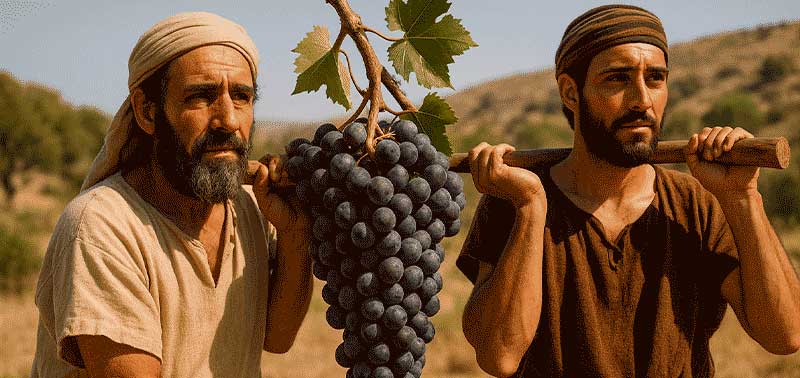
24. And this place was called the spring of Eshkol because of the cluster (eshkol) that the sons of Israel cut off there.
And when the scouts return, come to Moshe and Aharon and to the whole community, they too begin by showing what they have brought, and they say, among other things: “…and here are its fruits (of the land).” Everyone who has read the weekly portion Shelach knows that the mission failed, that the scouts, instead of encouraging the people, told what they told, and what happened happened. And there are many explanations on the subject of why it happened so.
Some say that the scouts had lofty souls. They were so used to being in the desert, where God's presence is evident, and they did not believe that the same presence of God could also be in the land of Israel. That is, the mission failed because of the loftiness of soul of these people. Others say that they were afraid of losing their service, losing their posts. One more opinion: instead of simply bringing intelligence, they took upon themselves the function of advisers. In a word, there are many different versions, different views of this picture, and (I never tire of repeating) as usually happens, the commentaries say more about the commentators themselves.
I propose to look at this whole story through the eyes of Rabbi Aizik of Gomel, who offers a version of events that is surprising and unusual for us in the context of our weekly portion. He says precisely that a very important part of the envoys' mission was to gather fruit. The verb latur (to explore), which is used here, is connected in the modern language with the word tayar (tourist, traveler), we have already spoken about this, and also about the fact that a tourist, by his purpose, by his definition, travels to see the sights, the beauties, he is shown the very best. And part of these beauties in this case is fruit. Why does it matter to Moshe what fruits grow there? Why is it important for those whom Moshe sent as tourists to bring precisely fruit as souvenirs from the land of Canaan? What, as Aizik says, was the mission of the Most High?
The people of Israel came out of Egypt, lived for more than a year in the Divine presence, walked together with God, saw miracles, fed on man and, one could say, lived accustoming itself to submission to the Most High. The goal is to enter the land of Canaan, God is leading the people there. And one can say: “Well yes, this is the land I am going into, because God is leading me there. I submit myself, I resign myself to the will of the Creator, and I go into this land.” But there is something else important. The Most High wanted the flesh not to resign itself to the desire of the Creator: “Well, since the Creator wants it, then I will go, although it is hard,” but that the person himself, each one of the people of Israel, would be filled to overflowing with love for the land, for its fruit, for its lakes, for its sea, in which one can swim, for its mountains, in which one can rest, can rejoice, can also delight one's own body, so that a person would love this land.
The teachers give this example. A young man who grew up and was brought up in love for the land of Israel and for the Torah – the time has come for him to look for a bride. He finds a girl and says: “Let us build a family together in Israel, let us build Israel together, let us develop spiritually together.” And to the next date he brings some books, to read together with her, to study together with her. And at such-and-such a stage she asks him: “Yes, I am very glad that I will have a husband like that, who loves God so much, and loves Israel so much, and tries so hard, but what about me? Do I myself interest you, or am I a means in service for you, or am I only an instrument for you? Do I exist? Do you have, on the level of your flesh, me as a person, as what I am? Do I myself attract you?”
Very often it happens that rabbis teach men to give women gifts. So a man comes and brings home a bouquet of flowers. A wonderful thing, it would seem, and the wife asks him: “You brought me a bouquet? And why did you bring me a bouquet?” – “Well, the rav told us in class that it is good to give women bouquets.” She says: “Well, it would be good if you decided yourself to bring a bouquet...”
It happens that it is better for a person to choose by himself. Once a rav was telling about how he bought his wife a piece of jewelry. He goes into a jewelry store, chooses something expensive, beautiful and smashing, in his view. And the wife says in bewilderment: “What is this you have brought me?” When she goes to the store herself, when she chooses herself, then for her it is a whole procedure, some kind of sacrament. The husband will not be able to please, he will not be able to pick out what she needs. She herself must choose for herself what her heart wants. These, it would seem, are material things, but we are material too. And the Most High wanted the soul of the people of Israel to catch fire, so that it would not be simply: “We are going because – well, where else are we to go? We have already come out of Egypt, we set out, we are here, in the desert, we have no choice.” The word latur has one more meaning – to choose. The Most High wanted the people of Israel itself, by the desire of its very-very-very fleshly soul, to want this land itself, to love this land, to love it with true love – not because God wants it so, but because the concrete I want it so as well. When a person is given a choice, one can say “yes” or say “no.” If you do not feel that you have the right to say “no,” if you can never say “no,” then your “yes” is also worth nothing.
The Most High invited the people and said: “Go, look, eat of the fruits of the land, rejoice, among other things, in its beauties.” For what happens? The scouts in a certain place cut off a cluster (eshkol) of grapes and call this place the same – Eshkol. That is, the place is named after a significant event. Let's say, the city of Kiryat Shmona (city of eight) is so named in honor of eight heroes who fell defending the settlement of Tel Hai in Israel's War of Independence of 1947–1949. The name Eshkol is the joy of the cluster, a call to love this land, joy in what gives delight, joy in the fact that the land is not only a place of service, it is delight, and delight in this land is also part of service. And what happened when the scouts, or, let's say, the tourists, returned? The people said neither “yes” nor “no.” The people said: “Why are you forcing us to go into that land?” The people did not even realize that the land can be chosen and that it can be loved. And then it was said to the people: “Well then, stay another forty years in the desert, bring up children, raise a new generation of people.”
And so these forty years passed, and representatives of the tribes of Re'uven and Gad come to Moshe and say: “Look what land is here! Here one can put up pens for livestock, we will put up pens for livestock here.” The daughters of Tzelofchad come and say: “We have a story like this, we have no allotment, give us land.” A thirst to possess this land appears, and not because God wants it so, not because it is the land of our fathers, it is our fatherland, and not because we have such a spiritual tradition, not only within the framework of service. There appears a thirst of love inside a person, love for the land appears, love for the mythical image of the land. And not because Dad said so or the Heavenly Dad said so, but because we ourselves love this land, because we ourselves want to live there. We choose this love for the land, we rejoice in its beauty, its fruits, its fruit, for us it is the best, the chosen one – like our spouse, whom we chose not only as given by God, but also as beloved.
This is how Rabbi Aizik of Gomel understands the whole tragedy that took place. The tragedy of a generation which, being in the Divine presence, seeing Divine miracles, did not want to choose, refused the choice and complained that it was being forced into something.
A very unusual view out of all those there are on our weekly portion Shelach. And this, as I said, is very important. It is important to understand: this land which is destined for me, or this woman whom my parents told me to marry and to whom God pointed me, must be loved with true love. So these are some reflections on the weekly portion. I will say again, there are dozens of different, directly opposite opinions about the story of the scouts. I wanted to share with you precisely this view.
Shelach: Materials for Further Study
See also the talk on the portion Shelach, the stenogram of the portion Behaalotecha and the weekly portions of the Torah.