- Weekly portions
- Shemot
- Yitro
יִתְרוֹ
Yitro
Sinai and the Ten Commandments
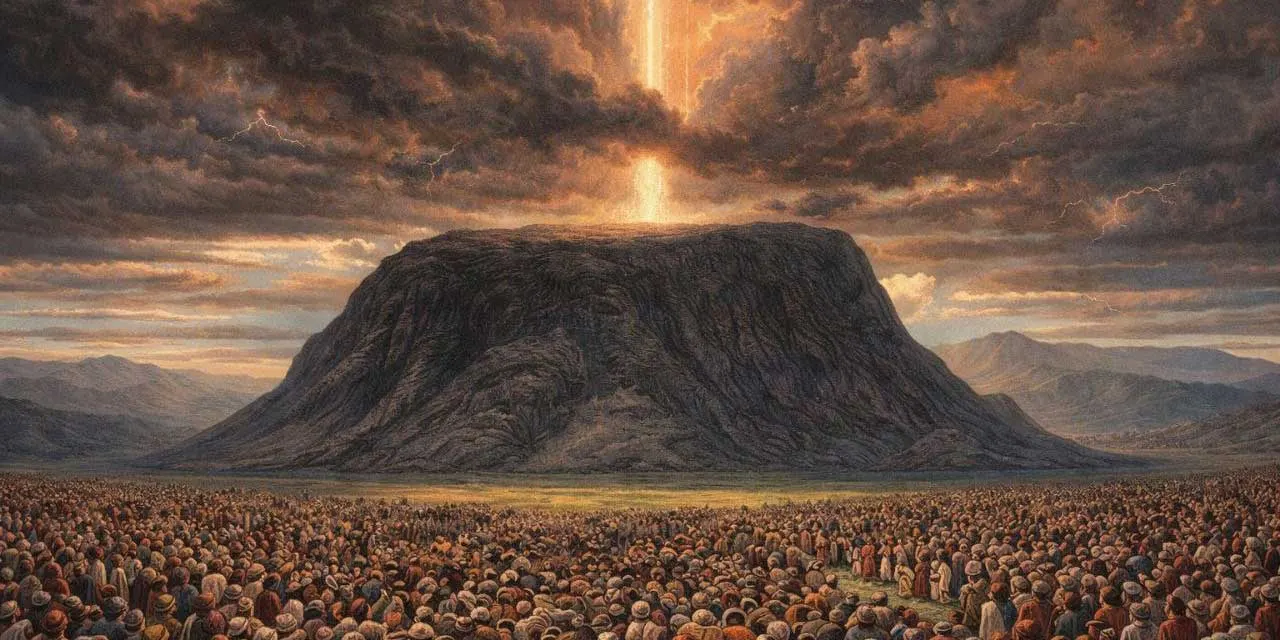
- Weekly portion
- 17 of 54
- Verses
- Shemot 18:1–20:23
- Parts
- 8
- Reading time
- 2 h 2 min
- Views
marks places where the translation deliberately departs from the Russian original. Tap it to show the note.
Yitro is the weekly portion about Moshe’s meeting with his father-in-law and the giving of the Torah at Sinai. Alex Blend examines the advice about the judges, the preparation of the people, the tablets and the Ten Commandments. The stenogram includes the text in Hebrew, a transliteration, a translation and the author’s commentary on the relationship between man, society and the Most High.
Yitro: Hello, I’m your father-in-law
Shemot 18:1–12
With God’s help we begin reading the weekly portion Yitro, from verse 1 of chapter 18 of the book of Shemot. In the previous portion we read that the sons of Israel, who had barely come out of Egypt, were attacked by the biggest gang in the area, the most serious armed gang formation – the people of Amalek. And Israel, inspired by Moshe, by the Most High, won a brilliant victory over this gang formation. The Most High partly revealed to Moshe that this is the beginning of a long, drawn-out enmity, and that the Most High himself undertakes, swears to blot out the memory of Amalek from under the heavens forever. Amalek is not just some “thug” who unexpectedly attacked Israel. It is, in essence, the ideological prototype, the inspirer of all the antisemites who came after, the founding father of the attacks, the assaults on the people of Israel.
The weekly portion Yitro is somewhat symmetrical to what happened in the previous weekly portion. Israel, having just come out of Egypt, acquired its first enemies in the person of Amalek, but it also acquires its first friends. If we remember, Yitro is the name of Moshe’s father-in-law, whom we have not heard of for a long time, and now the Torah returns to him.
וַיִּשְׁמַע יִתְרוֹ כֹהֵן מִדְיָן חֹתֵן מֹשֶׁה אֵת כָּל־אֲשֶׁר עָשָׂה אֱלֹהִים לְמֹשֶׁה וּלְיִשְׂרָאֵל עַמּוֹ כִּי־הוֹצִיא יְהוָה אֶת־יִשְׂרָאֵל מִמִּצְרָיִם׃
vayishmá yitró chohén midyán chotén moshé et kol-ashér asá elohím lemoshé ulyisraél ammó ki-hotzí adonáy et-yisraél mimmitzráyim
1 And Yitro, the priest of Midyan, the father-in-law of Moshe, heard all that the LORD had done with Moshe and with his people, Israel, that the Most High had brought Israel out of Egypt.
If in chapter 4 Moshe was called Yitro’s son-in-law, because Yitro was a celebrity and a local star, now Moshe is better known, and it is Yitro who is called Moshe’s father-in-law.
We remember that when Moshe was saying goodbye to Yitro, to his father-in-law, he said: “I will go and see how things are with the people of Israel.” Since then it is not known whether they wrote to each other; they certainly could not call each other (for lack of a telephone). In general, communication in those times was poorly organized, people heard nothing from each other for years, but rumors of some grandiose events did, of course, get through. And so rumors reached Yitro too that the Most High had brought the people of Israel out of Egypt with a strong hand. What could he have heard about? About the exodus from Egypt, about the plagues of Egypt, about the events at the sea; perhaps about the victory over Amalek, who possibly also dropped in on Midyan and carried out pogroms there. Many tidings, I think, were brought to the priest of Midyan by caravan traders and chance travelers. And so he heard about what the Most High had done with Moshe and with his people. Good news reached Yitro.
All this time Tzippora, Moshe’s wife, the mother of Yitro’s two grandsons, lived with him. If we imagine ourselves in this woman’s place, we will understand that she lived without any certainty: her husband had gone away (like Stirlitz, on some dangerous mission, you might only get to see him in a café), and it is unknown what may happen to him: maybe he will die, maybe the mission will fail, maybe he will turn up in ten years, or maybe in fifteen. And she lives in this kind of state of tense waiting. Maybe, since Yitro has many daughters, she hears all sorts of whispering, the talk of her other sisters behind her back, or maybe the sisters support her and while away the long evenings in the desert with her. In any case, life is very hard for this woman named Tzippora, married-unmarried, in her parents’ house.
וַיִּקַּח יִתְרוֹ חֹתֵן מֹשֶׁה אֶת־צִפֹּרָה אֵשֶׁת מֹשֶׁה אַחַר שִׁלּוּחֶיהָ׃
vayikkách yitró chotén moshé et-tzipporá éshet moshé achár shilluchéha
2 And Yitro, the father-in-law of Moshe, took Tzippora, the wife of Moshe, whom he had sent away,
Many say here that sent away can be understood as gave a get, as a divorce. Moshe, setting out on a difficult combat mission, gave his wife a get in advance. This is not so easy. We know what attitude many believers have toward divorce today. A man would go out to war. If he did not come back, then his wife, on the one hand, might have no means of support at all, no possibility of marrying another man. On the other hand, maybe she is already a widow, but nobody knows it. The man has disappeared, and the woman is doomed to loneliness, to waiting, to suffering, to dependence on others. Therefore it was customary – if a soldier went out to battle, if someone went out on some mission – to give his wife a get, a bill of divorce. That is: if I disappear, if I do not turn up after some time, then consider yourself a widow and free.
Moshe could also simply have sent his wife away, temporarily sent her to stay with her parents while he does what the Most High commanded him. And this word shilucheha (whom he sent away) suggests that Moshe did somehow define Tzippora’s stay in the house of her father Yitro, and she was waiting, among other things, for her status to be defined. Now, when Yitro hears that the Most High has brought out the people of Israel, that the Most High has done so much for Moshe, it becomes clear that Tzippora – she is Moshe’s wife, that he is Moshe’s father-in-law, that Moshe is alive, and therefore he takes Tzippora. But not only her.
וְאֵת שְׁנֵי בָנֶיהָ אֲשֶׁר שֵׁם הָאֶחָד גֵּרְשֹׁם כִּי אָמַר גֵּר הָיִיתִי בְּאֶרֶץ נָכְרִיָּה׃
ve'ét shené vanéha ashér shem ha'echád gereshóm ki amár ger hayíti be'éretz nochriyá
3 And her two sons, the name of one of whom was Gershom, because he said: “I was a stranger in a foreign land,”
וְשֵׁם הָאֶחָד אֱלִיעֶזֶר כִּי־אֱלֹהֵי אָבִי בְּעֶזְרִי וַיַּצִּלֵנִי מֵחֶרֶב פַּרְעֹה׃
veshém ha'echád eli'ézer ki-elohé aví be'ezrí vayattziléni mechérev par'ó
4 And the name of the second – Eliezer, because Moshe said, (when he named him): “The God of my father was for me and saved me from the sword of Pharaoh.”
Besides Tzippora, Yitro takes her two sons. We remember what Moshe’s sons were called: the name of one is Gershom, which means to be a stranger in a distant land, that is how the name is translated; and the name of the second – Eliezer, which means my God is my helper. The phrase about the sword of Pharaoh can be understood simply: Moshe managed to flee from Egypt when he killed the Egyptian, buried his body in the sand, and Pharaoh did not manage to catch up with him. There are several beautiful midrashim that tell how Pharaoh sent out a wanted notice for Moshe, they tried to catch him everywhere. And then the angel of the LORD came down, taking on the appearance of Moshe, and Pharaoh wanted to cut off his head. But his neck was like iron, the swords broke, flew off, killed the executioners themselves, there were many miracles. It is a beautiful midrash, why not mention it. But one can also understand the plain meaning, that the Most High saved Moshe from Pharaoh’s wrath in such a way that Moshe found refuge in his time, that this same Yitro decided to hide him, doing an extraordinary deed.
וַיָּבֹא יִתְרוֹ חֹתֵן מֹשֶׁה וּבָנָיו וְאִשְׁתּוֹ אֶל־מֹשֶׁה אֶל־הַמִּדְבָּר אֲשֶׁר־הוּא חֹנֶה שָׁם הַר הָאֱלֹהִים׃
vayavó yitró chotén moshé uvanáv ve'ishtó el-moshé él-hammidbár asher-hú choné sham har ha'elohím
5 And Yitro, the father-in-law of Moshe, came, and his sons, and his wife, they came to Moshe into the desert, where Moshe’s camp is pitched at the mountain of God.
So, Yitro heard that the Most High had worked many miracles for Moshe, that Moshe is not only alive but, thank God, also successful. And therefore he takes his daughter, his two grandsons, and comes to Moshe. We read in the previous portion (17:8): “…and Amalek came (vayavó amalék),” Amalek came from afar to be at enmity. And this is why I said that these portions are symmetrical. When there is someone who makes the choice to be at enmity with the people of Israel, with the people through whom the Most High acts, then there is also someone who blesses God and chooses to be friends, to support, to join the people through whom the Most High acts. And just as it is said “and Amalek came (vayavó amalék),” came with war, in exactly the same way it is said “and Yitro, the father-in-law of Moshe, came (vayavó yitró chotén moshé),” came with peace.
וַיֹּאמֶר אֶל־מֹשֶׁה אֲנִי חֹתֶנְךָ יִתְרוֹ בָּא אֵלֶיךָ וְאִשְׁתְּךָ וּשְׁנֵי בָנֶיהָ עִמָּהּ׃
vayomer el-moshé aní chotenchá yitró ba elécha ve'ishtechá ushné vanéha immá
6 And he said to Moshe: “I am your father-in-law Yitro, I have come to you, and your wife, and her two sons with her.”
At first glance this sounds very unexpected. Yitro came, came to Moshe and said: “I am Yitro, your father-in-law, I have come to you, and with me is your wife, and her two sons,” as if Moshe might not recognize them. But here it is most likely that, according to the custom of the East, before approaching, before coming near, Yitro sends messengers, some servants, to report: “Announce me,” a kind of butler of his own, who comes in and says: “Sir Moshe, your father-in-law is here to see you with your wife and her two children.” We see this from what is said further on in verse 7:
וַיֵּצֵא מֹשֶׁה לִקְרַאת חֹתְנוֹ וַיִּשְׁתַּחוּ וַיִּשַּׁק־לוֹ וַיִּשְׁאֲלוּ אִישׁ־לְרֵעֵהוּ לְשָׁלוֹם וַיָּבֹאוּ הָאֹהֱלָה׃
vayetzé moshé likrát chotenó vayishtáchu vayishak-ló vayish'alú ish-lere'éhu leshalóm vayavóu ha'óhela
7 And Moshe went out to meet his father-in-law, and bowed down to him, and kissed him, and they asked each other about peace (about shalom), about how things were, and went into the tent.
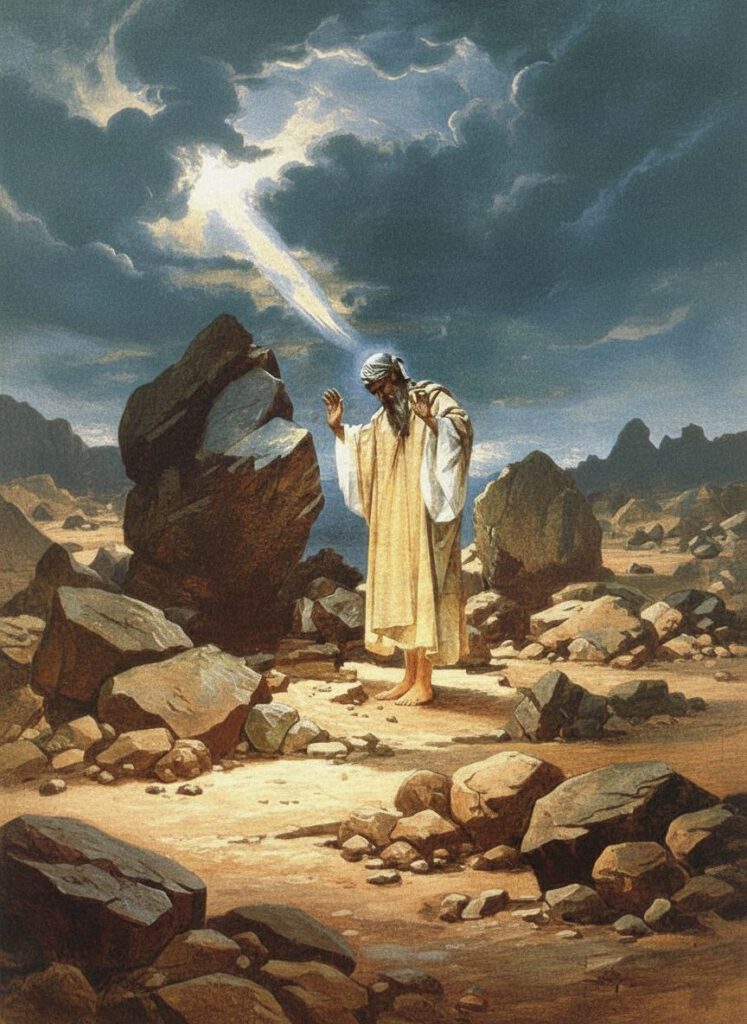
Moshe shows honor to Yitro as to a more respected person, that is, he goes out to meet him. The word shalóm in general means peace, that is, the absence of war; it comes from the root shalém – whole, complete, shlemút – wholeness. And when we, for example, want to ask a person: “How is your health?” we say: “Ma shlomcha?” which in Hebrew sounds like: “What is the meaning, what is the essence, what is the substance of your peace?” That is the kind of not-so-simple question that is asked. They told each other about what had happened to them during this time, and so, word by word, they came into the tent.
וַיְסַפֵּר מֹשֶׁה לְחֹתְנוֹ אֵת כָּל־אֲשֶׁר עָשָׂה יְהוָה לְפַרְעֹה וּלְמִצְרַיִם עַל אוֹדֹת יִשְׂרָאֵל אֵת כָּל־הַתְּלָאָה אֲשֶׁר מְצָאָתַם בַּדֶּרֶךְ וַיַּצִּלֵם יְהוָה׃
vaysappér moshé lechotenó et kol-ashér asá adonáy lefar'ó ulmitzráyim al odót yisraél et kol-hattela'á ashér metza'átam baddérech vayattzilém adonáy
8 And Moshe told his father-in-law all that the LORD had done to Pharaoh and to Egypt for Israel’s sake, about all those adventures (or misadventures) that had befallen them in the desert, and in which the LORD had saved them.
The word tla'ót – these are windings, some kind of loops, it can indeed be translated as adventures.
וַיִּחַדְּ יִתְרוֹ עַל כָּל־הַטּוֹבָה אֲשֶׁר־עָשָׂה יְהוָה לְיִשְׂרָאֵל אֲשֶׁר הִצִּילוֹ מִיַּד מִצְרָיִם׃
vayíchad yitró al kol-hattová asher-asá adonáy leyisraél ashér hittziló miyád mitzráyim
9 And Yitro rejoiced over all the good things that the LORD had done for Israel, for having saved it from the hands of Egypt.
The expression vayíchad yitró – is remarkable. One can translate yichad from the root chad (sharp) or from the root echád (one), and then say it like this: his skin turned into little pieces – little pieces. Some of the ancient translators say that it is as if Yitro got “goose bumps” from horror, from agitation, from strong emotion. Other translators interpret yichad from the word chadá, from which the Hebrew word chedvá (joy, jubilation) also comes – and Yitro rejoiced. Well, the one does not rule out the other. Maybe Yitro was horrified, was moved to the point of “goose bumps,” and rejoiced at the same time.
וַיֹּאמֶר יִתְרוֹ בָּרוּךְ יְהוָה אֲשֶׁר הִצִּיל אֶתְכֶם מִיַּד מִצְרַיִם וּמִיַּד פַּרְעֹה אֲשֶׁר הִצִּיל אֶת־הָעָם מִתַּחַת יַד־מִצְרָיִם׃
vayomer yitró barúch adonay ashér hittzíl etchém miyád mitzráyim umiyád par'ó ashér hittzíl et-ha'ám mittáchat yad-mitzráyim
10 And Yitro said: “Blessed be the LORD, Who saved you from the hands of the Egyptians and from the hands of Pharaoh, Who saved the people from the Egyptian hand.
Here again we see the direct opposite of what happens with Amalek: Yitro blesses the Most High. The first enemy – Amalek, and the first friend – Yitro, the first, one could say, the very first proselyte who joined the people.
In this case one can say that the LORD saved the people not only from the strength of the Egyptian army, but also from all the power of sorcery that Egypt had standing guard. The LORD God is stronger than any sorcery, than any wonder-workers, and He pulled the people out of the hand of Egypt.
And further Yitro testifies, and says:
עַתָּה יָדַעְתִּי כִּי־גָדוֹל יְהוָה מִכָּל־הָאֱלֹהִים כִּי בַדָּבָר אֲשֶׁר זָדוּ עֲלֵיהֶם׃
attá yadá'ti ki-gadól adonáy mikkol-ha'elohím ki vaddavár ashér zadú alehém
11 Now I know that the LORD is greater, more majestic than any god, than that evil which all these gods were plotting against you.
The LORD defeated all the schemes of the pagan gods. Yitro became convinced of this, and he testifies to it. And in the next verse we read the result of this testimony:
וַיִּקַּח יִתְרוֹ חֹתֵן מֹשֶׁה עֹלָה וּזְבָחִים לֵאלֹהִים וַיָּבֹא אַהֲרֹן וְכֹל זִקְנֵי יִשְׂרָאֵל לֶאֱכָל־לֶחֶם עִם־חֹתֵן מֹשֶׁה לִפְנֵי הָאֱלֹהִים׃
vayikkách yitró chotén moshé olá uzvachím lelohím vayavó aharón vechól ziknéy yisraél le'echol-léchem im-chotén moshé lifnéy ha'elohím
12 And Yitro, the father-in-law of Moshe, took a burnt offering and sacrifices for God. And Aharon came, and all the elders of Israel, they came to eat bread with the father-in-law of Moshe before God.
What is the difference between a burnt offering and a sacrifice? A burnt offering (olá) – this sacrifice is burned completely on the altar. Zévach – this is a sacrifice, part of which is offered to the Most High, and part of which is eaten by the participants in the sacrifice; it is a kind of shared meal with the Most High. So, Yitro, the father-in-law of Moshe, as a sign of joining the people of Israel, of joining the covenant with Israel, slaughters sacrifices, brings a burnt offering and sacrifices.
Aharon, as we know, is not simply Yitro’s in-law, he is also a kind of intercessor, a representative of the people of Israel, a future priest. He is not yet in the priesthood, but he is already Aharon, he is already preparing for this role without knowing it yet himself.
When we came across this phrase, le'echol-léchem, we said that it means to take a wife. We also read that Yaakov, when he buys the birthright, gives Esav bread. In both cases, both here and in the case of Yaakov, the commentary notes that they also took wine, they had wine. They ate bread and drank wine. We also read that Melchizedek brought out bread and wine to Avraham. Therefore it is clear that every meal was accompanied by wine, and this does not need to be explained, because people took wine with them on the road, wine was an element of every festive meal.
What is the essence of bread and wine? It is connected with marriage, with entering into marriage, that is, with the making of a covenant between bridegroom and bride. In a wider sense, we know that the relationship between Israel and the Most High is also the relationship of bridegroom and bride. And the symbol of making a covenant is bread and wine. Bread, léchem (wheat bread), means flesh. The word chitá (wheat) also sounds like the word chet (sin), this is also important. Yayin (wine) symbolizes blood, wine is called “the blood of grape berries.” One can say that léchem is the flesh of wheat, yayin is the blood of the grape. Thus léchem and yayin, bread and wine – are flesh and blood, which they ate, and this is the symbol and foundation of every covenant.
It is interesting that when the sages argue about what fruit that very fruit was which Chava ate, they usually speak of an apple. But the apple is a myth, nowhere is an apple mentioned. The point is that evil in Latin is malum (malum), and apple in Greek is mήλα (milya), and it is quite possible that the versions got mixed up, and the tree unexpectedly became an apple tree.
Even earlier, when there was neither Latin nor Greek, the sages named the options: wheat, grapes, fig and etrog. But the two main options are wheat (bread) and grapes (wine). And there are mystics, kabbalists, Hasidim who said that there was a special kind of fruit there – the “wheatgrape,” at once both bread and wine. This is what Chava tasted, and because of this a very bad covenant came about with the wrong one, – however, this is already going off into mysticism.
And yet here we read, and the commentators say this – and not only the classical Jewish commentators, but also scholars of the Scriptures – that most likely, when it says “they ate bread,” what is meant is “they ate bread and drank wine” before the Most High, that is, they made a covenant with the Most High.
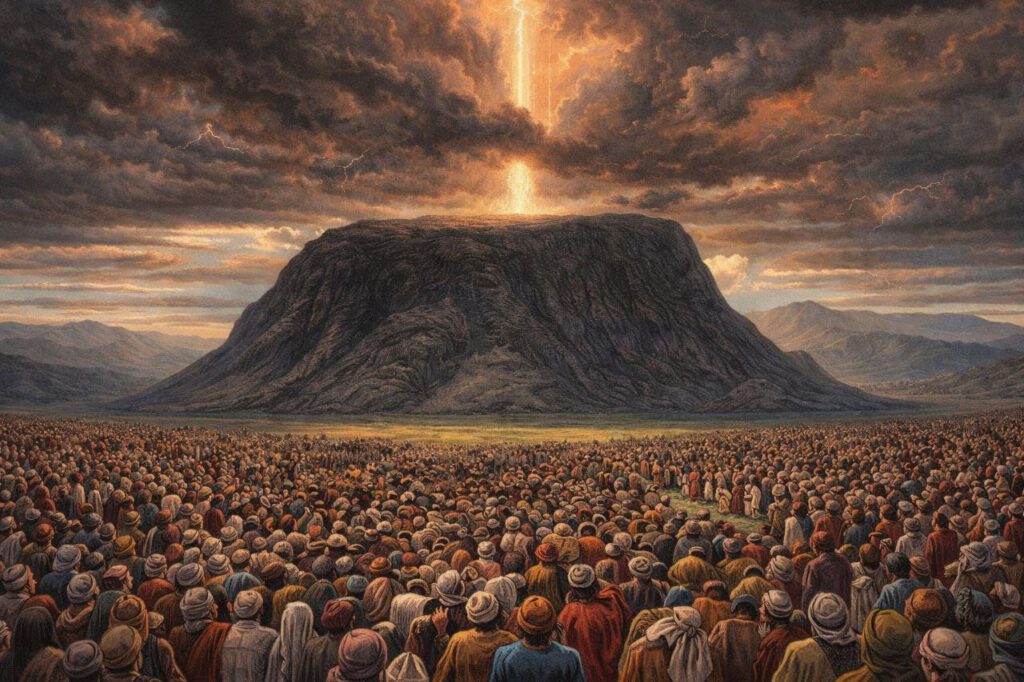
I tell you clever thing
Shemot 18:13–27
With God’s help we continue reading the weekly portion Yitro. You and I left off at the point where Yitro, his father-in-law, having taken Moshe’s wife, Tzippora, and his two children, Gershom and Eliezer, arrived at the camp of Israel and met with Moshe. It was such a warm family meeting, a friendly conversation in which they exchanged news, and Moshe told Yitro everything that the Most High had done with the people of Israel, about the deliverance and about all those miracles that the Most High had worked, and how the Most High had brought Israel out of Egypt. Yitro was very deeply moved, and this story got through to him so much, he was so impressed, that he accepted the God of Israel as the strongest God, brought Him sacrifices and made a covenant with Him in the presence of Moshe, Aharon and the elders of Israel, proclaiming Him his God. In this way he became the first proselyte, the first from the other nations to join Israel. We have already read about this. But there is something we have not read about. We have not read about how Moshe met his sons. Why not tell how, on seeing Eliezer, Moshe literally repeated the words of Gogol’s Taras Bulba: “Well now, turn around, sonny!” Why not tell how he embraced his sons and said: “How I have missed you, how you have matured, how you have grown!” Or maybe like this: “How grown-up you have become, how you have changed!” Why not tell how he embraced his wife? Why does the Torah keep silent about all this?
Many commentators say that Moshe is so busy with his service, so immersed in the service of the Most High, that his family ends up in the background, and this is his big “slip-up.” In this way he becomes the first father of “children of believing parents,” and the first conflict arises in the family of a religious leader. Others say (and this too can be understood and taken this way) that the Torah lowers the curtain of modesty over personal life where it is not worth describing it. It is clear that Moshe was glad to see his wife, it is clear that he was glad to see his children, but let us leave Moshe’s personal life to Moshe, let us too lower the curtain of modesty over this meeting. And what happened next, after the conversation between Yitro and Moshe, after Yitro joined the people of Israel, we will read from verse 13 of chapter 18.
וַיְהִי מִמָּחֳרָת וַיֵּשֶׁב מֹשֶׁה לִשְׁפֹּט אֶת־הָעָם וַיַּעֲמֹד הָעָם עַל־מֹשֶׁה מִן־הַבֹּקֶר עַד־הָעָרֶב׃
vayhí mimmachorát vayéshev moshé lishpót et-ha'ám vaya'amód ha'ám al-moshé min-habbóker ad-ha'árev
13 And it was on the next day, and Moshe sat down to judge the people, and the people stood over Moshe, before Moshe, from morning until evening.
It is not clear from this whether Moshe judged the people every day, whether these court proceedings went on from morning until evening, or whether, say, Moshe sat down to judge the people twice a week, on Mondays and Thursdays. Well, one way or another, it was at just such a proceeding that Yitro turned up, literally on the day after his arrival in the camp of Israel.
So, Moshe is busy with court cases, and the people stand in line from morning until evening. Whoever managed to get in line earlier got through earlier. You may ask: “What kind of court cases are these? What on earth does a people that lives in the desert come to court with – desert dwellers who seemingly have their food at the expense of the Most High, and tents, and for whom problems with real estate do not exist – what do they come to court with?” Hard to say. Maybe these were some squabbling stories: “These people borrowed a measure for the omer from us and won’t give it back!” – “This one took a book by Turgenev from me to read and didn’t return it!” – “And this one walks his dogs in our yard, and then the manna falls there, and we gather it where their dogs make a mess. Take measures!”
People often come to modern rabbinical courts not to sort out who is right and who is guilty, but to learn the will of God. I came across a case with two brothers, each of whom wanted to give his father a kidney. The father needed a kidney transplant. One of the brothers said: “I already have two children, I have raised them. But my brother has no children, he needs to have children, I will give the kidney!” The other objected: “He has two children, they need to be fed, they need to be provided for, while I don’t need to provide for anyone, I will give the kidney!” They argued, and in order to understand how to act rightly, what the Most High wants, they came to a rabbi. There are less dramatic stories. Here is a story where a family with children lives on the top floor, and the children make noise, run, jump. Downstairs live elderly people who sometimes have headaches, who sometimes want to rest. These people say: “We understand that children jump, run, and we don’t want to stop them from running, jumping, but we want to rest!” And the family says: “We understand that they are old people, sometimes they have headaches, sometimes it is hard for them, but we don’t want to be shushing our children all the time so that they don’t run. How can we find the golden mean?” People come with questions like this too. As a solution to this case one could, for example, chip in together and buy a thick, plush carpet for the children’s room, and let them run on the carpet, and there won’t be any noise. Many, many different court cases go through, there are many different stories, funny and strange, it is not always quarrels. Sometimes it really is people’s wish to understand how to act rightly. But in any case it takes time, and if Moshe sits in judgment alone like this, then it is really hard for him.
וַיַּרְא חֹתֵן מֹשֶׁה אֵת כָּל־אֲשֶׁר־הוּא עֹשֶׂה לָעָם וַיֹּאמֶר מָה־הַדָּבָר הַזֶּה אֲשֶׁר אַתָּה עֹשֶׂה לָעָם מַדּוּעַ אַתָּה יוֹשֵׁב לְבַדֶּךָ וְכָל־הָעָם נִצָּב עָלֶיךָ מִן־בֹּקֶר עַד־עָרֶב׃
vayár chotén moshé et kol-asher-hú osé la'ám vayomer ma-haddavár hazzé ashér attá osé la'ám maddúa attá yoshév levaddécha vechol-ha'ám nittzáv alécha min-bóker ad-árev
14 And the father-in-law of Moshe saw all that he was doing to the people, and
said: “What is this that you are doing to the people? Why do you sit alone, while all the people crowd, stand before you, from morning until evening?”
וַיֹּאמֶר מֹשֶׁה לְחֹתְנוֹ כִּי־יָבֹא אֵלַי הָעָם לִדְרֹשׁ אֱלֹהִים׃
vayomer moshé lechotenó ki-yavó eláy ha'ám lidrósh elohím
15 And Moshe said to his father-in-law: “Because the people come to me to seek out the Will of God!
In some conflicts, in some situations, the people ask to be told how to act rightly. Maybe the people see from the side someone who went to gather branches on the Sabbath, and they need to understand: is it allowed to do that? Maybe something else, maybe the examples I have already given. In various disputes, in disagreements, the people look for how to act rightly: something happened with food, something was done on the Sabbath – what to do, how to act so as not to offend a person? We hired a man, and he did half the work. Pay him the full price, pay half, not pay at all? A man caused us some damage, how should we act? And so on, a heap-heap-heap of questions that had to be sorted out.
כִּי־יִהְיֶה לָהֶם דָּבָר בָּא אֵלַי וְשָׁפַטְתִּי בֵּין אִישׁ וּבֵין רֵעֵהוּ וְהוֹדַעְתִּי אֶת־חֻקֵּי הָאֱלֹהִים וְאֶת־תּוֹרֹתָיו׃
ki-yihyé lahém davár ba eláy veshafattí ben ish uvén re'éhu vehoda'tí et-chukké ha'elohím ve'et-torotáv
16 If they have some matter, they come to me, and I judge them: between a man and between his neighbor, and I explain to them the Laws of God and His Torah.”
So, Moshe was a judge. Those people, those very Israelites who walked with him through the desert, at that moment did not know the Torah, did not know God’s Laws, could not apply them. In case of any problem they turned to Moshe as the only source. And Moshe had to “judge and decide” for the people from morning until evening.
וַיֹּאמֶר חֹתֵן מֹשֶׁה אֵלָיו לֹא־טוֹב הַדָּבָר אֲשֶׁר אַתָּה עֹשֶׂה׃
vayomer chotén moshé eláv lo-tóv haddavár ashér attá osé
17 And the father-in-law of Moshe said to him: “You are not acting well!
It is very interesting and significant that a ger, a man who joined Israel only yesterday, is already pointing things out to Moshe and saying: “You are not acting well!” Well, it is clear that he is his father-in-law, that he is a respected man. But, having barely joined the Jewish people, he is already teaching Jews how to be a Jew properly, and this tendency has often been preserved to this day. Such boldness is given to the proselyte Yitro – to tell Moshe that he is not acting well.
נָבֹל תִּבֹּל גַּם־אַתָּה גַּם־הָעָם הַזֶּה אֲשֶׁר עִמָּךְ כִּי־כָבֵד מִמְּךָ הַדָּבָר לֹא־תוּכַל עֲשֹׂהוּ לְבַדֶּךָ׃
navól tibból gam-attá gam-ha'ám hazzé ashér immách ki-chavéd mimmechá haddavár lo-tuchál asóhu levaddécha
18 With withering you will wither (with dryness you will dry up), both you and this people that is with you, for this matter is heavy for you, you cannot do it alone!
That is, Yitro says to Moshe: “This mission is impossible. You cannot sit alone, judge and decide for everyone, it is not right, you will run out of strength. And the people will stand from morning until evening. You will be busy with nothing but jurisprudence and figuring out who is right, who is guilty.” And, besides criticism, Yitro also has a constructive proposal:
עַתָּה שְׁמַע בְּקֹלִי אִיעָצְךָ וִיהִי אֱלֹהִים עִמָּךְ הֱיֵה אַתָּה לָעָם מוּל הָאֱלֹהִים וְהֵבֵאתָ אַתָּה אֶת־הַדְּבָרִים אֶל־הָאֱלֹהִים׃
attá shemá bekolí i'atzechá vihi elohim immách heyé attá la'ám mul ha'elohím vehevetá attá et-haddevarím el-ha'elohím
19 Now then, listen to my voice, and I will advise you, and God will be with you: and you will stand before the people in the Name of God, and you will stand for the people before God.
That is, if there are some problems, questions, then Moshe will bring them to the feet of the Most High, and if the people ask the will of the Most High, then Moshe will convey it to the people. This is exactly what Moshe is trying to do now.
וְהִזְהַרְתָּה אֶתְהֶם אֶת־הַחֻקִּים וְאֶת־הַתּוֹרֹת הוֹדַעְתָּ לָהֶם אֶת־הַדֶּרֶךְ יֵלְכוּ בָהּ וְאֶת־הַמַּעֲשֶׂה אֲשֶׁר יַעֲשׂוּן׃
vehizhartá ethém et-hachukkím ve'et-hattorót vehoda'tá lahém et-haddérech yélechu va ve'et-hamma'asé ashér ya'asún
20 And you, teach them the laws and the Torah, and show them the way in which they are to go, and the deeds that they will do.
The word lehazhír means to warn, to instruct, zehirút – is caution, but the word zóhar means radiance (from the verb lizhórThe original spells this verb with a g. The Hebrew verb is lizhor, from the same root as zohar and lehazhir in this sentence, so the English follows the Hebrew. – to shine, to gleam). You must “shine up,” illuminate the people, as it were put up warning signs, build them into them, so that they understand the laws (chukkím) and the Torah.
That is: “You must teach them, let’s put it this way, the theory of driving, tell them about the warning signs, about the traffic rules, and mark out for them the road on which they will go. You must give them the complete rules of the road of the spiritual world.”
It is impossible to be a traffic inspector where the drivers have no idea about traffic and constantly ask: “Can I turn left? Can I go straight? Can I reverse?” Yitro says: “Teach the people! Before being a judge to your people, try to be a teacher to your people, instruct them in the Torah. Make sure that they know the laws, so that in most cases they could sort things out and answer questions even without you.”
וְאַתָּה תֶחֱזֶה מִכָּל־הָעָם אַנְשֵׁי־חַיִל יִרְאֵי אֱלֹהִים אַנְשֵׁי אֱמֶת שֹׂנְאֵי בָצַע וְשַׂמְתָּ עֲלֵהֶם שָׂרֵי אֲלָפִים שָׂרֵי מֵאוֹת שָׂרֵי חֲמִשִּׁים וְשָׂרֵי עֲשָׂרֹת׃
ve'attá techezé mikkol-ha'ám anshe-cháyil yir'é elohím anshé emét soné'e vátza vesamtá alehém saré alafím saré meót saré chamishím vesaré asarót
21 And you, for your part, choose (see, behold) out of all the people efficient men (businesslike men), God-fearing, men of truth, hating greed, and set over the people chiefs of thousands, chiefs of hundreds, chiefs of fifties and chiefs of tens.
The word lachazót – to see, to foresee, to bring in some special vision, having examined attentively, to find.
It is hard for the modern reader to imagine how thoroughly revolutionary the program is that Yitro proposes.
First, the society of the people of Israel is a community, with a clan-based, family way of life. In every clan, in every one of the tribes of Israel, there are its own elders. They are never appointed, they emerge in the course of, so to speak, the natural development of life; usually this is the oldest, the most authoritative member of the family. And by virtue of this authority the elders governed the people. Revolutionary is the very idea of establishing authority, of choosing some leaders, some people who can teach or resolve problems. This is completely new for the people of Israel, completely new not to have one “know-it-all,” one specialist who would decide everything, would share his knowledge with everyone, and would teach people Torah.
Second, even more revolutionary is the hierarchical structure. It happens that a person is talented, strong, but he is not yet ready to “be a Moshe,” not ready to be a Supreme judge. He can be a chief of ten, can be responsible for some small matters, and with major matters one has to turn to the chief of fifty and higher. Here there is also a process of identifying talented, capable people and drawing them into the service of the Most High – so that the service of the Most High becomes the service of the whole people. This is very important for the structure of any community. We often come across a community that has a leader, and he has a vision, and he judges according to this vision of his, he has a monopoly on it. Sometimes the people stand before him from morning to evening, but most often he has assistants, you cannot even get to him himself, and that is how he judges. He plays the role of the Moshe of the period “before Yitro,” who is only a judge and in no way a teacher. What Yitro teaches is how to be a teacher, how to make it so that the whole people can learn Torah. There will be a little teacher of the primary grades, a chief of ten, who will perhaps teach ten simple people simple principles. Perhaps out of these ten a chief of fifty will grow, or perhaps the chief of ten himself will in time become a chief of fifty. But many, many people are drawn into the work, into the service of Torah, people who can communicate, seek the truth together, seek the face of the Most High. These little leaders will be closer to the people, will understand more deeply what is going on. It is much easier to know what is going on in your ten than what is going on in your people. Much less time is needed to sort it out, and sometimes everything is clear at once. And further Yitro develops his thought:
וְשָׁפְטוּ אֶת־הָעָם בְּכָל־עֵת וְהָיָה כָּל־הַדָּבָר הַגָּדֹל יָבִיאוּ אֵלֶיךָ וְכָל־הַדָּבָר הַקָּטֹן יִשְׁפְּטוּ־הֵם וְהָקֵל מֵעָלֶיךָ וְנָשְׂאוּ אִתָּךְ׃
veshafetú et-ha'ám bechol-ét vehayá kol-haddavár haggadól yavíu elécha vechol-haddavár hakkatón yishpetu-hém vehakél me'alécha venaseú ittách
22 And they will judge the people at all times. And it will be: every difficult matter they will bring to you (with every difficult matter they will turn to you), and every small matter they themselves will judge. And they will ease your lot, ease your work for you and will be your fellow workers.
In other words, Yitro proposes to involve the people in the service. Moshe does not serve alone, the whole people can serve together with him. A very good idea, in fact. I repeat, it is relevant also for many, many modern communities, where such work is not set up. Not only is such work not set up, but no “Moshe” sits there from morning to evening either.
אִם אֶת־הַדָּבָר הַזֶּה תַּעֲשֶׂה וְצִוְּךָ אֱלֹהִים וְיָכָלְתָּ עֲמֹד וְגַם כָּל־הָעָם הַזֶּה עַל־מְקֹמוֹ יָבֹא בְשָׁלוֹם׃
im et-haddavár hazzé ta'asé vetzivechá elohím veyacholtá amód vegám kol-ha'ám hazzé al-mekomó yavó veshalóm
23 And God will instruct you, and you will be able to stand firm, then all this people too will come to its place in peace.”
Yitro says to Moshe: “You care, you are concerned about the things of God – to bring the Word of God to the people, but because of this you may fail to see the people.” Yitro comes, sees this, sees the people and speaks to Moshe about it.
וַיִּשְׁמַע מֹשֶׁה לְקוֹל חֹתְנוֹ וַיַּעַשׂ כֹּל אֲשֶׁר אָמָר׃
vayishmá moshé lekól chotenó vayá'as kol ashér amár.
24 And Moshe listened to the voice of his father-in-law, and Moshe did everything that his father-in-law had told him.
Moshe did not say: “Hey, Yitro, you are just a proselyte here anyway, and you have taken it into your head to teach me, God’s anointed, who struck the Nile with the staff, struck the rock with the staff, scattered the army of Amalek with the staff?! I am about to whack you with this staff, and all your harmful, revolutionary, reformist ideas will fly out of your head! I won’t care that you are my father-in-law!” No, Moshe – the humblest of men, he knows how to accept constructive criticism constructively.
וַיִּבְחַר מֹשֶׁה אַנְשֵׁי־חַיִל מִכָּל־יִשְׂרָאֵל וַיִּתֵּן אֹתָם רָאשִׁים עַל־הָעָם שָׂרֵי אֲלָפִים שָׂרֵי מֵאוֹת שָׂרֵי חֲמִשִּׁים וְשָׂרֵי עֲשָׂרֹת׃
vayivchár moshé anshe-cháyil mikkol-yisraél vayittén otám rashím al-ha'ám saré alafím saré meót saré chamishím vesaré asarót
25 And Moshe chose efficient, fighting men out of all Israel, and set them as heads over the people, chiefs of thousands, chiefs of hundreds, chiefs of fifties and chiefs of tens.
We talked about the principle by which Yitro said to choose people. He said: “Choose fighting men, active men, yir'é elohím (God-fearing), anshé emét (men of truth), hating greed.” It often happens this way, this is relevant for a judicial system with a tribal way of life: a person will be inclined to judge in the interests of his relative, his tribe, his own gain. And it is necessary that the judge fear God more than some clan principles of his own, that he hate greed, that he seek not his own interest, not the interest of his clan, and not the interest of his relatives or of his class, but only the will of God.
וְשָׁפְטוּ אֶת־הָעָם בְּכָל־עֵת אֶת־הַדָּבָר הַקָּשֶׁה יְבִיאוּן אֶל־מֹשֶׁה וְכָל־הַדָּבָר הַקָּטֹן יִשְׁפּוּטוּ הֵם׃
veshafetú et-ha'ám bechol-ét et-haddavár hakkashé yeviún el-moshé vechol-haddavár hakkatón yishputú hem
26 And they judged the people at all times. Difficult things they brought, carried to Moshe, and all small things they judged themselves.
That is, difficult cases were decided in the Supreme Court, in which Moshe sat, simple cases were decided in the district courts, on the spot.
And while this reform was being carried out, Yitro stayed together with Moshe, was a guest of his son-in-law. And so, when the reform is carried out, Moshe has done everything that Yitro said, and the system has started working, Moshe sends his father-in-law off.
וַיְשַׁלַּח מֹשֶׁה אֶת־חֹתְנוֹ וַיֵּלֶךְ לוֹ אֶל־אַרְצוֹ׃
vayshallách moshé et-chotenó vayélech lo el-artzó
27 And Moshe sent off his father-in-law, and he went off to his own land.
Despite the fact that the father-in-law, as we have already said, brought sacrifices, made a covenant, joined the faith in the God of Israel, he does not go to Israel. He went his own way, while remaining in the covenant with the Most High. And one can say that this is the first Jew, yehudí. This word comes from the name Yehudá, which in its turn, according to one of its meanings, comes from the word lehodot –to thank. Yitro – the first “thanker” of God outside the people of Israel, who did not go with the people of Israel to Israel. Many say on this account that he did not really become a proselyte, that he did it just like that, on an impulse. Let us leave this reasoning on the conscience of such commentators.
I will be the one commanding the parade
Shemot 19:1–19
With God’s help, you and I continue reading the weekly portion Yitro. We have already said that Yitro, having observed how Moshe sits and judges the people from morning to evening, while the people stand before him, advised Moshe to break up the judicial system, one could say, to delegate judicial authority, to chiefs of thousands, chiefs of hundreds, chiefs of fifties and chiefs of tens. That is, to divide the whole judicial system into small parts and thereby, on the one hand, free up a lot of time, on the other hand, draw many new, talented people into the judicial system. And some compared this with multi-level marketing, and asked the question: how legitimate is it on Moshe’s part to follow Yitro’s advice without having received permission from the Most High? Well, first, we do not know whether Moshe consulted with the Most High and whether he received His approval for such a division of the judicial system. But it is important to note this: these events take place in immediate proximity to the giving of the Torah. The Torah is given to the people of Israel as the fruit of the prophetic communication of Moshe and the Most High. But the peculiarity of the Torah is that it is a teaching, and not a prophecy, that a person can master this teaching himself, without being a prophet, and instruct others in it, who are also not prophets. This is prophetic knowledge given for many years, for epochs ahead, a prophetic understanding of the universe, a conception of the interaction of things. Once it has been received prophetically, it becomes a teaching in the mouths of people, and it is possible to teach, to make many teachers of Torah who are not prophets. And precisely for this reason it is significant that the prophetic function of Moshe as a mediator between the Most High and man in various judicial cases seems to recede into the background, giving way to the teaching, the revelation of the Most High that has already been given. Remember, when the rich man asked for someone to be sent to the earth, he was told: “They have the Law and the Prophets.” This very Law, even before the Prophets, is already given as a teaching that can be taught, even if you are not a prophet. To teach a disciple, even if he is not a prophet, to pass on to him knowledge about the structure of the world. And therefore such a division became possible, but, as we will see further on, it does not operate as broadly as we might think. So, let us begin reading from the very beginning of chapter 19.
בַּחֹדֶשׁ הַשְּׁלִישִׁי לְצֵאת בְּנֵי־יִשְׂרָאֵל מֵאֶרֶץ מִצְרָיִם בַּיּוֹם הַזֶּה בָּאוּ מִדְבַּר סִינָי׃
bachódesh hashelishí letzét bene-yisraél me'éretz mitzráyim bayom hazzé báu midbár sináy
1 In the third month from the going out of the people of Israel from the land of Egypt, on this day (the new month is meant) they came to the wilderness of Sinai.
Let us count which third month this is from the going out of the people of Israel from Egypt. The first month was the month of nisán, in the month of nisan they went out. The second month – iyar, the time of the dispute about the quails and about the water. And the third month comes, the month of sivan, the new month (rósh chódesh) of sivan, the beginning of the third month from the going out of Egypt. This is important arithmetic for calculating also the day of the Resurrection of Yeshua. We say: “He rose on the third day.” And many ask: “Where are three days there? And where do three nights still fit in there?” And they try to calculate it mathematically in different ways or simply deny everything. Look how the Torah speaks of the third month: not even 45–46 days have passed yet, but the third month is already beginning. And the events that will be described here are events that happened in the third month, and this is quite symbolic, and this is quite a parallel.
וַיִּסְעוּ מֵרְפִידִים וַיָּבֹאוּ מִדְבַּר סִינַי וַיַּחֲנוּ בַּמִּדְבָּר וַיִּחַן־שָׁם יִשְׂרָאֵל נֶגֶד הָהָר׃
vayis'ú merefidím vayavóu midbár sináy vayachanú bammidbár vayichan-shám yisraél néged hahár
2 And they went out from Refidim, and they came to the wilderness of Sinai, and they stopped in the wilderness, and Israel stopped there opposite the mountain.
We see here a certain repetition of phrases: vayachanú bamidbár – and they stopped in the wilderness and vayichan-shám yisraél – and Israel stopped. They stopped as a united people, as one man, they came to the mountain in a state of inner unity. Therefore, on the one hand, vayachanú (and they stopped), because the people were many, on the other hand, vayichán (and he stopped), because they were like one man. When it says néged (opposite) hahar, this means to the east of the mountain.
וּמֹשֶׁה עָלָה אֶל־הָאֱלֹהִים וַיִּקְרָא אֵלָיו יְהוָה מִן־הָהָר לֵאמֹר כֹּה תֹאמַר לְבֵית יַעֲקֹב וְתַגֵּיד לִבְנֵי יִשְׂרָאֵל׃
umoshé alá el-ha'elohím vayikrá eláv adonáy min-hahár lemór ko tomár levét yaakóv vetaggéd livné yisraél
3 Moshe was going up to the LORD, was going up to God, and God called to him from the mountain, saying: “Thus say to the house of Yaakov and convey to the sons of Israel.
Many commentators say: “He was going up without any special invitation, he came to give a report.” Moshe hears the call halfway up the mountain.
Why does tomár (say) refer to beyt Yaakov (the house of Yaakov), and tagíd (convey) – to bnéy yisraél? We have already said that the word báyt (house) is a name for women, beyt Yaakov – these are all the women, all the wives of the people of Yaakov, therefore for women the word tomár is used, that is, speak with them gently. Bney yisraél are the sons of Israel, these are the men. The word tagíd here, the only time in the whole Tanach, is written with the little letter yud, and in this spelling it can be connected with the word gíd (sinew). And thus tagíd is speak sternly, pull the string taut toward the men. That is: what you are going to say, say to the women gently, and to the men – sternly. And here is what needs to be said:
אַתֶּם רְאִיתֶם אֲשֶׁר עָשִׂיתִי לְמִצְרָיִם וָאֶשָּׂא אֶתְכֶם עַל־כַּנְפֵי נְשָׁרִים וָאָבִא אֶתְכֶם אֵלָי׃
attém re'itém ashér asíti lemitzráyim va'essá etchém al-kanfé nesharím va'aví etchém eláy
4 You saw what I did to Egypt, and you I carried on the wings of an eagle and brought you to Myself.
There is such an understanding that the eagle takes its chicks, puts them on its wings and carries them that way. Ornithologists, specialists in the study of birds, do not know of such a phenomenon, but that is how it is passed down in the stories of the East. Perhaps at some time there was some kind of eagle that did this. Perhaps this is simply such a metaphor. Nésher – this is an eagle or a vulture, a large bird. The Most High begins by saying: “Do you remember how I dealt with Egypt, how I punished Egypt and how tenderly I treated you?”
וְעַתָּה אִם־שָׁמוֹעַ תִּשְׁמְעוּ בְּקֹלִי וּשְׁמַרְתֶּם אֶת־בְּרִיתִי וִהְיִיתֶם לִי סְגֻלָּה מִכָּל־הָעַמִּים כִּי־לִי כָּל־הָאָרֶץ׃
ve'attá im-shamóa tishmeú bekolí ushmartém et-berití viyítem li sgullá mikkol-ha'ammím ki-lí kol-ha'áretz
5 And now, if you will listen or obey (literally – with hearing you will hear My voice), and would keep My covenant, then you will be to Me a treasure house. You are chosen for this out of all the peoples, because all the earth belongs to Me.
A very surprising word for translation is sgúla. Sgulá is, on the one hand, that which gives the possibility, gives the ability. Able to do something is called mesugál. A habit, adaptation to something is called histaglút. One can say, if we speak in the language of programming, that the people of Israel will be a driver, will be an instrument for communication between the Most High and the world. On the other hand, the word sgulá means treasure house, that is, a place where the main treasure is kept. And one can understand it this way: “You will be the bearer of Me, the bearer of My Holy Spirit on the earth. I will choose you out of all the peoples, I have the right to do this, and I will do it. And in order to govern the whole earth, I will do it. I will endow you with the capabilities to be mediators between Me and the universe.” And in verse 6 we read an even more grandiose promise, the pledge of the Most High:
וְאַתֶּם תִּהְיוּ־לִי מַמְלֶכֶת כֹּהֲנִים וְגוֹי קָדוֹשׁ אֵלֶּה הַדְּבָרִים אֲשֶׁר תְּדַבֵּר אֶל־בְּנֵי יִשְׂרָאֵל׃
ve'attém tihyu-lí mamléchet kohaním vegóy kadósh élle haddevarím ashér tedabbér el-bené yisraél
6 And you will be to Me a kingdom (a state) of priests and a holy people. These are the words that you will speak to the people of Israel.”
The word mamlachá (mamléchet) can mean government, the structure of a state, that is: “You will be a governmental apparatus of priests, you will be the priests of the whole world.”
The word kohanim (priests) can, of course, also be translated as princes, and as ministers at court. About David it is said that his sons were kohanim, that is, princes, royal heirs. And in this sense one can say that the people of Israel is the environment in which the heir of the Kingdom will be born. But the Most High says more: “You will be that people through which I will convey My plan, My will to the peoples of the whole world. The Torah that I will give you, the Holy Spirit that I will give you, will make you My treasure house and will endow you with the possibilities, abilities and strength to serve Me.” Later, after the fall of the people, a spiritual fall, the people of Israel will lose this. But in chapter 3 of the book of the prophet Malachi we read that the people of Israel will again become sgulá, will again become the people through which the Most High will rule, will again become a people of priesthood, when the Holy Spirit of God returns upon the people of Israel. That is, from this moment, from the moment when the people of Israel becomes am-sgulá (a treasure-house people), the service begins, and without this the service is impossible.
וַיָּבֹא מֹשֶׁה וַיִּקְרָא לְזִקְנֵי הָעָם וַיָּשֶׂם לִפְנֵיהֶם אֵת כָּל־הַדְּבָרִים הָאֵלֶּה אֲשֶׁר צִוָּהוּ יְהוָה׃
vayavó moshé vayikrá lezikné ha'ám vayásem lifnehém et kol-haddevarím ha'élle ashér tzivvahu adonáy
7 And Moshe came, and he gathered the elders of the people of Israel, and set before them all these things that the LORD had commanded him.
Pay attention to what I said at the beginning. Moshe does not gather here the chiefs of thousands, chiefs of hundreds, chiefs of fifties, chiefs of tens, does not gather the whole judicial system that he created. He gathers the good old elders of the people of Israel, who are appointed, chosen, elected from among the people themselves. As the clan moved along, they took this position as the oldest in the clan, the wisest in the clan. Moshe gathers precisely them and to precisely them he sets all this out. The elders still govern the people and make decisions on behalf of the people. That is, Moshe does not speak at once to the whole people, does not address a huge assembly of several million people, but speaks with the elders, who hold the authority of the people.
וַיַּעֲנוּ כָל־הָעָם יַחְדָּו וַיֹּאמְרוּ כֹּל אֲשֶׁר־דִּבֶּר יְהוָה נַעֲשֶׂה וַיָּשֶׁב מֹשֶׁה אֶת־דִּבְרֵי הָעָם אֶל־יְהוָה׃
vaya'anú chol-ha'ám yachdáv vayomerú kol asher-dibbér adonáy na'asé vayáshev moshé et-divré ha'ám el-adonáy
8 And all the people answered together, and said: “Everything that the LORD speaks we will do!” And Moshe returned with the words of the people to the LORD.
Also an interesting detail, let us pay attention: surely the LORD heard what the people said. But Moshe returns to the LORD with the words, because that is how the Most High arranged the relationship with Israel. Only what is passed on through official channels is counted as an answer. This is the mercy of the Most High toward the people of Israel.
וַיֹּאמֶר יְהוָה אֶל־מֹשֶׁה הִנֵּה אָנֹכִי בָּא אֵלֶיךָ בְּעַב הֶעָנָן בַּעֲבוּר יִשְׁמַע הָעָם בְּדַבְּרִי עִמָּךְ וְגַם־בְּךָ יַאֲמִינוּ לְעוֹלָם וַיַּגֵּד מֹשֶׁה אֶת־דִּבְרֵי הָעָם אֶל־יְהוָה׃
vayomer adonáy el-moshé hinné anochí ba elécha be'áv he'anán ba'avúr yishmá ha'ám bedabberí immách vegam-bechá ya'amínu leolám vayaggéd moshé et-divré ha'ám el-adonáy
9 And the LORD said to Moshe: “Behold, I will come to you in the thickness of the cloud, so that the people may hear when I speak to you (when I speak with you), so that they may also believe in you forever.” And Moshe told the words of the people to the LORD.
וַיֹּאמֶר יְהוָה אֶל־מֹשֶׁה לֵךְ אֶל־הָעָם וְקִדַּשְׁתָּם הַיּוֹם וּמָחָר וְכִבְּסוּ שִׂמְלֹתָם׃
vayomer adonáy el-moshé lech el-ha'ám vekiddashtám hayom umachár vechibbesú simlotám
10 And the LORD said to Moshe: “Go to the people and sanctify yourselves today and tomorrow, and they will wash out, wash clean their garments (this meant a mikva and the washing of garments, in order to purify oneself).
וְהָיוּ נְכֹנִים לַיּוֹם הַשְּׁלִישִׁי כִּי בַּיּוֹם הַשְּׁלִישִׁי יֵרֵד יְהוָה לְעֵינֵי כָל־הָעָם עַל־הַר סִינָי׃
vehayú nechoním layom hashelishí ki bayom hashelishí yeréd adonáy le'ené chol-ha'ám al-hár sináy
11 And they will be ready for the third day, for on the third day the LORD will appear, will come down before the eyes of all the people upon Mount Sinai.
Now you and I will count again. The first day – they came and stopped and made camp. On the second day Moshe went up, and the Most High spoke with him. On the third day Moshe received the answer of the people, and he brings back the answer of the people, that is, here the conversation takes place on the third day of the month of Sivan. And the Most High says: “And they will be ready for the third day,” that is, for the sixth day of the month of Sivan, and this is the festival of Shavuot (the day of Pentecost, the day of completing the count of seven weeks).
וְהִגְבַּלְתָּ אֶת־הָעָם סָבִיב לֵאמֹר הִשָּׁמְרוּ לָכֶם עֲלוֹת בָּהָר וּנְגֹעַ בְּקָצֵהוּ כָּל־הַנֹּגֵעַ בָּהָר מוֹת יוּמָת׃
vehigbaltá et-ha'ám savív lemór hishamerú lachém alót bahárThe Russian transliteration line writes this word with a g. The Hebrew has the letter He here (bahar, “on the mountain”), so the English follows the Hebrew. ungóa bekatzéhu kol-hannogéya bahar mot yumát.
12 And warn (set bounds for) the people round about, saying: “Beware, you are not to go up onto the mountain and to touch even its edge – everyone who touches the mountain shall die by death.”
לֹא־תִגַּע בּוֹ יָד כִּי־סָקוֹל יִסָּקֵל אוֹ־יָרֹה יִיָּרֶה אִם־בְּהֵמָה אִם־אִישׁ לֹא יִחְיֶה בִּמְשֹׁךְ הַיֹּבֵל הֵמָּה יַעֲלוּ בָהָר׃
lo-tiggá bo yad ki-sakól yissakél o-yaró yiyaré im-behemá im-ísh lo yichyé bimshóch hayovél hémma ya'alú vahár
13 And not even a hand shall touch him, for he will be stoned with stones or will be shot with arrows, whether it is cattle or a man – he shall not live. When they hear the long-drawn sound of the trumpet, then they will go up onto the mountain.”
Many commentators say that the word yiyaré here means will be thrown down. One can translate it that way too, but in many targums and translations it is written literally: or with an arrow will be shot (from the verb lehiyarót).
וַיֵּרֶד מֹשֶׁה מִן־הָהָר אֶל־הָעָם וַיְקַדֵּשׁ אֶת־הָעָם וַיְכַבְּסוּ שִׂמְלֹתָם׃
vayéred moshé min-hahár el-ha'ám vaykaddésh et-ha'ám vaychabbesú simlotám
14 And Moshe came down from the mountain to the people, and sanctified the people, and they cleansed their garments.
וַיֹּאמֶר אֶל־הָעָם הֱיוּ נְכֹנִים לִשְׁלֹשֶׁת יָמִים אַל־תִּגְּשׁוּ אֶל־אִשָּׁה׃
vayomer el-ha'ám heyú nechoním lishlóshet yamím al-tiggeshú el-ishá.
15 And he said to the people: “Be ready for the third day, for three days do not go in to a woman.”
What is the connection, and why may the people not go in to a woman? The commentators explain it like this: the seed that has remained in her after intimacy with a man may flow out of her. And if the woman has an issue of seed, she will become unclean and will not be able to approach the mountain. That is, in order for the woman to remain clean, one may not go in to her for three days. This also concerns the cases of the Temple service, when it is a matter of approaching the Holy. Today a woman in a state of ritual impurity – during her monthly period, after an issue of seed, after intimacy with her husband and in any other state – of course may come to the service, take part in the praise and in all the other services, as long as it is not a matter of the Temple service. Here Moshe warns about a special degree of purity that is required for direct, face-to-face communion with the Most High.
וַיְהִי בַיּוֹם הַשְּׁלִישִׁי בִּהְיֹת הַבֹּקֶר וַיְהִי קֹלֹת וּבְרָקִים וְעָנָן כָּבֵד עַל־הָהָר וְקֹל שֹׁפָר חָזָק מְאֹד וַיֶּחֱרַד כָּל־הָעָם אֲשֶׁר בַּמַּחֲנֶה׃
vayhí vayom hashelishí bihyót habbóker vayhí kolót uvrakím ve'anán kavéd al-hahár vekól shofár chazák me'ód vayecherád kol-ha'ám ashér bammachané
16 And it came to pass, on the third day, at the beginning, as soon as the morning had set in, and there were thunders, and lightnings, and a heavy cloud on the mountain, and the voice of the shofar exceedingly strong, and all the people that were in the camp were frightened.
וַיּוֹצֵא מֹשֶׁה אֶת־הָעָם לִקְרַאת הָאֱלֹהִים מִן־הַמַּחֲנֶה וַיִּתְיַצְּבוּ בְּתַחְתִּית הָהָר׃
vayotzé moshé et-ha'ám likrát ha'elohím min-hammachané vayit'yattzevú betachtít hahár
17 And Moshe brought the people out of the camp to meet God, and they stood at the foot of the mountain.
וְהַר סִינַי עָשַׁן כֻּלּוֹ מִפְּנֵי אֲשֶׁר יָרַד עָלָיו יְהוָה בָּאֵשׁ וַיַּעַל עֲשָׁנוֹ כְּעֶשֶׁן הַכִּבְשָׁן וַיֶּחֱרַד כָּל־הָהָר מְאֹד׃
vehár sináy ashán kulló mippené ashér yarád aláv adonáy ba'ésh vayá'al ashanó ke'éshen hakkivshán vayecherád kol-hahár me'ód
18 And Mount Sinai – all of it covered with smoke, because the LORD came down upon it in fire, and its smoke went up like the smoke of a huge furnace, and the whole mountain shook, trembled.
The word yecherád here has the meaning trembled, shook, while in verse 16, when it speaks of the people, it is used in the meaning was frightened. By the way, the modern word charedí (Orthodox, God-fearing trembling) also comes from this same root chet-resh-dalet, which has the meaning to fear, to dread, to shake with fear.
וַיְהִי קוֹל הַשּׁוֹפָר הוֹלֵךְ וְחָזֵק מְאֹד מֹשֶׁה יְדַבֵּר וְהָאֱלֹהִים יַעֲנֶנּוּ בְקוֹל׃
vayhí kol hashofár holéch vechazék me'ód moshé yedabbér veha'elohím ya'anénnu vekól
19 And it came to pass, the voice of the shofar goes on and grows exceedingly strong; Moshe speaks, and the LORD answers him with a voice.
Moshe speaks, and there is an echo, there is such a special effect. This is something amazing, and we will continue reading about it further on.
The First Tablet
Shemot 19:20–20:12
We stopped at the point where the sons of Israel prepared for the solemn meeting with the Most High. Most likely they do not yet know how important, how historically pivotal this meeting with the Most High will be for them, for the giving of the Torah will take place, the making of the covenant, and much else will change. And the history of Israel will be divided into “before” and “after.” But for now they know none of this. The people came near and stood at the foot of the mountain. And we read the continuation from verse 20 of chapter 19.
וַיֵּרֶד יְהוָה עַל־הַר סִינַי אֶל־רֹאשׁ הָהָר וַיִּקְרָא יְהוָה לְמֹשֶׁה אֶל־רֹאשׁ הָהָר וַיַּעַל מֹשֶׁה׃
vayéred adonáy al-hár sináy el-rósh hahár vayikrá adonáy lemoshé el-rósh hahár vayá'al moshé
20 And the LORD came down upon Mount Sinai, upon the top of the mountain, and the LORD called Moshe to go up to the top of the mountain, and Moshe went up.
Of course, the LORD did not come down a ladder, did not jump with a parachute, and did not even move over there. It is not that the LORD, Whose glory fills the whole world, suddenly found Himself on Mount Sinai. But He showed His glory and revealed Himself in full measure on Mount Sinai. There He precisely showed Himself, there one could see His presence.
Concerning Mount Sinai there are quite a lot of different historical versions. The author of each of the versions, an archaeologist or a researcher, brings a great deal of evidence for precisely his own version. There are arguments in defense of each of them, and there are also counterarguments from opponents. This dispute is endless, long, and since we are not reading a geography book, we will not go into it. I can only say that my favorite version is that Mount Sinai is the place called Ar-Sun-Biser (somewhere around 50 kilometers from the modern Suez Canal). Sun (in the oral tradition) – this is like the name Sinai, Biser – like the proclaiming of good news, it can also be translated as gospel. There is such a mountain, which was also considered, was venerated from ancient times as one of the versions of Mount Sinai. And I will repeat again that this is simply a certain result of my searches, not at all a matter of principle, I do not support any disputes on this matter and will not enter into them.
You and I read this verse, and everything seems quite simple to us. But Moshe is already a little over eighty, perhaps he is still a vigorous old man, yet climbing Mount Sinai (according to any of the versions) would take about three and a half hours for a trained person, so Moshe had a hard way to go. Moshe goes up Mount Sinai, and an amazing thing happens.
וַיֹּאמֶר יְהוָה אֶל־מֹשֶׁה רֵד הָעֵד בָּעָם פֶּן־יֶהֶרְסוּ אֶל־יְהוָה לִרְאוֹת וְנָפַל מִמֶּנּוּ רָב׃
vayomer adonáy el-moshé red ha'éd ba'ám pen-yehersú el-adonáy lir'ót venafál mimménnu rav
21 And the LORD says to Moshe: “Go down and testify to the people (that is, repeat it for the especially folksy elements), so that they do not break through (do not violate the boundary between them and the holy, between them and the place where the LORD dwells) out of a desire to look, and many of it (of the people) will fall.”
One can understand this expression like this: even if one perishes, that is very many. One can say that those who will be modest and will want to refrain from climbing somewhere and looking at something may be carried along by the enthusiasts and may also perish. We have already read (19:12) that the Most High commanded Moshe to warn the people, so that the people would not come near. And although we have not read how Moshe fulfilled this commandment (we did not read that Moshe told the people about it), nevertheless one can assume that he did it. But now the Most High says again: “Remind them, take the trouble once more.” That is, despite the fact that the Most High has already given the commandment, and from here on one could say that “ignorance of the law is no excuse,” one could say so, but this is not the way of our LORD. Therefore the LORD repeats: “Go, go down and warn the people, so that they do not perish.”
וְגַם הַכֹּהֲנִים הַנִּגָּשִׁים אֶל־יְהוָה יִתְקַדָּשׁוּ פֶּן־יִפְרֹץ בָּהֶם יְהוָה׃
vegám hakkohaním hanniggashím el-adonáy yitkaddáshu pen-yifrótz bahém adonáy
22 And even those kohanim who stand before the Most High, let them sanctify themselves (set themselves apart), so that the LORD does not burst into their ranks.
“But what kohanim?” you will ask. “Where did kohanim suddenly come from here now? Well yes, there was a kohen Malki-tzedek, we read about him; there was also Yitro, the kohen of Midyan; but here, where did they come from, these kohanim?” Some commentators say that these were Nadav and Avihu, the sons of Aharon, who had already begun to some degree the preparation for the service of the kohanim. Others say: “No, these are the firstborn, the firstborn who are dedicated to the Most High.” They, the firstborn, by the duty of their calling, may be considered a kind of, as it were, “dwellers of heaven,” for they are set apart for the Holy. And they may say: “Even if something happens to someone, nothing at all will happen to us, that is for sure!” And that is why the Most High says this.
וַיֹּאמֶר מֹשֶׁה אֶל־יְהוָה לֹא־יוּכַל הָעָם לַעֲלֹת אֶל־הַר סִינָי כִּי־אַתָּה הַעֵדֹתָה בָּנוּ לֵאמֹר הַגְבֵּל אֶת־הָהָר וְקִדַּשְׁתּוֹ׃
vayomer moshé el-adonáy lo-yuchál ha'ám la'alót el-hár sináy ki-attá ha'edóta bánu lemór hagbél et-hahár vekiddashtó
23 And Moshe says to the LORD: “Why, the people will not go up onto Mount Sinai anyway, because You did testify to us, saying: ‘Set bounds about the mountain and sanctify it.’”
וַיֹּאמֶר אֵלָיו יְהוָה לֶךְ־רֵד וְעָלִיתָ אַתָּה וְאַהֲרֹן עִמָּךְ וְהַכֹּהֲנִים וְהָעָם אַל־יֶהֶרְסוּ לַעֲלֹת אֶל־יְהוָה פֶּן־יִפְרָץ־בָּם׃
vayomer eláv adonáy lech-réd ve'alíta attá ve'ahrón immách vehakkohaním veha'ám al-yehersú la'alót el-adonáy pen-yifrotz-bám
24 And the LORD answered him: “Go, go down and bring Aharon with you, but the kohanim and the people, let them not dare to go up to the LORD, so that He does not become angry among them.”
There is an interesting midrash. Moshe says to the Most High: “You created different organs in the human body. There are eyes, ears and nose, which a person cannot control, he is powerless with them. There are hands, feet and tongue, which a person can and must control. And therefore, what is to be done here? People may look, may get their eyes caught in such a way that the eyes too will pull them.” The Most High says: “Go, tell them, looking is allowed. Let them look (but from afar) and not come near.”
וַיֵּרֶד מֹשֶׁה אֶל־הָעָם וַיֹּאמֶר אֲלֵהֶם׃
vayéred moshé el-ha'ám vayomer alehém
25 And Moshe went down to the people, and said to them.
With this chapter 19 ends, and we begin to read chapter 20, in which, in fact, the Ten Commandments will come (from verse 2).
The theme of the Ten Commandments, one will have to say yet again, is an endless, deep theme. The commandments can be looked at from very different angles and on different levels of depth. We are moving along the simplest, the most elementary level. Nevertheless, I think that much will be interesting.
וַיְדַבֵּר אֱלֹהִים אֵת כָּל־הַדְּבָרִים הָאֵלֶּה לֵאמֹר׃
vaydabbér elohím et kol-haddevarím ha'élle lemór
1 And God spoke all these utterances, saying:
אָנֹכִי יְהוָה אֱלֹהֶיךָ אֲשֶׁר הוֹצֵאתִיךָ מֵאֶרֶץ מִצְרַיִם מִבֵּית עֲבָדִים׃
anochí adonáy elohécha ashér hotzetícha me'éretz mitzráyim mibbét avadím
2 “I am the LORD, your God, who brought you out of the land of Egypt, out of the house of slavery.
Many times I have been asked what the difference is between aní (I) and anochí (I), which is used here. Of course, anochí sounds more solemn even to an ear that is not familiar with Hebrew. And nevertheless, what is the difference? Anochí is precisely I. That is – I and no one else, this is my success, I did this, it is I. When I say: “I (aní) am going to school,” then it is both I who am going to school, and someone else is also going to school. When I say: “I (anochí) became a Nobel Prize laureate,” then this is an emphasis on the fact that it is precisely I, that it is I who achieved something. He calls himself anochí here: “I did this, I and no one else. I am the LORD, your God, both by the measure of mercy and by the measure of judgment. I am the One Who has mercy on you, and I am the One Who judges you. There are not two principles, everything proceeds from Me.”
The LORD says: “I am not just some impostor who has come to rule over you. My credential is the fact that I brought out, I have already done it, I have already set free, and therefore I became Master. I did not come as an invader to enslave you, not in order to steal you into slavery. I came in order to bring you out of the house of slavery, and only after that do I become the LORD, your God. All this I (anochí) have done.” The emphasis here is on I, and therefore further on we read:
לֹא יִהְיֶה־לְךָ אֱלֹהִים אֲחֵרִים עַל־פָּנָיַ׃
lo-yihyé lechá elohím acherím al-panáy
3 Let there be no other Gods for you before Me.
The LORD says: “I did this for you, I set you free, I am your liberator, I am the Creator of the world, I am judgment to you, I am mercy to you. Do not turn to other gods, do not look for some powers, some supports somewhere in another place. Do not create values for yourself apart from me.” The first meaning of the phrase elohím acherím may mean other gods, like the gods of the neighboring peoples, whom it will be fashionable to worship. There are quite a few people who want to be original, and they seek out for themselves all sorts of strange gods and little gods: from the Aztec Quetzalcoatl to the Chukchi Mother Walrus – and worship them. And the Most High says: “Perhaps at some point you will want to, you will be drawn to originality, you will be drawn to Mother Walrus. But remember that it was not Mother Walrus who brought you out of Egypt, not Mother Walrus who kept you all this time, and Mother Walrus has no such achievements.” This is the first thought, so as not to turn to other gods.
The second understanding of the phrase other gods is gods with a different nature, those gods that cannot listen. That is: “I am the LORD, I hear you, but other gods, they are alien gods, they do not work, they cannot hear those who turn to them. And let there be no such gods for you before My face.”
לֹא תַעֲשֶׂה־לְךָ פֶסֶל וְכָל־תְּמוּנָה אֲשֶׁר בַּשָּׁמַיִם מִמַּעַל וַאֲשֶׁר בָּאָרֶץ מִתָּחַת וַאֲשֶׁר בַּמַּיִם מִתַּחַת לָאָרֶץ׃
lo ta'ase-lechá fésel vechol-temuná ashér bashamáyim mimmá'al va'ashér ba'áretz mittáchat va'ashér bammáyim mittáchat la'áretz
4 Do not make for yourself a statue and any image that you will see in the heavens above, and on the earth below, and in the water that is under the earth.
From the sky to the depths of the ocean there exists an endless number of living organisms. And some of these organisms, it must be said, are fabulously beautiful, they are wonderful, they attract the eye. Others, though, are very strong or possess some special qualities. The eagle can fly (and on the wings of an eagle the Most High carried us), the cheetah is very fast, the kangaroo, look, has a pouch, the whale is very big; there are many strong animals, such as the lion. And it is forbidden to make images of all of them. One must not reduce the images of the Creator to some specific quality, to some specific image. If we want to learn something that the lion, the crocodile, the swallow has, then we can turn to Him Who gives us strength, Who is able to change us, who is the Master of this world. We do not need to make images, objects of meditation, for this. Nor is there any need to depict God himself in the form of some force, however great, however grandiose this force might seem to us. And it may seem to us that if we make him not a frog, like the foolish Egyptians, but make him a blue whale, a cool, huge animal – then it will be right. But however we may be mistaken – no image conveys the image of God. Nothing among the creations actually illustrates the Creator. Even when we speak about man, who was created in the image of God, that is only an image: he does not answer prayers, does not hear prayers and is not able to save. Therefore one should not make any statues, pictures and other assorted folk art.
לֹא־תִשְׁתַּחְוֶה לָהֶם וְלֹא תָעָבְדֵם כִּי אָנֹכִי יְהוָה אֱלֹהֶיךָ אֵל קַנָּא פֹּקֵד עֲוֹן אָבֹת עַל־בָּנִים עַל־שִׁלֵּשִׁים וְעַל־רִבֵּעִים לְשֹׂנְאָי׃
lo-tishtachavé lahém veló ta'ovdém ki anochí adonáy elohécha el kanná pokéd avón avót al-baním al-shilleshím ve'al-ribbe'ím lesone'áy
5 Do not bow down to them and do not serve them (what is meant is sacrificial service, not bringing sacrificesThe author’s gloss can be read two ways: “sacrificial service is meant, not the bringing of sacrifices,” or “sacrificial service is meant, that is, no bringing of sacrifices.” The English keeps his literal wording.), because I have already told you that I am the LORD, your God, a jealous God, Counting (Reckoning) the sin of the fathers upon the sons, upon the third and upon the fourth, of those who hate Me.
What does a jealous God mean? A certain high-ranking Roman comrade asked a sage: “Look, there it is written about your God that He is the Jealous One. How can that be, is He really jealous, like a jealous guy? Usually a general is jealous of another general, a prince – of another prince. Of whom is your God jealous, if He is God, and there is none equal to Him? – Of His name, – the sage answered him. – Imagine a man who had a son, and this son got himself a dog and named it by the name of his father. Will the father be jealous? – Of course he will!” – answered the high-ranking Roman comrade. And so, the Most High is also jealous when we ascribe to some dogs, to some creatures what should be ascribed to Him, when we endow them with an importance with which He should be endowed, when we give them glory that should be given to Him. Therefore the LORD calls Himself el kanná (a jealous God).
There is one more tó'ar (title) that the LORD gives Himself here, in this verse – pokéd avón (counting or reckoning sin). If a person does something, acts poorly toward the Most High, it may seem to us from the outside: he did it, and he “got away with it.” That means, perhaps, the LORD has more mercy on people whose surname ends in -stein, or people whose surname ends in -evsky , or by some other signs. The Most High says: “Three or four generations, if they do not abandon their deeds.” What is this like? And such a parable is given. “A certain king had a servant, and the servant said to the king: ‘Lend me a thousand denarii.’ The king lent a thousand denarii, but the servant did not give it back, disappeared somewhere. After some time the son of this servant appeared on the horizon and said: ‘My father was in trouble, he had a difficult situation, lend me another thousand denarii.’ He took the thousand denarii – and he too was gone. And the parable says: if a third and a fourth come and ask for a thousand denarii, then how will a king of blood and flesh act? He will not give.” In just the same way here too the Most High says: “I wait three or four generations, until some change happens, until some repentance comes. If repentance does not come – well then, that means we write the person down as a sinner in this matter, we begin to treat him accordingly and to call him to account.” So if someone somewhere did “get away with it,” then perhaps his children will not “get away with it.” So, the Most High says that He remembers the sin of three or four generations, and further on says:
וְעֹשֶׂה חֶסֶד לַאֲלָפִים לְאֹהֲבַי וּלְשֹׁמְרֵי מִצְוֹתָי׃
ve'óse chésed la'alafím le'ohaváy ulshomeré mitzvotáy
6 And I show mercy to thousands of generations, to those who love Me and keep My commandments.
To those who hate, the LORD remembers sin for three or four generations, but to those who love His commandments He remembers a thousand generations. If some great-great-…great-grandfather of yours gave tzdakú, saved a person from trouble, fed the poor, taught people Torah, ran a charity soup kitchen or delivered the baby of a beggar woman, then this can be credited to you. And when a spark of something good appears in a person, when a person who long ago left God seeks, in trouble, the paths to repentance, and a spark of something good appears in him, then the Most High counts it to him as merit and says: “Here, I believe in this person, in the fact that he is capable of doing good, because a thousand generations ago he did so, I remember a thousand generations back.” This is God’s mercy within the framework of judgment. We are not speaking here now about the Mashiach, here it is not about the Mashiach at all, not about his salvation, not about his cleansing. Here it is about how Divine judgment takes place. Therefore the Most High says: “Let there be no other gods for you! Never think that I can lose strength, so that these thoughts do not turn you to searching for someone else – more relevant, more loyal, more strong, more liberal, more someone, more other. Do not think so.”
In verse 7 – the next commandment, the third.
לֹא תִשָּׂא אֶת־שֵׁם־יְהוָה אֱלֹהֶיךָ לַשָּׁוְא כִּי לֹא יְנַקֶּה יְהוָה אֵת אֲשֶׁר־יִשָּׂא אֶת־שְׁמוֹ לַשָּׁוְא׃
lo tissá et-shem-adonáy elohécha lasháv ki lo yenakké adonáy et asher-yissá et-shemó lasháv
7 Do not carry (do not pronounce) the name of the LORD, your God, in vain; I will not let it pass, I will not let off the one who will use My name in vain.
People ask: do not pronounce, or after all do not carry? The Russian word to pronounce is also connected with the verb to carry, say it to yourselves and listen. And the word tisá (lasét) can be translated as to carry, one can say it as to carry on the lips, that is, to utter. Do not pronounce, do not speak the name of Your God in vain, to no purpose.
What does this commandment mean? Some once understood it as an oath. That is: do not swear in vain by the name of the LORD. What can you do if your oath by the name of the LORD turns out to be in vain? For rhetorical purposes, for greater persuasiveness you want to swear? Do you know where the footstool of His throne is? Do you know where His summit in the heavens is? What can you do? Therefore do not swear by His name. Others later decided to give up pronouncing this Name altogether, because it is frightening, because pronouncing the name of the Most High in vain, in impurity, in an unfitting spiritual state can lead to the Most High, as was said here, not sparing, not cleansing, not forgiving the one who pronounces His name in vain. And all of these are existing ways of understanding this verse.
And still I want to speak about one more option: do not use the name of the Most High as an ID card. If you want to say something, some thought of your own, then do not attribute it to the Most High. Often we receive some thought, some thought comes into our head, and we pronounce: “Thus says the LORD!”, but the LORD did not tell us this. Our own revelations of some kind, our own thoughts, our own ideas, our own understandings, our own notions we attribute to the Most High and, as it were, flash the ID card of the people of God where sometimes it looks like abuse of official position. This is what the LORD is speaking about here first of all: do not use the name of God for manipulation, for extracting your own benefit, in order to glorify yourself, to get something for yourself or simply to look better in someone’s eyes. Do not take God as a comrade-in-arms for your ideas, do not put God under your banners, do not sign Him up for your parties, but, on the contrary, stand under His banners and sign up for His parties. That is the kind of frightening commandment this is.
The next commandment. Oh, how many disputes about this commandment!
זָכוֹר אֶת־יוֹם הַשַּׁבָּת לְקַדְּשׁוֹ׃
zachór et-yom hashabbát lekaddeshó
8 Remember the Sabbath day, to sanctify it.
Yom hashabát – this is the seventh day, on which the LORD, as we remember, completed His creation, rested from all his labors. The Most High here bequeaths this, commands this to the people of Israel. And here is how it sounds.
שֵׁשֶׁת יָמִים תַּעֲבֹד וְעָשִׂיתָ כָּל־מְלַאכְתֶּךָ׃
shéshet yamím ta'avód ve'asíta kol-melachtechá
9 Six days work, and do all your work.
You know, there are such comrades in the world – dear, beloved, ardent – they say: “What about the Sabbath? Why do you keep pestering me with this Sabbath?! Me? Why, I devote all seven days to God!” But God says here this: “Six days work and do your work. I want such an arrangement that people would come to Me who work six days, that they would come to Me on the seventh day, so that the ratio is one to six. That is what I want, you do not need to devote everything to Me. Manage to devote to Me these six days of work in the everyday world, when you do your work.”
Here we need to pay attention to the word melachtechá (your work). The word melachá (work) became a stone, the cornerstone of all the laws about Shabbat. On the Sabbath it is forbidden to do precisely melachá – not simply work, not simply a task, but that which is called by the word melachá, a certain specific word out of many synonyms. Sometimes people say: “On the Sabbath you may not do any work.” I ask: “Do you want to do no work at all in joules, in physical units? Then for you, when your chest moves while breathing or when you scratch the back of your head, you are already producing work in joules. Or: “Do not do any task.” Well, scratching the back of your head, that is also a task.
So what is melachá? This word comes from the root lamed-alef-kaf, a very rare root. And of the same root with it is the word mal'ách (angel, messenger). A profession in Hebrew is called mishlóach yad (stretching out of the hand). That is, one can understand it this way: “Do not carry out any of your professional activity, do not occupy yourself with your professional and everyday, routine affairs.”
There is also another way to understand this word: to look where else it is mentioned in the Tanach. And it is mentioned, first, at the creation of the world (Bereshit 2:2). There it says that the Most High on the seventh day finished all melachtó, all His melachú, and rested from all melachtó, and rested from all His deeds. And second, at the building of the Temple (the first book of Melachim). At the building of the temple a series of works was carried out, each of which is called melachá, and one can thus say that melachá is what there was in the creation, and what there was at the making of the Temple. If we say that melachá is what there was when the Most High was creating the world, then we will run into some difficulties: of everything the Most High did at the creation of the world, we can perhaps create only fire. But if we say that these are the temple works, then the laws of the Sabbath will become a mountain hanging by a hair, because the 39 temple works give rise to other works and so on. It often happens that it is hard to keep the Sabbath (especially for “newly beginning” people), because it turns into solid, solid prohibitions, and people wait for it to end as soon as possible. And I will say that the Sabbath opens up to people gradually, and the meaning of the word melachá opens up gradually. Do not take upon yourselves what will be a burden to you, do not take upon yourselves what will be a load to you, move gradually, settle in, get acquainted with the Sabbath, so that this does not lead to some kind of breakdowns in the family. One can always leap high into the spiritual world and from there shake one’s head sympathetically, because the husband or the wife cannot pull themselves up. Let the Sabbath be for the whole family, let it be for everyone at that small speed at which it will be possible to move. First, of course – remember the Sabbath day and six days do every kind of work.
וְיוֹם הַשְּׁבִיעִי שַׁבָּת לַיהוָה אֱלֹהֶיךָ לֹא־תַעֲשֶׂה כָל־מְלָאכָה אַתָּה וּבִנְךָ־וּבִתֶּךָ עַבְדְּךָ וַאֲמָתְךָ וּבְהֶמְתֶּךָ וְגֵרְךָ אֲשֶׁר בִּשְׁעָרֶיךָ׃
veyom hashevi'í shabbát ladonáy elohécha lo ta'asé chol-melachá attá uvinchá uvittécha avdechá va'amatechá uvhemtécha vegerechá ashér bish'aréchaThe Russian transliteration line has an m instead of sh in the last word. The Hebrew reads bish’arecha, “in your gates,” so the English follows the Hebrew.
10 And the seventh day, Shabbat – to the LORD, your God; do not do any melachá (work), you and your house, your slave and your female slave, and your cattle, and the stranger who is in your gates.
Do no works for yourself, everything you do, do for the LORD. As for the stranger – what is meant, naturally, is not some tourist, not a visiting resident, but the one who has taken your judgments upon himself. One cannot sit down in the gates on one’s own authority, it is about strangers who have been accepted, whom the people accepted in some way. Such is the particularity of the Sabbath commandment. But it is a great blessing – the decision to spend one day together with the Most High.
In verse 11 the Most High continues to speak about the Sabbath commandment:
כִּי שֵׁשֶׁת־יָמִים עָשָׂה יְהוָה אֶת־הַשָּׁמַיִם וְאֶת־הָאָרֶץ אֶת־הַיָּם וְאֶת־כָּל־אֲשֶׁר־בָּם וַיָּנַח בַּיּוֹם הַשְּׁבִיעִי עַל־כֵּן בֵּרַךְ יְהוָה אֶת־יוֹם הַשַּׁבָּת וַיְקַדְּשֵׁהוּ׃
ki sheshet-yamím asá adonáy et-hashamáyim ve'et-ha'áretz et-hayám ve'et-kol-asher-bám vayánach bayom hashevi'í al-kén berách adonáy et-yom hashabbát vaykaddeshéhu
11 For six days the LORD made the heaven, and the earth, and the sea, and everything that is in them, and rested (reposed) on the seventh day, therefore the LORD blessed the Sabbath day and sanctified it.
This will also be worth noting for those who want to move the Sabbath to some other day. A day off can be arranged on Tuesday, and on Thursday, and on every third Monday of October. But the Most High from the very beginning blessed and sanctified the Sabbath day, that is, the Sabbath day from the beginning, from the foundations of the universe, is blessed and sanctified. We can choose some other days, but the blessed, sanctified one will be the Sabbath day. Therefore the Most High commands us to keep precisely the Sabbath day.
In verse 12 – the next commandment, the last in this talk.
כַּבֵּד אֶת־אָבִיךָ וְאֶת־אִמֶּךָ לְמַעַן יַאֲרִכוּן יָמֶיךָ עַל הָאֲדָמָה אֲשֶׁר־יְהוָה אֱלֹהֶיךָ נֹתֵן לָךְ׃
kabbéd et-avícha ve'et-immécha lemá'an ya'arichún yamécha al ha'adamá asher-adonáy elohécha notén lach
12 Respect, honor your father and your mother, so that your days may be prolonged on the land which the LORD, your God, is giving you.
One of the few commandments next to which the reward for keeping it is written down. If we keep this commandment, if we honor father and mother, then our days on the earth will also be prolonged. What does to honor mean? To honor means to create a worthy existence. In the simplest understanding: wherever your parents live, see to it that they live in dignity, have decent housing, have food. That is in the material sense. Besides that, guard their dignity, do not break it, do not speak evil of them, do not contradict them in front of people, do not threaten them. There are very many beautiful, vivid stories, one could say heroic stories, about respect for parents, and this is very important. This is a very important commandment, because it, look, even ended up on the first tablet. If we compare the first and the second tablet, then the first tablet is about the relationship of man with God. The second – about the relationships between people. And so, the relationship of man with his parents is built into the relationship of man with God, because very often we build our relationship with the Most High on the pattern of our relationships with our fathers, with our mothers, and vice versa. And also because the Most High took part together with them in our creation. Parents, by giving birth to us, revealed the Most High to us, therefore this commandment is very important. Regardless of the situation, the time, the era, how demanding the parents are and many other things – there is no limit, there is no kind of minimum, so that one could say: “There, I have done this for you, and now leave me alone.” The main thing is that the parents have a worthy life, there is no limit to this. This is one of the commandments of the LORD by fulfilling which in this world a person already receives a reward; but the greater part of the reward he receives in the world to come. So this, too, is a very important commandment, and for many, I will not hide it, it is one of the hardest.
You Just Think of Me
Shemot 20:13–23
With God's help, you and I continue reading the weekly portion Yitro. We stopped in the middle of the speech of the Most High and His address to the people of Israel. Jumping ahead, one can say that we stopped between the two tablets, the first and the second, or in the middle of the Decalogue. But neither the participants in the process nor a person who is reading the Torah for the first time knows yet that this is the Decalogue, that there will be two tablets. We stopped right in the middle, when the Most High was speaking about respect for father and mother. Here, again jumping ahead, one can say, the first tablet ends, and the second tablet begins.
There is a difference that we must pay attention to: on the first tablet the commandments were connected with the name of the Most High, the Most High adds and says: “I am the LORD.” In the second part there will be no mention of the name of the LORD. First, because these commandments belong to the area of relationships between man and man, of the obligations of a person toward another person. Second, because these commandments describe unclean, base states of people, and just as we do not hang portraits of our parents or of people dear to us in the bathroom or in the toilet, in exactly the same way we do not write the name of the Most High into unclean places; there is such an interpretation of this. We will begin with verse 13 of chapter 20, which lists several commandments at once.
לֹא תִּרְצָח לֹא תִּנְאָף לֹא תִּגְנֹב לֹא־תַעֲנֶה בְרֵעֲךָ עֵד שָׁקֶר׃
lo tirtzách lo tin'áf lo tignóv lo-ta'ané vere'achá ed sháker
13 Do not kill (you shall not kill); do not commit adultery; do not steal; do not bring a false charge against your neighbor.
The commandment lo tirtzách (do not kill) has the same root as the word rétzach (murder) and refers only to a human being; it does not mean the killing of an animal. One cannot lirtzó'ach (commit murder) on a hedgehog, a crocodile or a hippopotamus; one can murder only a human being. Throughout the whole Tanach this verb is used only in relation to someone of one's own people; for the most part it means malicious killing, and only in one case does it mean unintentional killing. Nowhere does lirtzó'ach refer to someone of another people, to killing in war, to some execution or to some killing through carelessness. That is, rétzach is the premeditated killing of one's neighbor for some selfish purposes, perhaps political ones, perhaps for property, no matter what kind, that is, the premeditated killing of a specific person, of a neighbor. This does not mean, it does not at all mean, that one may kill someone who is far off; it does not even mean that a hedgehog, or a crocodile, or a hippopotamus may be killed; no, there are other commandments of the Torah that forbid this, one may not even kick a cat. But in this case we are speaking about the first commandment of the second tablet, which says: “Do not kill, do not engage in malicious, refrain from the malicious killing of your neighbor for any purposes whatsoever.” There is permission to kill animals for food, for some other needs, there is a command sometimes to kill certain criminals, there is permission to kill in war, but this commandment, lo tirtzách, is a completely different commandment. The Torah and the Most High Himself, the author of the Torah, treat human life with enormous importance. One may not kill a person just like that, and this commandment speaks of the most terrible of killings, of the malicious, selfish murder of someone of one's own people.
The second commandment on the list is lo tin'áf (do not commit adultery). With commandments, with crimes, with sins of a sexual nature there is a great deal of confusion. The word lin'óf (to commit adultery) means relations of a man with a married woman who is not his wife, that is, a violation of another man's covenant with a woman, a crime against the covenant between a woman and a man who have become one flesh. If, God forbid, a man enters into relations with a married woman, a married woman enters into relations with a man who is not her husband – this is a terrible crime.
There are other crimes of a sexual nature, for example, znut (casual sexual relations), which is fornication. There is also a violation, there is such a sin that can be called pritzot (debauchery) – this is when a man and a woman, let us say, a husband and wife, do something for show, in public; or three or four couples get together, each with his own wife, but everything is done publicly, perversely; the relations of husband and wife also have their boundaries, and when the boundaries are violated, that is pritzot, the violation of boundaries, debauchery. There is also a crime that is called kdeshá – prostitution, relations for money. There is a crime that is called giluy arayot, the violation of sexual prohibitions, relations between relatives and the like. There is also mishkáv zachár – this is relations with persons of one's own sex; it too is not written down here, but this does not mean that such relations are not forbidden. There are many different sexual prohibitions. In this case what is written on the tablet is lo tin'áf (do not commit adultery), the most terrible of the forms of prohibitions, relations of a man with another man's wife, relations of a married woman with a strange man.
The next commandment seems to be fairly simple – lo tignóv (do not steal), and it implies that one may not steal a wallet, one may not steal a watch, that is, one may not steal anything. But besides that, it means that one may not steal people. In those times, for the East, this was a widespread phenomenon: people were stolen, stolen into slavery, including sexual slavery, stolen for any base needs whatsoever. Unfortunately, in today's world this phenomenon is also widespread. Very many children have been kidnapped into slavery for debauchery, for some kind of hard labor, for some other criminal purposes of one kind or another. And not only children, adults are also kidnapped – women, men, regardless of sex and age. People become victims of the trade in human beings, of the slave trade. And this commandment means, in its highest meaning, in its strictest meaning, not to kidnap people either. Stealing people is far more terrible than stealing property. Such is the commandment lo tignóv (you shall not steal).
The next commandment is lo-ta'ané vere'achá ed sháker (do not bring a false charge against your neighbor). One can, God forbid, kill a person, one can kidnap a person into slavery, or one can bring a false charge against him, accuse him of some sin, hand him over to the court, perhaps even bring him to the death penalty, ruin his life, ruin his family relationships, that is, kill a person or break his destiny with someone else's hands. All this happens and can be done, God forbid, by the hands of the court, by the hands of a Jewish court, where “paid” people or people driven by some ideology will come and slander a person, tell lies about him. Bad times were 80–90 years ago in the Soviet Union, when many denunciations were written, and very many people perished. But this very practice, driven by base human qualities, of using the court, slander in order to settle some personal scores, is a fairly ancient business, and already known in the time of the giving of the Torah. It must be said right away that the people who received these commandments, the people of Israel, who heard all this: “do not kill, do not commit adultery, do not steal, do not bear false witness” – did not suddenly wake up and say: “So that's how it is, it turns out this is not good, and we thought…” No, of course, it was not like that. That is, people did not think like this: “Whoa! It turns out stealing is not good, and it turns out committing adultery, though pleasant, is against God!” No, people did not think so. These commandments, when we pronounce the particle lo (not) before the verb, can be translated in two ways: both as “you, do not kill” and as “you will not kill,” “you will not commit adultery,” “you will not steal,” “you will not bear false witness.” If you keep the first five commandments, if your LORD – He is truly your LORD, if you are born of the Most High, if you have the Most High as your LORD, then you do not sin. These manifestations – if suddenly you have killed, commit adultery, steal, bear false witness – are an indicator that you have already lost the first tablet, you no longer have the LORD Who is a Master to you. There is also such a classification, when it is said that the first five commandments are “love God,” the second five commandments are “love your neighbor”; one can understand it that way too. If you love your neighbor (if you love all your neighbors), then of course you will not kill him, you will not commit adultery with his wife, you will not be unfaithful to your husband if you are a wife, you will not steal from him and, all the more, you will not bring a false charge against him, involve the court in order to kill him by the hands of the court – if you love your neighbor. But the commandments of the relationships between man and his neighbor, my obligations toward my neighbor – these are also my obligations toward God. Therefore it is not as if people said: “So that's how it is, here is something new for us, and we did not know.” No. Although with regard to some commandments one could say so, but not with regard to these commandments. In other words, they are a measure, an indicator of the relationship with the Most High.
Verse 14 completes the speech, the address of the Most High to the people, and the LORD says this:
לֹא־תַחְמֹד בֵּית רֵעֶךָ לֹא־תַחְמֹד אֵשֶׁת רֵעֶךָ וְעַבְדּוֹ וַאֲמָתוֹ וְשׁוֹרוֹ וַחֲמֹרוֹ וְכֹל אֲשֶׁר לְרֵעֶךָ׃
lo-tachmód bet re'écha lo-tachmód éshet re'écha ve'avdó va'amató veshoró vachamoró vechól ashér lere'écha
14 Do not covet the house of your neighbor, do not encroach on the wife of your neighbor, and his slave, and his female slave, and his ox, and his donkey, and on everything that is your neighbor’s.
I would try to give a more precise translation: do not hanker. Words of the same root from the verb lachmód sound altogether very beautiful in modern Hebrew: yaldá chamudá – this is a beautiful, sweet girl, although in the original it means coveted, the one whom we want to obtain. Today this is said in a very neutral sense. About a little boy people may say: “How sweet he is, eyze chamud!” In biblical Hebrew the word lachmód means to take purposeful actions, to encroach, to hanker after the property of another person. Again, one can achieve this by making a person a debtor, by deceiving a person, by taking him to court or by applying some other methods, kosher or not kosher. And the Most High says: “There are no kosher methods of taking your neighbor’s property, you must not encroach on your neighbor’s property, do not desire, do not strive to obtain your neighbor’s property.” Because to the same degree as the Most High cares for your neighbor, he also cares for you, and if, in your view, your neighbor receives what he needs, then you too receive what you need. The commentators ask: “How can one make a person not want something?” All right, we can abstain, restrain ourselves, not look at our neighbor’s house, at his car, at his yacht, at his villa, we can refuse to desire them, bless the person, rejoice over what he has. But how do you make yourself not want in your heart? And the commentators give different examples. For example, that same Ibn Ezra says: “This is like a man who has a beautiful sister, but he is not drawn to his sister, he has a prohibition at the level of reflex, and he has no attraction to his sister.” And he gives the example of how a resident of a distant village, when he sees a princess, understands that she is out of reach for him, she is from another world, not from his world in which he lives. And in exactly the same way we can say: what is not mine, it is not mine, it belongs to another world, not a better one and not a worse one, simply another, and what is mine – it is in my world. This is probably the most difficult of the commandments.
Where from and why, suddenly, in the laconic speech of the Most High, such a listing of property? And what may one encroach on? At one time my son saw on a certain girl (in Israel this was a rarity) a little plush Cheburashka on her bag, a little doll tied to the bag. He wanted this doll very much, and he asked me whether one may encroach on a Cheburashka, since it does not say here “do not encroach on the Cheburashka of your neighbor”? And here is the answer. The Most High cares for a person, for every person, including your neighbor, cares down to the level of the donkey, down to the level of the cat, down to the very tiniest level. Everywhere, on each and every small level, when your neighbor has something, that is the providence of the Most High, and this providence exists also in relation to you. And if a girl has a Cheburashka tied to her bag, then it is the will of the Most High that the Cheburashka be hers, and the listing only proves that one can go on listing endlessly. This is precisely not “strike out what is not needed” but “fill in what is missing.” If you did not find a Cheburashka there, mentally write it in there for yourself, and it too you must not want to obtain by some means, you must not hanker after it either.
With this, on this note the address of the Most High to the people of Israel ends, the Most High stops speaking.
So, the Ten Commandments have sounded, which became, one could say, the cornerstone of Jewish legislation, the foundation of the moral principles of the existence of the whole, not only Jewish, world, some of the most important words in the whole revelation of the Most High to the people.
וְכָל־הָעָם רֹאִים אֶת־הַקּוֹלֹת וְאֶת־הַלַּפִּידִם וְאֵת קוֹל הַשֹּׁפָר וְאֶת־הָהָר עָשֵׁן וַיַּרְא הָעָם וַיָּנֻעוּ וַיַּעַמְדוּ מֵרָחֹק׃
vechol-ha'ám ro'ím et-hakkolót ve'et-hallappidím ve'ét kol hashofár ve'et-hahár ashén vayár ha'ám vayanú'u vaya'amdúThe Russian transliteration line drops a syllable in this word. The English follows the Hebrew: vaya’amdu, “and they stood.” merachók
15 And all the people see the voices, the tongues of flame and the voice of the shofar, and the mountain was covered with smoke; and the people were afraid, and they drew back, and stood at a distance.
An astonishing phrase: all the people see the voices. The word kol, voice (plural kolót, voices) is also connected with the word kahal (crowd, assembly). The voice expresses, reflects the whole inner essence of the speaker, therefore we follow not the outward appearance, but, as it is said: “They follow Me, because they know My voice. They do not know My appearance, it is not a figure they follow – it is My voice they follow.” And it is also said: “If you will listen to My voice.” The voice is what comes out from inside a person, it is the spirit going out of a person. Accordingly, the voice of the Most High is the revelation of the inner, of what is in the depths of the Most High, in the depths of the Father from the Beginning, a revelation outward (insofar as we, of course, can primitively speak about the inner and the outer in the Most High). All the people saw the voices, that is, all the people perceived both by hearing and by sight, and the visual picture was laid over the sound track, and all the people saw, could clearly sense and remember the voice of the Most High, so as to be able to recognize it. Remember, we read that the Most High called the people to go up the mountain at the sound of the trumpet. The Most High finished speaking, and everyone heard, saw the voice of the Most High, heard the voice of the shofar, the voice of the trumpet. We have said more than once that the voice of the shofar recalls that symbolic sound with which the Most High blew the soul into man, the very first sound that a person heard at birth (there is such a line of reasoning).
וַיֹּאמְרוּ אֶל־מֹשֶׁה דַּבֵּר־אַתָּה עִמָּנוּ וְנִשְׁמָעָה וְאַל־יְדַבֵּר עִמָּנוּ אֱלֹהִים פֶּן־נָמוּת׃
vayomerú el-moshé dabber-attá immánu venishmá'a ve'al-yedabbér immánu elohím pen-namút
16 And they said to Moshe: “Come, you will speak with us, and we will listen to what you will tell us, and let God not speak with us, so that we do not die!”
People have already asked me: after all, there was an agreement (19:13) that the people would go at the sound of the trumpet. Why did this not happen, what went wrong? The people became afraid, afraid because so much had been said, so much had been seen! Probably, looking into themselves, looking at themselves, it was impossible not to be frightened, impossible not to be frightened of this great power that was revealed on the mountain. And the people became frightened. I could condemn the people or say: “But I would have acted differently!” Of course it is easy for me to talk, since I am sitting in a warm, cozy room, and there is no smoking mountain before me; and of a smoking mountain I, quite possibly, would also have been frightened.
וַיֹּאמֶר מֹשֶׁה אֶל־הָעָם אַל־תִּירָאוּ כִּי לְבַעֲבוּר נַסּוֹת אֶתְכֶם בָּא הָאֱלֹהִים וּבַעֲבוּר תִּהְיֶה יִרְאָתוֹ עַל־פְּנֵיכֶם לְבִלְתִּי תֶחֱטָאוּ׃
vayomer moshé el-ha'ám al-tirá'u ki leva'avúr nassót etchém ba ha'elohím uva'avúr tihyé yir'ató al-penechém leviltí techetá'u
17 And Moshe said to the people: “Do not be afraid, for it is in order to test you that God has come, and in order that His fear may be on your faces, so that you do not sin.”
The LORD showed how great the power is that is interested in man living rightly. This is astonishing, in fact: the Great, All-Powerful, Almighty Creator, Who governs distant and near planets, Who governs the tiniest microorganisms and the most grandiose processes in the Universe, This Very God wants us to live in a certain way. It is not all the same to Him how some heap of molecules named Alex lives, or some other heap of molecules. And so how can this heap of molecules not be frightened, if suddenly this great power begins to look at it intently? This is truly frightening.
וַיַּעֲמֹד הָעָם מֵרָחֹק וּמֹשֶׁה נִגַּשׁ אֶל־הָעֲרָפֶל אֲשֶׁר־שָׁם הָאֱלֹהִים׃
vaya'amód ha'ám merachók umoshé niggásh el-ha'arafél asher-shám ha'elohím
18 And the people stood far off, and Moshe approached the gloom (went into the gloom) in which the Most High dwelt.
The Most High reveals Himself in smoke and in fire, and at the same time He covers His revelation with gloom. Often we see that, although it is said that the LORD is Light, and this is unquestionably so, He is Light, and there is no darkness in Him at all, yet in His Revelation He can cover His Light with gloom.
וַיֹּאמֶר יְהוָה אֶל־מֹשֶׁה כֹּה תֹאמַר אֶל־בְּנֵי יִשְׂרָאֵל אַתֶּם רְאִיתֶם כִּי מִן־הַשָּׁמַיִם דִּבַּרְתִּי עִמָּכֶם׃
vayomer adonáy el-moshé ko tomár el-bené yisraél attém re'itém ki min-hashamáyim dibbárti immachém
19 And the LORD said to Moshe: “Thus say to the sons of Israel: ‘You have seen that I spoke with you from Heaven.
In other words: “Do not think that I live somewhere at the edge of the forest, or that I live on Mount Olympus, or even that I live on Mount Sinai. Although you saw that the cloud came down on the mountain, on the summit of the mountain, you saw that I spoke with you from Heaven. And remember this.”
לֹא תַעֲשׂוּן אִתִּי אֱלֹהֵי כֶסֶף וֵאלֹהֵי זָהָב לֹא תַעֲשׂוּ לָכֶם׃
lo ta'asún ittí elóhe chésef velohé zaháv lo ta'asú lachém
20 Do not make Me out of silver gods, out of golden gods do not make either.
That is: “Neither by skillful work nor at a high price will you get a connection with Me; neither a golden antenna is needed for this, nor a silver one, nor a diamond one, nor some cunningly clever one. Nothing complicated, no super-technologies do you need in order to connect with Me.”
מִזְבַּח אֲדָמָה תַּעֲשֶׂה־לִּי וְזָבַחְתָּ עָלָיו אֶת־עֹלֹתֶיךָ וְאֶת־שְׁלָמֶיךָ אֶת־צֹאנְךָ וְאֶת־בְּקָרֶךָ בְּכָל־הַמָּקוֹם אֲשֶׁר אַזְכִּיר אֶת־שְׁמִי אָבוֹא אֵלֶיךָ וּבֵרַכְתִּיךָ׃
mizbách adamá ta'ase-lí vezavachtá aláv et-olotécha ve'et-shelamécha et-tzonechá ve'et-bekarécha bechol-hammakóm ashér azkír et-shemí avó elécha uverachtícha
21 An altar of earth make for me, and you will offer sacrifice on it, your burnt offerings and your peace offerings, from your livestock and from your large livestock, and in every place where the Name will be mentioned, I will come to you and bless you.
An altar of earth is the simplest altar. The LORD could have said: “Make Me an altar with the proportions of the ‘golden ratio,’ so that its bottom is of silver, its top of gold, and the very top of platinum, and adorn it with three rows of emeralds, four rows of topazes, or set up amplifiers on semiconductors for Me for communication, or apply some high-tech technologies.” No, the Most High says: “Set up the simplest altar for me, so that you do not think that some technologies are needed in order to reach Me.”
Very, very important words the Most High says: “In every place where the Name will be mentioned, I will come to you and bless you.” This means, once again: “My address is not a house, and not a street, My address is not Mount Sinai, I do not live here, there is no need to keep coming back here in order to turn to Me. You will go and move away, go further through the desert, come into the land of Israel, and in due time you will be scattered throughout the world. In every place where you call on Me, I will come there. For this it is not necessary that there be the grave of a righteous man there, a holy, ‘prayed-in’ place, a synagogue facing Jerusalem, a church with a cross or anything of the kind (although synagogues are good). I will come to you in every place in which My Name will be mentioned, and more than that, the simplest altar of earth will do for offering sacrifices to Me. It is not hard to reach Me.”
וְאִם־מִזְבַּח אֲבָנִים תַּעֲשֶׂה־לִּי, לֹא־תִבְנֶה אֶתְהֶן גָּזִית; כִּי חַרְבְּךָ הֵנַפְתָּ עָלֶיהָ וַתְּחַלְלֶהָ׃
ve'im-mizbách avaním ta'ase-lí lo-tivné ethén gazít ki charbechá henáfta aléha vattechaleléha
22 And if you will make Me an altar of stone, do not make them (the stones) hewn and planed, because if you stretch out your sword over it, your pickaxe, onto this stone, you will spoil it.
The most ordinary stones are suitable for the altar: “If I created stones here, then I created them in a good enough form, there is no need to follow after Me with a file and finish off My creations, I created them perfectly. If it seems to you that such a stone will not suit the altar, well, lay another one, but do not finish it off so that the altar will be beautiful. The simplest, everything that is simplest – that is what is needed for a connection with Me.”
וְלֹא־תַעֲלֶה בְמַעֲלֹת עַל־מִזְבְּחִי אֲשֶׁר לֹא־תִגָּלֶה עֶרְוָתְךָ עָלָיו׃
velo-ta'alé vema'alót al-mizbechí ashér lo-tiggalé ervatechá aláv
23 And do not go up with quick steps to the altar, so that your nakedness is not uncovered to it.”
A very interesting note. There were times when the people of Israel, and in general all peoples, did not wear underwear, and if a man went up quickly to the altar, then his nakedness was uncovered, spread out over the altar. The LORD is not quite speaking about this, although He speaks about this too. There is a Russian proverb like this: “If you take wide steps, you can tear your pants.” That is: do not fly up, do not go up to the altar the way strongmen or magicians fly out onto the stage, be careful, go up with trembling, ascend to the altar, so that your nakedness is not shown, so that this boldness of yours does not uncover your nakedness, including your spiritual nakedness too, not only the physical. And if you begin to ascend to the altar with inspiration and with enthusiasm, you may disgrace yourself in a spiritual sense, for example, by calling on people and saying: “Now we'll re-e-e-ally offer sacrifices and re-e-e-ally charge at Berlin, at Damascus, at Oman or at Cairo, let's boldly go into battle!” There is no need for excess fervor and excess enthusiasm. The Most High says: “Yes, I will answer you everywhere, yes, I will always come to you, but remember also about trembling, about the need to cover your nakedness, do not be proud, but do not forget about it either.”
On the Wings of an Eagle
Let us read verse 4 of chapter 19 of our weekly portion Yitro. The Most High said to Moshe:
“You all saw what I did to Egypt, and lifted you up on the wings of eagles, and raised you to Myself.”
Many sages interpreted this verse. Why does the Most High speak like this? About the fact that the Jews saw what he did to Egypt? Among the Egyptians there was much untruth. One can say that the Egyptian people was a people sunk in sin. Perhaps, of course, no more than other peoples, but still. Already for these sins themselves, for its deeds, the Egyptian people deserved punishment. But the Most High speaks here about the punishment of Egypt for Israel. That is, the Most High punished Egypt not for its numerous sins, but for the fact that Egypt oppressed Israel, only for this sin. And if Egypt had been punished for its other sins, then there would have been no need to speak about this to Israel in such a fatherly way.
In the second part of the verse the Most High says that He lifted Israel up as on the wings of an eagle. We read a similar phrase in verse 11 of chapter 32 of the book of Devarim: “As an eagle guards its nest, hovers over its young, spreads out its wings, takes each one, carries it on its wing.”
How are we to understand this metaphor of the Torah? Birds usually carry their young in their claws, because they fear that other birds may swoop down on them. But the eagle does not fear other birds. In the same way the Torah says that the Most High led the people of Israel out of Egypt in such a way that there was no need to fear any enemies whatsoever around. Besides that, our verse speaks not of one eagle, but of many eagles: “… and lifted you up on the wings of eagles.” The sages paint such a picture, as though all the heavens are simply filled with eagles. That is, complete support, an enormous number of heavenly forces directed toward helping Israel. The Most High says that all these efforts were directed toward bringing the people of Israel to Himself.
In order to understand this verse as a whole, one can separate it a little from Jewish history. The Jews themselves say that the redemptions of Mashiach and of the Most High resemble one another. Therefore we can boldly compare the exodus from Egypt with the redemption, the salvation through Mashiach.
The Most High destroys the world that enslaves us. And someone may be freed from drug addiction, someone from a less conspicuous bad habit. The point is that the Most High destroys the sinful nature, the sinful shackles of a person. This is the point of the first phrase: “…what I did to Egypt.” The Most High does this in the most open way, not fearing anyone around, reveals Himself as the greatest, the highest power there is. And all this is done not only because the Most High opposes evil: this is the destruction of the shackles. It comes not from hatred of evil, but from love for us. To destroy Egypt – that is not a goal in itself, the goal – to bring us to the Most High.
Here it is very important to understand why the Most High brings us to Himself, what does “…raised you to Myself” mean? And for this one can turn to the Torah and look at the context in which this verse is spoken. The Most High says this to Moshe on the eve of the service at Mount Sinai: He freed us from our sinful nature, lifted us up on the wings of eagles and brought us to Himself, in order to give us a certain obedience, so that we would serve Him. The very “bringing of us to the Most High” – it is for the giving of the Law to us.
How can what is spoken of in our verse be seen in the life of a messianic believer? Often we hear the testimony of a person who tells what God did for him. The person says that he, let us say, was a drug addict and was healed, and now he is free from this addiction, he no longer touches drugs at all. And the person says: “God freed me, now I have God.” And here we see such an understanding of the verse: he saw that the Most High destroyed his own Egypt, brought him on an eagle to Himself, but he has not yet seen why. That is, the person decided that he has peace with the Most High, but at the same time it is unknown whether he serves the Most High.
Our liberation is only the introduction to the covenant with the Most High. The goal of the destruction of Egypt and the goal of lifting us up on the wings of eagles is, in essence, the making of the covenant between us and the Most High. It is very important not to confuse the making of the covenant with the covenant itself, this is not yet the covenant itself. Therefore it is worth it for a believing person to examine himself, the freed one: does he have not only a covenant with the Most High, but also service to the Most High – obedience. Does the believer do His will?
Digest
Our weekly portion bears the name Yitro. It must be said that far from every one of the heroes of the Torah is honored with having a weekly portion called by his name. We have no weekly portion Avraham, no weekly portion Yitzchak or Yaakov. Only Pinchas and Yitro, these are the few who were each honored with a weekly portion of their own. So what is special about Yitro?
Yitro is, as we remember, the Midyanite priest, Moshe’s father-in-law, who, having heard about the many miracles worked by the Most High through Moshe for the people of Israel, came to visit his son-in-law. He came to see with his own eyes what had happened to Israel, and to hear with his own ears from direct sources, one could say, about those miracles which the Most High had worked.
There is in the midrashim a very widespread motif about a dialogue between the Most High and Moshe. Here we need to make a small digression and say something about midrashim in general. Very often a midrash does not in the least claim that what it describes is factual. A midrash is an explanation, understandable to us, accessible to us, of what could have been happening in Moshe’s head with his inner conception of the Most High, or, as it were, some particular, one could say, event: a mental, spiritual one, which takes place in the dialogue between a person, in this case Moshe, and the Most High. There are midrashim about a supposed conversation of Yosef with his brothers and many other dialogues: dialogues of Moshe with the Most High about whether he will or will not enter the land of Israel, and so on. Often believers from among the Christians say: “Look, the Jews made all this up, none of this really happened, and therefore it is all lies, and there is no point listening.” Of course, a midrash is not true stories, it is fiction. But this fiction is a parable that wants to teach us something. If you want – learn, if you want – don’t.
In exactly the same way, in the Torah and in the Tanach we see that the Most High has a hand, a nostril, eyes, a heart, the soles of feet and so on. If we read the Tanach, we will hardly find there a description of a bodiless God; He always has something, almost a beard. And at the same time we understand that this description is meant to make understandable for us the absolutely inaccessible, absolutely transcendental God, the One Who is above our understanding, Who says that His thoughts are not our thoughts. No one will say: “This Torah is lying, because God does not, in fact, have eyes and does not have nostrils, and He cannot repent and so on.” In exactly the same way one can regard midrash too. It is an attempt of the sages to make what is incomprehensible for us into something understandable. Yes, it is human fiction, these are human words, but there are none among us who absolutely do not listen to anyone, who do not listen to absolutely anyone among people. It would be foolish to be such a person, for even the alphabet in which we read the Bible, no matter in what language, we learned from other people. With this the digression ends.
So, there is a midrash, the disputes of Moshe and the Most High about the non-Jews who joined Israel, of whom the Torah speaks. They are called érev rav (a manifold mixture) or in another place – asafsuf (riffraff). Riffraff here does not necessarily have a negative connotation. The Most High (again, we are speaking very abstractly) or, let us say, one voice, one side in Moshe’s head says that this people was impressed by the miracles and therefore followed Israel, and there is no real faith in it, there is only worship and a thirst for miracles. The other side says that, after all, there is Avraham, to whom people came into his tent. And it is said that the souls which Avraham made in Charan (Bereshit 12:5) are precisely the souls of proselytes whom Avraham brought to the Most High; they came thanks to Avraham’s hospitality. In the end, later we will hear that the Most High will say to Moshe: “Arise and go down, for the people that you brought out has become corrupt before Me.” And so it really turned out that many of those who went out with Israel in fact thirsted for miracles and nothing more. And when Moshe disappeared, when he did not appear at the moment they expected, they became corrupt and began to look for a cast image, so that God, who had brought them out of Egypt, would be evident to them, that is, this is practically an idol.
Yitro is a counterexample. The midrashim say that for such a turn to monotheism Yitro was thrown out of the post of kohen, became a proselyte, joined the Jewish people, leaving his native Midyanite faith. This is an example of how a proselyte truly can come into Israel, join Israel out of sincere faith and take part in the fate of the Jewish people, even give valuable advice on governing the people.
The advice that Yitro gave Moshe is also very important. We sometimes see in it simply some managerial, administrative advice that Moshe should not sit and govern, but should take deputies – chiefs of tens, chiefs of hundreds, chiefs of thousands and so on, that is, we perceive it simply as advice on governing the people. But there is something more in it. For Moshe possessed a special soul and special powers, he was chosen by the Most High for a special mission. And, of course, the whole people would have wanted it to be precisely Moshe who judged it. Then with Moshe’s death people would have said: “We no longer have anyone like Moshe, who will judge us now?” or: “Look, Moshe would have judged us differently, but you judge us this way or that.” And in this way Moshe, as the only chosen one, would have remained an unattainable judge, and a just court that enjoys trust would have become simply impossible. But Yitro gives advice which shows that one out of ten may turn out to be worthy to judge, and one out of a hundred may turn out to be worthy to judge, and one out of a thousand may turn out to be worthy to judge. There are many worthy ones among the people who, thanks to certain qualities, can be chosen in order to become judges among the people. And judging became a matter that is practically accessible to every person, if he possesses certain qualities. And in the same way we, having in Yeshua a righteousness which everyone can receive by imitating Him and learning from Him, are able to attain the state of a judge. But this does not mean that anyone who has come to believe in Yeshua and been baptized automatically becomes holy: he only begins to walk the path on which attaining holiness becomes possible for everyone. And this is the main component of the advice that Yitro gave Moshe.
Another very important part of the weekly portion is unquestionably the Ten Commandments, which in fact are not commandments at all, since here there is no word mitzvót (commandments). They are called aséret hadibrót, which literally means ten utterances, ten words. The word, in fact, is one, it is split into ten, because this is the law of the One God. And, naturally, the beginning of the Gospel of Yochanan immediately comes to mind: “In the beginning was the Word.” So, these are the Ten Words, the Ten Utterances, by which the Most High establishes the nature of man. These are not commandments, this is how the laws, the commandments will change man. And at the same time, these Ten dibrót, these Ten Utterances can be divided into two parts.
The first part concerns the relationship between the Most High and man, and the commandment of honoring parents belongs here too. The second part defines the relationship between man and man, between a person and his neighbor. To this belong: do not steal, do not murder, do not commit adultery, do not bear false witness, do not covet.
Both in Jewish law and in the Brit chadashá, these Ten Commandments come down to two. The first is love your God with all your heart. The second – love your neighbor. If we love God, we will not break His commandments, we will not be rude to our parents, we will not leave them without support. If we love God, we will keep His Sabbath. If we love our neighbor, we will not steal from him, we will not commit adultery, we will not encroach on his wife and we will not covet his computer. Thus all ten commandments come down, in essence, to two commandments – love God and love your neighbor. We can stop, do a small zoom, so to speak, on three commandments of the Decalogue.
The first commandment on which we will dwell is the commandment do not pronounce the name of the Most High in vain. We know that in Jewish tradition today the four-letter name of God is not pronounced, but is replaced with HaShém or with Elokím – not Elohim, with the letter hei, but precisely Elokím, with the letter kuf. And even the name Eliyahu (and the like), which indirectly contain the name of God, many Orthodox Jews pronounce as Eliyáku, that is, they avoid any pronouncing of the name of God. In itself the desire to keep away from the holy, to fear the holy and, assessing oneself, to have fear and the understanding that a person is unworthy to touch the holy – this is a praiseworthy phenomenon. At the same time, the command (utterance) not to pronounce the name of God may be understood somewhat differently. In our own troubles, in the illnesses that happen to us, in the illnesses of our children we often ask the Most High: “What for?!” perceiving what is happening as if it were the Most High sending us some punishment or leading us through some pain and “beating,” one could say. This finds confirmation also in the Epistle to the Hebrews (12:6), in which it says: “The LORD – whom He accepts, him He also beats, and all whom He accepts, He punishes; whom He loves, him He also beats, and all whom He accepts, He punishes.” But this punishment, this “beating” was received by righteous people with joy and with enthusiasm. We often see in Scripture that they thanked God for the suffering that they had to endure. Thus they did not perceive the suffering itself as suffering; this is a very high spiritual level. And if these sufferings and these illnesses are sent to us as an attempt to correct us, sent in order to shave us down, as with a plane, to remove from us something superfluous, then we must see that suffering, or what we call evil or pain, is not the expressed will of the Most High, but the result of our inability to build a relationship with the Most High and to build relationships with the surrounding world. And the greater the righteousness we attain, the less we perceive suffering as suffering and a trial as a trial.
There is a well-known story about Rabbi Zusha of Anipol, who endured much in life. His house burned down, his family perished. And when people came to the Baal Shem Tov and asked him: “How does one overcome suffering?” he said: “Ask Zusha, he is a master at this. So much suffering this man has had in life, so much has fallen to his lot…” But when these people turned to Rabbi Zusha, he said: “You have come to me in vain: nothing much has really happened to me in life.” Because he perceived his suffering as correction from the Most High, and this helped him not to suffer. I myself cannot testify about myself that I am at such a level. But this is the level to which the Decalogue calls us. In other words, do not accuse the Most High of your sufferings, the source of evil is not the Most High. Do not pronounce His name: “God, why are you punishing me?!” but understand that this is the result of your wrongness, of some crookedness, of something superfluous in you or something lacking in you, which the Most High is trying to correct. And in this is one more understanding of the commandment do not pronounce the name of the Most High in vain.
A very important commandment, on which we will also dwell – do not commit adultery (lo tin'áf). The institution of marriage is very important for the Torah. And there is a story that says that because of the destruction precisely of the family institution, because the attitude toward the family, or rather, the attitude toward the wife became disdainful, and because of this the Temple was destroyed.
A Talmudic story tells about a carpenter and his apprentice. Once upon a time there lived a carpenter who had an apprentice, perhaps a good and kind apprentice. And this carpenter had a beautiful wife. And the apprentice secretly wanted to win this wife, wanted, one could say, to steal her away from the carpenter. The time came, and the carpenter came to need money. The apprentice offered: “Let me lend you this money that you need. Send your wife to me tomorrow evening for the money, I will give her this money.” And the carpenter sent his wife to him to collect the money, and meanwhile the apprentice locked her up at his place. Having waited some time, the carpenter himself came to the apprentice and asked: “Have you not seen my wife, I sent her to you?” To which the apprentice said: “I gave her the money, I let her go and saw that some young men raped her.” Notice how the plot now sounded: “I saw that she was raped, and I did not stand up for her.” He can calmly speak about this, although it is a fabrication. He could also calmly lock up another man's wife at his place, and we do not hear that the wife objected in any way. And the carpenter asked the apprentice: “What then am I to do now with this wife, who has become a victim of rape?” The apprentice said: “Why, just drive her away!” The carpenter objected to this: “But I have a very large sum in the ktubá, that is, if I simply drive her away, I will have to give her a lot of money.” To which the apprentice said: “I will gladly lend you this sum too.” And the apprentice lent the carpenter more money, and the carpenter drove away his wife. The poor woman had nowhere to go, and she married the apprentice. Some time later the apprentice came to the carpenter and said: “I gave you the money that I lent through your wife, and I gave you the money that I lent for the divorce from your wife, now give me back the money.” The carpenter had no money. And then the apprentice said: “Then hire yourself out to me as a servant to work off this money.” And so the apprentice sat with the carpenter's former wife, now his wife, and the carpenter served them and wept. And the midrash tells that with these tears the sentence for the destruction of the Temple was signed. That is, the sentence was finally sealed not because of idolatry, not because of baseless hatred, but because of the destruction of family values, of family authority. So highly do the Oral Torah and the Torah value family institutions. Therefore the prohibition of adultery as the destruction of the family is written into the Ten Commandments.
One more commandment we will talk about is the commandment do not covet (lo-tachmód). It would seem, how can one propose to the heart not to covet? Not to control one's thoughts – that is natural for a person. We do not always know when and why some thought comes to us, therefore we seemingly cannot control our thoughts. The sages say that in such a situation a person can picture to himself a peasant commoner who looks at the king's daughter and understands that she is out of reach for him, he cannot marry her. In just the same way a person cannot dream that wings would grow on him or that he would grow a trunk like an elephant, understanding that God did not give him this (although, of course, the dream of flight is attainable and achievable). That is, every person must realize that God gives him what is due to him. And if we do not forget this, then we will understand: what is not given to us, we simply do not need it, and it contradicts our nature. Again we are speaking about a very high bar that the Torah sets for us and that is not so easy to reach. By checking to what extent we truly do not desire what our neighbor has, we can understand to what extent we are thereby drawing near to the Most High, drawing near to the bar that the Torah sets for us – to the fulfillment of the Ten Commandments.
One more interesting place on which I would like to dwell – this is verse 19 of chapter 19, where it says: “…and the Most High answered him (Moshe) with a voice.” It is natural to ask: why is it said that the Most High answered? After all, in all the dialogues that we read, it is the Most High who addresses Moshe, and Moshe answers Him. And here the sages see a very unusual reading and a phenomenon very important for our understanding. Moshe speaks, and the Most High answers him like an echo. The Most High, one could say, duplicates, repeats or amplifies Moshe's words. Moshe is in such a spiritual state, when his words sound in resonance with the words of the Most High. And the Most High answers him in the same tone, because Moshe and the Most High are on the same wavelength. This is a very high level of holiness.
Again, this is a bar for us, this is a measure for us, so that each of us can check whether the Most High answers us, whether we hear the voice of the Most High. When we preach from the pulpit or when I, for example, record a lesson – do we hear every time that we are on the same wavelength with the Most High, does the Most High answer us with a voice? Or, in other words: are we in the Torah, do we stand in the teaching of the Most High? This is a very important point for watching over oneself.
And the last point in the weekly portion, actually, the conclusion of the weekly portion – this is the commandment about the altar of earth. We often say that in the image of Yeshua the Most High was revealed, that “in Him dwelt all the fullness of the Godhead bodily.” That is, through Yeshua it is easiest to grasp divinity, to know the nature of God more closely. God sent down his bodily Revelation to the earth, and at the same time there is an effort that is required of us: to raise the earthly up to the heavens. The earthen altar rises toward the heavens and raises the earthly nature of man to the level of the heavenly. In just the same way Yeshua brought the divine down into this world not so that we would remain on the earth, but so that we (as I already said) would be a bridge between the Most High and the earth, so that we too would raise the earthly to the level of the heavenly. And the Ten Commandments are a criterion for self-examination: to what extent we truly lift the earthly up to the heavenly and to what extent the heavenly has penetrated into us. This interpenetration allows each of us to become ish elohim (a man of God), as it is said about Moshe, or to contain in oneself the fullness of the godhead bodily, as it is said about Yeshua. If not even the fullness, then at least to bring to light a crumb of divine revelation and show it, manifest it to the world. As the altar raises the earthly to the heavenly, so too our task is to raise the people around us, to make disciples of all nations, so that they would offer their bodies as a sacrifice pleasing to God. And a person's body is, after all, originally that dust from which God created man. That is, by bringing disciples to Yeshua, we move them to offer their bodies as a sacrifice pleasing to God and thereby to raise the earth up to heaven, as the earthen altar does at the end of our weekly portion.
In conclusion I very strongly want to wish all of us to attain perfection in all this, in order to please the Most High, offering one's body as a sacrifice to the Spirit, to be filled with divine content, to fulfill the Ten divine Commandments and to be chosen in order to have the opportunity to judge, in order to be found worthy in the eyes of God and men.
Do not desire.
The tenth commandment in our weekly portion Yitro (20:14) says: lo-tachmód or do not covet, do not seek to possess. It is hard to find a Russian word for the verb that is used here, therefore most Russian translations say here: “Do not desire.” But in fact what is spoken of here is not desire, although we will also talk about desire.
The first commandment is the commandment of faith. Further on we see commandments of action. And now the tenth commandment is connected with what happens inside a person and what cannot be seen from outside with the naked eye, something internal, a quality of the soul – do not covet or do not envy. And the commentators say that this tenth commandment is the key to all the rest. If a person is content with what he has (not self-satisfied, not pleased with himself, but content with what he has), lives in harmony with it, then he will not commit those offenses of which all ten commandments speak. Breaking this commandment can, on the domino principle, knock down the keeping of all the other commandments.
In the book of Mishlei (14:30) it says: “A meek heart is life for the body, and envy is rot of the bones.” Envy penetrates the bones and makes them rot. This, of course, is a metaphor. The word étzem (bone) is connected with the word étzem, atzmí (self, self-), it is, as it were, the “selfhood” of a person, aní beatzmí – this is I myself (myself). And so my selfhood, my individuality is destroyed by envy.
What happens to a person who envies? It is hard for him to live his own life, he looks at how and by what others live, and lives someone else’s life. Or he cannot reconcile himself to the fact that someone has something that he envies, and he spends his life on destroying this world of the other. He destroys what belongs to others, he does not build his own, he builds nothing at all – neither his own, nor someone else’s.
There is another situation, perhaps even more widespread, when a person says: “If only I could have what the man next door has, what my neighbor has.” Again he renounces what is his own, does not look at everything that he has, wants to get what his neighbor has. But what his neighbor has is meant for his neighbor. And even if a person gets what his neighbor had, and it often happens that one manages to drive a person out of his house, to take a man’s wife away from him, God forbid… But this does not bring happiness, because it is someone else’s. And the bones (selfhood) go on rotting.
Strange as it may seem, in the Jewish, mystical interpretation of language the antonym (a word opposite in meaning) of the word jealousy (kin'á) – is the word desire (ratzón), and this means that I am content (do-volen, that is, up to my will). I am content with what I have, I am content with the instruments that the Most High has given me for service, content with the possibilities that I have. I live with them, I want to realize these possibilities, I want to develop the potential that I have. I want – at last, at last after everything – I want what is mine. I want what will help me. I want what God wants to give me. I am content with my vessels, I want to fill them with the Divine light. This is my desire, the sense of a lack of the Divine light in my vessels, with which I am content, and this is the antonym of jealousy: to realize oneself, to live one’s own life, to live for oneself. And if a person knows what he wants, if a person understands who he is, then his desire is the opposite of jealousy. Awareness of oneself, above all acceptance of oneself – is the beginning of resisting the feeling of jealousy. And when this happens, then jealousy too can show itself in a good sense.
A midrash tells that Avraham “envied” Noach. There took place (according to the midrash) such a conversation between them. Avraham asks Noach: “How were you found worthy of such mercy – to come out of the ark?” And Noach says: “It is because we showed care for the animals, showed mercy to the animals.” Avraham said: “I too want to show mercy.” And if he had followed the path of envy, he would have had to become a kind of Doctor Aibolit, who would sit under a tree, and to whom “both the cow and the she-wolf” would come to be healed, and so on down the list. But Avraham decided to show mercy not to animals but to people. He saw what Noach was doing, related it to his own instruments, applied it in his life and began to receive guests, began to invite people. And his hospitality was known in the whole world, because, without knowing it, he received angels as guests.
And in exactly the same way this is relevant for us too. If we see someone’s happy family life, we can say: “How wonderful it is to have a happy family life! I too, for myself, with the person I love (with my beloved woman or with my beloved man), will build my own family life.” If I see how a person happily, joyfully goes to work, to some service, I can say: “I too want to find work, I too want to realize myself in happiness and in joy.” And one can want to acquire any instrument, but acquire it in accordance with one’s own desires, use one’s own instruments, one’s own family – use what God has given me for serving Him, in order to realize what God wants from me. And in this sense desire, I will repeat again, is also the antonym of jealousy. And if it is so, then in this there will be realization, and there will be happiness, and there will no longer be room for envy. These, then, are short reflections on the commandment lo-tachmód – do not covet, do not be jealous.
Read also: Beshalach, Mishpatim, Yitro in audio format and the weekly portions of the Torah.