- Weekly portions
- Vayikra
- Shemini
שְּׁמִינִי
Shemini
the eighth day and strange fire
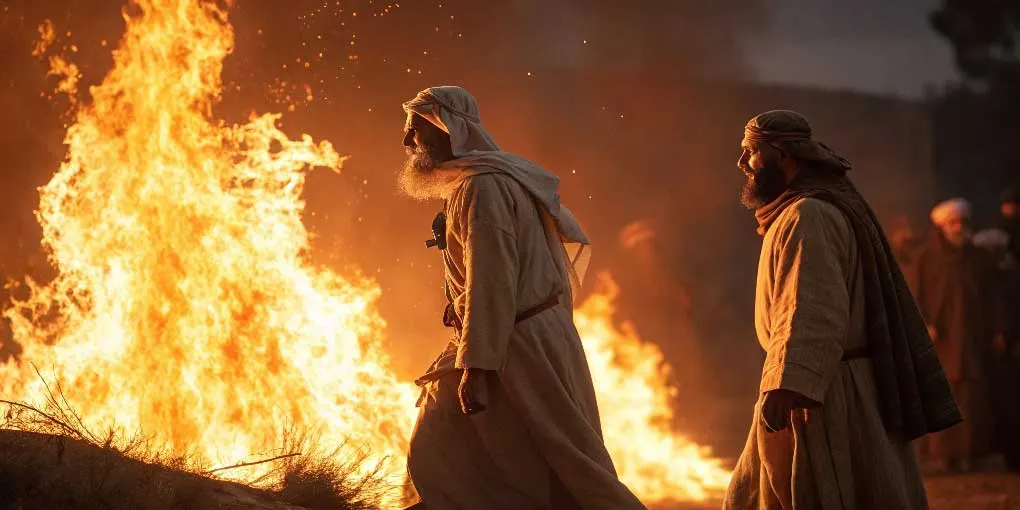
- Weekly portion
- 26 of 54
- Verses
- Vayikra 9:1–11:47
- Parts
- 7
- Reading time
- 1 h 28 min
- Views
marks places where the translation deliberately departs from the Russian original. Tap it to show the note.
Shemini is the weekly portion about the eighth day of service, the appearance of the glory of God, the tragedy of Nadav and Avihu, and the dietary laws. Alex Blend’s stenogram examines chapters 9–11 of the book of Vayikra: the Hebrew text, the transliteration, a translationThe original lists “a Russian translation” here, because that page gives the verses in Russian. On this page the verses are in English, so it simply says “a translation”. and the author’s interpretation. A separate reflection is devoted to strange fire and to testing one’s own desires.
And finally they built it
Vayikra 9:1–24
With God’s help, you and I are beginning to study the weekly portion Shemini. In chapter 8 we talked about the seven days of preparation of the kohanim, about the fact that seven is not just a number, it is a number that to a certain degree symbolizes our world. The Most High created this world in seven days, on the seventh day He rested from His works, the seventh day He blessed and sanctified. Whereas regarding any of the days of creation, when we read about it, it says: “And there was evening, and there was morning – day one,” “And there was evening, and there was morning – day two,” this is not said regarding Shabbat. We live in a seven-level, as it were “sevenfold” world, our world is limited by the seven, and therefore to a certain extent our Shabbat does not end. But there is also another world.
The other world is a world in which there is a direct connection between man and God, a world in which Shabbat is not an anticipation of the world to come, but a real experience. This is the world of the eighth day, a renewed world. That is why many say that there will be eight notes, and there will be eight colors, and everything will change. When the kohen entered the Holy of Holies on Yom Kippur, he found himself, as it were, in the eighth day – in a more perfect world, in a world where the presence of the Most High is more revealed. There was such a danger that he would feel so good there, in the Divine presence, that he would not want to come out of there. Therefore the kohen was adjured, they demanded of him that he take an oath that he would return (the word oath, shvua in Hebrew shares its root with the word shiva, seven). And through this oath they connected him with this world, “grounded” him. Probably Peter experienced the same feeling from the Divine presence when, in a rush of emotion, he said: “Let us put up three booths here.”
So, the eighth day is the day when the Divine presence is revealed in this world. And as a prototype of this – the day when Moshe consecrates the altar and when the glory of God appears. And this is what we are beginning to read about.
וַיְהִי בַּיּוֹם הַשְּׁמִינִי קָרָא מֹשֶׁה לְאַהֲרֹן וּלְבָנָיו וּלְזִקְנֵי יִשְׂרָאֵל׃
vayhí bayom hasheminí kará moshé le'aharón ulvanáv ulziknéy yisraél
1 And it was, on the eighth day Moshe called Aharon, and his sons, and the elders of Israel.
The eighth day according to the pshat (the simple meaning) is the day that comes after the seven days of preparation of the kohanim. It is not for nothing that they prepare for seven days, this is their entering into the eighth day. Why did they remain for seven days in holiness, for seven days stay in the courtyard? In order to be able to enter into this very eighth day, to stop being tourists in the world of holiness and to receive permanent residence there, the right to a place of residence, to become its residents and bearers of the eighth day within themselves.
וַיֹּאמֶר אֶל־אַהֲרֹן קַח־לְךָ עֵגֶל בֶּן־בָּקָר לְחַטָּאת וְאַיִל לְעֹלָה תְּמִימִם וְהַקְרֵב לִפְנֵי יְהוָה׃
vayomer el-aharón kach-lechá égel ben-bakár lechattát ve'áyil le'olá temimím vehakrév lifné adonáy
2 And he said to Aharon: “Take for yourself a calf from the cattle as a purification offering and a lamb, unblemished, as a burnt offering, and offer them as a sacrifice before the LORD.”
The word tamim (innocent, whole, unblemished) has the same root, tav-mem-mem, as the word tam (simple, guileless, honest). The Torah also uses this word in relation to a person, for example, in relation to Noach or to Yov, this is someone unblemished, perfect. In the same way the offering that is chosen for the Most High must be from a lamb without blemish.
But not only must the kohanim bring offerings for themselves, the people too must bring certain offerings.
וְאֶל־בְּנֵי יִשְׂרָאֵל תְּדַבֵּר לֵאמֹר קְחוּ שְׂעִיר־עִזִּים לְחַטָּאת וְעֵגֶל וָכֶבֶשׂ בְּנֵי־שָׁנָה תְּמִימִם לְעֹלָה׃
Ve'el-bené yisraél tedabbér lemór kechú se'ir-izzím lechattát ve'égel vachéves bene-shaná temimím le'olá
3 And to the sons of Israel speak, saying: “Take a young goat as a purification offering, and a calf, and a young ram, a year old, unblemished, as a burnt offering.
וְשׁוֹר וָאַיִל לִשְׁלָמִים לִזְבֹּחַ לִפְנֵי יְהוָה וּמִנְחָה בְּלוּלָה בַשָּׁמֶן כִּי הַיּוֹם יְהוָה נִרְאָה אֲלֵיכֶם׃
veshór va'áyil lishlamím lizbóach lifné adonáy uminchá belulá vashámen ki hayom adonáy nir'á alechém
4 And a bull, and a young ram as a shelamim (peace) offering, as a sacrifice before the LORD, and a mincha (gift) of flatbreads in oil, for today the LORD will appear to you.”
So, which offerings were they commanded to bring? Aharon must bring a young bull as a purification offering (chatat) for himself and a lamb as a burnt offering (ola). The people bring four offerings. The first offering, the purification offering (chatat) – this is a goat. Pay attention: in the previous chapters we read that a bull is brought as the sin offering of the people. Here we read that a goat is brought. And this reminds us of what happens on Yom Kippur, on the Day of Judgment. It was precisely on the Day of Judgment that a young goat was offered, not a young bull. Moshe here performs the sacrifice according to the customs of the Day of Judgment, precisely with regard to the chatat offering.
The second offering, the burnt offering (ola) – a young bull and a young ram. And again, usually only a lamb was brought, here a bull is added as well. The commentators say that this is a festive, special offering in honor of the renewal of the altar, in honor of the beginning of the altar’s work.
The third offering (one more bull and young ram) is brought as a peace offering (shelamim). We said that the peace offering is a special offering that is eaten both by the kohen and by those who bring it, and the Most High Himself takes part in this meal.
The fourth offering is the grain offering, a gift (mincha).
Aharon’s sacrifice prepares him for the service, completes his transformation into a kohen. And the sacrifice of the people now prepares the whole people for the glory of God to appear, for the Most High Himself to appear. And this is a great mercy that was given to Israel, it was for its sake that the building of the Tent of Meeting was undertaken.
וַיִּקְחוּ אֵת אֲשֶׁר צִוָּה מֹשֶׁה אֶל־פְּנֵי אֹהֶל מוֹעֵד וַיִּקְרְבוּ כָּל־הָעֵדָה וַיַּעַמְדוּ לִפְנֵי יְהוָה׃
vayikchú et ashér tzivvá moshé el-pené óhel mo'éd vayikrevú kol-ha'edá vaya'amdú lifné adonáy
5 And they took everything that Moshe had commanded, before the entrance of the Tent of Meeting, and the whole community drew near, and stood before the Most High.
וַיֹּאמֶר מֹשֶׁה זֶה הַדָּבָר אֲשֶׁר־צִוָּה יְהוָה תַּעֲשׂוּ וְיֵרָא אֲלֵיכֶם כְּבוֹד יְהוָה׃
vayomer moshé ze haddavár asher-tzivvá adonáy ta'asú veyerá alechém kevód adonáy
6 And Moshe said: “This commandment, which the LORD commanded, do it, and the glory of the LORD will appear to you.”
We see that Moshe says here: “This is what the LORD commanded.” But nowhere do we read that the LORD commanded precisely this. Nowhere is it written that the LORD commanded which offerings exactly must be brought after the kohanim are ready. And we can draw the conclusion that not everything the Most High commanded Moshe has been told to us beforehand.
וַיֹּאמֶר מֹשֶׁה אֶל־אַהֲרֹן קְרַב אֶל־הַמִּזְבֵּחַ וַעֲשֵׂה אֶת־חַטָּאתְךָ וְאֶת־עֹלָתֶךָ וְכַפֵּר בַּעַדְךָ וּבְעַד הָעָם וַעֲשֵׂה אֶת־קָרְבַּן הָעָם וְכַפֵּר בַּעֲדָם כַּאֲשֶׁר צִוָּה יְהוָה׃
vayomer moshé el-aharón keráv el-hammizbéach va'asé et-chattatechá ve'et-olatécha vechappér ba'adchá uv'ád ha'ám va'asé et-korbán ha'ám vechappér ba'adám ka'ashér tzivvá adonáy
7 And Moshe said to Aharon: “Approach the altar, and bring your purification offering and your burnt offering, and atone for yourself and for the people. And bring the offering of the people, and atone for them, as the LORD commanded.”
After Aharon brings his purification offering and burnt offering, the offering of the people is brought as well.
In verse 8 we read that Aharon, of course, humbly submits to Moshe and does what he says. Whereas in the previous chapter we read that Moshe, in preparing the kohanim, himself performed all their functions and brought the offerings on the altar, here for the first time we see that Aharon does it. The first case in history when kohanim bring an offering on the altar.
וַיִּקְרַב אַהֲרֹן אֶל־הַמִּזְבֵּחַ וַיִּשְׁחַט אֶת־עֵגֶל הַחַטָּאת אֲשֶׁר־לוֹ׃
vayikráv aharón el-hammizbéach vayishchát et-égel hachattát asher-ló
8 And Aharon approached the altar, and slaughtered his purification offering.
וַיַּקְרִבוּ בְּנֵי אַהֲרֹן אֶת־הַדָּם אֵלָיו וַיִּטְבֹּל אֶצְבָּעוֹ בַּדָּם וַיִּתֵּן עַל־קַרְנוֹת הַמִּזְבֵּחַ וְאֶת־הַדָּם יָצַק אֶל־יְסוֹד הַמִּזְבֵּחַ׃
vayakrívu bené aharón et-haddám eláv vayitból etzba'ó baddám vayittén al-karnót hammizbéach ve'et-haddám yatzák el-yesód hammizbéach
9 And the sons of Aharon brought the blood to him, and he dipped his finger in the blood, and sprinkled it on the horns of the altar, and the remaining blood he poured out at the base of the altar.
Aharon goes around the altar and pours blood over its base. Going around the altar is in itself also very symbolic. This is how a bride is led around her husband. There is also in this, again, a kind of dance element. So, Aharon goes around the altar and pours the blood out at its base. Then Aharon again acts according to those instructions, as the Most High commanded the offering to be brought.
וְאֶת־הַחֵלֶב וְאֶת־הַכְּלָיֹת וְאֶת־הַיֹּתֶרֶת מִן־הַכָּבֵד מִן־הַחַטָּאת הִקְטִיר הַמִּזְבֵּחָה כַּאֲשֶׁר צִוָּה יְהוָה אֶת־מֹשֶׁה׃
ve'et-hachélev ve'et-hakkelayot ve'et-hayotéret min-hakkavéd min-hachattát hiktír hammizbécha ka'ashér tzivvá adonáy et-moshé
10 And the inner fat, and the kidneys, and the caudate lobe of the liver from the purification offering he brought onto the altar, as the LORD commanded Moshe.
וְאֶת־הַבָּשָׂר וְאֶת־הָעוֹר שָׂרַף בָּאֵשׁ מִחוּץ לַמַּחֲנֶה׃
ve'et-habbasár ve'et-ha'ór saráf ba'ésh michútz lammachané
11 And the meat and the hide he burned in fire outside the camp.
This is the commandment of the Most High regarding the bull that is brought. Only the inner fat and the organs that are listed are brought onto the altar. The rest, without any processing, together with the skin and even with the dung, is burned outside the camp. After this Aharon brings the burnt offering.
וַיִּשְׁחַט אֶת־הָעֹלָה וַיַּמְצִאוּ בְּנֵי אַהֲרֹן אֵלָיו אֶת־הַדָּם וַיִּזְרְקֵהוּ עַל־הַמִּזְבֵּחַ סָבִיב׃
vayishchát et-ha'oláThe Russian transliteration leaves out the first vowel of this word (“the burnt offering”). The English line follows the Hebrew: ha'olá. vayamtzíu bené aharón eláv et-haddám vayizrekéhu al-hammizbéach saviv
12 And he slaughtered the burnt offering, and the sons of Aharon brought the blood to him, and he sprinkled the whole altar around.
Here it is important to pay attention, probably, to the fact that Aharon is not alone in his service. No kohen can manage an offering on his own, the work of a kohen is teamwork. The Most High loves teamwork. The work on the building of the Mishkan was teamwork: the Most High placed people in certain positions in order to, again, organize this team. The Most High gathered the people of Israel – that is a team too. Sometimes it seems that it is easier to do something yourself, without relying on people, without communicating with people, without sharing the work with them, but the Most High wants us to be able, to know how to work with other people side by side, to have love for these people, to accept them as our brothers. It is even harder in this to understand that you will not always be in the leading roles, that sometimes you are Betzalel, the skilled craftsman who made almost everything in the Mishkan, or you are Moshe, through whom the Most High brought out the people of Israel, but the one to perform the sacred service will be Aharon. And his sons cannot yet perform the sacred service, some of them will only bring the blood to him. Everyone is in his own place, and working in supporting roles is sometimes also extremely difficult, but without this there is no revealing of the glory of God.
וְאֶת־הָעֹלָה הִמְצִיאוּ אֵלָיו לִנְתָחֶיהָ וְאֶת־הָרֹאשׁ וַיַּקְטֵר עַל־הַמִּזְבֵּחַ׃
ve'et-ha'olá himtzíu eláv lintachéha ve'et-harósh vayaktér al-hammizbéach
13 And they brought to him the slaughtered burnt offering, cut into pieces, and the head, and he offered it as a sacrifice on the altar,
Once again we see that the team of kohanim is working, and some of them take part in cutting up the offering.
וַיִּרְחַץ אֶת־הַקֶּרֶב וְאֶת־הַכְּרָעָיִם וַיַּקְטֵר עַל־הָעֹלָה הַמִּזְבֵּחָה׃
vayirchátz et-hakkérev ve'et-hakkera'áyim vayaktér al-ha'olá hammizbécha
14 And he washed the innards and the legs, and burned them with the burnt offering on the altar.
After all these actions have been performed, he brought near the offering of the people.
וַיַּקְרֵב אֵת קָרְבַּן הָעָם וַיִּקַּח אֶת־שְׂעִיר הַחַטָּאת אֲשֶׁר לָעָם וַיִּשְׁחָטֵהוּ וַיְחַטְּאֵהוּ כָּרִאשׁוֹן׃
vayakrév et korbán ha'ám vayikkách et-se'ír hachattát ashér la'ám vayishchatéhu vaychatte'éhu karishón
15 He brought the offering of the people (to the entrance of the Tent of Meeting), and took the goat of the purification offering, which is from the people, and he slaughtered it, and purified with it, as with the first.
Here for the first time the verb lehitchate (to purify oneself from sin) is used, with the same root as the word chatat. One can see a play on words here: if the offering is called chatat, then in Russian one could say that he chatatted this offering. This resembles the birth of a professional kohanic slang.
וַיַּקְרֵב אֶת־הָעֹלָה וַיַּעֲשֶׂהָ כַּמִּשְׁפָּט׃
vayakrév et-ha'olá vaya'aséha kammishpát
16 And he brought the burnt offering, and did everything according to the law.
וַיַּקְרֵב אֶת־הַמִּנְחָה וַיְמַלֵּא כַפּוֹ מִמֶּנָּה וַיַּקְטֵר עַל־הַמִּזְבֵּחַ מִלְּבַד עֹלַת הַבֹּקֶר׃
vayakrév et-hamminchá vaymallé chappó mimménna vayaktér al-hammizbéach millevád olát habbóker
17 And the grain offering he also brought, and filled his hands with it, and offered it as a sacrifice on the altar, besides the morning sacrifice.
The grain offering is brought from a mixture of solet flour, pure, white flour without admixtures, of the highest quality, olive oil and frankincense. The kohen takes a full handful, a fistful, squeezes it tightly and makes a kind of little patty out of this mixture. He takes it so that there is more frankincense, and burns it. And the remaining part goes to the kohanim themselves. After all this, the peace offering can now be brought.
וַיִּשְׁחַט אֶת־הַשּׁוֹר וְאֶת־הָאַיִל זֶבַח הַשְּׁלָמִים אֲשֶׁר לָעָם וַיַּמְצִאוּ בְּנֵי אַהֲרֹן אֶת־הַדָּם אֵלָיו וַיִּזְרְקֵהוּ עַל־הַמִּזְבֵּחַ סָבִיב׃
vayishchát et-hashór ve'et-ha'áyil zévach hashelamím ashér la'ám vayamtzíu bené aharón et-haddám eláv vayizrekéhu al-hammizbéach savív
18 And he slaughtered the bull and the young ram as a peace offering for the people, and the sons of Aharon brought (again) the blood to him, and he sprinkled it around the altar.
Both the kohen and the people take part in the peace offering. This offering is truly one of peace, just as it is called, as a common meal of the people, the kohanim and the Most High.
וְאֶת־הַחֲלָבִים מִן־הַשּׁוֹר וּמִן־הָאַיִל הָאַלְיָה וְהַמְכַסֶּה וְהַכְּלָיֹת וְיֹתֶרֶת הַכָּבֵד׃
ve'et-hachalavím min-hashór umin-ha'áyil ha'alya vehamchassé vehakkelayot veyotéret hakkavéd
19 And the inner fat of the bull, and from the lamb, and from the young ram, and the fat tail, and the fat that covers the lungs, and part of the liver,
וַיָּשִׂימוּ אֶת־הַחֲלָבִים עַל־הֶחָזוֹת וַיַּקְטֵר הַחֲלָבִים הַמִּזְבֵּחָה׃
vayasímu et-hachalavím al-hechazót vayaktér hachalavím hammizbécha
20 And they placed the fat on the breast, and the fats they burned on the altar.
Two parts – the part of the kohanim and the part of the Most High – spent some time together, as it were, then the fat was brought as a burnt offering.
וְאֵת הֶחָזוֹת וְאֵת שׁוֹק הַיָּמִין הֵנִיף אַהֲרֹן תְּנוּפָה לִפְנֵי יְהוָה כַּאֲשֶׁר צִוָּה מֹשֶׁה׃
ve'ét hechazót ve'ét shok hayamín heníf aharón tenufá lifné adonáy ka'ashér tzivvá moshé
21 And the breast and the right leg, Aharon waved them with a waving before the LORD, as Moshe commanded (as Moshe taught him).
Of course, Aharon fulfills the commandment of the LORD, and not the commandment of Moshe. And about the waving itself we have already said more than once that it is a kind of dance with the Most High, a joint movement. And in a dance there is the intention to synchronize, to be in harmony. This concerns not only, again, the work with the Most High, it also concerns teamwork on earth. With whom we work, with whom we are connected, with whom we serve together and with whom we are now dancing before the Most High – this is a question that is relevant for everyone. This “someone” does not necessarily have to be distant and a stranger, it can be a wife, a husband, children, parents, a friend, a brother – anyone. But in order for the glory to appear, in order for the glory of God to be revealed, very often a team is needed, a community is needed.
So, everything is ready. All the necessary offerings have been made, and the whole long description of the offerings, which perhaps seemed boring and tiresome to someone, is finished. The Tent of Meeting has finally, hooray, started working!
וַיִּשָּׂא אַהֲרֹן אֶת־יָדוֹ (יָדָיו) אֶל־הָעָם וַיְבָרְכֵם וַיֵּרֶד מֵעֲשֹׂת הַחַטָּאת וְהָעֹלָה וְהַשְּׁלָמִים׃
vayissá aharón et-yadáv el-ha'ám vayvarechém vayéred me'asót hachattát veha'olá vehashelamim
22 And Aharon lifted up his hands toward the people and blessed them, and in this way he performed the purification offering, and the burnt offering, and the peace offering.
Let us note that only after Aharon blessed all the participants is it written that he completed the sacrifice. The blessing that the kohen pronounces is part of the sacrifice itself. And this is the first time that the kohanic blessing is heard.
וַיָּבֹא מֹשֶׁה וְאַהֲרֹן אֶל־אֹהֶל מוֹעֵד וַיֵּצְאוּ וַיְבָרֲכוּ אֶת־הָעָם וַיֵּרָא כְבוֹד־יְהוָה אֶל־כָּל־הָעָם׃
vayavó moshé ve'aharón el-ohel mo'éd vayetze'ú vayvarechú et-ha'ám vayerá chevod-adonáy el-kol-ha'ám
23 And Moshe and Aharon went into the Tent of Meeting, and came out, and again blessed the people. And the glory of the LORD appeared to all the people.
After Moshe and Aharon had risen into a state of holiness, they were allowed to enter the Holy. Once more I want to speak about the importance of blessing. It was not after the sacrifices that the glory of the LORD appeared to all the people, but after the blessing, when the kohen and Moshe, Aharon and Moshe, blessed the people. This is an important lesson for teachers, for all who have been appointed as mentor, priest, teacher to bless the people. When we say: “May the LORD bless!” we call upon the glory of the Most High to be revealed in the life of this person. A blessing is so valuable that the sages said: “Let not the blessing of a simple man, a commoner, be insignificant in your eyes.” Any blessing is a prayer, it is a calling forth of the glory of God. Any blessing has great significance.
וַתֵּצֵא אֵשׁ מִלִּפְנֵי יְהוָה וַתֹּאכַל עַל־הַמִּזְבֵּחַ אֶת־הָעֹלָה וְאֶת־הַחֲלָבִים וַיַּרְא כָּל־הָעָם וַיָּרֹנּוּ וַיִּפְּלוּ עַל־פְּנֵיהֶם׃
vattetze esh millifné adonáy vattóchal al-hammizbéach et-ha'olá ve'et-hachalavím vayár kol-ha'ám vayarónnu vayippelú al-penehém
24 And fire came out from the LORD, and consumed on the altar the burnt offering and the fat, and all the people saw, and they rejoiced, and all fell on their faces.
The enormous project of creating the Tent of Meeting – the place in which the Most High will meet with His people – is completed, completed successfully. And the whole people, by the mercy of the Most High, was granted to see His glory. The whole people saw with their own eyes that the Most High is near them, that the Most High is favorable toward them, that the Most High accepts the offering.
The tragedy of Aharon
Vayikra 10:1–20
With God’s help we will continue reading the weekly portion Shemini. Let me remind you that you and I have found ourselves at a celebration. After the long work of the whole people, the Tent of Meeting has been set up, the kohanim have been prepared, the offerings have been brought, fire has come down on the offerings, the glory of God has appeared to the whole people. Aharon has blessed the people. A celebration in every respect!
וַיִּקְחוּ בְנֵי־אַהֲרֹן נָדָב וַאֲבִיהוּא אִישׁ מַחְתָּתוֹ וַיִּתְּנוּ בָהֵן אֵשׁ וַיָּשִׂימוּ עָלֶיהָ קְטֹרֶת וַיַּקְרִבוּ לִפְנֵי יְהוָה אֵשׁ זָרָה אֲשֶׁר לֹא צִוָּה אֹתָם׃
vayikchú vene-aharón nadáv va'avihú ish machtató vayittenú vahén esh vayasímu aléha ketóret vayakrívu lifné adonáy esh zará ashér ló tzivvá otám
1 And the sons of Aharon, Nadav and Avihu, took each his shovel (fire pan), and put fire in them (that is, they took coals from somewhere), and put incense on it, and brought before the LORD strange fire, which He had not commanded them.
וַתֵּצֵא אֵשׁ מִלִּפְנֵי יְהוָה וַתֹּאכַל אוֹתָם וַיָּמֻתוּ לִפְנֵי יְהוָה׃
vattétze esh millifné adonáy vattóchal otám vayamútu lifné adonáy
2 And fire came out from the LORD, and ate them, and they died before the LORD.
A huge tragedy in practically two verses. What happened there? The sons of Aharon take the incense and, most likely, bring it into the Holy of Holies. At that time there was no prohibition against entering the Holy of Holies. The prohibition will come later, we know this for certain, because in chapter 16 it will be said: “And the LORD spoke with Moshe after the death of the sons of Aharon.” And there the LORD says to Moshe: “Let them not come in at all times.” So, it was permitted to enter the Holy of Holies. And it is not even written that they did something forbidden. They did something that the LORD had not commanded them. For example, the LORD forbade me to eat pork; if I do eat it, I will break God’s commandment. At the same time, the LORD did not command me to drink tea. But if I drink tea, I break nothing and do nothing bad, although I am doing something that the LORD did not command me.
Let me say right away that very many commentaries have been written about this story. Very many people, many teachers over many centuries have tried to understand what happened there, why Nadav and Avihu received a punishment. And is it a punishment at all? And I myself, over the last few years, have spoken on this topic more than once and tried to look at it from different angles. And, as usually happens, commentaries often say more about the commentators themselves than about the text.
There are those who present Nadav and Avihu as people who were not entirely good. Someone says that they dreamed of “unseating” Aharon and Moshe, dreamed of taking their place. Therefore they decided: “If Aharon and Moshe go into the Holy Place, we will go further, we will go into the Holy of Holies and come out of there as victors. Wow, how we will bless the people then!”
There were those who drew attention to the fact that Nadav and Avihu were not married. Although Aharon at that time was already 84 years old, and one can assume that his children were not small, but children quite of marriageable age. Why are they not married? In the opinion of these commentators, they do not find themselves a match, thinking like this: “Our uncle is, one might say, the president, our dad is the high priest. Which of the girls, of these simpletons, would be worthy of us?” And out of their pride, out of class pride, they did not marry. And when they entered the Holy Place to represent the people, while despising the people, a certain part of it – the simple girls, considering themselves more worthy than others, they burned up because in this state they could not represent the people.
There are also commentators who say that, burning with the enthusiasm of service, they hurried to be in closeness with the Most High, went into the Holy of Holies for the sake of closeness and burned up through this love. Love, as they say, breaks rank. Literally this proverb sounds ahava mekalkelet ota shura (love breaks the orderly ranks, breaks the structure). Acting on the inspiration of love, a person does what, perhaps, is not customary to do. Every human soul has a desire to enter the Holy Place, has a desire to dissolve in the Most High. The soul desires to return to its source.
There is also a commentary that Nadav and Avihu were not even married because they were not attached to this world. From birth they were not of this world, sort of pious mystics. And as soon as they had the opportunity to leave this world, “to move into Peter’s three booths,” they immediately wanted it. Filled with desire, burning with the desire to break away, to take off from this world, they rushed into the Holy of Holies, bringing with them the fire of the altar with the incense and, to no lesser degree, the fire of their heart. In the Epistle to the Philippians Paul says: “…I have the desire to be released and to be with Mashiach.” Paul restrained his desire, remaining in earthly service. Nadav and Avihu could not restrain their desire and dissolved in the Holy, dissolved in the Most High, and because of this they burned up.
The Tent of Meeting was built so that the Most High could descend and speak there with the people; it is, as it were, the landing pad of the Most High in this world. It is not a runway from which one can take off and break away, leave this world. It is precisely the airport of the Most High, the place where He descends to the earth and has communion with the people. And when Nadav and Avihu wanted to fly up on high, to the Most High, they ran out onto the runway, and the fire burned them. It is hard to condemn this desire of the heart – to be with the Most High. And nevertheless this desire is human.
Remember, when Yeshua tells the disciples for the first time that He must suffer, Peter says: “May it not be!” Who of us does not sympathize with Peter at this moment? If I heard something like that from my beloved teacher, I too would want with all my soul to cry out: “May it not be!” Humanly it is not hard to understand this desire of Peter’s, this cry of his soul, but precisely humanly. For God’s plan something more is needed. In exactly the same way, humanly, precisely humanly, one can understand Nadav and Avihu and their desire to enter the Holy Place. This is a human desire for everything to be good, but good in a human way. And in the Holy the human does not always work. And it is precisely with such an understanding that I propose to look at what happened to Nadav and Avihu.
וַיֹּאמֶר מֹשֶׁה אֶל־אַהֲרֹן הוּא אֲשֶׁר־דִּבֶּר יְהוָה לֵאמֹר בִּקְרֹבַי אֶקָּדֵשׁ וְעַל־פְּנֵי כָל־הָעָם אֶכָּבֵד וַיִּדֹּם אַהֲרֹן׃
vayomer moshé el-aharón hu asher-dibbér adonáy lemór bikrováy ekkadésh ve'al-pené chol-ha'ám ekkavéd vayiddóm aharón
3 And Moshe said to Aharon: “This is what the LORD spoke of, saying: I will be sanctified in those who draw near to Me, and before the face of all the people I will receive glory (be glorified).” And Aharon fell mute.
That is, the LORD says: “In those who are close to Me, in those who try to draw near to Me, I will be sanctified.” Or: “By those I will be sanctified who draw near to Me.”
One of the most ancient and authoritative commentators, Rabbi Shlomo Yitzchaki, known as Rashi, says in his commentary: “Moshe said: I knew that this would happen, I knew, the LORD told me this phrase earlier: ‘In those who draw near to Me I will be sanctified.’ But I thought that it would be either you, Aharon, or me. I did not know that it would be your children.” Why then is sanctification through a person needed? Does God really need a human sacrifice, does the Most High really need this? Must we, like pagans, found the Temple on our firstborn or on the firstborn of our kohanim, God forbid? Let me remind you that holiness – is that which is set apart. Holiness is that which, on the one hand, one wants to draw near to, and on the other hand – that which one must approach carefully, in fear and trembling. One of the understandings of what happened (and let me say right away that all this, in fact, is beyond our understanding) is that Nadav and Avihu are like a warning of how terrible and how dangerous it is to break rank in the relationship with the Most High, how dangerous it can be to do in the Holy what comes from a person, from the human heart, perhaps even the kindest one. Peter too wanted good, but was called satan.
And what about Aharon? It is said: and Aharon fell mute. It is hard not to empathize with Aharon in this situation, hard, God forbid, to imagine oneself in his place, and what words could one have found anyway? This is a terrible tragedy.
וַיִּקְרָא מֹשֶׁה אֶל־מִישָׁאֵל וְאֶל אֶלְצָפָן בְּנֵי עֻזִּיאֵל דֹּד אַהֲרֹן וַיֹּאמֶר אֲלֵהֶם קִרְבוּ שְׂאוּ אֶת־אֲחֵיכֶם מֵאֵת פְּנֵי־הַקֹּדֶשׁ אֶל־מִחוּץ לַמַּחֲנֶה׃
vayikrá moshé el-misha'él ve'él eltzafán bené uzzi'él dod aharón vayomer alehém kirvú se'ú et-achechém me'ét pene-hakkódesh el-michútz lammachané
4 And Moshe called Misha'el and Eltzafan, the sons of Uzi'el, Aharon’s uncle, and said to them: “Draw near, carry your brothers out from before the holy place to outside the camp.”
Since we have such a tradition that we interpret names, let us pause on these names as well. Misha'el can be translated as the one who carries the LORD on himself, the one who bears the LORD within himself. The name Eltzafan means the LORD has hidden or he hid the LORD in his heart. They are the sons of Uzi'el – a man whose name is translated as my strength is God, and a man with such a name is Aharon’s uncle.
Why are Nadav and Avihu carried outside the camp? Cemeteries were usually set up outside the city, outside the camp, outside the quarter of the community. This does not mean that Nadav and Avihu, like some criminals or suicides, God forbid, are buried outside the cemetery, that is not the point.
וַיִּקְרְבוּ וַיִּשָּׂאֻם בְּכֻתֳּנֹתָם אֶל־מִחוּץ לַמַּחֲנֶה כַּאֲשֶׁר דִּבֶּר מֹשֶׁה׃
vayikrevú vayissa'úm bechuttonotám el-michútz lammachané ka'ashér dibbér moshé
5 And they drew near, and carried them out by their shirts outside the camp, as Moshe had said.
Pay attention: carried them out by their shirts – this tells us that Nadav and Avihu did not burn up completely, otherwise what shirts would there be talk of? What burned was their breath (neshimatam), as from a neutron bomb. So, the two sons of Aharon were carried out, most likely carried out in order to be buried.
וַיֹּאמֶר מֹשֶׁה אֶל־אַהֲרֹן וּלְאֶלְעָזָר וּלְאִיתָמָר בָּנָיו רָאשֵׁיכֶם אַל־תִּפְרָעוּ וּבִגְדֵיכֶם לֹא־תִפְרֹמוּ וְלֹא תָמֻתוּ וְעַל כָּל־הָעֵדָה יִקְצֹף וַאֲחֵיכֶם כָּל־בֵּית יִשְׂרָאֵל יִבְכּוּ אֶת־הַשְּׂרֵפָה אֲשֶׁר שָׂרַף יְהוָה׃
vayomer moshé el-aharón ul'el'azár ul'itamár banáv rashechém al-tifrá'u uvigdechém lo-tifrómu veló tamútu ve'ál kol-ha'edá yiktzóf va'achechém kol-bét yisraél yivkú et-hasserefá ashér saráf adonáy
6 And Moshe said to Aharon, and to Elazar, and to Itamar, his sons: “Do not let your hair loose and do not tear your garments, and you will not die, and the Most High will not be angry with the whole community, and the whole house of Israel will weep over the burning which the LORD has burned.
Do not let your hair loose – when a person is in mourning (this is a mourning custom in Israel even today), he does not cut his hair and does not shave. And do not tear your garments – this is one more mourning custom. Here Moshe says: “Do not carry out the mourning customs.” Why? Because a kohen who is serving has no right to observe mourning even for people close to him. What then, is one really to just skip it like that, pass it by, turn the page, “the calendar will close this page” with the death of Nadav and Avihu? No, of course not. The kohanim will serve for Israel, and Israel will bear the mourning, will weep for those whom the fire of the Most High scorched.
וּמִפֶּתַח אֹהֶל מוֹעֵד לֹא תֵצְאוּ פֶּן־תָּמֻתוּ כִּי־שֶׁמֶן מִשְׁחַת יְהוָה עֲלֵיכֶם וַיַּעֲשׂוּ כִּדְבַר מֹשֶׁה׃
umippétach óhel mo'éd lo tetze'ú pen-tamútu ki-shémen mishchát adonáy alechém vaya'asú kidvár moshé
7 And from the entrance of the Tent of Meeting do not go away, lest you die, for the oil of anointing of the Most High is upon you.” And they did as Moshe said.
That very oil which Moshe poured on them at the consecration has not yet dried on them, has not yet soaked in. Can you imagine the scale of the catastrophe, when such an event happens right in the middle of a celebration! But this oil does not allow them to go out beyond the holy circle, beyond the line of holiness. In this state of theirs they must not leave the Holy. This is a test of the ability to remain in the Holy. A terrible test.
וַיְדַבֵּר יְהוָה אֶל־אַהֲרֹן לֵאמֹר׃
vaydabbér adonáy el-aharón lemór
8 And the LORD spoke to Aharon, saying:
יַיִן וְשֵׁכָר אַל־תֵּשְׁתְּ אַתָּה וּבָנֶיךָ אִתָּךְ בְּבֹאֲכֶם אֶל־אֹהֶל מוֹעֵד וְלֹא תָמֻתוּ חֻקַּת עוֹלָם לְדֹרֹתֵיכֶם׃
yáyin veshechár al-tésht attá uvanécha ittách bevo'achém el-óhel mo'éd veló tamútu chukkát olám ledorotechém
9 “Wine and alcohol do not drink, you and your sons with you, when you come into the Tent of Meeting, and you will not die. This is an eternal law for your generations,
וּלֲהַבְדִּיל בֵּין הַקֹּדֶשׁ וּבֵין הַחֹל וּבֵין הַטָּמֵא וּבֵין הַטָּהוֹר׃
ulehavdíl ben hakkódesh uvén hachól uvén hattamé uvén hattahór
10 So that you may distinguish (judge) between the holy and the ordinary, between the unclean and the clean,
וּלְהוֹרֹת אֶת־בְּנֵי יִשְׂרָאֵל אֵת כָּל־הַחֻקִּים אֲשֶׁר דִּבֶּר יְהוָה אֲלֵיהֶם בְּיַד־מֹשֶׁה׃
ulehorót et-bené yisraél et kol-hachukkím ashér dibbér adonáy alehém beyad-moshé
11 And explain to the sons of Israel all the laws which the LORD gave you by the hands of Moshe.”
There are commentators who say (and this is very logical) that perhaps the prohibition on drinking alcohol followed after Nadav and Avihu entered the Holy drunk. They simply drank and went in there. Otherwise, why immediately after this does the LORD Himself say these words to Aharon, not through Moshe, but directly? Indeed, one can sense this connection. In what does the effect of alcohol show itself? Alcohol dulls the sensations of this world, alcohol gives a feeling that it is possible to break away from the earth – such is its effect on most people. And therefore the one understanding does not hinder the other. Wishing to break away from this world, as is customary today among the Hasidim (to drink a little in order to come closer to the mystery, in order to dull consciousness, to dull the rational mind), it is quite possible that Nadav and Avihu, moved by the same idea, did what they did, having drunk some amount of alcohol.
Here the Most High says: “You do indeed belong both to the holy world and to the ordinary world. But when you judge the sons of Israel, judge entirely by the laws of the Torah, which operate in the physical world.” There, in the eighth day, one wants to leave all laws behind, all boundaries, all limits, and rush upward. The eighth day is above the law of Moshe, and one very much wants to break away from everything there. Therefore the Most High says: “No, you are conductors of the law even on the eighth day. You must in sobriety and holiness indicate what is clean, what is unclean, bring offerings. And you must also teach the laws in sobriety and holiness.” No weakening, muffling, dulling of the senses.
וַיְדַבֵּר מֹשֶׁה אֶל־אַהֲרֹן וְאֶל אֶלְעָזָר וְאֶל־אִיתָמָר בָּנָיו הַנּוֹתָרִים קְחוּ אֶת־הַמִּנְחָה הַנּוֹתֶרֶת מֵאִשֵּׁי יְהוָה וְאִכְלוּהָ מַצּוֹת אֵצֶל הַמִּזְבֵּחַ כִּי קֹדֶשׁ קָדָשִׁים הִוא׃
vaydabbér moshé el-aharón ve'él el'azár ve'el-itamár banáv hannotarím kechú et-hamminchá hannotéret me'ishé adonáy ve'ichlúha mattzót étzel hammizbéach ki kódesh kadashím hi
12 And Moshe spoke with Aharon and with Elazar, and with Itamar, the remaining sons: “Take the remainder of the grain offering (mincha) from the fire offering to the Most High and eat it unleavened beside the altar, for it is holy for holiness.
Of the five kohanim whom Moshe prepared, only three remained. Three kohanim for the whole service, for the whole enormous people of Israel. And we have not yet read to the end of the whole ceremony, and the offerings have not yet been eaten. And Moshe is concerned that, despite this terrible tragedy, the consecration should take place.
Let me remind you how a mincha is brought: a large quantity of flour of the highest quality, solet, is brought with oil and frankincense. The kohen takes a handful, a full fistful, makes a kind of little patty out of it, puts it on the altar and offers it as a sacrifice. The rest the kohanim eat. The eating of the offering by the kohanim is part of the sacrifice. Therefore Moshe insists that this be done: “Take the mincha and eat it. You must still eat this offering, despite what happened.”
וַאֲכַלְתֶּם אֹתָהּ בְּמָקוֹם קָדֹשׁ כִּי חָקְךָ וְחָק־בָּנֶיךָ הִוא מֵאִשֵּׁי יְהוָה כִּי־כֵן צֻוֵּיתִי׃
va'achaltém otá bemakóm kadósh ki chokchá vechok-banécha hi me'ishé adonáy ki-chén tzuvvéti
13 And you shall eat it in a holy place, for this is your law and the law of your sons (to you and to all your descendants, the kohanim) from the fire offering to the Most High, for so it was commanded to me.
The expression ki-chen tzuveti means so I was commanded, such commandments I received. Let us remember this, it is important. We will come back to this.
And further Moshe reminds them what must be done with the shelamim offering: certain parts of it must be waved and then certain parts of it eaten.
וְאֵת חֲזֵה הַתְּנוּפָה וְאֵת שׁוֹק הַתְּרוּמָה תֹּאכְלוּ בְּמָקוֹם טָהוֹר אַתָּה וּבָנֶיךָ וּבְנֹתֶיךָ אִתָּךְ כִּי־חָקְךָ וְחָק־בָּנֶיךָ נִתְּנוּ מִזִּבְחֵי שַׁלְמֵי בְּנֵי יִשְׂרָאֵל׃
ve'ét chazé hattenufá ve'ét shok hatterumá tochelú bemakóm tahór attá uvanécha uvnotécha ittách ki-chokchá vechok-banécha nittenú mizzivché shalmé bené yisraél
14 And the breast, intended to be waved before the Most High, and the leg, which is the heave offering, eat in a clean place, you and your sons, and your daughters with you, for this is your law and the law of your sons, that the sons of Israel should set apart this share of yours from the peace offering.
Pay attention, here daughters appear. Indeed, the wives, daughters, grandchildren of the kohanim may eat of this offering – all those who are in his house. Daughters may eat the meat of the heave offering while they are in their father’s house, as long as they do not get married. If a daughter marries someone who is not a kohen (which is possible), she stops eating the meat of the offering. Here Moshe passes on a law that will be in force in all generations.
שׁוֹק הַתְּרוּמָה וַחֲזֵה הַתְּנוּפָה עַל אִשֵּׁי הַחֲלָבִים יָבִיאוּ לְהָנִיף תְּנוּפָה לִפְנֵי יְהוָה וְהָיָה לְךָ וּלְבָנֶיךָ אִתְּךָ לְחָק־עוֹלָם כַּאֲשֶׁר צִוָּה יְהוָה׃
shok hatterumá vachazé hattenufá al ishé hachalavím yavíu lehaníf tenufá lifné adonáy vehayá lechá ulvanécha ittechá lechok-olám ka'ashér tzivvá adonáy
15 Take the leg of the heave offering and the breast intended to be waved, the portions of fat for the fire, bring them, in order to wave them before the Most High, and it will be for you and for your sons with you an eternal law, as the LORD commanded.”
וְאֵת שְׂעִיר הַחַטָּאת דָּרֹשׁ דָּרַשׁ מֹשֶׁה וְהִנֵּה שֹׂרָף וַיִּקְצֹף עַל־אֶלְעָזָר וְעַל־אִיתָמָר בְּנֵי אַהֲרֹן הַנּוֹתָרִם לֵאמֹר׃
ve'ét se'ír hachattát darósh darásh moshé vehinné soráf vayiktzóf al-el'azár ve'al-itamár bené aharón hannotarím lemór
16 And the goat of the purification offering Moshe also demanded, but he learned that the goat had been burned, and he became angry with Elazar and with Itamar, the remaining sons of Aharon, saying:
Here it must be said that, although certain offerings are listed, there were many more offerings. We read in the book of Shemot that the Most High commanded Moshe to set up the Tent of Meeting on Rosh Chodesh (the new moon). And it is not very clear: did He command to begin the period of preparation of the kohanim on the new moon, or to finish it. According to most opinions, it was precisely the finishing of the period of preparation of the kohanim that had to be done by Rosh Chodesh. And then all the events that are described here take place on the 1st of the month of Nisan. In this case three goats must be brought, three purification offerings: one – the offering of the new moon, the second – from the people, and the third, which we read about in chapter 7 of the book of Bemidbar, – the daily offering from the leader of one of the tribes (and since, by the blessing, the tribe of Yehuda became the eldest, this is the offering that Nachshon, son of Amminadav, brings). And, as usually happens, there is a dispute regarding which goat exactly Moshe speaks about in verse 16. There are arguments both one way and the other. But if we read the pshat of the Torah, then we do not yet know what will be in chapter 7 of the book of Bemidbar. We also do not know about the goat of the new moon, and therefore, I think, we can focus on the idea that it is about the goat which the people brought. Moshe tries to find out what happened to this goat. Moshe learns that this goat has been burned, and becomes angry.
מַדּוּעַ לֹא־אֲכַלְתֶּם אֶת־הַחַטָּאת בִּמְקוֹם הַקֹּדֶשׁ כִּי קֹדֶשׁ קָדָשִׁים הִוא וְאֹתָהּ נָתַן לָכֶם לָשֵׂאת אֶת־עֲוֹן הָעֵדָה לְכַפֵּר עֲלֵיהֶם לִפְנֵי יְהוָה׃
maddúa lo-achaltém et-hachattát bimkóm hakkódesh ki kódesh kadashím hi ve'otá natán lachém lasét et-avón ha'edá lechappér alehém lifné adonáy
17 “Why did you not eat the purification offering in the Holy place, for it is a holy thing for the holy, and it is given to you so that you may bear the sin of the community, to atone for them before the LORD.
Again Moshe says: “The eating of the offerings is part of the sacrifice. The offering is given to you so that you bring it and eat it. What right did you have to burn it, if it was given to you for the atonement of the community?” And he explains in verse 18:
הֵן לֹא־הוּבָא אֶת־דָּמָהּ אֶל־הַקֹּדֶשׁ פְּנִימָה אָכוֹל תֹּאכְלוּ אֹתָהּ בַּקֹּדֶשׁ כַּאֲשֶׁר צִוֵּיתִי׃
hen lo-huvá et-damá el-hakkódesh peníma achól tochelú otá bakkódesh ka'ashér tzivvéti
18 Since its blood is not brought inside, you should have eaten it in the Holy, as I commanded you.”
What is Moshe saying here? There are offerings, for example, the purification offering for the high priest or the purification offering for the people, whose blood is brought into the Holy, then this offering is not eaten. But here it is not simply the people’s purification offering. This is an offering that was brought before the sanctuary began working. Its blood was not brought into the Holy, and Moshe is indignant that it was not eaten. Part of the sacrifice, as we said, is eating it, and Moshe says: “The blood of the offering was not brought into the Holy, and so you should have eaten the offering. Why did you not do this, as I commanded you!?”
There is one important difference. In verse 13 we read ki-chén tzuvvéti – as it is commanded, bidden to me. Here we read ka'ashér tzivvéti, as I ordered. There are cases when Moshe passes on word for word the words of the LORD: “The LORD ordered me.” When Moshe speaks in this way, one cannot argue with him: there is no equality, because he is the one who received the revelation. There are cases when Moshe interprets the words of the LORD which He ordered him. When Moshe speaks his interpretation, then it is a completely different matter, it is not one and the same.
I will give a very simple everyday example. A wife sent her husband to the store, gave him a short little shopping list, and he went. Having thought about something, the wife sends her son to her husband and says: “Run to the store, tell Dad to buy something to go with tea.” The son runs up to Dad and passes on his mother’s words word for word: “Mom said to buy something to go with tea.” He knows these words better than the father, you can’t argue with them. The father – hand to his cap: “All right, I’ll buy it.” If the son adds at this point: “… I think, fruit jellies,” then that is no longer part of the message from Mom – what he thinks. You can argue with that, you can decide that Mom wants something else. Dad may know better than the son what Mom wants.
There is an indisputable message and there is interpretation. In the first case Moshe said: “Why did you not do as is commanded to me?”, in the second case: “Why did you not do as I ordered?” And precisely there, where Moshe says as I ordered, there one can argue with him. It often happens, when you take part in some discussion, conversation or argument, that toward the end someone, straightening his tie, says: “Everyone here has said his own opinion, and now I will say what the Bible says.” After that this person also says his own opinion. Because even when reading the Bible and interpreting the Bible, we always speak our own understanding of the Bible. And it is very hard to get used to the thought that there are many people who are no more foolish than we are, who are no less honest than we are, who want no less than we do to understand the truth, but understand it differently. That is how it is, however hard it may be to accept. Therefore we must always distinguish what is written, what we know word for word, and our understanding. And if we speak our understanding, if we remember that we are speaking our understanding, we must not be surprised that we will run into someone else’s understanding, that someone understands differently. This is what will now happen with Moshe. You and I will become witnesses of the first case when people argue with Moshe, with Moshe himself (who, it would seem, knows the Torah of Moshe better than Moshe?!), about the Torah. This is no longer an attack on him: “Where have you brought us out to?”, this is precisely an argument about the interpretation of the Torah.
Pay attention, it was written that Moshe was angry with Elazar and Itamar, it was not said that he was angry with Aharon. But apparently he was angry, because Aharon is responsible for them. Moshe does, after all, show respect to Aharon, his older brother.
וַיְדַבֵּר אַהֲרֹן אֶל־מֹשֶׁה הֵן הַיּוֹם הִקְרִיבוּ אֶת־חַטָּאתָם וְאֶת־עֹלָתָם לִפְנֵי יְהוָה וַתִּקְרֶאנָה אֹתִי כָּאֵלֶּה וְאָכַלְתִּי חַטָּאת הַיּוֹם הַיִּיטַב בְּעֵינֵי יְהוָה׃
vaydabbér aharón el-moshé hen hayom hikrívu et-chattatám ve'et-olatám lifné adonáy vattikréna otí ka'élle ve'achálti chattát hayom hayitáv be'ené adonáy
19 And Aharon said to Moshe: “Behold, today they brought the purification offerings and their burnt offerings before the LORD. And such a thing also happened to me, and if I eat the sin offering today, will that really be good in the eyes of the Most High?”
This is what Aharon says: “Will the Most High really be pleased that in such a state I simply carry out my routine work? I will not bring about any atonement by this, because I can force myself to chew up this offering, but is it such a mechanical service that the Most High wants? If you, Moshe, interpret the Torah in such a way that a kohen must serve no matter what, in any state of soul, then I tell you that while his dead lie before him, on the day of the death of people close to him, a kohen is free from eating the sin offering. He cannot do it. It will not be pleasing to the Most High. And in this, Moshe, you and I – forgive me – interpret the Torah of Moshe differently.”
וַיִּשְׁמַע מֹשֶׁה וַיִּיטַב בְּעֵינָיו׃
vayishmá moshé vayitáv be'enáv
20 And Moshe heard, and it seemed right to him.
Moshe accepts Aharon’s objection. It turns out that someone can argue with Moshe about the Torah of Moshe and turn out to be right. Now this is a master class in modesty and humility for all teachers.
And with this the very difficult chapter 10 ends. What is this chapter about? About the fact that holiness, too, has its own laws and rules, and serving in holiness, being in holiness, can be more dangerous than in our ordinary everyday world. This is a warning for all kohanim and for all ministers that it is frightening to try to tear oneself away from this world. And in order to judge someone, one must be sensitive to the feelings, to the sensations of this world, not tear oneself away from them, not judge people as angels of God, not by such criteria. About the fact that our understanding is our understanding, and even Moshe allowed people to argue with him, and his opponent turned out to be right. One must be ready for it to turn out that we are not the ones who are right, to accept this and to agree with it. This too is very difficult, these are the difficult tasks that remain with us. How do you accept those who disagree with you? How do you stay with them in one team, in one family, in one community? What do you do if your students or your older brother disagree with you, as happened in the case of Moshe? These are serious questions that we can ask ourselves. A very difficult chapter, very difficult lessons. But who will we be if we do not try to understand?
On an empty stomach, not even a song gets sung
Vayikra 11:1–47
After the glory of the LORD came down and appeared to the people, the whole people was sanctified by this glory, and then the question arose: “How does one preserve holiness?” If a person has become impure, how is he to return to the state of holiness, to the state of purity?
I must make a very important caveat and clarification: being impure is not in itself a sin. In a state of impurity it is a sin to enter the Tent of Meeting, the Holy of Holies, there are also other actions that must not be performed in this state, but being impure in itself is not a sin. For example, a woman who has given birth to a child becomes impure. And the reason for this impurity is a good one: she did a good thing, fulfilled a commandment, but impurity still came upon her. Therefore one must always remember that the state of impurity is not a sin. One can wash a dead person, take care of a sick person, while being in a state of impurity. It is not a sin to become impure or to be impure, but it is a sin to enter the Tent of Meeting, to enter into communion with the Most High in this state. One must first be purified. Just as being dirty is not a sin. There is work as a result of which we can get dirty, but you cannot show up everywhere in such a dirty state. This does not mean that getting dirty is always bad in itself. This must be remembered, and every time we speak of impurity, we must separate impurity and sin, these are completely different concepts.
But let us return to our chapter 11. It is devoted to the question of what to eat (what to feed on) for a person who belongs to the people of God and is sanctified by God’s glory.
וַיְדַבֵּר יְהוָה אֶל־מֹשֶׁה וְאֶל־אַהֲרֹן לֵאמֹר אֲלֵהֶם׃
vaydabbér adonáy el-moshé ve'el-aharón lemór alehém
1 And the LORD spoke with Moshe and Aharon, saying to them:
For a long time we have not read such a form of address, when the LORD speaks both with Moshe and with Aharon. In the last chapter we encountered an argument, when Moshe, the lawgiver, argued with the one who is the “interpreter of the law,” with Aharon. And in the end they agreed with each other, agreement came, and we can say: “The Torah of Moshe is the law, the Torah of Aharon is the interpretation of the law, including certain exceptions to this law.” And after harmony came between them, the Most High turns to them and gives them the command to instruct the sons of Israel.
דַּבְּרוּ אֶל־בְּנֵי יִשְׂרָאֵל לֵאמֹר זֹאת הַחַיָּה אֲשֶׁר תֹּאכְלוּ מִכָּל־הַבְּהֵמָה אֲשֶׁר עַל־הָאָרֶץ׃
dabberú el-bené yisraél lemór zot hachayá ashér tochelú mikkol-habbehemá ashér al-ha'áretz
2 “Speak with the sons of Israel, saying: These are the animals that you will eat out of all the beasts that are on the earth.
The first command of the Most High that He gave to man in the Garden of Eden was: “Of every tree eat, except the Tree of the knowledge of good and evil,” that is, man was given the command to eat of everything, of all the trees. The Most High was as if saying to man: “Eat my world.” When we eat an orange, an apple, a pear, some fruit, it becomes part of us. For the life force of an orange, as a plant, to become a human being is a big leap. Therefore plants are permitted to us with greater ease. When we eat an animal that has to die in order for us to eat it, the situation changes radically. If with our strength, with our energy that we receive from this animal, we serve the Most High, then for the animal this is, of course, also a big leap. If we are busy with some affairs of our own, spend the calories we received on something not very clean, then there is no leap at all for the animal. And then – is it worth killing a chicken in order to lounge in front of the TV with the life force received and flip through the channels? Therefore the Torah greatly limits the use of meat. Of all the animals of the Earth only a very small number of them are permitted to us as food. If in the Garden of Eden, of all the plants only one was forbidden, then in our case only a small, small part of the animal world is permitted as food. The Torah does not really encourage eating meat all that much. So, which animals may we eat out of all the earthly beasts?
כֹּל מַפְרֶסֶת פַּרְסָה וְשֹׁסַעַת שֶׁסַע פְּרָסֹת מַעֲלַת גֵּרָה בַּבְּהֵמָה אֹתָהּ תֹּאכֵלוּ׃
kol mafréset parsá veshosá'at shésa perasót ma'alát gerá babbehemá otá tochélu
3 Everything that hooves a hoof (that has hooves) and with a cleft cleaves its hooves (splits its hooves), a cud-chewer among the beasts – it you will eat.
There are two signs of an animal that may be eaten. The first is a split hoof, the second is that the animal chews the cud. One can accept this as a law and say: “That’s just how the Most High wants it, and that’s all.” One can plunge into medical research: “This is good for health, this is bad for health.” Both the one and the other approach have a right to exist, but we will go another way. There are commentaries that are based on the characteristic traits of these animals. Hooves are the animal’s weapon; split hooves soften the blow, the animal as it were holds back its aggression. The fact that the animal chews the cud means that it does not swallow everything at once. This points to a certain patience, an absence of the urge to swallow and eat at once whatever comes along. Many commentators single out precisely these features as the signs of animals that may be eaten.
Beginning with verse 4, the Torah gives an important warning.
אַךְ אֶת־זֶה לֹא תֹאכְלוּ מִמַּעֲלֵי הַגֵּרָה וּמִמַּפְרִיסֵי הַפַּרְסָה אֶת־הַגָּמָל כִּי־מַעֲלֵה גֵרָה הוּא וּפַרְסָה אֵינֶנּוּ מַפְרִיס טָמֵא הוּא לָכֶם׃
ach et-zé lo tochelú mimma'alé haggerá umimmafrisé happarsá et-haggamál ki-ma'alé gerá hu ufarsá enénnu mafrís tamé hu lachém
4 But these do not eat, of those that chew the cud and of those that split the hooves: the camel, which regurgitates the cud but does not have split hooves – unclean it is for you.
The camel really is a cud-chewing animal, but its hoof is not split, it has no hooves at all, the camel is considered callus-footed. If some animal chews the cud but does not split the hoof, this means that it has an inner sign of purity, but there is no outer sign of being kosher. One could say that inwardly it looks clean, clean from the inside, but unclean on the outside.
Verses 5 and 6 are very difficult from the point of view of modern science.
וְאֶת־הַשָּׁפָן כִּי־מַעֲלֵה גֵרָה הוּא וּפַרְסָה לֹא יַפְרִיס טָמֵא הוּא לָכֶם׃
ve'et-hashafán ki-ma'alé gerá hu ufarsá lo yafrís tamé hu lachém
5 And the hyrax, because it chews the cud, but does not split the hoof, unclean it is for you.
וְאֶת־הָאַרְנֶבֶת כִּי־מַעֲלַת גֵּרָה הִוא וּפַרְסָה לֹא הִפְרִיסָה טְמֵאָה הִוא לָכֶם׃
ve'et-ha'arnévet ki-ma'alát gerá hi ufarsá lo hifrísa teme'á hi lachém
6 And the hare, which also chews the cud, but has not split the hoof, unclean it is for you.
Naturally, the question arises: since when have the hyrax, the hare, the rabbit, however you translate the names of these beasts, since when did they become cud-chewers? They, of course, are not cud-chewers. And there are those who mock the Torah, saying: “The author of the Torah apparently saw chewing movements in hares and rabbits (when their lips twitch, and it looks as if they chew the cud) and thought, the simpleton, that they regurgitate and chew the cud.” Indeed, neither the hare, nor the hyrax, nor the rabbit chews the cud. But the concept ma'alé (ma'alát) gerá, means that the animal pulls food out from inside and eats it again. The hare, indeed, very often eats what it has already eaten, eats its own vomit, and it happens that it eats its own feces too. And to some degree it can also be called regurgitating, since the meanings of terms in the Torah and in biology may well differ. The Torah’s definition is much older than the definition of biology, and it can be broader or simply be different.
These animals, just like the camel, look clean by the inner sign, but outwardly they are unclean.
וְאֶת־הַחֲזִיר כִּי־מַפְרִיס פַּרְסָה הוּא וְשֹׁסַע שֶׁסַע פַּרְסָה וְהוּא גֵּרָה לֹא־יִגָּר טָמֵא הוּא לָכֶם׃
ve'et-hachazír ki-mafrís parsá hu veshosá shésa parsá vehu gerá lo-yiggár tamé hu lachém
7 And the pig, because it has hooves and splits the hooves, but it does not regurgitate the cud, unclean it is for you.
The pig, on the contrary, has the outer sign of being kosher, it presents itself as clean. They say that the pig lies in such a way as to show the sign of its being kosher, to show its little hooves. But inside it is unclean, and thus the pig too is forbidden. In Hebrew pig is called chazír, this word has the same root as the word lachzór (to return). This gave rise to a certain group of midrashim and interpretations saying that in the world to come, when the Most High comes and is revealed, when the glory of God is revealed again, the pig will become a kosher animal. There are no ancient interpretations on this matter; all the interpretations connected with Chazri'el (a spiritual entity, an angel who accuses the Jews before the Heavenly court but then takes their side) or with Esav, who is associated with the outwardly kosher pig and whose descendants, the Christians, will rebuild the Third Temple – these are interpretations of the late Middle Ages that arose in Central Europe – there where Catholicism had already begun to exert influence on Jewry. In recent years these midrashim, at the prompting of some messianic teachers, have become popular. But if we want to refer to them, we need to remember that for most Jewish teachers they were strange and unacceptable. There are many midrashim that some accept and others do not. This midrash is one of the most vivid examples of this. Moreover, the rejection of this midrash happens not for the reason that it says something positive about Christians (I would gladly accept it), but because it really has no authoritative source in our literature.
מִבְּשָׂרָם לֹא תֹאכֵלוּ וּבְנִבְלָתָם לֹא תִגָּעוּ טְמֵאִים הֵם לָכֶם׃
mibbesarám lo tochélu uvnivlatám lo tiggá'u teme'ím hem lachém
8 Their meat do not eat, their carrion (their corpses) do not touch, unclean they are for you.
The question arises: is it really forbidden in all situations to touch the carcass of a pig? Can one, for example, make a shoe brush from pig bristles? The answer – one can. When it speaks here of touching the carcasses, it speaks of touching with the feet. When we go to the Temple, when we go to the Temple service (when the Temple existed, the Tent of Meeting existed), then a person who had touched the carrion of these animals with his feet became unclean.
From verse 9 begins the discussion of which fish may be eaten.
אֶת־זֶה תֹּאכְלוּ מִכֹּל אֲשֶׁר בַּמָּיִם כֹּל אֲשֶׁר־לוֹ סְנַפִּיר וְקַשְׂקֶשֶׂת בַּמַּיִם בַּיַּמִּים וּבַנְּחָלִים אֹתָם תֹּאכֵלוּ׃
et-zé tochelú mikkól ashér bammáyim kol asher-ló senappír vekaskéset bammáyim bayammím uvannechalím otám tochélu
9 And this you will eat of everything that is in the water: everything that has a fin and scales in the water, in the seas and in the springs, in salt water and in fresh water – eat them.
Again, everything that is in the water is forbidden, except what is listed here. So, for fish, for sea animals there are two signs of being kosher – scales in the water and fins. What does scales in the water mean? There are fish such as, for example, mackerel. The mackerel was unlucky. Many of those who return to teshuva stop eating it, because it seems to have no scales. However, in the water the mackerel does have scales: its scales wash off when it is taken out of the water. Therefore the mackerel is a kosher fish precisely because of the addition scales in the water. But we know from biology that if a fish has scales, it also has a fin. And then again it is unclear why the Torah says scales and fin: just say scales, because the fin goes without saying. Apparently, these are not signs of kosher fish, but they are kosher precisely because they have scales and fin. And it is precisely the presence of scales and fins that for some reason makes them edible. Scales are the fish’s protection, they perform a protective function. But if a fish had only scales and no fins, it would be immobile, because it is hard to move without fins, even with scales. Therefore protection that does not restrict movement – these are the signs of a kosher fish.
וְכֹל אֲשֶׁר אֵין־לוֹ סְנַפִּיר וְקַשְׂקֶשֶׂת בַּיַּמִּים וּבַנְּחָלִים מִכֹּל שֶׁרֶץ הַמַּיִם וּמִכֹּל נֶפֶשׁ הַחַיָּה אֲשֶׁר בַּמָּיִם שֶׁקֶץ הֵם לָכֶם׃
vechól ashér en-ló senappír vekaskéset bayammím uvannechalím mikkól shéretz hammáyim umikkól néfesh hachayá ashér bammáyim shéketz hem lachém
10 Everything that has no fin and scales, in the sea and in the springs, of everything that the water swarms with and of every living soul that is in the water – an abomination they are for you.
וְשֶׁקֶץ יִהְיוּ לָכֶם מִבְּשָׂרָם לֹא תֹאכֵלוּ וְאֶת־נִבְלָתָם תְּשַׁקֵּצוּ׃
veshéketz yihyú lachém mibbesarám lo tochélu ve'et-nivlatám teshakkétzu
11 They will be an abomination for you, their meat do not eat, and their carcasses abhor.
The sages derive from this a prohibition even to touch them, even to sell them, to have any dealings with them.
כֹּל אֲשֶׁר אֵין־לוֹ סְנַפִּיר וְקַשְׂקֶשֶׂת בַּמָּיִם שֶׁקֶץ הוּא לָכֶם׃
kol ashér en-ló senappír vekaskéset bammáyim shéketz hu lachém
12 Everything that has no fin and scales in the water – an abomination it is for you.
From verse 13 the subject will be birds. The Torah begins the list of birds forbidden as food.
וְאֶת־אֵלֶּה תְּשַׁקְּצוּ מִן־הָעוֹף לֹא יֵאָכְלוּ שֶׁקֶץ הֵם אֶת־הַנֶּשֶׁר וְאֶת־הַפֶּרֶס וְאֵת הָעָזְנִיָּה׃
Ve'et-élle teshakketzú min-ha'óf lo ye'achelú shéketz hem et-hannésher ve'et-happéresThe Russian transliteration gives a different word here. The Hebrew reads peres (the bearded vulture), and the English line follows the Hebrew: happéres. ve'ét ha'ozniyá
13 And these you will abhor among the birds, you will not eat them, because they are an abomination: the eagle, and the bearded vulture, and the osprey.
וְאֶת־הַדָּאָה וְאֶת־הָאַיָּה לְמִינָהּ׃
ve'et-hadda'á ve'et-ha'ayá leminá
14 And the kite, and the falcon of different kinds.
אֵת כָּל־עֹרֵב לְמִינוֹ׃
et kol-orév leminó
15 All kinds of crows.
וְאֵת בַּת הַיַּעֲנָה וְאֶת־הַתַּחְמָס וְאֶת־הַשָּׁחַף וְאֶת־הַנֵּץ לְמִינֵהוּ׃
ve'et bat haya'aná ve'et-hattachmás ve'et-hasháchaf ve'et-hannétz leminéhu
16 And the ostrich, and the nightjar, and the gull, and all kinds of hawk.
וְאֶת־הַכּוֹס וְאֶת־הַשָּׁלָךְ וְאֶת־הַיַּנְשׁוּף׃
ve'et-hakkós ve'et-hashalách ve'et-hayanshúf
17 And the little owl, and the cormorant, and the eagle owl.
וְאֶת־הַתִּנְשֶׁמֶת וְאֶת־הַקָּאָת וְאֶת־הָרָחָם׃
ve'et-hattinshémet ve'et-hakka'át ve'et-harachám
18 The white owl, the desert owl and the vulture.
וְאֵת הַחֲסִידָה הָאֲנָפָה לְמִינָהּ וְאֶת־הַדּוּכִיפַת וְאֶת־הָעֲטַלֵּף׃
ve'ét hachasidá ha'anafá leminá ve'et-hadduchifát ve'et-ha'atalléf
19 And the stork, and the heron of all kinds, and the hoopoe, and the bat.
Regarding birds, the Torah does not give any specific signs for how to determine a kosher bird, but speaks in a list. Since not every name of a bird, not every kind of bird can be translated precisely, many have doubts regarding specific birds. Because of this there are differences in understanding between communities, and you can meet Jews who do not eat turkey, or do not eat swan, or do not eat guinea fowl, or something else, because the names of the birds that are given here are partly lost (as is what we will speak about further on), we can accept them here only provisionally.
From verse 20 we read about insects:
כֹּל שֶׁרֶץ הָעוֹף הַהֹלֵךְ עַל־אַרְבַּע שֶׁקֶץ הוּא לָכֶם׃
kol shéretz ha'óf haholéch al-arbá shéketz hu lachém
20 Every flying insect that walks on four little legs – it is an abomination for you.
אַךְ אֶת־זֶה תֹּאכְלוּ מִכֹּל שֶׁרֶץ הָעוֹף הַהֹלֵךְ עַל־אַרְבַּע אֲשֶׁר־לֹא (לוֹ) כְרָעַיִם מִמַּעַל לְרַגְלָיו לְנַתֵּר בָּהֵן עַל־הָאָרֶץ׃
ach et-zé tochelú mikkól shéretz ha'óf haholéch al-arbá asher-ló chera'áyim mimmá'al leragláv lenattér bahén al-ha'áretz
21 But only this you may eat of all the flying insects that walk on four: those whose joints are above the feet, to move on them by hopping over the earth,
אֶת־אֵלֶּה מֵהֶם תֹּאכֵלוּ אֶת־הָאַרְבֶּה לְמִינוֹ וְאֶת־הַסָּלְעָם לְמִינֵהוּ וְאֶת־הַחַרְגֹּל לְמִינֵהוּ וְאֶת־הֶחָגָב לְמִינֵהוּ׃
et-élle mehém tochélu et-ha'arbé leminó ve'et-hassol'ám leminéhu ve'et-hachargól leminéhu ve'et-hechagáv leminéhu
22 Of them you may eat: the locust according to its kinds, and the cicada according to its kind, and the cricket according to its kind, and the grasshopper according to its kind.
After the Torah forbade all kinds, it defined those insects which may nevertheless be eaten.
וְכֹל שֶׁרֶץ הָעוֹף אֲשֶׁר־לוֹ אַרְבַּע רַגְלָיִם שֶׁקֶץ הוּא לָכֶם׃
vechól shéretz ha'óf asher-ló arbá ragláyim shéketz hu lachém
23 And all the other flying insects that have four legs – an abomination for you.
וּלְאֵלֶּה תִּטַּמָּאוּ כָּל־הַנֹּגֵעַ בְּנִבְלָתָם יִטְמָא עַד־הָעָרֶב׃
ul'élle tittammá'u kol-hannogé'a benivlatám yitmá ad-ha'árev
24 By them you will become defiled: everyone who touches them will be unclean until evening.
וְכָל־הַנֹּשֵׂא מִנִּבְלָתָם יְכַבֵּס בְּגָדָיו וְטָמֵא עַד־הָעָרֶב׃
vechol-hannosé minnivlatám yechabbés begadáv vetamé ad-ha'árev
25 Everyone who lifts any of their carcasses will wash his clothes and will be unclean until evening.
לְכָל־הַבְּהֵמָה אֲשֶׁר הִוא מַפְרֶסֶת פַּרְסָה וְשֶׁסַע אֵינֶנָּה שֹׁסַעַת וְגֵרָה אֵינֶנָּה מַעֲלָה טְמֵאִים הֵם לָכֶם כָּל־הַנֹּגֵעַ בָּהֶם יִטְמָא׃
lechol-habbehemá ashér hi mafréset parsá veshésa enénna shosá'at vegerá enénna ma'alá teme'ím hem lachém kol-hannogé'a bahém yitmá
26 And with all livestock that has hooves and does not split them, and does not bring up the cud – they are unclean for you: everyone who touches them will be unclean.
וְכֹל הוֹלֵךְ עַל־כַּפָּיו בְּכָל־הַחַיָּה הַהֹלֶכֶת עַל־אַרְבַּע טְמֵאִים הֵם לָכֶם כָּל־הַנֹּגֵעַ בְּנִבְלָתָם יִטְמָא עַד־הָעָרֶב׃
vechól holéch al-kappáv bechol-hachayá haholéchet al-arbá teme'ím hem lachém kol-hannogé'a benivlatám yitmá ad-ha'árev
27 And every animal that walks on paws, of those that walk on four – they are unclean for you: everyone who touches their carcass will be unclean until evening.
וְהַנֹּשֵׂא אֶת־נִבְלָתָם יְכַבֵּס בְּגָדָיו וְטָמֵא עַד־הָעָרֶב טְמֵאִים הֵמָּה לָכֶם׃
vehannosé et-nivlatám yechabbés begadáv vetamé ad-ha'árev teme'ím hemma lachém
28 Everyone who lifts their carcass will wash his clothes and will be unclean until evening – they are unclean for you.
This is about animals that walk on four paws, the simple understanding – cats, dogs and others. They have grasping movements, they can grab with their paws, this is the difference between paws and hooves. Besides that, they have claws as a means of attack, these are more aggressive animals and, as a rule, predators. And this is one of the explanations of why they are unfit for food.
וְזֶה לָכֶם הַטָּמֵא בַּשֶּׁרֶץ הַשֹּׁרֵץ עַל־הָאָרֶץ הַחֹלֶד וְהָעַכְבָּר וְהַצָּב לְמִינֵהוּ׃
vezé lachém hattamé bashéretz hashorétz al-ha'áretz hachóled veha'achbár vehattzáv leminéhuThe Russian transliteration has a ch sound in this word, but the Hebrew has the letter He. The English line follows the Hebrew: leminéhu.
29 And this is what is unclean for you among what scurries on the earth: the rat, and the mouse, and all possible kinds of toads.
In modern Hebrew the word tzav means turtle. But here it is not about a turtle, but precisely about a toad, about what in modern Hebrew is called karpadá.
וְהָאֲנָקָה וְהַכֹּחַ וְהַלְּטָאָה וְהַחֹמֶט וְהַתִּנְשָׁמֶת׃
veha'anaká vehakkóach vehalleta'á vehachómet vehattinshámet
30 And the gecko, and the monitor lizard, and the lizard, and the snake-eyed skink, and the chameleon.
The word tinshámet is the name of a lizard, which in this case we translate as chameleon, while in verse 18 we translated it as the name of a bird, as white owl. It would seem, a bird and a lizard with the same name, but this is not one and the same thing.
אֵלֶּה הַטְּמֵאִים לָכֶם בְּכָל־הַשָּׁרֶץ כָּל־הַנֹּגֵעַ בָּהֶם בְּמֹתָם יִטְמָא עַד־הָעָרֶב׃
élle hatteme'ím lachém bechol-hasharétz kol-hannogé'a bahém bemotám yitmá ad-ha'árev
31 These are what is unclean for you among all the insects: everyone who touches them dead will be unclean until evening.
וְכֹל אֲשֶׁר־יִפֹּל־עָלָיו מֵהֶם בְּמֹתָם יִטְמָא מִכָּל־כְּלִי־עֵץ אוֹ בֶגֶד אוֹ־עוֹר אוֹ שָׂק כָּל־כְּלִי אֲשֶׁר־יֵעָשֶׂה מְלָאכָה בָּהֶם בַּמַּיִם יוּבָא וְטָמֵא עַד־הָעֶרֶב וְטָהֵר׃
vechól asher-yippól-aláv mehém bemotám yitmá mikkol-keli-étz o véged o-ór o sak kol-kelí asher-ye'asé melachá bahém bammáyim yuvá vetamé ad-ha'érev vetahér
32 And everything on which their carcass falls will be unclean: every wooden vessel, or garment, or leather, or sackcloth, and every other vessel or tool for work – let it be washed in water, and it will be unclean until evening, and in the evening it will be clean again.
This is the general rule of purification, it is important to say this. Even if a person washes after some discharge of his, or a woman after giving birth, or a woman after the end of her period – anyone who undergoes purification, if he immerses during the day, in the evening of that same day, only after the stars come out, he becomes clean. Cleanness does not come immediately after the washing, therefore a person or an object that is being purified must, after the washing, still be as if in quarantine for some time. Until sunset there is, as it were, an acclimatization, a getting used to cleanness. And as long as this has not happened, the person is not yet fully joined to cleanness.
וְכָל־כְּלִי־חֶרֶשׂ אֲשֶׁר־יִפֹּל מֵהֶם אֶל־תּוֹכוֹ כֹּל אֲשֶׁר בְּתוֹכוֹ יִטְמָא וְאֹתוֹ תִשְׁבֹּרוּ׃
vechol-keli-chéres asher-yippól mehém el-tochó kol ashér betochó yitmá ve'otó tishbóru
33 And every clay vessel into which something of them falls – everything that is in it will become unclean, and it you shall break.
Because clay is porous and, as is held, immediately absorbs everything into itself, clay vessels cannot be kashered (according to the laws of kashrut) or purified, and, as they say, what purifies them is that they are broken.
מִכָּל־הָאֹכֶל אֲשֶׁר יֵאָכֵל אֲשֶׁר יָבוֹא עָלָיו מַיִם יִטְמָא וְכָל־מַשְׁקֶה אֲשֶׁר יִשָּׁתֶה בְּכָל־כְּלִי יִטְמָא׃
mikkol-ha'óchel ashér ye'achél ashér yavó aláv máyim yitmá vechol-mashké ashér yishaté bechol-kelí yitmá
34 And of any food that is eaten (taken as food), everything onto which water from such a vessel comes will become unclean, and every drink (liquid) that can be drunk from such a vessel will become unclean.
It is implied that if we have some food or some object, and water from an unclean vessel got onto it, then in this case the water that was in the vessel is a conductor of uncleanness, and it will make our object or our food unclean.
וְכֹל אֲשֶׁר־יִפֹּל מִנִּבְלָתָם עָלָיו יִטְמָא תַּנּוּר וְכִירַיִם יֻתָּץ טְמֵאִים הֵם וּטְמֵאִים יִהְיוּ לָכֶם׃
vechól asher-yippól minnivlatám aláv yitmá tannúr vechiráyim yuttátz teme'ím hem utme'ím yihyú lachém
35 Everything on which the carcass of such a creature falls will become unclean. If it is an oven or if it is a hearth, they must be broken, they are unclean and will remain unclean for you.
Again, the oven and the hearth were made at that time of clay (and today in the East such ovens are made), and therefore they must be broken, because there is no way to purify them.
אַךְ מַעְיָן וּבוֹר מִקְוֵה־מַיִם יִהְיֶה טָהוֹר וְנֹגֵעַ בְּנִבְלָתָם יִטְמָא׃
ach ma'yán uvór mikve-máyim yihyé tahór venogé'a benivlatám yitmá
36 But a clean spring or well (or another body of water) will be clean, and one who touches a carcass in them is unclean.
What situation is this about? When the carcass of one of these unclean animals has fallen into a well or into a spring, the water does not become unclean. Whoever touched this animal in the water becomes unclean himself.
וְכִי יִפֹּל מִנִּבְלָתָם עַל־כָּל־זֶרַע זֵרוּעַ אֲשֶׁר יִזָּרֵעַ טָהוֹר הוּא׃
vechí yippól minnivlatám al-kol-zéra zerú'a ashér yizzaré'a tahór hu
37 If one of their carcasses falls on the seeds of some plant that is sown, they will be clean.
If a carcass falls on dry seeds, when they are in a dry, loose state, they do not become ritually unclean.
וְכִי יֻתַּן־מַיִם עַל־זֶרַע וְנָפַל מִנִּבְלָתָם עָלָיו טָמֵא הוּא לָכֶם׃
vechí yuttan-máyim al-zéra venafál minnivlatám aláv tamé hu lachém
38 But if these seeds were watered, and after that one of the carcasses of these animals fell on them (on these seeds), they will be unclean for you.
Here there is an interesting detail, where human intention determines the cleanness or uncleanness of something. If I took an apple, then my apple is dry and it cannot become unclean: if a little mouse ran over it, brushed it with its little tail, if a dead little mouse fell on it, well, of course, it will have to be washed, but it does not become ritually unclean. If I took an apple and washed it, then from the moment I myself poured water over it, it becomes capable of receiving uncleanness, becomes sensitive to uncleanness. But if rain fell on the apple and it was not I who watered it, but the Most High watered it, then it does not become unclean. This specification is derived from the words if it is watered, by human power, that is meant.
וְכִי יָמוּת מִן־הַבְּהֵמָה אֲשֶׁר־הִיא לָכֶם לְאָכְלָה הַנֹּגֵעַ בְּנִבְלָתָהּ יִטְמָא עַד־הָעָרֶב׃
vechí yamút min-habbehemá asher-hí lachém le'ochlá hannogé'a benivlatá yitmá ad-ha'árev
39 If one of the animals permitted to you for food dies, whoever touches its carcass will be unclean until evening.
וְהָאֹכֵל מִנִּבְלָתָהּ יְכַבֵּס בְּגָדָיו וְטָמֵא עַד־הָעָרֶב וְהַנֹּשֵׂא אֶת־נִבְלָתָהּ יְכַבֵּס בְּגָדָיו וְטָמֵא עַד־הָעָרֶב׃
veha'ochél minnivlatá yechabbés begadáv vetamé ad-ha'árev vehannosé et-nivlatá yechabbés begadáv vetamé ad-ha'árev
40 And whoever eats of its carcass (carrion) will wash his clothes and will be unclean until evening. And whoever lifts its carcass will wash his clothes and will be unclean until evening.
וְכָל־הַשֶּׁרֶץ הַשֹּׁרֵץ עַל־הָאָרֶץ שֶׁקֶץ הוּא לֹא יֵאָכֵל׃
vechol-hashéretz hashorétz al-ha'áretz shéketz hu lo ye'achél
41 And all creeping things that scurry on the earth – this is an abomination, and let it not be eaten.
כֹּל הוֹלֵךְ עַל־גָּחן וְכֹל הוֹלֵךְ עַל־אַרְבַּע עַד כָּל־מַרְבֵּה רַגְלַיִם לְכָל־הַשֶּׁרֶץ הַשֹּׁרֵץ עַל־הָאָרֶץ לֹא תֹאכְלוּם כִּי־שֶׁקֶץ הֵם׃
kol holéch al-gachón vechól holéch al-arbá ad kol-marbé ragláyim lechol-hashéretz hashorétz al-ha'arétz lo tochelúm ki-shéketz hem
42 Whatever crawls on its belly, and whatever moves on four legs (on four legs and more), and all the vermin crawling on the earth, do not eat them, for they are an abomination.
And at the conclusion of this chapter the Most High explains through Moshe and Aharon to the people of Israel that one must not defile souls.
אַל־תְּשַׁקְּצוּ אֶת־נַפְשֹׁתֵיכֶם בְּכָל־הַשֶּׁרֶץ הַשֹּׁרֵץ וְלֹא תִטַּמְּאוּ בָּהֶם וְנִטְמֵתֶם בָּם׃
al-teshakketzú et-nafshotechém bechol-hashéretz hashóretz veló tittamme'ú bahém venitmetémThe Russian transliteration has an n in the middle of this word, but the Hebrew reads venitmetem. The English line follows the Hebrew: venitmetém. bam
43 Do not make your souls an abomination through any creeping things that scurry on the earth, do not become unclean, do not defile yourselves, so that you do not become unclean.
כִּי אֲנִי יְהוָה אֱלֹהֵיכֶם וְהִתְקַדִּשְׁתֶּם וִהְיִיתֶם קְדֹשִׁים כִּי קָדוֹשׁ אָנִי וְלֹא תְטַמְּאוּ אֶת־נַפְשֹׁתֵיכֶם בְּכָל־הַשֶּׁרֶץ הָרֹמֵשׂ עַל־הָאָרֶץ׃
ki aní adonáy elohechém vehitkaddishtém vih'yitém kedoshím ki kadósh áni veló tetammeú et-nafshotechém bechol-hashéretz haromés al-ha'áretz
44 For I am the LORD, your God. And sanctify yourselves, and be holy, for I am Holy, and do not make your souls impure with any creeping thing of those that crawl on the earth.
What does it mean, be holy, for I am Holy? Be eternal, for I am Eternal? Be almighty, for I am Almighty? Be all-seeing, for I am All-Seeing? Why does the LORD speak precisely about holiness? Because our holiness is the state in which we can be in communion with Him. Not eternal, not almighty, not all-seeing, made of blood and flesh, we can rise to the level of holiness and become a landing pad in this world for His glory. For this the LORD gives clear instructions, the whole book of Vayikra is about this, including with regard to food. One can sustain life with any food, both clean and unclean. To sustain life in holiness with unclean food, as the book of Vayikra teaches, is impossible. And therefore the Most High says: “Be holy, make this your goal, for I am Holy, and if you are not holy, communion between us will not work out, we will not be able to be on one team.”
כִּי אֲנִי יְהוָה הַמַּעֲלֶה אֶתְכֶם מֵאֶרֶץ מִצְרַיִם לִהְיֹת לָכֶם לֵאלֹהִים וִהְיִיתֶם קְדֹשִׁים כִּי קָדוֹשׁ אָנִי׃
ki aní adonáy hamma'alé etchém me'éretz mitzráyim lihyot lachém lelohím vih'yitém kedoshím ki kadósh áni
45 Because I, the LORD, brought you out of the land of Egypt to be God to you, and be holy, for I am Holy.
In order for the LORD, who brought us out of the land of Egypt, who saved us, to be present in our life, we must be holy, because He is Holy, because holiness cannot abide outside of what is holy and because the LORD brings us out. And the task that He sets before us is drawing near to holiness, He gives us everything in order to sanctify us. And probably this is one more opportunity to say what holiness is.
We often say holiness is separateness. Indeed, holy means separated, separated from this world, cleansed from this world, from everything that is connected with this world. Like two surfaces which, before they are glued to each other, are scraped clean of all dirt, of everything superfluous, in exactly the same way we too must scrape ourselves clean, remove every impurity in order to stick to the Most High. You often hear the question: “What do I lack for communion with the Most High?”, people very often ask about this. It is a very good, very right question, but there is an even more right question: “What hinders me today from communing with the Most High, what impurity in me hinders me from sticking to Him? What in me is superfluous?” And when we speak about holiness, the Most High tells us what must be done so that this impurity does not appear on us, including through unclean food.
In conclusion Aharon and Moshe repeat the topic of the lesson, summarize what the lesson was about.
זֹאת תּוֹרַת הַבְּהֵמָה וְהָעוֹף וְכֹל נֶפֶשׁ הַחַיָּה הָרֹמֶשֶׂת בַּמָּיִם וּלְכָל־נֶפֶשׁ הַשֹּׁרֶצֶת עַל־הָאָרֶץ׃
zot torát habbehemá vehaóf vechól néfesh hachayá haromését bammáyim ulchol-néfesh hashorétzet al-ha'áretz
46 This is the teaching about the cattle, and about the bird, and about all living creatures that scurry in the water, and about all creatures that scurry on the earth,
לְהַבְדִּיל בֵּין הַטָּמֵא וּבֵין הַטָּהֹר וּבֵין הַחַיָּה הַנֶּאֱכֶלֶת וּבֵין הַחַיָּה אֲשֶׁר לֹא תֵאָכֵל׃
lehavdíl ben hattamé uvén hattahór uvén hachayá hanne'echélet uvén hachayá ashér lo te'achél
47 So that you may know how to distinguish the clean from the unclean among the animals that are meant for food and among the animals that are not meant for food.”
Torah in 5 minutes
In the previous weekly portion we read about how the seven days of preparation of Aharon and his sons, that is, the first kohanim in history, for service in the Tent of Meeting went by. And now the solemn, eighth day comes, the day when everything is to open up, everything is to start working, and our weekly portion is called just that – Shemini, which means eighth. Let us read from the very beginning, this is chapter 6 of our book, verses 1 to 7.
1–6. And it was, on the eighth day Moshe called Aharon, and his sons, and the elders of Israel, and said to Aharon: “Take for yourself a young bull calf for a sin-purification offering and a ram for a burnt offering, without blemish, and present them before the LORD.” And to the sons of Israel speak thus: “Take a goat for a sin-purification offering, and a bull calf and a lamb, a year old, without blemish, for a burnt offering. And a bull and a ram for a peace offering, to slaughter before the LORD, and a grain offering mixed with oil, for today the LORD appears to you.” And they brought what Moshe commanded before the Tent of Meeting, and the whole community came near, and they stood before the LORD. And Moshe said: “What the LORD has commanded, do it, and the glory of the LORD will appear to you.”
The most solemn moment in the history of the making of the Tent of Meeting. Any moment now all the detailed instructions that Moshe gave will be carried out, and the glory of the LORD will appear to the people. But at this moment, apparently, some hitch occurs. Aharon does not dare to begin the service, therefore in verse 7 we read:
7. And Moshe said to Aharon: “Come near to the altar…”
Moshe, as it were, encourages Aharon, hurries him to begin the service. The commentators say: perhaps Aharon got frightened and hesitated, because he remembered his sin with the golden calf. Some say that Aharon looked at the altar, which also has horns, and the altar reminded him of the calf. The midrashim even say that the satán showed Aharon the calf and reminded him of this sin, and Aharon for a moment thought that he was unworthy, that because of his sin he was unworthy to begin this service. And therefore Moshe turns to Aharon. Moshe does not say to him: “The LORD has forgiven your sin,” or: “You are in fact not guilty of anything,” or: “No one condemns you,” or: “You are worthy.” Moshe simply says to him: “Go and begin your service.”
This very often happens, it very often happens with each of us too, when we think that we are unworthy of some service: perhaps because of the mistakes of our past, perhaps simply because of low self-esteem, perhaps because of fear of the crowd (some people are afraid of speaking in public), because of fear of making a mistake, because of some other fear. Something inside us prevents us from acting, and here we can remember, these simple words of Moshe will be very useful to us: “Come near to the altar, just start doing it, just start serving, and everything will work out for you, you are worthy.”
The midrash brings a parable about a young woman who became the wife of a king, and, of course, on the first night she is afraid to go in to the king. And her sister encourages her and says: “After all, it was the king who chose you for this mission, you are here for this, so go, be bold, go in to the king.”
And we can say the same thing to ourselves. If what we are wary of, what we are afraid to do, what we do not dare to do, is felt by us as a task, as a message from the Most High – we must simply start and do it and not doubt whether you are worthy or not worthy. I will note that not everyone would dare to throw their child into a river, but in many cases that is how children learn to swim. And, having thrown ourselves, as into a river, into a new undertaking, having begun a new service, we will suddenly discover that we have the strength for it, that we are worthy of it (if, I repeat, we feel that this is an assignment from the Most High). This is the medicine against doubts, against weakness, against lack of self-confidence, that our weekly portion gives us. This is a medicine that we can take all our life.
More than life
The weekly portion Shemini is probably one of the emotionally heavy portions in the book Vayikra. In the middle of the festival, before the eyes of all Israel, the sons of Aharon die. At this moment Moshe says to Aharon, this is chapter 10:
3. This is what the LORD spoke of when He said: “Among those who draw near to Me I will be sanctified, and before all the people I will be glorified.”
Several things are unclear in these words of Moshe. First, is that really how one should comfort a person who has lost two children? And second: where, actually, does the LORD say this? The commentators note that in fact there are many cases where by no means all the words that the Most High spoke to Moshe are written down in the Torah. And it often happens (even in our book Vayikra) that Moshe speaks about something, retells something and adds: “Thus said the LORD.” But we do not see that the Most High said this before.
Rashi, one of the classical commentators of the Torah, answers the second question: the LORD said this in the book Shemot (29:43), when He was sanctifying the kohanim for the service in the Tent of Meeting: “I will appear to the sons of Israel there with My glory.” With My glory can also be understood as among My glorious ones, or by My glorious ones, or by means of, through glory. Rashi tries to explain what Moshe is saying, as if Moshe says to Aharon: “I always knew that the Temple would be sanctified, that the Temple would become holy through those who are close to the Most High. I thought it would be either me or you, but it turns out that your sons are on a much higher level than we are, they are closer to the Most High, and therefore the Temple of the Most High is sanctified through them.” And in these words, in this interpretation of Rashi, there is, I think, a deep meaning for people who believe in Yeshua. The Most High sanctified the earthly sanctuary through the sons of the kohen, and here there is a parallel with the death of Mashiach, through which He Himself, Himself the father of the priesthood, the chief kohen, the High Priest, enters the Heavenly Temple. Just as the earthly Temple was sanctified by the death of people close to the Most High, so too the Heavenly Temple was sanctified through one close to the Most High.
In fact, Rashi’s commentary answers both of these questions. Where did the Most High speak about this? He spoke about it, as we have already said, in chapter 29 of the book Shemot, in verse 43. And what is the comfort here? The comfort is that the sons of Aharon are holy, that spiritually they turned out to be a level higher than their father and their glorious uncle. For a spiritual person this is a great comfort. Moshe comforts Aharon with such words because Aharon could have thought that his sons had sinned. He grieves not so much over the death of his sons as, being a spiritual man, he fears that their death is the result of impurity. And Moshe, comforting him, says to him: “Your sons are the holiest people in our generation,” which Rashi also speaks of in his commentary.
And this is a comfort for a spiritual person, and this is an important lesson for us: holiness has a higher price than life, and for a spiritual person the testimony of the holiness of the loved ones whom he loses is a comfort. And since Aharon is a spiritual man, spiritual death is more terrible for him than physical death, and therefore the fact that his sons did not die spiritually is a comfort for him. When we have to choose between preserving life and preserving holiness, we can keep this example before us.
In roughly this way the word shalém (whole) applies to a person no part of whom is enslaved by sin. Paul says in the Epistle to the Colossians (3:5): “Put to death your fleshly members.” Through this putting to death of the fleshly members everything that Paul lists further on is put to death, all the “delights”: fornication, impurity, passion, evil lust, covetousness, anger, rage, malice, slander, foul language, lies. And these fleshly, earthly members live in us, live in the man who is being renewed, as remnants of our past. When we put them to death, new members are restored in us, are born, the new man rises again in us, and then we become that very heavenly man who more and more enters into the image of God, is filled with what is God’s and draws near to God.
Danger zone!
In our weekly portion Shemini we read about a very terrible event. On the eighth day Moshe solemnly opens the Tent of Meeting. Everything goes wonderfully: the people have a festival, the offerings go up on the altar, and the Most High accepts these offerings, the whole people celebrates. One can say that since the very exodus from Egypt, and what is there to say, since the very creation of the world, imagine, for the first time in history a whole people became a dwelling for the Most High, made a covenant with the Most High, and the offerings of the whole people were accepted. One can say that since Adam, man and God had not been so close. And what happens at the moment of this festival? Two sons of the high priest enter the Holy Place, and something not very understandable takes place: they bring strange fire, but they die not from the strange fire but from fire from Heaven, before the eyes of the whole people – two sons of Aharon, the high priest, the man who was leading the festival. This is terrible. And Moshe says words of comfort to Aharon, as if quoting the Most High. Where did the Most High say these words? This is not a quotation, there is no need to look for it. He pronounces a prophecy that the LORD speaks through Moshe to Aharon precisely at this moment: “I am sanctified through those who draw near to Me.” Aharon is silent. Did Moshe’s words comfort him, can we say that this is comfort? The Jewish teachers said on this matter: “Those close to an ordinary earthly king, or his friends, do not fear him. He pours out his anger on people distant from him.” The Most High conducts Himself differently. He is sanctified through those who draw near to Him, through the holiest people, in the holiest place, in the middle of the holiest festival. Here it is frightening to be close to Him, holiness is a very frightening state.
Let us go a little deeper in order to understand better. Let us recall chapter 1 of the book Bereshit. One can notice that about almost every day of Creation it is said: “And there was evening, and there was morning.” Day one, day two, day three… Except for one day. About one day this is not said – about Shabbat. And what did the Most High do on this day? It is said: “The Most High finished the work on the seventh day.” On the seventh day the attainment of wholeness takes place. Why then is it not said: “There was evening, and there was morning?” Because the world is not yet perfect. On the seventh day the Most High had a plan concerning man: he was to become perfect on the seventh day. But this process has not yet ended. Therefore the sages say: “The seventh day still continues, continues and continues.” First God created man in the image and likeness, God wanted to live in man. But what happened happened, and then God says to man: “You are dust, you will return to dust.” And the seventh day went on.
Our weekly portion begins with chapter 9 of the book, and in verse 1 it is said: “And it was, on the eighth day…” The eighth day is the day of the Tent of Meeting. God settled among people on the eighth day. That is, the seventh day ends, and the eighth day comes when God settles in man, in this case through the Tent of Meeting.
They say that when the kohen entered the Holy of Holies, he very much did not want to come back from there. At that moment he is in the Divine presence, and it is so good for him there that he does not want to go anywhere. He is near God, and he does not at all want to go somewhere back into the world in which he was. What do they do with him, how do they make him come back? They say that he is adjured, an oath is taken from him, in Hebrew – mashbi'ím, a word with the same root as the word shéva (seven). One could say that he is “sevened,” as it were brought back by force into the seventh day.
Do you remember the situation when Yeshua took several of His disciples, and among them Peter, up Mount Tavor? This is a very similar story. Peter is a simple man, a fisherman, and when he saw everything that happened there, he said in simplicity: “Teacher, it is very good for us here. Let us put up three simple huts here. What more do we need?!” One does not want to come back when one abides in God’s presence.
There, in the eighth day, it is very good, but there it is also very dangerous. One careless movement – and fire comes down and consumes, because the Most High said: “Among those who draw near to Me I will be sanctified.” And the people of Israel had a choice. And Peter too still had a choice then. One can live in our world, where it is not as good as there, in the eighth day, but safe (or, let us say, less dangerous than there), or nevertheless enter the eighth day.
You surely remember the story of Zachariya, the father of Yochanan the Immerser. The Gospel of Luke tells that when he was burning incense in the Holy of Holies, an Angel appeared to him, and Zachariya stayed there longer. Luke describes the anxiety of this situation in one small line: “And the people prayed in fear.” Tradition says that a rope was tied to the kohen’s leg: if he fell there, in the Holy of Holies, he could be pulled out by this rope. It is told that kohanim died there many times. About one very righteous kohen it is said that he was able to enter the Holy of Holies four times, a sort of record. But the sons of Aharon did not succeed. And one can explain in different ways what exactly they did wrong.
There are commentators who say that they took the fire from the wrong place. There are those who say that they put together the burning of incense wrongly, or that they decided to add their own love to God’s love. And here the reason is not so important; what is important is that one careless step, some carelessness – and they perished.
How does this relate to us today? Both in the Gospels and in the epistles of Paul we often read the phrase: “You are a temple, the kingdom of God is in you, God lives among you.” That is, one careless step of ours – and we will be burned by fire, consumed by some crazy ideas. Many people lose their reason, lose their sobriety, simply get sick, simply die. We have drawn near to the Most High, and the people has entered the eighth day (or is called to enter the eighth day). In the first epistle of Peter it says: “Once you were not a people, but the Most High took you into the Holy of Holies.” And one so wants to understand: what in our life is the strange fire that the Most High did not ordain? What is strange fire for believers in Yeshua? Someone arranges for himself a bathing in the Holy Spirit, someone waits for a great blessing of gold from Heaven. Someone, on the other hand, says that all we need is sorrows, hardships and misfortunes. How do we sort it out? Let us try.
One can perform some service that God did not command, do something that is not in the Bible – for example, celebrate the Nativity of Yeshua in churches. Those who celebrate the Nativity, they too seem to be trying to serve God, but God did not command to celebrate the Nativity. And here it turns out that there is love for God, but the fire is strange. The sons of Aharon also served God, but they brought a fire that God had not commanded to bring.
There is also an opinion of the commentators that Nadav and Avihu may have been drunk when they went into the Holy of Holies. In verse 9 of chapter 10, right after what happened, the Most High gives the kohanim a prohibition on drinking alcoholic beverages. In what spiritual state do we come into communion with God? A person can serve when his mind is clouded, and not necessarily by alcohol. He may be thinking that he has to pay off his debts, or he has quarreled with someone close to him, and this distracts him. In its own way, after all, such a person is also intoxicated. Once, early in the morning, I came to a lesson at the yeshiva. I was sitting, preparing for the lesson, when the teacher came in. He said to me: “Come on, get out of here quickly. You offended your wife this morning, your heart is not at peace, and there is no place for you here.” I was not drunk, but when I examined myself, looked into my heart, I saw something because of which I could not give my mind fully to study. And I came only as a student, not as a teacher. For a teacher it is even more dangerous, and for a kohen more dangerous. As for the sons of Aharon, I think that they were sober, but for the festive occasion they wanted to do something outstanding, something that the Most High had not ordered to be done. But for us alcohol can give birth to strange fire.
I will give one more example of strange fire that I see. We often ask the Most High for a blessing on His service, to which He never even sent us. We say: “It is true, isn’t it, LORD, that You want me to go to Toronto and serve there?” And right away we give thanks: “Thank You, LORD, that You have blessed me! Hallelujah! Glory to You, God!”, although the Most High was not in this picture we painted at all. Often a person says: “God told me,” or: “God sent me.” But when you check, try to find out how it actually was, you see – no, this person is passing off his own desire as God’s will.
We read the Torah, the word of the Great God, the Omnipotent God, Who fills the whole world (any description of Him we give will not be an exaggeration). And He writes to us: “Make five pillars here, and here make six ornaments,” He describes every little detail thoroughly. The Most High did not say: “Build Me some beautiful Temple, the most luxurious one you can possibly build.” No, He gives a plan in which every little square is in its place. If the Jews had set up five or eight pillars instead of four – do we begrudge God pillars?! – it would have been a violation of the Torah. The Most High always gives precise instructions. He does not say: “Set up as many pillars as you don’t begrudge.” He says the exact number: how many at the entrance to the Mishkan, how many at the entrance to the courtyard. After all, this is also speaking about our inner temple. And we very often build in exactly this way: “We don’t begrudge it, we will put some here and also over here. We will not keep Shabbat, the Sabbath day, we will keep the Sunday, and anyway, we keep all the days of the week as it is.” I know well a preacher who said: “It is not necessary to give up pork specifically, give God something else: here, don’t eat fish, or you can not eat turtle meat.” If I had not been at his sermon in Jerusalem myself, I would not have believed it. And very often in smaller things we invent God’s will for ourselves. We do this, and the Most High is silent, and we think that He is just like us, that it is all the same to Him how many pillars we set up, from what fabric we make the kohen’s garment, how we will serve Him, whether we go to Helsinki or to Moscow. And since it is all the same to Him, then we decide ourselves. I think that this is the key phrase here, that this is exactly the strange fire. When the sons of Aharon brought a fire that the Most High had not commanded to bring, whose will was done? Certainly not the LORD’s, it was their desire. And it seems a person went to another country precisely to serve the Most High, but the sons of Aharon too, I think, were sure that they were serving the Most High. But this is human will.
And we must understand, it is very important to understand when reading the Torah, that this is not just a story about some two Jews who lived three thousand years ago. It is a story about us. God – He is the Same God, and the Temple is the same Temple. The only thing that has changed – having come to believe, we make our body a temple. And as long as we are believers, it stays that way. The sons of Aharon finished the service and went home, they perhaps had an 8-hour working day. And then, to put it in modern language, they could play football with their children, watch television, because some other kohanim were already serving in the Temple. We know that there were very many of them, that there were divisions (rotations) of kohanim. Let us remember that same Zechariah whom we mentioned. In the Gospel of Luke (1:5) it says that he was of the division of Abijah. Thus a kohen served 4–5 days a year. The rest of the time the kohanim had cities, fields, and they were busy with something of their own.
With us it does not work that way, we cannot say: “We have served enough today, held two meetings and helped three old ladies across the street. That’s it, enough now,” come home and watch television. We have entered the body of Mashiach, we know that the assembly of believers is the body of Mashiach. And Mashiach stands in the Holy of Holies, never goes out from there anywhere, and we cannot go out either, we are in the temple constantly. And this means a very frightening thing: not for a single second must there arise in us our desire. As soon as it has arisen, as soon as something not of God has arisen – this immediately means strange fire. God has mercy on us, and we do not burn up, but we must know how dangerous this is.
We are told: “You sign up, enter, join the club of believers in Yeshua. That person in you who can want something must die.” We are told: “If this person does not die, he will not rise again either. If your old man dies for the sake of Yeshua, for the sake of Mashiach, the same Spirit who raised Mashiach, He will raise you too.” And if something human arises in us, it means that this old fellow has not died yet, and we are spinning around in the Holy of Holies with strange fire, and we are in danger. God’s mercy, of course, is with us, but our task is to constantly examine our desires. And then on the eighth day there will be a celebration, everything as it is described, but without the death of children. Reread chapter 9: there is joy there, there is rejoicing there, there is unity with God there, there is such a bright, manifest Divine presence there. Why? Because everything is done thoroughly according to the word of God: everything is laid where God said, set up where God said, and there is nothing human. It happens that, when the human gets in, troubles begin. And we need to examine whether these Nadav and Avihu with their desires are in us. Or maybe we are drunk, maybe we are carried away by something through our eyes, or we celebrate some festivals of our own, not commanded by God. And very, very much of everything that each person must examine in himself, because we see how dangerous this is.
Shemini: related portions and talks
Read also the stenogram of the portion Tzav, the portion Vayikra, the talk on ritual impurity and the index of the weekly Torah portions.