- Weekly portions
- Shemot
- Teruma
תְּרוּמָה
Teruma
Mishkan, Holiness and Consecration
- Weekly portion
- 19 of 54
- Verses
- Shemot 25:1–27:19
- Parts
- 9
- Reading time
- 1 h 54 min
- Views
marks places where the translation deliberately departs from the Russian original. Tap it to show the note.
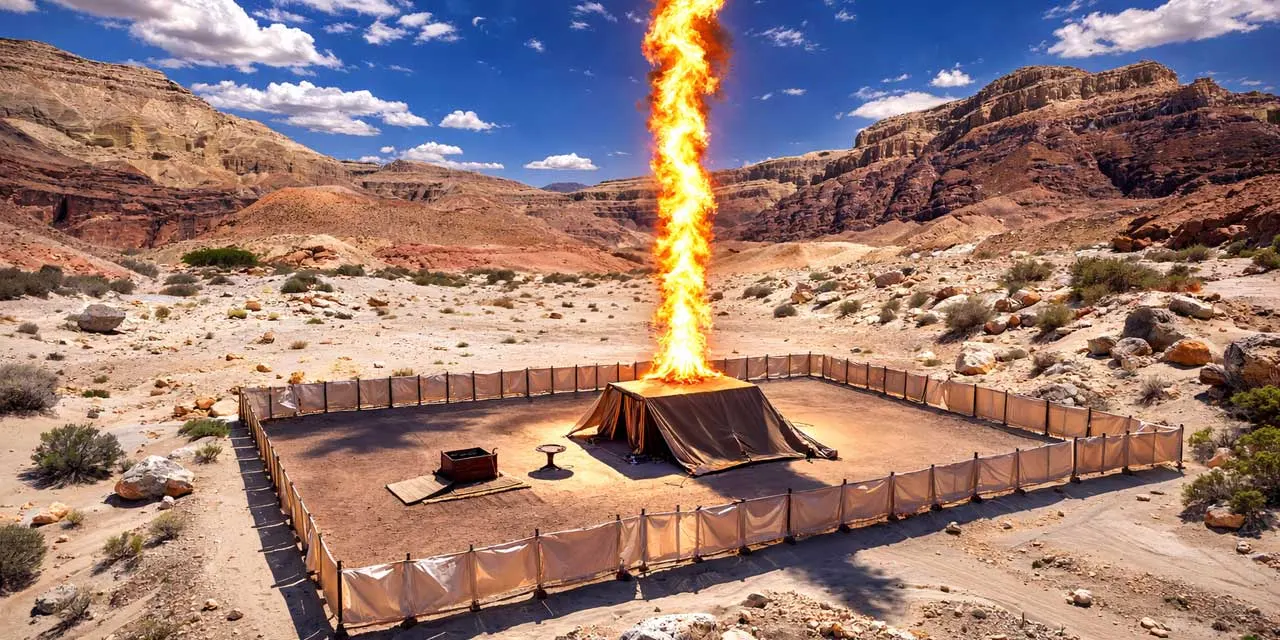
Teruma is the weekly portion about the consecration and the structure of the Mishkan. Alex Blend examines the elevation, the ark, the lampstand, the structure of the tent and the boundaries of holiness. The stenogram includes the Torah text in Hebrew, a transliteration, a translation, the author's commentary and the haftara from the first book of Melachim.
Teruma: How to Rise Up to God
Shemot 25:1–16
With God's help we begin to study the weekly portion Teruma. The word terumá is usually translated into Russian as ascension or elevation. The root of the word, resh-vav-mem, has the meaning height. So, maróm – is the heights, the heavens; leharím – is to raise, murám – is raised up. For example, an elevated mood – matzáv rúach murám (an elevated state of spirit). So what is terumá? It is that which lifts us upward, a kind of elevator, or some sort of take-off structure, which allows material objects, material entities to rise into the spiritual worlds through consecrating themselves to the Most High. Once, in order to consecrate an object to the Most High, it was lifted up in the hands, stretched out toward heaven, and in this way it was considered consecrated. Therefore terumá became the image of a kind of consecrating (or flying) apparatus. It is, in essence, the design of such an apparatus that our weekly portion is about.
וַיְדַבֵּר יְהוָה אֶל־מֹשֶׁה לֵּאמֹר׃
vaydabbér adonáy el-moshé lemór
1 And the LORD spoke to Moshe, saying:
דַּבֵּר אֶל־בְּנֵי יִשְׂרָאֵל וְיִקְחוּ־לִי תְּרוּמָה מֵאֵת כָּל־אִישׁ אֲשֶׁר יִדְּבֶנּוּ לִבּוֹ תִּקְחוּ אֶת־תְּרוּמָתִי׃
dabbér el-bené yisraél veyikchú-lí terumá me'ét kol-ísh ashér yiddevénnu libbó tikchú et-terumatí
2 “Speak to the sons of Israel, and they shall take Me an elevation; this ascension shall be made from every man whose heart prompts him, take My ascensions (take My materials for building a lift to Me).
What does they shall take Me mean? One can say they shall give Me, or one can say they shall take from Me. They will take that which will lift them up to Me. From what can they take? Everything there is in this world belongs to the Most High. It is impossible to take anything that would not be His. But the Most High gives us the material world as a gift, sometimes gives us the illusion that something in this material world belongs to us. And the Most High says: “Let them take a lifting apparatus, a flying apparatus, which will lift them up to Me.”
The word nedavá – is a voluntary donation; lenadév means to be a volunteer, to give something voluntarily; ledabév means to voice. Here, in the one word yidevénu, these two roots meet: as his heart whispers to him, as his heart prompts him, but this verb is used only in a positive sense.
The Most High commands the people to collect the elevation, to collect building material for a certain structure. Each one will give what his heart prompts him: not by someone's command, not according to a list, not like this: “You bring silver, you – gold, you – ladders, you – wheels, you – gasoline,” but each one as his heart prompts him. And this is amazing. The Most High assembles a certain structure out of the material of human hearts. In fact, it is the sounds of the heart that will be put into it, that will be the roots of this structure. The hearts of the people of Israel must, in this structure, begin to play in one symphony, begin to sound in one melody. If everyone suddenly brings wheels, or everyone suddenly brings salt, nothing can be prepared out of it. The Most High (we will see this further on) will give a list of what needs to be brought, but each one chooses something of his own, and in the end what must come out is what the Most High wants. Each one will play his own part on the small instrument of his heart, and the symphony will turn out to be the symphony of the Most High. This is a miracle.
From verse 3 the Most High begins to list what is required for the ascension, and here is what He says:
וְזֹאת הַתְּרוּמָה אֲשֶׁר תִּקְחוּ מֵאִתָּם זָהָב וָכֶסֶף וּנְחֹשֶׁת׃
vezót hatterumá ashér tikchú me'ittám zaháv vachésef unchóshet
3 This is the ascension that you shall take from them: gold, silver and copper.
These are the most widespread metals, the precious metals of that time. We are talking about a structure that is not simply a sheaf-binder, a lawnmower or some other agricultural machine. We are talking about what will connect the people with the Most High, and here noble metals are needed. We said before (one could object to me) that the Most High said: “Make me an altar simply of earth. No gold is needed, no stones are needed, not even hewn stones are needed.” Here suddenly silver, gold, copper appear. Why do they appear here? Because this is not a means of communication between God and man, this is not a telephone by which one can get through, this is a road to the Most High, this is a ladder by which we can ascend to Him. Therefore a much more complex structure has to be built. And besides that, an altar is for one person or a group of people, but here what is needed is that the whole people in a symphony, that the whole people at the same time could ride on this elevator up to the Most High. Not such a simple task, I'll tell you.
What else is needed besides gold, silver and copper?
וּתְכֵלֶת וְאַרְגָּמָן וְתוֹלַעַת שָׁנִי וְשֵׁשׁ וְעִזִּים׃
utchélet ve'argamán vetolá'at shaní veshésh ve'izzím
4 Blue fabrics, and crimson (red fabrics), and one more kind of scarlet, beautiful fabrics, and fine linen, and goat hair.
וְעֹרֹת אֵילִם מְאָדָּמִים וְעֹרֹת תְּחָשִׁים וַעֲצֵי שִׁטִּים׃
ve'orót elím me'oddamím ve'orót techashím va'atzé shittím
5 And skins of deer (hinds) with a red sheen, and skins of táchash, and trunks of acacia trees.
A few words about this animal, the táchash. Since it does not occur so often in the Tanach, there are many disputes. Some say that it is possibly a giraffe – on the grounds that its translation from Aramaic means spotted, multicolored; well, if spotted, then a giraffe. Others say that it is an unknown little critter, that it existed only in the times when Moshe was building the Mishkan, specifically so that its skin could be taken. And there are many more different versions in the light of Semitic linguistics. Studying the Semitic languages, one can come to the conclusion that this is about a sea animal called the common dugong. It is such an amazing, one-of-a-kind marine mammal, you can read about it separately. Indeed, its skin is used to this day by the Bedouins living in the coastal strip for sewing footwear: they make sandals from its skin. And, generally speaking, one can suppose that it is a dugong. Some say that it is a unicorn. Since we are talking about fairy-tale mythical creatures, it is worth mentioning it too. But if we nevertheless consider that the people did not practice magic, simply lived in the desert and, hearing the name, did not think about where to find some field guide to magical animals, then it is reasonable to suppose that the people somehow recognized this. So, giraffe or dugong – whatever you choose, that's what it will be.
שֶׁמֶן לַמָּאֹר בְּשָׂמִים לְשֶׁמֶן הַמִּשְׁחָה וְלִקְטֹרֶת הַסַּמִּים׃
shémen lamma'ór besamím leshémen hammishcha veliktóret hassammím
6 Oil for lighting, aromatics for the anointing oil and aromatics for the burning of incense,
אַבְנֵי־שֹׁהַם וְאַבְנֵי מִלֻּאִים לָאֵפֹד וְלַחֹשֶׁן׃
avné-shóham ve'avné millu'ím la'efód velachóshen
7 Opal (most likely, or onyx) and stones of filling for the efod and for the choshen.
In the efod there were such little cells into which various stones were inserted. They, naturally, also had to be donated. This is the Most High's listing of what can be chosen for donation, each one can choose something for himself.
וְעָשׂוּ לִי מִקְדָּשׁ וְשָׁכַנְתִּי בְּתוֹכָם׃
ve'ásu li mikdásh veshachantí betochám
8 And make Me a sanctuary, and I will live among you.
The word sanctuary can be translated as “sanctifier”: “You will make out of all these materials something that will create an oasis of holiness in this world, and I will be neighbors with you in it.” The word shchiná (divine presence) is connected with the word shchuná (quarter, neighborhood), or lishkón (to live, to dwell, to reside), or shachén (to be neighbors): “I will be next to you, I will be your Neighbor, I will be among you, inside you, and I will be part of you, as one of you.” We said that the Most High called the people of Israel am sgulá (a chosen people), a people that is the means of reaching other peoples, a kind of driver to other peoples (if one puts it in the language of programming). And here the Most High says: “We are creating together with you a certain building, a certain device, which will allow Me to dwell in this world, inside you, in this house, in this sanctuary that you will build for Me.”
כְּכֹל אֲשֶׁר אֲנִי מַרְאֶה אוֹתְךָ אֵת תַּבְנִית הַמִּשְׁכָּן וְאֵת תַּבְנִית כָּל־כֵּלָיו וְכֵן תַּעֲשׂוּ׃
kechól ashér aní mar'é otechá et tavnít hammishkán ve'ét tavnít kol-keláv vechén ta'asú
9 In everything that I am showing you, the design of the Mishkan and of all its vessels, in everything that I am showing you, how to make it, so you shall make it (that is, the drawings must be kept for the future as well).
Here you have the root (shin-kaf-nun) of the word mishkán, it is the same as in the words shachén (to be neighbors) and shchiná (God's presence), that is, mishkán – is a device for “neighboring.”
וְעָשׂוּ אֲרוֹן עֲצֵי שִׁטִּים אַמָּתַיִם וָחֵצִי אָרְכּוֹ וְאַמָּה וָחֵצִי רָחְבּוֹ וְאַמָּה וָחֵצִי קֹמָתוֹ׃
ve'asú arón atzé shittím ammatáyim vachétzi orkó ve'ammá vachétzi rochbó ve'ammá vachétzi komató
10 And make a chest (or a cabinet) of acacia wood, two and a half cubits in length, a cubit and a half in width, and a cubit and a half in height.
A cubit – is 50 centimeters, that is, the dimensions of the ark: length 1.25 meters, width 75 centimeters, height 75 centimeters.
וְצִפִּיתָ אֹתוֹ זָהָב טָהוֹר מִבַּיִת וּמִחוּץ תְּצַפֶּנּוּ וְעָשִׂיתָ עָלָיו זֵר זָהָב סָבִיב׃
vetzippitá otó zahav tahór mibbáyit umichútz tetzappénnu ve'asíta aláv zer zahav savív
11 And you shall overlay it with gold, from inside and from outside you shall overlay it, and you shall make a little golden crown (a diadem), adorning it from above.
We know from the oral Torah about the crown of priesthood, about the crown of kingship, about the crown of Torah, and the midrashim say a lot about this. This ark, this cabinet (if one translates in the simple language of the Torah), symbolizes at once three crowns that Israel will have: the crown of David (the royal crown), the crown of Aharon (the crown of priesthood), and the crown of Torah (the crown of the one who carries the Torah within himself). While the first two crowns go by belonging, the crown of Torah – it lies freely, anyone can take it. And the one who takes the crown of Torah, who fulfills the whole Torah, he, according to the midrashim, will be worthy also of the first two crowns, of king and of priest, because the fullness of Torah will be realized in him. And the sages see a hint of all this here, in the little golden crown that is made around the lid of the ark.
וְיָצַקְתָּ לּוֹ אַרְבַּע טַבְּעֹת זָהָב וְנָתַתָּה עַל אַרְבַּע פַּעֲמֹתָיו וּשְׁתֵּי טַבָּעֹת עַל־צַלְעוֹ הָאֶחָת וּשְׁתֵּי טַבָּעֹת עַל־צַלְעוֹ הַשֵּׁנִית׃
veyatzákta lo arbá tabbe'ót zaháv venatattá al arbá pa'amotáv ushté tabba'ót al-tzal'ó ha'echát ushté tabba'ót al-tzal'ó hashenítThe Russian transliteration ends with hashení, without the final t. The Hebrew reads hashenít (“the second”), so the English line follows the Hebrew.
12 And you shall cast for it four rings of gold, and on its four corners you shall put them: two rings on one side and two rings on the other side.
וְעָשִׂיתָ בַדֵּי עֲצֵי שִׁטִּים וְצִפִּיתָ אֹתָם זָהָב׃
ve'asíta vaddé atzé shittím vetzippitá otám zaháv
13 And you shall make poles of acacia, you shall overlay them with gold too.
וְהֵבֵאתָ אֶת־הַבַּדִּים בַּטַּבָּעֹת עַל צַלְעֹת הָאָרֹן לָשֵׂאת אֶת־הָאָרֹן בָּהֶם׃
vehevetá et-habbaddím battabba'ót al tzal'ót ha'aron lasét et-ha'arón bahém
14 And you shall insert the poles into the rings of the cabinet (of the ark), to carry the ark on them on each side.
בְּטַבְּעֹת הָאָרֹן יִהְיוּ הַבַּדִּים לֹא יָסֻרוּ מִמֶּנּוּ׃
betabbe'ót ha'arón yihyú habbaddím lo yasúru mimménnu
15 In the rings of the ark the poles must be, they shall not be removed from them.
וְנָתַתָּ אֶל־הָאָרֹן אֵת הָעֵדֻת אֲשֶׁר אֶתֵּן אֵלֶיךָ׃
venatattá el-ha'arón et ha'edút ashér ettén elécha
16 And you shall put into this ark the testimony (the tablets), which I will give you.
One very important question remains. The people of Israel came out of Egypt, and it has been in the desert for 6 months. In essence, these are former slaves, they took some property with them when they came out of Egypt, they have gold and silver. The question: where do they get everything else – fabrics, acacia wood, skins (including the skin of this strange animal), precious stones… Even if a person has the disposition of heart to donate, where is he to take all this from? Very many people ask this question, therefore this question must be answered. And it is answered in different ways.
Some say that at Mount Sinai there was a forest of acacias. The acacia is the most difficult problem in this respect, because these are big logs and they had to be carried somehow: surely they didn't drag them along with them through the desert? Therefore they say that there happened to be an acacia forest there, and so all of it was used for the Mishkan. Others say that Yaakov, back when he first went to Egypt, foresaw everything by the Holy Spirit and hid everything needed for the construction there. The idea is very beautiful and interesting, but also very debatable. Most likely, such a large camp as the camp of the people of Israel could not help trading with merchants, with those who passed nearby. And, certainly, caravans also visited this camp. It is also possible that some messengers from the camp went to neighboring caravans, to neighboring places, to carry on trade, and the people could simply acquire this. Each person chose what exactly he wants to give, what exactly his heart disposes him to give for the sanctuary. This in itself is amazing. Many people say: “I don't agree that only wool will be taken from me. Wool, it isn't visible, but now if it's gold! If I give something golden, then I'll be able to say that this little monogram right here, that this little corner right here, that all this right here is ours, I'll tell my grandchildren too, and my great-grandchildren!” Giving gold is somehow easier. In exactly the same way in any service, when it consists of many components, of course, it's good to be on stage, it's good to be at the center of attention. It's harder to be the person who sets out little chairs somewhere, hands out little books somewhere and serves on a small section of the front. Just the same in an orchestra: one wants to be a soloist, one wants to be the leading part, and not some small, barely audible little voice. And nevertheless the people of Israel overcame all these ambitions in itself, as we will see later, because it was called to this. And it managed to create the mishkán, managed to create a dwelling, a “co-neighboring place” for the Most High. And this is the first victory of the people of Israel.
It is interesting that in the book of Tehillim psalms often begin with the word lamenatzéach, which is translated as to the conductor or to the victor. The word lenatzéach means at the same time both to conduct, and to conquer. The ability to create, to unite everything into one symphony – that is a victory. To this first victory, to the unity of the people, to the ability to act in harmony, the Most High called the people for the building of the mishkán. And it is precisely in this harmoniously acting people, in which both the small and the large parts are played as the heart whispers, are played with all the heart, with enormous love – precisely in this people, precisely in this community the Most High wants to dwell.
This is the essence of the test, without this one cannot take off. Without this our donation will simply be a giving, but not an elevation. Elevation, that which lifts us upward, is possible only from a pure heart. And here the whole people, in great and in small, is called to ascend. Such is the difficult challenge the Most High gave the people of Israel.
Border Guard Angels
Shemot 25:17–30
We have already read that the Most High gives Moshe instructions about how the ark of the covenant is to be constructed. Before we continue, I want to say a few words. The question is often asked what exactly the elements of the ark in these drawings symbolize, what symbols can be seen here. And indeed, there are very many commentaries, very many different lessons and interpretations on this topic, because the plain text of the Torah does not reveal this. Somewhere we can see some parallels, somewhere – some hints. I too will touch on the topic of symbolism, but most likely not the way it is usually done. I will try to bring commentaries and understandings that others do not bring, otherwise why would you need me, if I repeat what everyone talks about even without me. And we will try to keep to our main task: to reveal more deeply the plain meaning of the Torah and to give food for thought, to throw firewood onto the little campfire of thoughts (as I usually say), so that you yourselves can build parallels in your minds and understand hints. And what your mind gives birth to as a result will most likely be much closer to you than what I tell you. So, we begin reading from verse 17 of chapter 25.
וְעָשִׂיתָ כַפֹּרֶת זָהָב טָהוֹר אַמָּתַיִם וָחֵצִי אָרְכָּהּ וְאַמָּה וָחֵצִי רָחְבָּהּ׃
ve'asíta chappóret zaháv tahór ammatáyim vachétzi orká ve'ammá vachétzi rochbá
17 And make a lid of pure gold: two and a half cubits the length and a cubit and a half the width.
The lid is made of pure gold. From another place in the text we can understand that the thickness of the lid is about a handbreadth (or 8–10 centimeters). Its length is two and a half cubits (1.25 meters) and its width a cubit and a half (0.75 meters), that is, an enormous piece of pure gold. In the ark there are also parts made of wood, it itself is gilded and inside it are the tablets of the covenant. And on top of that this ark has to be carried. Just remember how much all this weighs and what a miracle this ark is. The commentators say that the peculiarity of the ark is that “it carries those who carry it.” It is like a flying apparatus, like an anti-gravity device that lifts above the ground those who haul it. Ordinary people could not lift a structure of such weight onto their shoulders, could not carry it on their shoulders. Perhaps with the help of some devices it could have been hauled, but the Most High gives us the opportunity to take part in a miracle.
The word kapóret is usually translated as lid. The root of the word, kaf-pe-resh means atonement, covering, freezing, that is, a stop, a suspension of action. From the same root also comes the word kfar, village, edge of a forest, something covered with sparse vegetation against the background of a forest, against the background of some deserted place. One way or another, the word lid in Hebrew also comes from the word covering, as in the Russian language, but it also sounds like the word kapará, kipúr – atonement, lechapér – to atone (in the sense of to make atonement), kófer – ransom. That is, the word lid is connected with liberation, with liberation from something.
There is an interesting commentary which views the Temple with the ark as a place where a person comes to commune with the Most High, brings his main needs. The main needs, in simple human understanding, are the health of the children, one's own health and sustenance: to live long, for the children to be obedient and to gladden the LORD, and for there to be prosperity. If long life is symbolized by the tablets that are inside the ark (we know that the tree of life is the Torah), then the lid of the ark symbolizes the wife, symbolizes the married life of a person: in marriage people cover each other. By tradition it is held that at the moment of marriage people become one flesh. To this new flesh all sins are forgiven, because it is already a different creature, it is born anew. And so the kapóret (lid), according to these commentaries, symbolizes the wife, and the two keruvím, which will be on it (we will still get to this), symbolize the children. That is, in perfect service before the Most High there stands a family of dad, mom and children, the smallest community that can stand before the Most High, and it is symbolized by the ark. This, God forbid, does not mean that a person who is alone, or single, or widowed, or for some reasons divorced cannot stand before the Most High. We are talking here about symbolism, and such an understanding exists. I do not insist on its truth and absoluteness, I simply bring it as an interesting understanding of the ark.
וְעָשִׂיתָ שְׁנַיִם כְּרֻבִים זָהָב מִקְשָׁה תַּעֲשֶׂה אֹתָם מִשְּׁנֵי קְצוֹת הַכַּפֹּרֶת׃
ve'asíta shenáyim keruvím zaháv mikshá ta'asé otám mishené ketzót hakkappóret
18 And make two keruvim of gold, make them of a piece, from the two sides of the lid
Here it is clear what to make them from, but it is not clear what a cherúv, or korúb, or krúv is; it is not even immediately clear to everyone how to read it. This word is commented on in different ways.
Some say that the word comes from ancient Semitic roots, from the word krúb (bull). Of the Most High it is said that He sits enthroned on cheruvím. In the Russian language cheruvím is the singular, one cheruvím, and many is cheruvími. But the word cheruvím – is the plural of the word kerúv. That is, it so happened that the Russian language borrowed only the plural and made it singular. So, kerúv, according to some versions, is a bull, a kind of heavenly animal on which the Most High sits enthroned and rides about. We read about this in Tehillim, we read about this in the prophet Yechezkel. Of course, this is an image, the Most High has no chariot, and He does not ride about on anything, He needs neither private nor public transport. This is given to us as an image, it is what is revealed to us.
Others consider that kerúv – is a youth, it is someone with a human face, and the majority of commentators say so. Winged youths, two keruvim on the ark; let us accept this version as the closest to the simple meaning of the Torah. The word kerúv itself is interesting, it is connected with many meanings. If one rearranges the letters in the word, forms new roots, then we will find here the word brachá (blessing), and the word ravách (to increase in size), and the word bchór (firstborn). Such an amazing word-matryoshka, one inside another, a lot has been put into it.
What does “make them of a piece” mean? The keruvim are not made, not cast somewhere separately, so that afterwards they could be stuck, glued or welded onto the lid. The lid is made from the start so that it has two large pieces of gold on the right and on the left side, which are worked with chasing tools or in some other way and turn into keruvim. The keruvim are not stuck on, they are from the start part of the lid, they are one whole with it. In this too one can see much symbolism: as an association with one flesh, with one nature and the like.
וַעֲשֵׂה כְּרוּב אֶחָד מִקָּצָה מִזֶּה וּכְרוּב־אֶחָד מִקָּצָה מִזֶּה מִן־הַכַּפֹּרֶת תַּעֲשׂוּ אֶת־הַכְּרֻבִים עַל־שְׁנֵי קְצוֹתָיו׃
va'asé kerúv echád mikkatzá mizzé uchruv-echád mikkatzá mizzé min-hakkappóret ta'asú et-hakkeruvím al-shené ketzotáv
19 Make one keruv on one side, and the other keruv on the other side – from the lid make the keruvim at the two ends (that is, the keruvim on the right and on the left at the ends of the lid, they need to be placed so).
וְהָיוּ הַכְּרֻבִים פֹּרְשֵׂי כְנָפַיִם לְמַעְלָה סֹכְכִים בְּכַנְפֵיהֶם עַל־הַכַּפֹּרֶת וּפְנֵיהֶם אִישׁ אֶל־אָחִיו אֶל־הַכַּפֹּרֶת יִהְיוּ פְּנֵי הַכְּרֻבִים׃
vehayú hakkeruvím poresé chenafáyim lemá'la sochechím bechanfehém al-hakkappóret ufnehém ish el-achív el-hakkappóret yihyú pené hakkeruvím
20 And they, the keruvim, shall be lifting up their wings upward, covering the lid with their wings, and their face toward one another, on the lid shall the keruvim be.
Some say that the keruvim spread out their wings in such a way that a kind of seat was formed, a throne for the Most High. Others say that they spread out their wings so as to cover the lid completely with them. We have no description, we have no photographs, we do not even have testimonies. We have a description of frescoes, of bas-reliefs from other temples, but we know that with our God it is not as with other gods.
There are places in the Talmud where it is said that the two youth-keruvim were face to face and they drew closer, and even joined, when there was unity in the people, and when the people had no unity, they could even turn away from each other. Most likely, this is not some miraculous function, not some miraculous feature (a special property) of the Ark. This is the vision of the priest who went in to the keruvim, the vision of Moshe.
וְנָתַתָּ אֶת־הַכַּפֹּרֶת עַל־הָאָרֹן מִלְמָעְלָה וְאֶל־הָאָרֹן תִּתֵּן אֶת־הָעֵדֻת אֲשֶׁר אֶתֵּן אֵלֶיךָ׃
venatattá et-hakkappóret al-ha'arón milmá'la ve'el-ha'aron tittén et-ha'edút ashér ettén elécha
21 And you shall put this lid on the Ark from above, and into the Ark put the testimony that I will give you.
That is, as we have already mentioned, the two tablets are placed inside the ark. They symbolize life, they are, in essence, the Torah, the Tree of life, they – are the root of life. We are connected with the Tree of life through the keruvim. A keruv – is a kind of fellow who stands on guard in Gan Eden and guards the way to the Tree of life, which we read about in the book of Bereshit (3:24). Thus, one of the functions of the keruv is to be a border guard, to serve at the border outpost between our world and the world of holiness. And the Most High says: “Let us meet at the border, let us come to where the keruvim are, where my border post is, and there we will speak.” We come to the ark as to the border of holiness. The ark – is that in which the Torah is revealed, on the surface of the ark the Most High reveals Himself to us.
And what all this device, whose description we have read, is needed for, the Most High explains in verse 22:
וְנוֹעַדְתִּי לְךָ שָׁם וְדִבַּרְתִּי אִתְּךָ מֵעַל הַכַּפֹּרֶת מִבֵּין שְׁנֵי הַכְּרֻבִים אֲשֶׁר עַל־אֲרֹן הָעֵדֻת אֵת כָּל־אֲשֶׁר אֲצַוֶּה אוֹתְךָ אֶל־בְּנֵי יִשְׂרָאֵל׃
veno'adtí lechá sham vedibbartí ittechá me'ál hakkappóret mibbén shené hakkeruvím ashér al-arón ha'edút et kol-ashér atzavvé otechá el-bené yisraél
22 I will appear before you there, I will speak with you above the lid between the two keruvim that are on the Ark of the testimony, all that I will command you for the sons of Israel.
The LORD says: “I will communicate with you there, at the ark, or even consult with you there, I will appear for consultation, for testimony. This will be the place of our connection, the place of our meeting, and there, between the keruvim, I will speak with you.”
The root in the word ed (testimony) is the same as in the word no'adtí – to be appointed, to be a witness, to give advice or to consult. It will be such a businesslike, constructive meeting. The meeting place cannot be changed, the meeting place – it is on the wings of the keruvim, which are on the lid, which is on the ark, in which are the tablets of the covenant.
How will this happen? Some say that Moshe laid his head between the keruvim and listened, as in stereo headphones, immersing himself in a special way in the world of holiness, listened to what the Most High says. Others say that the voice of the Most High sounded from the keruvim. Of course, this is a question of our imagination, of our ability to picture how it was, our constant attempt to put ourselves in the place of those we read about. We do not know how it really was. The Most High says: “This here device, the Ark of the covenant, – is the means through which I will constantly reveal Myself to you. It is a means of connection between Me and you, not over telephone wires, but one that will bring you to the very border of My world. We will meet at the border outpost of My holy world, you will rise up to Me, and I will come out to meet you.”
From verse 23 we are already reading about another object that must be made for the service of the Most High.
וְעָשִׂיתָ שֻׁלְחָן עֲצֵי שִׁטִּים אַמָּתַיִם אָרְכּוֹ וְאַמָּה רָחְבּוֹ וְאַמָּה וָחֵצִי קֹמָתוֹ׃
ve'asíta shulchán atzé shittím ammatáyim orkó ve'ammá rochbó ve'ammá vachétzi komató
23 And you shall make a table of acacia wood, two cubits in length (or one meter), a cubit in width (half a meter), a cubit and a half in height (seventy-five centimeters).
וְצִפִּיתָ אֹתוֹ זָהָב טָהוֹר וְעָשִׂיתָ לּוֹ זֵר זָהָב סָבִיב׃
vetzippitá otó zaháv tahor ve'asíta lo zer zaháv savív
24 And you shall cover it with pure gold, and make for it a little rim and a little crown around.
So much gold… Yes, we spoke about the fact that, on the one hand, the Most High says: “Build me an altar simply of earth.” On the other hand, everything there is in this world, everything belongs to Him: gold, silver, copper, diamonds, brilliants, we ourselves, and the future little table. Why does the Most High ask for so much gold, why does gold play such an important role? On this matter, again, a great deal has been said. And everything we say – is guesses, these are thoughts, they cannot be taken as the final truth, because this is not written, this is our attempt to make sense of it.
The word zaháv (gold) consists, as it were, of two parts: of the little letter zayin (in gematria this is 7), and two little letters hei (5) and vet (2), which not only, when added, also give 7 (5+2=7), but form the imperative mood of the verb to give – háv (give). One can say that zaháv – is (from the first midrash that comes to mind) give it up to the holy, give it up to the seventh day, consecrate it to the border with the Most High. When in the morning the kohen cleaned the Menorah in the Temple, he cleaned 5 lamps, then performed other services, and then cleaned the 2 remaining lamps, not all 7 at once. In this way this service was stretched out, in order to attract everyone's attention. This is also a separate story, it also symbolizes zaháv or gold. Gold is a kind of “border” metal, therefore many Temple vessels were often overlaid with gold. This is one of the versions.
וְעָשִׂיתָ לּוֹ מִסְגֶּרֶת טֹפַח סָבִיב וְעָשִׂיתָ זֵר־זָהָב לְמִסְגַּרְתּוֹ סָבִיב׃
ve'asíta lo misgéret tófach savív ve'asíta zer-zaháv lemisgartó savív
25 And you shall make for it a frame the thickness of a palm around it, and the little crown must be placed on that frame, which will go under the tabletop.
What does this mean? On four sides under the tabletop, between the legs, there is also a frame, a small framework a tófach (palm) wide; as we have already said, this is 8-10 centimeters. This frame will have a gold edging, a little crown.
What is this table, why is a table needed? We have already mentioned (in the commentary on verse 17) that the basic human needs – are length of life, children and sustenance. Sustenance, the need for it or an excess of it, often drives a person out of their mind. A heap of crimes, a heap of all kinds of misdeeds and sins are committed on the basis of money, of financial reasons.
We said that the expression human flesh is connected with the word léchem (bread), that the word léchem means at the same time both bread and flesh. The Most High makes in the Temple, in the sanctuary, a table as an atonement for our food, so that it would be a covering for the yétzer ha-ra, the evil inclination, which can tempt us to very bad deeds, tempt us because of our greed, our self-interest, because of some personal interests. The table – is an altar, an instrument of atonement for the flesh in its most fleshly, “eating” sense. This, of course, is only one of the meanings. When we speak later about the breads of offering, we will unfold the thought about bread more deeply.
Here a small remark is needed. The point is that my task – is to go through the whole weekly portion, and the deeper we dive in, the fewer chances we will have to do this. In Judaism there are two approaches to study: bakiyút – general knowledge, knowledge of the general content, and yun – in-depth knowledge. That is, one can take some verse and study it for a week, and know a lot about it, and not read all the rest of the portion. There are teachers who do this, there is nothing bad in this. I, however, try to speak about general knowledge, therefore some points are involuntarily left out. I am saying this now because I catch myself thinking that I cannot retell, cannot fit in this, and this, and this, and it will be so further on too. Therefore it is better to spend time once on explaining why “I cannot” than to try each time to explain it in a crumpled way. Here the remark ends, and we return to the text.
וְעָשִׂיתָ לּוֹ אַרְבַּע טַבְּעֹת זָהָב וְנָתַתָּ אֶת־הַטַּבָּעֹת עַל אַרְבַּע הַפֵּאֹת אֲשֶׁר לְאַרְבַּע רַגְלָיו׃
ve'asíta lo arbá tabbe'ót zaháv venatattá et-hattabba'ót al arbá happe'ót ashér le'arbá ragláv
26 Make for it (for this little table) four golden rings and put these four rings on the four edges, which are at its legs,
The word pe'ót (edges) – is the plural of the word pe'á (edge); this is also the name of the edge of the field that must be left for the poor. But if one pronounces the word pe'ót in the Ashkenazi dialects, as it is customary to pronounce in Germany or Hungary, then the word pe'ót will sound like payos, and from this the Russian language got peisy, those Jewish little braids. And if one reads in the Ashkenazi way, then one must make for the little table rings in the peisy, which are at its legs.
לְעֻמַּת הַמִּסְגֶּרֶת תִּהְיֶיןָ הַטַּבָּעֹת לְבָתִּים לְבַדִּים לָשֵׂאת אֶת־הַשֻּׁלְחָן׃
le'ummát hammisgéret tihyéna hattabba'ót levattím levaddím lasét et-hashulchán
27 Under the frame shall be the rings, so that one can insert poles into them and carry this table.
וְעָשִׂיתָ קְּעָרֹתָיו וְכַפֹּתָיו וּקְשׂוֹתָיו וּמְנַקִּיֹּתָיו אֲשֶׁר יֻסַּךְ בָּהֵן זָהָב טָהוֹר תַּעֲשֶׂה אֹתָם׃
ve'asíta et-habbaddím atzé shittím vetzippitá otám zahav venissa-vám et-hashulchán
28 And you shall make poles for the table of acacia wood, and cover them with gold, and you shall carry the table with them.
וְעָשִׂיתָ קְּעָרֹתָיו וְכַפֹּתָיו וּקְשׂוֹתָיו וּמְנַקִּיֹּתָיו אֲשֶׁר יֻסַּךְ בָּהֵן זָהָב טָהוֹר תַּעֲשֶׂה אֹתָם׃
ve'asíta ke'arotáv vechappotáv uksotáv umnakkiyotáv ashér yussách bahén zahav tahór ta'asé otám
29 And you shall make bowls for it, and little spatulas for it, and tongs, and stands, which will be used – make them of pure gold.
וְנָתַתָּ עַל־הַשֻּׁלְחָן לֶחֶם פָּנִים לְפָנַי תָּמִיד׃
venatattá al-hashulchán léchem paním lefanáy tamíd
30 And you shall put on this table the bread of the face before Me always.
The bread of the face – is bread that is laid before the face of God. As a symbol that, wherever we sit, wherever we eat, our table is connected with the table of the Most High. When we break bread, we know that there, with the Most High, there are always the breads of offering, He is our table companion. This does not allow us to bring Him unclean food for the meal, to eat before His face something unclean. And not only from the point of view of kashrut, but also what is uncleanly earned, received in uncleanness, or what is eaten over an unclean conversation, over an unclean talk, with unclean thoughts. And all this helps us to cleanse our table, our food, our bodies, our communication. And all this, of course, is only one of the many facets of what the arrangement of the ark speaks about.
Draftsman's prose
Shemot 25:31–26:14
We continue studying the weekly portion Teruma and will read from verse 31 of chapter 25, but first I would like to make two small prefaces.
Preface one. If today we received an order to manufacture Temple articles or to create the Mishkan, then, most likely, we would receive by email an exact 3D model (a three-dimensional digital image) indicating the dimensions, colors, materials and methods of their production. Unfortunately, in the times of the giving of the Torah there was no such luxury. The Most High retells the drawings in simple language, conveys the construction of complex things in simple language. This means that one has to strain one's spatial thinking, and imagination, and knowledge of the language, simply in order to understand what it looks like. In this lies the first difficulty of the texts that we are now studying.
The second difficulty of these texts is that we have a natural desire – not to be content with the simple meaning. It is important for us to understand not only the construction, but also what its meaning is. This curiosity, of course, is not at all a vice, but quite simply our natural human property, built into us by the Most High Himself. At the same time we, with our level of knowledge, may look like a child who is examining an internal combustion engine or a computer motherboard, trying to understand how it all works. That is, we can fantasize, we can get carried away by our associations. And when we speak about what is not written directly in the text, we need to remember that we are not handing out some final truth, not proclaiming it, but can only share some of our thoughts and associations. And only on these conditions can we speak about any associations. And so, having finished this uncomplicated preface, let us begin to study the text of the Torah itself.
וְעָשִׂיתָ מְנֹרַת זָהָב טָהוֹר מִקְשָׁה תֵּעָשֶׂה הַמְּנוֹרָה יְרֵכָהּ וְקָנָהּ גְּבִיעֶיהָ כַּפְתֹּרֶיהָ וּפְרָחֶיהָ מִמֶּנָּה יִהְיוּ׃
ve'asíta menorát zaháv tahór mikshá te'asé hammenorá yerechá vekaná gevi'éha kaftoréha ufarachéha mimménna yihyú
31 And made for himselfThe Russian verse begins with “made for himself” in the past tense, while the rest of the verse gives the command “make”. We translated it as written. a menorah (lamp) of pure gold, of one piece make the menorah: its base, and its shaft, the receptacle, buds and flowers shall be of one piece.
The root nun-vav-reish of the word menorá (lamp) means light. The word menorá, is probably one of the best-known Hebrew words outside of native speakers of Hebrew. And the object itself, its image is also very widespread. People like to put it up as evidence of a Jewish component in preaching, in teaching and so on. And if some teacher or preacher wants to show that he preaches in a Jewish key, then he often considers it necessary to surround himself, among other things, with a menorah or to lay out a shofar, to hang up a tallit or something else like that. But I think that the menorah – is among the top leaders of the “Jewishness certificates” among preachers. In the Temple it is also a very important symbol. It is not for nothing that it has become so popular among preachers. It is a symbol of the Temple service, for some reason even more than the altar. It is a symbol of the State of Israel, on my passport a menorah gleams in gold.
So, the Most High commands us here for the first time to make a menorah (lamp) of pure gold. We will read further on that the menorah will have many small parts. But they cannot be screwed onto it with a thread, glued, soldered or welded on. The menorah can only be chased or forged from one solid piece of gold; whatever elements it may contain, it – is one, single and indivisible.
The word gavía (which is used here with a pronominal suffix – gevi'éha) in modern Hebrew means a small little goblet or a little cup. In the Hebrew of the Torah the word also has this meaning, but, besides this, it also means receptacle, that is, a kind of little wine glass at the end of a flower's stem, on which the flower is laid, a natural stand for the flower. The word kaftór in modern Hebrew means button, but in this case what is meant is a bud, an unopened flower bud or a bud in which there is a little seed.
We can trace and see that in this verse mainly botanical terms are used. The menorah has a base, a shaft, receptacles, buds and flowers, everything is described in the language of botany. It is not for nothing that the menorah was associated with the tree of life, it really looks like a tree, and it has parts characteristic of a plant. And all this must be made of one piece of gold, such is the assignment. All the parts of this lamp, however complex they may be, are not screwed on, not glued on, but are forged or chased with complex craftsmanship from one large piece of gold.
וְשִׁשָּׁה קָנִים יֹצְאִים מִצִּדֶּיהָ שְׁלֹשָׁה קְנֵי מְנֹרָה מִצִּדָּהּ הָאֶחָד וּשְׁלֹשָׁה קְנֵי מְנֹרָה מִצִּדָּהּ הַשֵּׁנִי׃
veshishá kaním yotzeím mittziddéha sheloshá kené menorá mittziddá ha'echád ushloshá kené menorá mittziddá hashení
32 Six branches (offshoots) go out to its different sides: three branches (offshoots) of the menorah to one side and three offshoots to the other side.
That is, on the menorah there are, as it were, three crossroads. From each crossroads branches of the menorah go out to two sides. It turns out three branches on one side, three on the other, and also the shaft in the middle – in total seven places for lamps, that is, it turns out to be a seven-branched candlestick; everyone knows that the menorah has seven branches. But these are the main branches. And how these branches are decorated we read in verse 33:
שְׁלֹשָׁה גְבִעִים מְשֻׁקָּדִים בַּקָּנֶה הָאֶחָד כַּפְתֹּר וָפֶרַח וּשְׁלֹשָׁה גְבִעִים מְשֻׁקָּדִים בַּקָּנֶה הָאֶחָד כַּפְתֹּר וָפָרַח כֵּן לְשֵׁשֶׁת הַקָּנִים הַיֹּצְאִים מִן־הַמְּנֹרָה׃
sheloshá gevi'ím meshukkadím bakkané ha'echád kaftór vaférach ushloshá gevi'ím meshukkadím bakkané ha'echád kaftór vafárach ken leshéshet hakkaním hayotze'ím min-hammenorá
33 Three receptacles of the finest workmanship, on the upper one a bud and a flower, three receptacles, a bud and a flower, three receptacles, a bud and a flower, and so on each of the six branches of the menorah.
Let us look at the word meshukád. From the root of this word, shin-kaf-dalet, comes the word shakéd (almond, almond tree). And then the word meshukád means a little cup that in its shape somewhat resembles half of an almond kernel. But from this same root comes the word shokéd (from the verb lishkód), which means diligently worked, carefully executed.
We have already said that gavía – is a receptacle. In order not to look into a botanical dictionary, not to search in botany textbooks, one can picture the whole picture more simply. Let us imagine that the receptacle (gavía) is like a cone-shaped waffle cup for ice cream and that three such cups are placed one inside another. On top, a little bud (kaftór) like a scoop of ice cream. And further on top – a little flower (pérach), like a little flower. This is what each of the branches of the menorah looks like.
Why were three receptacles suddenly needed for each flower? A flower (if we are making a likeness of a flower) holds well even on one such little stand, on one such little wine glass. Why did we need to put our ice cream into three waffle cups at once? Well, one can come up with many interesting things with the number three. But one can also not do this, because, thank God, this has already been done before us. The midrash says: “Blessed is the LORD, who gave a threefold Scripture (that is, the Torah, Nevi'im and Ketuvim), to a threefold people (that is, a people consisting of three parts: of Israel, the Levites and the kohanim), in the third month (after the going out from Egypt), on the third day (on the third day after the purification), through the third man.” The third man – is Moshe. You will ask me: “In what way is he the third man?” He is the third son in the family: there is Aharon, Miryam and the third – Moshe. Thus, around the Tanach the number three appears many times, and the people of Israel itself consists of three parts: of Israel, properly speaking, the ordinary people, the Levites, the descendants of Levi, and the kohanim, the descendants of Aharon within the Levites. And one can say that each of the branches represents the people of Israel, like three receptacles or three waffle cups.
Let us return again to the word kaftór (little bud). One can notice that in its little letters it repeats the word kapóret (lid), which we already spoke about in 25:17, and both concepts, both words really have similar functions. First, in the kaftór the seed is set, that is, it is connected with marriage, with fertilization, and we spoke about the lid in the same vein. Second, in this case kaftór also means the border, the place of the joining of the people of Israel with the Most High, of its standing before the Most High, Whose light will come down and will be present in the menorah. The menorah with its lamps symbolizes the people of Israel, over which the Shechina is present, the Holy Spirit, like tongues of flame descending on the people. And thus the kaftór we are talking about is also a kind of border point, the place where Israel meets the Most High.
וּבַמְּנֹרָה אַרְבָּעָה גְבִעִים מְשֻׁקָּדִים כַּפְתֹּרֶיהָ וּפְרָחֶיהָ׃
uvammenorá arba'á gevi'ím meshukkadím kaftoréha ufrachéha
34 The menorah itself (its central shaft) also has four such flower clusters.
If we go up along the shaft, then at the place where the shaft is attached to the base – there is one flower cluster, and at the three crossings, at the place of the three branchings, three more. And about this further on:
וְכַפְתֹּר תַּחַת שְׁנֵי הַקָּנִים מִמֶּנָּה וְכַפְתֹּר תַּחַת שְׁנֵי הַקָּנִים מִמֶּנָּה וְכַפְתֹּר תַּחַת־שְׁנֵי הַקָּנִים מִמֶּנָּה לְשֵׁשֶׁת הַקָּנִים הַיֹּצְאִים מִן־הַמְּנֹרָה׃
vechaftór táchat shené hakkaním mimménna vechaftór táchat shené hakkaním mimménna vechaftór tachat-shené hakkaním mimménna leshéshet hakkaním hayotze'ím min-hammenora
35 A bud between two branches spreading apart, and a bud between two branches spreading apart, and a bud between two branches spreading apart, for all six branches.
That is, six branches spread out from three crossings, between them there are three kaftórs (buds). If we say that the kaftór – is a kind of place of joining, a point of connection, one could say, an input for a USB port or for a socket, then one can see (and some commentaries speak about this) that this is the place where other branches can be grafted onto the Tree of life. This is a possibility of grafting, these are open grafting points for other branches. That is, the menorah, in principle, can expand; what it symbolizes provides for expansion.
כַּפְתֹּרֵיהֶם וּקְנֹתָם מִמֶּנָּה יִהְיוּ כֻּלָּהּ מִקְשָׁה אַחַת זָהָב טָהוֹר׃
kaftorehém uknotám mimménna yihyú kullá mikshá achát zaháv tahór
36 All these buds and all these branches will be made of a single piece of gold.
The Most High again repeats this command. Despite the fact that we have read about a multitude of different parts, and it may seem to us that it is simpler to take such a Lego set and put it together – but no, it is not simpler. Everything must be from one single piece. This means the following: what will be grafted on, what will join through the free input, will also become one whole with the menorah.
וְעָשִׂיתָ אֶת־נֵרֹתֶיהָ שִׁבְעָה וְהֶעֱלָה אֶת־נֵרֹתֶיהָ וְהֵאִיר עַל־עֵבֶר פָּנֶיהָ׃
ve'asíta et-nerotéha shiv'á vehe'elá et-nerotéha vehe'ír al-éver panéha
37 And you shall make its candles seven, and you shall raise its candles, and you shall light up what is in front of it.
Another variant of the reading: the lamps illuminate the central lamp, the three lamps that are on the sides illuminate or direct their light toward the central lamp.
וּמַלְקָחֶיהָ וּמַחְתֹּתֶיהָ זָהָב טָהוֹר׃
umalkachéha umachtotéha zaháv tahór
38 Its tongs (of the menorah) and its little shovels – all of pure gold.
כִּכָּר זָהָב טָהוֹר יַעֲשֶׂה אֹתָהּ אֵת כָּל־הַכֵּלִים הָאֵלֶּה׃
Kikkár zaháv tahór ya'asé otá et kol-hakkelím ha'élleThe Russian transliteration leaves out the opening h of the last word. The Hebrew has ha'élle (“these”), so the English line follows the Hebrew.
39 Of a talent (kikkár) of pure gold make it and all its accessories.
An ordinary talent – is 37-39 kilograms. The holy talent, the Temple one, as some commentators say, is twice as large. Therefore we can say that the weight of the menorah is approximately 78 kilograms of gold.
וּרְאֵה וַעֲשֵׂה בְּתַבְנִיתָם אֲשֶׁר־אַתָּה מָרְאֶה בָּהָר׃
ur'é va'asé betavnitám asher-attá mor'é bahár
40 And see, make everything according to the image, according to the likeness, which you saw on the mountain.
A very important remark, it is said mainly in relation to the menorah. The Most High showed Moshe the menorah on the mountain. That means, in the temple not made with hands there already exists, there already “pre-existed” a menorah not made with hands in this image. Probably it could be seen only with the eyes of Moshe, in a prophetic vision. And nevertheless this image already existed there. We are not talking about some hastily created device that the Most High thought up on the go. We are talking about what existed before the giving of the Torah. This brings us back to the thought that the menorah symbolizes the Tree of life. The keruv that guards the Tree of life, and everything that will be connected with the Holy in the Tent of Meeting – this is an opportunity for a person to make some kind of excursions into Paradise, excursions into the world before the fall, in order to taste a little of that state in which the kohanim abide. This is an elevator, a time machine that carries us into Paradise. And one can say that there we see the Tree of life, which is reflected through the menorah. We are given the opportunity to feel symbolically the world before it changed, to bring from there a little air in our lungs, a little warmth in our hearts. This is what the menorah gives us, one of the elements, one of the gifts that is given through it and through the Holy in general.
But let me remind you that these are only our reflections (as I warned at the very beginning). One should not take this as the one and only final truth.
With this we have finished studying chapter 25 and are moving on to chapter 26, in which we will talk about the structure of the Mishkan (tent) itself. We will read about various materials, about how they are joined together. And if one does not go into the mystical component (and the Torah does not open up the mystical component to us), then this may seem like boring reading. But we will read nevertheless and try to understand a little more than what is written. So, chapter 26, verse 1:
וְאֶת־הַמִּשְׁכָּן תַּעֲשֶׂה עֶשֶׂר יְרִיעֹת שֵׁשׁ מָשְׁזָר וּתְכֵלֶת וְאַרְגָּמָן וְתֹלַעַת שָׁנִי כְּרֻבִים מַעֲשֵׂה חֹשֵׁב תַּעֲשֶׂה אֹתָם׃
ve'et-hammishkán ta'asé éser yeri'ót shesh moshzár utchélet ve'argamán vetolá'at shaní keruvím ma'asé choshév ta'asé otám
1.The Mishkan make of ten cloths of sixfold thread: of fine linen, and blue, and purple, and scarlet, and keruvim make (with the skilled work of a weaver) on them.
Here there are four kinds of threads, each of which is folded six times, that is, a fiber of 24 threads, and from it the cloth will be woven. This is a very interesting component. Again, one can say a lot about the number 24: by some counts, by some systems of the books of the Tanach, there are 24 hours in a dayThe Russian sentence seems to run two thoughts together: the 24 books of the Tanach by some counts, and the 24 hours of a day. We translated it literally, as it stands.. This too is a kind of whole number that defines a complete cycle. The people of Israel consists of many different people, different in their nature, different in their inclinations. And the hours in the day are also different, and they join into one day, into one single whole. That is, the Mishkan – is what unites the different into one, what can, as it were, bind the 24 hours of the day into one single cloth, a kind of overcoming of time. And this too is only thoughts.
The keruvim on the cloths are not to be embroidered, but ma'asé choshév, two words. Ma'asé – deed, choshév – I think. Ma'asé choshév – is skillful creation or weaving. That is, one must weave the keruvim into these cloths in a special, ingenious way.
אֹרֶךְ הַיְרִיעָה הָאַחַת שְׁמֹנֶה וְעֶשְׂרִים בָּאַמָּה וְרֹחַב אַרְבַּע בָּאַמָּה הַיְרִיעָה הָאֶחָת מִדָּה אַחַת לְכָל־הַיְרִיעֹת׃
órech hayri'á ha'achát shemoné ve'esrím ba'ammá veróchav arbáThe Russian transliteration swaps two letters in the word for “four” (abrá). The Hebrew reads arbá, so the English line follows the Hebrew. ba'ammá hayri'á ha'echát middá achát lechol-hayri'ót
2 The length of one cloth 28 cubits, and the width 4 cubits for each cloth, the size for all the cloths.
We consider that a cubit is approximately 50 centimeters. That is, it comes out to a length of 14 meters and a width of 2 meters. And all the cloths are the same, all ten. Let us read further how they are to be joined:
חֲמֵשׁ הַיְרִיעֹת תִּהְיֶיןָ חֹבְרֹת אִשָּׁה אֶל־אֲחֹתָהּ וְחָמֵשׁ יְרִיעֹת חֹבְרֹת אִשָּׁה אֶל־אֲחֹתָהּ׃
chamésh hayri'ót tihyéna choverót ishá el-achotá vechamésh yeri'ót choverót ishá el-achotá
3 Five cloths shall be joined one to another, and five cloths shall be joined one to another.
Here, in the original, joined with each other – joined as a wife with a sister (ishá el-achotá), since the word cloth (yeri'á) is feminine in Hebrew. That is, there will be two large pieces of fabric, each of which consists of five cloths.
וְעָשִׂיתָ לֻלְאֹת תְּכֵלֶת עַל שְׂפַת הַיְרִיעָה הָאֶחָת מִקָּצָה בַּחֹבָרֶת וְכֵן תַּעֲשֶׂה בִּשְׂפַת הַיְרִיעָה הַקִּיצוֹנָה בַּמַּחְבֶּרֶת הַשֵּׁנִית׃
ve'asíta lule'ót techélet al sefát hayri'á ha'echát mikkatzá bachováret vechén ta'asé bisfát hayri'á hakkitzoná bammachbéret hashenít
4 And you shall make loops of blue fabric along the edge of the cloth for joining them, and make along the edge of the other cloth for the joining.
חֲמִשִּׁים לֻלָאֹת תַּעֲשֶׂה בַּיְרִיעָה הָאֶחָת וַחֲמִשִּׁים לֻלָאֹת תַּעֲשֶׂה בִּקְצֵה הַיְרִיעָה אֲשֶׁר בַּמַּחְבֶּרֶת הַשֵּׁנִית מַקְבִּילֹת הַלֻּלָאֹת אִשָּׁה אֶל־אֲחֹתָהּ׃
chamishím lula'ót ta'asé bayri'á ha'echát vachamishím lula'ót ta'asé biktzé hayri'á ashér bammachbéret hashenít makbilót hallula'ót ishá el-achotá
5 Make fifty loops on one piece of cloth and fifty loops on the piece of cloth that is joined to it (again, the loops are like a woman with her sister).
וְעָשִׂיתָ חֲמִשִּׁים קַרְסֵי זָהָב וְחִבַּרְתָּ אֶת־הַיְרִיעֹת אִשָּׁה אֶל־אֲחֹתָהּ בַּקְּרָסִים וְהָיָה הַמִּשְׁכָּן אֶחָד׃
ve'asíta chamishím karsé zaháv vechibbartá et-hayri'ót ishá el-achotá bakkerasím vehayá hammishkán echád
6 And you shall make fifty golden hooks, and join the cloths one with another with these hooks (clasps), and it will be one Mishkan.
In this way we make the main cloth – the wall of the Mishkan.
וְעָשִׂיתָ יְרִיעֹת עִזִּים לְאֹהֶל עַל־הַמִּשְׁכָּן עַשְׁתֵּי־עֶשְׂרֵה יְרִיעֹת תַּעֲשֶׂה אֹתָם׃
ve'asíta yeri'ót izzím le'óhel al-hammishkán ashte-esré yeri'ót ta'asé otám
7 And you shall make cloths of goat hair for the covering (the roof) of the Mishkan, make 11 such cloths.
אֹרֶךְ הַיְרִיעָה הָאַחַת שְׁלֹשִׁים בָּאַמָּה וְרֹחַב אַרְבַּע בָּאַמָּה הַיְרִיעָה הָאֶחָת מִדָּה אַחַת לְעַשְׁתֵּי עֶשְׂרֵה יְרִיעֹת׃
órech hayri'á ha'achát sheloshím ba'ammá veróchav arbá ba'ammá hayri'á ha'echát middá achát le'ashté esré yeri'ót
8 The length of one cloth is thirty cubits (15 meters), the width – four cubits (2 meters), one cloth each – the measure for all 11 cloths.
וְחִבַּרְתָּ אֶת־חֲמֵשׁ הַיְרִיעֹת לְבָד וְאֶת־שֵׁשׁ הַיְרִיעֹת לְבָד וְכָפַלְתָּ אֶת־הַיְרִיעָה הַשִּׁשִּׁית אֶל־מוּל פְּנֵי הָאֹהֶל׃
vechibbartá et-chamésh hayri'ót levád ve'et-shésh hayri'ót levád vechafaltá et-hayri'á hashishít el-múl pené ha'óhel
9 Five of them you joined separately and six you joined separately, and you folded, rolled up the sixth cloth in front of the entrance to the tent, so that half of the cloth hung down over the entrance to the tent.
וְעָשִׂיתָ חֲמִשִּׁים לֻלָאֹת עַל שְׂפַת הַיְרִיעָה הָאֶחָת הַקִּיצֹנָה בַּחֹבָרֶת וַחֲמִשִּׁים לֻלָאֹת עַל שְׂפַת הַיְרִיעָה הַחֹבֶרֶת הַשֵּׁנִית׃
ve'asíta chamishím lula'ót al sefát hayri'á ha'echát hakkitzoná bachováret vachamishím lula'ót al sefát hayri'á hachovéret hashenítThe Russian transliteration has a garbled repetition of letters after the last word. The English line follows the Hebrew and ends with hashenít.
10 And you shall make fifty loops along the edge of the outermost cloth of one piece and fifty loops symmetrically to that, which you will make on the other cloth.
וְעָשִׂיתָ קַרְסֵי נְחֹשֶׁת חֲמִשִּׁים וְהֵבֵאתָ אֶת־הַקְּרָסִים בַּלֻּלָאֹת וְחִבַּרְתָּ אֶת־הָאֹהֶל וְהָיָה אֶחָד׃
ve'asíta karsé nechóshet chamishím vehevetá et-In the Russian transliteration the word et-hakkerasím is split across two lines, with a stray extra syllable at the break. The English line follows the Hebrew and leaves the stray syllable out.
hakkerasím ballula'ót vechibbartá et-ha'óhel vehayá echád
11 And you made fifty hooks of copper, and you inserted these hooks into the loops, and you joined the whole tent, and it became one whole (it is not made of a single piece, but it became one whole from the moment you joined it).
Here not silver but copper is used for the hooks. We know many commentaries regarding what copper is, what gold is, what silver is. I have already dwelt a little on what gold is (25:24). When we see the word nechóshet (copper), first of all an association comes with the word nachásh (serpent). The word lenachésh – is to guess, to sense, to understand; the word nichúsh – is anticipation, pre-understanding, penetration into the depth of things, the ability to foresee. If we have said that in the joining of the cloths of the Mishkan a joining (of a sort) in time takes place, then one can say that nechóshet (copper) – is a sort of property of penetrating time. And where time disappears, there one can see a person not as he is now, but as he is intended for the Kingdom, as the Most High conceived him. And bringing a person closer to this image is in many respects the very essence of the Tent of Meeting.
וְסֶרַח הָעֹדֵף בִּירִיעֹת הָאֹהֶל חֲצִי הַיְרִיעָה הָעֹדֶפֶת תִּסְרַח עַל אֲחֹרֵי הַמִּשְׁכָּן׃
vesérach ha'odéf biri'ót ha'óhel chatzí hayri'á ha'odéfet tisrách al achoré hammishkánIn the Russian transliteration the last word has extra letters attached. The English line follows the Hebrew: hammishkán.
12 And the remainder (surplus) of the upper covering of the tent, the extra half of the width of the cloth, will hang down behind the Mishkan.
וְהָאַמָּה מִזֶּה וְהָאַמָּה מִזֶּה בָּעֹדֵף בְּאֹרֶךְ יְרִיעֹת הָאֹהֶל יִהְיֶה סָרוּחַ עַל־צִדֵּי הַמִּשְׁכָּן מִזֶּה וּמִזֶּה לְכַסֹּתוֹ׃
veha'ammá mizzé veha'ammá mizzé ba'odéf be'órech yeri'ót ha'óhel yihyé sarúach al-tziddé hammishkán mizzé umizzé lechassotó
13 A cubit from here and a cubit from here (that is, half a meter on one side and half a meter on the other side) the surplus in the length of the cloth of the tent will hang down along the edges of the Mishkan on this and on this side, in order to cover it.
That is, there will also be a surplus along the length of the Mishkan in order to create an additional covering. The arrangement of the tent does not end with this.
וְעָשִׂיתָ מִכְסֶה לָאֹהֶל עֹרֹת אֵילִם מְאָדָּמִים וּמִכְסֵה עֹרֹת תְּחָשִׁים מִלְמָעְלָה׃
ve'asíta michsé la'óhel orót elím me'oddamím umichsé orót techashím milmá'la
14 And you shall make one more covering for the tent of rams' skin dyed with crimson and of tachash skin on top.
We read about an additional layer of covering of ram's skin dyed with crimson and of the skin of the wonder-animal táchash, which is an “unknown little beast”: whether a dugong, or a giraffe, or a special one-time creation of the Creator.
The first parallel that comes to mind in connection with this: the Most High made garments of skin for man after the fall, when man felt himself naked. When a person enters the Tent of Meeting and feels that his impurity, his unholiness, the darkness in him is laid bare, then it is possible that this skin on top will be a protection for him and a reminder of what was.
With this we finish the study of our passage. A very complex text, a text with very many meanings, where even the pshat (simple meaning) is extremely difficult to understand. As far as my strength allowed, I tried to explain, but this has to be reread, relearned, looked at again, pictured in one's imagination and thought over a great deal.
One little board, two little board
Shemot 26:15–25
We are reading the detailed instructions that the Holy One, blessed be He, gives through Moshe to the people of Israel regarding the arrangement of the Mishkan. So, let us begin reading from verse 15 of chapter 26.
וְעָשִׂיתָ אֶת־הַקְּרָשִׁים לַמִּשְׁכָּן עֲצֵי שִׁטִּים עֹמְדִים׃
ve'asíta et-hakkerashím lammishkán atzé shittím omedím
15 And make boards for the Mishkan, standing upright, of acacia wood.
Let us pay attention to the word krashím (boards), in the singular it will sound like kéresh (board). The root kuf-reish-shin in the word kéresh is the same as in modern Hebrew. It points to the process of coagulation or clotting of blood (krishát dam), and also to gelling. For example, jellied meat (a traditional, but not universally loved dish) in Hebrew is called régel-krushá (jellied leg). Such an unusual root kuf-reish-shin. One can say that it is connected with giving form, preserving the integrity of something, hardening, turning the formless into something that has form. Regarding the root kuf-reish-shin one can also recall the preface to the book of the Zohar. In it there is a story (this is a kind of midrash, a tradition) that many, many centuries before the giving of the Torah, before the creation of the world, the letters of the alphabet, beginning with the last letter tav, came, appeared before the face of the Most High, and each of the letters asked that the Torah begin precisely with it. And naturally, in this order, the second to come was the little letter shin. And she said: “LORD, I am very suitable for creating the world anew, because Your name Shaddai begins with me, and, in general, I am beautiful in every way. Begin the Torah precisely with me.” The Most High says to her (let us recall, this is all a midrash, a tradition): “Little letter shin, you really are a wonderful little letter, you are beautiful in every way, but next to you there are two not very good friends: these are the little letters kuf and reish, such are the neighbors you got. They took you in hand and tied you up, and the result was késher (connection, knot) – let us note, a word with the same root kuf-shin-reish. – And, having made a connection with you, they opened the way for there to appear in the world shéker (untruth, lie)” – again the same root. As the Zohar explains, any person, anyone who wants to tell a lie, adds an element of truth to it. The letter shin, a truthful little letter, turned out to be tied up in a bundle with the letters kuf and reish, and this bundle serves as the foundation of lies, through it the lie, as it were, enters the world. Thanks to the truth that is contained in the letter shin, the lie comes into the world. When the process of the Most High's enthronement begins, when the Most High brings back the peoples, He will say: “I will whistle, and at My whistle, at My call all My faithful ones will gather, I will gather all My people.” In the phrase I will whistle (Ani eshrók), in the word eshrók – there is yet another variant of the root shin-reish-kuf. And with this shriká (whistle) the correction of untruth, the revealing of truth will begin. And one can say that kéresh (board) – is also a variant of putting the disordered in order, of turning into a form that which has no form, as it were also one of the variants of the correction of the lie in the world. All the more so since the shape of a board is a straight pillar, by its very appearance it already symbolizes straightness. Such is this word kéresh.
עֶשֶׂר אַמּוֹת אֹרֶךְ הַקָּרֶשׁ וְאַמָּה וַחֲצִי הָאַמָּה רֹחַב הַקֶּרֶשׁ הָאֶחָד׃
éser ammót órech hakkáresh ve'ammá vachatzí ha'ammá róchav hakkéresh ha'echád
16 Ten cubits the length of the board and a cubit and a half the width of the board.
We have said that we convert into the metric system at a ratio of one to two. Five meters the length of the board and seventy-five centimeters (a cubit and a half) the width of the board. Thus we have boards measuring five meters by seventy-five centimeters. But that is not all.
שְׁתֵּי יָדוֹת לַקֶּרֶשׁ הָאֶחָד מְשֻׁלָּבֹת אִשָּׁה אֶל־אֲחֹתָהּ כֵּן תַּעֲשֶׂה לְכֹל קַרְשֵׁי הַמִּשְׁכָּן׃
sheté yadót lakkéresh ha'echád meshullavót ishá el-achotá ken ta'asé lechól karshé hammishkán
17 Two tenons for each board, joining it one with another; so do with all the boards in the Mishkan.
One can imagine these two tenons like two little legs at the bottom of each board, which, like feet into felt boots, are inserted into special stands, which will be discussed further on. They are all made the same way.
וְעָשִׂיתָ אֶת־הַקְּרָשִׁים לַמִּשְׁכָּן עֶשְׂרִים קֶרֶשׁ לִפְאַת נֶגְבָּה תֵימָנָה:
ve'asita et-hakkerashímThe Russian transliteration swaps two letters in the word for “the boards”. The English line follows the Hebrew: hakkerashím. lammishkán esrím kéresh lif'át négba teymána
18 And you shall make the boards for the Mishkan: twenty boards for the southern side.
The word southern, southern direction is rendered here by two words. The first word – négev. Négev – this is what a desert in Israel is called. In the land of Israel, in the land where the Fathers lived, the Négev desert is in the southern part, and this word is often used both to designate all deserts and for the concept “south.” The word négev comes from the word lenagév (to wipe dry), that is, the desert as a place that has been as if wiped with a dry towel, everything there seems to have been swept away. The second word by which south is designated – is the word teymána. The word is interesting, it has as its root the little letters yud-mem-nun and means yamín (right side). In all Semitic languages the right side is, as a rule, the south. A person oriented himself (the word orient in many languages means east) in this way: he stood facing east (kédem, kadíma, ahead), behind him was the west (achór, behind), on the left hand – the north (tzafon) and on the right hand – the south (teymán, right side). In Hebrew the notion left hand has not been preserved as the direction to the north, but in many Semitic languages, including Arabic, they say ísna, that is, to the left. This is a little geography inside the Torah.
וְאַרְבָּעִים אַדְנֵי־כֶסֶף תַּעֲשֶׂה תַּחַת עֶשְׂרִים הַקָּרֶשׁ שְׁנֵי אֲדָנִים תַּחַת־הַקֶּרֶשׁ הָאֶחָד לִשְׁתֵּי יְדֹתָיו וּשְׁנֵי אֲדָנִים תַּחַת־הַקֶּרֶשׁ הָאֶחָד לִשְׁתֵּי יְדֹתָיו:
ve'arba'ím adne-chésef ta'asé táchat esrím hakkáresh shené adaním tachat-hakkéresh ha'echád lishté yedotáv ushné adaním tachat-hakkéresh ha'echád lishté yedotáv
19 And forty silver bases make under the twenty boards, two bases under each board, under two tenons two stands, under each board for its two tenons.
We said that each board has two tenons, thus twenty boards have forty tenons, that is, under twenty boards one must make forty bases. The word adné today means a colored potThe Russian literally says the word today means “a colored pot”; a flowerpot is probably meant. We kept the literal wording., but it can also mean simply base. It would seem, why does the Torah repeat all this time after time? Why the repeated descriptions? We also said that we have no blueprints. Therefore, in order to make it easier to picture, we will simply read this. And those who read it then had to make it, to produce it according to these directions, and therefore they are given such a detailed instruction.
וּלְצֶלַע הַמִּשְׁכָּן הַשֵּׁנִית לִפְאַת צָפוֹן עֶשְׂרִים קָרֶשׁ:
ultzéla hammishkán hashenít lif'át tzafón esrím káresh
20 And on the other side of the Mishkan, on the north side, also twenty boards.
That is, twenty boards of seventy-five centimeters in width each: you and I have discovered the secret of the length of the Mishkan – fifteen meters.
וְאַרְבָּעִים אַדְנֵיהֶם כָּסֶף שְׁנֵי אֲדָנִים תַּחַת הַקֶּרֶשׁ הָאֶחָד וּשְׁנֵי אֲדָנִים תַּחַת הַקֶּרֶשׁ הָאֶחָד:
ve'arba'ím adnehem kásef shené adaním táchat hakkéresh ha'echád ushné adaním táchat hakkéresh ha'echád
21 And forty bases of silver, two bases under one board, and two bases under each board.
וּלְיַרְכְּתֵי הַמִּשְׁכָּן יָמָּה תַּעֲשֶׂה שִׁשָּׁה קְרָשִׁים׃
ulyarketé hammishkan yámma ta'asé shishá kerashím
22 And for the thighs (yaréch literally means thigh) of the Mishkan on the side of the sea (on the western side) make six boards.
וּשְׁנֵי קְרָשִׁים תַּעֲשֶׂה לִמְקֻצְעֹת הַמִּשְׁכָּן בַּיַּרְכָתָיִם:
ushné kerashím ta'asé limkutz'ót hammishkán bayarchatayim
23 And two more boards set at the corners (so that there will be eight boards on the western side) of the Mishkan.
In verse 24 we read about these two additional pillars or two additional boards that must be set up.
וְיִהְיוּ תֹאֲמִים מִלְּמַטָּה וְיַחְדָּו יִהְיוּ תַמִּים עַל־רֹאשׁוֹ אֶל־הַטַּבַּעַת הָאֶחָת כֵּן יִהְיֶה לִשְׁנֵיהֶם לִשְׁנֵי הַמִּקְצֹעֹת יִהְיוּ:
veyihyú to'amím millemátta veyachdáv yihyú tammím al-roshó el-hattabbá'at ha'echát ken yihyé lishneyhém lishné hammiktzo'ót yihyú
24 And they shall fit (coincide, touch) below, and together they shall come together at the top to one ring; so it shall be for both (boards), for each corner it shall be.
That is, the outermost boards on the long and short sides of the Mishkan do not touch, but there are special corner load-bearing pillars for each of the faces. They touch each other, at the top they are joined by a ring and, in essence, hold the whole construction on themselves.
וְהָיוּ שְׁמֹנָה קְרָשִׁים וְאַדְנֵיהֶם כֶּסֶף שִׁשָּׁה עָשָׂר אֲדָנִים שְׁנֵי אֲדָנִים תַּחַת הַקֶּרֶשׁ הָאֶחָד וּשְׁנֵי אֲדָנִים תַּחַת הַקֶּרֶשׁ הָאֶחָד:
vehayu shemoná kerashím ve'adnehém késef shishá asár adaním shené adaním táchat hakkéresh ha'echád ushné adanímThe Russian transliteration repeats shené after ushné adaním, which is not in the Hebrew verse. The English line follows the Hebrew. táchat hakkéresh ha'echád
25 And there shall be eight boards and sixteen bases of silver, two bases under one board, two bases under each board.
In verse 26 we read how all this must be joined into a single whole.
וְעָשִׂיתָ בְרִיחִם עֲצֵי שִׁטִּים חֲמִשָּׁה לְקַרְשֵׁי צֶלַע־הַמִּשְׁכָּן הָאֶחָד׃
ve'asíta verichím atzé shittím chamishá lekarshé tzela-hammishkán ha'echád
26 And you shall make bars (poles that go through all the openings) of acacia, for one side of the Mishkan you shall make five bars.
In essence, these are three large bars. The upper and the lower will consist of two poles that will reach to the middle, going apart in different directions, and the central pole will pass through all the boards.
וַחֲמִשָּׁה בְרִיחִם לְקַרְשֵׁי צֶלַע־הַמִּשְׁכָּן הַשֵּׁנִית וַחֲמִשָּׁה בְרִיחִם לְקַרְשֵׁי צֶלַע הַמִּשְׁכָּן לַיַּרְכָתַיִם יָמָּה:
vechamishá verichím lekarshé tzela-hammishkán hashenit vachamishá verichím lekarshé tzéla hammishkán layarchatáyim yámma
27 Five bars for the other face of the Mishkan and five bars for the wall that is on the side of the sea, in the west.
That is, for each of the sides of the Mishkan one must make five bars. They are arranged in three horizontal rows, the upper and the lower consist of two bars, and the middle one runs from the beginning to the end of the wall, which we read about in verse 28:
וְהַבְּרִיחַ הַתִּיכֹן בְּתוֹךְ הַקְּרָשִׁים מַבְרִחַ מִן־הַקָּצֶה אֶל־הַקָּצֶה׃
vehabberíach hattichón betóch hakkerashím mavríach min-hakkatzé el-hakkatzé
28 And the middle bar in the boards is inserted from end to end (it is not divided into two bars).
וְאֶת־הַקְּרָשִׁים תְּצַפֶּה זָהָב וְאֶת־טַבְּעֹתֵיהֶם תַּעֲשֶׂה זָהָב בָּתִּים לַבְּרִיחִם וְצִפִּיתָ אֶת־הַבְּרִיחִם זָהָב׃
ve'et-hakkerashím tetzappé zaháv ve'et-tabbe'otehém ta'asé zahav battím labberichím vetzippitá et-habberichím zahav
29 And overlay the boards with gold, and make their rings of gold, which will be loops for the bars, and overlay the bars themselves with gold.
וַהֲקֵמֹתָ אֶת־הַמִּשְׁכָּן כְּמִשְׁפָּטוֹ אֲשֶׁר הָרְאֵיתָ בָּהָר׃
vehakemotá et-hammishkán kemishpató ashér hor'éta bahar
30 And you shall set up the Mishkan according to the arrangement, according to the principle, which you saw on the mountain.
The briefing continues
Shemot 26:31–27:8
We continue reading the detailed instruction that the Most High, through Moshe, gives to the people of Israel concerning the structure of the Mishkan.
וְעָשִׂיתָ פָרֹכֶת תְּכֵלֶת וְאַרְגָּמָן וְתוֹלַעַת שָׁנִי וְשֵׁשׁ מָשְׁזָר מַעֲשֵׂה חֹשֵׁב יַעֲשֶׂה אֹתָהּ כְּרֻבִים׃
ve'asitá faróchet techélet ve'argamán vetolá'at shaní veshésh moshzár ma'asé choshév ya'asé otá keruvím
31 And you shall make a dividing curtain of blue, and purple, and scarlet, and fine linen threads, twisted together, with skillful (a wise deed, professional, complex) weaver's work, let him make keruvim on it.
If one translates literally, the word paróchet – is a “divider.” In Hebrew there is such an unusual phenomenon as root cells. Some word roots are combined into groups by the sign of the first two root letters. And one of the most characteristic cells is the roots that begin with the letters pei-reish. All Hebrew words whose roots begin with these letters are connected with separation, tearing into parts, tearing into pieces, sawing apart and so on. For example: lifrók (to separate), lifrós (to cut, to slice), lefarék (to divide into parts, to separate in space), lehafriach (to tear apart, to open up like a flower, to make bloom), lifróm (to unstitch) and so on. Thus, when we see such a word as paróchet, we should immediately understand that its meaning will be connected with separation.
Another interesting property of the word paróchet. We spoke about the lid of the ark, that it is called kapóret, and we also spoke about one of the ornaments of the menorah, that it is called kaftór, and we noted that these two words consist of the same letters. The word paróchet also consists of the same letters. If we said about the kapóret that it is a border place, a place of separation, and we gave the same explanation concerning the ornament of the menorah, then here the separation is already simply the direct meaning of the word. There is a curtain that separates, one could say, one world from another.
So, we are commanded to make a dividing curtain of six-strand thread of blue, purple and scarlet colors and to adorn it with an image of keruvim. But not simply to embroider them on it, but to weave them in, to put the image of the keruvim onto it in a special way.
וְנָתַתָּה אֹתָהּ עַל־אַרְבָּעָה עַמּוּדֵי שִׁטִּים מְצֻפִּים זָהָב וָוֵיהֶם זָהָב עַל־אַרְבָּעָה אַדְנֵי־כָסֶף׃
venatattá otá al-arba'á ammudé shittím metzuppím zaháv vavehém zaháv al-arba'á adne-chásef
32 And you shall place it on four pillars of acacia wood, overlaid with gold, with golden hooks on them, in four silver stands.
Here it is no longer boards but pillars, therefore each pillar has its own silver stand at the bottom. This pillar is made of acacia wood, it itself is overlaid with gold, and as for the word vavehém (their hooks), which is used here, it is not very clear where they are located. Some say that a hollow is chiseled out in the pillar (which makes its top look like a bottle opener) in such a way that a pole lies in this notch, and on the pole, between neighboring notches, a part of the paróchet (the dividing curtain) is placed, this is how it is hung. Others say that at the top these pillars are crowned with hooks. Let me remind you that the word vav (hook) consists of two little letters vav, which themselves look like hooks.
So, this curtain must be fastened on four pillars made of acacia wood and overlaid with gold, each of which is inserted into a silver base, and at the top hooks are set on them, by means of which the curtain is held.
וְנָתַתָּה אֶת־הַפָּרֹכֶת תַּחַת הַקְּרָסִים וְהֵבֵאתָ שָׁמָּה מִבֵּית לַפָּרֹכֶת אֵת אֲרוֹן הָעֵדוּת וְהִבְדִּילָה הַפָּרֹכֶת לָכֶם בֵּין הַקֹּדֶשׁ וּבֵין קֹדֶשׁ הַקֳּדָשִׁים׃
venatattá et-happaróchet táchat hakkerasím vehevetá shámma mibbét lapparóchet et arón ha'edút vehivdilá happaróchet lachém ben hakkódesh uvén kódesh hakkodashím
33 And you shall place this curtain under the hooks, and you shall bring there, behind the curtain, the ark of testimony, and this curtain shall be a separation for you between the Holy and the Holy of Holies.
Here we are talking about other hooks, about the copper hooks from 25:11, by which the two cloths covering the Mishkan are joined. As we remember, two cloths, each 20 cubits long, were intended for covering the Mishkan. Since the length of the Mishkan is 30 cubits, the covering from the second cloth amounted to 10 cubits on the roof, and 10 cubits of excess length hung down behind the back wall. Thus, if we went into the Mishkan, we would see that at a distance of 20 amót (cubits) from the entrance, at the top, there is the joining of the two cloths on the copper hooks. And it is to these hooks that our paróchet is also attached, and by means of it the far third of the Mishkan is separated from the two thirds at the entrance.
And we finally see the definitive confirmation that the kapóret, and the kaftór, and the paróchet can be understood as border elements, as border barriers between the Holy and the Holy of Holies, between the everyday and the holy, as a border between worlds.
וְנָתַתָּ אֶת־הַכַּפֹּרֶת עַל אֲרוֹן הָעֵדֻת בְּקֹדֶשׁ הַקֳּדָשִׁים׃
venatattá et-hakkappóret al arón ha'edút bekódesh hakkodashím
34 And you shall cover with the lid (on which are the keruvim) the ark of testimony in the Holy of Holies.
וְשַׂמְתָּ אֶת־הַשֻּׁלְחָן מִחוּץ לַפָּרֹכֶת וְאֶת־הַמְּנֹרָה נֹכַח הַשֻּׁלְחָן עַל צֶלַע הַמִּשְׁכָּן תֵּימָנָה וְהַשֻּׁלְחָן תִּתֵּן עַל־צֶלַע צָפוֹן׃
vesamtáThe Russian transliteration has an extra syllable in the first word. The Hebrew reads vesamtá, so the English line follows the Hebrew. et-hashulchán michútz lapparóchet ve'et-hammenorá nóchach hashulchán al tzéla hammishkán temána vehashulchán tittén al-tzéla tzafón
35 And place the table outside the curtain, and the menorah – opposite the table, on the south side of the Mishkan; and the table shall be on the north side.
Well, this is also quite understandable, since they are opposite each other. Besides the curtain separating the Holy from the Holy of Holies, one more must be made, which we read about in verse 36.
וְעָשִׂיתָ מָסָךְ לְפֶתַח הָאֹהֶל תְּכֵלֶת וְאַרְגָּמָן וְתוֹלַעַת שָׁנִי וְשֵׁשׁ מָשְׁזָר מַעֲשֵׂה רֹקֵם׃
ve'asíta masách lefétach ha'óhel techélet ve'argamán vetola'át shaní veshésh moshzár ma'asé rokém
36 And make one more curtain, make a screen for the entrance to the Tent of blue, and purple, and scarlet, and linen thread, woven together, the work of an embroiderer.
וְעָשִׂיתָ לַמָּסָךְ חֲמִשָּׁה עַמּוּדֵי שִׁטִּים וְצִפִּיתָ אֹתָם זָהָב וָוֵיהֶם זָהָב וְיָצַקְתָּ לָהֶם חֲמִשָּׁה אַדְנֵי נְחֹשֶׁת׃
ve'asíta lammasách chamishá ammudé shittím vetzippitá otám zaháv vavehém zaháv veyatzaktá lahém chamishá adné nechóshet
37 And make for the screen five pillars of acacia wood, and overlay them with gold, their hooks also of gold, and make for them five copper bases.
Since the screen of the entrance is not located where there are load-bearing structures (it is located outside), it is held on five pillars, and since these pillars stand outside the Mishkan, they have a lower level of holiness and therefore their bases are of copper.
And with this we finish reading chapter 26 and continue with verse 1 of chapter 27.
וְעָשִׂיתָ אֶת־הַמִּזְבֵּחַ עֲצֵי שִׁטִּים חָמֵשׁ אַמּוֹת אֹרֶךְ וְחָמֵשׁ אַמּוֹת רֹחַב רָבוּעַ יִהְיֶה הַמִּזְבֵּחַ וְשָׁלֹשׁ אַמּוֹת קֹמָתוֹ׃
ve'asíta et-hammizbéyach atzé shittím chamésh ammót órech vechamésh ammót róchav ravúa yihyé hammizbéyach vashalósh ammót komató
1 And you shall make an altar of acacia wood, five cubits (2.5 meters) in width and five cubits (2.5 meters) in length, square it shall be, and three cubits (1.5 meters) its height.
The word mizbéyach (altar) comes from the root of the word zévach (sacrifice, to bring as a sacrifice, to slaughter). From the same root also comes the word tabách (cook) or tévach, tuvéach (executioner) – that is, the one who slaughters. The word zévach, in essence, means slaughter, any sacrifice that is slaughtered. And the word mizbéyach could be translated literally as a slaughterhouse, a place of slaughter. But the sages gave the word mizbéyach an interpretation through the acronym מזבח: mem, the first letter – mechilá (forgiveness); zayin, the second letter – zchut (merit); bet, the third letter – bracha (blessing); chet, the fourth letter – chayim (life). Thus the sages interpreted that the mizbéyach (altar) helps in attaining forgiveness of sins.
Commentators who find it hard to accept such a small size of the altar say that three cubits is the height of the altar above its pedestal. It is held that there is also a certain place on which this altar is set up. The priests must go up there, and above this very pedestal the altar rises 1.5 meters. There is a dispute among the sages about this.
וְעָשִׂיתָ קַרְנֹתָיו עַל אַרְבַּע פִּנֹּתָיו מִמֶּנּוּ תִּהְיֶיןָ קַרְנֹתָיו וְצִפִּיתָ אֹתוֹ נְחֹשֶׁת׃
ve'asíta karnotáv al arbá pinnotáv mimménnu tihyéna karnotáv vetzippitá oto nechóshet
2 And you shall make its horns, make them on its four corners; from it itself the horns shall be made, and you shall overlay it with copper.
The horns of the altar served, among other things, also for tying to it the cattle being slaughtered, for tying the sacrifice to it. The horns are not welded on, not glued on, not screwed on with a thread. They are made of the same material as the altar. And what is the altar made of? Of acacia boards, of acacia wood.
We have already spoken about the meaning of the word nechóshet (copper). One of the meanings of the word nechóshet that the commentators cite here is stubbornness. For example, métzach nechushá – is a stubborn forehead, a brazen, stubborn person who finds it hard to humble himself. And one can say that the sages see this altar as atonement for the lack of humility, for brazenness, for stubbornness in opposing the Most High.
וְעָשִׂיתָ סִּירֹתָיו לְדַשְּׁנוֹ וְיָעָיו וּמִזְרְקֹתָיו וּמִזְלְגֹתָיו וּמַחְתֹּתָיו לְכָל־כֵּלָיו תַּעֲשֶׂה נְחֹשֶׁת׃
ve'asíta sirotáv ledashenó veya'áv umizrekotáv umizlegotáv umachtotáv lechol-keláv ta'asé nechóshet
3 And you shall make little pots for clearing the ash from it (and the remains of fat that does not burn up), and its scoops, and its sprinkling basins, and its pitchforks (or forks), and its little shovels, and all its tools you shall make of copper.
The word ya'e is also used in modern Hebrew and means scoop.
וְעָשִׂיתָ לּוֹ מִכְבָּר מַעֲשֵׂה רֶשֶׁת נְחֹשֶׁת וְעָשִׂיתָ עַל־הָרֶשֶׁת אַרְבַּע טַבְּעֹת נְחֹשֶׁת עַל אַרְבַּע קְצוֹתָיו׃
ve'asíta lo michbár ma'asé réshet nechóshet ve'asíta al-haréshet arbá tabbe'ót nechóshet al arbá ketzotáv
4 And you shall make part of its covering in the form of a copper grating, and you shall attach to this grating four copper rings at its four corners.
When people try to reconstruct what it looked like, then, according to some versions, on top the altar was covered with a kind of grating – like the ones that are put on a grill, to lift the coal off it, to separate its coals.
וְנָתַתָּה אֹתָהּ תַּחַת כַּרְכֹּב הַמִּזְבֵּחַ מִלְּמָטָּה וְהָיְתָה הָרֶשֶׁת עַד חֲצִי הַמִּזְבֵּחַ׃
venatattá otá táchat karkóv hammizbéyach millemátta vehayetá haréshet ad chatzí hammizbéyach
5 And you shall place it (the grating) under the karkóv, and this grating shall be up to half of the altar in height.
No one can say what the word karkóv means, there are very many different versions. The root kaf-reish-kaf is connected with wrapping around, wrapping up, interweaving with something (by the way, in modern Hebrew it means cornice, rim, border). One can say, as some commentators say, that the braiding too, part of the wall of the altar has a lattice form, that is, its wall is not solid, not uniform, but part of it is a grating at the bottom.
וְעָשִׂיתָ בַדִּים לַמִּזְבֵּחַ בַּדֵּי עֲצֵי שִׁטִּים וְצִפִּיתָ אֹתָם נְחֹשֶׁת׃
ve'asíta vaddím lammizbéyach baddé atzé shittím vetzippitá otám nechóshet
6 And you shall make poles for the altar, poles of acacia wood, and you shall overlay them with copper.
וְהוּבָא אֶת־בַּדָּיו בַּטַּבָּעֹת וְהָיוּ הַבַּדִּים עַל־שְׁתֵּי צַלְעֹת הַמִּזְבֵּחַ בִּשְׂאֵת אֹתוֹ׃
vehuvá et-baddáv battabba'ót vehayú habbaddím al-sheté tzal'ót hammizbéyach bis'ét otó
7 And you shall insert the poles into its rings, and the poles shall be on the two sides of the altar when it is carried.
The last remark that is made in regard to this altar:
נְבוּב לֻחֹת תַּעֲשֶׂה אֹתוֹ כַּאֲשֶׁר הֶרְאָה אֹתְךָ בָּהָר כֵּן יַעֲשׂוּ׃
nevúv luchót ta'asé otó ka'ashér her'á otechá bahár ken ya'asú
8 Make it hollow inside; as I showed you on the mountain, so make it.
That is, the altar is not made from a huge stump of acacia, but is a frame, it is hollow inside, empty.
Here we again see evidence that some of the Temple accessories were shown to Moshe on the mountain during his communion with the Most High, in the world above, in the heavenly world. Consequently, they “pre-existed” there before their making on earth.
Many commentators say: “Why is this altar commanded to be made hollow? Because there is an instruction to make the altar of earth.” We make an altar of earth, playing as in a sandbox (there were such molds for the sandbox, so that one could mold all sorts of different interesting little figures from sand, or simply use a little bucket – cheap and cheerful). And so, on roughly the same principle, the earthen altar is covered with a beautiful frame of wood and copper. And so, we have such a portable altar, a feast of sacrifice that is always with us.
As we have already said, the word mizbéyach is connected with the possibility of atonement for sin, with forgiveness, with justification, with blessing and with life. And, naturally, it is one of the most useful tools in the household. What could be more useful?
We have spoken about the fact that the earthen altar is a kind of symbol of simplicity, and the Most High commanded it to be made precisely this way in order to avoid frills, in order to do without all sorts of decorations, without gold, without platinum and without precious stones. And here it is fitting to ask: why suddenly does this earthen altar have to be covered with something? It is necessary to remember that we are talking about a different situation. When a person could come, bring the Most High a sacrifice and have direct communion with Him, that was one situation. But a new situation arose, after the people refused direct communion with the Most High, after the people chose communion through intermediaries. It was then that for this mediation, as these same commentators explain, all this luxury appeared. But there is also the opinion that this altar has nothing to do at all with the altar of earth, and that something completely different is meant.
Where there is a fence, there is a courtyard
Shemot 27:9–19
With this passage we finish our study of the weekly portion Teruma. Throughout the whole portion we read instructions and directions which the Most High gives through Moshe to the people of Israel concerning the Mishkan. There was a detailed description of practically all its parts. Like any palace, temple or house (all the more so the Temple of Holiness), the Mishkan had to have a courtyard, without it a building is not a building. And therefore in our fragment we will read the description of how the courtyard of the Mishkan is to be arranged.
וְעָשִׂיתָ אֵת חֲצַר הַמִּשְׁכָּן לִפְאַת נֶגֶב־תֵּימָנָה קְלָעִים לֶחָצֵר שֵׁשׁ מָשְׁזָר מֵאָה בָאַמָּה אֹרֶךְ לַפֵּאָה הָאֶחָת׃
ve'asíta et chatzár hammishkán lif'át negev-temána kela'ím lechatzér shesh moshzár me'á va'ammá órech lappe'á ha'echat
9 And you shall make the courtyard of the Mishkan: on the south side, nets for the fence of the courtyard, a hundred cubits (50 meters) the length of one side.
That is, the enclosure of the courtyard is made of nets woven from shesh moshzár (twisted linen thread). The word kéla (pl. kela'ím) means woven net or braid. Even braided challah for the Sabbath is called today chalá klu'á, braiding a pigtail for girls – likló'a tzamá; that is, kéla – is what is woven from several elements. In this case – a woven net for the courtyard, so we are commanded.
וְעַמֻּדָיו עֶשְׂרִים וְאַדְנֵיהֶם עֶשְׂרִים נְחֹשֶׁת וָוֵי הָעַמֻּדִים וַחֲשֻׁקֵיהֶם כָּסֶף׃
ve'ammudáv esrím ve'adnehém esrím nechóshet vavé ha'ammudím vachashukehém kásef
10 Twenty pillars must be made with twenty bases on each side; the hooks on top of the pillars and the threads wrapping around the pillars must be of silver.
We have spoken about the fact that the craftsmen made a tenon at the bottom of each pillar, and it went into a slot that was in the base, made of metal (in this case of copper), and in this way the pillar was fastened.
Besides this, on each pillar on top there must be vavé (hooks). The little letter vav itself looks like a hook, and the word vav means hook, little hook.
The word chashukehém is connected with the word to fasten, to frame, to wrap around, to unite. In Hebrew there is the word chishúk, which means the ring (hoop) with which a barrel is held together. In this case these are framing bands of silver.
So, besides the fact that each pillar stands in a copper base, it is also adorned with a band of silver, and also on it, on top, there is a hook. On these hooks there were rings, into the rings were inserted beams for the whole length of 100 cubits (of course, not a single beam), on which, like curtains, the net was hung.
וְכֵן לִפְאַת צָפוֹן בָּאֹרֶךְ קְלָעִים מֵאָה אֹרֶךְ וְעַמְדּוּ (וְעַמּוּדָיו) עֶשְׂרִים וְאַדְנֵיהֶם עֶשְׂרִים נְחֹשֶׁת וָוֵי הָעַמֻּדִים וַחֲשֻׁקֵיהֶם כָּסֶף׃
vechén lif'át tzafón ba'órech kela'ím mé'a órech ve'ammudáv esrím ve'adnehém esrím nechóshet vavé ha'ammudím vachashukehém kásef
11 And likewise for the north side, make the length of the net a hundred cubits (again 50 meters), and along this whole length twenty pillars, and twenty bases, and the hooks and the framing of silver.
וְרֹחַב הֶחָצֵר לִפְאַת־יָם קְלָעִים חֲמִשִּׁים אַמָּה עַמֻּדֵיהֶם עֲשָׂרָה וְאַדְנֵיהֶם עֲשָׂרָה׃
veróchav hechatzér lif'at – yám kela'ím chamishím ammá ammudehém asará ve'adnehém asará
12 And the width of the courtyard on the side of the sea (that is, on the western side) – fifty cubits of woven net, in ten pillars, in ten bases.
וְרֹחַב הֶחָצֵר לִפְאַת קֵדְמָה מִזְרָחָה חֲמִשִּׁים אַמָּה׃
veróchav hechatzér lif'át kédma mizrácha chamishím ammá
13 And the width of the fence on the eastern side, fifty cubits (that is, 25 meters).
It turns out that our fence is 50x25 meters, but on the eastern side the structure of the fence is not like its other parts, since there must also be an entrance.
וַחֲמֵשׁ עֶשְׂרֵה אַמָּה קְלָעִים לַכָּתֵף עַמֻּדֵיהֶם שְׁלֹשָׁה וְאַדְנֵיהֶם שְׁלֹשָׁה׃
vachamésh esré ammá kela'ím lakkatéf ammudehém sheloshá ve'adnehém sheloshá
14 Fifteen cubits of woven net on one side of the fence, pillars three and bases three.
וְלַכָּתֵף הַשֵּׁנִית חֲמֵשׁ עֶשְׂרֵה קְלָעִים עַמֻּדֵיהֶם שְׁלֹשָׁה וְאַדְנֵיהֶם שְׁלֹשָׁה׃
velakkatéf hashenít chamésh esré kela'ím ammudehém sheloshá ve'adnehém sheloshá
15 And on the other side also fifteen cubits of woven net, three pillars and three bases.
That is, if we look at the entrance to the courtyard, we will see that on the eastern side of the fence, to the right and to the left of the corners – 15 cubits each. And how wide is our courtyard in total? 50 cubits, right? So 20 cubits remain for the arrangement of the entrance. And in verse 16 we read about how it must be arranged.
וּלְשַׁעַר הֶחָצֵר מָסָךְ עֶשְׂרִים אַמָּה תְּכֵלֶת וְאַרְגָּמָן וְתוֹלַעַת שָׁנִי וְשֵׁשׁ מָשְׁזָר מַעֲשֵׂה רֹקֵם עַמֻּדֵיהֶם אַרְבָּעָה וְאַדְנֵיהֶם אַרְבָּעָה׃
ulshá'ar hechatzér masách esrím ammá techélet ve'argamán vetolá'at shaní veshésh moshzár ma'asé rokém ammudehém arba'á ve'adnehém arba'á
16 And as the gate of the courtyard – a screen, twenty cubits long (or 10 meters), of blue fabric, and purple, and scarlet fabric, and linen, of threads twisted together, the work of an embroiderer, four pillars and four bases.
The screen is made of the same materials as the other curtains, but with a small difference: techélet (blue fabric), argamán (purple), tolá'at shaní (scarlet fabric), shésh moshzár (linen fabric), and here is the difference: ma'asé rokém – the work of an embroiderer. If earlier (26:31) we read ma'ase choshév, that is, the work of a skillful craftsman (weaver), here it is the work of an embroiderer. In this case the ornaments must be not woven but embroidered on this fabric, on this screen. The commentators say that the same keruvim as on the other curtains were to be embroidered on them.
And the Torah repeats to us, gives a general instruction:
כָּל־עַמּוּדֵי הֶחָצֵר סָבִיב מְחֻשָּׁקִים כֶּסֶף וָוֵיהֶם כָּסֶף וְאַדְנֵיהֶם נְחֹשֶׁת׃
kol-ammudé hechatzér savív mechushakím késef vavehém kásef ve'adnehém nechóshet
17 All the pillars of the courtyard are adorned with a silver band, and the hooks are of silver, and their bases – of copper.
We have not yet spoken about the interesting word késef (silver). In modern Hebrew it means money. Well, and in the past money was associated with silver, hence the word love of silver, but this is not love of the metal, it is love of money. A person “without silver” is not someone who has no silver jewelry, but someone who has no money. The word késef is connected with the word lehikasef (to passionately desire), to long for, to receive what is desired. What is the essence? Money by itself is needed by no one. If you happen to have a million, a billion, a trillion dollars and you find yourself on Mars, on a desert island, in open space, then you will do nothing with this money. Money is an instrument for obtaining what is desired in society, it is a potential that is not realized without someone being interested in it, without entering into interaction with others. That is, one can say that késef is the obtaining of what is desired in interaction with others, the joining of efforts to obtain what is desired. If, on the one hand, money (or rather, the passion for money) divides people, then at the level of késef as the striving to fulfill a desire, it must work precisely toward uniting people. And in this lies one of the meanings of the concept késef.
אֹרֶךְ הֶחָצֵר מֵאָה בָאַמָּה וְרֹחַב חֲמִשִּׁים בַּחֲמִשִּׁים וְקֹמָה חָמֵשׁ אַמּוֹת שֵׁשׁ מָשְׁזָר וְאַדְנֵיהֶם נְחֹשֶׁת׃
órech hechatzérThe Russian transliteration writes the second word with a g sound instead of h. The Hebrew has hechatzér (“the courtyard”), so the English line follows the Hebrew. me'á va'ammá veróchav chamishím bachamishím vekomá chamésh ammót shesh moshzár ve'adnehém nechóshet
18 The length of the courtyard is one hundred cubits, and the space of the courtyard – fifty by fifty, and the height of the enclosure – five cubits, a woven net of six-strand thread, and bases of copper.
What is meant is that the Mishkan stands on one part of the courtyard (although the structure itself is smaller, but in front of it, and behind it, and at its sides there was free space), and it occupies an area of 50x50 cubits, that is half of the courtyard. And the remaining courtyard also has an area of 50x50 cubits. The Mishkan is to be erected in the western part of the courtyard, then the width and the length of the empty eastern half will be equal. That is, the part that is at the entrance will be 50 x 50 cubits.
לְכֹל כְּלֵי הַמִּשְׁכָּן בְּכֹל עֲבֹדָתוֹ וְכָל־יְתֵדֹתָיו וְכָל־יִתְדֹת הֶחָצֵר נְחֹשֶׁת׃
lechól kelé hammishkán bechól avodató vechol-yetedótav vechol-yitdót hechatzér nechóshet
19 And with all the vessels of the courtyard of the Mishkan, in all its work, and all its pegs, every peg of the courtyard is made of copper.
That is, when we read here that this refers to the whole Mishkan, then in meaning it refers specifically to the courtyard. That is, all the equipment of the Mishkan that serves the courtyard is made of copper.
Caution: holiness!
Our weekly portion begins with the Most High commanding Moshe to speak with the people of Israel and to say to them: “Take for Me terumá (a donation).”
The longer humanity exists, the more meanings the word me acquires. How does an ordinary person understand the word me, how can I understand it? Me – that means for me, for my sake. But how can one give anything to the Most High, to whom, certainly, everything belongs anyway? Why would He need some terumá of mine?
One of the most authoritative commentators of the Torah gives us a hint and says: “Me means in My Name.” “What does in My Name mean?” you will ask. In My Name – means for the sake of My name, for the sake of serving Me. That is, we give this donation for the sake of the holiness of the Most High with a pure heart and for what is holy, for the building of a dwelling for the Most High. What this dwelling is and what significance it has for us, we will speak about later. But the basic understanding, the most important thing in these words, is: in My Name – this is for the sake of the holiness of the Most High. That is, we give the donation in holiness, with a completely sincere heart, “each one as his heart gives.” It is very important to give according to the heart, not out of a wish to show off to someone, not with the lips, not so that people would say good things about us, or not so that people would not think badly of us, but sincerely, out of love for the Most High, to give these donations.
We know that today in the church many pastors live on donations. And this is right, because they are servants of what is holy. But this also has another side. Whoever eats terumá, eats what is sacrificial not in holiness, shall surely die. That is, these donations must be treated with due holiness. They must not only be given in holiness, but must also be received in holiness. And the accountability is very great. Today, of course, thanks to grace, the system of punishments that the Torah provides for is not in effect, but the very seriousness of the attitude toward what is sacrificial must be felt.
Another aspect of this phrase with which our weekly portion begins is the word take. What does it mean: take for Me a donation? Why is it not said: “Give Me a donation”? We live in this world, we often take something, we try to accumulate, and everyone wants to see as high a figure as possible in their bank account. We want to see our house full of all kinds of goods, and this is all wonderful and good. But at the same time we must remember that, although there is no sin in what we have here, a good life, a comfortable life for service, what will truly be ours in eternity is what we have given to others, what we have donated to what is holy.
And we see an example of this in Yeshua, who speaks to the young Pharisee who came up to Him. (You know, people often talk about this young man, he has literally become a byword. They say about him: “What a bad young man.” And he has become a bad example in many sermons.) So this young man, who was rich, came up to Yeshua and asked Him: “What shall I do to inherit eternal life?” I would like my children to seek precisely this question. The young man did not ask how to earn a million. The young man did not ask how to become even richer? The young man came up to the Teacher and asked Him the question by which we all live, the most important question in life: “How do I receive eternal life?” Yeshua told him that in reality only what you give away, only where you lay your treasure, there your heart will be also. The young man stumbled at this. And, of course, one can condemn him for it. But if we look into our own heart, how we would act: are all of us ready to give everything away in order to inherit eternal life, then perhaps for many of us the answer to this question will not be so obvious. We often love our possessions, there are many things it would be a pity for us to part with.
So, there is nothing bad in living richly, living with dignity, living in comfort. But we must remember that this comfort is the comfort of our temporary life here, and we must not forget to take care of the comfort of our life in eternity. Take for Me terumá – this means that into eternity we will truly take with us only what we have given to others, given to a holy cause. Not simply squandered; it does not mean that one simply has to go out into the street and throw money around. And there is such a saying of the sages: “Let the coin of charity sweat in your hand,” that is, do not hurry to give it away. In this, too, there is no need for haste, everything must be done in holiness. But what we have given in holiness, that remains with us forever.
We see very many measurements in our weekly portion. God gives measurements for various cloths, for the chest; in the Russian text this word is translated as ark. Ark is such an elevated word, but the Hebrew text uses the simple word chest – it is simply a chest in which certain things are carried (we will talk more about this chest). But the Most High gives measurements for all things. And for many this also raises a question: “Why is the All-Powerful, Exalted, transcendental, incomprehensible God occupied with such trifles?” But if we look at how our Universe is arranged, how all kinds of organisms, all kinds of small elements coexist together in this Universe, we will see that, by removing some small, insignificant brick from this Universe, by shifting one of the fixed quantities, the constants in physics, by a thousandth part, we will see that the Universe will cease to exist. The whole Universe, all life is possible thanks to the most precise data that the Most High laid into this Universe. Life rests on this precision. And all the more so when we are talking about the Tent of Meeting, about the instrument of connection between man and the Most High. Just imagine what a lofty purpose this instrument has. And therefore the Most High tells us exact measurements. It is not, as it were, the precision of the measurements that matters here, but that keeping the commandments and serving the Most High must be done scrupulously, precise down to the smallest details. We can say: “Well, here we cut a corner, here we shortened something.” But no, the Most High calibrates His commandments down to the millimeter. The Talmud says: “The Most High watches over the righteous and demands of the righteous to a hair’s breadth.” That is, it is enough to deviate from the course by a hair’s breadth, and you are no longer where you are going. And by the mercy of the Most High repentance brings us back on course, but a deviation by a hair’s breadth is already a deviation. One must treat oneself very attentively.
A very important element of the Temple is the curtain (paróchet). In today’s Messianic circles people like to say that the word paróchet comes from the Semitic root pei-reish-kaf, which means to crush, to squeeze, to break. And indeed there is such a root, but the word paróchet has a more ancient meaning, it is much older than the modern language of the Mishna and even the language of the Tanach. It comes from an Akkadian root, also pei-reish-kaf, which means to close, to hide, to conceal: the coverings that conceal the Holy of Holies.
The Epistle to the Hebrews says that Yeshua revealed the Holy of Holies to us through the curtain, that is, through His body. The point is that (according to Jewish mysticism, according to Jewish notions of the order of the world) our body, the material world in general, is a curtain that conceals the Most High. The particularity of Yeshua, His difference both from the angels and from any other being in the Universe, is that He revealed the Divine to us through His curtain. As He himself said about Himself: “Whoever has seen Me has seen the Father.” And the point is not only this, but that such a commandment lies on us too: through our curtain we too must reveal the Creator.
The Epistle to the Hebrews says that we have hope as an anchor hooked in the Holy of Holies. That is, imagine that our soul is a ship that has hooked onto the Holy of Holies with its anchor. And we pull ourselves along, we row, we row toward this Holy of Holies, raising our soul to a level higher and higher, growing up and drawing closer to the revelation of the Most High within ourselves. This is not what we already have, it is what we will have. In the Talmud Rabbi Yochanan says that there are three crowns: the crown around the altar, the crown around the table and the crown around the ark. The crown around the altar Aharon took, the crown around the table David took (we remember the loaves), the crown around the ark – it is accessible to everyone, whoever wants comes and takes it. This is a great mystery. Having this anchor in the Holy of Holies, we can rise and be exalted, so that in our body, as in the Tent of Meeting, through our curtain, through the curtain of our body, the Holy of Holies is revealed. In this sense the body symbolizes the curtain in the Temple. Not only the body of Mashiach, but our body too must be like this.
The author of the Epistle to the Hebrews clearly does not speak about the tearing of the curtain, because in chapter 9 he speaks precisely about entering behind the curtain. That is, our soul, behind its own curtain, rises upward and brings the Holy of Holies down to earth, into itself. And this, like any phenomenon in this world, is a double-edged sword. The same Talmud says that the word zer (crown) is sometimes written like the word zar (foreign). The Talmud says: “If a person merits it, it will be a crown for him; if he does not merit it, he is estranged, cut off from it.” Can you imagine how terrible it is, what can happen to us if we approach the Holy of Holies unworthily, if we proclaim that we are holy, but in reality we are not holy.
Again, in our weekly portion we see that the Most High commands to overlay the ark with gold inside and outside. Why is the ark not made of pure gold? That would be rich, worthy of the King of kings. Gold is a wonderful material, but it has one drawback: gold cannot grow. Wood by its nature grows. Wood is taken from matter that possessed the property of growth, and therefore in us, in each one, as in the ark, the property of growth is laid down. And the gold overlay both inside and outside – what is it for? Outside is understandable, outside everyone looks. But why overlay the inside? Therefore the Talmud says that every disciple whose inner state does not correspond to the outer is not a disciple. We can proclaim holiness as much as we like, do some good deeds for show, but if our inner self contradicts this, then we are unworthy disciples. Therefore the ark is overlaid with gold outside and inside and has the potential of growth.
And exactly the same with the curtain, which is our body: our inner Holy of Holies grows like a tree, and can reach, can bring the Holy of Holies down to earth. But this must not simply be proclaimed, simply be said: here we are holy, because God sent His Son, and His Son died for us. Holiness is a potential, it is what must be revealed in us. How it will be revealed in us depends on us. And the same: how much light we display, how much darkness there is in us that hinders the light from being revealed – this also depends on us. But great is the danger of being liars, of entering the Holy of Holies with an impure heart.
And again, the Talmud comments on the phrase (the very beginning of the weekly portion Mishpatim): “This is the Torah which Moshe set before the sons of Israel.” We have already talked about the word sam (from the verb lasím, to put), that Moshe, like a waiter, offers the Torah to the Jews, Moshe serves the Jews, puts the Torah before them. A person may take it or not take it. The Talmud says that the word sam is also, as it were, medicine, remedy, potion. “If a person merits it,” says the Talmud, “that means he has received the potion of life; if he does not merit it, he has received the potion of death – poison, like the water of life and the water of death.”
What does merited mean in this case? The word merited (zachá) comes from the word transparency: a person must become transparent like a crystal, that is, get rid of all darkness in himself, in order to be worthy of the crown, worthy of entering the Holy of Holies. And therefore the author of the Epistle to the Hebrews speaks about hope, and we row into the Holy of Holies, having cast an anchor there.
The word to row in Hebrew is lachtór. This word has long been used as a metaphor for the expression striving for something. In Hebrew one says: “Ani chotér le” – “I am striving for something”. I remember my wife, who was born in Israel, and Russian is not her native language, talking with one brother, said to him: “I understand where you are rowing.” But he himself did not understand where he was rowing, because this is a Hebrew expression, it has existed in Hebrew for a long time and has entered today’s spoken language. The author of the Epistle to the Hebrews says that we row toward the Holy of Holies and we have an anchor cast there, since we have a connection with Mashiach, who entered there with blood. When we row, when we grow like the wood in the ark, it is very important that our inner self correspond to our outer, that we not only proclaim our growth, not only talk about our own holiness, because a person whose inside does not correspond to the outside is called abominable. The Talmud, drawing on the book of Job, uses the word nit’áv – vile. And also, by the way, the book of Mishlei says that “a fool (ksíl) wants to acquire wisdom, but he has no heart.” What is this about? About what is needed in order to move forward in the Torah. Before wisdom, fear of God is needed. The foundation of wisdom is fear of God. If we do not move with this very fear of God, if we give donations not in holiness, receive donations not in holiness, study not in holiness and teach not in holiness, then woe to us.
But there is mercy in this too. Again, the sages advise and say: “Let a person study Torah not for the sake of the Most High, because through this he will come to study for the sake of the Most High.” We are given to grow. We are not killed immediately for the smallest lie that is uncovered in us, because otherwise there would be no life for us. There is the mercy of the Most High toward us, and we must accept this as mercy. And we can grow, grow up and turn this inner into something like the outer, so that we are not vile before the Most High, so as not to grieve Him, so as to shine for people, so as to teach people Torah, to bring people to the Most High in purity and holiness.
May God grant us to fulfill this mission and to stand before Him, so that He is pleased with us, and that His mercy, endless mercy, is revealed over us, because, when approaching holiness, mercy is all one can count on.
May the grace of the Most High be with you, and may God bring us all near to holiness in fear, and trembling, and in the immense, infinite love of the Most High for us. And may our love also unfold and grow toward the Most High.
We built, we built
In our weekly portion the Most High gives Israel the command about building the temple. This is a kind of portable temple for the desert, a tent, really. And the sages ask the question: when exactly was this command given? The book of the Zohar says that the command was given immediately after the giving of the Torah, that is, this happened even before the sin of the golden calf was committed. A second opinion is expressed by the medieval commentator Rashi, who says that the commandment was given on the Day of Judgment, that is, after the sin of the golden calf. There is also a third opinion, represented by Nachmanides, that Moshe received this commandment before the sin of the golden calf, but gave it to the people only after. Nachmanides says that this happened because God forgave the people, gave them the second tablets and made a new covenant with the people. And the people returned to normal life and to good relations with God. And then Moshe understood that the Divine presence would be among the people, and therefore he commanded them to make the Tent of Meeting, as had been entrusted to him at the beginning.
When we reflect on these three opinions, we can compare them with three states of Israel, with three states of a believing person. According to the first opinion (by which this commandment was given immediately after the giving of the Torah), all the Jews were righteous. According to the second opinion (that it was given after Yom Kippur), it turns out that the Jews were in a state of repentance. And according to the third opinion, the commandment was given when the Jews were still in the state of sinners.
When a believing person finds himself on the very highest level, when he is righteous, he may think that he no longer needs anything in the physical world. Righteousness gives him a certain grace, and it seems to him that nothing in the world needs to be done anymore, that no physical actions are needed. But for him the commandment from chapter 25 of the book of Shemot sounds: “They shall make Me a sanctuary, and I will dwell with them,” that is, even an absolutely righteous person must take physical objects in hand and make a physical dwelling for God.
What happens with a person who repents? It may seem to him that all his troubles come from this physical world, that this world is the source of his fall, and he wants to run away from this world as far as possible, so as not to fail, so as not to fall again. But such a believing person too, and such a Jew too, is told that he must build the Mishkan.
The third kind of person, the third kind of state – the state of sinners. This is the state of a person who proclaimed the covenant, but only with the lips, and does not follow the covenant. The Most High says to such a person (in Psalm 50:16): “You speak of My laws. Why do you take My covenant into your mouth?” That is, the Most High brings an accusation against the person and in the psalm addresses these words to the wicked one. But even the sin of the golden calf does not cancel the necessity of building the temple. One may be puzzled by the question: how can it be that a wicked man, a godless man, would build a temple? And on this account the Talmud cites such a figurative saying of the Most High: “Let them even forsake Me, if only they keep the Torah.” That is, as long as a person studies the Torah, as long as he is immersed in the Word of God, even if hypocritically, this light of the Torah can bring the person back to the path of holiness. Therefore, even at this level, the commandment about the necessity of building the sanctuary stands.
And therefore we can say that all three opinions have a certain spiritual foundation. And one of the purposes of the Tent of Meeting is to unite people, to unite the whole people. One can put it this way: Israel, which came out of Egypt, did not have any common symbol. And, in giving it such a symbol, the Most High chose that it should not be some strong beast. Such a symbol was to be He Himself, the house of His dwelling.
This portable ark of the covenant some commentators called a “portable Homeland,” a Homeland that is always with the people of Israel. The true statehood of Israel, the true kingdom of Israel consists precisely in the Tent of Meeting. That is, when the people is united and in this unity strives toward holiness, when the Mishkan is built and working, and the Most High lives in the Tent of Meeting, then the kingdom of Israel truly exists. Perhaps it is precisely about this that Yeshua said: “My kingdom is not of this world.” The Most High reigns over us, and, although we live in this world, we must turn all the affairs of our world to the Most High. The King commands us to act in this world, we must subject this world to Him, but His kingdom is not of this world. Precisely while reigning over this world, the King Himself is not in this world. And this is the principle of action, the principle on which the Tent of Meeting exists, and to this the community of believing people is called. That is, this is a practical task for every believing person.
Haftara. 1 Melachim 5:26–6:13
Our weekly portion Teruma tells how Moshe began the erection of the Tent of Meeting in the desert at the command of the Most High. And together with our weekly portion a passage is read that tells how King Shlomo built the Temple. We will read from the first book of Melachim, from verse 26 of chapter 5 to verse 13 of chapter 6. But before we begin to read, it is necessary to give a certain historical preface.
So, as the Most High had promised, Shlomo is endowed with wisdom. The fame of his wisdom spreads throughout the whole world, and whichever of the sages he is compared with, Shlomo turns out to be wiser. Rumors that the son of David has sat down on the throne and that he is wise and great reach the king of Tzor (in general, not such a distant neighbor, this is present-day Lebanon), named Chiram. Chiram sends a delegation to Shlomo to establish friendly relations, and Shlomo offers him cooperation. Shlomo also sends a delegation to Chiram and says to him: “You know, after all, that David, my father, wanted so much to build the Temple, but because of military actions he could not do it. And now, here, I intend to build a House for the LORD. You, as the king of a country that is engaged in supplying timber, as the king of the most wooded region around, command that cedars be cut for me from Levanon, and my servants will be together with your servants, and I will give you wages for your servants, whatever you set, for you know that we have no one who knows how to cut trees like the Tzidonians.” Well, indeed, in Israel, which is not distinguished by an abundance of forests, there are not a great number of lumberjacks, professional lumberjacks, how could they compare with the Tzidonians. King Chiram, the king of Tzor, hears about this, rejoices greatly and he says: “I will command my workers to cut the timber and float it on rafts (this, in principle, is the way timber is floated even now) to wherever you say. There you will pick it up, and you will only give me provisions for my house.” And Shlomo, it must be said, generously gave provisions for Chiram's house. We read (5:25) that 20 thousand kor (1kor=100 omer), 20 thousand measures of wheat Shlomo gave; this is like the wheat from two thousand square meters, a huge amount of wheat. And another 20 kor of oil, that is, 4,400 liters of olive oil every year, such were the yearly deliveries. Shlomo gave practically a third of what he himself gathered for his house. This alliance held for quite a long time, until food problems began in Israel and Shlomo could no longer keep it up. Such was the alliance between them, and this is the background, and now we can begin to read the prophetic passage.
וַיהוָה נָתַן חָכְמָה לִשְׁלֹמֹה כַּאֲשֶׁר דִּבֶּר־לוֹ וַיְהִי שָׁלֹם בֵּין חִירָם וּבֵין שְׁלֹמֹה וַיִּכְרְתוּ בְרִית שְׁנֵיהֶם׃
vadonáy natán chochmá lishlomó ka'ashér dibber-ló vayhi shalóm ben chirám uvén shelomó vayichretú verít shenehém
26 And the LORD endowed Shlomo with wisdom, as He had promised him, and there was peace between Chiram and Shlomo, and they made a covenant with each other.
Perhaps this was a kind of trade agreement. Some commentators say that Shlomo married Chiram's daughter. There are many different midrashim, traditions about this, but one can say that the simple meaning of the Tanach says that they became firm friends.
וַיַּעַל הַמֶּלֶךְ שְׁלֹמֹה מַס מִכָּל־יִשְׂרָאֵל וַיְהִי הַמַּס שְׁלֹשִׁים אֶלֶף אִישׁ׃
vayá'al hammélech shelomó mas mikkol-yisraél vayhi hammas sheloshím élef ish
27 And King Shlomo imposed a levy on all the people of Israel, and this levy was 30 thousand men.
The people had to provide 30 thousand men. Even though Chiram politely declined the services of Israelite workers, Shlomo nevertheless sends workers (and no small number of them) to Lebanon. Perhaps because he does not want to depend exclusively on the gifts of the king of Tzor, perhaps for some other reasons known to him alone, but the generosity of Chiram, who said: “I will do everything myself,” does not suit Shlomo.
וַיִּשְׁלָחֵם לְבָנוֹנָה עֲשֶׂרֶת אֲלָפִים בַּחֹדֶשׁ חֲלִיפוֹת חֹדֶשׁ יִהְיוּ בַלְּבָנוֹן שְׁנַיִם חֳדָשִׁים בְּבֵיתוֹ וַאֲדֹנִירָם עַל־הַמַּס׃
vayishlachém levanóna aséret alafím bachódesh chalifót chódesh yihyu vallevanón shenayim chodashím bevetó va'adonirám al-hammas
28 And he sent them to Lebanon, ten thousand a month in turns: each of them was a month in Lebanon and two months at home. Adoniram saw to it that the levy was properly carried out.
That is, these people worked in shifts, on the principle: a month we work – two we sit at home; 10 thousand were sent to Lebanon, 20 thousand were in reserve, that is how they rotated. Adoniram is the name of a person, he managed this whole operation. Adoniram ben Avda, the man who was responsible for the taxes both under King David, and under Shlomo, and under his son Rechavam. In Jewish tradition there is a dispute whether he was an Israelite or a Canaanite. Why does such a doubt arise? Because the very system of the levy did not exist in Israel before David, and there is such an idea that, when David needed to organize a levy, he brought in a Canaanite specialist. But there is another opinion too: it is quite possible that, as with Lomonosov, “its own Platos and quick-minded Nevtons (Newtons)”, that is, its own specialists, Israel too could bring forth, and therefore Adoniram could quite well have been an Israelite. After the death of King Shlomo, his son Rechavam held negotiations with the northern tribes, with the kingdom of Israel (which had not yet become the kingdom of Israel), and the people demanded that the taxes be lowered. Rechavam refused to lower the taxes, and, since all these negotiations went through Adoniram, he was killed by an indignant crowd of people. Such is the fate of this man.
Here we read that he managed the workers performing the levy, that is, he led a fairly large project. But it so happened that, perhaps because someone does not read the Tanach very well, or perhaps because someone loves mythology very much, Adoniram entered history beyond the Bible as well and became an authority for such remarkable people as the Masons. The Masons believe that Adoniram stood at the origins of their movement. They say that he was the son of a certain woman, a widow from the line of the nefilím (that is, just imagine, from the line of those very giants!), and the Masons themselves often called themselves “children of the widow”. And it was precisely Adoniram, as a great master, a remarkable expert in all the arts and in architecture, who was occupied with building the Temple. Only such a person could make it, because the Temple is a micromodel of the world, and its architect must be initiated into all, all the mysteries of the universe. The Masons tell that Adoniram divided all the workers into three degrees of initiation, three steps of initiation. At the very lowest – apprentices, a little higher – fellows, and further – masters. And each of them received wages according to his guild, according to his rank. In order to receive the wages available to one’s rank, one had to say the words of the password, and the words of the password were “Yachin, Bo'az, HaShem”. Yachin and Bo'az are the copper pillars that Shlomo set up at the entrance to the Temple, and HaShem – well, that is clear, that is the name of the LORD. It is told that the workers, driven by envy, ignorance, hypocrisy, in an attempt to extract the password of the very highest guild, wove an intrigue and killed Adoniram, he died a martyr’s death. They killed him either with a compass or with a hammer – in general, with one of those objects that today are symbols of the Masonic movement. But he rose again, and, actually, strangely enough, Masonic mythology begins with this.
This was a little corner of the history of Freemasonry, for broadening your horizons and for understanding how far one can go if one invents biographies for biblical characters. Most likely, it has no relation whatsoever to the true biography of Adoniram – nothing of what the Masons tell. Well, how else: here a person is mentioned, and little is said about his biography, and one can glue some convenient mythology onto the biography of this person. Similar mythological tricks were played with Malki-tzedek, Chanoch, Yitro and with many others, and each time the result is a separate sect and a separate story.
וַיְהִי לִשְׁלֹמֹה שִׁבְעִים אֶלֶף נֹשֵׂא סַבָּל וּשְׁמֹנִים אֶלֶף חֹצֵב בָּהָר׃
vayhi lishlomó shiv'ím élef nosé sabbál ushmoním élef chotzév bahár
29 And Shlomo also had 70 thousand porters and 80 thousand stonecutters, who hewed stones in the mountains.
לְבַד מִשָּׂרֵי הַנִּצָּבִים לִשְׁלֹמֹה אֲשֶׁר עַל־הַמְּלָאכָה שְׁלֹשֶׁת אֲלָפִים וּשְׁלֹשׁ מֵאוֹת הָרֹדִים בָּעָם הָעֹשִׂים בַּמְּלָאכָה׃
levád missaré hannitzavím lishlomó ashér al-hammelachá sheloshét alafím ushlósh meót harodím ba'ám ha'osím bammelachá
30 And all this not counting the 3,300 overseers whom Shlomo appointed to supervise the work, to rule with a hard hand over the people who carried out these works.
In the word harodím (with a hard hand) the root reish-dalet-hei is used, which means to rule harshly, to tyrannize; from this same root also comes the word rodán (dictator). That is, over these 70 thousand bearers and 80 thousand stonecutters, over these 150 thousand laborers there were also 3300 overseers, who harshly kept watch over order. Here one must stop and take the time to be amazed: 150 thousand people at a construction site – that is a huge project. In the Soviet Union, at the peak of the construction of the Baikal–Amur Mainline in 1938, many centuries later, 150 thousand prisoners also worked. One way or another, the building of the Temple is a grandiose project which, apparently, did not come all that easily to the people.
וַיְצַו הַמֶּלֶךְ וַיַּסִּעוּ אֲבָנִים גְּדֹלוֹת אֲבָנִים יְקָרוֹת לְיַסֵּד הַבָּיִת אַבְנֵי גָזִית׃
vaytzáv hammélech vayassiú avaním gedolót avaním yekarót leyasséd habbáyit avné gazít
31 And the king commanded, and they brought great stones, costly stones, to lay the foundation of the House with hewn stones.
וַיִּפְסְלוּ בֹּנֵי שְׁלֹמֹה וּבֹנֵי חִירוֹם וְהַגִּבְלִים וַיָּכִינוּ הָעֵצִים וְהָאֲבָנִים לִבְנוֹת הַבָּיִת׃
vayifselú boné shelomó uvoné chiróm vehaggivlím vayachínu ha'etzím veha'avaním livnót habbáyit
32 And the Sons of Shlomo, and the sons of Chiram, and the Givlites were engaged in the final working of the stone, and they prepared the trees, and they prepared the stones for building the House.
Such a remarkable formula – the sons of Shlomo and the sons of Chiram. It is clear that these are not their children, but apparently these are their pupils, that is, those they raised, the coolest, the closest masters from the Academy of Arts. And besides them – the Givlites, professionals in working stone.
This is the end of chapter 5, and we will continue reading from verse 1 of chapter 6.
וַיְהִי בִשְׁמוֹנִים שָׁנָה וְאַרְבַּע מֵאוֹת שָׁנָה לְצֵאת בְּנֵי־יִשְׂרָאֵל מֵאֶרֶץ־מִצְרַיִם בַּשָּׁנָה הָרְבִיעִית בְּחֹדֶשׁ זִו הוּא הַחֹדֶשׁ הַשֵּׁנִי לִמְלֹךְ שְׁלֹמֹה עַל־יִשְׂרָאֵל וַיִּבֶן הַבַּיִת לַיהוָה׃
vayhi vishmoním shaná ve'arbá meót shaná letzét bene-yisraél me'eretz-mitzráyim bashaná harevi'ít bechódesh ziv hu hachódesh hashení limlóch shelomó al-yisraél vayivén habbáyit ladonáy
1 And it was, in the 480th year after the going out of the sons of Israel from the land of Egypt, in the fourth year of Shlomo’s reign, in the month of ziv, the second month, and he built (here one can also translate it as began to build) the House for the LORD.
Here one must stop and make a remark. There are several, as it is customary to say, old names of months that are used in the Tanach, as, for example, here ziv, or in another place bul, or eitanim. And many say: “Look, look, here are traces of the pre-Babylonian name of the month.” But one must admit that there is one snag. Every time these very old, supposedly age-old, homespun names of months are mentioned, their number is mentioned with them; there is a need to explain which month it is: this is the second month, this is the eighth month, this is the seventh month. Why is that? Most likely, because in those years the regional Phoenician calendar prevailed, and therefore the name of the month is given in Phoenician, and in order for it to be understood by the Jewish reader, its number is added.
וְהַבַּיִת אֲשֶׁר בָּנָה הַמֶּלֶךְ שְׁלֹמֹה לַיהוָה שִׁשִּׁים־אַמָּה אָרְכּוֹ וְעֶשְׂרִים רָחְבּוֹ וּשְׁלֹשִׁים אַמָּה קוֹמָתוֹ׃
2 And the House which King Shlomo built (or was building) for the LORD – sixty cubits its length, and twenty cubits its width, and thirty cubits its height.
If you look, it seems that this is not such a large building: 30 meters by 10 meters and 15 meters high, this is not at all a grandiose building even by ancient standards, and therefore the dimensions given here are, of course, puzzling. What is obvious is that these are not the outer dimensions, what is meant here are the dimensions of the inner part of the building. Why do I say so? Because we know that even the wingspan of the keruvim was larger (6:23–27). Therefore, if we investigate the dimensions correctly, we will understand that what is spoken of here are the inner dimensions of the house. But, be that as it may, this question remains a riddle for the commentators, for those who try to investigate. So much timber was brought from Lebanon, so many workers worked at this construction site – and such a (in size) result, which, as I have already said, is puzzling. Therefore there is an opinion that perhaps there are other metric standards here. It is hard to say anything, and the riddle remains a riddle.
וְהָאוּלָם עַל־פְּנֵי הֵיכַל הַבַּיִת עֶשְׂרִים אַמָּה אָרְכּוֹ עַל־פְּנֵי רֹחַב הַבָּיִת עֶשֶׂר בָּאַמָּה רָחְבּוֹ עַל־פְּנֵי הַבָּיִת׃
veha'ulám al-pené hechál habbáyit esrím ammá orkó al-pené róchav habbáyit éser ba'ammá rochbó al-pené habbáyit
3 And the front part (the porch) before the Temple hall, twenty cubits long, corresponding to the width of the House, and ten cubits wide before the House.
The description of Shlomo’s Temple begins – both how it was built, and an abundance of architectural terms and dimensions, and the whole inner arrangement of the Temple. What could be conveyed beautifully and clearly in a drawing is hard to do in a sparse description, and (I apologize in advance) it may seem boring.
וַיַּעַשׂ לַבָּיִת חַלּוֹנֵי שְׁקֻפִים אֲטֻמִים׃
vayá'as labbáyit challoné shekufím atumím
4 And he made for the House transparent windows.
The word atúm means tightly closing, hermetic; some translate atumím as latticed, but that is hard to accept. That is, windows that perhaps do not open, transparent, of good glass, so that much light would get into the house. It must be added that the transparency of a window is by no means obvious for that time. In order for the windows to really correspond to the word shekufím (shakúf – transparent), one had to make an effort and obtain or make glass of the needed quality, which not everyone has the strength or the purse for.
וַיִּבֶן עַל־קִיר הַבַּיִת יָצוֹעַ )יָצִיעַ( סָבִיב אֶת־קִירוֹת הַבַּיִת סָבִיב לַהֵיכָל וְלַדְּבִיר וַיַּעַשׂ צְלָעוֹת סָבִיב׃
vayíven al-kír habbáyit yatzíya savív et-kirot habbáyit savív lahechál veladdevír vayá'as tzela'ót savív
5 And he attached an annex to the wall of the House around the whole House (around the whole Temple, that is, around the hall and around the Holy of Holies), and made side rooms alongside.
הַיָּצוֹעַ )הַיָּצִיעַ( הַתַּחְתֹּנָה חָמֵשׁ בָּאַמָּה רָחְבָּהּ וְהַתִּיכֹנָה שֵׁשׁ בָּאַמָּה רָחְבָּהּ וְהַשְּׁלִישִׁית שֶׁבַע בָּאַמָּה רָחְבָּהּ כִּי מִגְרָעוֹת נָתַן לַבַּיִת סָבִיב חוּצָה לְבִלְתִּי אֲחֹז בְּקִירוֹת־הַבָּיִת׃
hayatzíya hattachtoná chamésh ba'ammá rochbá vehattichoná shésh ba'ammá rochbá vehashelishít shéva ba'ammá rochba ki migra'ót natán labbáyit savív chútza leviltí achóz bekirót habbáyit
6 The lower tier – its width 5 cubits, the middle tier – its width 6 cubits, and the third tier – its width 7 cubits, for offsets were made in the beams around the House, so that they would be held not in the walls of the House, but on the ledges.
Let me remind you once again that a cubit is a little less than 50 centimeters. Such an inverted pyramid is what we get.
וְהַבַּיִת בְּהִבָּנֹתוֹ אֶבֶן־שְׁלֵמָה מַסָּע נִבְנָה וּמַקָּבוֹת וְהַגַּרְזֶן כָּל־כְּלִי בַרְזֶל לֹא־נִשְׁמַע בַּבַּיִת בְּהִבָּנֹתוֹ׃
vehabbáyit behibbanotó even-shelemá massá nivná umakkavót vehaggarzén kol-kelí varzél lo-nishmá babbáyit behibbanotó
7 And the House, when it was being built, was built of whole stones that had been brought. Neither sledgehammer, nor pick, nor axe, no iron tool was heard in the House when it was being built.
That is, there was no working of the stones, all the stones were brought already finished.
פֶּתַח הַצֵּלָע הַתִּיכֹנָה אֶל־כֶּתֶף הַבַּיִת הַיְמָנִית וּבְלוּלִּים יַעֲלוּ עַל־הַתִּיכֹנָה וּמִן־הַתִּיכֹנָה אֶל־הַשְּׁלִשִׁים׃
pétach hattzelá hattichoná el-kétef habbáyit haymanít uvlullím ya'alú al-hattichoná umin-hattichoná el-hashelishím
8 The entrance to the middle tier of the side rooms was on the right side, by a spiral staircase, and from the middle one – to the upper one.
וַיִּבֶן אֶת־הַבַּיִת וַיְכַלֵּהוּ וַיִּסְפֹּן אֶת־הַבַּיִת גֵּבִים וּשְׂדֵרֹת בָּאֲרָזִים׃
vayíven et-habbáyit vaychalléhu vayispón et-habbáyit gevím usderót ba'arazím
9 And he built this House, and finished it, and he roofed the House with boards and with whole rows of cedar beams.
וַיִּבֶן אֶת־הַיָּצוֹעַ )הַיָּצִיעַ( עַל־כָּל־הַבַּיִת חָמֵשׁ אַמּוֹת קוֹמָתוֹ; וַיֶּאֱחֹז אֶת־הַבַּיִת בַּעֲצֵי אֲרָזִים׃
vayíven et-hayatzía al-kol-habbáyit chamésh ammót komató vaye'echóz et-habbayit ba'atzé arazím
10 And he built an annex, each tier of which was five cubits high (2.5 meters), and it too was fastened to the House with cedar trees.
So Shlomo finished the construction of his Temple. And when the construction of the Temple was completed, the LORD turned to Shlomo.
וַיְהִי דְּבַר־יְהוָה אֶל־שְׁלֹמֹה לֵאמֹר׃
vayhí devar-adonáy el-shelomó lemór
11 And there was the word of the LORD to Shlomo, saying:
הַבַּיִת הַזֶּה אֲשֶׁר־אַתָּה בֹנֶה אִם־תֵּלֵךְ בְּחֻקֹּתַי וְאֶת־מִשְׁפָּטַי תַּעֲשֶׂה וְשָׁמַרְתָּ אֶת־כָּל־מִצְוֹתַי לָלֶכֶת בָּהֶם וַהֲקִמֹתִי אֶת־דְּבָרִי אִתָּךְ אֲשֶׁר דִּבַּרְתִּי אֶל־דָּוִד אָבִיךָ׃
habbáyit hazzé asher-attá voné im-teléch bechukkotáy ve'et- mishpatáy ta'asé veshamartá et-kol-mitzvotáy laléchet bahém vahakimotí et-devarí ittách ashér dibbárti el-davíd avícha
12 This House that you are building – if you walk in My laws and keep My statutes, if you keep all My commandments and follow them, then I will fulfill for you My word, which I gave you, which I spoke to David, your father.
וְשָׁכַנְתִּי בְּתוֹךְ בְּנֵי יִשְׂרָאֵל וְלֹא אֶעֱזֹב אֶת־עַמִּי יִשְׂרָאֵל׃
veshachánti betóch bené yisraél veló e'ezóv et-ammí yisrael
13 And I will live among the sons of Israel, and will not forsake My people, the people of Israel.
The Most High says that there is a House that Shlomo has built, and it corresponds to the promises that were given. But the LORD immediately says: “In order for My presence among the sons of Israel to be continuous, you must keep My statutes, laws, live by My commandments. My dwelling in this house, My dwelling with this people, it is not unconditional.” This is the story of how Shlomo built the Temple, the First Temple. Unfortunately, we know that not everything turned out as joyfully as it was at the very beginning...
Read also: Mishpatim, Tetzave, Teruma in audio format and the weekly portions of the Torah.