- Weekly portions
- Shemot
- Tetzave
תְּצַוֶּה
Tetzave
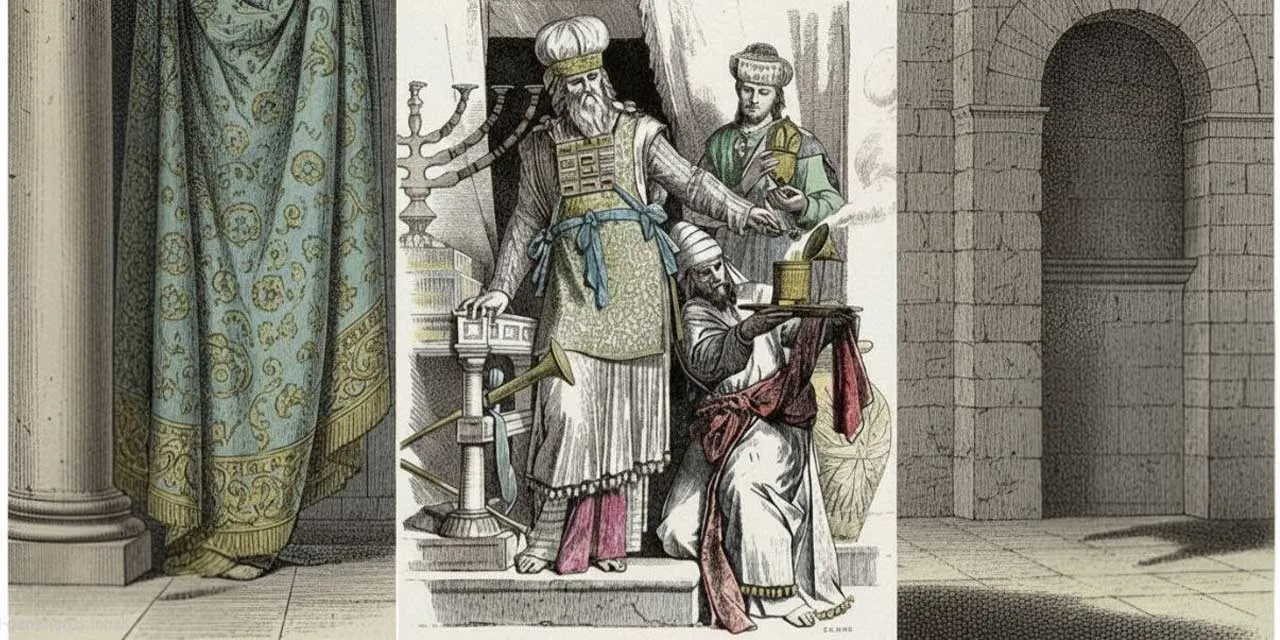
the garments of the kohen and the service
- Weekly portion
- 20 of 54
- Verses
- Shemot 27:20–30:10
- Parts
- 9
- Reading time
- 2 h 3 min
- Views
marks places where the translation deliberately departs from the Russian original. Tap it to show the note.
Tetzave (Tetzaveh) – the weekly portion about the service in the Mishkan. Alex Blend examines the light, the garments of the kohen, the consecration of the priests and the holy everyday. The stenogram includes the Torah text in Hebrew, transliteration, translation and the author's commentary on holiness and the meaning of the vestments.
Tetzave: A Spacesuit for Holiness
Shemot 27:20–28:12
With God's help, today you and I begin reading the weekly portion Tetzave. We have already become acquainted with the detailed instruction that the Most High gave the sons of Israel through Moshe concerning the construction of the Mishkan. Here we will read about how the service will take place in this Mishkan, in this Tent of Meeting. So, let's start reading from verse 20 of chapter 27.
וְאַתָּה תְּצַוֶּה אֶת־בְּנֵי יִשְׂרָאֵל וְיִקְחוּ אֵלֶיךָ שֶׁמֶן זַיִת זָךְ כָּתִית לַמָּאוֹר לְהַעֲלֹת נֵר תָּמִיד׃
ve'attá tetzavvé et-bené yisraél veyikchú elécha shémen záyit zach katít lammaór leha'alót ner tamíd
20 And you command the sons of Israel, and they will take to you pure, beaten olive oil for lighting, to raise up the eternal candle.
The LORD here addresses Moshe, and the sons of Israel will have to take to him, that is, collect, hand over to his disposal, under his responsibility, olive oil. What does pure and beaten olive oil mean? Pure does not mean that it is counterfeitThe Russian literally says that “pure” does not mean the oil is counterfeit; the intended sense is probably that “pure” means it is not counterfeit. We kept the literal wording., that sesame oil, widespread at that time, or sunflower oil, nonexistent at that time, was added to the original oil. Pure means that the oil must not contain in itself the pulp of the olive itself, that is, only the first few drops after pressing the olive were collected into a separate vessel. Such olives were called beaten, because they were struck to release the oil. It was free of all impurities. Then it, now for the second pressing, was put under the millstones. The pressing could be hot or cold, several different pressings, several sorts of oil different in quality came out of the very same olives. The highest-grade oil is called extra virgin in English, and in Hebrew – katít (beaten) me'ulé (excellent), that is, perfect beaten oil, oil of the very best quality. That is the kind of oil that had to be collected for Moshe.
Next – an amazing commandment: to raise up the eternal candle, that is, to light the menorah. The Most High, the Source of all light, asks us, commands us to have a lamp in the Tent of Meeting – like a parent who asks a child for help in order to teach the child himself, the very child, something. It is a great mercy that we are given the opportunity to create a source of light, to some degree on a par with the Most High. The Most High gives us such mercy when commanding that the lamp be lit.
בְּאֹהֶל מוֹעֵד מִחוּץ לַפָּרֹכֶת אֲשֶׁר עַל־הָעֵדֻת יַעֲרֹךְ אֹתוֹ אַהֲרֹן וּבָנָיו מֵעֶרֶב עַד־בֹּקֶר לִפְנֵי יְהוָה חֻקַּת עוֹלָם לְדֹרֹתָם מֵאֵת בְּנֵי יִשְׂרָאֵל׃
be'óhel mo'éd michútz lapparóchet ashér al-ha'edút ya'aróch otó aharón uvanáv me'érev ad-bóker lifné adonáy chukkát olám ledorotám me'ét bené yisraél
21 In the Tent of Meeting, behind the curtain which is over the ark of testimony, Aharon and his sons shall arrange it, from evening to morning before the LORD, an eternal law throughout their generations on behalf of the sons of Israel.
That is, this is the first commandment that the ministers in the Tent of Meeting receive: there must be light in it, everything begins with the lamp.
With this chapter 27 ends, and from verse 1 of chapter 28 the Most High continues to give commandments to Moshe.
וְאַתָּה הַקְרֵב אֵלֶיךָ אֶת־אַהֲרֹן אָחִיךָ וְאֶת־בָּנָיו אִתּוֹ מִתּוֹךְ בְּנֵי יִשְׂרָאֵל לְכַהֲנוֹ־לִי אַהֲרֹן נָדָב וַאֲבִיהוּא אֶלְעָזָר וְאִיתָמָר בְּנֵי אַהֲרֹן׃
ve'attá hakrév elécha et-aharón achícha ve'et-banáv ittó mittóch bené yisraél lechahano-líThe Russian transliteration leaves out the h in this word (it has it in verses 3 and 4). The English line follows the Hebrew. aharón nadáv va'avihú el'azár ve'itamár bené aharón
1 And you (Moshe) bring near to yourself Aharon, your brother, and his sons with him from among all the sons of Israel for priesthood to Me: Aharon, Nadav and Avihu, Elazar and Itamar, the sons of Aharon.
The root of the word hakrév (bring near) is the same (kuf-reish-vav) as that of the word kórban (sacrifice), that is, offer him as a sacrifice: both the one and the other mean to bring near; in this case – to turn Aharon into a kind of “near-bringer” or “approximator.” Aharon as kohen will be placed at the joining of the people of Israel and the Most High, a kind of bridge between heaven and earth. Such is the position of the kohanim – to stand, on the one hand, for the people before the Most High, on the other hand, to represent the Most High before the people. Such a double mission, a great deal is said about this in detail in the Epistle to the Hebrews, precisely about the mission.
The Most High chooses Aharon. We know that Aharon has for a long time already been representing the people of Israel before the Most High and the Most High before the sons of Israel. He is that “eloquent man” who conveys the speeches and commandments of Moshe to the people of Israel. In the midrashim, in tradition he is portrayed as a man who loves Israel, who reconciles families, who cares for everyone. If Moshe in the midrashim (and in the Torah too it comes out that way) is more inclined to solitude, then Aharon is constantly among the people.
So, Aharon and his sons are chosen for the service of the Most High. The name Aharon, as we said, is connected with the word ohel (one who dwells in a tent or one who sits in tents), and in a language closer to Hebrew it would sound ahalyon, but since Aharon was born in Egypt, in the South Semitic dialects it can indeed sound like aharon or tent man. The name Nadav means good of heart, the one who gives, who donates with all his heart, the one whom the heart moves to donate. The name Avihu means He is my Father (a hint, naturally, at the Most High), the merciful, good, caring Most High is my Father. The name of the third son is Elazar, which means God helped, and the name of the fourth son is Itamar. If you ask a modern Israeli, he will hear in the name the word tamár (date), but in fact this name has nothing to do with the date. Itamar is the same thing as the word in the Aramaic language (known, probably, to many) memrá – utterance, speech, word, logos, saying, a saying that possesses a certain power. And these are the sons of Aharon, those whom the Most High appointed to be the firstfruits of Aharon's priesthood in Israel.
וְעָשִׂיתָ בִגְדֵי־קֹדֶשׁ לְאַהֲרֹן אָחִיךָ לְכָבוֹד וּלְתִפְאָרֶת׃
ve'asíta vigde-kódesh le'aharón achícha lechavód ultif'áret
2 And you shall make holy garments for Aharon, your brother, for glory and for majesty.
That is, in order for Aharon to be worthy and in order for him to display the glory of the Most High before the people of Israel, special garments are created. These are the garments that Aharon wears precisely during his service; at ordinary times he is to go about in civilian clothing. This vestment is called bigdéy kódesh (garments of holiness), a kind of aqualung or spacesuit, special workwear that allows one to act in a world with a different structure.
וְאַתָּה תְּדַבֵּר אֶל־כָּל־חַכְמֵי־לֵב אֲשֶׁר מִלֵּאתִיו רוּחַ חָכְמָה וְעָשׂוּ אֶת־בִּגְדֵי אַהֲרֹן לְקַדְּשׁוֹ לְכַהֲנוֹ־לִי׃
ve'attá tedabbér el-kol-chachme-lév ashér milletív rúach chochmá ve'asú et-bigdé aharón lekaddeshó lechahano-lí
3 And you (Moshe) speak with all the wise of heart (talented), each of whom I have filled with wisdom, and they shall make garments for Aharon, to consecrate him for service to Me.
Here the Most High speaks of people whose talents are known, people skilled in one kind of work or another, and the Most High says that if a person has a talent, then it is He who gave it to the person, He filled him with the spirit of this wisdom.
In verse 4 the garments that must be made for Aharon are listed.
וְאֵלֶּה הַבְּגָדִים אֲשֶׁר יַעֲשׂוּ חֹשֶׁן וְאֵפוֹד וּמְעִיל וּכְתֹנֶת תַּשְׁבֵּץ מִצְנֶפֶת וְאַבְנֵט וְעָשׂוּ בִגְדֵי־קֹדֶשׁ לְאַהֲרֹן אָחִיךָ וּלְבָנָיו לְכַהֲנוֹ־לִי׃
ve'élle habbegadím ashér ya'asú chóshen ve'efód ume'íl uchtónet tashbétz mitznéfet ve'avnét ve'asú vigde-kódesh le'aharón achícha ulvanáv lechahano-lí
4 And these are the garments that they shall make: choshen, efod, and me'il, chtonet tashbetz, mitznefet and avnet. And they shall make holy garments for Aharon, your brother, and for his sons, so that he serves as priest to Me.
Let's stop here and go through it in more detail. So, chóshen – this is a breastplate.
Efód – this is a special kind of garment that resembles, on the one hand, a vest (a bulletproof vest), on the other hand, a corset. It is a kind of wide belt covering the whole torso, with shoulder straps and connecting parts. In modern Hebrew efód magén – is a bulletproof vest, a protective vest, which is entirely right.
Me'íl – this is a cloak, that is how the word is usually translated today, from the root me'ál (over), the upper part of clothing. That is, me'íl is a long, tunic-like outer garment that is put on over the head.
Uchtónet tashbétz – this is also a tunic, or chiton, or shirt, but it is an undergarment, like a robe for walking around everywhere or like the modern Arab galabíya, which is also put on over the head, without sleeves, and it is very simple. In this case this shirt is netted, full of hollows, made in such a way that it can be adorned with something.
Mitznéfet – this is a kind of head ornament, it is often interpreted as a turban, or a head wrap, or a bandana, a headband.
Avnét – this is a sash or belt.
וְהֵם יִקְחוּ אֶת־הַזָּהָב וְאֶת־הַתְּכֵלֶת וְאֶת־הָאַרְגָּמָן וְאֶת־תּוֹלַעַת הַשָּׁנִי וְאֶת־הַשֵּׁשׁ׃
vehém yikchú et-hazzaháv ve'et-hattechélet ve'et-ha'argamán ve'et-tola'át hashaní ve'et-hashésh
5 They shall take the gold, and the blue threads, and the purple, and the scarlet threads, and the linen threads.
In this case, they are those skilled and talented people to whom the Most High commands this work to be entrusted.
וְעָשׂוּ אֶת־הָאֵפֹד זָהָב תְּכֵלֶת וְאַרְגָּמָן תּוֹלַעַת שָׁנִי וְשֵׁשׁ מָשְׁזָר מַעֲשֵׂה חֹשֵׁב׃
ve'asú et-ha'efód zaháv techélet ve'argamán tolá'at shaní veshésh moshzár ma'asé choshév
6 And they shall make the efod of gold, blue thread, and purple, and scarlet thread, and of linen thread, interwoven, the work of a weaver (skillful work).
שְׁתֵּי כְתֵפֹת חֹבְרֹת יִהְיֶה־לּוֹ אֶל־שְׁנֵי קְצוֹתָיו וְחֻבָּר׃
sheté chetefót choverót yihye-ló el-shené ketzotáv vechubbár
7 Two attached shoulder pieces (straps) it shall have at its two edges, and they shall be joined.
This is similar to the way construction overalls are fastened, when the straps come up from behind and fasten in front, only here they are attached and join the front and back part of the efod.
וְחֵשֶׁב אֲפֻדָּתוֹ אֲשֶׁר עָלָיו כְּמַעֲשֵׂהוּ מִמֶּנּוּ יִהְיֶה; זָהָב תְּכֵלֶת וְאַרְגָּמָן וְתוֹלַעַת שָׁנִי וְשֵׁשׁ מָשְׁזָר׃
vechéshev afuddató ashér aláv kema'aséhu mimménnu yihyé zahav techélet ve'argamán vetolá'at shaní veshésh moshzár
8 And the belt part of the efod, which is on it, shall be made exactly the same way (in the same manner, with the same work) of gold, blue thread, and purple, and scarlet thread, and of linen thread interwoven.
וְלָקַחְתָּ אֶת־שְׁתֵּי אַבְנֵי־שֹׁהַם וּפִתַּחְתָּ עֲלֵיהֶם שְׁמוֹת בְּנֵי יִשְׂרָאֵל׃
velakachtá et-sheté avne-shóham ufittachtá alehém shemót bené yisraél
9 And you took two onyx stones (opal), and engraved on them, the names of the sons of Israel.
שִׁשָּׁה מִשְּׁמֹתָם עַל הָאֶבֶן הָאֶחָת וְאֶת־שְׁמוֹת הַשִּׁשָּׁה הַנּוֹתָרִים עַל־הָאֶבֶן הַשֵּׁנִית כְּתוֹלְדֹתָם׃
shishá mishemotám al ha'éven ha'echát ve'et-shemót hashishá hannotarím al-ha'éven hashenít ketoledotám
10 Six of the names – on one stone, and the names of the six remaining – on the second stone, according to their birth make them.
מַעֲשֵׂה חָרַשׁ אֶבֶן פִּתּוּחֵי חֹתָם תְּפַתַּח אֶת־שְׁתֵּי הָאֲבָנִים עַל־שְׁמֹת בְּנֵי יִשְׂרָאֵל מֻסַבֹּת מִשְׁבְּצוֹת זָהָב תַּעֲשֶׂה אֹתָם׃
ma'asé charásh éven pittuché chotám tefattách et-sheté ha'avaním al-shemót bené yisraél musabbót mishbetzót zahav ta'asé otám
11 With the craft of a stone engraver, like an engraved seal, make them, the two stones with the names of the sons of Israel, framed in gold make them.
The two stones with the names of the sons of Israel, finished with gold, edged with gold, like epaulettes, are inserted into special sockets on the shoulder pieces of the efod (vest), which the kohen gadol wears.
וְשַׂמְתָּ אֶת־שְׁתֵּי הָאֲבָנִים עַל כִּתְפֹת הָאֵפֹד אַבְנֵי זִכָּרֹן לִבְנֵי יִשְׂרָאֵל וְנָשָׂא אַהֲרֹן אֶת־שְׁמוֹתָם לִפְנֵי יְהוָה עַל־שְׁתֵּי כְתֵפָיו לְזִכָּרֹן׃
vesamtá et-sheté ha'avaním al kitfót ha'efód avné zikkarón livné yisraél venasá aharón et-shemotám lifné adonáy al-sheté chetefáv lezikkarón
12 And you shall put these two stones on the shoulders of the efod, stones of remembrance for the sons of Israel. And Aharon shall carry these names before the LORD, on his two shoulders, for their remembrance.
That is, when the kohen gadol went in to stand before the Most High, he carried on himself the names of the whole people of Israel. We will yet read the blessing of Aharon (Bemidbar 6:22–27), which the Most High concludes with the command: “And you shall put My Name on the sons of Israel, and I will bless them.” The Most High gives Israel the opportunity to bear His Name, and this happens through the kohanim. But the names of the sons of Israel also come before the Most High through the kohanim, through the kohen gadol. He, on the one hand, is the bearer of the name of the Most High and, on the other hand, stands before the Most High for all of Israel.
Carrying the names of the sons of Israel is needed, of course, not so that the Most High would remember them in case He suddenly forgets. The Most High forgets nothing. This is needed for remembrance, for signification, so that Aharon himself would remember it, so that it would be made manifest. The truth must not only exist but also be open, manifest; that is how it happens in the service.
Mysteries Wrapped in Light
Shemot 28:13–30
With God's help we continue studying the weekly portion Tetzave and will read from verse 13 of chapter 28 of the book of Shemot. It is important to recall that in our weekly portion the Most High, through Moshe, gives instructions to narrow specialists – especially talented, skilled craftsmen whom He filled with the Spirit of knowledge of this craft, with skillfulness, with the ability to carry out especially delicate and complex work. That is, the Most High speaks with specialists of a narrow profile. We read, starting with verse 13:
וְעָשִׂיתָ מִשְׁבְּצֹת זָהָב׃
ve'asíta mishbetzót zaháv
13 And you shall make golden frames (cells, squares).
In modern Hebrew the word mishbétzet means square. For example, a checkered shirt – chultza mishubétzet. A crossword, which in appearance consists of squares, is called tashbétz. To assign someone somewhere, to put into some kind of frame, is called lishabétz – to find a suitable square. And thus the word mishbétzet means square, frame, framing. Accordingly, in the plural mishbetzót – cells, squares, frames. We understand from the text that it is about cells into which precious and semi-precious stones will later be inserted, which we will read about further on.
וּשְׁתֵּי שַׁרְשְׁרֹת זָהָב טָהוֹר מִגְבָּלֹת תַּעֲשֶׂה אֹתָם מַעֲשֵׂה עֲבֹת וְנָתַתָּה אֶת־שַׁרְשְׁרֹת הָעֲבֹתֹת עַל־הַמִּשְׁבְּצֹת׃
ushté sharsherót zaháv tahór migbalót ta'asé otám ma'asé avót venatattá et-sharsherót ha'avotót al-hammishbetzót
14 And two chains of pure gold, at the edges make them, made by braiding. And you shall join these braided chains to the framings.
That is, the chains are not made of links, as there are little chains that are made of links – of little rings joined to one another. Here is another variant of chain: a braided chain, which resembles a braiding of several threads, more expensive, of more skillful work, a jeweler's chain.
וְעָשִׂיתָ חֹשֶׁן מִשְׁפָּט מַעֲשֵׂה חֹשֵׁב כְּמַעֲשֵׂה אֵפֹד תַּעֲשֶׂנּוּ זָהָב תְּכֵלֶת וְאַרְגָּמָן וְתוֹלַעַת שָׁנִי וְשֵׁשׁ מָשְׁזָר תַּעֲשֶׂה אֹתוֹ׃
ve'asíta chóshen mishpát ma'asé choshév kema'asé efód ta'asénnu zaháv techélet ve'argamán vétola'at shaní veshésh moshzár ta'asé otó
15 And you shall make the breastplate of judgment, made by a weaver; make it like a vest: gold, blue thread, purple thread, scarlet thread and linen thread, twisted together, make it.
Many commentators try to understand: what does breastplate of judgment mean? Some say: “Like all the garments of the kohen gadol, each garment is meant to atone for a certain sin, a certain problem.” In order for the people of Israel to stand in purity before the Most High, the garments cover certain sins; we have talked about this. The word levúsh (garment) can be understood as an abbreviation lo vúsh – not ashamed. A garment covers shame. And in this case the breastplate of judgment covers judicial errors among the people of Israel. This is one of the understandings.
According to another understanding (in light of what we will read further on about urím vetummím) this breastplate is itself an instrument of judgment, a certain special instrument that allows the kohen to carry out just judgment.
רָבוּעַ יִהְיֶה כָּפוּל זֶרֶת אָרְכּוֹ וְזֶרֶת רָחְבּוֹ׃
ravúa yihyé kafúl zéret orkó vezéret rochbó
16 When it is folded in two, it shall be square: 25 centimeters – the width and 25 centimeters – the length.
That is, initially the breastplate is rectangular, but when it is folded in two (it must be folded in two), it becomes square. The word zéret means half a cubit (that is, 25 centimeters).
וּמִלֵּאתָ בוֹ מִלֻּאַת אֶבֶן אַרְבָּעָה טוּרִים אָבֶן טוּר אֹדֶם פִּטְדָה וּבָרֶקֶת הַטּוּר הָאֶחָד׃
umilletá vo millú'at éven arba'á turím áven tur ódem pitdá uvaréket hattúr ha'echád
17 And fill it, with a filling of stones in four rows of stones. And the first row: three stones (kinds) – this is carnelian, emerald and topaz.
That is, the framings must be filled with precious and semi-precious stones. When I speak about the names of the stones, one must understand that the Torah, as I have already said, spoke to narrow specialists, to people who were knowledgeable about stones (in this case), understood the names of the stones and could tell an opal from a carnelian or a garnet from a ruby. Far from everyone can do this. And since for a long time among the people of Israel, among the teachers of Torah, among those studying Torah, there were no specialists in stones, there were not those skillful people we spoke about at the beginning, the tradition of identifying these stones, unfortunately, turned out to be almost lost. And therefore in different translations you may come across different names of the stones. Different people say different things about what these stones are that go into the breastplate. I give one of the numerous reconstructions. Perhaps it is not the most accurate, but it is based on linguistics, on research into the Semitic and Persian languages in the regions where the jeweler's craft flourished. So, the first row is carnelian, emerald and topaz.
וְהַטּוּר הַשֵּׁנִי נֹפֶךְ סַפִּיר וְיָהֲלֹם׃
vehattúr hashení nófech sappír veyahalóm
18 And the second row – this is red garnet, sapphire and diamond.
הַטּוּר הַשְּׁלִישִׁי לֶשֶׁם שְׁבוֹ וְאַחְלָמָה׃
vehattúr hashelishí léshem shevó ve'achláma
19 Three more stones: zircon, agate, amethyst.
וְהַטּוּר הָרְבִיעִי תַּרְשִׁישׁ וְשֹׁהַם וְיָשְׁפֵה מְשֻׁבָּצִים זָהָב יִהְיוּ בְּמִלּוּאֹתָם׃
vehattúr harevi'í tarshísh veshóham veyashefé meshubbatzím zaháv yihyú bemillu'otám
20 And the fourth row: aquamarine, onyx and jasper. And their setting must be such that all four rows of three stones each, all of them are set in separate cells, each one.
וְהָאֲבָנִים תִּהְיֶיןָ עַל־שְׁמֹת בְּנֵי־יִשְׂרָאֵל שְׁתֵּים עֶשְׂרֵה עַל־שְׁמֹתָם פִּתּוּחֵי חוֹתָם אִישׁ עַל־שְׁמוֹ תִּהְיֶיןָ לִשְׁנֵי עָשָׂר שָׁבֶט׃
veha'avaním tihyéna al-shemót bene-yisraél shetém esré al-shemotám pittuché chotám ish al-shemó tihyéna lishné asár shávet
21 And the stones shall be according to the names of the sons of Israel, twelve, and these names must be engraved on them, like seals, each with its own name it shall be for the twelve tribes.
That is, on each of the twelve stones one must engrave the name of one of the tribes. And, most likely, this had to be done in the order of the birth of Yaakov's sons, as we read last time. Here a very interesting question arises: how could anything be engraved on a diamond? Diamond is very hard. We know from the jeweler's craft that diamond does not yield to processing without special technologies. It is impossible to scratch it, and all the more impossible to drill anything out in it. Some commentators say that there was such a technology: with the help of diamond dust and some other methods they made engravings on diamond. Others say that there was a special kind of worm that helped to do this. Many different versions, and the question of technology remains open.
וְעָשִׂיתָ עַל־הַחֹשֶׁן שַׁרְשֹׁת גַּבְלֻת מַעֲשֵׂה עֲבֹת זָהָב טָהוֹר׃
ve'asíta al-hachóshen sharshót gavlút ma'asé avót zaháv tahór
22 And you shall make on the breastplate at its edges braided chains of pure gold.
This is an instruction that we have already received earlier, and from verse 23 the Torah begins to explain how to attach these chains to the chóshen (breastplate). One can imagine that the Most High first gives the heading “Make,” and then explains in several verses how this is to be done.
וְעָשִׂיתָ עַל־הַחֹשֶׁן שְׁתֵּי טַבְּעוֹת זָהָב וְנָתַתָּ אֶת־שְׁתֵּי הַטַּבָּעוֹת עַל־שְׁנֵי קְצוֹת הַחֹשֶׁן׃
ve'asíta al-hachóshen sheté tabbe'ót zaháv venatattá et-sheté hattabba'ót al-shené ketzót hachóshen
23 And you shall make on it two golden rings, and you shall place these two rings on the two edges (on the two outer corners of the breastplate).
וְנָתַתָּה אֶת־שְׁתֵּי עֲבֹתֹת הַזָּהָב עַל־שְׁתֵּי הַטַּבָּעֹת אֶל־קְצוֹת הַחֹשֶׁן׃
venatattá et-sheté avotót hazzaháv al-sheté hattabba'ót el-ketzót hachóshen
24 Two golden braids (two golden braidings, two braided chains), insert these braided chains into the two rings that are at the edge of the breastplate.
וְאֵת שְׁתֵּי קְצוֹת שְׁתֵּי הָעֲבֹתֹת תִּתֵּן עַל־שְׁתֵּי הַמִּשְׁבְּצוֹת וְנָתַתָּה עַל־כִּתְפוֹת הָאֵפֹד אֶל־מוּל פָּנָיו׃
ve'ét sheté ketzót sheté ha'avotót tittén al-sheté hammishbetzót venatattá al-kitfót ha'efód el-múl panáv
25 And the two other ends of these two chains insert into the framing, and insert them into the shoulder piece of the efod, at the top.
That is, at the top, in the upper part of the breastplate, two rings at the edges, through which the braided chain passes, and it is fastened to the shoulder pieces, to the straps of the efod (vest).
וְעָשִׂיתָ שְׁתֵּי טַבְּעוֹת זָהָב וְשַׂמְתָּ אֹתָם עַל־שְׁנֵי קְצוֹת הַחֹשֶׁן עַל־שְׂפָתוֹ אֲשֶׁר אֶל־עֵבֶר הָאֵפֹד בָּיְתָה׃
ve'asíta sheté tabbe'ót zaháv vesamtá otám al-shené ketzót hachóshen al-sefató ashér el-éver ha'efód báyta
26 And you shall take (make) two golden rings, and you shall set (place) them on the two edges of the breastplate on its lower side, and they face from the inner side toward the efod.
וְעָשִׂיתָ שְׁתֵּי טַבְּעוֹת זָהָב וְנָתַתָּה אֹתָם עַל־שְׁתֵּי כִתְפוֹת הָאֵפוֹד מִלְּמַטָּה מִמּוּל פָּנָיו לְעֻמַּת מֶחְבַּרְתּוֹ מִמַּעַל לְחֵשֶׁב הָאֵפוֹד׃
ve'asíta sheté tabbe'ót zaháv venatattá otám al-sheté chitfót ha'efód millemátta mimmúl panáv le'ummát mechbartóThe Russian transliteration has “machbartó” here, but the Hebrew reads “mechbartó” with an e, so the English line follows the Hebrew. mimmá'al lechéshev ha'efód
27 And you shall make two more golden rings, and place them on the two fastenings of the efod below, opposite. Calculate it so that they are opposite each other, opposite the woven efod.
וְיִרְכְּסוּ אֶת־הַחֹשֶׁן מִטַּבְּעֹתוֹ (מִטַּבְּעֹתָיו) אֶל־טַבְּעֹת הָאֵפֹד בִּפְתִיל תְּכֵלֶת לִהְיוֹת עַל־חֵשֶׁב הָאֵפוֹד וְלֹא־יִזַּח הַחֹשֶׁן מֵעַל הָאֵפוֹד׃
veyirkesú et-hachóshen mittabbe'otáv el-tabbe'ót ha'efód biftíl techélet lihyot al-chéshev ha'efód velo-yizzách hachóshen me'ál ha'efód
28 And tie the rings of the breastplate to the rings of the vest with a blue thread, so that it is bound to the fabric of the vest, so that the breastplate does not shift from the efod (does not move along the efod, along the priest's belly, does not slide anywhere, so that it is fastened very securely).
וְנָשָׂא אַהֲרֹן אֶת־שְׁמוֹת בְּנֵי־יִשְׂרָאֵל בְּחֹשֶׁן הַמִּשְׁפָּט עַל־לִבּוֹ בְּבֹאוֹ אֶל־הַקֹּדֶשׁ לְזִכָּרֹן לִפְנֵי־יְהוָה תָּמִיד׃
venasá aharón et-shemót bene-yisraél bechóshen hammishpát al-libbó bevo'ó el-hakkódesh lezikkarón lifne-adonáy tamíd
29 And Aharon shall carry the names of the sons of Israel on the breastplate of judgment and on his heart when he enters the Holy Place, to remember them before the LORD always.
On his heart – this is no longer a physical image. That is, not only on the breastplate, demonstratively and declaratively, but also on the heart of Aharon the names of the sons of Israel must be. Aharon must always remember that he stands before the LORD not as Aharon, not as a priest, but as all Israel, as the sons of Israel, as Israel in its entirety.
וְנָתַתָּ אֶל־חֹשֶׁן הַמִּשְׁפָּט אֶת־הָאוּרִים וְאֶת־הַתֻּמִּים וְהָיוּ עַל־לֵב אַהֲרֹן בְּבֹאוֹ לִפְנֵי יְהוָה וְנָשָׂא אַהֲרֹן אֶת־מִשְׁפַּט בְּנֵי־יִשְׂרָאֵל עַל־לִבּוֹ לִפְנֵי יְהוָה תָּמִיד׃
venatattá el-chóshen hammishpát et-ha'urím ve'et-hattummím vehayú al-lév aharón bevo'ó lifné adonáy venasá aharón et-mishpát bene-yisraél al-libbó lifné adonáy tamíd
30 And you shall make on the breastplate of judgment the Urim and Tummim. And they shall be on the heart of Aharon when he enters before the LORD, and Aharon brings the judgment of the sons of Israel (judicial matters, the right ordering of society) on his heart before the LORD always.
Urím and Tummím – a very mysterious instrument. Almost always, when one has to answer questions, people ask: what is this? Some say that it is a scroll of parchment that is placed inside the breastplate and that, one could say, as it were switches on the breastplate, makes it a kind of “monitor” on which letters from the names of the tribes light up, or the words “yes” or “no.” In general, the breastplate works like a monitor.
There are many different versions of how this works and how it answers questions. It is a kosher Jewish oracle, a kosher means of communication with the Most High, receiving answers to questions from the Most High. Such an instrument, of course, attracted attention in all generations, after all, one very much wants to receive from the Most High precise and completely definite “telegrams.” Therefore there were sages, masters of Kabbalah, who compiled tables, made likenesses of the Urím and Tummím in the absence of the Temple, made something reminiscent or similar. Various systems of divination were born, and the Urím and Tummím became overgrown with legends.
The classical translation of the concept Urím and Tummím is this: ur – from the word or (light), tum – from the word tom (perfect, whole). But if we turn to the ancient Semitic languages, then ur is a curse, tom is a blessing, tamim is whole, righteous, and arúr is cursed. That is, one can say that the Urím and Tummím answered with a blessing or a curse: “This action of yours that you are asking about will be blessed, but this action of yours that you are asking about will be cursed.” And in this way it was possible to receive a very serious answer from the Most High. Perhaps that is how it worked.
Everything we are talking about here, everything that I say, and everything that other teachers say – these are only assumptions. We do not have a precise, clear tradition of how this worked. And when we read the midrashim, the Talmud or other sources in which the Urím and Tummím are discussed, we read: some say this, others say otherwise, and I think this. That is how people usually speak, and I too am only setting out my thought.
Perhaps this action was similar to a rainbow. A rainbow is a physical phenomenon that represents the refraction of light in drops of rain or fog. The light is refracted, a phenomenon similar to a prism results, and the light is broken down into a spectrum, and we see that the light becomes seven different colors. In exactly the same way, other waves that are in the world can also be broken down into different components. And a certain Divine energy, Divine power, one could say, is broken down into twelve. Therefore there are twelve sons of Israel, twelve tribes, twelve apostles, twelve months. And we see on the chóshen of judgment twelve components – a kind of rainbow of the Holy Spirit, one could say so, a rainbow of Divine power. Therefore there are twelve stones, therefore there are fifty letters on twelve stones, and this too can be taken into account. This is a kind of breakdown into a spectrum, which can reveal what at the given moment serves us as an answer to the question. And just as the rainbow is a symbol of the covenant, a remembrance of the connection with the Most High, His promise not to destroy the world, so here too there is a kind of rainbow. A likeness of a rainbow is placed into the covenant, and the kohen wears it. And here there is a revelation of Divine power in images understandable to man. Maybe it is a monitor, maybe it is some kind of pictures, we do not know. Perhaps these stones came together and worked like a good liquid-crystal screen. Anything is possible. This phenomenon is mysterious.
Respect for the Uniform
Shemot 28:31–43
We continue reading the detailed instruction that the Most High gives to the talented craftsmen, the narrow specialists, regarding the making of garments for Aharon and his sons. For now, it is true, the matter concerns only Aharon.
וְעָשִׂיתָ אֶת־מְעִיל הָאֵפוֹד כְּלִיל תְּכֵלֶת׃
ve'asíta et-me'íl ha'efód kelíl techélet
31 And you madeThe Russian verse has a past-tense verb with no subject (“and made”), although the verses around it are commands to Moshe. It is rendered literally as “you made.” the upper garment under the efod of purely blue cloth (techélet).
We have already spoken about the word me'íl, that it shares a root with the word me'ál (above), that is, it is some kind of upper garment. I tried to find adequate Russian-language translations. Usually this garment is designated as riza, a word not very understandable to most modern readers. Let's perceive the me'íl simply as a cloak, as an upper garment.
וְהָיָה פִי־רֹאשׁוֹ בְּתוֹכוֹ שָׂפָה יִהְיֶה לְפִיו סָבִיב מַעֲשֵׂה אֹרֵג כְּפִי תַחְרָא יִהְיֶה־לּוֹ לֹא יִקָּרֵעַ׃
vehayá fi-roshó betochó safá yihyé lefív savív ma'asé orég kefí tachrá yihye-ló lo yikkaré'a
32 And there was an opening for the head in the center, with folded-over edges all along the perimeter of the neckline, and edged, and this shall be a reinforcement to it (the opening), so that it does not tear.
Thus the me'íl is put on over the head. And here it is about what the opening for the head should be like. The whole collar that is on the priest's cloak, on the priest's upper garment, is made in such a way that the fabric is turned inward and finished on top with an overlock stitch (to put it in modern language), so that the collar is strong and does not tear, because a kohen is not allowed to have his garments torn. Of course, those who have read the Brit chadashá may ask me: but how then did the high priest tear his garments (Matityahu 26:65)? He did not tear these garments, since in the times of Roman administration these garments were issued only for the days of service. And on ordinary days the priest was in civilian clothing, whatever it may have been then, he was not in his service clothes and not in uniform.
וְעָשִׂיתָ עַל־שׁוּלָיו רִמֹּנֵי תְּכֵלֶת וְאַרְגָּמָן וְתוֹלַעַת שָׁנִי עַל־שׁוּלָיו סָבִיב וּפַעֲמֹנֵי זָהָב בְּתוֹכָם סָבִיב׃
ve'asíta al-shuláv rimmoné techélet ve'argamán vetolá'at shaní al-shuláv savív ufa'amoné zaháv betochám savív
33 And you shall make on the hem of this upper garment (on its lower edge) pomegranate apples (one could say, balls in the shape of pomegranate apples) of a mixture of blue, purple and scarlet, and between them (between the pomegranate apples) you shall also sew bells, all along the hem.
The color red on a curve, in certain lighting, is reflected, refracted, like blue. Many medieval artists noticed this. And in the art of antiquity blue was often added to red to emphasize its redness. Therefore here it seems to be a pomegranate apple, but its color is not quite red, it really is like that, with spots, with shades, blue color is added to it.
What is a pomegranate? In many eastern kingdoms the pomegranate (since the fruit as it were has a crown, as it were wears a crown) was a symbol of royal power. The pomegranate apple resembles the head of a king in a crown, therefore many royal accessories among the peoples in whose surroundings Israel lived were decorated with pomegranates.
In this connection it is interesting that the pomegranate here is attached to the hem of the garment, and one can see in this a hint that the priesthood rises above kingship. The priest has, as it were, the crowns of all earthly kings on the hem of his garment at the moment when he enters the Kódesh Kodashím and stands before the Most High. This raises him to a level much higher than all kings, and this is a context common to the Near East. But besides this, it is important that the pomegranate is an amazing fruit that in many ways has become a symbol of the people of Israel. The pomegranate is full of seeds just as Jews full of mitzvót (commandments) are full of virtue. Therefore a pomegranate does not clatter, just as a packed jug does not clatter, does not ring when you try to rattle it.
On the other hand, a coin in an empty jug rings. In the Aramaic language there is this proverb: “Istará satír belóga kish-kish karíya: one astari in a big jug cries kish-kish, that is, it rings.” What is meant is that a person who knows little, who has two or three thoughts in his head, he is very loud. And the people of Israel, in the interpretation of the sages, consists of two parts: of the righteous, who are full like a pomegranate, and of those who are heard the most, but they do not have so many commandments. And therefore they are mixed on the hem of the priest: some of those who make noise – the bells, some of those who are full – these are the pomegranates.
פַּעֲמֹן זָהָב וְרִמּוֹן פַּעֲמֹן זָהָב וְרִמּוֹן עַל־שׁוּלֵי הַמְּעִיל סָבִיב׃
pa'amón zaháv verimmón pa'amón zaháv verimmón al-shulé hamme'íl savív
34 A golden bell and a pomegranate, a golden bell and a pomegranate, let them be all along the hem of the me'íl.
וְהָיָה עַל־אַהֲרֹן לְשָׁרֵת וְנִשְׁמַע קוֹלוֹ בְּבֹאוֹ אֶל־הַקֹּדֶשׁ לִפְנֵי יְהוָה וּבְצֵאתוֹ וְלֹא יָמוּת׃
vehayá al-aharón lesharét venishmá koló bevo'ó el-hakkódesh lifné adonáy uvtzetó veló yamút
35 And it (the me'íl) shall be on Aharon in order to serve, and its voice shall be heard when he (Aharon) comes into the Holy Place before the face of the LORD and when he goes out, and he shall not die.
If we make such an ornament of pomegranate apples and bells, if Aharon comes into the Holy Place not as a representative of the righteous only and not as a representative of the wicked only, if both parts of the people – both the righteous and those who for now are not yet very much of a righteous person – understand that they need representation before the Most High, then only then, only representing the whole people, will Aharon not die. Therefore on the hem of his me'íl, on the hem of his upper garment, there already are, he has already taken, he has already carried also the simple Israelites who are not distinguished by righteousness.
Here, probably, is the very place to talk about one very well-known legend. About the legend according to which, at the time when the high priest entered the Holy of Holies, a golden chain was tied to him so that, if he died there, he could be pulled out. For some reason this legend is often connected with the bells on the hem of his me'íl: if the bells stopped ringing, it means something happened to him. There is one important detail that indicates why this is a legend. The high priest was forbidden to have anything metallic on himself when he entered the Holy of Holies. This is a direct prohibition of the Torah. The priest does not put on the me'íl (that very garment we are talking about) when he enters the Holy of Holies. He enters there only in the four lower garments, therefore no rope, no golden chain can be tied to him. Besides, if we assume that the priest died in the Holy of Holies, then there is no more holiness there. A dead body is impure, the place is defiled, and there is no problem at all to enter there. And also for repairs, for some other works there was no problem at all to enter the Holy of Holies: if a person is, for example, a painter, then there were cases when it was possible to enter there. Entering the Holy of Holies was dangerous precisely for service, for work not one's own. Of course, if, God forbid, the priest died in the Holy of Holies, it was possible to enter there, and no chain was needed. The legend of the chain appears in a collection that is called Tikkunei Zohar (Corrections of the Zohar). It dates to the 13th–14th century CE, and one can boldly say that this is after all a legend, because in the early sources there is no such thing. This is a little bit of a digression from our topic, but I wanted to say this.
In verse 36 we read about another object that must be on Aharon:
וְעָשִׂיתָ צִּיץ זָהָב טָהוֹר וּפִתַּחְתָּ עָלָיו פִּתּוּחֵי חֹתָם קֹדֶשׁ לַיהוָה׃
ve'asíta tzitz zaháv tahór ufittachtá aláv pittuché chotám kódesh ladonáy
36 And you shall make a plate of pure gold, and on it you shall make an inscription, as seals are made (that is, you shall carve, engrave): “Holiness to the LORD”;
The word tzitz can be translated as crest, something sticking up. Sometimes this word is translated as small board. But it is unclear how there can be a small board of pure gold. I translated the word tzitz as plate.
וְשַׂמְתָּ אֹתוֹ עַל־פְּתִיל תְּכֵלֶת וְהָיָה עַל־הַמִּצְנָפֶת אֶל־מוּל פְּנֵי־הַמִּצְנֶפֶת יִהְיֶה׃
vesamtá otó al-petíl techélet vehayá al-hammitznáfet el-múl pene-hammitznéfet yihyéThe Russian transliteration writes the last word with a hard g and an extra vowel (roughly “yigiyé”). The Hebrew reads yihyé, and the English line follows it.
37 You shall put it (the plate) on a blue thread, and it shall be on the headdress in front (on the face).
In the original, historically, three holes were made in this plate, a blue thread was passed through them, and in this way the plate was fastened to the headdress, it (the thread) was tied at the back of the head.
We do not know very well how the headdress is made, which we have already called a turban or some kind of headband (28:4). There are many different drawings and many different reconstructions, but there are no concrete, more serious, precise indications.
Thus the kohen has on his forehead a small golden plate with the inscription “Holiness to the LORD.” What this is needed for we read in verse 38.
וְהָיָה עַל־מֵצַח אַהֲרֹן וְנָשָׂא אַהֲרֹן אֶת־עֲוֹן הַקֳּדָשִׁים אֲשֶׁר יַקְדִּישׁוּ בְּנֵי יִשְׂרָאֵל לְכָל־מַתְּנֹת קָדְשֵׁיהֶם וְהָיָה עַל־מִצְחוֹ תָּמִיד לְרָצוֹן לָהֶם לִפְנֵי יְהוָה׃
vehayá al-métzach aharón venasá aharón et-avón hakkodashím ashér yakdíshu bené yisraél lechol-mattenót kodshehém vehayá al-mitzchó tamíd leratzón lahém lifné adonáy
38 And it shall be on the forehead of Aharon, and Aharon shall bear the sin of the holy sacrifices that the sons of Israel consecrated, of all the holy gifts; and it shall be constantly on his forehead, so that this disposes the Most High toward you (so that forgiveness takes effect).
An amazing thing. Aharon, when he carries on himself the golden plate with the inscription “Holiness to the LORD,” becomes all the sin offerings, all the offerings at once, the consecrations for sin that the people of Israel brought. He represents a huge sacrifice of the people of Israel, joined in time and space. Of course, this is not a literal concept.
When it says that “the plate shall be on him constantly,” what is meant is precisely during the service. He does not go to the market with it. Every time Aharon stands before the Most High, it is as if all the sacrifices of Israel stand before Him.
וְשִׁבַּצְתָּ הַכְּתֹנֶת שֵׁשׁ וְעָשִׂיתָ מִצְנֶפֶת שֵׁשׁ וְאַבְנֵט תַּעֲשֶׂה מַעֲשֵׂה רֹקֵם׃
veshibbatztá hakketónet shesh ve'asíta mitznéfet shesh ve'avnét ta'asé ma'asé rokém
39 And you shall weave a shirt of fine linen, and you shall make a turban of fine linen, and you shall make a sash, and all this you shall make as the work of an embroiderer.
Regarding these three items there are no concrete instructions on how to make them.
With this verse the description of Aharon's garments ends. You and I have read for a very long time about what Aharon dresses in. The Torah devotes, as we see, much more space to the description of Aharon's garments than even to the creation of the world, as if dressing Aharon were more difficult than creating the world. But the world was created by the Most High Himself, while Aharon must be dressed by skilled craftsmen from the people of Israel. What is the special point, why are such precise, so minutely prescribed garments needed? We know that the world broke with the fall of Adam, a rupture occurred between the heavenly and the earthly. When we read about Aharon, we know what we are building in him. We are talking about a person who, as if in a spacesuit or in scuba gear, will enter the Holy of Holies, will be able to ascend to heaven. And here, besides that, we read that he will also bear on himself the sins, will bear on himself the sacrifices of the whole people. And in order for this to work, for the person who will be doing this to survive, he needs finely thought-out special work clothing, and this is, in fact, what the Most High is talking about.
Next we will read what the ordinary priests, the sons of Aharon, dress in.
וְלִבְנֵי אַהֲרֹן תַּעֲשֶׂה כֻתֳּנֹת וְעָשִׂיתָ לָהֶם אַבְנֵטִים וּמִגְבָּעוֹת תַּעֲשֶׂה לָהֶם לְכָבוֹד וּלְתִפְאָרֶת׃
velivné aharón ta'asé chuttonót ve'asíta lahém avnetím umigba'ót ta'asé lahém lechavód ultif'áret
40 And for Aharon's sons make shirts, and you shall make them sashes, and tall headdresses make for them for greatness and glory.
The ordinary priests have different headdresses – migba'ót (the word giv'á means hill), tall headdresses, a kind of top hats. The ordinary priests have simpler clothing, but it too is for greatness and glory. Every person glorifies the Most High. And the priest, as a person who is called after all, even if as an ordinary priest, but to serve in the Temple, he certainly must be clothed in dignity and luxury.
וְהִלְבַּשְׁתָּ אֹתָם אֶת־אַהֲרֹן אָחִיךָ וְאֶת־בָּנָיו אִתּוֹ וּמָשַׁחְתָּ אֹתָם וּמִלֵּאתָ אֶת־יָדָם וְקִדַּשְׁתָּ אֹתָם וְכִהֲנוּ לִי׃
vehilbashtá otám et-aharón achícha ve'et-banáv ittó umashachtá otám umilletá et-yadám vekiddashtá otám vechihanú li
41 And clothe in them Aharon, your brother, and his sons with him, and anoint them, fill their hands with oil (fill them up with oil thoroughly), and sanctify them, so that they serve as priests to Me (and they will serve as priests to Me).
Every appointment to service begins with anointing: both royal and priestly. Kings who are descendants of kings do not need anointing – they are already anointed. One of the explanations of why the Mashiach was called the anointed one, is this: that he, being an heir of King David, destined for the throne, was already born with this anointing. But a kohen has to be anointed at the very beginning of his service as a kohen.
The Torah told about three details of the garments of Aharon's sons: about the shirt, the sash and the headdress, but told little about them, therefore we do not give them detailed descriptions. Later, when we touch on the actual making of the garments, I will try to bring descriptions that exist in later sources. It is hard to call them reliable, but these are interesting guesses, we will definitely talk about this. Let us now also tell about the fourth item.
וַעֲשֵׂה לָהֶם מִכְנְסֵי־בָד לְכַסּוֹת בְּשַׂר עֶרְוָה מִמָּתְנַיִם וְעַד־יְרֵכַיִם יִהְיוּ׃
va'asé lahém michnese-vád lechassót besár ervá mimmotnáyim ve'ad-yerecháyim yihyú
42 And make for them trousers of cloth, to cover the shameful flesh, from the waist to the thighs they shall be.
It is necessary to make for the priests an item of underwear that resembles shorts, swim trunks or boxer shorts, to cover their nakedness. Here it is important to note that for Middle Eastern men's clothing the covering of nakedness, that is, underwear – is not something that goes without saying, it is very expensive clothing. After all, it has to be constantly changed, washed, and one has to take special care of hygiene and cleanliness. And besides, according to most opinions, who is looking there anyway? Therefore the necessity to make such clothing for the priests shows that they are under special, close attention, are examined by the Most High from all sides. And here is the natural objection that often arises not only regarding priests but also regarding everyday life: so what, does the Most High not see what we have there under our underwear? Does He really not constantly see our nakedness? The Most High is certainly All-Seeing, and He can see everything. At the same time He is delicate enough not to look at our nakedness where we do not strive to show it. Therefore here the Most High suggests that we cover our nakedness not so as not to be offended by the sight of it, but for the sake of preserving our dignity above all.
וְהָיוּ עַל־אַהֲרֹן וְעַל־בָּנָיו בְּבֹאָם אֶל־אֹהֶל מוֹעֵד אוֹ בְגִשְׁתָּם אֶל־הַמִּזְבֵּחַ לְשָׁרֵת בַּקֹּדֶשׁ וְלֹא־יִשְׂאוּ עָוֹן וָמֵתוּ חֻקַּת עוֹלָם לוֹ וּלְזַרְעוֹ אַחֲרָיו:
vehayú al-aharón ve'al-banáv bevo'ám el-óhel mo'éd o vegishtám el-hammizbéyach lesharét bakkódesh velo-yis'ú avón vamétu chukkát olám lo ulzar'ó acharáv
43 And they shall be on Aharon and on his sons when they enter the Tent of Meeting and when they approach the altar to serve in holiness, and they shall not bear sin; this is an eternal statute for him and for his seed after him (for Aharon).
That is, they shall not bear sin for entering the Holy and ascending to the altar. It is precisely in such attire that they are allowed to do this, and it is not a sin.
So, we have read the description of the garments of Aharon and his sons. The description of Aharon's garments is given very carefully; it is a description of the garments not only of Aharon, but of any high priest, the chief intercessor for the people of Israel and for the whole world. The description of the garments of the sons of Aharon is given in less detail. But all of this together is special work clothing that allows Israel to interact with the Most High, and that is precisely why such close attention is paid to it. We also read that Aharon must be anointed, go through anointing, in order to be consecrated for service.
Consecration as Priests
Shemot 29:1–18
With God's help we continue to study the weekly portion Tetzaveh and will read from the beginning of chapter 29 of the book of Shemot. In the previous passages of the portion we read the instructions that the Most High gives to the skilled craftsmen regarding the making of clothing for Aharon and his sons, so that they could be consecrated to the priesthood. In this chapter the Most High now speaks directly with Moshe and gives instructions to him himself. And these instructions are about how to make out of an almost ordinary Israelite named Aharon and out of his sons priests for the people of Israel (or how to make a person a priest).
וְזֶה הַדָּבָר אֲשֶׁר־תַּעֲשֶׂה לָהֶם לְקַדֵּשׁ אֹתָם לְכַהֵן לִי לְקַח פַּר אֶחָד בֶּן־בָּקָר וְאֵילִם שְׁנַיִם תְּמִימִם׃
vezé haddavár ashér ta'asé lahém lekaddésh otám lechahén li lekách par echád ben-bakár ve'elím shenáyim temimím
1 And this is the action that you must do with them in order to sanctify them for the priesthood to Me: take one bull, a son of a bull (a bull, Bull's son) and two pure lambs (unblemished lambs).
The word davár has a very broad meaning (and we have spoken about this more than once) – it is speech, action, some topic, some event. In this case it is action.
To sanctify them – whom? To do with them – with whom? It is about Aharon and his sons. This is an instruction concerning how one must deal with the sons of Aharon and with Aharon himself, in order to make them priests to the Most High.
Take one bull, a son of a bull – what is this about? About the fact that we know regarding him that he is a purebred bull, without any admixtures of every possible kind, which at that time was quite widespread. That is, take a real, purebred bull.
…and two pure lambs. As soon as such a description comes up, one immediately wants to understand: what does this mean? And the commentators say different things. For example, this: “The bull is atonement for the sin of the golden calf. The Most High foresees it in advance, that it will happen. One of the little rams is atonement for the sin of Aharon, the second is consecration, the offering of consecration.” Others assert: “The bull is indeed for the golden calf. One of the little rams is a burnt offering, the second is consecration.” Still others say: “Well, the golden calf probably has nothing at all to do with it here. The bull signifies Avraham, after all, about Avraham it is said: ‘And he ran to the herd, to the horned large cattle.’ And the two little rams actually signify Yitzchak and Yaakov. Thus the bull and the two little rams symbolize the Patriarchs.” There are also those who say that there is something prophetic in this offering. Aharon had four sons: Nadav, Avihu, Elazar and Itamar, but only Elazar and Itamar will ultimately serve as priests, Nadav and Avihu will perish. Therefore in this case the sacrifice, in the opinion of these commentators, symbolizes Aharon and his two sons, who will remain in the priesthood.
It is hard to choose any one of these variants, and, in general, I think that these variants arise when we do not want to accept, do not agree to accept, that the Most High said so, that this is His will and that in something, somewhere, it is incomprehensible to us. We need an explanation that is understandable to us. I need it too. Although I understand that this is a little bit of “childhood.” We are His children, and He loves it when we remain children. Therefore one can choose from those listed or find one's own variant of interpretation.
We have learned what had to be taken from the animal world. Next we read:
וְלֶחֶם מַצּוֹת וְחַלֹּת מַצֹּת בְּלוּלֹת בַּשֶּׁמֶן וּרְקִיקֵי מַצּוֹת מְשֻׁחִים בַּשָּׁמֶן סֹלֶת חִטִּים תַּעֲשֶׂה אֹתָם׃
veléchem mattzót vechallót mattzót belulót bashémen urkiké mattzót meshuchím bashámen sólet chittím ta'asé otám
2 Take unleavened breads, unleavened breads kneaded with oil, and unleavened flatbreads anointed with oil – make them from the finest wheat flour.
Léchem matzót – this is literally unleavened bread. In reality these are breads of flour that are boiled in boiling water, and then they are baked on a kind of inverted frying pan and fried a little bit in oil. This is the first kind of bread that has to be taken.
The second kind of bread is called chalyát matzót (an unleavened bagel or an unleavened round loaf). It is made from flour that is mixed with oil in advance and then baked. This is a separate recipe of preparation.
And the third kind of bread that is brought, that Moshe must take, is rakikéi matzót (unleavened flatbreads). They are baked without oil. It is flour and water, but then, when they are stacked, they are smeared with oil. The commentators say: “There is such an old tradition that the flatbreads were smeared with oil, and on them was drawn such an angular letter kaf or the Greek letter lambda, which symbolizes, on the one hand, as the letter kaf, the first letter of the word kohén, and on the other hand, it points to the blessing of Aharon, which takes place with a group of split fingers, a special formation of the hand, in which one can also see such a lambda or the letter vee (v), or the angular letter kaf, as each person's imagination allows.” But this is the commentators, while the plain text says that one must take three kinds of flatbreads. Again the commentators say that there are ten of each kind of flatbread.
The three kinds of flatbreads are compared with the three measures of flour that Avraham commanded Sara to knead. That is, the commentators try to find parallels in Jewish history to the components of the sacrifice that are described here, and everything is referred back to Avraham. The first meal, in which the heavenly and the earthly take part, must, in the opinion of the commentators, in the opinion of the sages, find parallels in the other meals as well.
וְנָתַתָּ אוֹתָם עַל־סַל אֶחָד וְהִקְרַבְתָּ אֹתָם בַּסָּל וְאֶת־הַפָּר וְאֵת שְׁנֵי הָאֵילִם׃
venatattá otám al-sál echád vehikravtá otám bassál ve'et-happár ve'ét shené ha'elím
3 And you shall put them into one basket, and bring them in the basket, and, besides that, bring the bull and two rams.
All thirty flatbreads must be put into the basket: three kinds of flatbreads, ten of each kind (as we said, ten each is the opinion of the commentators).
וְאֶת־אַהֲרֹן וְאֶת־בָּנָיו תַּקְרִיב אֶל־פֶּתַח אֹהֶל מוֹעֵד וְרָחַצְתָּ אֹתָם בַּמָּיִם׃
ve'ét-aharón ve'et-banáv takrív el-pétach óhel mo'éd verachatztá otám bammáyim
4 And bring Aharon and the sons near to the entrance of the Mishkan and wash them with water.
Pay attention that in verse 3 it is written about the flatbreads that they must be lehakrív (offered as a sacrifice), vehikravtá (and offered them as a sacrifice). And in verse 4 we again see a parallel that I already spoke about earlier – vetakrív el-pétach (bring near to the entrance) Aharon and the sons. One and the same root (kuf-reish-bet) – to offer as a sacrifice and to bring near. It would seem that both the one and the other are offered as a sacrifice, or both the one and the other are brought near.
Aharon and the sons must be washed with water. That is, apparently, it is not Moshe with a washcloth who must wash them. He must command them to wash themselves or to go into a mikva with them, as one option. There are also different options of understanding, and, as often happens, there are also directly opposite understandings. And in order to be consistent, I will soon cite such an understanding as well.
וְלָקַחְתָּ אֶת־הַבְּגָדִים וְהִלְבַּשְׁתָּ אֶת־אַהֲרֹן אֶת־הַכֻּתֹּנֶת וְאֵת מְעִיל הָאֵפֹד וְאֶת־הָאֵפֹד וְאֶת־הַחֹשֶׁן וְאָפַדְתָּ לוֹ בְּחֵשֶׁב הָאֵפֹד׃
velakachtá et-habbegadím vehilbashtá et-aharón et-hakkuttónet ve'ét me'íl ha'efód ve'et-ha'efód ve'et-hachóshen ve'afadtá lo bechéshev ha'efód
5 And you took the garments and dressed Aharon: the shirt, the cloak, the efod and the breastplate, and “vested” him (tied, girded) with the little belt wisely (tied it on him in a special way, closed it at the back).
First of all Aharon is dressed in the garments of the high priest. In our list it is omitted (and the commentators fill this in) that the first garment is the michnasáyim (michnase-vád) or trousers, shorts, which we spoke about in 28:42. But again: this is not in the text, one can simply remember that they must be there somewhere. Out of modesty the Torah does not say: “And you, put trousers on Aharon.”
Moshe, thus, helps Aharon get dressed. One can say (if one applies the Eastern tradition) that when a person had slaves, they helped him do some work that the person could also do himself, but it was customary, it was especially honorable, for this work to be done through slaves. Perhaps both the washing and the dressing here can be understood as Moshe humbly lowering himself to the level of a slave and washing Aharon and his sons himself after all, and dressing them himself as well.
וְשַׂמְתָּ הַמִּצְנֶפֶת עַל־רֹאשׁוֹ וְנָתַתָּ אֶת־נֵזֶר הַקֹּדֶשׁ עַל־הַמִּצְנָפֶת׃
vesamtá hammitznéfet al-roshó venatattá et-nézer hakkódesh al-hammitznáfet
6 And you shall put the turban on his head, and give a golden crown (of a sort) onto this turban.
וְלָקַחְתָּ אֶת־שֶׁמֶן הַמִּשְׁחָה וְיָצַקְתָּ עַל־רֹאשׁוֹ וּמָשַׁחְתָּ אֹתוֹ׃
velakachtá et-shémen hammishchá veyatzaktá al-roshóThe Russian transliteration writes the word for “his head” with a final e (roshé). The Hebrew reads roshó, and the English line follows it. umashachtá otó
7 And you shall take the anointing oil, and pour it upon him, and anoint him.
The commentators say that Moshe first had to sprinkle seven times the utensils, the altar and all the vessels that are in the Temple. Then pour a certain amount onto Aharon's head, applying the oil to him between the eyelids, on the bridge of the nose and on the crown of the head so that it would flow down the forehead. And again the commentators say that the oil had to run down in the same letter lambda or kaf. But that is what the commentators say, and they base themselves on some understanding of their own. Without denying what has been said, I can only specify that this is not directly in the text.
וְאֶת־בָּנָיו תַּקְרִיב וְהִלְבַּשְׁתָּם כֻּתֳּנֹת׃
ve'et-banáv takrív vehilbashtám kuttonót
8 Bring his sons near and dress them too in shirts.
וְחָגַרְתָּ אֹתָם אַבְנֵט אַהֲרֹן וּבָנָיו וְחָבַשְׁתָּ לָהֶם מִגְבָּעֹת וְהָיְתָה לָהֶם כְּהֻנָּה לְחֻקַּת עוֹלָם וּמִלֵּאתָ יַד־אַהֲרֹן וְיַד־בָּנָיו׃
vechagartá otám avnét aharónThe Russian transliteration writes the name Aharon here with the wrong first consonant and two stress marks. The English line follows the Hebrew: aharón. uvanáv vechavashtá lahém migba'ót vehaytá lahém kehunná lechukkát olám umilletá yad-aharón veyad-banáv
9 And gird them with sashes – Aharon and the sons, and put cylinders on them, and they shall have kehuná (priesthood) by an everlasting law; and you filled the hand of Aharon and the hand of his sons.
What does filled the hand mean? The word malé means full, the word yad – hand, that is, “full-handed,” an exact analogue of the Russian empowered: you filled their hand with power, from this moment they possess all the kohen's powers (“full-handednesses”) and can carry out everything that a kohen must carry out. After this:
וְהִקְרַבְתָּ אֶת־הַפָּר לִפְנֵי אֹהֶל מוֹעֵד וְסָמַךְ אַהֲרֹן וּבָנָיו אֶת־יְדֵיהֶם עַל־רֹאשׁ הַפָּר׃
vehikravtá et-happár lifné óhel mo'éd vesamách aharón uvanáv et-yedehém al-rósh happár
10 And you shall bring a bull as a sacrifice before the entrance to the Tent of Meeting, and Aharon and his sons shall lay their hands on this bull.
What is this needed for? So that the bull from simple meat, and the slaughter from a simple slaughter, would become a priestly slaughter. The bull first becomes a bull designated for sacrifice, and only then is it slaughtered. That is, one can say that through the laying on of hands of Aharon and the sons the bull begins to stand before the Most High, and it is precisely as one standing before the Most High that it is slaughtered.
וְשָׁחַטְתָּ אֶת־הַפָּר לִפְנֵי יְהוָה פֶּתַח אֹהֶל מוֹעֵד׃
veshachattá et-happár lifné adonáy pétach óhel mo'éd
11 And you slaughtered (cut the throat of) this bull before the LORD, at the entrance to the Tent of Meeting.
וְלָקַחְתָּ מִדַּם הַפָּר וְנָתַתָּה עַל־קַרְנֹת הַמִּזְבֵּחַ בְּאֶצְבָּעֶךָ וְאֶת־כָּל־הַדָּם תִּשְׁפֹּךְ אֶל־יְסוֹד הַמִּזְבֵּחַ׃
velakachtá middám happár venatattá al-karnót hammizbéyach be'etzba'écha ve'et-kol-haddám tishpóch el-yesód hammizbéyach
12 And you took (or shall take) of the blood of the bull, and you shall anoint the horns of the altar with it with your finger, and pour out all the blood at the base of the altar.
The horns of the altar are those very projections we talked about, they are located at the four corners of the altar. If Aharon is anointed with oil, then the altar is anointed both with oil and with blood (we have already talked about how such a rite points to a certain degree of kinship, to a bond of kinship, a “fraternization” with the Most High, so that we with the Most High, the kohanim with the Most High, would be of one blood).
וְלָקַחְתָּ אֶת־כָּל־הַחֵלֶב הַמְכַסֶּה אֶת־הַקֶּרֶב וְאֵת הַיֹּתֶרֶת עַל־הַכָּבֵד וְאֵת שְׁתֵּי הַכְּלָיֹת וְאֶת־הַחֵלֶב אֲשֶׁר עֲלֵיהֶן וְהִקְטַרְתָּ הַמִּזְבֵּחָה׃
velakachtá et-kol-hachélev hamchassé et-hakkérev ve'ét hayotéret al-hakkavéd ve'ét sheté hakkelayot ve'et- hachélev ashér alehén vehiktartá hammizbécha
13 And you shall take all the fat that covers the innards, and you shall take the membrane (or film) that covers the liver, and the two kidneys, and the fat that is on them, and you offered them as a sacrifice on the altar.
A complicated anatomical verse. It is important to pay attention to the word chélev (fat), it is mentioned here several times. In the Torah there is a prohibition on eating internal fat: the fat that covers the innards, and the fat that is on the kidneys. And it is precisely this that is called by the word chélev. I have come across many people who mistakenly think that any fat is prohibited. No, not any fat. There is fat that covers the ribs (shumán), for example on lamb ribs; there is tail fat (alya). Both of these kinds of fat may, of course, be used as food, and they are used. Only chélev is forbidden as food.
In this verse we read that Moshe is commanded to take all the chélev, all the internal fat that covers the innards, the belly, and that film that covers the liver, and the two kidneys, and the fat that is on the kidneys, and to offer them as a burnt offering on the altar.
וְאֶת־בְּשַׂר הַפָּר וְאֶת־עֹרוֹ וְאֶת־פִּרְשׁוֹ תִּשְׂרֹף בָּאֵשׁ מִחוּץ לַמַּחֲנֶה חַטָּאת הוּא׃
ve'et-besár happár ve'et-oró ve'et-pirshó tisróf ba'ésh michútz lammachané chattát hu
14 And the meat of the bull and its skin, and its dung, burn it on a fire outside the camp; it shall be a sin offering, an offering of purification.
אֶת־הָאַיִל הָאֶחָד תִּקָּח וְסָמְכוּ אַהֲרֹן וּבָנָיו אֶת־יְדֵיהֶם עַל־רֹאשׁ הָאָיִל׃
ve'et-ha'áyil ha'echád tikkách vesamechú aharón uvanáv et-yedehém al-rósh ha'áyil
15 Take one of the rams, and Aharon and his sons shall lay hands on the head of this ram;
וְשָׁחַטְתָּ אֶת־הָאָיִל וְלָקַחְתָּ אֶת־דָּמוֹ וְזָרַקְתָּ עַל־הַמִּזְבֵּחַ סָבִיב׃
veshachattá et-ha'áyil velakachtá et-damó vezaraktá al-hammizbéyach savív
16 And slaughter this ram, and take its blood, and you shall throw (sprinkle) it around the altar.
וְאֶת־הָאַיִל תְּנַתֵּחַ לִנְתָחָיו וְרָחַצְתָּ קִרְבּוֹ וּכְרָעָיו וְנָתַתָּ עַל־נְתָחָיו וְעַל־רֹאשׁוֹ׃
ve'et-ha'áyil tenattéyach lintacháv verachatztá kirbó uchra'áv venatattá al-netacháv ve'al-roshó
17 And cut the ram into pieces, and wash its innards and its legs (shins), and join them to its pieces and to its head (put all this together).
וְהִקְטַרְתָּ אֶת־כָּל־הָאַיִל הַמִּזְבֵּחָה עֹלָה הוּא לַיהוָה רֵיחַ נִיחוֹחַ אִשֶּׁה לַיהוָה הוּא׃
vehiktartá et-kol-ha'áyil hammizbécha olá hu ladonáy réyach nichóach ishé ladonáy hu
18 And burn the whole ram as incense on the altar: this is for the LORD a scent of delight, this is a fragrance pleasing to the LORD, this is a (so-called) fire offering for the Most High.
This second ram is an offering of consecration on the part of the people, Moshe brings it, this is such a unique case (we will speak more about the status of Moshe). Moshe brings it as a lamb of consecration, and we will continue to speak about this in detail further on.
A Feast on a Grand Scale
Shemot 29:19–37
We continue reading the portion Tetzave from verse 19 of chapter 29. In the previous passage we began reading the instruction – the directive about how Moshe is to consecrate Aharon and his sons as kohanim. An amazing process that makes it possible to make out of a simple person (perhaps not an entirely simple one, as Aharon was) a kohen – a person capable of meeting holiness and not dying, a person capable of meeting holiness in his everyday life. For this the Most High commanded to prepare three animals – two young rams (lambs) and one bull – and 30 flatbreads. In the previous passage we read about one of the lambs and about the bull. And now we will read the continuation about the third, the most unusual of the rams ever offered in sacrifice by the people of Israel.
וְלָקַחְתָּ אֵת הָאַיִל הַשֵּׁנִי וְסָמַךְ אַהֲרֹן וּבָנָיו אֶת־יְדֵיהֶם עַל־רֹאשׁ הָאָיִל׃
velakachtá et ha'áyil hashení vesamách aharón uvanáv et-yedehém al-rósh ha'áyil
19 And you shall take the second ram, and Aharon and his sons shall lay their hands on the head of this ram.
We have spoken about how, when a kohen lays his hands on a sacrifice, the sacrifice becomes one standing before the Most High, it is “delegated” to stand on behalf of the people. In this case both hands were laid on the sacrifice. When a person is given some new assignment, when his status is changed, when he is appointed as a minister or something similar, two hands are laid on him. But if he goes out with some mission that does not change the essence of his ministry, one hand is laid on him.
וְשָׁחַטְתָּ אֶת־הָאַיִל וְלָקַחְתָּ מִדָּמוֹ וְנָתַתָּה עַל־תְּנוּךְ אֹזֶן אַהֲרֹן וְעַל־תְּנוּךְ אֹזֶן בָּנָיו הַיְמָנִית וְעַל־בֹּהֶן יָדָם הַיְמָנִית וְעַל־בֹּהֶן רַגְלָם הַיְמָנִית וְזָרַקְתָּ אֶת־הַדָּם עַל־הַמִּזְבֵּחַ סָבִיב׃
veshachattá et-ha'áyil velakachtá middamó venatattá al-tenúch ózen aharón ve'al-tenúch ózen banáv haymanít ve'al-bóhen yadám haymanít ve'al-bóhen raglám haymanít vezaraktá et-haddám al-hammizbéyach savív
20 And you slaughtered (shall slaughter) this ram, and you shall take of its blood, and put it (the blood) on the lobe (or on the cartilage) of the ear of Aharon (the right one), and on the lobe of the right ear of his children, and on the thumb of their right hand, and on the big toe of their right foot; and you poured blood over the whole altar.
There is a certain dispute about what the word tenúch means? It is clear that it is some part of the ear. Most commentators lean toward this being the lobe of the ear, but some say that it is the cartilage that is in the middle of the ear.
This is the consecration of Aharon and his sons that had to be done. Of course, in all the years of commentary it could not have happened that the commentators did not try to understand what is being talked about here, why precisely these parts of the body? The simplest commentaries say that these are the most convenient places for anointing, this is an anointing of the boundaries of a person. They simply anointed the edges of Aharon and the sons in three convenient places.
The author of the book “Chesed le-Avraham” (Mercy to Avraham), Rabbi Azulai, tells this midrash: when Yaakov was courting Rachel, he was afraid that Lavan would play some trick, and it might turn out that on the wedding night it would not be Rachel with him, but someone else. And Rachel gave him signs. She said: “I will touch the lobe of your ear, the thumb of your hand, the big toe of your foot, that is how you will know that it is me.” Afterwards Rachel, like a sister, shared these signs with Lea (when she saw that she was being given away by force), so that Lea would not be put to shame. Such a midrash, such a tradition, but what is important for us is the repetition of these three elements.
Other, earlier commentators said that the unclean power, certain unclean spirits directed against hearing, against the perception of information (the ears are the instrument of hearing, “faith comes from hearing”), directed against the correct analysis of information, correct actions (hands) and correct intentions (feet), they cling to a person precisely in these places: on the lobe of the ear, on the thumb of the hand and on the big toe of the foot. Therefore, in order to cleanse a person (in this case – Aharon) of demonic influences, he was cleansed in this way.
Other commentators say that in general the yétzer ha-rá (evil inclination), like a puppet by its strings, holds a person by these three points, because it controls not the body but the néfesh (soul), and these three points are enough for it. It controls a person's soul, and the soul then rules the person. Therefore the commentators said: “In order to get rid of sinful passion, so that during intimacy with one's spouse the conception would not be passionate but precisely in holiness, the woman had to touch the lobe of the ear, the thumb of the hand, the big toe of the foot.” Such are the mystical characteristics with which these three points on the body were endowed (or were endowed from the beginning).
There is a similar description among the neighboring peoples as well: Sumerian and Akkadian myths also say that certain evil gods stick arrows or throw darts into these parts of the human body. And it is quite possible that here we have the opportunity to look in some way into the depths of the mysteries of the human body. All this is certainly very interesting, and one cannot unequivocally take all this and throw it away, that is why I bring it here. But one must remember that midrashim and mystical interpretations are human attempts (even if of very wise people) to penetrate the meaning of the words of the Torah. At the same time, the elements themselves – the earlobe and the two big digits – are words of the holy Torah, and they are not accidental, it is not by accident that the Most High commanded Moshe to choose precisely these places.
Further it is written: and you poured blood over the whole altar. That is, a becoming-kin takes place, a binding of the kohen and the altar. The altar is also the table of the Most High. Again a “fraternization” takes place, a binding of the kohen and the Most High.
וְלָקַחְתָּ מִן־הַדָּם אֲשֶׁר עַל־הַמִּזְבֵּחַ וּמִשֶּׁמֶן הַמִּשְׁחָה וְהִזֵּיתָ עַל־אַהֲרֹן וְעַל־בְּגָדָיו וְעַל־בָּנָיו וְעַל־בִּגְדֵי בָנָיו אִתּוֹ וְקָדַשׁ הוּא וּבְגָדָיו וּבָנָיו וּבִגְדֵי בָנָיו אִתּוֹ׃
velakachtá min-haddám ashér al-hammizbéyach umishémen hammishchá vehizzetá al-aharón ve'al-begadáv ve'al-banáv ve'al-bigdé vanáv ittó vekadásh hu uvgadáv uvanáv uvigdé vanáv ittó
21 And you shall take of the blood that is on the altar, and of the anointing oil, and you shall sprinkle Aharon and his garments, and his sons and the garments of his sons with him, and holy shall be he and his garments, and his sons and the garments of the sons with him.
With this the consecration of Aharon, of his sons and of his garments ends.
וְלָקַחְתָּ מִן־הָאַיִל הַחֵלֶב וְהָאַלְיָה וְאֶת־הַחֵלֶב הַמְכַסֶּה אֶת־הַקֶּרֶב וְאֵת יֹתֶרֶת הַכָּבֵד וְאֵת שְׁתֵּי הַכְּלָיֹת וְאֶת־הַחֵלֶב אֲשֶׁר עֲלֵהֶן וְאֵת שׁוֹק הַיָּמִין כִּי אֵיל מִלֻּאִים הוּא׃
velakachtá min-ha'áyil hachélev veha'alyá ve'et-hachélev hamchassé et-hakkérev ve'ét yotéret hakkavéd ve'ét sheté hakkelayot ve'et-hachélev ashér alehén ve'ét shok hayamín ki el millu'ím hu
22 And you shall take from the ram (already slaughtered) the inner fat and the tail fat, and of the fat that surrounds the innards, and the membrane that covers the liver, and the two kidneys, and the fat that is on them, and the right hind shank, for it is a little ram of authorization (a little ram of filling).
Here the butchering of the sacrifice shelamím, the sacrifice of reconciliation, of reconciliation with the Most High, is described. There are different kinds of sacrifices, which differ by the manner in which they are brought and by how they are eaten. The sacrifice shelamím is eaten by three groups: the altar (what remains on the altar is, conditionally speaking, eaten by the Most High, although He does not eat), the kohen who performs the sacrifice, and the owner of the sacrifice. And in this way peace is concluded. This meal will be a meal of reconciliation.
Here the Most High tells Moshe to take those parts of the peace offering that are originally designated for the Most High, for burning on the altar. These are the fat and the fat tail, and the fat that covers the innards (I have already said that there are different names for fat, and here we see two – inner fat (chélev) and fat tail (alyá)), and the surface membrane that covers the liver, the two kidneys and the kidney fat, and the shok (the word, it will probably be correct to translate as the shank of the right leg). And what must be done with them? Breads must also be added to them:
וְכִכַּר לֶחֶם אַחַת וַחַלַּת לֶחֶם שֶׁמֶן אַחַת וְרָקִיק אֶחָד מִסַּל הַמַּצּוֹת אֲשֶׁר לִפְנֵי יְהוָה׃
vechikkár léchem achát vechallát léchem shémen achát verakík echád missál hammatzót ashér lifné adonáy
23 And one of the flatcakes, and one of the oil loaves, and one of the thin breads from the little basket that are before the Most High
We have already talked about the three kinds of breads that are in the little basket. That is, one needs to take those very pieces of meat and the breads from the basket that are before the Most High.
וְשַׂמְתָּ הַכֹּל עַל כַּפֵּי אַהֲרֹן וְעַל כַּפֵּי בָנָיו וְהֵנַפְתָּ אֹתָם תְּנוּפָה לִפְנֵי יְהוָה׃
vesamtá hakkól al kappé aharón ve'ál kappé vanáv vehenaftá otám tenufá lifné adonáy
24 And you put all this on the hands of Aharon and on the hands of his sons, and sway them (rock them with a rocking) before the Most High.
Here the word tenufá is used – one can say to swing, to flutter in the wind, to wave. From the same root comes, for example, the word menifá (fan). In our case this is a kind of way of swaying: up, down, to the right, to the left, all together, holding hands. In this case, this will be Moshe, Aharon and the sons, but later on, when sacrifices are brought, the kohen brings his part and the part of the altar, the owner – his part. Each one, holding his part, swings it in the air: up, down, to the right, to the left, raises it on his hands. This is a kind of custom of reconciliation. And one imagines that the Most High on the other side takes us by the hands, and together with Him we sway, we wave this part of the sacrifice. And this joint “dance” begins the process of reconciliation between us. We testify that peace is being concluded between us, that from this moment we begin to coexist peacefully.
Surprising as it may be, I think that most of us have not only seen but have also ourselves taken part in a similar process. When little children take each other by the little finger and say (if it is in Russian): “Make up, make up, and don't fight anymore.” If it is in Hebrew, they say: “Shólem, shólem – le-olám, brógez, brógez (this is a children's word) – af-pa'ám” (“Peace, peace – forever, quarrel, quarrel – never”). And they also swing their fingers like this in all directions. This is a reflection of customs of reconciliation that exist also among very ancient peoples, but today have survived mainly at the children's level. This is a very, very similar custom. What it means can be seen from the English-language version. In Russian they say: “If you fight, I will bite” or something else (there are different variants of a defensive character). In English they say: “Pinky swear, hope to die” (“Shall we keep our little fingers together, or do you want to be left without it?” – that is roughly how it can be translated). This is how we conclude an agreement. We conclude a peace agreement with You, but if something goes wrong on my side, then I may be “butchered,” like this unfortunate, blessed little ram. Blessed – because not every one of the little rams that wander in the flock can become this historic little ram, the prototype of reconciliation between man and God.
וְלָקַחְתָּ אֹתָם מִיָּדָם וְהִקְטַרְתָּ הַמִּזְבֵּחָה עַל־הָעֹלָה לְרֵיחַ נִיחוֹחַ לִפְנֵי יְהוָה אִשֶּׁה הוּא לַיהוָה׃
velakachtá otám miyadám vehiktartá hammizbécha al-ha'olá leréyach nichóach lifné adonáy ishé hu ladonáy
25 And you shall take the meat and the bread from their hands, and you shall offer them up on the altar as a burnt offering for a scent of delight before the LORD – this is a scorched (burned) sacrifice for the Most High.
Further, in verse 26, we read the continuation of what must be done with the sacrifice.
וְלָקַחְתָּ אֶת־הֶחָזֶה מֵאֵיל הַמִּלֻּאִים אֲשֶׁר לְאַהֲרֹן וְהֵנַפְתָּ אֹתוֹ תְּנוּפָה לִפְנֵי יְהוָה וְהָיָה לְךָ לְמָנָה׃
velakachtá et-hechazé me'él hammillu'ím ashér le'aharón vehenaftá otó tenufá lifné adonáy vehayá lechá lemaná
26 And you took the breast of the little ram of reconciliation, which was to be designated for Aharon, and sway it too before the Most High, and this shall be your portion.
Usually we know that the breast (chazé) and the right shank (shok) are the parts that the kohen receives from the peace offering. (As I have already said, the peace offering is “eaten” by the altar, the kohen and the owner of the sacrifice). In this case Moshe receives the breast, as if fulfilling the role of the kohen. Some commentators say: “Here Moshe fulfills the role of the priest of priests, he is kohen ha-kohaním. A kind of one-time function that happens once in a lifetime. Once in human history.” Others say that, indeed, the functions of the kohen at the time of the birth of the priesthood itself, that is, at that first and only time, are divided. Aharon is the vessel that will be consecrated, Moshe is the light, a kind of “test tube” with priesthood that will fill Aharon. Moshe, thus, is the inner essence of Aharon's service, a kohen not according to the flesh but according to his inner essence, according to his filling. And he takes for himself, as his part of the sacrifice, precisely the breast. Not the second part, which is due to the priest and which is called shok (shank). We read about this further on:
וְקִדַּשְׁתָּ אֵת חֲזֵה הַתְּנוּפָה וְאֵת שׁוֹק הַתְּרוּמָה אֲשֶׁר הוּנַף וַאֲשֶׁר הוּרָם מֵאֵיל הַמִּלֻּאִים מֵאֲשֶׁר לְאַהֲרֹן וּמֵאֲשֶׁר לְבָנָיו׃
vekiddashtá et chazé hattenufá ve'ét shok hatterumá ashér hunáf va'ashér hurám me'él hammillu'ím me'ashér le'aharón ume'ashér levanáv
27 And you shall sanctify the breast by swinging, and the shank, which is an elevation, which will also be swayed, and everything that will be offered from the little ram of reconciliation, for Aharon or for his sons.
That is, here the Most High says that not only this time but for all times the sons of Aharon and Aharon, as long as he lives, will receive their part of the sacrifice. The word terumá (we said, this was the name of the previous portion) – that which is raised up, that which is brought as a sacrifice, and the kohanim will receive the chazé (breast) and the shok (shank) of the sacrifice for all ages.
וְהָיָה לְאַהֲרֹן וּלְבָנָיו לְחָק־עוֹלָם מֵאֵת בְּנֵי יִשְׂרָאֵל כִּי תְרוּמָה הוּא וּתְרוּמָה יִהְיֶה מֵאֵת בְּנֵי־יִשְׂרָאֵל מִזִּבְחֵי שַׁלְמֵיהֶם תְּרוּמָתָם לַיהוָה׃
vehayá le'aharón ulvanáv lechok-olám me'ét bené yisraél ki terumá hu utrumá yihyé me'ét bene-yisraél mizzivché shalmehém terumatám ladonáy
28 And this shall be for Aharon and his sons an eternal law from the sons of Israel, for this is an elevation, the terumá of the LORD from the sons of Israel, their sacrifices of reconciliation, a terumá of offering to the LORD.
That is, the Most High says here: “These parts shall by an eternal law be designated for Aharon, as part of the elevation that the sons of Israel raise up among the elevations to the LORD.” It is clear in advance how to divide the little ram.
וּבִגְדֵי הַקֹּדֶשׁ אֲשֶׁר לְאַהֲרֹן יִהְיוּ לְבָנָיו אַחֲרָיו לְמָשְׁחָה בָהֶם וּלְמַלֵּא־בָם אֶת־יָדָם׃
uvigdé hakkódesh ashér le'aharón yihyú levanáv acharáv lemoshchá vahém ulmalle-vám et-yadám
29 And the holy garments that Aharon has shall be for his sons later, for anointing them and for filling their hands.
That is, the sons following after Aharon, the sons of sons and the great-grandsons, will not need to be anointed separately. But the garment itself will serve them as anointing and as the transfer of authority. In what way will this happen?
שִׁבְעַת יָמִים יִלְבָּשָׁם הַכֹּהֵן תַּחְתָּיו מִבָּנָיו אֲשֶׁר יָבֹא אֶל־אֹהֶל מוֹעֵד לְשָׁרֵת בַּקֹּדֶשׁ׃
shiv'át yamím yilbashám hakkohén tachtáv mibbanáv ashér yavó el-óhel mo'éd lesharét bakkódesh
30 Seven days shall the priest put them on who will be after him from his sons, who will come into the Tent of Meeting to serve the HolyThe Russian literally says “to serve the Holy” with a capital letter, which could mean the Holy One or the holy place. The Hebrew has “in the holy place.” The English keeps the literal wording..
That is, in order to be consecrated and in order to become a kohen, an anointed one and an authorized one, the kohen of the next generation will not have to go through this whole procedure, but he will need to put on this garment for seven days. This is how the kohanim were trained in the times of the Temple, and seven days before entering the Temple on Yom Kippur he had rehearsals of a sort.
In verse 31 we return to our rams:
וְאֵת אֵיל הַמִּלֻּאִים תִּקָּח וּבִשַּׁלְתָּ אֶת־בְּשָׂרוֹ בְּמָקֹם קָדֹשׁ׃
ve'ét el hammillu'ím tikkách uvishaltá et-besaró bemakóm kadósh
31.Take this little ram of filling (the parts that belong to you) and boil its meat in a holy place.
וְאָכַל אַהֲרֹן וּבָנָיו אֶת־בְּשַׂר הָאַיִל וְאֶת־הַלֶּחֶם אֲשֶׁר בַּסָּל פֶּתַח אֹהֶל מוֹעֵד׃
ve'achál aharón uvanáv et-besár ha'áyil ve'et-halléchem ashér bassál pétach óhel mo'éd
32 And Aharon and his sons shall eat the meat of this little ram and the bread that is in the basket, at the entrance of the Tent of Meeting (inside, in the courtyard).
That is, since this is holy food, one may not take it home in a little container and warm it up at home in the microwave. No, it must be eaten in the inner courtyard.
וְאָכְלוּ אֹתָם אֲשֶׁר כֻּפַּר בָּהֶם לְמַלֵּא אֶת־יָדָם לְקַדֵּשׁ אֹתָם וְזָר לֹא־יֹאכַל כִּי־קֹדֶשׁ הֵם׃
ve'achelú otám ashér kuppár bahém lemallé et-yadám lekaddésh otám vezár lo-yochál ki-kódesh hem
33 And they shall eat all this, which was brought for atonement at their dedication and their consecration, and an outsider shall not eat it, for they are a holy thing.
וְאִם־יִוָּתֵר מִבְּשַׂר הַמִּלֻּאִים וּמִן־הַלֶּחֶם עַד־הַבֹּקֶר וְשָׂרַפְתָּ אֶת־הַנּוֹתָר בָּאֵשׁ לֹא יֵאָכֵל כִּי־קֹדֶשׁ הוּא׃
ve'im-yivvatér mibbesár hammillu'ím umin-halléchem ad-habbóker vesaraftá et-hannotár ba'ésh lo ye'achél ki-kódesh hu
34 And if any of the meat of the filling (reconciling) lamb and of the bread remains until morning, then you shall burn all that remains in the fire, and it shall not be eaten, because it is holy.
Holy food is eaten neither cold nor warmed up, and it cannot be shared with everyone.
וְעָשִׂיתָ לְאַהֲרֹן וּלְבָנָיו כָּכָה כְּכֹל אֲשֶׁר־צִוִּיתִי אֹתָכָה שִׁבְעַת יָמִים תְּמַלֵּא יָדָם׃
ve'asíta le'aharón ulvanáv kácha kechól asher-tzivvíti otácha shiv'át yamím temallé yadám
35 And you shall do to Aharon and to his sons thus, as I commanded you: for seven days you shall empower him.
That is, a procedure like the one that you and I have read here and in the previous passage will have to be done and repeated over the course of 7 days.
Besides that, the altar also has to be prepared, and in verse 36 we read about the preparation of the altar:
וּפַר חַטָּאת תַּעֲשֶׂה לַיּוֹם עַל־הַכִּפֻּרִים וְחִטֵּאתָ עַל־הַמִּזְבֵּחַ בְּכַפֶּרְךָ עָלָיו וּמָשַׁחְתָּ אֹתוֹ לְקַדְּשׁוֹ׃
ufár chattát ta'asé layom al-hakkippurím vechittetá al-hammizbéyach bechapperchá aláv umashachtá otó lekaddeshó
36 And make a bull for sin beyond the atoning sacrifices, and you shall purify the altar, sprinkling (purifying) it, and you shall anoint it with oil for its sanctification.
Pay attention to an interesting coincidence, to an interesting connection. The words chatát (sin offering) and chitetá (purified, sterilized), in today's Hebrew – chitúy (sterilization, complete purification), are written completely identically. Chet (sin) and lechaté (to purify, to sterilize) – these are close, essentially, words of the same root.
The altar is also smeared with oil, as we also spoke about this earlier.
שִׁבְעַת יָמִים תְּכַפֵּר עַל־הַמִּזְבֵּחַ וְקִדַּשְׁתָּ אֹתוֹ וְהָיָה הַמִּזְבֵּחַ קֹדֶשׁ קָדָשִׁים כָּל־הַנֹּגֵעַ בַּמִּזְבֵּחַ יִקְדָּשׁ׃
shiv'át yamím techappér al-hammizbéyach vekiddashtá otó vehayá hammizbéyach kódesh kodashím kol-hannogéya bammizbéyach yikdásh
37 For seven days make atonement for the altar, and you shall sanctify it, and the altar will be a holy of holies: everyone who touches the altar will be sanctified.
From what can the altar be atoned? What did the altar do, anyway? And why does it need atonement if it is not even animate? The point is that, possibly, something obtained dishonestly was donated for it. Maybe someone gave stolen scrap metal or brought the wrong piece of wood. In general, in order for this altar to be pure, all the procedures have to be carried out. Therefore it is sanctified for seven days. So, for seven days you shall make atonement for the altar.
And this altar will be super-holy. In the original it says kódesh kodashím, but this is not connected with the Holy of Holies. Here kódesh – holy, brighteningThe Russian uses a word meaning “brightening” or “lightening” here, possibly a slip of the tongue for “sanctifying.” It is translated literally., and making holy. Why so? Because further on it is written kol-hanogéya bamizbéyach yikdásh (everyone who touches the altar will be sanctified). An astonishing property appeared in an object – to sanctify everything that touches it. And much more will be said about this in the Torah.
Holy Weekdays
Shemot 29:38–46
In the previous chapters, in the previous talks, we spoke about the arrangement of the Tent of Meeting, of the altar, and about the consecration of the kohanim – Aharon and his sons. In this passage of ours we will talk about the initial duties of the kohanim, about what they are consecrated as kohanim for, what duties connected with sacrifice they will have. So, we read from verse 38 of chapter 29.
וְזֶה אֲשֶׁר תַּעֲשֶׂה עַל־הַמִּזְבֵּחַ כְּבָשִׂים בְּנֵי־שָׁנָה שְׁנַיִם לַיּוֹם תָּמִיד׃
vezé ashér ta'asé al-hammizbéyach kevasím bene-shaná shenáyim layom tamíd
38 This is what you shall do on the altar: yearling rams, they must be offered two a day, continually.
When we speak in Hebrew about age and want to say that a person is, for example, twenty-six years old, we say that he is a son of twenty-six – ben esrím veshésh. And a yearling ram is a son of a year. Therefore, when we read kevasím bene-shaná (rams – sons of a year), this means yearling rams. That is, every day two yearling rams will have to be offered, daily.
אֶת־הַכֶּבֶשׂ הָאֶחָד תַּעֲשֶׂה בַבֹּקֶר וְאֵת הַכֶּבֶשׂ הַשֵּׁנִי תַּעֲשֶׂה בֵּין הָעַרְבָּיִם׃
et-hakkéves ha'echád ta'asé vabbóker ve'ét hakkéves hashení ta'asé ben ha'arbayim
39 Offer the first ram as a sacrifice in the morning, and make the second ram in the between-evenings.
This means that right before dawn the priests slaughtered the ram, and with dawn it had to be cut up and already brought onto the altar. That is, if the slaughter took place in summertime, it began at four thirty – five o'clock in the morning. Not easy work: the priests cut up the meat in the Temple, on the grounds of the Temple. They walked barefoot, and that is also rather chilly, at times damp and raw. In general, the work began at daybreak.
Regarding the commandment that the second ram has to be slaughtered in the between-evenings (or in the evening twilight), there is a very interesting story. Rabbi Akiva said that the commandment “love your neighbor as yourself” is the most important principle, the most important general rule of the Torah. Besides this, two other opinions were known as to which rule of the Torah is the most important. Ben Azai (a contemporary of Rabbi Akiva) said that the most important is hiné toldót adám, “here is the offspring of man,” here is what a person has produced, what fruits he has in life, what he does, how he changes the world. And another scholar, who lived a little later, Shimon ben Pazi, says that precisely this verse of ours: “the first ram early in the morning and the second ram in the evening at twilight” – is the most important principle of the Torah. What does he mean? Diligence, constancy, thoroughness in fulfilling the commandments. One can at one fine moment sacrifice thousands of rams to the Most High and for half a year forget about His existence. It is much harder to fulfill the commandments of the Torah thoroughly every day. Why did the sages differ in opinion about what is more important in the Torah? Generally speaking, a person's fruits are important, and constancy, and love (it is surely the most important of all). Each one spoke about what represents a particular difficulty for him, what is a challenge specifically for him. For someone, for Rabbi Akiva, for example, the hardest thing was to love his neighbor. Now one could be indignant: “How dare you say that about Rabbi Akiva?!” Rabbi Akiva himself says this about himself. And I do not want to say that he loved his neighbor less than I do. He saw a difficulty in this, a difficulty that he successfully overcame. Ben Azai thought: “What will I leave behind me, what will remain after me, what will there be after me?” This was his biggest problem. And Shimon ben Pazi, Rabbi Shimon, thought about how to preserve thoroughness, how to preserve discipline in observing the Torah. And he singled out as the most important principle in the Torah – a ram in the morning and a ram in the evening.
In verse 40 we read what else is needed.
וְעִשָּׂרֹן סֹלֶת בָּלוּל בְּשֶׁמֶן כָּתִית רֶבַע הַהִין וְנֵסֶךְ רְבִעִית הַהִין יָיִן לַכֶּבֶשׂ הָאֶחָד׃
ve'issarón sólet balúl beshémen katít réva hahín venésech revi'ít hahín yáyin lakkéves ha'echád
40 A tenth part of an efa of coarsely ground flour, which is diluted with a quarter of a hin of olive oil, and a quarter of a hin of wine for each ram.
Sólet – this is what is called in Italian durum, coarsely ground flour, which is used for making pasta and pizza in Italy, flour of the highest quality. One can translate it into Russian as semolina, as something resembling semolina groats. A tenth part of what has to be taken? A tenth part of an efa, of a measure that amounts to twenty-two liters. Thus isarón is 2.2 liters of semolina.
In this case the olive oil may be “beaten,” it may be of the second pressing. And of this oil one has to take réva hahín (a quarter of a hin). Another unit of measurement – hín. This is a measure of 3.6–3.9 liters. And, accordingly, a quarter of a hin is approximately 0.8 liters. It turns out that one has to mix 2.2 liters of semolina with almost a liter of olive oil. The amount of wine must be revi'ít hahín (a fourth part of a hin), in this case approximately 0.9 liters.
וְאֵת הַכֶּבֶשׂ הַשֵּׁנִי תַּעֲשֶׂה בֵּין הָעַרְבָּיִם כְּמִנְחַת הַבֹּקֶר וּכְנִסְכָּהּ תַּעֲשֶׂה־לָּהּ לְרֵיחַ נִיחֹחַ אִשֶּׁה לַיהוָה׃
ve'ét hakkéves hashení ta'asé ben ha'arbáyim keminchát habbóker uchniská ta'ase-lá leréyach nichóach ishé ladonáy
41 And make the second ram in the between-evenings, as also in the morning offering, with everything that was brought together with the morning one; make it for a gladdening scent, a fire sacrifice to the Most High.
עֹלַת תָּמִיד לְדֹרֹתֵיכֶם פֶּתַח אֹהֶל־מוֹעֵד לִפְנֵי יְהוָה אֲשֶׁר אִוָּעֵד לָכֶם שָׁמָּה לְדַבֵּר אֵלֶיךָ שָׁם׃
olát tamíd ledorotechém pétach ohel-mo'éd lifné adonáy ashér ivva'éd lachém shámma ledabbér elécha sham
42 This is an eternal burnt offering for your generations, at the entrance to the Tent of Meeting, before the LORD, there where I will commune with you and speak with you there.
וְנֹעַדְתִּי שָׁמָּה לִבְנֵי יִשְׂרָאֵל וְנִקְדַּשׁ בִּכְבֹדִי׃
veno'adtí shámma livné yisraél venikdásh bichvodí
43 And I will meet with them there, with the sons of Israel, and they will be sanctified by My Glory.
That is, through contemplating the presence of the Glory of the Most High the people of Israel will also be sanctified. First the kohanim were sanctified. They bring the offering that the Most High commanded. Through this the Most High meets with the kohanim in the ohel-mo'éd (in the Tent of Meeting). And at the entrance to the ohel-mo'éd the Israelites can meet with the Most High and be sanctified by His glory.
וְקִדַּשְׁתִּי אֶת־אֹהֶל מוֹעֵד וְאֶת־הַמִּזְבֵּחַ וְאֶת־אַהֲרֹן וְאֶת־בָּנָיו אֲקַדֵּשׁ לְכַהֵן לִי׃
vekiddashtí et-ohel mo'éd ve'et-hammizbéyach ve'et- aharón ve'et-banáv akaddésh lechahén li
44 And I will sanctify the Tent of Meeting, and the altar, and Aharon, and his sons I will sanctify to Me for the priesthood.
First the Most High commands Moshe to do everything necessary for the sanctification of Aharon, having said to him: “And they will be sanctified.” But this holiness, it is like a representation from the people of Israel, that is, they will be separated from the people, they will, as it were, be put forward before the people, on its behalf. And further the Most High says: “I will sanctify them, I will take them to Myself, into My priesthood, and they will be priests to Me.” And when we have an ambassador in heaven in the person of the priest, through this connection what is described next will happen:
וְשָׁכַנְתִּי בְּתוֹךְ בְּנֵי יִשְׂרָאֵל וְהָיִיתִי לָהֶם לֵאלֹהִים׃
veshachantí betóch bené yisraél vehayíti lahém lelohim
45 And I will live (I will be a neighbor, I will be One of the inhabitants) within the sons of Israel, and I will be God to them.
That is: “I will live among the sons of Israel, I will be God to them, I will be the Measure of judgment for them, I will be their inner Judge, their Compass in all deeds, I will be That which directs them in all life situations. And when this whole described, this astonishing mechanism starts working, then:
וְיָדְעוּ כִּי אֲנִי יְהוָה אֱלֹהֵיהֶם אֲשֶׁר הוֹצֵאתִי אֹתָם מֵאֶרֶץ מִצְרַיִם לְשָׁכְנִי בְתוֹכָם אֲנִי יְהוָה אֱלֹהֵיהֶם׃
veyade'ú ki aní adonáy elohehém ashér hotzéti otám me'éretz mitzráyim leshochní vetochám aní adonáy elohehém
46 And they will know that I am the LORD, their God, Who brought them out of the land of Egypt, to dwell in them. I am the LORD, your God.
Here the Most High says: “I brought them out of Egypt so that they would be a home for Me, so that I would dwell among them”.
This is where our passage ends. It is quite small, but historic, very important and significant. The Most High says that if the kohanim offer the continual sacrifice (the sacrifice in the Temple will be performed continually), then He, the LORD, will sanctify the altar and sanctify the kohanim, and take them to Himself, that is, complete from His, the heavenly, side the construction of the “earth-heaven” elevator, or the “earth-heaven” bridge, and through this the whole people of Israel will be sanctified by His glory. And the LORD will dwell in the people of Israel, will be the foundation for every inner judgment, will lead the people and each one of the people. Each one will be sanctified and will keep this holiness, and will remember that it is the LORD who brought the people out – brought us out, brought me out of the land of Egypt, to dwell in me, to dwell inside me. For He is the LORD. Such is the meaning of today's passage.
Oh, Yes! I Almost Forgot
Shemot 30:1–10
וְעָשִׂיתָ מִזְבֵּחַ מִקְטַר קְטֹרֶת עֲצֵי שִׁטִּים תַּעֲשֶׂה אֹתוֹ׃
ve'asíta mizbéyach miktár ketóret atzé shittím ta'asé otó
1 And you shall make an altar for the burning of incense, of acacia make it.
The root kuf-tet-reish – from it comes the word ketóret (incense or burning of incense). This word can mean simply to smoke or even simply to grumble. Mekatér – that is a person who grumbles and complains about everything, figuratively speaking, “smokes.” A railway locomotive, which is no longer made now and which went along and smoked at the front of the train and, actually, pulled the whole train behind it – that is a katár, from the very same root. So, lekatér (to burn incense) – that is to raise smoke, burning of incense is a raising of smoke. The Most High commands to make an altar for burnings of incense.
This looks surprising, as if the Most High said: “Oh, yes! I almost forgot: there also has to be an altar of incense there!” After all, the whole description of all the vessels, all the furnishings of the Mishkan is finished, and suddenly the Most High adds at the very end about the need to make one more altar. Somehow this little passage turns out not very logical chronologically. And, of course, this drew not only my attention, it drew the attention of many commentators, many thought about this. An interesting idea (there is such a tradition, such an understanding) that the human body receives pleasure from food, drink and many other pleasures, but the soul receives pleasure only from smell. When Chava, our Foremother, looked at the tree in Paradise, she noted its appearance, and its color, and its taste. She did not note the smell. Nothing was said about the smell, and the smell was not damaged. Smell, the sense of smell, is the only (according to tradition) undamaged sense in a person. And smell carries us, is as it were a bridge, into another world. Therefore the altar of incense (ketóret) is connected with the world in which the Mishkan is already completed, its construction is already completed. That is, ketóret can be offered by people who have stepped into a world where the soulish or the spiritual already prevails over the bodily. Such is one understanding of this break in the chronology. Ketóret is the most exalted of all the offerings that a person can make.
In verse 2 we read about this altar:
אַמָּה אָרְכּוֹ וְאַמָּה רָחְבּוֹ רָבוּעַ יִהְיֶה וְאַמָּתַיִם קֹמָתוֹ מִמֶּנּוּ קַרְנֹתָיו׃
ammá orkó ve'ammá rochbó ravúa yihyé ve'ammatáyim komató mimménnu karnotáv
2 A cubit – its length and a cubit – its width, it shall be square, and two cubits its height, and out of it make the horns.
That is, this is a small altar, it is made of wood (acacia). We have talked about how the words out of it make the horns mean that the horns are not screwed on, not bolted on, not glued on, but are made of one solid piece with the altar.
וְצִפִּיתָ אֹתוֹ זָהָב טָהוֹר אֶת־גַּגּוֹ וְאֶת־קִירֹתָיו סָבִיב וְאֶת־קַרְנֹתָיו וְעָשִׂיתָ לּוֹ זֵר זָהָב סָבִיב׃
vetzippitá otó zaháv tahór et-gaggóThe Russian transliteration has an extra v in front of “gaggó” (its top). The English line follows the Hebrew. ve'et-kirotáv savív ve'et-karnotáv ve'asíta lo zer zaháv savív
3 And overlay it with pure gold: its lid, and its walls all around, and its horns; and make for it a little golden crown all around.
Since it is intended to stand in the Holy, and not in the courtyard, it is, naturally, no longer overlaid with copper, but with gold. And from the fact that it is overlaid with gold, we understand that it will not stand outdoors at all.
וּשְׁתֵּי טַבְּעֹת זָהָב תַּעֲשֶׂה־לּוֹ מִתַּחַת לְזֵרוֹ עַל שְׁתֵּי צַלְעֹתָיו תַּעֲשֶׂה עַל־שְׁנֵי צִדָּיו וְהָיָה לְבָתִּים לְבַדִּים לָשֵׂאת אֹתוֹ בָּהֵמָּה׃
ushté tabbe'ót zaháv ta'ase-ló mittáchat lezeróThe Russian transliteration writes “lazeró” with an a. The English line follows the Hebrew vowel: “lezeró.” al sheté tzal'otáv ta'asé al-shené tziddáv vehayá levattím levaddím lasét otó bahémma
4 And make two rings of gold for it, under its crown (little crown), at two corners, on two sides. And they shall be for the bars that will be inserted, to carry it.
That is, this is such a small altar: 50x50 centimeters is its size in plan and a meter its height. It is finished with pure gold, it has two rings, through them two bars are inserted, which will also (as we will read) be finished with gold. And this is how this altar will be carried.
וְעָשִׂיתָ אֶת־הַבַּדִּים עֲצֵי שִׁטִּים וְצִפִּיתָ אֹתָם זָהָב׃
ve'asíta et-habbaddím atzé shittím vetzippitá otám zaháv
5 And you shall make poles of acacia wood, and overlay them with gold.
All the furnishings of the Holy are overlaid with gold, including this altar.
וְנָתַתָּה אֹתוֹ לִפְנֵי הַפָּרֹכֶת אֲשֶׁר עַל־אֲרֹן הָעֵדֻת לִפְנֵי הַכַּפֹּרֶת אֲשֶׁר עַל־הָעֵדֻת אֲשֶׁר אִוָּעֵד לְךָ שָׁמָּה׃
venatattá otó lifné happaróchet ashér al-arón ha'edút
lifné hakkappóret ashér al-ha'edút ashér ivva'éd lechá shámma
6 And you shall place it before the curtain that covers the ark of the covenant, opposite the ark of the covenant itself, where I will appear to you.
What does this mean? In fact the curtain covers not only the ark of the covenant, it divides the whole Mishkan. But what is meant is: place it at that spot opposite the ark of the covenant. That is, this altar is placed in the place that is called kódesh (the Holy), a few cubits from the ark of the covenant, but between them there is the dividing curtain.
וְהִקְטִיר עָלָיו אַהֲרֹן קְטֹרֶת סַמִּים בַּבֹּקֶר בַּבֹּקֶר בְּהֵיטִיבוֹ אֶת־הַנֵּרֹת יַקְטִירֶנָּה׃
vehiktír aláv aharón ketóret sammím babbóker babbóker behetivó et-hannerót yaktirénna
7 And Aharon shall burn on it a gathered incense morning by morning, when he trims the candles of the menorah, he shall burn them as incense.
That is, before Aharon begins any service (the kohen begins the service early, early in the morning), he first of all burns the incense.
וּבְהַעֲלֹת אַהֲרֹן אֶת־הַנֵּרֹת בֵּין הָעֲרְבַּיִם יַקְטִירֶנָּה קְטֹרֶת תָּמִיד לִפְנֵי יְהוָה לְדֹרֹתֵיכֶם׃
uvha'alót aharón et-hannerót ben ha'arbáyim yaktirénna ketóret tamíd lifné adonáy ledorotechém
8 And when Aharon arranges the candles at twilight, he shall burn an everlasting incense before the LORD throughout your generations.
Indeed, the tradition of burning incense existed throughout the whole existence of the Temple. This tradition was born among the kohanim on the basis of the understanding of chapter 33 of the book of Devarim, the last chapter of the Torah, where Yaakov blesses Levi. And he says there thus (Devarim 33:10): “Let him (Levi and his descendants) teach Your laws to Yaakov, Your teaching to Israel. Let him perform before You the burning of incense, the burnt offering on Your altar. Bless, LORD, his might, favor the work of his hands.”
Among the kohanim there was an understanding that offering the sacrifice of ketóret (the offering of incense) enriches the kohen: whoever of the kohanim was found worthy to offer such a sacrifice would certainly become rich (such a “prosperity doctrine”). Therefore the incense sacrifice was one of the sacrifices that were offered by lot. A kohen got to offer such a sacrifice once in his life. And this was important for him, because the prosperity (well-being) of his family depended on it. Besides, of course, the aspect that he stands before the Most High and for the first time (the only time in his life) enters the Holy, in order to serve there with incense. They treated this lot very seriously. We read that Zechariah went in to serve, for it fell to him by lot (Luke 1:8–9).
The lot was cast among all the kohanim. How did this happen? The kohanim, one can say, were divided into groups, into rows. If it fell to one to offer the sacrifice in the morning, then he gave the one standing next to him the right to offer the sacrifice in the evening. There were very many kohanim, far from every one of them was granted such an opportunity – to offer the sacrifice. Many kohanim received revelations precisely during the offering of the incense sacrifice, there are many stories about this. Therefore it is understandable that there were many who wished to offer this sacrifice. And this sacrifice truly remained throughout the generations.
לֹא־תַעֲלוּ עָלָיו קְטֹרֶת זָרָה וְעֹלָה וּמִנְחָה וְנֵסֶךְ לֹא תִסְּכוּ עָלָיו׃
lo-ta'alú aláv ketóret zará ve'olá uminchá venésech lo tissechú aláv
9 And no other incense is to be offered up on it: neither a burnt offering, nor any kind of gifts, and wine is not to be poured out on it.
That is, the Most High will give the composition of a specific incense, and no other incense (according to some other, special recipes) may be offered up on this altar. Around this too there will be many specialists who will know every component, every ingredient of this incense and will watch over the correctness of the composition. And many interesting stories are connected with this as well.
That is, this is a special altar, which is made specifically for one exclusive kind of sacrifice – for incense. Nothing else may be offered on it. One cannot say: “Ah, let's offer a grain offering on it just once! What difference does it make to the Most High through which gate this sacrifice comes in to Him.” No, the Most High says: “This altar is exclusively for the sacrifice of incense.”
וְכִפֶּר אַהֲרֹן עַל־קַרְנֹתָיו אַחַת בַּשָּׁנָה מִדַּם חַטַּאת הַכִּפֻּרִים אַחַת בַּשָּׁנָה יְכַפֵּר עָלָיו לְדֹרֹתֵיכֶם קֹדֶשׁ־קָדָשִׁים הוּא לַיהוָה׃
vechippér aharón al-karnotáv achát bashaná middám chattát hakkippurím achát bashaná yechappér aláv ledorotechém kodesh-kadashím hu ladonáy
10 And Aharon shall perform the atonement of its horns once a year, from the blood of the sin offering, which will be on the Day of Atonement; once a year he shall atone it, throughout all your generations; with consecration it is consecrated to the LORD.
Consecrated with consecration (kodesh-kodashím) – what is meant is that it is set apart by a definite setting apart, consecrated for a definite consecration. As we have already said, this altar is set apart, it is holy for the offering of ketóret, for burnings of incense. In this case the word kódesh means precisely dedicated. It is not always connected with holiness. In our understanding, when a woman gets married, she too is dedicated to her husband. She is mukdéshet – dedicated to her husband, set apart. This does not mean that she becomes holy, it means that she becomes her husband's. If she becomes God's, she also becomes holy. If you have an enamel pot in which you make lightly salted pickles (and only lightly salted pickles!), if you have decided not to make anything else in it, then this pot is dedicated to lightly salted pickles. In exactly the same way the altar is dedicated to the offering of incense burnings. Well, of course, since it is located in the Holy and it is set apart into the Holy, it is also holy to the Most High. But within the framework of this holiness we cannot say: “Well, the grain offering is also holy, so let us bring the grain offering on it.” No, it is set apart for a completely concrete, definite purpose. And this purpose is the offering of burning of incense, nothing else.
Torah in 5 Minutes
Beginning with the weekly portion Yitro, we read about how the Most High establishes the relationship with the people of Israel. In the weekly portion Yitro itself we read about the making of the covenant, the giving of the Torah, one can say, about the wedding between Israel and the Most High. It was an amazing wedding: with lightning, thunder, trumpet sounds. So that all those present were afraid because of the grandeur of this event. And Israel during this wedding was raised to a very high level of holiness. Therefore immediately after this we read about how the Most High instructs the people to live with this holiness. This was the weekly portion Mishpatim, which told about how to show holiness in everyday life, day after day, what a holy people must be like. And there was a multitude of the tiniest details of the most, most routine human life.
After this the people of Israel began the construction of the Mishkan – the place of meeting of Israel and the Most High. One can say, if we rely on that metaphor of a wedding which we have adopted, that it is a home for the newlyweds – Israel and the Most High, a place where Israel will meet with the Most High. This construction is described in the tiniest particulars and in the tiniest details. We saw the harmony, the unity which the people showed in the construction of the Mishkan. It was an amazing event. And again Israel rose to a high level of holiness. The Mishkan became a kind of ladder of holiness for the Jewish people.
In the weekly portion Tetzave we read about the final touches, about the garments of the kohanim, about the preparation of those through whom this meeting will take place – the meeting of Israel and the Most High. And, when we have learned about all this, we begin to read again about everyday life. What, then, will happen in this house in which Israel and the Most High live? In chapter 29, in verse 38, we read: “And this is what you shall offer on the altar: two yearling lambs per day continually. Offer one lamb in the morning, and offer the other lamb at twilight.” There are detailed descriptions of how exactly these lambs must be offered, but it is precisely with this that the Most High begins the description of the service. All this grandiose historical preface of a magnificent wedding with detailed instructions, with the construction of the wonderful Tent of Meeting, so that two lambs would be offered: one in the morning, one in the evening.
And this is what often happens in our service. It is easy to do some grandiose things, it is easy to hold some grandiose events. It is much harder to abide in constancy. The relationship of the covenant requires constancy: offer one lamb in the morning, and offer the other lamb at twilight. It is good to do this in the relationship with the Most High, when we gather not only for great deeds, but also every day, as the Torah says, lying down and rising up, we think: “What have we done for the Most High?”, we try to do something for the Most High.
This is also good in family life, in our everyday life. Of course, it is good to give your wife expensive gifts or to do something big and significant in the family. But sometimes you need to take out the trash, peel the potatoes, simply hug, kiss your wife, listen to her. In everyday family life, too, one lamb in the morning and one lamb in the evening is needed. This is the foundation for the relationship with God. This is also the foundation for a good relationship with your wife. Acting in this way, let us keep the covenant.
The Clothing of the Kohen and the Full Armor of God
From our weekly portion we know that the kohen has eight garments, which are divided by the sages into seven different groups. Here it is necessary to make a remark that, in general, the Jewish kabbalistic tradition sees the world as divided into seven different layers, into seven levels of being.
If we make a small historical excursion, we will remember that Avraham (of blessed memory, our Forefather) in his time sent the sons of the concubines far away from himself and gave them certain gifts. About what these gifts are, there are many different opinions. Some say: “He gave them money.” Others say that he gave them the impure part of mystical (esoteric) knowledge, that is, knowledge about the impure world. Not so that they would become impure, not for that at all. (Just as a modern virologist studies viruses, mainly not in order to create viruses, but in order to counter viruses.) Avraham, knowing that those sons of his, his descendants, who would be sent far away from him, would constantly encounter the world of impure forces, demons, spirits, spirits of the dead and so on, supplied them with special knowledge of how to deal with these forces. He taught them many questions of the order of the world, so that they could exist in the material world. There is no contempt of any kind in this. For the time being Avraham gave everything to Yitzchak. But we believe that all mankind will be gathered, and the LORD says that every kneeThe Russian word here can mean both “knee” and “tribe.” Since the sentence echoes the verse “every knee shall bow,” it is rendered as “knee.” will bow down to Him. That is, today there are no low-quality and high-quality peoples, and God wants the worship of Himself by all peoples. But then, for the time being, the descendants of Avraham were, let us say, in certain greenhouse conditions. The other children of Avraham were sent far away from Yitzchak, so that Yitzchak could grow up in righteousness. And those received gifts of impurity. Hence very much knowledge that has been preserved in India, in Tibet and so on. This knowledge, according to Jewish tradition (we are not now speaking about the position of science, we are speaking about tradition), was preserved among these peoples from what had been passed on to Avraham. And from this, among the ancient peoples, in India, there arose such a notion as the terrifying Sanskrit word chákra. Chakra or the energy center of a person, wheel – in Indian, in Sanskrit. Simply “wheel,” that is, no longer so terrifying.
And the kohen's garments, according to Jewish tradition, are also correlated with the seven layers of the universe, the seven centers of reality, and each layer works in its own way. In the Epistle to the Ephesians (6:11–17) Paul also speaks of seven garments. Let us recall that the kohen had eight garments, but the me'íl (cloak) and the któnet (shirt) are combined into one – the outer garment. And therefore one can speak of seven garments. Paul also names seven garments of faithfulness: the belt of truth, the breastplate of righteousness, the shoes – readiness to proclaim the good news, the shield of faith, the sword – the Word of God, the helmet of salvation, and prayer. And we will try to go through the kohen's garments and understand why they are the way they are, what they concretely do, and, accordingly, form for ourselves an idea of the dress code that Paul speaks of – of the military gear of the warrior of that battle to which we are all called.
But we will begin in historical order with the garment of the kohen, and we will examine each element of the garment in the light of Jewish tradition and in the light of Paul's description, that is, in the Christian tradition.
The very uppermost garment of a person is the bound miter (mitznéfet), a kind of likeness of a kippa or a small turban. It is located on the crown of the kohen's head – the, one can say, most important, the highest place in the human body.
Again let us make a small digression. The Talmud says that it is not for nothing that the description of the kohen's garments comes immediately after the description of the sacrifices. It is written this way in order to teach us that the kohen's garments also atone, like the sacrifices. Having clothed himself in these garments and having humbled himself, having brought himself into a state corresponding to these garments, the kohen atones for certain qualities of his own and at the same time atones for the qualities of the whole people. It is very important to understand that the kohen gadol does not enter the Holy of Holies on his own. With him, figuratively, the whole people necessarily enters. Spiritually he stands on behalf of the whole people. In the Temple there is no personality of the kohen, there are no private elements, he is not on his own, he does not belong to himself. He is, on the one hand, the emissary of the people before the Most High, and, on the other hand, he is the emissary of the Most High before the people. In him the Divine and the human meet. Having entered the Holy of Holies, he becomes a God-man, as a prototype of Yeshua, and for him this was possible in moments of illumination and by God's mercy, thanks to the existence of the sanctuary. And therefore everything that the kohen atones for is atoned for the people as wellThe Russian sentence can be read two ways: everything that atones for the kohen also atones for the people, or whatever the kohen atones for is atoned for the people too. The English follows the more likely second reading.. This is an answer to many of our opponents who say: “How can many be saved by the righteousness of one?” Here, Judaism itself (the Talmud tractate Zevachim) says that the kohen's garments atone. That is, when the kohen gadol enters the Holy of Holies, the atonement of the people takes place through the righteousness that one particular kohen gadol attains at the meeting with the Creator. And so, we will now examine the garment and the qualities that it atones for, according to the Talmud (tractate Zevachim, folio 88, page 2).
The very topmost garment, as we said, the mitznéfet – this is the crown of the head. According to the Talmud, it atones for such qualities as pride, arrogance, rudeness, disdain for others. The highest part of the equipment that Paul describes in the Epistle to the Ephesians is the helmet of salvation. Why is salvation a helmet? Why is salvation not armor, not trousers, but a helmet? A helmet is on the head. And salvation rises above us like a plume over a hussar's hat. That is, salvation is our hope, our trust, our continuation in the world to come. Our spiritual man, who is located much higher than we are, he is already a saved man and already dwells in the world to come. And the symbol of this dwelling, like a helmet, is located above us. And since we are saved not by our own righteousness, since we believe in the mercy of the Most High, having our salvation, salvation stands as a counterweight to pride, as a counterweight to disdain for other people. For if God showed us His love and gave us this salvation as a gift, then we must move toward others and save them, because we did not earn this gift by our beauty, not by our intellect, not, God forbid, by our wealth, but only by His mercy. And, loving Him, hoping in Him, we will be ready and glad for God to share this mercy with others. And salvation, like a plume, is an adornment, a hope. And this hope moves us in the world. This is the foundation for our relationship with the Most High. For the kohen this is the tied turban (mitznéfet).
A little lower on the kohen comes the tzitz. Many kings had such an adornment. It hung down from the forehead to the bridge of the nose. In the book of Shemot (28:36) it is written: “Make yourself a polished little board of pure gold.” The question is, how can one make a little board out of gold? I will not argue with this, but the general sense is clear: make a small flat plate of pure gold, on which the name was written. This is the spiritual center in a person: it is responsible for thoughts, for the mind, for what we think about, for the way we think. And, accordingly, to this we can liken prayer, which Paul speaks about. Our mind, clothing itself in prayer, constantly begins to turn to the Most High. That is, we know that our thoughts are the so-called inner dialogue, inner chatter; it is very hard to stop it and very hard to control it. Far from always do we manage to keep track of which thought comes into our head. And the Torah warns: “Beware lest a thought creep into you.” True, the Torah speaks of the thinking heart, but today we are speaking about the mind, about what is in the head. This mind differs greatly from the heart. With the mind we can understand that smoking is harmful, and still smoke. With the mind we can understand that anger is a sin, and that it is harmful for us, and yet the heart may be full of anger. The heart and the mind do not always walk in step, if one may put it that way. The mind knows what is right, but the heart does not always correspond to it. The mind is likened to the mouth, because the mouth follows the mind, the mouth often follows the head, and not the heart. And only when there is an overflow in the heart, when the heart is already overflowing (what we can say in anger, we will not say in ordinary speech), then the mouth begins to speak out of the overflow of the heart. When there is no overflow of the heart, then this inner chatter in our head is what sounds.
And so here, as it were, to clothe the mind in prayer – this is the first beginning. Then we can say that there is such a concept as heartfelt, inner prayer. It is very important. Unceasing prayer in the heart is when we really try to concentrate on the heart, to pray to the Most High. This is the hesychast practice (the hermit monasticism of the silent anchorites), a very ancient practice among Christians, which today, unfortunately, is almost forgotten. But try, thinking about the heart, as if placing your “I” into your own heart, to pray, and you will feel warmth in the heart, and, strange as it may seem, you may feel sweetness in the heart from this, when your mouth glorifies God out of the overflow of the heart.
But here we are speaking about the discipline of a warrior, about the very first clothing. And therefore, first of all, to clothe the mind, to give a right understanding at least on the level of the mind. And in this sense, as it were, the golden tablet on Aharon's forehead is responsible for insolence and for shame, for the ability to restrain oneself, for the ability to keep a human face. In English they say: “To lose face,” – and in Russian today they say: “To lose face.” In Yirmeyahu (3:3) we read that you had the forehead of a harlot, that is, a harlot's way of thinking. Even the mind itself, as it were, no longer distinguished good and evil. As if harlotry were written on her forehead, that is, not only the heart had become depraved, but the brain as well. And, according to the Talmud, this rudeness, insolence is atoned for by the element of the kohen's clothing that is called the tzitz, or this polished tablet. It humbles a person's thoughts, directing them into prayer, and makes this inner dialogue of ours, which we can never manage to drown out, turn to the Most High.
The next garment is the sword or the efod. The efod is what values we choose for ourselves, what goals we set for ourselves and for the world around us. Each of us is to some degree a colleague of the Creator. We change the reality around us. Maybe it only seems so to us, but we, having been created in the image and likeness of God, also contain within ourselves a creative power, which shows itself in what we do. And the sword, which Paul compares with the Word of God, and the efod as the sign of a steward, our speech with which we speak (after all, we govern people, communicate with them in words, we show ourselves in reality above all through words) – this is precisely our creative principle. And when we preach the Word of God, we preach the living Word of God. That is, God has not already said everything and closed His Book; He can speak through us. We are called to carry His Word into life, to repeat His Word to people. The Jewish people is called the people of the book. But this is not quite so, because the Torah itself commands: “Tell your son, repeat to your son, say. The son will ask, and you will tell.” This makes our creative principle, our word, not repeat to him, not quote verses to him (for some reason in the Christian world it is customary to communicate in quotations), but tell it in our own words, so that he hears the voice of his father, the voice of his mother, and the understanding of his father, the understanding of his mother, so that he can say: “This is the God of my father.” Not of some ancient people who wrote down the Torah, but the God of my father, because here is my father telling about it in his own words. And when we turn to other people, when we bring the good news (and it is precisely by the good news that we change the world), in this lies our co-creation with God. We too must try to speak in our own words, to learn to put in our own understanding. The Most High has called us, so different, to service for His Son, so that we, so different, would preach His Word in so many different ways.
In Judaism it is held that the efod atones for idolatry. We must understand what God we are preaching, for the sake of what values we are building the world. We can discover something new in research of the brain, in research of space, in research of the depths of the Earth or the sea. But we must understand that in doing so we serve God, we reveal His universe, even when telling about some new discoveries. Just recently hundreds of new species of marine animals were discovered in Antarctica. One can speak about this to the glory of science, to the glory of the expedition that organized this research. Or one can speak about this to the glory of the Most High, Whom, however much they discover the world, we discover in ever new and new creations. And to see transparent fish or transparent crayfish there, and many other wonders, and to be delighted, and to say not only: “How great are Your works, Most High!”, but also: “How small are Your works, Most High. How tiny the animals You created, living, it would seem, in a very narrow range, and how You care for them too!” And this creative maintaining of the connection with the Most High must remind us that we do not carry ourselves into our creativity, do not bring ourselves into the world through our creativity, through our creative principle, through everything that we do. We are, as it were, a filter not for what is our own, a beautiful piece of glass, chosen not in order to illuminate what is our own through it; we are special not in order to reveal our own specialness, but in order through our specialness to reveal other facets of the Most High.
Hoshea says (3:4): “You have remained without sacrifice, without altar, without efod, without terafim.” That is, the efod (like the terafim in paganism) provides the connection of our creative principle, the ascent of our creative principle to the Most High. And everything that we create: whether we write music or poems about love, they too can glorify God, who taught us to love like this. I once thought that I could love only myself alone. Then suddenly I met a woman whom I came to love, and discovered that you can already love someone else. Then a child is born, and you think: “This here snotty little creature, and I will never love anyone in the world more than it.” Then suddenly it turns out that there is room for one more, one more, one more. And then, maybe, grandchildren will come along too, and the room does not run out. God gives us infinite love and creative power, infinite, so that in everything – in a newly discovered little fish, in a newly bred variety of roses – we would show His glory.
The next garment is the chóshen (breastplate), the breastplate of justice or of righteousness. The word that is used here in the Greek language, it is, one can say, like chain mail, woven from justice and faith. And this chain mail – it is such armor in which justice and faith can exist only together, because it is precisely by faith that the notion of justice is set. Justice (righteousness) does not let us lean to the wrong side. Being endowed with the Spirit, we see the overall picture, and therefore we can act righteously and justly in all our deeds. That is, one can say that what is spoken of here is rightness and decency, honesty before the Most High. And, being honest before the Most High, righteous and, moreover, justified by the very Most High through the Son, we become as if behind armor, invulnerable to everything. And Jewish tradition also says that the chóshen (breastplate) rectifies judgment, rectifies judgments, verdicts and so on. We know that there is such a prosecutor – the satan, who constantly goes about and says: “But is this person righteous? Is he ready? Let us check!” He is a kind of eternal crash tester. A crash test is a test for breaking, that is, an attempt to break an object in order to test it. So, the satan tries to break us, but we have armor, and even good anti-tank shells cannot get through to us. Our armor will be stronger than the “Merkava” tank, if we turn to righteousness, because the righteous one is protected by the Most High. And this righteousness shows itself not through all of us walking around in white and fluffy or in white and glossy, but through love, through good deeds, through mercy.
How are judgment and mercy connected? Paul says that mercy is exalted over judgment. This thought has been preserved not only in Paul. In the Talmud Rabbi Yochanan says that Jerusalem was destroyed because in it they judged by the judgment of the Torah. “What is wrong with judging in it by the judgment of the Torah?” the disciples ask. “By what judgment, in your opinion, should they have judged there?” And Yochanan says that the problem was that they judged according to the Torah, according to the letter of the Law, but did not show mercy. Mercy was not exalted over judgment. God's justice is that mercy is exalted over judgment. The Talmud says that when some person speaks well of others, the heavenly angels also speak well of him. All the heavenly angels, including that very slanderer. So, through good thoughts about people we attain good thoughts and good judgments for ourselves, as Yeshua says: “With what judgment you judge, with that you will be judged.”
They will ask me: “Well, Alex, you are, of course, a master of talking, but what about in practice?” In practice there is a good method. If you look at an evil person, at a person who does evil to you, picture him to yourself as the Most High intended to see him in the Kingdom. The Most High plans to see in the Kingdom every person He has created. And when you picture this, look, and you will understand that it is like a lost wallet. You found a wallet, and in it is the owner's business card. You will return it to the person, because it is dishonest to take what belongs to someone else. And you can even get upset because some person has lost a wallet and is now looking for it. In exactly the same way we can return these souls to the Most High. If we have done everything that has already been said above, then the first thought that arises in us is: “What a pity that this person (no, not a pity that he offended us, not a pity that he stepped on our foot), what a pity that he is lost today for the Most High. How important it is for the Most High to get this person back.” This is a very high bar, but, by and large, Paul tells us about this, and Yeshua teaches us precisely this. It is precisely toward this that we must strive.
Although we must understand something else as well, that our surroundings must be clean. That is, while helping these people, caring for these people, we must keep our home clean and our assembly clean, and we need, as it were, to guard ourselves from evil. Therefore this is, in fact, exactly what is said: “After the second or third admonition – leave him.” That is, care is needed, a showing of care is needed, and we will sow something. But here our desire to fix everything ourselves can also let us down, although it is, in fact, the Most High who fixes things. Therefore two or three times, ten times, twenty times, but we leave off.
We forgive our neighbor up to seven times seventy times, this is among those who stand on the path with us. But those who do not stand on the path we call, we preach to them two or three times. And after this (there is such a notion as time management – managing time) we must move on, hoping that what we have sown will sprout. And there are such testimonies that what has been sown sprouts even many years after it was sown.
So, we have spoken about the heart, and about how the heart was made righteous (just), and about the fact that justice (righteousness) in its present manifestation is love.
The next very important part of the garment is the avnét (sash or belt), and it is connected with a person's thoughts. In Jewish tradition we find that the sash, belt is responsible for the will, for our desires, for our intentions, for how much we strive toward our goals at all. That is, one can say that this is, as it were, our “gasoline.” As much will as we have, as much reserve, as much strength there is, so much are we able to put into our action. We can draw strength from different sources. Money, for example, is also strength. The support of people close to us is also strength. Imagine how important the support of the spectators, the fans, is to an athlete running in a stadium, or to soccer players. They often speak about this. We, however, do not seek human glory, we do not seek people's support, but gird ourselves with the belt of truth. It covers the belly and at the same time is connected (tied) to the tunic, about which we will speak below.
So, the avnét covers the belly and allows us to choose what the source of our strength is, where we seek support, whether it matters to us what people think about us, or what the government thinks about us, or what the spectators think about us. Paul, for example, testifies about himself: “I do not seek the support of other people. I do not think about what people think about me. What matters to me is what the Most High thinks about me!” Paul also says: “And I can do all things in Yeshua who empowers me, who speeds me on, who strengthens me!” That is, I can do everything when He is my “fuel,” when He is my strength. This is the quality of the kohen's service, when the question arises what he chooses, what is the source of life for him?
The source of life for the kohen is emét (truth), it is the understanding that truth alone is the seal of the Most High. The word truth in Hebrew begins with the letter álef and ends with the letter tav. It encompasses everything: from álef to tav. And the letter mem between them, with which the word mávet (death) begins, allows a mortal to stand (to be) in truth. Emét is the revelation of the Divine truth on earth, and Paul advises girding the loins with it. And it is important that the source of our service be the Most High. We can look at the enthusiastic eyes of those who listen to us. It is pleasant. But first of all we must seek to find favor in the eyes of the Most High. In Hebrew the word to be liked still means to find favor (limtzó chen). And we try to find favor in the eyes of the Most High with all our service.
The kohen enters the Holy of Holies in the avnét (sash), in order to find favor. And this avnét (sash) is also one of the elements of atonement. It atones for the intentions, the thoughts of a person: “And what does this one think about me? And what does that one think about me?” and so on.
In Paul's teaching this is connected with the shield (magén) of faith, which we take with us. Why a shield? A shield is, as it were, a passive weapon. A shield cannot attack anyone. “The shield,” says Paul, “deflects the arrows of satan, withstands satan.” And what, then, is the connection here between faith and will? The Epistle to the Hebrews (11:1), as we know, gives the famous definition of faith: “Faith is the realization of what is hoped for, the assurance of the unseen.” The assurance of the unseen is when we do not yet see God's plan realized. Our opponents say to us: “You claim that Mashiach has already come. Where, then, is the wolf that lives with the lamb? Where is the victory of peace on earth? Where is all this? Wolves and lambs are still not friends, and therefore your faith is futility!” But we are sure that the way of Yeshua will lead us to our faith turning out to be right. Like a person who believed, for example, in flights into space and invested his whole life, his whole soul in this, designed projects of spaceships all his life and even died without seeing his project realized, but his project was realized. People dreamed of flights, people predicted the discovery of some elementary particles. Why did they devote their lives to something that they did not yet know? Because they believed. They believed that it could be realized.
There were also people whose faith turned out to be futility, for example, those who researched the nonexistent substance phlogiston, from which fire supposedly originates. There were people who wrote dissertations and researched the supposed possible vegetation on Mars, but it turned out that there is no vegetation on Mars.
But faith is what moves us. If truth is our fuel, then faith is our engine, it is our motor that carries us. And this motor, overcoming the force of friction, protects us, our movement, from all possible obstacles. When we believe, when we see the goal and strive toward this goal, and the engine is our righteousness, then our faith leaves all doubts behind. All those who say: “Nothing will come of it, why are you giving money there? You would do better to buy yourself something! Why do you go to church on Sundays, go to the community on Sabbaths? Why do you do this at all? You would do better to sit and play dominoes with the guys, drink some beer, at least there would be some pleasure. Why do you hang around with these homeless people? Why do you do this? Why do you do that?” We behave irrationally in the eyes of the world, because we are building something that is still invisible. In each of our actions we do not simply perform an action – we partly fulfill the Divine plan. And this fulfillment of the plan leads us to being moved by faith; we build what God commanded us to build, not yet seeing our building.
We live a very short time. A little more than two thousand years have passed since the day of Yeshua's resurrection, and today we see that the Gospel has been preached among all nations. From the far Russian north to Papua New Guinea, to the south of Australia, the Good News has reached. All this was done by people who were moved by faith.
And the kohen too was moved by faith, lived in this, performed his sacred service. And it is very frightening to be in the Holy of Holies. The kohen gadol stood for the people, stood for its righteousness, believing that the existence of Israel, that the whole plan of God is not in vain and that one must stand in this; through this the atonement of the people takes place.
And we must remember (again, we began with this) that everything in the Temple is not connected with one person. We too are not on our own. Each of us is a part of the body of Yeshua. And in the body of Yeshua, if some organ has fallen ill, some organ has not performed its functions, then the whole body will be insignificantThe Russian word used here for the whole body literally means “insignificant” or “immaterial,” which reads oddly in context. It is translated literally.. Each of us is potentially in this Holy of Holies, in the kohen's garment. Therefore our actions (we are not a little mouse that relieves itself in the sea and says: “Now my share is here too”) really contribute to the fulfillment of the Divine plan. And faith allows us to spend our strength on building the invisible, to say in the words of Mayakovsky: “In four years there will be a garden city here!” Maybe in a thousand years there will be a world here in which God will be the One and absolute Ruler, and every kneeThe Russian word in “every knee will bow” means both “knee” and “tribe.” “Knee” was chosen because the phrase echoes the familiar biblical wording, although the “every nation” that follows could suggest “tribe.” will bow before Him, every nation will bow before Him. It is this faith that moves us. And for the kohen this is service to the people, that which did not make him drop everything and say: “I will retire, I will sit and reread the works of Seneca.” What made him enter the Holy of Holies? Faith that his service is not in vain, everything he does is not in vain. And this is what the avnét symbolized.
The next, second-to-last level is the michnasáim (trousers). In Russian – trousers, jeans, a skirt. That which covers, conceals our sexual organs and atones, accordingly, for depravity. The Torah itself says that trousers were made to cover our nakedness, and depravity in Hebrew is called uncovering of nakedness. The covering of nakedness atones for the uncovering of nakedness. The kohen gadol stands for the people. Moreover, having brought the sacrifice, he has already entered the Temple. And we remember that we have a perfect Kohen gadol, who stands with his blood, but he stands in the very same kohen's garments, only in heavenly kohen's garments. And to cover nakedness, to cover gilúy rayót (uncovering of nakedness), there exists the covering of nakedness. All bad intentions, all lustful thoughts with which we are tempted – all this is connected with the covering of nakedness.
But in a global sense it is not only about fornication. Yeshua sets a very, very high bar for us. He says that in the world to come all will be like angels: they do not marry, they are not given in marriage. And this does not mean that today one must drop everything and go into monasticism. Monasticism is perhaps a path for those who have chosen it. And I do not advise anyone to hurry, and I do not push anyone onto this path, and I myself am not on this path at all. Today it is better for us to have our own families and to manage our own families. But it is not given to us to commit depravity even in our own family. I will say right away that between spouses everything is permitted that does not offend one of the spouses. Let no one say to you: “Don't do it this way! Don't do it that way!” And in general, let no one meddle in these matters. But everything you do, do with the understanding that you love each other not with carnal love, that you live together because God gave you to each other, because you are given to each other by God. And the commandment of love for one's neighbor flows first of all from the commandment of love for the Most High. First are written five commandments of the relationship between God and man, and then five commandments of relationships between people. Everything you do must be done in holiness. This concerns not only bedroom matters, it concerns the joint (or not joint) preparing of dinner, work, going off to work, raising children and so on, namely setting up order, peace in the family. Again, let no one say to you: “Why do you live like this, or why do you live differently?” if there is agreement and peace in the family. Your standing is before the Most High, and therefore everything that is done in holiness is done in holiness. And Paul says that our sexual life must be in holiness.
And the very last thing we are talking about is the shoes. Shoes are our readiness to proclaim the good news. If we have already compared something with fuel, something with a motor, then shoes are the ignition key. “Why do we need all of it at all?” you will ask. “I go to work, earn money, support my family, go to my community on Sabbaths, we study the Torah (or on Sundays I go to church, and we listen to sermons). Why do I need to go somewhere and proclaim the good news?” The readiness to proclaim the good news again flows from love for the Creator. And it is important to understand that this world is imperfect and that the Creator has charged us with making this world perfect; He has trusted us to become His co-workers. He, of course, could easily have made it so that the world would become perfect by itself, so that it would not even break, would not cease to be perfect. But God chose us in order to make this world perfect. The sense of this calling, the pain over the imperfections of this world and the joy of the possibility of making this world perfect – this is the enormous joy of being co-workers of the Creator. I knew one man who was hired at Google. He rejoiced, almost jumped to the ceiling, because Google means good opportunities for earning, excellent working conditions and so on. And here the Creator Himself invites us to work, and moreover does not require us to send Him an autobiography or a resume, does not ask us to pass any exams, although there will be many exams. He says to us: “Come to Me for service, I can give you an assignment. Go and transform the whole world, make disciples of the whole world!” This is our ignition key, this is what moves us, where we actually want to drive. Otherwise it is not even worth starting the engine.
In the kohen's garment, what is connected with the outer world is the me'íl and the któnet. In Jewish tradition they atone for two very interconnected sins, therefore they were combined into one – these are evil speech (lashon hara) and bloodshed (shfichút damím). What evil speech is, is clear. But why is it connected with bloodshed? Because when we insult a person, when we speak ill of a person, many people blush. And when a person blushes, his blood seems to pour out from inside to the outside. Therefore the sages connected evil speech and bloodshed together. When we shame a person publicly, when we scold a person publicly, when we say evil things about a person, making him blush, we thereby, as it were, shed his blood. And the first shedding of blood happened not when Kayin killed Hevel, but when Adam ate of the fruit, and it is said: “You will die by death.” This outer garment atones for the sin of Adam, atones for all the sinfulness of this world. And against the sinfulness of this world, against the impurity of this world, as we have already said, is our war. A war both inner and outer. And above all, of course, as we have seen from the garments, it is an outer struggle. When we have done all this, then in the shoes of readiness to proclaim the good news we can “start” our “car,” “start” ourselves and go to serve the Most High. Such is the not-so-simple conversation we have had about the kohen's garments, about the clothing of the believer and, accordingly, about the dress code.
Read also: Teruma, the priest's garments, anointing and the weekly portions of the Torah.