- Weekly portions
- Bemidbar
- Korach
קֹרַח
Korach
rebellion, leadership and service

- Weekly portion
- 38 of 54
- Verses
- Bemidbar 16:1–18:32
- Parts
- 6
- Reading time
- 1 h 29 min
- Views
marks places where the translation deliberately departs from the Russian original. Tap it to show the note.
Korach is the weekly portion about rebellion, leadership and the responsibility of those who serve. Alex Blend’s stenogram examines chapters 16–18 of the book of Bemidbar: the dispute with Moshe and Aharon, Aharon’s staff, the duties of the kohanim and the Levites. The Hebrew text is accompanied by a transliteration, a translationThe Russian says “a Russian translation” here. Since this describes the page itself, the English simply says “a translation.” and the author’s reflection on disputes in the community.
Unity of diversity
Bemidbar 16:1–35
With God’s help, you and I are beginning the study of the weekly portion Korach, and we will read chapter 16 of the book of Bemidbar from verse 1.
The weekly portion Korach is very much loved by commentators. Already Rabbi Shlomo Yitzchaki (Rashi) noted that it is very good to comment on. Mutiny on the ship, a story more than classic, although at that time it happened for the first time. Rebellion, confrontation, disputes happen in any community, and indeed in any family, in any society. And in the case of a rebellion, when you are a spiritual leader, when you are a mentor, it is good to preach on the portion Korach. But why only in the case of a rebellion? Any criticism can be answered with a sermon on the weekly portion Korach: put the words of the opponents into Korach’s mouth, and the Torah itself will paint before them the sad picture that awaits them. Usually, when I begin to go through the weekly portion Korach, I say that if I had lived in those times, if I had walked with the camp of Israel at that time, I would quite possibly have joined Korach in this rebellion. Let us try to figure out what was going on there and look at it from different angles, from different sides.
וַיִּקַּח קֹרַח בֶּן־יִצְהָר בֶּן־קְהָת בֶּן־לֵוִי וְדָתָן וַאֲבִירָם בְּנֵי אֱלִיאָב וְאוֹן בֶּן־פֶּלֶת בְּנֵי רְאוּבֵן׃
vayikkách kórach ben-yitzhár ben-kehát ben-leví vedatán va'avirám bené eli'áv veón ben-pélet bené re'uvén
1 And Korach ben Yitzhar, ben Kehat, ben Levi took, and (those who joined him) Datan and Aviram, sons of Eli'av, and (a man by the name of) On ben Pelet, all of them sons of Re'uven,
What does and took mean? And took the initiative, somehow separated himself from everyone, became not like everyone else (which is not so bad in itself), and began some independent activity, which we will still read about.
The Torah tells us that Korach is from the clan of Kehat, from the tribe of Levi; this is quite important. That is, the rebellion is started by guys from the tribe of Levi – from the tribe that is appointed to serve the kohanim, and there may be some who are dissatisfied there: “We are all Levites, how come we’re walking around as servants?” Those who joined him are from the tribe of Re'uven, belonging to the tribe of the firstborn, but also deprived of power and honor. So these are, in essence, fighters for justice.
וַיָּקֻמוּ לִפְנֵי מֹשֶׁה וַאֲנָשִׁים מִבְּנֵי־יִשְׂרָאֵל חֲמִשִּׁים וּמָאתָיִם נְשִׂיאֵי עֵדָה קְרִאֵי מוֹעֵד אַנְשֵׁי־שֵׁם׃
vayakúmu lifné moshé va'anashím mibbene-yisraél chamishím umatáyim nesi'é edá keri'é mo'éd anshe-shém
2 And they rose up against Moshe; and people from among the sons of Israel – two hundred and fifty people, heads of the community, who convene the assemblies, people of renown.
That is, Korach, Datan, Aviram and On ben Pelet rebelled against Moshe and managed to unite a party around themselves, to create the first party in the history of Israel separated from Moshe. And these were serious spiritual leaders, inspirers of the crowd. Some commentators say that the last straw for Korach was the appointment of Elitzafan ben Uzi'el to the position of head of the house of the family of Kehat, that Korach reasoned roughly like this: “My grandfather Kehat has four sons – Amram (the father of Aharon and Moshe), Yitzhar (his, Korach’s, father), Chevron and Uzi'el. And if the first, the sons of Amram, have received their honors, then the second in line for honors and respect is me. First the firstborn were chosen by God, then, after the incident with the golden calf – oh, miracle! – God rejects the firstborn and appoints – whom do you think? Precisely the tribe of Levi, to which Moshe, who was chosen for service, belongs. For the priesthood they choose not just anyone, but precisely Aharon, Moshe’s brother. And now, by some strange, random authority, Moshe appoints his little nephew to the position of head of the clan. Why does Moshe suddenly go and appoint some obscure nephew, the son of the youngest of the sons of Levi? Moshe acts not at all humanly, untraditionally, not in the Eastern way.” If something like this were happening in your state, in your community, in some community of yours, couldn’t this make you wary or, perhaps, outrage you, as it did Korach? And, as the commentators say, on this basis Korach concluded that Moshe was simply a fabricator.
Others speak of a sort of accounting version of understanding the reasons for the rebellion. Aharon receives, collects from all of Israel teruma, the heave offering, and the firstlings, the first fruits. Let’s count. Teruma is one fiftieth (1/50) part; if you count from 600 thousand shares of the whole people, that is 12 thousand. The firstlings are brought in the amount of one sixtieth (1/60) part – that is 10 thousand. And so it turns out that Aharon collects 22 thousand shares from the whole people, and this corresponds to the number of Levites (after all, the Levites were counted at exactly 22 thousand). And so it would be good to divide this by the number of Levites and hand it out to everyone, to everyone equally, so that there would be no difference. Every Levite would receive one additional share from Israel, every Levite would count for two, and not one oligarch Aharon for 22 thousand. It really does seem unfair.
And the simplest explanation, the most important starting point for Korach’s rebellion, is what I have both to say and to hear: “If God wants to speak with me, He will tell me Himself. Why do you think that God prophesies only through you?” I think many of us have also had to hear some personal prophecies, when people came to you and said: “You must do this… you must do this…,” “You must donate to me,” “You must help me,” “You must take a husband,” “You must take a wife,” “You must get divorced,” “You must adopt a son, adopt a daughter…” and all sorts of different “you musts” that a person received as a prophecy for you. And in just the same way you had to throw up your hands and answer: “What, doesn’t God have my phone number? What, can’t He contact me directly? If He wants to, He will tell me directly.” I reason the same way too. And one can imagine that Korach also reasoned like this: “Why are you exalting yourselves, comrade Levites, my dear little fellow tribesmen? We all stood at Sinai, the Most High spoke with everyone, the Shechina dwells upon the whole people. What is this with you: now tzitzit, now a libation, now one thing, now another, you keep making up some strange commandments and don’t let the simple people live?”
Tradition tells such a tale about Korach as a fighter for justice. This is an imaginary speech that Korach supposedly delivered: “There was a widow in my neighborhood. She had two daughters and one field. She went to plow it, but Moshe came and said: ‘Listen, do not plow with an ox and a donkey together.’ She wanted to sow it, then he said: ‘Do not sow your field with mixed seed.’ When she came to reap, he said: ‘Leave for the poor the single ears, the forgotten sheaves, the edge of your field.’ And when she wanted to thresh, he showed up again and said: ‘Set aside the teruma, the heave offering, and also set aside the first tithe and the second tithe.’ And she, the poor widow, obeyed the will of the Most High and gave all this to him. But she understood that with such laws of God it is better not to engage in farming. She sold her field and with the money she got for it bought two little sheep, in order to make use of their wool and the milk products from them. As soon as the lambs were born, who came right away? Aharon. And he said: ‘Give the firstborn, since the Holy One said: “All the firstborn that are born among the large and the small livestock shall belong to God, your Almighty.”’ And again, keeping the law, she gave him the offspring. When the time came to shear the sheep, Aharon came again and said: ‘The first portions of your grain, your wine, your oil and of the shearing of your sheep give (to him, to the kohen).’ She says: ‘I no longer have the strength to resist this man. Better I slaughter the little sheep and eat the meat.’ But as soon as she slaughtered them, Aharon came and said: ‘Give me the shoulder, the jaw and the stomach.’ Then she said: ‘LORD, I cannot get rid of this man! Even now, when I have already slaughtered them, he still demands something from me! Let them be dedicated to You.’ And Aharon said: ‘Ah, since they are dedicated to the LORD, then I take everything.’”
Naturally, this speech is imaginary; it was written in order to explain the essence of Korach’s arguments. The speech is absolutely demagogic, but the struggle for justice is clothed in precisely such forms, and he, Korach, is indeed a fighter for justice. This speech, put into Korach’s mouth, shows him as a kind of stand-up comedian performing before a live audience. History says that at one time there were three prophets: Yirmeyahu, Tzfanya and Chulda the prophetess. Yirmeyahu prophesied in the squares, in the markets, in places where crowds of people gathered, that is, he was engaged in street preaching. Tzfanya, more academic, prophesied in the synagogues. Chulda prophesied to women. When a person prophesies, tries to instruct in something, he usually chooses an audience according to the preference of his soul. A clown can perform anywhere; a comedian works with the audience he has chosen. In this case, the letzanut (buffoonery, clowning, playing the fool) of the comedian Korach, according to this approach, is what prompted the audience to join him. It was precisely the buffoonish approach of the stand-up comedian Korach that gathered fans for him. That is the kind of opinion that exists.
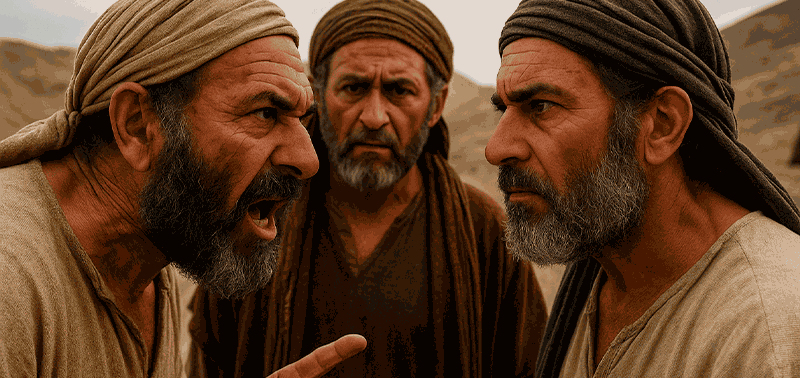
וַיִּקָּהֲלוּ עַל־מֹשֶׁה וְעַל־אַהֲרֹן וַיֹּאמְרוּ אֲלֵהֶם רַב־לָכֶם כִּי כָל־הָעֵדָה כֻּלָּם קְדֹשִׁים וּבְתוֹכָם יְהוָה וּמַדּוּעַ תִּתְנַשְּׂאוּ עַל־קְהַל יְהוָה׃
vayikkahalú al-moshé ve'al-aharón vayomerú alehém rav-lachém ki chol-ha'edá kullám kedoshím uvtochám adonáy umaddúa titnasse'ú al-kehál adonáy
3 And they came (crowded) around Moshe and Aharon, and said: “Isn’t it going to be too much for you? For the whole community, all are holy, and the LORD is among them! Why do you exalt yourselves above the people of God?!”
And this too is something that servants, and teachers, and anyone who tries to be a leader have to hear. This is often said with regard to Israel too: “So how come the Jews are exalting themselves?” And there is no end to such disputes. As they say: the sons of Korach did not die, the disputers are always alive.
So, this was Korach’s main idea: “You are unjust. The whole people is equal before God. Why do you exalt yourselves?” Most commentators condemn Korach. But the Arizal (the Ari), not only the founder of the teaching of Kabbalah but also a deep commentator, an interpreter of the Torah, says that the last letters of three words from Tehillim 92:13: “The righteous one will flourish like a palm tree – Tzadík (ק) katamár (ר) yifrách (ח)” make up the name Korach. In the Arizal’s opinion, Korach is an example of such a righteous one.
What is special about the date palm? That its leaves are not joined together. If we look at the crown of a tree, we will see that the crown usually merges into a single whole, and its little leaves merge, overlap one another. In the date palm all the branches are arranged separately, and the little leaves on the branches are separate too, and they look in different directions, but they are joined by one stem.
In the world there are many divisions. I spoke about the fact that in every people there are some divisions, in every family there are some divisions. Sometimes no one remembers anymore for what reason they occurred, for what reason one separated from the other. Disputes happen between denominations, between communities, between people. Is this good or bad? On the one hand, when there is no dispute, there is no burning, there is no fire, there is no concern for the truth, then one can agree with everything. Where there is no dispute, there is a desire to resign oneself, to accept some small untruth, some small inaccuracy, to close one’s eyes to it. On the other hand, dispute and disagreement should not be a reason for division. I may disagree with my neighbor, but he remains my neighbor, my brother (even when we see differently), because our common goal is the search for truth. If I want him simply to agree with me, or he wants me simply to agree with him, then this means that we are fighting for some victories of our own. But if I am ready to listen to his opinion, to understand his view and, if he reveals the truth to me, to accept this truth (just as he does, on his side), then we are part of one people. But there is a very great temptation, which is really hard to resist: the desire to out-argue a person, to defeat him in the dispute, to turn out to be right even at the cost of departing from the truth. This happens often. We come to a person, trying to teach him some sense, but in fact we want to draw him to our side, to recruit him into our community, into our allies. And his opinion, his position, his view interest us very little at all. And the settings of the radar of a person’s soul warn: “Something is wrong here, this is not for me, this is not for the truth, this is against me. They do not want to open my eyes, but to change the way I see.” And one must constantly keep track of oneself, in order to speak the truth, to teach the truth, to lead to the truth, and not to convince others of one’s own opinion, of one’s own rightness.
There are interesting examples in the history of Jewish scholarly life. In the tractate Shabbat the following story is told. The sages Abaye and Rava often argued very stormily and very heatedly. And once it happened that Abaye won the dispute, bringing some such weighty argument to which Rava had nothing more to object. It would seem one could slam the book shut and dance a victory dance with a spear. But Abaye found the opposite argument, defending Rava’s side, found an argument that would help Rava uphold his opinion in the dispute. This is the highest aerobatics of love for the truth.
Rabbi Yochanan ben Zakai, one of the pillars of Judaism, studied for a long time with Resh Lakish, his brother-in-lawThe Russian word used here can mean either “son-in-law” or “brother-in-law.” We chose “brother-in-law,” since Resh Lakish was married to Rabbi Yochanan’s sister.. When Resh Lakish died, Rabbi Yochanan was given another study companion, who said to everything: “How well you said that! How right you are!” And at some stage Rabbi Yochanan could not bear it and cried out, pleaded: “Where?! Where is Resh Lakish, who objected to my every word?! I know already that I speak beautifully. You try objecting to me, you argue with me!” This is that state when a person strives for the truth, and not only tries to be right, although these two motives can, of course, mix and intermingle one with the other. One must constantly sift them, cut one off from the other. One must constantly check oneself in this, in order to be able to conduct a dispute with a person. Then the person will be for you not bad, not a villain, but one who seeks the truth together with you.
The idea itself, Korach’s driving force, had in it a rational, good grain (in the opinion of the Arizal and in the opinion of some other commentators). Korach had not only personal motives, not only that buffoonery which someone wants to show. He had the motive of a struggle for justice, there really was a sense of injustice and there was a desire to achieve the truth. Yes, he intrigued. Yes, he waited for the right moment. That’s all so, yes and amen! And nevertheless he is not an absolute villain, there is in him this righteousness in the form of a desire to find the truth. Therefore, when Moshe later, in the book of Devarim, recalls this story, he will mention only Datan and Aviram, but not Korach. And with Korach’s further fate, too, everything is not simple. One does not always need to see heroes in black and white, and it is even better never to see them in such colors. Although there were some personal motives there, Korach moved and fought (in the Arizal’s opinion) for justice, unlike Datan and Aviram, who joined him.
Another hero of our story, a man by the name of On ben Pelet, appears only in the first verse. After that he is gone, and there is not a word more about him. Well, he disappeared somewhere. The commentators tell an interesting story on this subject and say this: “Korach had a wife, an ambitious, strong, but not very kind woman, who kept egging him on and saying: ‘Why do you put up with this Moshe, why does he rule over you? You’re always playing second fiddle, you need to make your way up to be a leader, who did I marry?’ And she kept egging Korach on, setting him against Moshe. But when On ben Pelet came home and told: ‘Listen, I’ve signed up for such a business! To the woe of all the bourgeois we’ll fan a worldwide fire!’ His wife said: ‘LORD, where have you stuck yourself, dear? If Moshe is in power – you’ll be a simple Jew. If Korach is in power – you’ll be a simple Jew. Where are you climbing? Why are you getting into this dispute?’ He said: ‘You know, dear, it’s that kind of thing, a man’s thing, I’ve already promised.’ She said: ‘Never mind, drink some wine, eat a bit of meat.’ She gave him wine to drink, put him to bed. The rebels began to scurry back and forth, to knock at their tent. No one opens. And the wife sat at the entrance of the tent with her hair let down. They tried to peek in, saw that a woman with her hair let down was sitting there and, apologizing to themselves, retreated. And when On ben Pelet woke up, the whole story was already over. And so his wife saved him from the not very fascinating journey that awaited all the other rebels. This is one of the versions, which tells more about how wives influence our lives. Such an interesting tale. But one way or another, indeed, On ben Pelet did not appear on the horizon again and did not fall under any repressions.
Purely to broaden your horizons I will add that, from the point of view of biblical criticism, there is a slip of the pen here in the Torah. And there is no ben Pelet, and instead of On one should read ben, and Datan and Amiram, accordingly, are bnei Pelet. That is such a slip of the scribes, which became the original of the Torah, so says biblical criticism. But biblical criticism finds many errors and misprints in the Torah, there is nothing we can do about that. It simply exists next door to us, this biblical criticism.
So, the company of rebels comes to Moshe and lays a claim against him that he has usurped power, usurped holiness and in general usurped everything, that he is a fabricator and makes up the revelations of the Most High himself.
וַיִּשְׁמַע מֹשֶׁה וַיִּפֹּל עַל־פָּנָיו׃
vayishmá moshé vayippól al-panáv
4 And Moshe heard, and fell on his face.
וַיְדַבֵּר אֶל־קֹרַח וְאֶל־כָּל־עֲדָתוֹ לֵאמֹר בֹּקֶר וְיֹדַע יְהוָה אֶת־אֲשֶׁר־לוֹ וְאֶת־הַקָּדוֹשׁ וְהִקְרִיב אֵלָיו וְאֵת אֲשֶׁר יִבְחַר־בּוֹ יַקְרִיב אֵלָיו׃
vaydabbér el-kórach ve'el-kol-adató lemór bóker veyodá adonáy et-asher-ló ve'et-hakkadósh vehikrív eláv ve'ét ashér yivchar-bó yakrív eláv
5 And he spoke to Korach and to all his community, saying: “Morning will come, and the LORD will know his own, and that which is holy He will bring near to Himself; that which He chooses He will bring near to Himself.
זֹאת עֲשׂוּ קְחוּ־לָכֶם מַחְתּוֹת קֹרַח וְכָל־עֲדָתוֹ׃
zot asú kechu-lachém machtót kórach vechol-adató
6 Let us do this: take for yourselves little scoops, Korach and all his community,
וּתְנוּ בָהֵן אֵשׁ וְשִׂימוּ עֲלֵיהֶן קְטֹרֶת לִפְנֵי יְהוָה מָחָר וְהָיָה הָאִישׁ אֲשֶׁר־יִבְחַר יְהוָה הוּא הַקָּדוֹשׁ רַב־לָכֶם בְּנֵי לֵוִי׃
utnu-vahén esh vesímu alehén ketóret lifné adonáy machár vehayá ha'ísh asher-yivchár adonáy hu hakkadósh rav-lachém bené leví
7 And put fire in them, and tomorrow put the burning of incense on them before the LORD. And it will be: the man whom the LORD chooses, he will be considered holy. There you have it, sons of Levi!”
Pay attention to a completely new circumstance: Moshe in this case does not turn to the Most High. The very Moshe who usually, in every situation, asks the Most High what to do and how to act, here does not turn to the Most High. This is evidence that the Most High has already endowed him with some authority, evidence that Moshe himself is already endowed with power and the right to make some decisions. He can decide how events will develop and even how the Most High will act.
וַיֹּאמֶר מֹשֶׁה אֶל־קֹרַח שִׁמְעוּ־נָא בְּנֵי לֵוִי׃
vayomer moshé el-kórach shim'u-ná bené leví
8 And Moshe said to Korach: “Listen, sons of Levi!
הַמְעַט מִכֶּם כִּי־הִבְדִּיל אֱלֹהֵי יִשְׂרָאֵל אֶתְכֶם מֵעֲדַת יִשְׂרָאֵל לְהַקְרִיב אֶתְכֶם אֵלָיו לַעֲבֹד אֶת־עֲבֹדַת מִשְׁכַּן יְהוָה וְלַעֲמֹד לִפְנֵי הָעֵדָה לְשָׁרְתָם׃
ham'át mikkém ki-hivdíl elohé yisraél etchém me'adát yisraél lehakrív etchém eláv la'avód et-avodát mishkán adonáy vela'amód lifné ha'edá lesharetám
9 Is it too little for you that God separated you from the community of Israel, to bring you near to Himself, so that you would work in the Mishkan, to stand before the community and to serve them,
וַיַּקְרֵב אֹתְךָ וְאֶת־כָּל־אַחֶיךָ בְנֵי־לֵוִי אִתָּךְ וּבִקַּשְׁתֶּם גַּם־כְּהֻנָּה׃
vayakrév otechá ve'et-kol-achécha vene-leví ittách uvikkashtém gam-kehunná
10 And brought near you and all your brothers, the sons of Levi, together with you? You want the priesthood as well?
לָכֵן אַתָּה וְכָל־עֲדָתְךָ הַנֹּעָדִים עַל־יְהוָה וְאַהֲרֹן מַה־הוּא כִּי תִלּוֹנוּ )תַלִּינוּ( עָלָיו׃
lachén attá vechol-adatechá hanno'adím al-adonáy ve'aharón ma-hú ki tallínu aláv
11 Therefore you and all your community, you are disputing with God. And what does Aharon have to do with it at all, that you grumble against him?”
So, until morning Moshe tries to make peace with everyone, tries to save the situation and to do without bloodshed, appeals to the mind, to the common sense of Korach, and says: “But you already have an advantage, you are already a Levite. Why do you, Korach Yitzharovich, need to push your way into the kohanim?” Further on we read that Moshe also tries to talk with Datan and Aviram.
וַיִּשְׁלַח מֹשֶׁה לִקְרֹא לְדָתָן וְלַאֲבִירָם בְּנֵי אֱלִיאָב וַיֹּאמְרוּ לֹא נַעֲלֶה׃
vayishlách moshé likró ledatán vela'avirám bené eli'áv vayomerú lo na'alé
12 And Moshe sent to call Datan and Aviram, the sons of Eli'av. They said: “And we will not go to you!
הַמְעַט כִּי הֶעֱלִיתָנוּ מֵאֶרֶץ זָבַת חָלָב וּדְבַשׁ לַהֲמִיתֵנוּ בַּמִּדְבָּר כִּי־תִשְׂתָּרֵר עָלֵינוּ גַּם־הִשְׂתָּרֵר׃
ham'át ki he'elitánu me'éretz zavát chaláv udvásh lahamiténu bammidbár ki-tistarér alénu gam-histarér
13 Is it too little for you that you brought us out of a land flowing with milk and honey (Egypt,) so that we would die here, in the wilderness? That you should now also rule over us and go on ruling?
אַף לֹא אֶל־אֶרֶץ זָבַת חָלָב וּדְבַשׁ הֲבִיאֹתָנוּ וַתִּתֶּן־לָנוּ נַחֲלַת שָׂדֶה וָכָרֶם הַעֵינֵי הָאֲנָשִׁים הָהֵם תְּנַקֵּר לֹא נַעֲלֶה׃
af lo el-éretz zavát chaláv udvásh havi'otánu vattitten-lánu nachalát sadé vachárem ha'ené ha'anashím hahém tenakkér lo na'alé
14 And you have not brought us into a land flowing with milk and honey, and have not given us an allotment or a vineyard. Will you gouge out the eyes of these people (that is, us)? We will not come!”
In many ancient laws, laws of that time, we come across the statute that for disobedience to the king the eyes are to be gouged out. In one of the Hittite documents there is a mention that people had their eyes gouged out because they did not answer the king’s summons. Here they say: “What, are you going to gouge out our eyes?” It must be said that the time for the rebellion was chosen perfectly. The generation has nothing to lose: forty years in the wilderness, we are waiting until we die anyway. The prospect is such that we are waiting here for our death and nothing more. Maybe in the meantime we should take up the favorite Jewish pastime – revolutionary transformations? Maybe we should change the leader, choose the ambitious Korach, who is younger and for justice, and support him? Indeed, this is a very hard period in Moshe’s life, when for the first time he was unable to cancel the sentence, and the generation really is sentenced to perish in the wilderness. Of course, a very good time for a rebellion. And they said to him: “And who are you anyway, to command us? What is your merit? You were unable to fulfill your mission, so know that we will not submit to you.”
וַיִּחַר לְמֹשֶׁה מְאֹד וַיֹּאמֶר אֶל־יְהוָה אַל־תֵּפֶן אֶל־מִנְחָתָם לֹא חֲמוֹר אֶחָד מֵהֶם נָשָׂאתִי וְלֹא הֲרֵעֹתִי אֶת־אַחַד מֵהֶם׃
vayíchar lemoshé me'ód vayomer el-adonáy al-téfen el-minchatám lo chamór echád mehém nasáti veló hare'óti et-achád mehém
15 And it became very bitter for Moshe, and he said to the LORD: “Pay no attention (do not regard) to their offering! I have never taken a single donkey from them and have done nothing bad to any of them.”
Moshe says: “What are they accusing me of? How have I profited from them?”
וַיֹּאמֶר מֹשֶׁה אֶל־קֹרַח אַתָּה וְכָל־עֲדָתְךָ הֱיוּ לִפְנֵי יְהוָה אַתָּה וָהֵם וְאַהֲרֹן מָחָר׃
vayomer moshé el-kórach attá vechol-adatechá heyú lifné adonáy attá vahém ve'aharón machár
16 And Moshe said to Korach: “You will stand before the LORD, you, and all your community, and Aharon, you will stand tomorrow.
וּקְחוּ אִישׁ מַחְתָּתוֹ וּנְתַתֶּם עֲלֵיהֶם קְטֹרֶת וְהִקְרַבְתֶּם לִפְנֵי יְהוָה אִישׁ מַחְתָּתוֹ חֲמִשִּׁים וּמָאתַיִם מַחְתֹּת וְאַתָּה וְאַהֲרֹן אִישׁ מַחְתָּתוֹ׃
ukchú ish machtató untattém alehém ketóret vehikravtém lifné adonáy ish machtató chamishím umatáyim machtót ve'attá ve'aharón ish machtató
17 And each will take his scoop, and you will put incense on them, and you will bring before the LORD each his scoop with incense, two hundred and fifty scoops; and you, and Aharon, – each with his scoop (with his little shovel).
וַיִּקְחוּ אִישׁ מַחְתָּתוֹ וַיִּתְּנוּ עֲלֵיהֶם אֵשׁ וַיָּשִׂימוּ עֲלֵיהֶם קְטֹרֶת וַיַּעַמְדוּ פֶּתַח אֹהֶל מוֹעֵד וּמֹשֶׁה וְאַהֲרֹן׃
vayikchú ish machtató vayittenú alehém esh vayasímu alehém ketóret vaya'amdú pétach óhel mo'éd umoshé ve'aharón
18 And they took each his little scoop (his little shovel), and put fire on them, and laid incense on them, and stood at the entrance to the Tent of Meeting, and Moshe with Aharon.
וַיַּקְהֵל עֲלֵיהֶם קֹרַח אֶת־כָּל־הָעֵדָה אֶל־פֶּתַח אֹהֶל מוֹעֵד וַיֵּרָא כְבוֹד־יְהוָה אֶל־כָּל־הָעֵדָה׃
vayakhél alehém kórach et-kol-ha'edá el-pétach óhel mo'éd vayerá chevod-adonáy el-kol-ha'edá
19 And Korach gathered all his community to them, to the entrance to the Tent of Meeting, and the glory of the LORD appeared to all the community.
וַיְדַבֵּר יְהוָה אֶל־מֹשֶׁה וְאֶל־אַהֲרֹן לֵאמֹר׃
vaydabbér adonáy el-moshé ve'el-aharón lemór
20 And the LORD spoke with Moshe and Aharon, saying:
הִבָּדְלוּ מִתּוֹךְ הָעֵדָה הַזֹּאת וַאַכַלֶּה אֹתָם כְּרָגַע׃
hibbadelú mittóch ha'edá hazzót va'achallé otám kerága
21 “Separate yourselves from this community, and I will devour them right now!”
In the literal sense: “Step aside, I will destroy them right now!”
וַיִּפְּלוּ עַל־פְּנֵיהֶם וַיֹּאמְרוּ אֵל אֱלֹהֵי הָרוּחֹת לְכָל־בָּשָׂר הָאִישׁ אֶחָד יֶחֱטָא וְעַל כָּל־הָעֵדָה תִּקְצֹף׃
vayippelú al-penehém vayomerú el elohé haruchót lechol-basár ha'ísh echád yechetá ve'ál kol-ha'edá tiktzóf
22 And they (that is, Moshe and Aharon) fell on their faces and said: “God of the spirits of all flesh! Is it because one man has sinned that You will be angry with the whole community?”
Again, even in this situation, in mortal danger, slandered and spat upon, they intercede for the people.
There are some ringleaders of the rebellion who dragged the simple people along with them, carried people away after them. And there is a different guilt for the one who started the dispute and for the one who gave in to some persuasion, who followed a false leader. The responsibility must be different, and this is what it is about. Midrash Tanchuma cites, as it were, the answer of the Most High, who says to Moshe and Aharon: “Yes, I know, you are right, and I will punish precisely the guilty.”
וַיְדַבֵּר יְהוָה אֶל־מֹשֶׁה לֵּאמֹר׃
vaydabbér adonáy el-moshé lemór
23 And the LORD spoke to Moshe, saying:
דַּבֵּר אֶל־הָעֵדָה לֵאמֹר הֵעָלוּ מִסָּבִיב לְמִשְׁכַּן־קֹרַח דָּתָן וַאֲבִירָם׃
dabbér el-ha'edá lemór he'alú missavív lemishkan-kórach datán va'avirám
24 “Speak with the community and tell them: withdraw (move away) on all sides from the houses of Korach, Datan and Aviram.”
וַיָּקָם מֹשֶׁה וַיֵּלֶךְ אֶל־דָּתָן וַאֲבִירָם וַיֵּלְכוּ אַחֲרָיו זִקְנֵי יִשְׂרָאֵל׃
vayákom moshé vayélech el-datán va'avirám vayelechú acharáv zikné yisraél
25 And Moshe rose and went to Datan and Aviram, and the elders of Israel went with him.
וַיְדַבֵּר אֶל־הָעֵדָה לֵאמֹר סוּרוּ נָא מֵעַל אָהֳלֵי הָאֲנָשִׁים הָרְשָׁעִים הָאֵלֶּה וְאַל־תִּגְּעוּ בְּכָל־אֲשֶׁר לָהֶם פֶּן־תִּסָּפוּ בְּכָל־חַטֹּאתָם׃
vaydabbér el-ha'edá lemór súru na me'ál aholé ha'anashím haresha'ím ha'élle ve'al-tigge'ú bechol-ashér lahém pen-tissafú bechol-chattotám
26 And he spoke to the community, saying: “Move away from the tents of these wicked men and do not touch anything of theirs, so that you are not gathered (so that you do not die) for their sin.”
Here, in the expression lahém pen-tissafú (so that you are not gathered), the verb lehe'asef (to be gathered) is used in the sense of being added to the people, that is, in the sense of death. This is a concept with many meanings. We talked about the word yosef (to add, to make up, to continue) when we were examining the meaning of the name Yosef; the word asefá means assembly, asafsúf – rabble.
וַיֵּעָלוּ מֵעַל מִשְׁכַּן־קֹרֶח דָּתָן וַאֲבִירָם מִסָּבִיב וְדָתָן וַאֲבִירָם יָצְאוּ נִצָּבִים פֶּתַח אָהֳלֵיהֶם וּנְשֵׁיהֶם וּבְנֵיהֶם וְטַפָּם׃
vaye'alú me'ál mishkan-kórach datán va'avirám missavív vedatán va'avirám yatze'ú nittzavím pétach aholehém unshehém uvnehém vetappám
27 And they moved away from the dwelling of Korach, Datan and Aviram all around, and Datan and Aviram came out of their tents, stood at the entrance to their tents, and their wives, and their children with them.
That is, the people stepped back, forming a circle of emptiness around the dwellings of Korach, Datan and Aviram. We read (in chapters 2 and 3 of our book) that the camp of Re'uven in the south borders on the Levite camp of Korach.
וַיֹּאמֶר מֹשֶׁה בְּזֹאת תֵּדְעוּן כִּי־יְהוָה שְׁלָחַנִי לַעֲשׂוֹת אֵת כָּל־הַמַּעֲשִׂים הָאֵלֶּה כִּי־לֹא מִלִּבִּי׃
vayomer moshé bezót tede'ún ki-adonáy shelacháni la'asót et kol-hamma'asím ha'élle ki-ló millibbí
28 And Moshe said: “By this you will know that the LORD sent me to do all these things, that they are not from my heart:
אִם־כְּמוֹת כָּל־הָאָדָם יְמֻתוּן אֵלֶּה וּפְקֻדַּת כָּל־הָאָדָם יִפָּקֵד עֲלֵיהֶם לֹא יְהוָה שְׁלָחָנִי׃
im-kemót kol-ha'adám yemutún élle ufkuddát kol-ha'adám yippakéd alehém lo adonáy shelacháni
29 If they die as every man dies, if as death visits every man, so it visits them too, then God did not send me.
וְאִם־בְּרִיאָה יִבְרָא יְהוָה וּפָצְתָה הָאֲדָמָה אֶת־פִּיהָ וּבָלְעָה אֹתָם וְאֶת־כָּל־אֲשֶׁר לָהֶם וְיָרְדוּ חַיִּים שְׁאֹלָה וִידַעְתֶּם כִּי נִאֲצוּ הָאֲנָשִׁים הָאֵלֶּה אֶת־יְהוָה׃
ve'im-beri'á yivrá adonáy ufatzetá ha'adamá et-píha uvale'á otám ve'et-kol-ashér lahém veyaredú chayím she'óla vida'tém ki ni'atzú ha'anashím ha'élle et-adonáy
30 But if the LORD creates a new creation, and the earth opens its mouth, and it swallows them and all that is theirs, and they go down alive into sheol, then you will know that these people waged war against God.”
Moshe himself sets the rules, without a revelation from the Most High. Moshe says: “Let the Most High create something new, something that did not exist before.” From this testimony the following conclusion is drawn: what a righteous man establishes in this world, what a righteous man binds in this world, that also remains bound. That is, as Moshe said, so it will be; Moshe, as a righteous man, has such a right.
Moshe was always a man who loved Israel, who interceded for Israel, and many times he exposed himself to mortal danger in this world and in the world to come for the sake of saving Israel. But here the time comes when Moshe must, as it were, bang his fist on the table and say: “Enough!” When the wedding ceremony takes place and the groom gives the bride a ring, he says to her: “You are consecrated to me according to the faith of Moshe and Israel.” What does Moshe and Israel mean? Forty years together. Constant quarrels, squabbles, disputes, but they lived forty years together. As long as Moshe was alive, he was with Israel; in the same way one must live with one’s spouse for many years: quarrel, argue, but be together and love each other. Here Moshe again intercedes for Israel, he says: “Do not destroy those whom these instigators carried away, strike only the guilty.” But for the rest this must be a clear testimony, so that they would no longer fall into doubt, so that the faith that was in them when they believed in the LORD and in Moshe, His servant (Shemot 14:31), so that this faith would remain. One more, final, strong testimony is needed. And once again this is not hatred, not anger – it is care for the people.
וַיְהִי כְּכַלֹּתוֹ לְדַבֵּר אֵת כָּל־הַדְּבָרִים הָאֵלֶּה וַתִּבָּקַע הָאֲדָמָה אֲשֶׁר תַּחְתֵּיהֶם׃
vayhí kechallotó ledabbér et kol-haddevarím ha'élle vattibbaká ha'adamá ashér tachtehém
31 And it came to pass, when he finished speaking all these words, and the earth split (cracked, crumbled) beneath them.
וַתִּפְתַּח הָאָרֶץ אֶת־פִּיהָ וַתִּבְלַע אֹתָם וְאֶת־בָּתֵּיהֶם וְאֵת כָּל־הָאָדָם אֲשֶׁר לְקֹרַח וְאֵת כָּל־הָרֲכוּשׁ׃
vattiftách ha'áretz et-píha vattivlá otám ve'et-battehém ve'ét kol-ha'adám ashér lekórach ve'ét kol-harechúsh
32 And the earth opened its mouth, and swallowed them, and their houses, and every person who was with Korach, and all their property.
It is not written here that it swallowed Korach too. The question of Korach’s death remains a mystery. And before this it was written that Datan and Aviram came to the entrances of the tents. And we know that the prophet Shmuel was from the descendants of Korach, so it is written in his genealogy. From this the conclusion is drawn that Korach received some special punishment and, in any case, his children remained alive: some Psalms were written by the sons of Korach.
Many centuries later there lived a certain sage and storyteller, Rabba bar Bar Chana. He has many wondrous stories about his extraordinary travels. Indeed, some incredible things are described there, incredible countries, and one can take them as tall tales. Some take them as some kind of mystical experiences. The Rambam says that Rabba bar Bar Chana told these stories to his students before his lessons, in order to somehow intrigue them, to attract their attention. Here is one of these stories. Traveling through the Sinai desert, he met an Arab merchant, a Yishmaelite, who said to him: “Do you want me to show you the place where the earth swallowed the sons of Korach?” He said: “Well yes, of course I want to, it’s interesting after all.” And this Arab led him to some place in the desert. There he took a big stick, wound some cotton wool onto it, lowered it into a crack, and when he pulled it out, it was scorched. And this Arab said to Rabba: “Put your ear to the ground.” He put his ear to the ground and heard there, under the ground, voices that said: “We were wrong, and Moshe is right.” This was two thousand years after the events described in verse 32. One can take this story as truth, or one can take it as a legend. I lean toward the second, but such a story is told, a story about the whole community being swallowed alive.
וַיֵּרְדוּ הֵם וְכָל־אֲשֶׁר לָהֶם חַיִּים שְׁאֹלָה וַתְּכַס עֲלֵיהֶם הָאָרֶץ וַיֹּאבְדוּ מִתּוֹךְ הַקָּהָל׃
vayeredú hem vechol-ashér lahém chayím she'óla vattechás alehém ha'áretz vayovedú mittóch hakkahál
33 And they went down, they and all that was theirs, alive into Sheol, and the earth covered them (closed over them), and they perished (vanished) from the community.
As Moshe asked of the Most High, so the Most High carried it out: the righteous one establishes, the Most High does, as we also said.
Some commentators see in this verse, as it were, the words of the earth. The earth opened its mouth, swallowed all the rebels and said: “They have reached Sheol.” Why is this needed, why do the commentators want such an explanation? So that the people would be convinced that the earth swallowed them and they flew all the way down to Sheol alive. After all, it is a long flight down, one could die on the way. And if we interpret these words as the testimony of the earth, then the whole people is told, as in a telegram: “There, I swallowed them, and they have landed safely; these mutineers have landed!” There is such an understanding. But the simple understanding is quite appropriate too. The Torah testifies to us that this whole mutinous community, all the insurgents went down into Sheol alive.
וְכָל־יִשְׂרָאֵל אֲשֶׁר סְבִיבֹתֵיהֶם נָסוּ לְקֹלָם כִּי אָמְרוּ פֶּן־תִּבְלָעֵנוּ הָאָרֶץ׃
vechol-yisraél ashér sevivotehém násu lekolám ki amerú pen-tivla'énu ha'áretz
34 And all the sons of Israel who were around fled at their voice, because they said: “Lest the earth swallow us too!”
Who else remained untouched by the punishment? Two hundred fifty men, candidates to become kohanim.
וְאֵשׁ יָצְאָה מֵאֵת יְהוָה וַתֹּאכַל אֵת הַחֲמִשִּׁים וּמָאתַיִם אִישׁ מַקְרִיבֵי הַקְּטֹרֶת׃
ve'ésh yatze'á me'ét adonáy vattóchal et hachamishím umatáyim ish makrivé hakketóret
35 And fire came out from the LORD, and consumed the two hundred fifty men who had brought the burning of incense.
So, part of the community was carried away under the earth, part was burned up by the fire. The struggle for equality ended tragically, but even in this death there is a manifestation of inequality. Indeed, the unity of a society is not the uniformity of a society. Attempts to make all people think the same, eat the same, dress the same, have the same income, succeed the same – all these attempts end badly. And although we see a multitude of examples of this in history, and Korach’s rebellion is one of them, we continue to hear and see the like even now.
Besides being about a rebellion, this portion is also about the often arising desire to replace justice with sameness, uniformity, standardization. Such was Korach’s attempt, that is how he saw it.
And the same vision may be characteristic not only of students, but also of teachers. And teachers want it even more, that everyone copy, that everyone imitate, that everyone be the same, because that way it is easier to teach. Just as one does not always need to fight for unity of opinions, so one does not always have to come out against a mentor who thinks differently from you. Unity does not mean uniformity: there must be differences of opinion, so that the skillful may appear. This is one of the lessons the Torah teaches us. And if someone wants to assert his leadership – well then, stand in front of the tent with little scoops, with little shovels, with the burning of incense. But a leader must be ready for the fact that he may also be scorched by fire.
The independent leader
Bemidbar 17:1–28
With God’s help, you and I continue to study the weekly portion Korach and will read chapter 17 of the book of Bemidbar. We stopped at the point that the rebellion, Korach’s attempt at division, ended tragically. The communities of Datan and Aviram were swallowed by the earth and went down alive into Sheol – a punishment the like of which had never been until then. And those who saw themselves as candidates to become kohanim, two hundred fifty men, who stood with scoops and burnings of incense, were burned by the fire that came down from heaven. A terrible picture. We continue reading the tragic story of the people of Israel.
וַיְדַבֵּר יְהוָה אֶל־מֹשֶׁה לֵּאמֹר׃
vaydabbér adonáy el-moshé lemór
1 And the LORD spoke to Moshe, saying:
אֱמֹר אֶל־אֶלְעָזָר בֶּן־אַהֲרֹן הַכֹּהֵן וְיָרֵם אֶת־הַמַּחְתֹּת מִבֵּין הַשְּׂרֵפָה וְאֶת־הָאֵשׁ זְרֵה־הָלְאָה כִּי קָדֵשׁוּ׃
emór el-el'azár ben-aharón hakkohén veyarém et-hammachtót mibbén hasserefá ve'et-ha'ésh zere-hál'a ki kadéshu
2 “Say to Elazar, son of Aharon the kohen, and he shall gather up the scoops from the site of the blaze, the strange fire he shall throw out, because these scoops have become holy.
The difference between Elazar and Aharon is that Aharon is the kohen gadol, that is, the high priest, while his children during his lifetime are simply kohanim, including Elazar ben Aharon. Those who brought the burning of incense in the scoops turned out to be unfit for the priesthood and perished. But the scoops themselves became holy, because there was the intention to serve the Most High with them, and they can no longer be used for some ordinary, everyday work. Therefore the fire must be thrown out, and the little scoops kept, and the Most High will now tell how to use them.
אֵת מַחְתּוֹת הַחַטָּאִים הָאֵלֶּה בְּנַפְשֹׁתָם וְעָשׂוּ אֹתָם רִקֻּעֵי פַחִים צִפּוּי לַמִּזְבֵּחַ כִּי־הִקְרִיבֻם לִפְנֵי־יְהוָה וַיִּקְדָּשׁוּ וְיִהְיוּ לְאוֹת לִבְנֵי יִשְׂרָאֵל׃
et machtót hachatta'ím ha'élle benafshotám ve'asú otám rikku'é fachím tzippúy lammizbéyach ki-hikrivúm lifne-adonáy vayikdáshu veyihyú le'ót livné yisraél
3 Take the little scoops of these who sinned with their own soul, and make them flat (by hammering), make them a covering for the altar, because in them it was offered before the LORD, and they became holy, and they will be a sign for the sons of Israel.
That is, I will repeat: even though the offering itself was not legitimate, the scoops became holy all the same, and therefore the Most High commands to flatten them and make from them a covering for the altar, so that the sons of Israel remember to whom kehunná (the priesthood) belongs. The service of the kohen gadol (the high priest) is a separate question, it will be spoken of later, in this same portion. For now the kohen Elazar ben Aharon is commanded to gather these scoops and prepare them for hammering, for working. In what will these scoops be a sign to the sons of Israel? In that the priesthood will no longer be contested.
וַיִּקַּח אֶלְעָזָר הַכֹּהֵן אֵת מַחְתּוֹת הַנְּחֹשֶׁת אֲשֶׁר הִקְרִיבוּ הַשְּׂרֻפִים וַיְרַקְּעוּם צִפּוּי לַמִּזְבֵּחַ׃
vayikkách el'azár hakkohén et machtót hannechóshet ashér hikrívu hasserufím vayrakke'úm tzippúy lammizbéyach
4 And Elazar the kohen took these copper scoops, which the burned ones had brought, and hammered out of them a covering of the altar.
Why is it written here serufím (burned ones), while above the Most High says hachatta'ím ha'élle benafshotám (those who sinned with their soul)? It could happen that people might say: “All right, Datan and Aviram, they are the instigators, the ringleaders. But these were egged on by Korach, who said: ‘Go ahead, guys, everything will work out for you!’ They went with a sincere, pure heart to bring the Most High the burning of incense, in order to – what? In order to become kohanim and serve the Most High. They are pure in heart, and then these flattened sheets from the little scoops will be in memory of how these pure people perished.” But the Most High says clearly that in their soul they were villains. That is, these people who went with the burnings of incense did not have, did not have a pure intention. And also: it often happens that, besides the desire to serve the Most High, to serve the Most High sincerely, there is always a little worm that says: “It is I who will be doing this, I will see myself in God more than God in myself, I am God’s servant, not just anyone, but precisely I! And it is God for me, and not I for God.” This is a very great temptation.
So, Elazar gathered the little scoops and made from them a covering for the altar.
זִכָּרוֹן לִבְנֵי יִשְׂרָאֵל לְמַעַן אֲשֶׁר לֹא־יִקְרַב אִישׁ זָר אֲשֶׁר לֹא מִזֶּרַע אַהֲרֹן הוּא לְהַקְטִיר קְטֹרֶת לִפְנֵי יְהוָה וְלֹא־יִהְיֶה כְקֹרַח וְכַעֲדָתוֹ כַּאֲשֶׁר דִּבֶּר יְהוָה בְּיַד־מֹשֶׁה לוֹ׃
zikkarón livné yisraél lemá'an ashér lo-yikráv ish zar ashér lo mizzéra aharón hu lehaktír ketóret lifné adonáy velo-yihyé chekórach vecha'adató ka'ashér dibbér adonáy beyad-moshé lo
5 A memorial to the sons of Israel, so that no strange man who is not of the family of Aharon would draw near to burn the burning of incense before the Most High, and so that he would not be like Korach and like his community, as God said through Moshe to him.
Said to him – to whom? To Elazar. Elazar was told to flatten the copper sheets. As it was told to him, so he did.
From verse 6 we read… Well, as has long been the custom:
וַיִּלֹּנוּ כָּל־עֲדַת בְּנֵי־יִשְׂרָאֵל מִמָּחֳרָת עַל־מֹשֶׁה וְעַל־אַהֲרֹן לֵאמֹר אַתֶּם הֲמִתֶּם אֶת־עַם יְהוָה׃
vayillónu kol-adát bene-yisraél mimmachorát al-moshé ve'al-aharón lemór attém hamittém et-ám adonáy
6 And the whole community of the sons of Israel came to complain (to murmur) the next day against Moshe and against Aharon, saying: “You have killed the people of God.”
That is: “Why did you, Moshe, set them up, these unfortunate people whom Korach egged on, set them up to bring the burning of incense? It was your idea after all, God did not say that you should set them up. You knew that they would die. Why did you, Moshe, this time not intercede for the people of God, why did you not stand in the breach, but on the contrary supported the killing of the people? Are you with us at all, or with whom?” With such a claim the people came to Moshe.
וַיְהִי בְּהִקָּהֵל הָעֵדָה עַל־מֹשֶׁה וְעַל־אַהֲרֹן וַיִּפְנוּ אֶל־אֹהֶל מוֹעֵד וְהִנֵּה כִסָּהוּ הֶעָנָן וַיֵּרָא כְּבוֹד יְהוָה׃
vayhí behikkahél ha'edá al-moshé ve'al-aharón vayifnú el-óhel mo'éd vehinné chissáhu he'anán vayerá kevód adonáy
7 And it came to pass, when the people were gathering against Moshe and against Aharon, and they all turned to the Tent of Meeting, and behold, the cloud covered it, and the glory of the LORD appeared.
וַיָּבֹא מֹשֶׁה וְאַהֲרֹן אֶל־פְּנֵי אֹהֶל מוֹעֵד׃
vayavó moshé ve'aharón el-pené óhel mo'éd
8 And (only then) Aharon and Moshe came out to the entrance to the Tent of Meeting.
That is, apparently the people were gathering for an unauthorized rally with grievances against Moshe. The people wrote placards: “You are murderers of Jews!”, “No to genocide!”, “Anti-Semites!”, and with these placards they wanted to go out to the Tent of Meeting – and went out. The cloud appeared, the glory of the LORD appeared. And at the noise and the light Moshe and Aharon came over.
וַיְדַבֵּר יְהוָה אֶל־מֹשֶׁה לֵּאמֹר׃
vaydabbér adonáy el-moshé lemór
9 And the LORD spoke with Moshe, saying:
הֵרֹמּוּ מִתּוֹךְ הָעֵדָה הַזֹּאת וַאֲכַלֶּה אֹתָם כְּרָגַע וַיִּפְּלוּ עַל־פְּנֵיהֶם׃
herómmu mittóch ha'edá hazzót va'achallé otám kerága vayippelú al-penehém
10 “Go up (move away) from this community, I will destroy them in an instant.” And they fell prostrate.
Again a severe trial for Moshe. Again the people accuse him of something, again endless accusations pour down. And the Most High wants to destroy the people of Israel, as has already happened before. Moshe says nothing, Moshe falls prostrate (together with Aharon). And Moshe, simply a teacher, is worried for the people. Although he could, of course, have rejoiced: “Finally He, the Sovereign of the world, will kill them all while we lie here.” And so, they lie prostrate.
וַיֹּאמֶר מֹשֶׁה אֶל־אַהֲרֹן קַח אֶת־הַמַּחְתָּה וְתֶן־עָלֶיהָ אֵשׁ מֵעַל הַמִּזְבֵּחַ וְשִׂים קְטֹרֶת וְהוֹלֵךְ מְהֵרָה אֶל־הָעֵדָה וְכַפֵּר עֲלֵיהֶם כִּי־יָצָא הַקֶּצֶף מִלִּפְנֵי יְהוָה הֵחֵל הַנָּגֶף׃
vayomer moshé el-aharón kach et-hammachtá veten-aléha esh me'ál hammizbéach vesím ketóret veholéch meherá el-ha'edá vechappér alehém ki-yatzá hakkétzef millifné adonáy hechél hannágef
11 And Moshe said to Aharon: “You take the scoop, take fire on it from the altar, and put incense on it, and go quickly to the community, and atone for them, because wrath has gone out from the LORD and the plague (epidemic) has begun.”
Moshe saw (perhaps by the Holy Spirit) that an epidemic had begun among the people, a plague had begun. How he saw this is hard to say, but apparently he had some kind of revelation, apparently he was bound so strongly to the people of Israel that he could feel it – feel that a plague is beginning among the people, the people are beginning to die. Moshe sends Aharon with an antidote, with a pill against the epidemic, with an inoculation, a vaccine in the form of incense. The commentators do not pass this by and ask: how did Moshe know that this would work? And some commentators tell an old midrash. When Moshe went up to heaven, the angels said to the Most High: “Why are You giving the Torah to people? Give it to us.” The Most High answered them thus: “Well, in the Torah it is written: ‘I am the LORD, God, Who brought you out of the land of Egypt.’ Did you come out of the land of Egypt? No. It is written: ‘You shall have no other gods before Me.’ Do you have idolatry? Do you have such a temptation? No. It is written: ‘Do not lift up My Name in vain.’ Do you conduct any negotiations, any disputes, any lawsuits, so that you would swear by My Name? No. Do you have some daily work of your own, so that you would rest on Shabbat? No. Do you have parents, so that you would honor dad and mom? No. You have no belongings, and no wives, and no courts at which you would testify.” And so on, commandment after commandment (according to some versions, it was Moshe who answered the angels on all their arguments). And the Most High said: “The Torah belongs to people.” After this the Most High commanded each of the angels to teach Moshe something. And so the angel of death, according to this midrash, taught Moshe that incense helps against an epidemic, that if the Most High has sent a plague, then one must burn incense, place it at the boundary of the plague’s spread, and the plague, the epidemic, will be stopped. And at this moment, when Moshe’s life is (once again) under threat, Moshe simply sends his older brother Aharon, no longer a young man, with the words: “Go quickly! Quickly, because the people are dying.” To me it is not so interesting how Moshe knows about the incense. What interests me is how Moshe resolves no longer to argue, no longer to debate with the Most High, no longer to intercede, but himself to start taking some countermeasures – knowing that this is the wrath of the Most High, that this is the action of the Most High. How can one even know any recipes to stand against the will of the Most High? First, how does he dare, how does he resolve to do such a thing? Second, why does he think that he will succeed, and why does he actually succeed? This question is far more astonishing than the fact that he knew how to do it. This takes us back to what we talked about in chapter 16: “The righteous man establishes, the Most High does.” By his actions Moshe says to the Most High: “I am the building manager here. You appointed me, You gave me authority, and on the basis of my authority I decide that here and now this will be atonement.” It is precisely this that will stop the plague – not the incense offering itself, not Aharon and his censer (I think that the censer here is something auxiliary), but Moshe’s readiness to intercede for the people once again.
וַיִּקַּח אַהֲרֹן כַּאֲשֶׁר דִּבֶּר מֹשֶׁה וַיָּרָץ אֶל־תּוֹךְ הַקָּהָל וְהִנֵּה הֵחֵל הַנֶּגֶף בָּעָם וַיִּתֵּן אֶת־הַקְּטֹרֶת וַיְכַפֵּר עַל־הָעָם׃
vayikkách aharón ka'ashér dibbér moshé vayárotz el-tóch hakkahál vehinné hechél hannégef ba'ám vayittén et-hakketóret vaychappér al-ha'ám
12 And Aharon did (took), as Moshe had said, and ran into the crowd, and behold, the plague had begun among the people, and he offered up the incense and atoned for the people.
He did not even go quickly, as Moshe advised, but ran. Old Aharon ran to save the people. And yet Aharon too had suffered from this people like you would not believe. Both cursed and crushed by this people, and everything that Moshe endured, Aharon endured too. And he too runs to save the people, without asking himself: “Wait a moment, we are now working against the Most High.” He has no such thought, he has to save the people.
וַיַּעֲמֹד בֵּין־הַמֵּתִים וּבֵין הַחַיִּים וַתֵּעָצַר הַמַּגֵּפָה׃
vaya'amód ben-hammetím uvén hachayím vatte'atzár hammaggefá
13 And he stood between the living and the dead (stood at the boundary of the epidemic’s spread), and the epidemic stopped.
וַיִּהְיוּ הַמֵּתִים בַּמַּגֵּפָה אַרְבָּעָה עָשָׂר אֶלֶף וּשְׁבַע מֵאוֹת מִלְּבַד הַמֵּתִים עַל־דְּבַר־קֹרַח׃
vayihyú hammetím bammaggefá arba'á asár élef ushvá me'ót millevád hammetím al-devar-kórach
14 And those who died of the epidemic were fourteen thousand seven hundred, this besides those who died because of Korach.
וַיָּשָׁב אַהֲרֹן אֶל־מֹשֶׁה אֶל־פֶּתַח אֹהֶל מוֹעֵד וְהַמַּגֵּפָה נֶעֱצָרָה׃
vayáshov aharón el-moshé el-pétach óhel mo'éd vehammaggefá ne'etzára
15 And Aharon returned to Moshe to the entrance to the Tent of Meeting, and the epidemic was stopped.
Two questions, connected with the accusation of Moshe of the genocide of Jews and with the kohanim, have been resolved. One more remains – the question of the high priesthood, and it too must be closed.
וַיְדַבֵּר יְהוָה אֶל־מֹשֶׁה לֵּאמֹר׃
vaydabbér adonáy el-moshé lemór
16 And the LORD spoke to Moshe, saying:
דַּבֵּר אֶל־בְּנֵי יִשְׂרָאֵל וְקַח מֵאִתָּם מַטֶּה מַטֶּה לְבֵית אָב מֵאֵת כָּל־נְשִׂיאֵהֶם לְבֵית אֲבֹתָם שְׁנֵים עָשָׂר מַטּוֹת אִישׁ אֶת־שְׁמוֹ תִּכְתֹּב עַל־מַטֵּהוּ׃
dabbér el-bené yisraél vekách me'ittám matté matté levét av me'ét kol-nesi'ehém levét avotám sheném asár mattót ish et-shemó tichtóv al-mattéhu
17 “Speak with the sons of Israel, and take from them a staff each, from every father’s house, from each of the leaders of their fathers’ houses, twelve staffs; and let each write his name on his staff.
וְאֵת שֵׁם אַהֲרֹן תִּכְתֹּב עַל־מַטֵּה לֵוִי כִּי מַטֶּה אֶחָד לְרֹאשׁ בֵּית אֲבוֹתָם׃
ve'ét shem aharón tichtóv al-matté leví ki matté echád lerósh bet avotám
18 And write Aharon’s name on the staff of the Levites, because from each house (from each father’s house, including from their common house) only one staff is needed.
וְהִנַּחְתָּם בְּאֹהֶל מוֹעֵד לִפְנֵי הָעֵדוּת אֲשֶׁר אִוָּעֵד לָכֶם שָׁמָּה׃
vehinnachtám be'óhel mo'éd lifné ha'edút ashér ivva'éd lachém shámma
19 And you will place them in the Tent of Meeting, before the ark of testimony, where I appear to you.
וְהָיָה הָאִישׁ אֲשֶׁר אֶבְחַר־בּוֹ מַטֵּהוּ יִפְרָח וַהֲשִׁכֹּתִי מֵעָלַי אֶת־תְּלֻנּוֹת בְּנֵי יִשְׂרָאֵל אֲשֶׁר הֵם מַלִּינִם עֲלֵיכֶם׃
vehayá ha'íshThe Russian transliteration line has “and a man” here, but the Hebrew reads “the man” (ha'ísh), so the English line follows the Hebrew. ashér evchar-bó mattéhu yifrách vahashikkotí me'aláy et-telunnót bené yisraél ashér hem malliním alechém
20 And it will be, the man whom I choose, his staff will blossom, and I will cast off all the complaints (get rid of all the complaints) of the sons of Israel, with which they constantly complain against you.”
וַיְדַבֵּר מֹשֶׁה אֶל־בְּנֵי יִשְׂרָאֵל וַיִּתְּנוּ אֵלָיו כָּל־נְשִׂיאֵיהֶם מַטֶּה לְנָשִׂיא אֶחָד מַטֶּה לְנָשִׂיא אֶחָד לְבֵית אֲבֹתָם שְׁנֵים עָשָׂר מַטּוֹת וּמַטֵּה אַהֲרֹן בְּתוֹךְ מַטּוֹתָם׃
vaydabbér moshé el-bené yisraél vayittenú eláv kol-nesi'ehém matté lenasí echád matté lenasí echád levét avotám sheném asár mattót umatté aharón betóch mattotám
21 And Moshe spoke with the sons of Israel, and all the leaders gave him one staff each from each house, from each one’s father’s house, twelve staffs, and Aharon’s staff among them.
וַיַּנַּח מֹשֶׁה אֶת־הַמַּטֹּת לִפְנֵי יְהוָה בְּאֹהֶל הָעֵדֻת׃
vayannách moshé et-hammattót lifné adonáy be'óhel ha'edút
22 And Moshe placed these staffs before the LORD in the Tent of Testimony.
וַיְהִי מִמָּחֳרָת וַיָּבֹא מֹשֶׁה אֶל־אֹהֶל הָעֵדוּת וְהִנֵּה פָּרַח מַטֵּה־אַהֲרֹן לְבֵית לֵוִי וַיֹּצֵא פֶרַח וַיָּצֵץ צִיץ וַיִּגְמֹל שְׁקֵדִים׃
vayhí mimmachorát vayavó moshé el-óhel ha'edút vehinné parách matte-aharón levét leví vayotze férach vayátzetz tzitz vayigmól shekedím
23 And it came to pass on the next day, and Moshe came into the Tent of Testimony, and behold, Aharon’s staff from the house of Levi had blossomed, and a flower came out, and a shoot appeared, and almonds sprouted (grew).
The word almond in Hebrew is shakéd (plural – shekedím), the root shin-kuf-resh. From the same root comes the verb lishkód (to work diligently at something). We see in the book of Yirmeyahu (1:11) that the Most High shows him an almond branch (shakéd), and in the next verse (1:12) says: “Ki shokéd ani – For I am diligently at work.” And the fact that Aharon’s staff sprouted precisely with almonds is perhaps a sign that nurturing, upbringing, any labor over the people is a long process. In today’s Hebrew shakdán is a diligent, painstaking, persistent and stubborn person who puts all of himself in. This is a good characterization of Aharon, who had just run with a staff (or without a staff) and a censer to save the people of Israel, which had yet again nearly killed him.
וַיֹּצֵא מֹשֶׁה אֶת־כָּל־הַמַּטֹּת מִלִּפְנֵי יְהוָה אֶל־כָּל־בְּנֵי יִשְׂרָאֵל וַיִּרְאוּ וַיִּקְחוּ אִישׁ מַטֵּהוּ׃
vayotzé moshé et-kol-hammattót millifné adonáy el-kol-bené yisraél vayir'ú vayikchú ish mattéhu
24 And Moshe brought out all the rods (staffs) from before the face of the Most High to the sons of Israel, and they saw, and each took his staff.
וַיֹּאמֶר יְהוָה אֶל־מֹשֶׁה הָשֵׁב אֶת־מַטֵּה אַהֲרֹן לִפְנֵי הָעֵדוּת לְמִשְׁמֶרֶת לְאוֹת לִבְנֵי־מֶרִי וּתְכַל תְּלוּנֹּתָם מֵעָלַי וְלֹא יָמֻתוּ׃
vayomer adonáy el-moshé hashév et-matté aharón lifné ha'edút lemishméret le'ót livne-méri utchál telunnotám me'aláy veló yamútu
25 And the LORD said to Moshe: “Return Aharon’s staff, so that it is before the ark of testimony for eternal keeping, as a sign for all the rebels, and their complaints against Me will cease (they will leave Me alone), and they will not die.”
וַיַּעַשׂ מֹשֶׁה כַּאֲשֶׁר צִוָּה יְהוָה אֹתוֹ כֵּן עָשָׂה׃
vayá'as moshé ka'ashér tzivvá adonáy otó ken asá
26 And Moshe did; as the Most High had commanded him, so he did.
Aharon’s staff remained as a sign, as a token for all who wish to argue, in all the generations of Israel. Unfortunately, it has not come down to us because of our many sins in the numerous vicissitudes of our history.
וַיֹּאמְרוּ בְּנֵי יִשְׂרָאֵל אֶל־מֹשֶׁה לֵאמֹר הֵן גָּוַעְנוּ אָבַדְנוּ כֻּלָּנוּ אָבַדְנוּ׃
vayomerú bené yisraél el-moshé lemór henThe Russian transliteration line has “ben” here, but the Hebrew word is “hen” (behold), so the English line follows the Hebrew. gavá'nu avádnu kullánu avádnu
27 And the sons of Israel spoke to Moshe, saying: “Behold, we are doomed to destruction, and all are perishing, all are being lost.
One can understand this verse in such a way that the people of Israel saw how great the mortality was, how quick the Most High is with death sentences. And indeed, the sons of Israel had reason to be frightened. And they say: “With such a strict attitude of the Most High toward the people, we will all perish, we will all be lost.”
כֹּל הַקָּרֵב הַקָּרֵב אֶל־מִשְׁכַּן יְהוָה יָמוּת הַאִם תַּמְנוּ לִגְוֹעַ׃
kol hakkarév hakkarév el-mishkán adonáy yamút ha'ím támnu ligvóa
28 And it has already been said that everyone who draws near to the Mishkan of the LORD will die. Will we really all perish here?”
Will we, each of us, find some death penalty of our own, will each of us perish for some sins of our own? Will we really not survive with such a strict attitude of the Most High?
With this tragic question we finish studying chapter 17.
Life goes on
Bemidbar 18:1–32
With God’s help, you and I will study chapter 18 of the weekly portion Korach. In our chapter some organizational conclusions are drawn, some results are summed up after all the terrible, tragic events we read about in chapters 16 and 17.
וַיֹּאמֶר יְהוָה אֶל־אַהֲרֹן אַתָּה וּבָנֶיךָ וּבֵית־אָבִיךָ אִתָּךְ תִּשְׂאוּ אֶת־עֲוֹן הַמִּקְדָּשׁ וְאַתָּה וּבָנֶיךָ אִתָּךְ תִּשְׂאוּ אֶת־עֲוֹן כְּהֻנַּתְכֶם׃
vayomer adonáy el-aharón attá uvanécha uvet-avícha ittách tis'ú et-avón hammikdásh ve'attá uvanécha ittách tis'ú et-avón kehunnatchém
1 And the LORD said to Aharon: “You and your sons, and the house of your father with you, will bear the sin of the sanctuary; you and your sons will bear the sin of your priesthood.”
In all, there are two cases in the Torah when the LORD speaks directly with Aharon. There are cases when the LORD addresses Moshe and Aharon at the same time, there are many such cases. There are cases when the LORD speaks with Moshe and asks him to instruct Aharon. But there are only two cases when the LORD speaks with Aharon directly. The first case was in chapter 10 of the book of Vayikra (after the death of the sons of Aharon), when the LORD tells Aharon that neither he nor his sons should drink any alcohol before entering the sanctuary, and the second case is here. If we draw a parallel, try to find something in common between the two cases, then we will see that it is about a certain consolation, a confirmation, personally for Aharon, of the continuation of his service. He remains in the service, his service is pleasing, whatever tragedies may happen nearby. He remains the one chosen by the Most High for this service.
Aharon and his sons, his descendants – these are the kohanim, part of the tribe of Levi, it is they who will bear the sin of the priesthood. And together with the house of Aharon’s father, that is, with the whole tribe of Levi, they will also bear the sin of the sanctuary.
When the Tent of Meeting stands in its assembled state and services take place in it, the kohanim are responsible for this – Aharon and his sons, or their descendants. The kohanim are also responsible for making sure that the Levites do not take part in dismantling the Mishkan, in packing the holy articles, so that they do not perish. But when the Mishkan travels, the Levites carry it, that is, it is now their responsibility. This is the first part of our verse, when the Most High says: “You, and your sons, and the whole house of your father are responsible for the Holy, for the sanctuary.” The second part says: “You and your sons are responsible for your priesthood.” The priesthood requires a reverent attitude, the observance of a whole series of laws, for example: not to enter the sanctuary drunk or impure, to keep the vessels of the sanctuary safe and sound, and much else. There are various punishments for violating the Temple service. In the Mishna, in the tractate Sanhedrin (chapter 5, mishna 9), we read the following: “A kohen who performed the service in impurity – his brothers the kohanim do not bring him to the beit-din (house of judgment), but the young kohanim take him out of the courtyard and split his head with logs of firewood. A stranger who performed the service in the Temple (in the opinion of Rabbi Akiva) is liable to strangulation, and the sages say that his punishment is in the hands of Heaven.” Imagine a kohen who has to make enormous efforts in order to keep himself pure, because the slightest touch of something that must not be touched makes him impure, and he will have to wash and purify himself. And he can hardly say: “Well, big deal, I entered the sanctuary impure,” because they will not take him to any court, but according to the laws of wartime, of revolutionary times, they will take him out and smash his head with logs of firewood. This is, of course, not the text of the Torah, this is the Mishna, but the Mishna describes the law in force as it was in practice. The same Mishna says: “One who stole a cup – zealots strike him down, zealots kill him.” That is, if a kohen went and stole some vessel out of a desire for profit or because of the dispute that the Pharisees had with the Sadducees (the Sadducees were against libations and could hide the cup for libations), then this person could be killed on the spot by zealots, people who cared about the glory of God, and nothing would happen to them for it. The death penalty for entering the sanctuary in a state of impurity (moreover, without trial and investigation, without examination) and the death penalty for theft of Divine property, a cup or some other Temple utensil. Such were the strict laws imposed on the kohanim. I will repeat that we do not read this directly in the Torah, but this is the practice that really existed, the laws by which the kohanim lived.
וְגַם אֶת־אַחֶיךָ מַטֵּה לֵוִי שֵׁבֶט אָבִיךָ הַקְרֵב אִתָּךְ וְיִלָּווּ עָלֶיךָ וִישָׁרְתוּךָ וְאַתָּה וּבָנֶיךָ אִתָּךְ לִפְנֵי אֹהֶל הָעֵדֻת׃
vegám et-achécha matté leví shévet avícha hakrév ittách veyillavú alécha visharetúcha ve'attá uvanécha ittách lifné óhel ha'edút
2 And your brothers, the camp of Levi, the tribe of your father, bring near to yourself (or together with yourself), and they will accompany you, and will serve you, and you and your sons will be before the Tent of Testimony.
This is an explanation of what was said a verse earlier: here is what you will do, and here is what the Levites will do. The name of the tribe (after the name of the patriarch Levi) and the word yillavú (future tense of the verb lelavót – to accompany, to be a companion) come from one root, that is, the Levites will accompany you, “companion” you, walk alongside.
וְשָׁמְרוּ מִשְׁמַרְתְּךָ וּמִשְׁמֶרֶת כָּל־הָאֹהֶל אַךְ אֶל־כְּלֵי הַקֹּדֶשׁ וְאֶל־הַמִּזְבֵּחַ לֹא יִקְרָבוּ וְלֹא־יָמֻתוּ גַם־הֵם גַּם־אַתֶּם׃
veshamerú mishmartechá umishméret kol-ha'óhel ach el-kelé hakkódesh ve'el-hammizbéyach lo yikrávu velo-yamútu gam-hém gam-attém
3 And they will serve in service to you, and in the service in the whole Mishkan, but to the holy vessels and to the altar they will not draw near, and neither they nor you will die.
The Levites are given to you for service, they are your assistants, they are your helpers, but they help you with the practical, household work. To everything that concerns contact with holiness they must not be admitted, so that neither they die, nor you who would allow it. Very strict rules: when it concerns the Temple, the Mishkan, what is connected with the service in the Tent of Meeting, the rules are always very strict.
וְנִלְווּ עָלֶיךָ וְשָׁמְרוּ אֶת־מִשְׁמֶרֶת אֹהֶל מוֹעֵד לְכֹל עֲבֹדַת הָאֹהֶל וְזָר לֹא־יִקְרַב אֲלֵיכֶם׃
venilvú alécha veshamerú et-mishméret óhel mo'éd lechól avodát ha'óhel vezár lo-yikráv alechém
4 And they will accompany you, and keep (carry out) all the service in the Tent of Meeting, in all matters of the service in the Tent; and let a stranger not draw near to you.
There are, as it were, two circles of service: directly in the Holy only the kohanim serve, around them – their assistants, the Levites, and a stranger had better not meddle in this business, it can end very badly.
וּשְׁמַרְתֶּם אֵת מִשְׁמֶרֶת הַקֹּדֶשׁ וְאֵת מִשְׁמֶרֶת הַמִּזְבֵּחַ וְלֹא־יִהְיֶה עוֹד קֶצֶף עַל־בְּנֵי יִשְׂרָאֵל׃
ushmartém et mishméret hakkódesh ve'ét mishméret hammizbéyach velo-yihyé od kétzef al-bené yisraél
5 And keep the service of the holy place and the service of the altar, and there will be no more wrath upon the sons of Israel.
From this moment on, let us live in peace with one another. You will keep all your service, no one will (probably) dare to covet it anymore, therefore there will be no more wrath upon the sons of Israel.
וַאֲנִי הִנֵּה לָקַחְתִּי אֶת־אֲחֵיכֶם הַלְוִיִּם מִתּוֹךְ בְּנֵי יִשְׂרָאֵל לָכֶם מַתָּנָה נְתֻנִים לַיהוָה לַעֲבֹד אֶת־עֲבֹדַת אֹהֶל מוֹעֵד׃
va'aní hinné lakáchti et-achechém halviyím mittóch bené yisraél lachém mattaná netuním ladonáy la'avód et-avodát óhel mo'éd
6 And behold, I have taken your brothers, the Levites, from all the sons of Israel, as a gift to you. They are the given onesThe Russian word as written means “those given over,” though it could also be a slip for the similar word meaning “subjects.” We translated it literally as “given ones,” which matches the Hebrew netunim. of the LORD, to carry out all the work in the Tent of Meeting.
The Most High did not give the Levites away as slaves, the way one gives some thing as a gift. He gave the kohanim a gift – the opportunity to have help from the Levites, but the Levites also received their gift – the opportunity to serve the kohanim. All the service is performed for the sake of the Most High, and the very fact that the Most High admits to this service – whether kohanim or Levites – is a gift and a mercy of the Most High, because the Most High Himself needs neither sacrifices, nor the lampstand, nor wine, nor bread, nor service. And everything that He gives to his people is a gift.
The kohanim are appointed to serve the Most High in the Holy, therefore, being in the Holy, they receive not a salary, not payment, but precisely mattanót kehunná (gifts of the priesthood). The Levites are alongside, they are helpers, assistants of the kohanim in the service in the Holy, they are in secondary roles, and they, as we will see further on (in verse 31), receive for their service sachár (payment, reward). And we will try to understand what the difference is between the one gift and the other.
וְאַתָּה וּבָנֶיךָ אִתְּךָ תִּשְׁמְרוּ אֶת־כְּהֻנַּתְכֶם לְכָל־דְּבַר הַמִּזְבֵּחַ וּלְמִבֵּית לַפָּרֹכֶת וַעֲבַדְתֶּם עֲבֹדַת מַתָּנָה אֶתֵּן אֶת־כְּהֻנַּתְכֶם וְהַזָּר הַקָּרֵב יוּמָת׃
ve'attá uvanécha ittechá tishmerú et-kehunnatchém lechol-devár hammizbéyach ulmibbét lapparóchet va'avadtém avodát mattaná ettén et-kehunnatchém vehazzár hakkarév yumát
7 And you and your sons with you, keep your priesthood in everything that concerns the altar, and in everything that concerns the place behind the Curtain, and serve with the service granted to you as a gift. I will give you the priesthood (or it is to you that I will give the priesthood), and the stranger who draws near will die.”
You must see that your service, which you have, is a gift given to you by the mercy of the Most High. That is, by mercy, by love, by His favor the Most High gave precisely the kohanim the gift of the priesthood, and every stranger who draws near to it will die.
From verse 8 a somewhat different topic begins.
וַיְדַבֵּר יְהוָה אֶל־אַהֲרֹן וַאֲנִי הִנֵּה נָתַתִּי לְךָ אֶת־מִשְׁמֶרֶת תְּרוּמֹתָי לְכָל־קָדְשֵׁי בְנֵי־יִשְׂרָאֵל לְךָ נְתַתִּים לְמָשְׁחָה וּלְבָנֶיךָ לְחָק־עוֹלָם׃
vaydabbér adonáy el-aharón va'aní hinné natátti lechá et-mishméret terumotáy lechol-kodshé vene-yisraél lechá netattím lemoshchá ulvanécha lechok-olám
8 And the LORD spoke to Aharon: “Behold, I have given you the keeping of the heave offerings from all the holy things of the sons of Israel; I have given them to you as a sign of goodwill, and to your sons as an eternal statute.
זֶה יִהְיֶה לְךָ מִקֹּדֶשׁ הַקֳּדָשִׁים מִן־הָאֵשׁ כָּל־קָרְבָּנָם לְכָל־מִנְחָתָם וּלְכָל־חַטָּאתָם וּלְכָל־אֲשָׁמָם אֲשֶׁר יָשִׁיבוּ לִי קֹדֶשׁ קָדָשִׁים לְךָ הוּא וּלְבָנֶיךָ׃
ze yihyé lechá mikkódesh hakkodashím min-ha'ésh kol-korbanám lechol-minchatám ulchol-chattatám ulchol-ashamám ashér yashívu li kódesh kadashím lechá hu ulvanécha
9 This shall be yours from the holy, from the holy things, from the fire (that is, after the offering has passed through the fire), of all their offerings: every mincha of theirs, and every purification offering of theirs, and every guilt offering of theirs, which they will bring to Me, shall be holy of holies to you and to your sons.
בְּקֹדֶשׁ הַקֳּדָשִׁים תֹּאכֲלֶנּוּ כָּל־זָכָר יֹאכַל אֹתוֹ קֹדֶשׁ יִהְיֶה־לָּךְ׃
bekódesh hakkodashím tochelénnu kol-zachár yochál otó kódesh yihye-lách
10 In the holy part you shall eat it, every male among your sons (among the kohanim, of course) shall eat it, holy shall it be to you.
A kohen has a share of every offering of the sons of Israel; this is an eternal promise that the Most High gives to Aharon. On the one hand, of course, this is a great mercy; on the other hand, this offering, this meat, must be eaten in holiness. Whoever collects donations, like a kohen, whoever receives any gifts, like a kohen, must remember that these gifts must be used in holiness, and if they are not used in holiness, then there is a severe punishment for that. And of course, as many observe, there is also this aspect: if a kohen does not teach his people a normal righteous life, then more and more chatát (purification) and ashám (guilt) offerings are brought to him. He eats the portions due to him from them and literally carries the sins of Israel on himself. That is why there were very many fat kohanim – just think how much one has to eat!
וְזֶה־לְּךָ תְּרוּמַת מַתָּנָם לְכָל־תְּנוּפֹת בְּנֵי יִשְׂרָאֵל לְךָ נְתַתִּים וּלְבָנֶיךָ וְלִבְנֹתֶיךָ אִתְּךָ לְחָק־עוֹלָם כָּל־טָהוֹר בְּבֵיתְךָ יֹאכַל אֹתוֹ׃
veze-lechá terumát mattanám lechol-tenufót bené yisraél lechá netattím ulvanécha velivnotécha ittechá lechok-olám kol-tahór bevetechá yochál otó
11 And this is yours: a gift from every elevation of the sons of Israel; to you I have given it, and to your sons, and to your daughters, to you as an eternal law; everyone who is pure in your house may eat it.
Here it is about the elevations of the people of Israel (from sheaves, for example), and in this case anyone who is pure may eat of them, a man as well as a woman (if she, of course, is the daughter or wife of a kohen). It must be eaten in purity, but there is no longer an obligation to eat the gift in the holy part of the Temple courtyard.
כֹּל חֵלֶב יִצְהָר וְכָל־חֵלֶב תִּירוֹשׁ וְדָגָן רֵאשִׁיתָם אֲשֶׁר־יִתְּנוּ לַיהוָה לְךָ נְתַתִּים׃
kol chélev yitzhár vechol-chélev tirósh vedagán reshitám asher-yittenú ladonáy lechá netattím
12 All the fat of the olive oil, all the fat of the grape juice and of the grain – the first that they give to the LORD, to you I will give.
Naturally, the question arises: what is this fat of olive oil, which is itself a fat? How can oil have fat (like oily oil), let alone grape juice? The word chélev (fat, grease) in this case means the best. It is like in the Russian language the expression to skim the cream means to take the very best. Of course, to say the cream of the olive oil and the cream of the grape juice also does not sound very good, but the metaphor is clear enough: “I have given you the best of what they lift up, of the firstlings that they give to the LORD, the best of the best.”
בִּכּוּרֵי כָּל־אֲשֶׁר בְּאַרְצָם אֲשֶׁר־יָבִיאוּ לַיהוָה לְךָ יִהְיֶה כָּל־טָהוֹר בְּבֵיתְךָ יֹאכֲלֶנּוּ׃
bikkuré kol-ashér be'artzám asher-yavíu ladonáy lechá yihyé kol-tahór bevetechá yochelénnu
13 And the first fruits of everything that is in their land, which they will bring to the LORD, shall be yours. Everyone who is pure in your house may eat it.
כָּל־חֵרֶם בְּיִשְׂרָאֵל לְךָ יִהְיֶה׃
kol-chérem beyisraél lechá yihyé
14 Everything consecrated in Israel shall belong to you.
If someone decided and said: “I will consecrate to the LORD all the fruits of this tree, or the young that will be born to my cow,” or a person wanted to consecrate something else to the Most High, this is given to the kohanim. The kohanim are the governors of the Most High on earth in terms of receiving gifts on His behalf – such an astonishing office. Very honorable, but, as we will see, also very responsible.
כָּל־פֶּטֶר רֶחֶם לְכָל־בָּשָׂר אֲשֶׁר־יַקְרִיבוּ לַיהוָה בָּאָדָם וּבַבְּהֵמָה יִהְיֶה־לָּךְ אַךְ פָּדֹה תִפְדֶּה אֵת בְּכוֹר הָאָדָם וְאֵת בְּכוֹר־הַבְּהֵמָה הַטְּמֵאָה תִּפְדֶּה׃
kol-péter réchem lechol-basár asher-yakrívu ladonáy ba'adám uvabbehemá yihye-lách ach padó tifdé et bechór ha'adám ve'ét bechor-habbehemá hatteme'á tifdé
15 Every one that opens the womb of all flesh, which they will bring as an offering (bring near) to the LORD, among humans and among animals, shall be yours. But receive a ransom for the firstborn of humans, and for the firstborn of unclean animals take a ransom.
What is this about? When one brings near to the Most High, this means the beginning of an offering. But we cannot, God forbid, offer a human being as a sacrifice, and we cannot offer an unclean animal as a sacrifice, although both this firstborn human and the firstborn of an unclean animal belong to the LORD. And what is the way out here? They can be redeemed. The father, if it is a human, redeems his firstborn, and the owner of an unclean animal – a horse, a donkey, a camel – redeems the firstborn of his animal.
וּפְדוּיָו מִבֶּן־חֹדֶשׁ תִּפְדֶּה בְּעֶרְכְּךָ כֶּסֶף חֲמֵשֶׁת שְׁקָלִים בְּשֶׁקֶל הַקֹּדֶשׁ עֶשְׂרִים גֵּרָה הוּא׃
ufduyáv mibben-chódesh tifdé be'erkechá késef chaméshet shekalím beshékel hakkódesh esrím gerá hu
16 And you shall redeem it from the age of one month; redeem it for silver, five shekels, by the holy shekel, which is twenty gera.
Let me remind you: with the low survival rate of children at that time, a child was considered to have a chance of survival from the age of one month. This applies to the firstborn both of humans and of unclean animals. They cannot be given to the kohen; they must be redeemed at the valuation of five holy shekels. Thank God, we have no human sacrifices, and we do not bring unclean animals as gifts either.
אַךְ בְּכוֹר־שׁוֹר אוֹ־בְכוֹר כֶּשֶׂב אוֹ־בְכוֹר עֵז לֹא תִפְדֶּה קֹדֶשׁ הֵם אֶת־דָּמָם תִּזְרֹק עַל־הַמִּזְבֵּחַ וְאֶת־חֶלְבָּם תַּקְטִיר אִשֶּׁה לְרֵיחַ נִיחֹחַ לַיהוָה׃
ach bechor-shór o-vechór késev o-vechór ez lo tifdé kódesh hem et-damám tizrók al-hammizbéach ve'et-chelbám taktír ishé leréach nichóach ladonáy
17 But the firstborn of an ox, or the firstborn of a sheep, or the firstborn of a goat, do not redeem them – they are a holy thing. Their blood sprinkle on the altar, their fat burn as a fire offering, fragrant to the LORD.
That is, what is consecrated to the Most High as an offering or for the Temple service (any thing, any object) becomes a holy thing, belongs to the Most High, is sanctified, and it cannot be made unholy again, it cannot be deprived of its holiness.
וּבְשָׂרָם יִהְיֶה־לָּךְ כַּחֲזֵה הַתְּנוּפָה וּכְשׁוֹק הַיָּמִין לְךָ יִהְיֶה׃
uvsarám yihye-lách kachazé hattenufá uchshók hayamín lechá yihyé
18 And their meat shall be yours, like the breast of elevation and like the right shoulder – they shall be yours.
כֹּל תְּרוּמֹת הַקֳּדָשִׁים אֲשֶׁר יָרִימוּ בְנֵי־יִשְׂרָאֵל לַיהוָה נָתַתִּי לְךָ וּלְבָנֶיךָ וְלִבְנֹתֶיךָ אִתְּךָ לְחָק־עוֹלָם בְּרִית מֶלַח עוֹלָם הִוא לִפְנֵי יְהוָה לְךָ וּלְזַרְעֲךָ אִתָּךְ׃
kol terumót hakkodashím ashér yarímu vene-yisraél ladonáy natátti lechá ulvanécha velivnotécha ittechá lechok-olám berít mélach olám hi lifné adonáy lechá ulzar'achá ittách
19 All the holy elevations that the sons of Israel will bring to the LORD I have given to you, and to your sons, and to your daughters with you as an eternal law; this is an eternal covenant of salt before the LORD, for you and for your seed.”
Very much has been said about the covenant of salt. Why salt in particular? In those times salt is a preservative, something able to preserve a product for a long time. What is sprinkled with salt is preserved, it will never spoil, it is not subject to the action of bacteria. The covenant of salt is an image of an eternal union, an image of a relationship that cannot be spoiled.
And the Most High says one more thing to Aharon, also as part of the priestly responsibility.
וַיֹּאמֶר יְהוָה אֶל־אַהֲרֹן בְּאַרְצָם לֹא תִנְחָל וְחֵלֶק לֹא־יִהְיֶה לְךָ בְּתוֹכָם אֲנִי חֶלְקְךָ וְנַחֲלָתְךָ בְּתוֹךְ בְּנֵי יִשְׂרָאֵל׃
vayomer adonáy el-aharón be'artzám lo tinchál vechélek lo-yihyé lechá betochám aní chelkechá venachalatechá betóch bené yisraél
20 And the LORD said to Aharon: “In their land you will not receive an allotment, and you will have no share among them: I am your share and your allotment among the sons of Israel.
Here it is important to understand that the Most High says to Aharon: “We are together, you and I, but at the same time you are only with Me. You will not have an allotment in the Holy Land, you will not be a farmer on it, you will not cultivate it. The source of your sustenance is the bread of heaven: what I allot to you from what the sons of Israel have lifted up, consecrated, made holy, from this you eat. Since you serve Me at My Tent of Meeting, you have many gifts.” In all, the commentators count twenty-four gifts that the kohanim receive. There are various lists of these gifts; they are compared either with certain parts of the body or with something else. There are very many interesting, beautiful midrashim on the subject of the twenty-four gifts of the priesthood. But we will not go into this here, because it is not quite on our way.
וְלִבְנֵי לֵוִי הִנֵּה נָתַתִּי כָּל־מַעֲשֵׂר בְּיִשְׂרָאֵל לְנַחֲלָה חֵלֶף עֲבֹדָתָם אֲשֶׁר־הֵם עֹבְדִים אֶת־עֲבֹדַת אֹהֶל מוֹעֵד׃
velivné leví hinné natátti kol-ma'asér beyisraél lenachalá chélef avodatám asher-hém ovedím et-avodát óhel mo'éd
21 And to the sons of Levi I have given all the tithes of Israel as an allotment for their work, which they perform in the Tent of Meeting.
That is, the whole people of Israel sets aside for the Levites a tithe from all their harvests, from all their income in the Holy Land, from everything that the Holy Land gives them. And this replaces an allotment for the Levites. Like the kohanim, they have no allotment in the land of Israel.
וְלֹא־יִקְרְבוּ עוֹד בְּנֵי יִשְׂרָאֵל אֶל־אֹהֶל מוֹעֵד לָשֵׂאת חֵטְא לָמוּת׃
velo-yikrevú od bené yisraél el-óhel mo'éd lasét chet lamút
22 And the sons of Israel will no longer come near to the Tent of Meeting, so as to bear sin and die.
That is, the Levites are appointed to the service in the Tent of Meeting; only the Levites will now come near to it, they will be constantly occupied there. They will have no time to occupy themselves with tilling the land, agriculture, animal husbandry or anything like that. Therefore they will have no allotment; their allotment is the Tent of Meeting or the Temple, the Holy. But since one still has to eat something, they will live off the tithes. The whole people of Israel will support them for this service of theirs. And they will serve in the Tent of Meeting in place of the people of Israel, so that ordinary Israelites, non-Levites, do not come near and do not die.
וְעָבַד הַלֵּוִי הוּא אֶת־עֲבֹדַת אֹהֶל מוֹעֵד וְהֵם יִשְׂאוּ עֲוֹנָם חֻקַּת עוֹלָם לְדֹרֹתֵיכֶם וּבְתוֹךְ בְּנֵי יִשְׂרָאֵל לֹא יִנְחֲלוּ נַחֲלָה׃
ve'avád halleví hu et-avodát óhel mo'éd vehém yis'ú avonám chukkát olám ledorotechém uvtóch bené yisraél lo yinchalú nachalá
23 And the Levites shall serve with the service in the Tent of Meeting, and they shall answer for the sins of their service; this is an eternal law throughout your generations, and among the sons of Israel they shall not receive an allotment.
כִּי אֶת־מַעְשַׂר בְּנֵי־יִשְׂרָאֵל אֲשֶׁר יָרִימוּ לַיהוָה תְּרוּמָה נָתַתִּי לַלְוִיִּם לְנַחֲלָה עַל־כֵּן אָמַרְתִּי לָהֶם בְּתוֹךְ בְּנֵי יִשְׂרָאֵל לֹא יִנְחֲלוּ נַחֲלָה׃
ki et-ma'sár bene-yisraél ashér yarímu ladonáy terumá natátti lalviyím lenachalá al-kén amárti lahém betóch bené yisraél lo yinchalú nachalá
24 Because the tithe of the sons of Israel, which they will give to the Most High as an elevation, I have given to the Levites as an allotment; therefore I said to them that among the sons of Israel they will have no allotment.”
The allotment of the Levites is, as it were, in the supernal, in the heavenly Israel, in what Israel lifts up to the Most High. It is precisely from what is lifted up, from the holy, from the heavenly bread that the Levites will eat.
וַיְדַבֵּר יְהוָה אֶל־מֹשֶׁה לֵּאמֹר׃
vaydabbér adonáy el-moshé lemór
25 And the LORD spoke with Moshe, saying:
וְאֶל־הַלְוִיִּם תְּדַבֵּר וְאָמַרְתָּ אֲלֵהֶם כִּי־תִקְחוּ מֵאֵת בְּנֵי־יִשְׂרָאֵל אֶת־הַמַּעֲשֵׂר אֲשֶׁר נָתַתִּי לָכֶם מֵאִתָּם בְּנַחֲלַתְכֶם וַהֲרֵמֹתֶם מִמֶּנּוּ תְּרוּמַת יְהוָה מַעֲשֵׂר מִן־הַמַּעֲשֵׂר׃
ve'el-halviyím tedabbér ve'amartá alehém ki-tikchú me'ét bene-yisraél et-hamma'asér ashér natátti lachém me'ittám benachalatchém vaharemotém mimménnu terumát adonáy ma'asér min-hamma'asér
26 “Speak with the Levites and say to them: when you take from the sons of Israel the tithes which I have given you from them as your allotment, set apart from them a contribution to the Most High, a tithe of the tithes.
The Levites are Moshe's kinsmen, he himself is a Levite too. And they, from their tithes, also give tithes, they give them to the kohanim. There is such a custom that many leaders of communities, ministers, set apart their tithe and send it to Israel, send it to Jewish communities, for some service in Jerusalem, for service to the people of Israel.
וְנֶחְשַׁב לָכֶם תְּרוּמַתְכֶם כַּדָּגָן מִן־הַגֹּרֶן וְכַמְלֵאָה מִן־הַיָּקֶב׃
venechsháv lachém terumatchém kaddagán min-haggóren vechamle'á min-hayákev
27 And this heave offering of yours (ma'aser) will be counted to you as though you had raised it up from the threshing floor or from the winery.
כֵּן תָּרִימוּ גַם־אַתֶּם תְּרוּמַת יְהוָה מִכֹּל מַעְשְׂרֹתֵיכֶם אֲשֶׁר תִּקְחוּ מֵאֵת בְּנֵי יִשְׂרָאֵל וּנְתַתֶּם מִמֶּנּוּ אֶת־תְּרוּמַת יְהוָה לְאַהֲרֹן הַכֹּהֵן׃
ken tarímu gam-attém terumát adonáy mikkól ma'serotechém ashér tikchú me'ét bené yisraél untattém mimménnu et-terumát adonáy le'aharón hakkohén
28 And so you too will raise up a heave offering to the LORD from all the tithes which you take from the sons of Israel, and give from them a contribution to Aharon the kohen.
מִכֹּל מַתְּנֹתֵיכֶם תָּרִימוּ אֵת כָּל־תְּרוּמַת יְהוָה מִכָּל־חֶלְבּוֹ אֶת־מִקְדְּשׁוֹ מִמֶּנּוּ׃
mikkól mattenotechém tarímu et kol-terumát adonáy mikkol-chelbó et-mikdeshó mimménnu
29 And from all your gifts raise up a heave offering to the Most High, from all the fat, from all the best set apart its holy part.
לַלְוִיִּם כִּתְבוּאַת גֹּרֶן וְכִתְבוּאַת יָקֶב׃
ve'amartá alehém baharimechém et-chelbó mimménnu venechsháv lalviyím kitvu'át góren vechitvu'át yákev
30 And say: when they bring the best of it, it will be counted to the Levites as though they had given from the threshing floor and from the winery,
That is, the Most High not only explained this directly to Moshe, but also commanded: “You, Moshe, tell the Levites that you give this as something earned by your own labor, as though you are not sharing donations, but sharing the fruits of the land.” Why is this important? Because this makes the Levites participants in the service and in the land of Israel too. I want to remind you of two dimensions: the kohanim connect the Most High and the people vertically, the Levites connect the whole people into a single whole horizontally. The unity of the people, including spiritual unity, is in a certain way connected with the Levites. And, as a consequence of this, the blessing of the threshing floor, of the winery, of the oil press and of everything that the land gives is connected with the activity of the Levites: to the extent that the Levites maintain in the people a state of righteousness, purity and spirituality, to that extent the land also blesses. Therefore the Levites are co-workers of every worker of the land. And what they give as their tithe is really, as the Most High said, part of their wages, as what they earned from the threshing floor and from the winery, their part in joining the earthly labor of the whole people into a single whole, and through this – the spiritualization, the sanctification of earthly labor.
וַאֲכַלְתֶּם אֹתוֹ בְּכָל־מָקוֹם אַתֶּם וּבֵיתְכֶם כִּי־שָׂכָר הוּא לָכֶם חֵלֶף עֲבֹדַתְכֶם בְּאֹהֶל מוֹעֵד׃
va'achaltém otó bechol-makóm attém uvetechém ki-sachár hu lachém chélef avodatchém be'óhel mo'éd
31 And you may eat it in any place, you and your households, because this is a reward (payment) to you for your service in the Tent of Meeting.
When the Levites set apart their tithes from the tithes, what remains for them they may eat in any place. If for the kohanim this is holy, this is a present, a gift to the kohanim, mattanót kehunná (gifts of the priesthood), then about the Levites it is said: this is your wages (sachár). Receive it for your service, it is yours, you may eat it wherever you want, but after you have set apart the tithe.
וְלֹא־תִשְׂאוּ עָלָיו חֵטְא בַּהֲרִימְכֶם אֶת־חֶלְבּוֹ מִמֶּנּוּ וְאֶת־קָדְשֵׁי בְנֵי־יִשְׂרָאֵל לֹא תְחַלְּלוּ וְלֹא תָמוּתוּ׃
velo-tis'ú aláv chet baharimechém et-chelbó mimménnu ve'et-kodshé vene-yisraél lo techallelú veló tamútu
32 And you will not bear sin for it when you set apart from it the fat (the best), and you will not then profane the holy things of Israel, and you will not die for this.”
That is, since this is your payment, a reward (not what is given to you as a gift, but what is given to you precisely as a reward), when you eat it, you will not bear punishment for it. You may eat it wherever you like and however you like, both in purity and even in impurity, because this is your payment, you will not bear punishment for it.
Such are the results summed up, such are the conclusions drawn from all the events, and such are the instructions given. At a high price, but the people saw clearly who serves with what service, who stands in what relationship with the Most High, and how dangerous, how frightening it is to violate this subordination. In this whole chapter that we have read, nothing new is said. Here it is about a repetition of laws that will allow the people of Israel not to violate the holiness of the holy place, not to expose themselves to mortal danger; about a repetition of laws that will calm down, perhaps, potential rebels, because this time everything is laid out completely clearly, precisely and unambiguously. Warnings are given both to the kohanim and to the Levites, to show that this is not some carefree service, not a sinecure, but hard, complex, responsible and, in the spiritual sense, dangerous work.
You are not the only holy one here
The weekly portion Korach (16:1–18:32) is devoted, one could say, to the first attempt at revolution in history (the first one described). Korach rises up against Moshe. The main idea of Korach's rebellion is set out in verse 3 of chapter 16:
3. And they came (crowded together) around Moshe and Aharon, and said: “Isn't it too much for you? For the whole community, all are holy, and the LORD is among them! Why do you exalt yourselves above the people of God?!”
We see here, in a certain sense, a struggle for equality. And it is worth asking: what on earth happened that Korach decided to dispute Moshe's right to power?
Already a year and a half before this story Moshe had become the head of Israel. During the plagues of Egypt everything happened by the word of Moshe, and the Red Sea parted by the word of Moshe, and during the giving of the Torah everyone saw how Moshe speaks with the Most High and how the Most High speaks with Moshe. With regard to Aharon one can also ask such a question. By that time Aharon had already been a kohen in the new Tent of Meeting for half a year. Why then precisely at this moment, after the scouts returned, does Korach raise this rebellion? And the Jewish sages give many different explanations. We will dwell here on one of them.
Moshe, as the leader of Israel, originally had three tasks. The first task was to bring Israel out of Egypt, and Moshe coped with this task. The second task is to bring Israel to Mount Sinai, to the receiving of the Torah. Moshe coped with this task too. And the third task was to bring the people of Israel into the Promised Land. And it is precisely with carrying out this task that a problem arose. The scouts returned and began to say that the land could not be conquered, the people began to bewail their bitter lot, and the Most High imposed a punishment on the people. What was the punishment? That the people would remain in the wilderness for 40 years and that it would not be Moshe who brings the people into the land (after 40 years Yehoshua ben Nun will do this). This meant that Moshe, as the leader of the people of Israel, had no more tasks: he now has nowhere at all to lead the people, and everything that will happen further on will happen without his participation.
Let us turn to the book of Devarim and read two verses from chapter 2:
16. And it was, when all those who go to war had died,
17. God spoke (vaydabbér) to me thus…
Here the word vaydabbér is used in the sense of spoke face to face. Rashi's commentary on this place says that from the moment the scouts were sent until this place it was not said vaydabbér, but only vayomer (said) was said. What is the difference between these words? Vaydabbér (from the verb ledabbér) means talked, that is, the possibility of an answer is implied. And the word vayomer (from the verb lomár) means announced, essentially, a simple address. That is, from the moment the scouts returned until this place in the book of Devarim there was no direct communication, precisely communication, between God and Moshe; Moshe's prophetic level was lowered. Why did this happen? Because such close communication with the Most High is possible only for the sake of the people of Israel. Prophecy of such a level is given only for the sake of the people of God, and as long as the people of Israel was under punishment, this revelation did not happen.
We can see a similar story in the situation with the golden calf. When Israel worships the golden calf, the Most High says to Moshe (Shemot 32:7): “Go, go down (lech-red), for the people has become corrupt…” The Talmud says that this go down means go down from your greatness, go down from this prophetic level. That is, this prophetic level is given to Moshe only for the sake of the people of God. And when (because of the sin of the scouts) Moshe loses this high prophetic anointing, one could say, then naturally the question arises: if Moshe no longer has the high prophetic gift, if he only sometimes hears the Most High addressing him, if Moshe no longer has a mission, then why, actually, does he exalt himself? Hence Korach's indignation as well: if the situation has turned out so that the people will not enter the land in the near future, then why does Moshe remain in power? Why not set up a society of universal equality altogether? This is the essence of the claim that Korach makes.
What, then, is Korach's mistake, because of which he receives such a harsh answer? Probably that chosenness does not depend on being entrusted with a mission. Moshe was chosen to lead the people, and this was his main function, everything else only followed from it. As long as the people existed, this function of Moshe existed too.
One can draw a parallel with the people of Israel in our time. It must be said that the people of Israel did not accept Mashiach Yeshua, went through exile and the destruction of the Temple. And the question may arise: what then is the essence of Israel's chosenness? And people say that the people of Israel has lost its historical function, and there is nothing special about the people of Israel anymore. And there are also those who want to take its place. But precisely in the example of Korach one can see how wrong and dangerous such an approach is. Israel's chosenness did not disappear with the fall of Israel, because chosenness is once and for all, it does not depend on some specific functions. This is also Korach's mistake – to think that Israel has ceased to be the chosen people. It is important to remember this, and this is the main lesson of our weekly portion.
To argue or not – that is the question
Our weekly portion Korach is very unusual, very rich in material for reflection.
Korach ben Yitzhar, it would seem, appears out of nowhere and enters Jewish history forever as a man of dispute. And if people reason about this weekly portion, then usually about the fact that arguing is not good, not right, and very often the conversation goes in this direction: what prompted Korach to argue, what the basis for the argument was, what his plan was.
Korach is not a simple man. According to tradition, he is one of the richest people of Israel. To this day there is a saying “rich as Korach.” He wants to have influence, but he has no influence, so he takes two wheeler-dealers in hand – Datan and Aviram, and a man by the name of On ben Pelet, and then a support group also joins in, two hundred and fifty people of renown, from among those who would also like to perform the burning of incense in the Tent of Meeting, but do not dare, do not venture to. This is how the voice of the people is organized, and since then this has been the general scheme for a rebellion. If Korach looked in the mirror and asked himself what he wants and what he is fighting for, he would say, certainly, that he is fighting for justice, so that everyone gets an equal share, so that everyone gets the same, so that there is no hierarchy at all.
The name Korach, as we already mentioned in the book of Shemot, is most often identified with strength. But most likely the name comes from the word keréach (bald). From the same root also comes the word kérach (ice) – usually the surface of the ice on rivers is smooth, the surface of the rivers is as though bald. And the sages ask: what does the name Korach mean, why did his parents name him so? How is the name Korach to be interpreted symbolically? What meaning did it acquire? And they say that Korach wanted to turn Israel into a karáchat (clearing), a forest glade, literally – a bald spot of the forest. For some reason the soil there is not very good, no trees grow there – neither low ones nor tall ones, only some kind of low-growing plants. When there are no trees, everything in a forest glade is more or less the same. As is well known, short people and gnomes feel more comfortable when there is no one tall nearby.
Just think: here people came out of Egypt and came to Mount Sinai (Korach among them). And they stood at Mount Sinai, and they said the famous na'asé venishmá (we will do and we will listen), and they ate the man, went through the golden calf, through trials and punishments. So they lived through this amazing year, and suddenly, after the story with the scouts, they are told: “Your whole generation will die in the wilderness.” What meaning does life have now for people who know that they will certainly die in the wilderness? God is simply waiting for forty years to pass and for the whole generation to die out. God does not kill it at once, but waits until it dies by itself. And it seems that the life that follows is devoid of meaning. And Korach feels hurt: where have the leaders led us?
In the people of Israel there is a certain hierarchy, and there is a leader – Moshe. But one gets the impression that he has distributed the key posts unfairly. And Korach wants to fight for justice, wants to remove this hierarchy: “The whole society is equally holy, we are all the same. Then what is the difference? Why should we distinguish some from others? Why are some greater and others lesser? Let us erase the differences!” And on the whole, as the sages say, ultimately, when the world comes to the end of its existence and the wolf will live peacefully with the sheep, then the differences will go away, hierarchy will disappear, one will no longer teach another. Ultimately it will, after all, be Korach's way. But this is a long process of correction. The world cannot be made perfect at once, the world must grow up to it, and one must grow together with it.
Some say that Korach saw in the spirit that the prophet Shmuel would be born from him. And the prophet Shmuel is such a people's prophet: wherever he is, there is his home. He finds a common language with people everywhere, he treats everyone the same, and people also go up to him, people also come to him for advice. And it seems that there is no hierarchy at all in the service of this people's prophet. And it is for this kind of populism, for this kind of equality, that Korach fights. Korach is for a dispute against dispute, for a dispute about there being no disputes: let us just embrace the enemy, let us just accept that we are all the same and remove all differences.
The Jewish midrashim speak of the questions he asked, for example: if a person has blue clothing, does he need a blue thread on the tzitzit? If there is a house full of Torah scrolls, does one need to put a mezuza on the door? And Moshe answered him: yes, one does, for such is the Law. That is, if we are full of good intentions, if I love my wife very much, with all my heart, sincerely, do I need to give her flowers and take out the trash? Korach is for not needing to. And perhaps in the time to come it will indeed be arranged and settled that way, but we live in a world that has been given to us so that, with God's help, we serve both in its correction and in our own correction as well.
In this world each of us is a walking dispute, because my face is not like anyone else's face. The tools that are given to me for the road, the tools that the Most High gave me in order to serve, they are not like the tools that He gave another. Someone is stronger than me, someone can sing better than me, someone can draw better than me, speak better than me. But it is precisely my tools that are best suited for carrying out my function, for carrying out my service. It is precisely myself that I can be best of all. And I must understand, when arguing with another, that next to me is a completely different person, not like me, with other tools, and he too serves the Most High.
When the sages examined Korach's dispute, they said: “Any dispute that takes place for the sake of Heaven will stand.” That is, if the heart and the brain argue, then the heart says: “Blood has to be pumped,” and the brain says: “Other functions have to be attended to.” And since this division (machlóket) takes place for the sake of Heaven, all of it works in harmony. Therefore it is said that those who argue about the Torah increase peace in the whole world, because they preserve harmony in this dispute. By the way, a dispute in Hebrew is also called by the word machlóket, that is, division into little parts, as though each one has a part of one whole. Not a breaking of relations, but harmony in the dispute of different people. And this is my wonderful right – to be not like others, and to love my neighbor, who is not like me, to love him as myself, and to act in harmony with him.
Korach wanted everyone to be the same. He proposes to acknowledge the following: “So a person doesn't play the violin very well, but he is trying! Let us measure not by potential, not by tools, let us measure by efforts. I want something so much, so let us consider that I have it. Let us accept the other as he is, even if he himself does not accept himself as such. Let us embrace, and all disputes will disappear.”
No, there is a hierarchy, there is a division into functions, each person has his own service, his own purpose. Not everyone will be the same, and the desire that drives Korach as a fighter for justice – this is the desire to be in someone else's place, the desire to live someone else's life, it is simple envy in the end. Envy, strange as it may seem, is one of the sins that is condemned most of all, just as the desire to occupy someone else's place, to perform someone else's service, to be not oneself or not to be oneself, is condemned most of all in the Torah. A person who envies lives someone else's life, is in a dispute with himself, and this is not a dispute for the sake of Heaven, it is a dispute for the sake of his own notions of justice, for the sake of himself: I want to be considered better. I do not want to serve with my modest tools, I do not want to be in my own place, I want to be in the place where I want to be.
Korach's dispute with Moshe is a dispute with the Torah, a dispute with the Law that God establishes in this world, although it may look beautiful, may seem just (why, of course, he feels hurt for the state, he feels hurt about where the leaders have led us). After all, the leaders have brought us to the point that we will now live here meaninglessly for forty years – some forty, and some even less, but within forty years everyone will die. A whole generation is deprived of the meaning of life, there is no meaning in correction, no meaning in patient waiting, and one wants those very wonderful messianic times here and now. Korach reasons like this: “I see, I see in the spirit, that the prophet Shmuel will come from me. That means I am right, God is on my side, since I will have such fruits.” Well, the same can be said about Lot too. Lot became a forefather of Yeshua Mashiach, but this does not make what he did with his daughters right.
If we go back to the very, very beginning, then the first fall of man was committed because they wanted to be like gods. They wanted not to be simply a woman, not to be simply a human being, but to be like gods, knowing good and evil. The serpent says (according to the midrashim): “He forbade you to eat because He Himself ate and became just the way He is now, and if you eat, then you yourselves will become like that too.” Such is the reasoning: we want to be like gods, we do not want to be simply humans. And Korach does not want to be simply a kohen, simply a rich man, he wants to occupy someone else's place. An ancient dispute that simply appeared before the face of Moshe in the form of a struggle for justice. One can put it this way: the serpent also wanted justice, the serpent wanted it to be possible for everyone to become like God: “So what, only He is God? We too can become like one of them, know good and evil. What is this, a monopoly or what?” This ancient dispute is revived by Korach, and the root is envy, the unwillingness to be in one's own place, the non-acceptance of the authority of the Creator as the One Who has endowed us with all, absolutely all the necessary tools to be ourselves. There are some things that we will be able to learn, some things that we will be able to master with our tools. But if I do not have a harmonious musical ear, then I will never become a musician, there is something else where I will be able to show myself. There is what I will be able to learn, and what I will not be able to learn, but my tools are the very best for me to be myself. And yes, people are not the same: someone has some tools, someone has others, someone has some tasks in life, someone has others – exactly as a person has different organs. If we, with this division, with this particularity of ours, together with these tools of ours, act in the name of Heaven, then we move toward correction. But if we quarrel with our tools and do not want to be ourselves, then we will live a life that is not our own, and we will fall away from God's plan, and where we will end up in the end – one can only count on God's mercy.
Korach: related portions
Continue reading: the portion Shelach, the portion Behaalotecha, the portion Naso and the weekly Torah portions.